

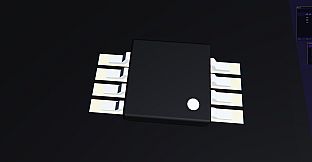
Crosstalk is a simulation game that places players in the role of city builders working directly on a printed circuit board. Components function as buildings and infrastructure, and all operations follow real electrical principles including signal integrity, power distribution, and thermal behavior. The experience blends creative construction with technical problem solving as layouts must support stable city functions without interference or failure.
Gameplay
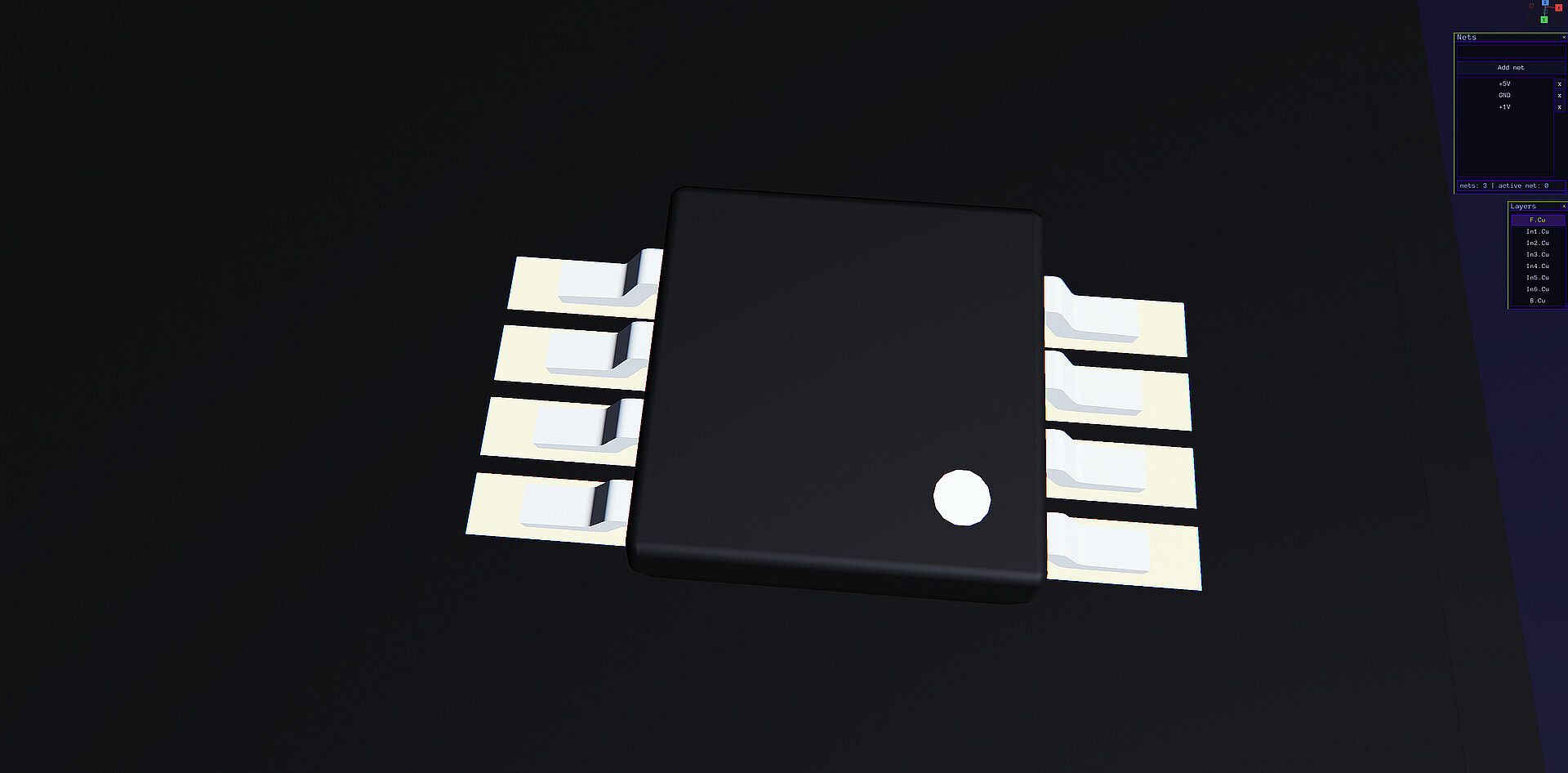
Core play revolves around placing electronic parts such as resistors, capacitors, traces, and integrated circuits to form functional urban districts. Each addition influences voltage levels, current flow, and heat generation across the board. Players adjust routing and component values to keep the simulated city running, responding to growing demands from new districts or external loads. The underlying engine applies physics calculations in real time, so poor design choices produce visible effects like signal noise or overheating zones that disrupt operations.
Design tools allow precise placement and editing of schematics and layouts. Players import specifications or analyze datasheets to select appropriate parts, then test configurations through built-in simulators that cover signal integrity, power delivery networks, electromagnetic interference, and thermal performance. These systems provide immediate feedback on whether a layout will sustain the city or require revisions. SystemVerilog utilities support advanced scripting for custom logic elements when needed.
Import and export options connect the simulation to external formats, enabling work with standard PCB tools while staying inside the game environment. The full professional feature set, unlocked through the dedicated license, expands these capabilities for commercial-scale projects and unrestricted use of generated outputs.
Game Modes
Sandbox mode serves as the primary single-player or cooperative experience. Individuals or small groups construct and maintain PCB cities at their own pace, experimenting with different component arrangements and scaling districts without external pressure. Optional co-op support lets multiple participants contribute to the same board simultaneously, dividing tasks such as routing or analysis.
Adversarial mode introduces direct competition between players. Participants build opposing layouts on shared or mirrored boards and attempt to outmaneuver one another through superior electrical design. Success depends on maintaining stable operations while exploiting weaknesses in the opponent's power distribution or signal paths. The mode emphasizes strategic foresight and rapid iteration using the same simulation tools available in sandbox play.
Professional Features and Commercial Use
The Professional EDA License removes restrictions on commercial application. It activates the complete suite of generators for symbols, footprints, and STEP models directly from specifications, along with advanced importers for formats such as KiCad, Altium, Eagle, and Gerber. Full access to analyzers and simulators supports professional workflows, while SystemVerilog tools enable FPGA synthesis and C99 simulation emission. License terms permit any commercial activity involving the software and its outputs once the main game becomes available.
Is It Worth Playing?
Crosstalk targets players who enjoy detailed simulation combined with strategic city management and an interest in electronics. The realistic physics layer adds depth beyond typical building games, rewarding careful planning and iterative testing. Sandbox offers relaxed exploration suitable for learning or creative projects, while adversarial mode provides competitive tension for those seeking direct challenges against others.
With release approaching and a focused scope on PCB-based construction, the game appeals most to enthusiasts of technical simulations and strategy titles. The professional license extends value for anyone intending to apply the tools beyond personal use. Early indications point to a niche but distinctive experience centered on accurate electrical modeling rather than broad appeal mechanics.