


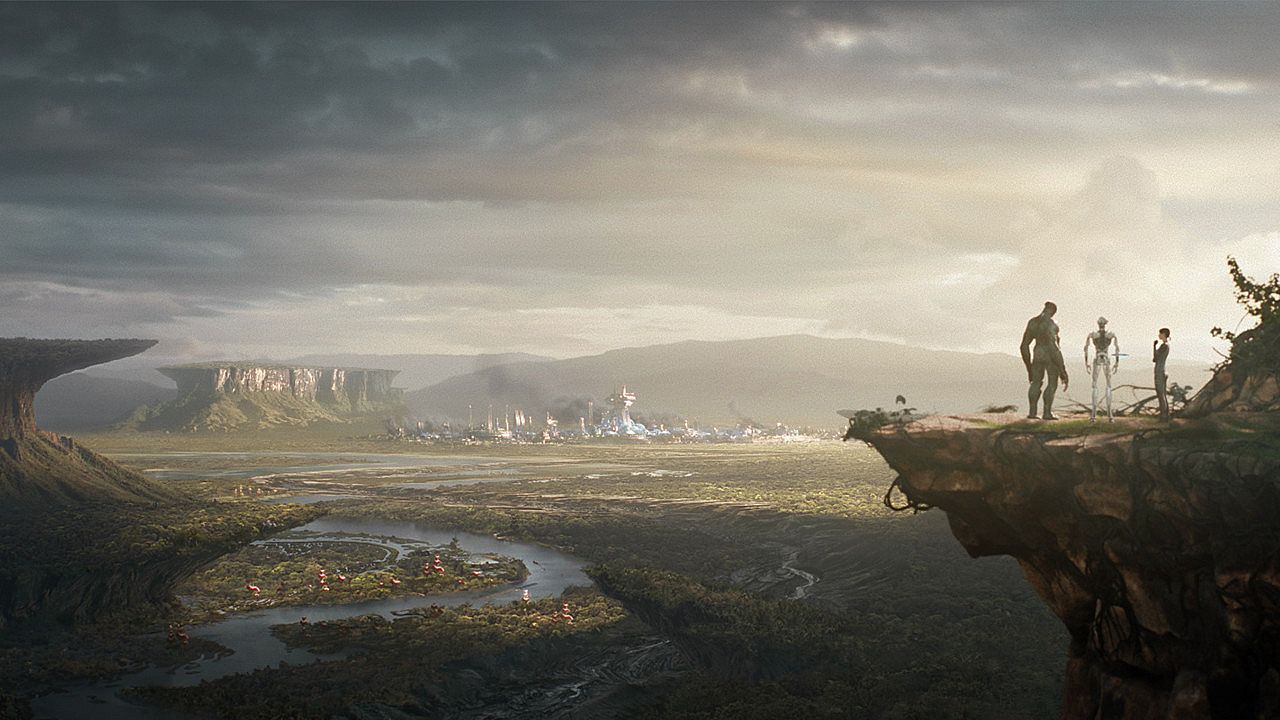

Grey Goo stands out as a real-time strategy game that harkens back to the genre's roots while introducing fresh twists through its unique factions and mechanics.
Gameplay
In Grey Goo, you manage resources, construct bases, and command armies in fast-paced battles. The core loop revolves around harvesting a resource called Catalyst to fuel production and expansion. Each faction brings distinct approaches: Humans rely on traditional structures and versatile units, Beta aliens use modular tech for adaptive defenses, and the Goo operates as a shapeshifting swarm that consumes enemies to grow without fixed bases.
Combat emphasizes positioning and unit composition, with epicenters serving as key resource points that players fight to control. Matches build tension through escalating tech trees, where unlocking advanced units and abilities can shift the tide of war.
Game Modes
The single-player campaign unfolds a story across 15 missions, split among the three factions, revealing a narrative of interstellar conflict. Skirmish mode lets you battle AI opponents on various maps, customizing difficulty and settings for practice or quick games.
Multiplayer supports online matches against other players, including ranked and unranked options for competitive play.
Factions and Mechanics
Humans focus on defensive fortifications and ranged firepower, making them strong in prolonged engagements. Beta emphasize mobility and area control with units that can relocate structures. The Goo introduces asymmetry by morphing into different forms, allowing aggressive expansion without supply lines.
Mechanics like unlimited unit production encourage massive armies, though this can lead to performance demands in large-scale fights.
Is It Worth Playing?
Grey Goo appeals to strategy enthusiasts who enjoy classic RTS elements with innovative faction designs. Player feedback highlights its balanced combat and engaging campaign, though some note a lack of depth in unit variety compared to genre giants. As a 2015 release with a definitive edition including all DLC, it remains accessible for those seeking a self-contained experience without ongoing updates. If you prefer thoughtful base management over micromanagement-heavy titles, it holds up well for solo or casual multiplayer sessions.