


Journeybound Idle is a fantasy idle RPG for PC in which players start as an F-rank adventurer in a new world and work toward S-rank status through steady progression in gathering, crafting, combat, and guild tasks. The game emphasizes offline advancement alongside active play, with systems that reward consistent effort across multiple interconnected activities.
Gameplay
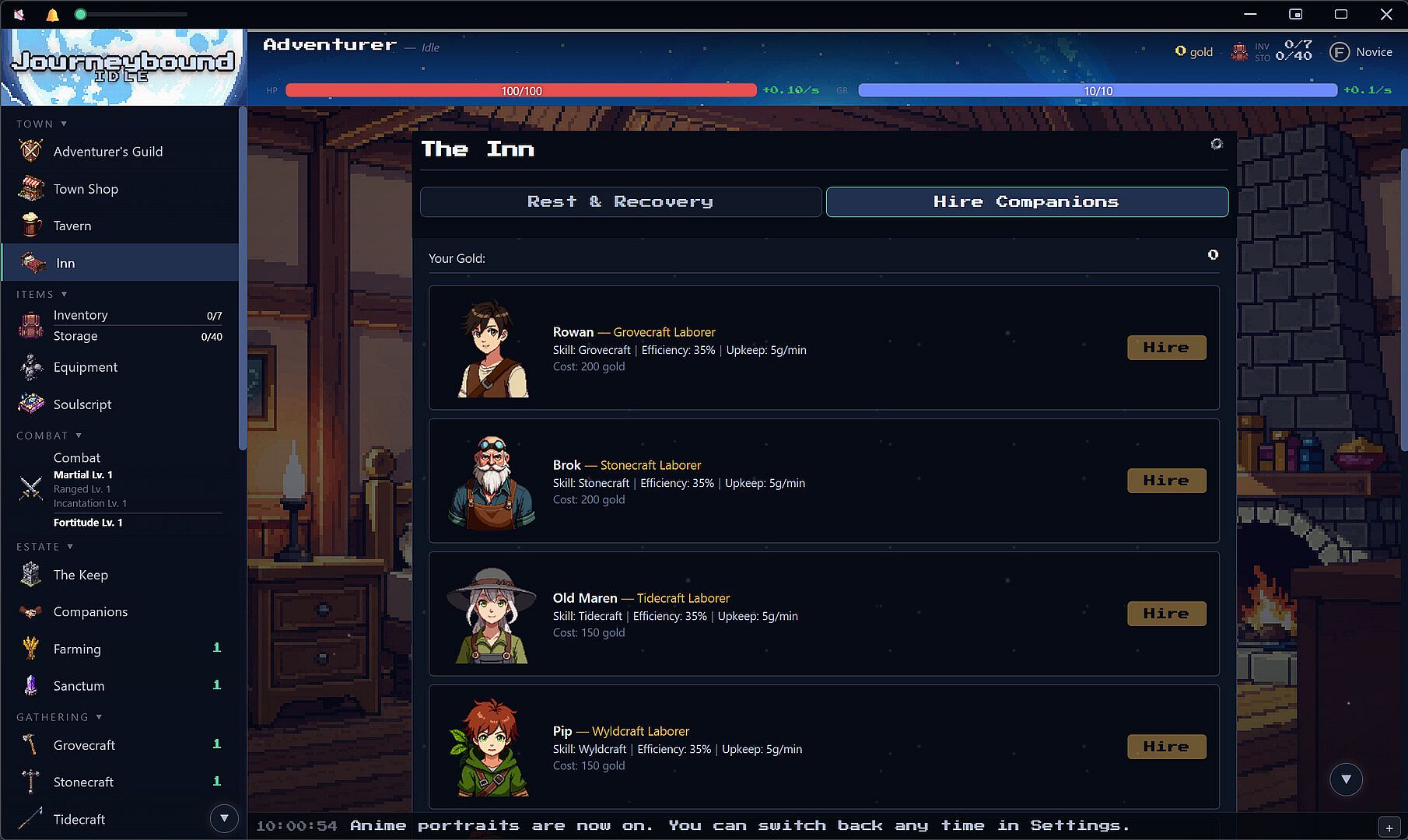
Core gameplay revolves around leveling 17 distinct skills divided into combat and production categories. Combat skills include Martial, Ranged, Incantation, and Fortitude, which determine performance in auto-battles against enemies that employ their own styles, ailments, and resistances. Production skills cover gathering like Grovecraft, Stonecraft, Tidecraft, and Wyldcraft, plus crafting disciplines such as Blacksmithing, Cooking, Fletching, Artisanry, Tailoring, Willbending, and Alchemy. Resources flow into equipment creation, farmstead management, and offerings at the Sanctum that unlock relic bonuses on a grid. Players also handle 114 quests, hire companions, and navigate 165 monsters spread across 32 hunting grounds while managing a growing inventory of more than 1,300 items.
Progression ties directly to seven guild ranks, each featuring tasks, milestones, and promotion exams that unlock new regions, gear, and opponents. An auto-battle system handles encounters once styles are set, allowing focus on planning builds or resource management. A desktop widget supports monitoring progress outside the main client. The experience avoids pay-to-win elements or in-game shops, relying instead on single-purchase access and quality-of-life features for long-term engagement.
Game Modes
Players advance through structured guild rank progression that serves as the central framework, beginning at F-rank and advancing via exams and accumulated milestones. Separate activity loops include task board contracts for reputation gains, dungeon runs that feature multiple stages and bosses, and dedicated hunting grounds for targeted monster encounters. Crafting and farming operate as ongoing production cycles that feed combat readiness and relic collection. These systems run in parallel, with idle mechanics ensuring resources and experience accumulate even during offline periods.
Combat encounters follow an auto-battle format where pre-set styles determine outcomes against varied enemy behaviors. Questing integrates dialogue and objectives across the world, while companion hiring adds layers to party composition. The overall structure supports both short sessions for quick tasks and extended play focused on skill mastery or dungeon completion.
The Anime Portrait Pack
This optional DLC provides a complete alternative art set of 98 portraits that replace every character, NPC, boss, and entity portrait used in questing, dialogue, and combat. The pack integrates seamlessly after purchase and activation through the in-game settings panel, where players select the Anime style or revert to the original artwork at any time. It aligns with the game's isekai-inspired theme of entering a new world and offers visual variety without altering core mechanics or balance.
Is It Worth Playing?
Journeybound Idle suits players who enjoy methodical idle RPG progression built around skill trees, resource loops, and steady rank advancement rather than fast-paced action or competitive multiplayer. Its single-player focus, absence of monetization pressure, and emphasis on offline gains make it accessible for those with limited playtime who still want meaningful long-term development. The recent release includes active community elements like Discord support and the addition of cosmetic options such as the anime portrait set, indicating ongoing attention from the developer. Those drawn to detailed crafting, companion management, and guild-based fantasy themes will find a cohesive experience here, while players seeking immediate high-stakes challenges or social features may prefer other titles. The game stands on its own as a complete package for the right audience.