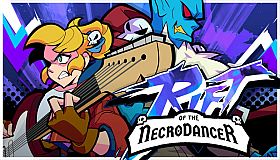


Rift of the NecroDancer stands as a rhythm game that blends timed button presses with monster combat across three lanes. Players control Cadence as she faces waves of enemies that descend toward her, each tied to the beat of the current track. The experience draws from the NecroDancer series while shifting focus to direct rhythm challenges set in a modern setting after a rift transports the characters.
Gameplay
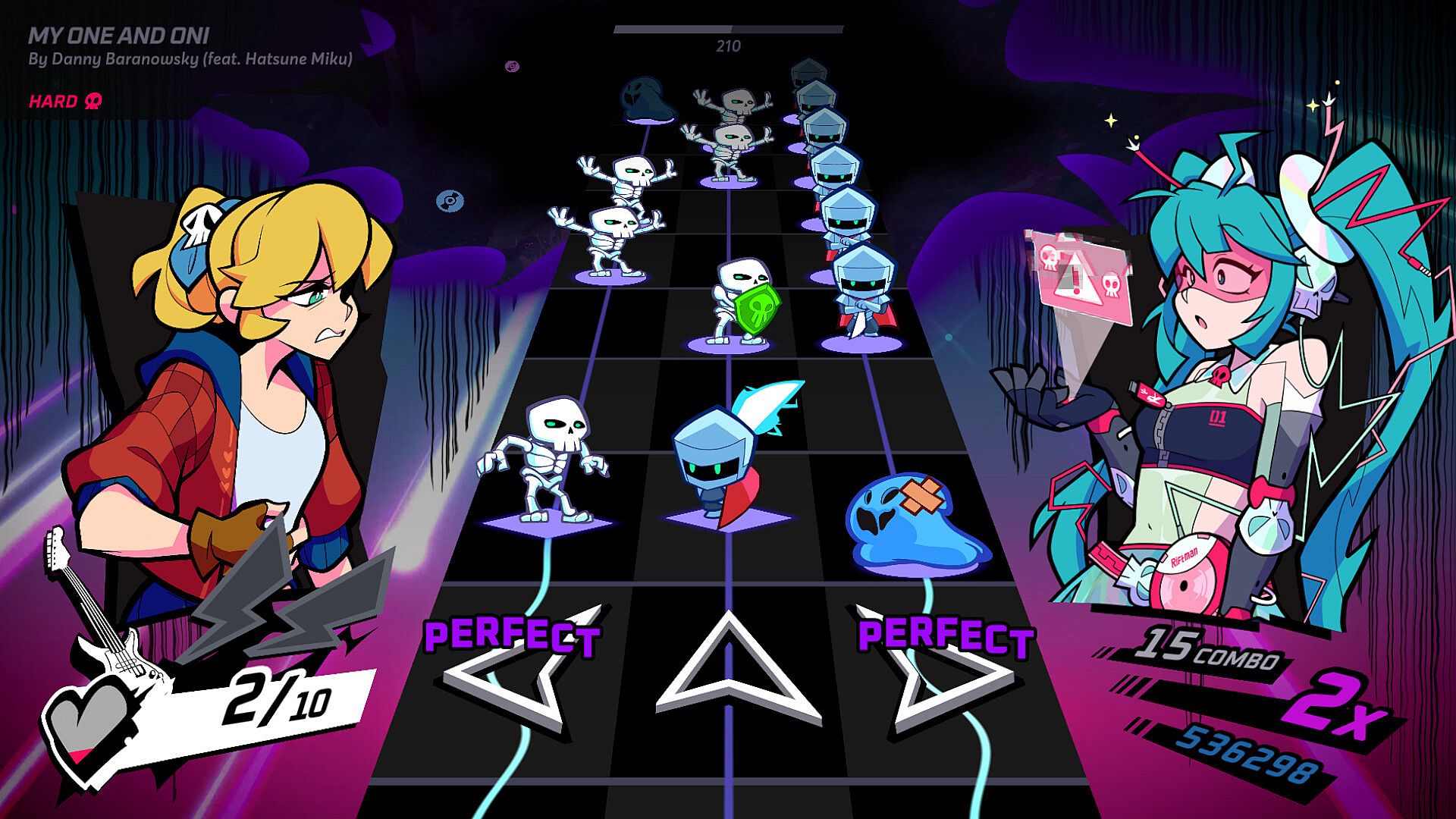
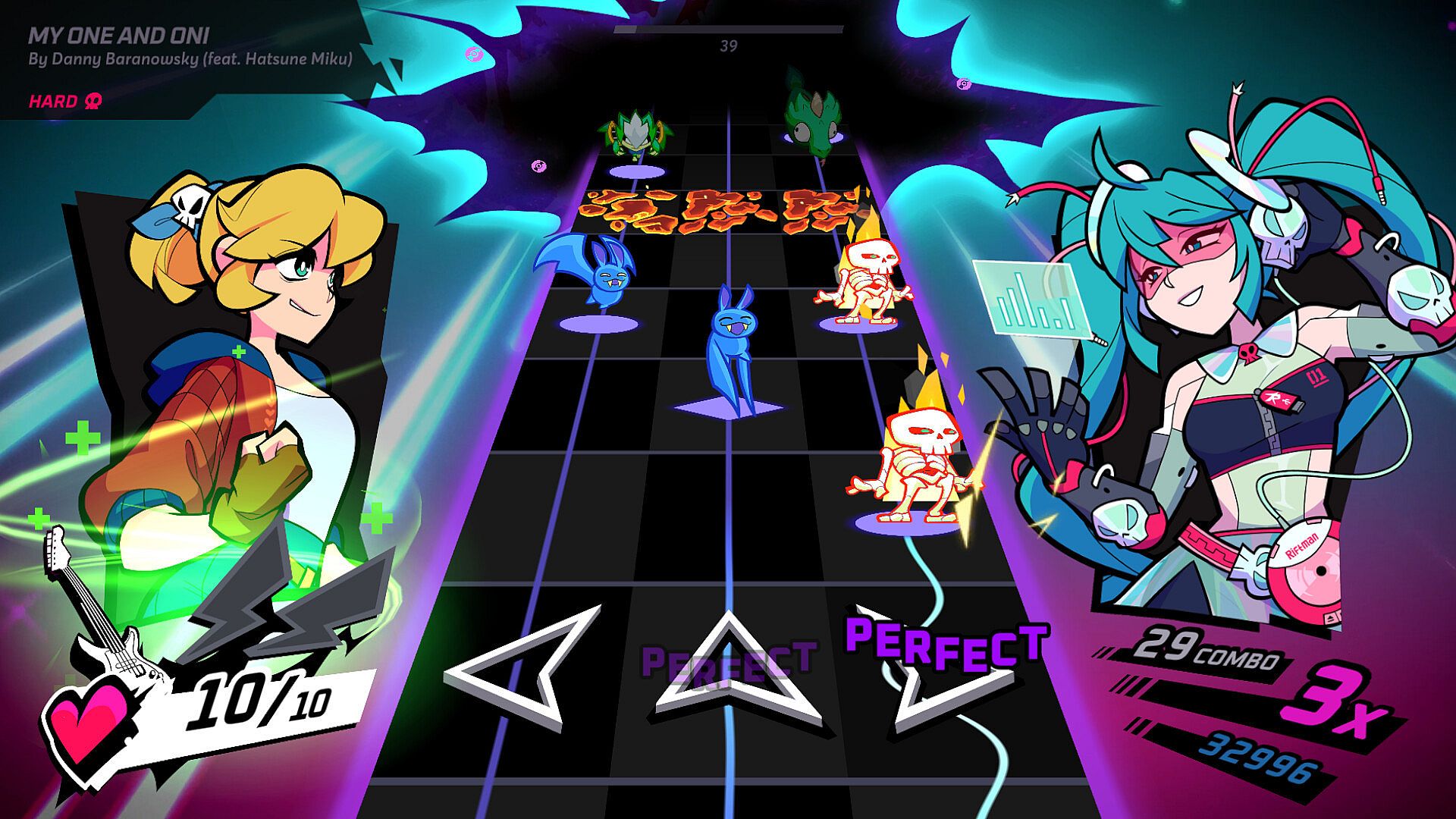
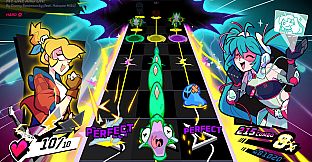
The core loop centers on matching inputs to enemy positions in real time. Enemies arrive in three lanes, and each requires a corresponding button press when it reaches the marker at the bottom. Different monster types introduce variety through movement patterns and durability. Some shift lanes after being hit, while others demand multiple strikes before they vanish. This setup keeps players reading both the music and enemy behaviors simultaneously rather than relying on fixed note patterns alone.
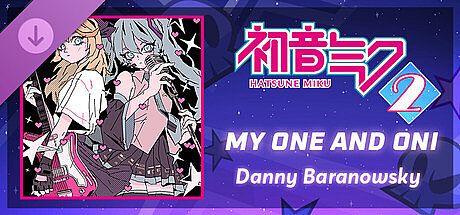
Tracks feature original compositions, including contributions from Danny Baranowsky. The Hatsune Miku Music Pack 2 adds the track My One and Oni as a free Rhythm Rift. This entry includes Hatsune Miku appearing in a custom outfit created for the game, paired with a background visualizer that incorporates particle effects. Four difficulty settings adjust the density and complexity of enemy placements for each rift.
Game Modes
Rhythm Rifts form the primary activity, available in Easy, Medium, Hard, and Impossible difficulties. Remix Mode generates a new arrangement of enemies and placements for the same song on every attempt while preserving the underlying rhythm structure. This mode supports separate leaderboards and adds variety without altering the core timing demands.
Story Mode progresses through a sequence of rifts, minigames, and boss encounters with connecting scenes. Daily Challenges present a single remixed rift each day for one attempt at leaderboard placement. Free play options allow selection of unlocked tracks with modifiers and difficulty choices. Minigames provide shorter rhythm exercises in varied scenarios, such as timing poses or handling service tasks.
Progression and Features
Players unlock additional tracks through in-game currency or by advancing in Story Mode. Leaderboards track performance across difficulties and Remix Mode for both global and friend comparisons. A level editor supports creation of custom beatmaps using the same tools employed by the developers. The Hatsune Miku content integrates directly into these systems, with purchases granting profile items alongside the new rifts.
Enemy variety carries over from the series foundation, with behaviors that reward pattern recognition over simple repetition. The three-lane format maintains accessibility while allowing complexity to build across difficulties and remixes.
Is It Worth Playing?
The game delivers consistent rhythm challenges supported by an expanding library of tracks through regular music packs. The free My One and Oni rift provides an immediate entry point into the Hatsune Miku content, complete with its dedicated visual elements and full difficulty range. Remix Mode and daily challenges extend replay value for those who enjoy adapting to changing patterns rather than memorizing fixed sequences.
Players seeking a focused rhythm experience with monster-themed visuals and ongoing additions will find the structure engaging. The combination of hand-crafted rifts, procedural remixes, and minigame diversions suits sessions of varying length. Availability on PC supports keyboard or controller input, aligning with the precision required for higher difficulties.