






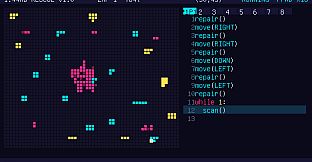
1.44MB RESCUE is an indie simulation game for PC in which players restore a decaying 1.44MB floppy disk from the inside. The experience centers on programming repair actions in a custom Python-style language called PyDust to salvage sectors, unlock new capabilities, and bring the disk back to life through automation.
Gameplay
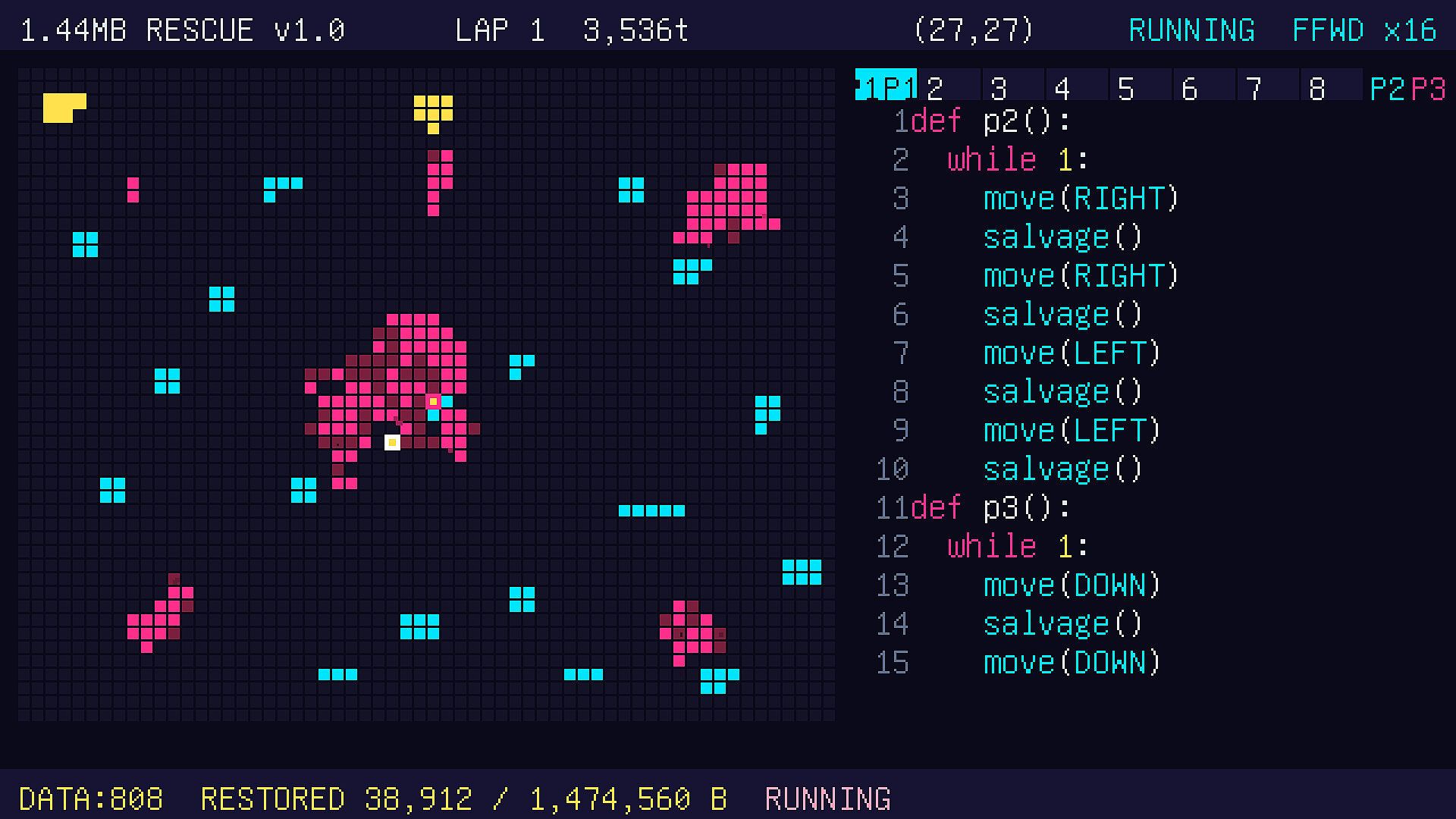
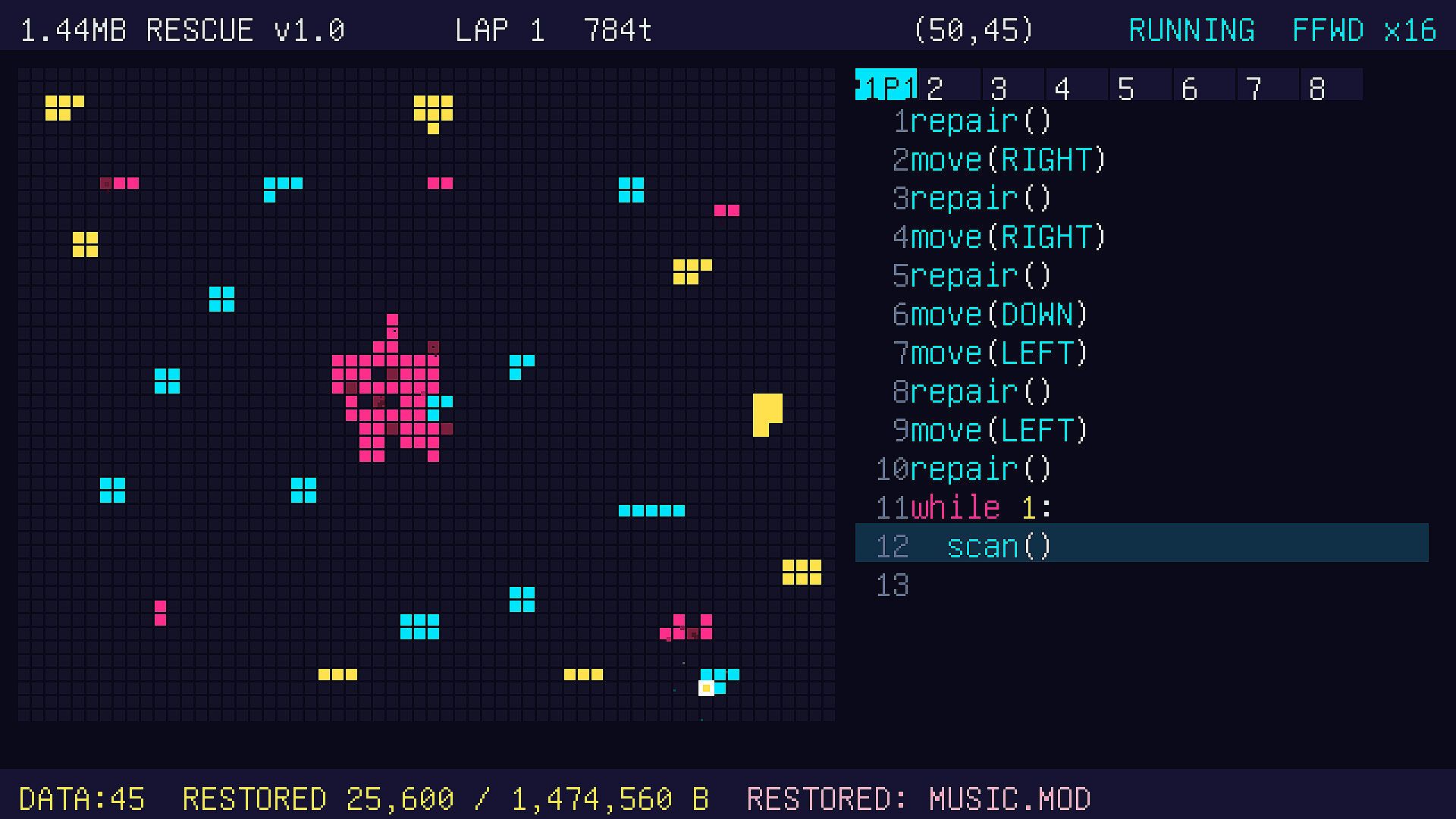
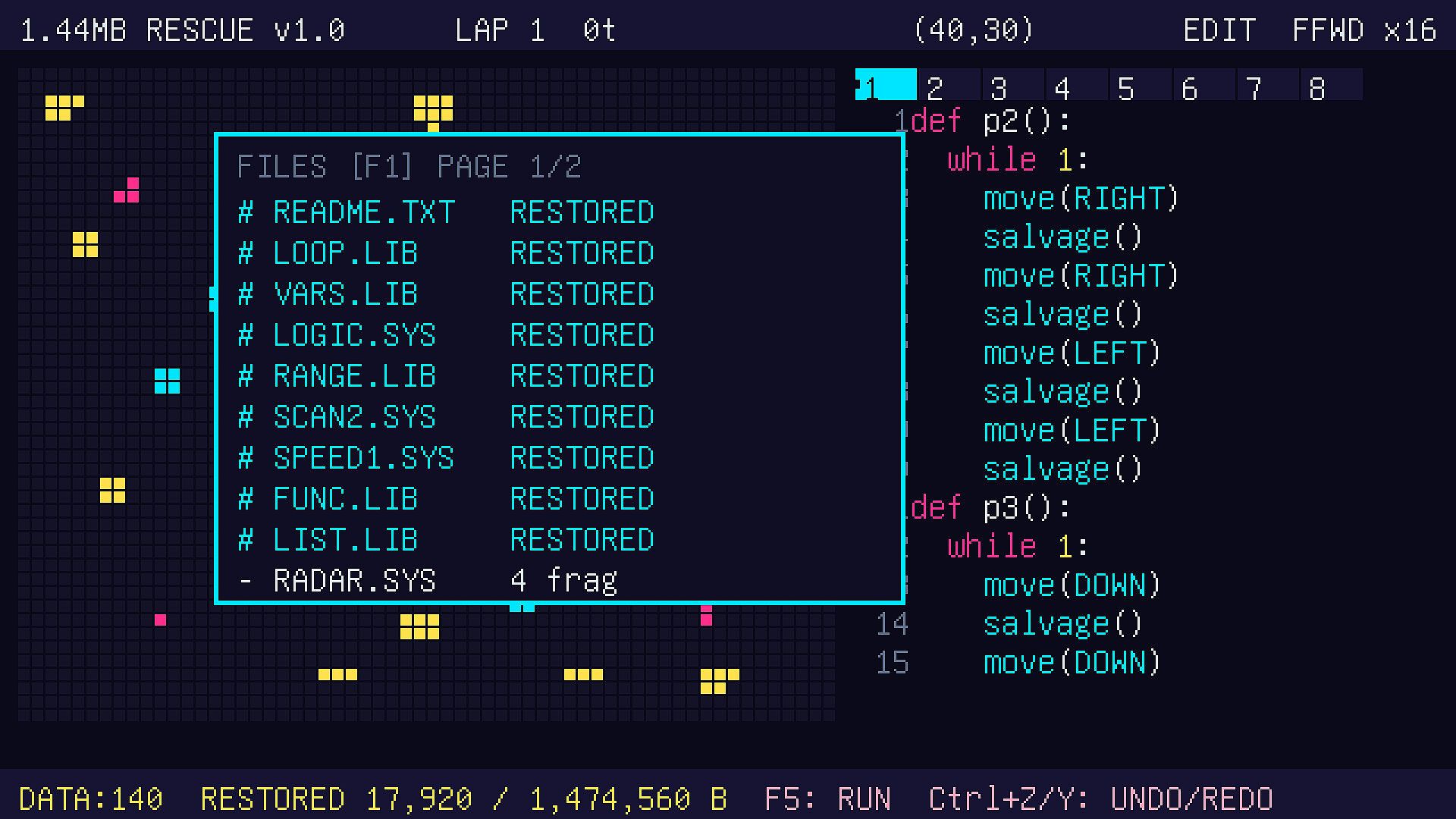
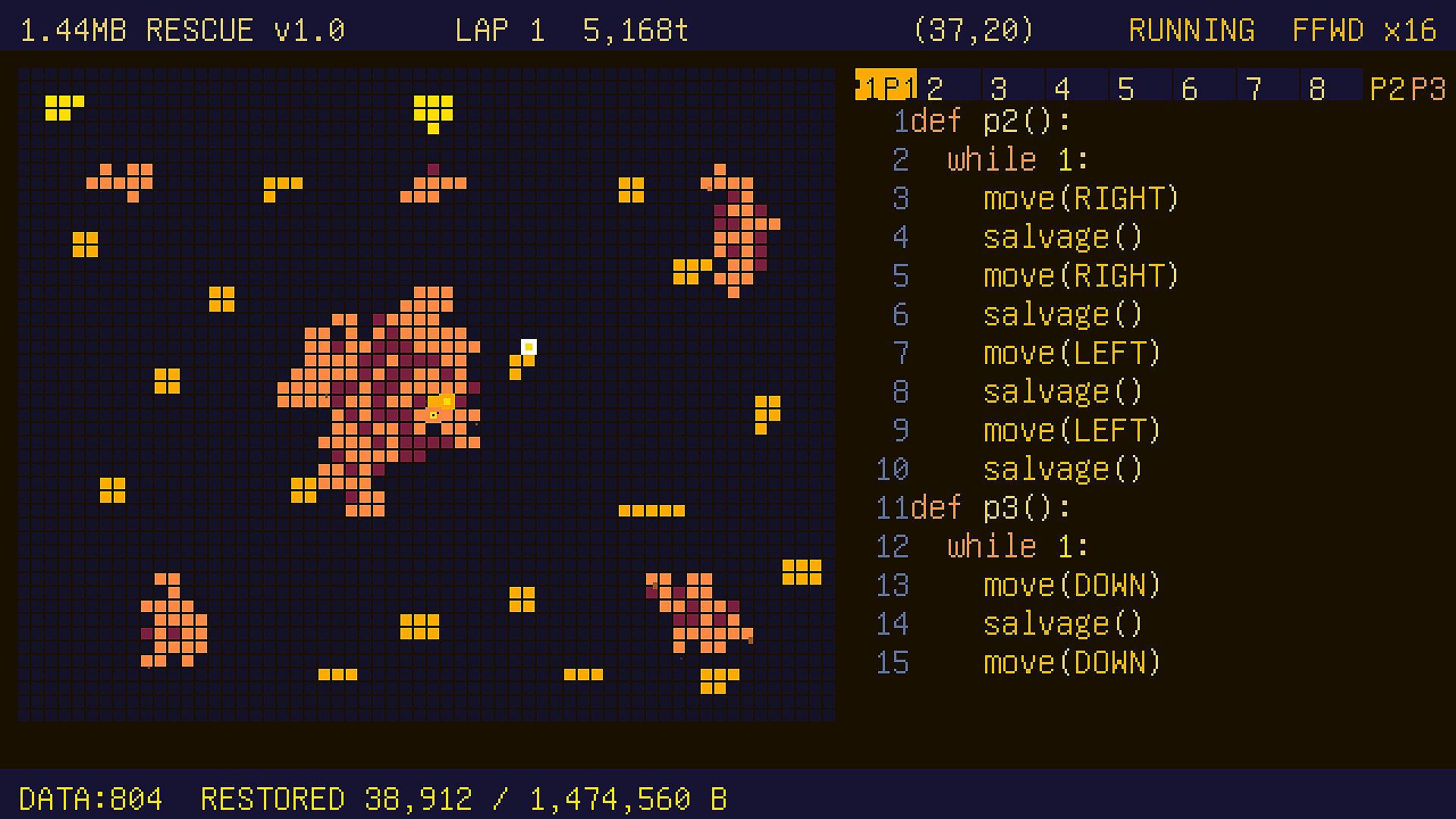
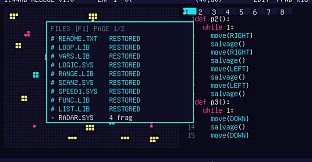
The core loop involves writing code that directs a repair patcher to fix corrupted sectors. Players begin with four basic commands and gradually expand their toolkit by restoring files. Each restored file adds elements such as loops, variables, functions, and lists. Corruption serves as a resource that players salvage for DATA, which they then spend to perform repairs. The economy of corruption versus repair forms the central tension.
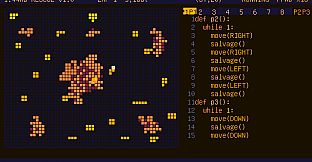
Programs run visibly as animations because execution itself drives the on-screen activity. Infinite loops continue without freezing the game. Players can deploy up to three patchers at once and use a deploy command to create child patchers that work in parallel. Everything in the game is generated procedurally at runtime, with no pre-made asset files. Every pixel and musical note is synthesized on the fly.
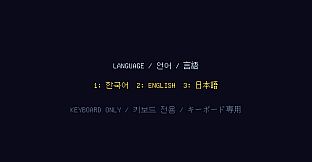
Keyboard input is required throughout. The game supports English, Korean, and Japanese interfaces and subtitles. A full rescue typically takes between two and four hours, after which the systems encourage continued experimentation through repeated runs.
Game Modes
The primary mode focuses on restoring twenty specific files within the disk. Each file unlocks additional language features, tools, or unexpected elements that expand what the patcher can accomplish. Progress builds toward full automation so that later stages run largely on their own.
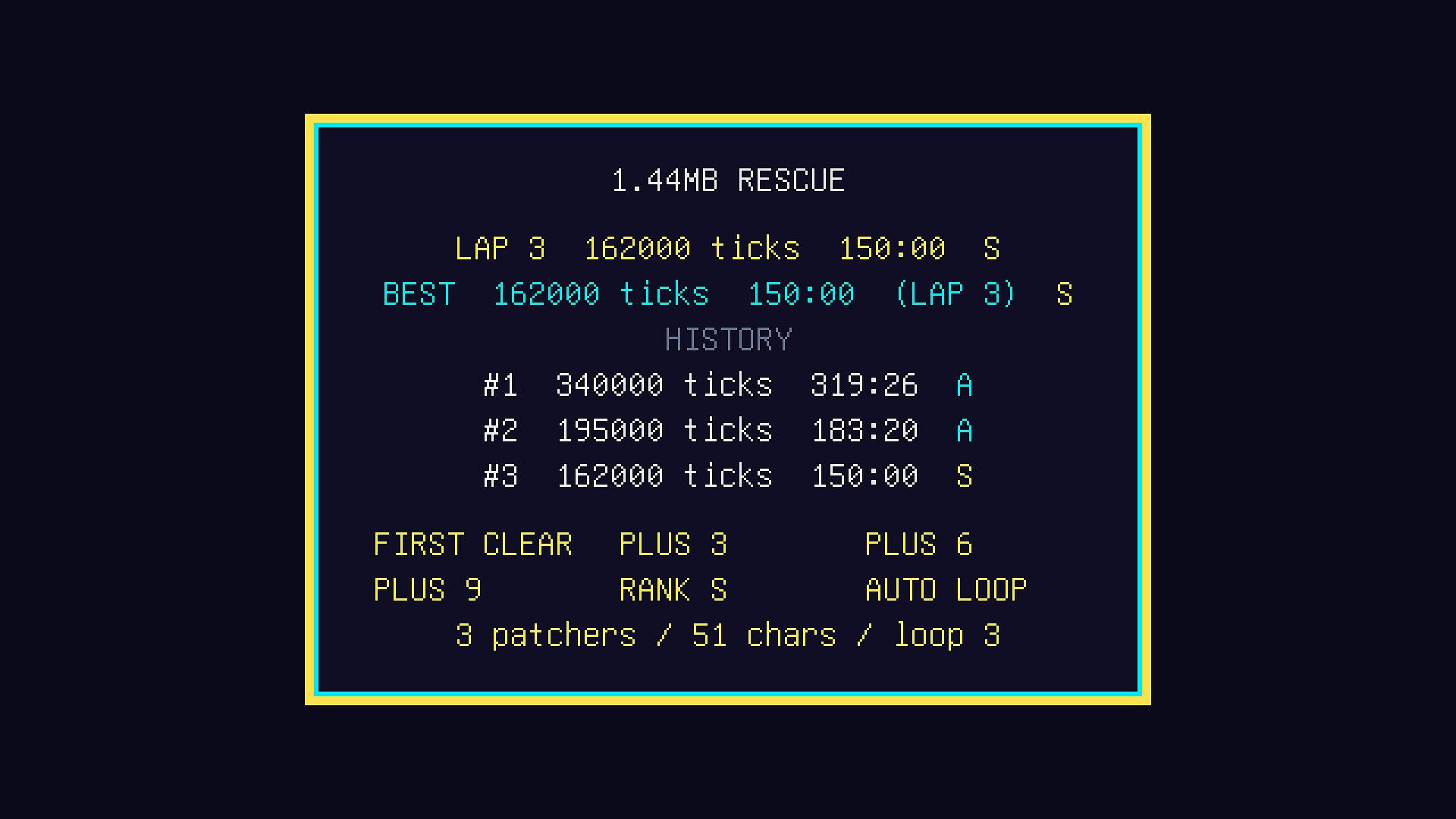
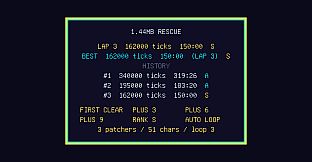
NEW DISK+ provides a structured replay system with escalating difficulty across multiple laps. Players receive S through C ranks based on performance, along with achievement badges and a shareable stats card. This mode emphasizes optimization and repeated attempts after the initial rescue.
Midway through a run, restoring MUSIC.MOD introduces nine chiptune tracks, five of which are unlockable. Audio arrives as part of the in-game world rather than as a separate menu option.
Visual and Technical Design
Eight CRT display themes are available, including neon, DOS blue, phosphor green, and amber, plus additional hidden retro palettes. The entire game is built to occupy exactly 1,474,560 bytes, matching the capacity of a standard 3.5-inch floppy disk. This constraint shapes every aspect of the presentation and code.
No external asset files are used. The procedural generation extends to both visuals and sound, ensuring the experience remains consistent with the floppy-disk theme even across different runs and themes.
Is It Worth Playing?
1.44MB RESCUE appeals to players interested in programming puzzles and resource management within a tightly constrained simulation. The single-player experience rewards careful planning and iterative code refinement rather than fast reflexes. Those who enjoy watching automated systems take over after initial setup will find satisfaction in the later stages.
The game is scheduled for release in Q4 2026. At present there are no user reviews available, so reception remains to be seen once it launches. Its compact scope and focus on code-driven automation make it a distinctive choice for anyone drawn to indie simulation titles that blend coding with survival mechanics on a retro platform.











