



















AI Lab Tycoon is a single-player strategy and simulation game that places players in charge of building an artificial intelligence research laboratory from humble beginnings. Set against the backdrop of the AI revolution starting in 2016, the experience unfolds over two decades as participants manage resources, personnel, and research priorities to pursue technological breakthroughs. The core appeal lies in its focus on consequential choices within an interconnected economy, where success depends on balancing talent acquisition, compute allocation, product development, and competitive positioning against rival organizations.
Gameplay
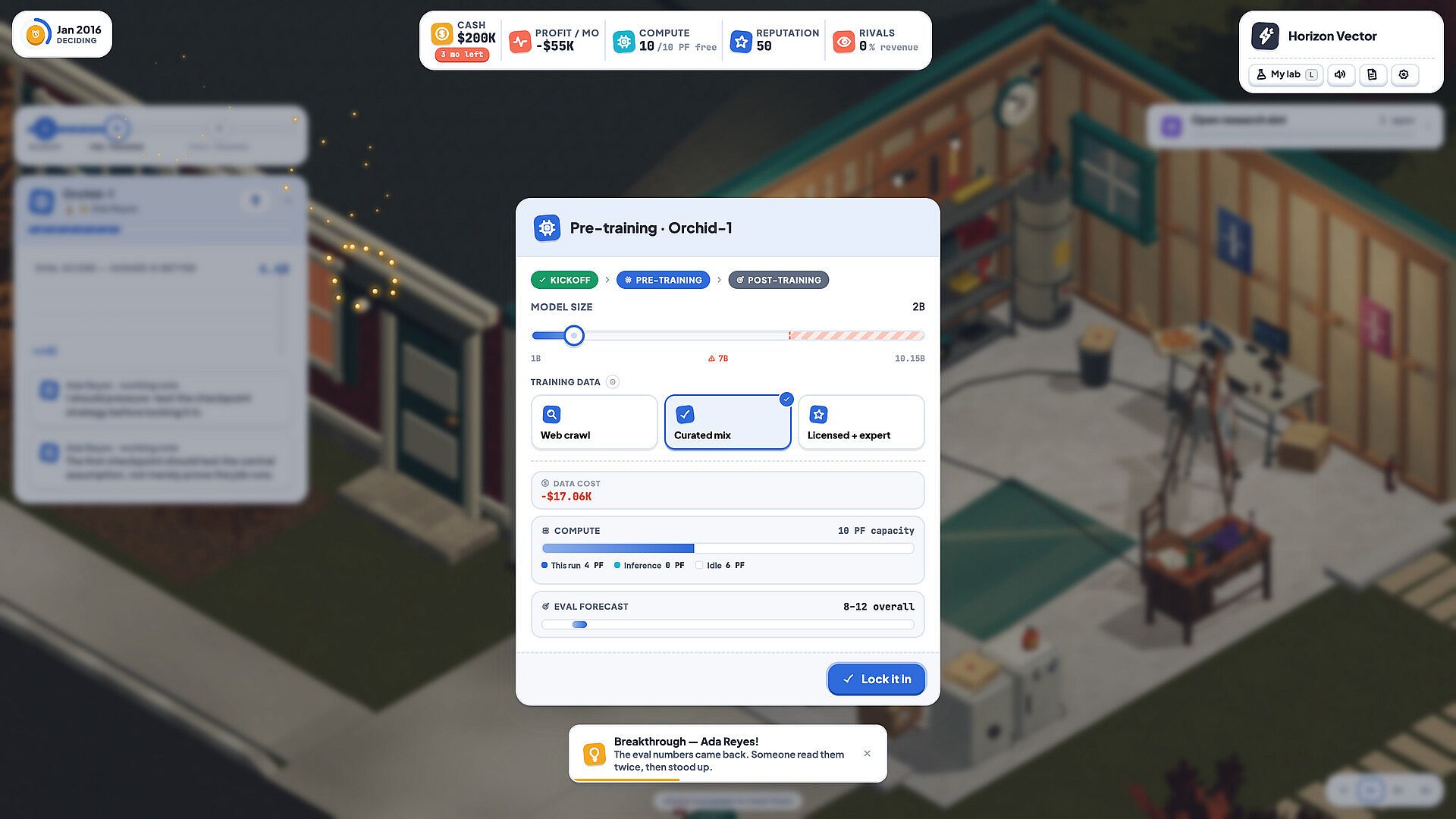
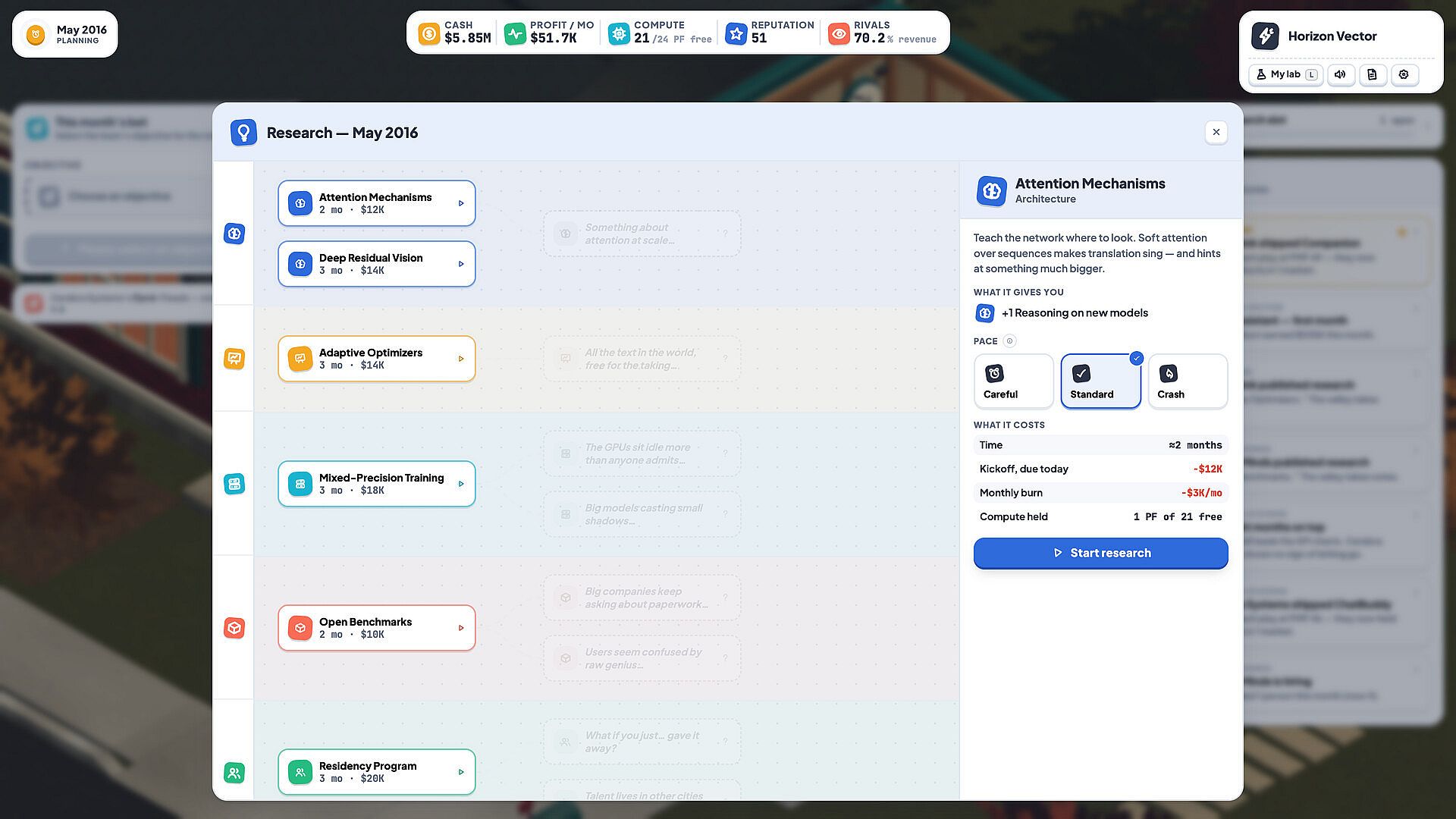
The gameplay centers on incremental growth from a small operation with limited resources into a dominant force in AI development. Players begin with basic funding and must decide how to allocate capital between hiring skilled researchers, securing additional hardware for training runs, or pursuing specific research avenues. A connected technology tree guides progress, requiring prerequisites before advancing to more advanced capabilities. Managing runway becomes critical, as overspending on early bets can lead to financial strain while conservative approaches risk falling behind in the race toward more powerful systems.
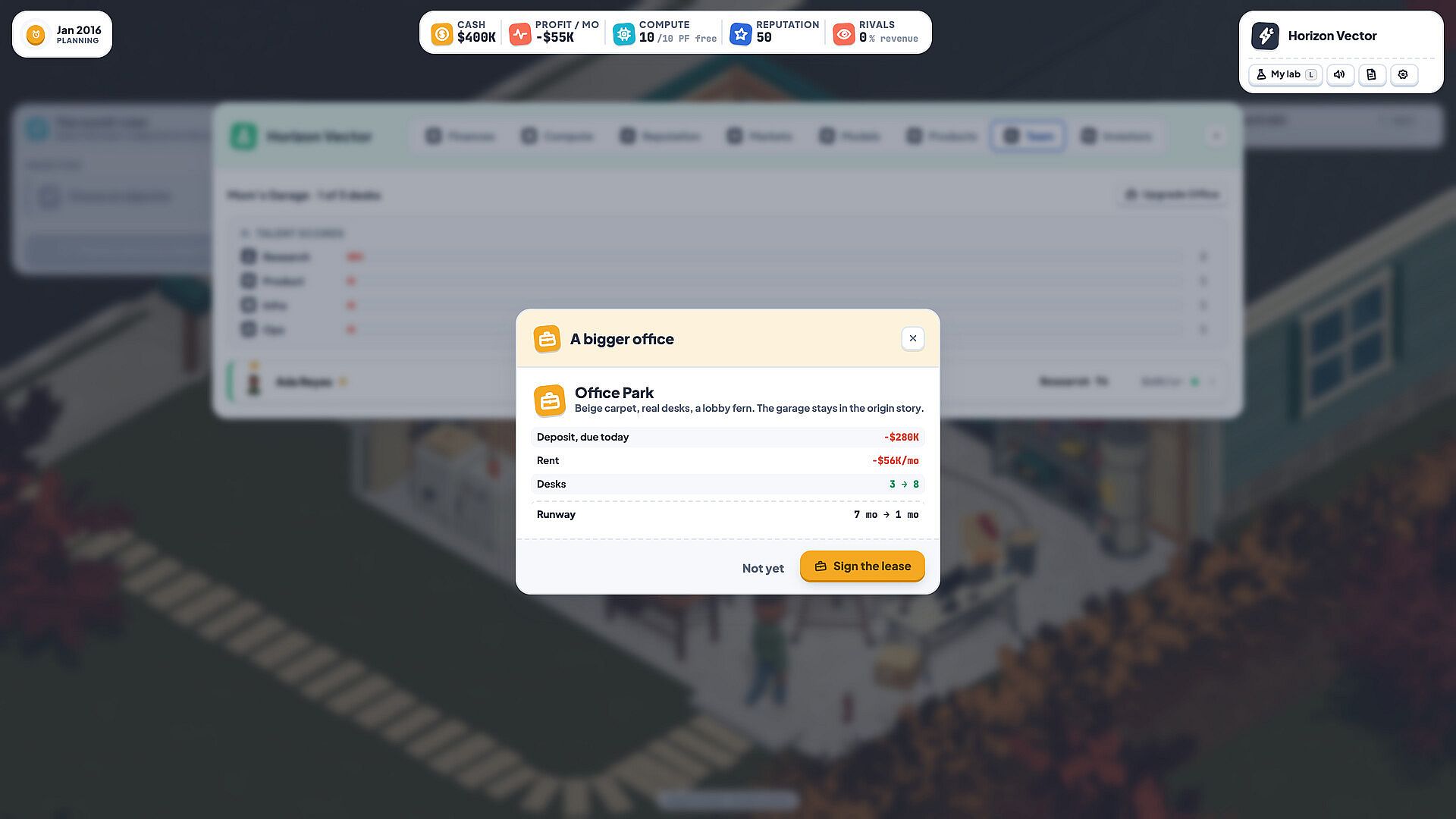
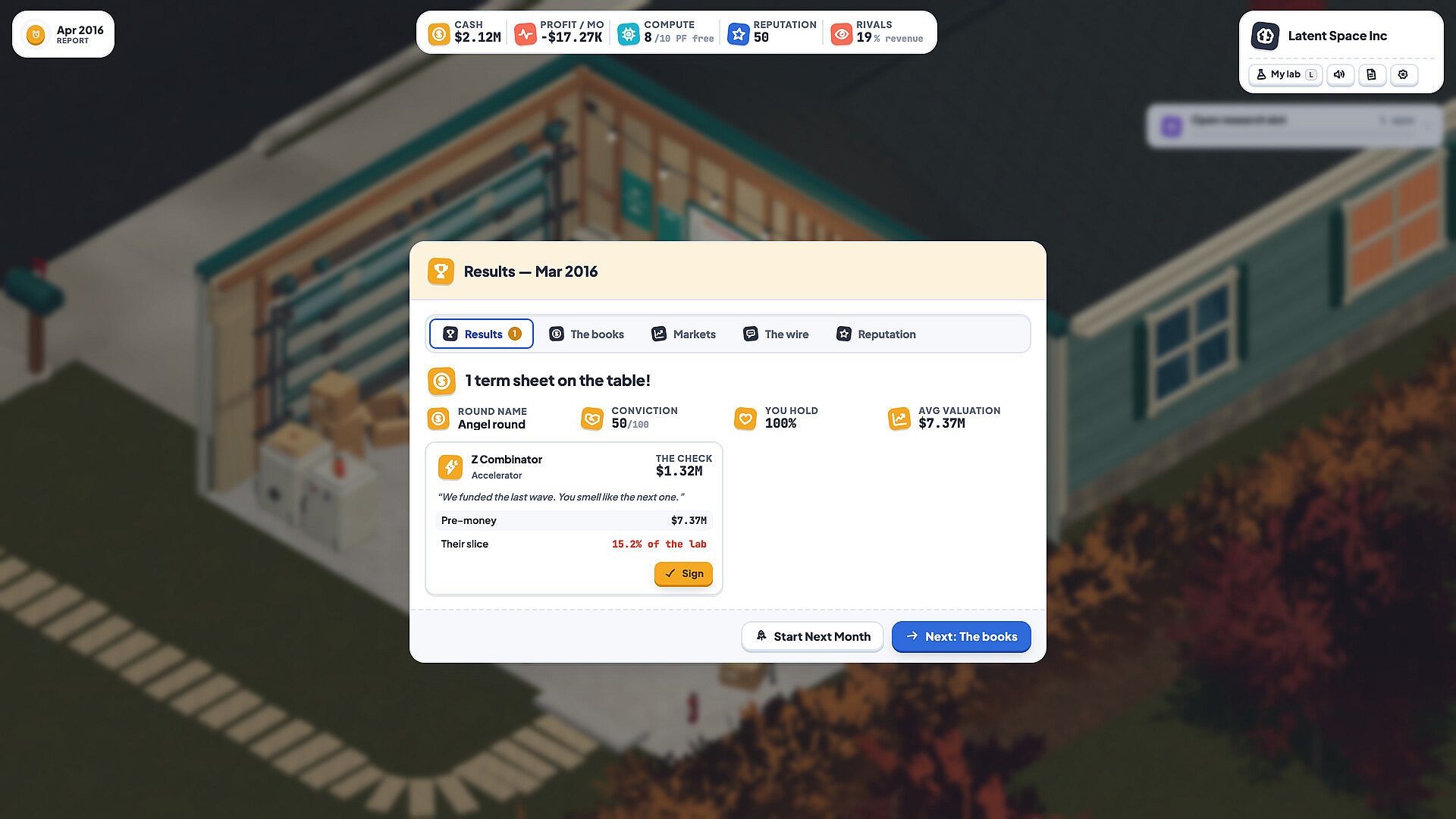
Breakthroughs in research translate directly into deployable models and commercial products. Releasing these items influences market dynamics, generating revenue that funds further expansion. Reputation and equity considerations factor into funding rounds, where timing investment decisions affects ownership stakes and long-term control. Expansion occurs across multiple office tiers, unlocking greater capacity in research output, talent retention, and overall operational scale. Every GPU allocation carries weight, forcing trade-offs between model scale, evaluation thoroughness, and parallel experiments.
Game Modes
The game operates as a single-player management simulation without separate multiplayer or competitive modes. Victory paths emphasize either achieving broad AI dominance through superior products and market share or accelerating toward artificial superintelligence ahead of competitors. Players track rival labs in real time, adapting strategies based on shifting competitive pressures and technological leads. Multiple endings emerge from the combination of research focus, financial decisions, and timing of releases, encouraging repeated playthroughs to explore different branches of the technology tree and team compositions.
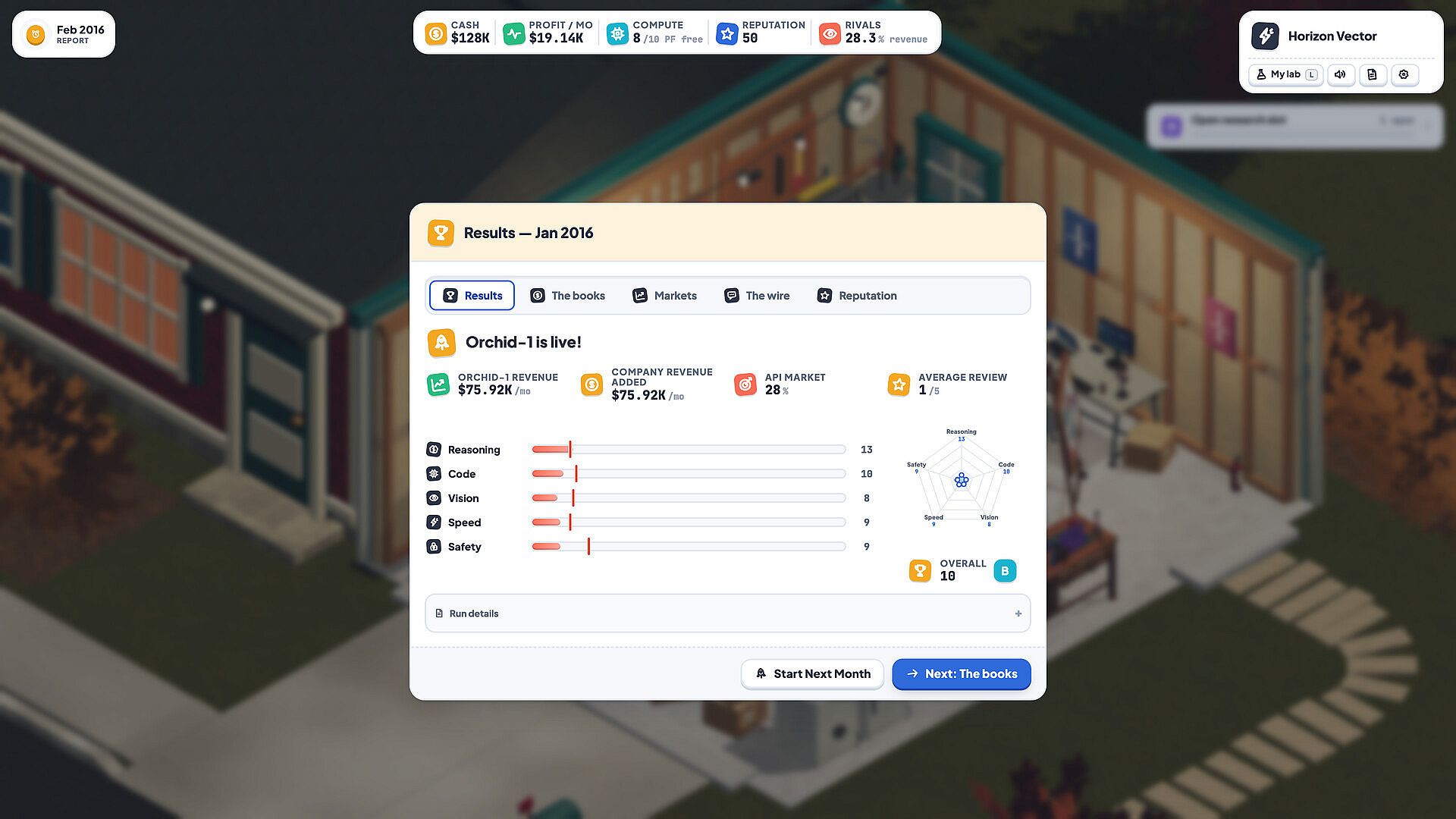
Core loops revolve around training successive generations of models, evaluating their performance, and converting technical advances into marketable applications. The absence of predefined scenarios means progression stems entirely from player-driven choices in a dynamic economic environment.
Key Mechanics and Systems
Resource management forms the foundation, linking talent development, hardware procurement, and capital flows in a single system. Reputation influences access to better funding terms, while equity dilution represents a persistent risk when accepting external investment. The technology tree enforces logical progression, preventing shortcuts that bypass foundational work. Rival tracking adds a layer of strategic awareness, requiring players to monitor external advancements and adjust priorities accordingly.
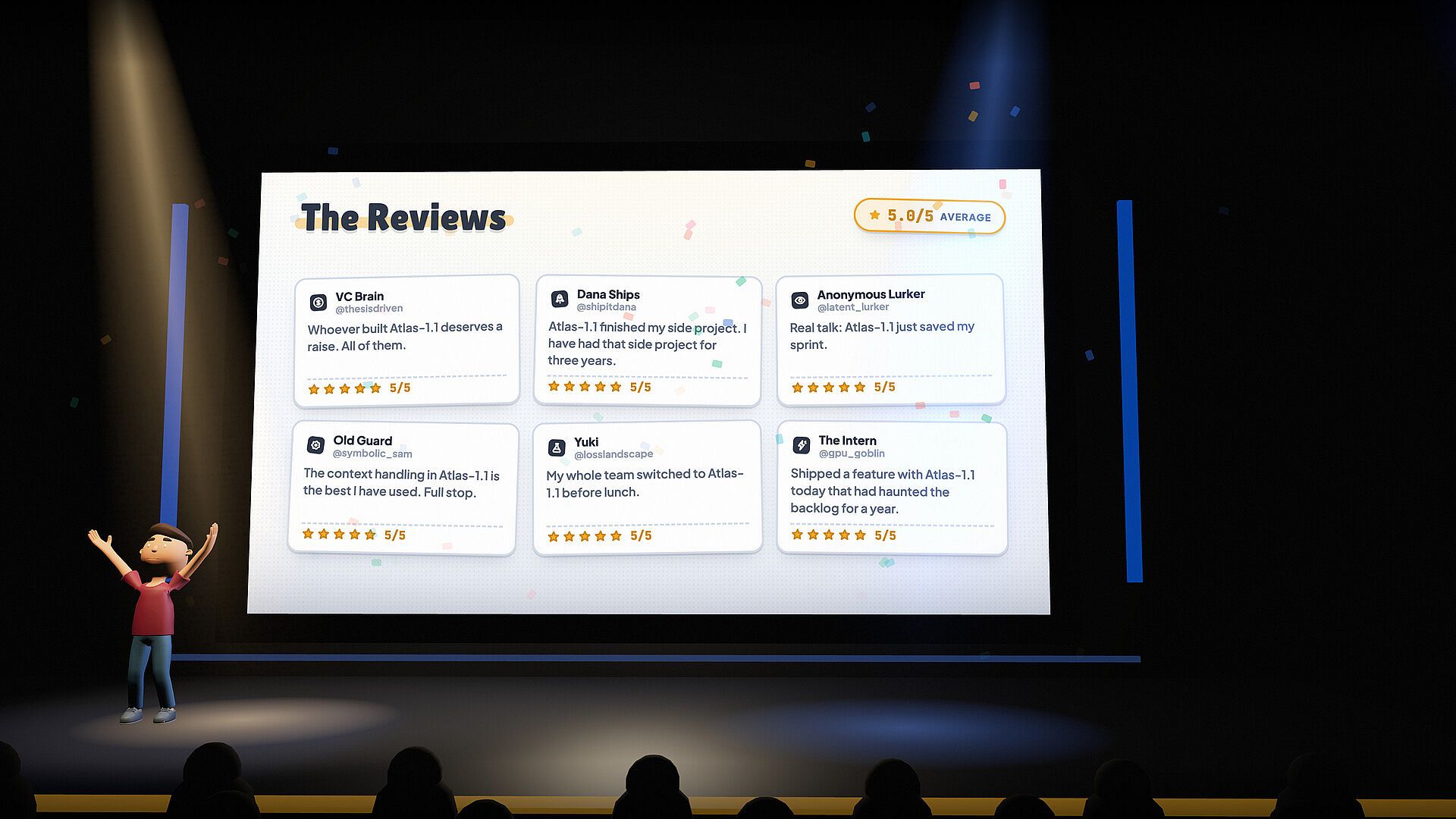
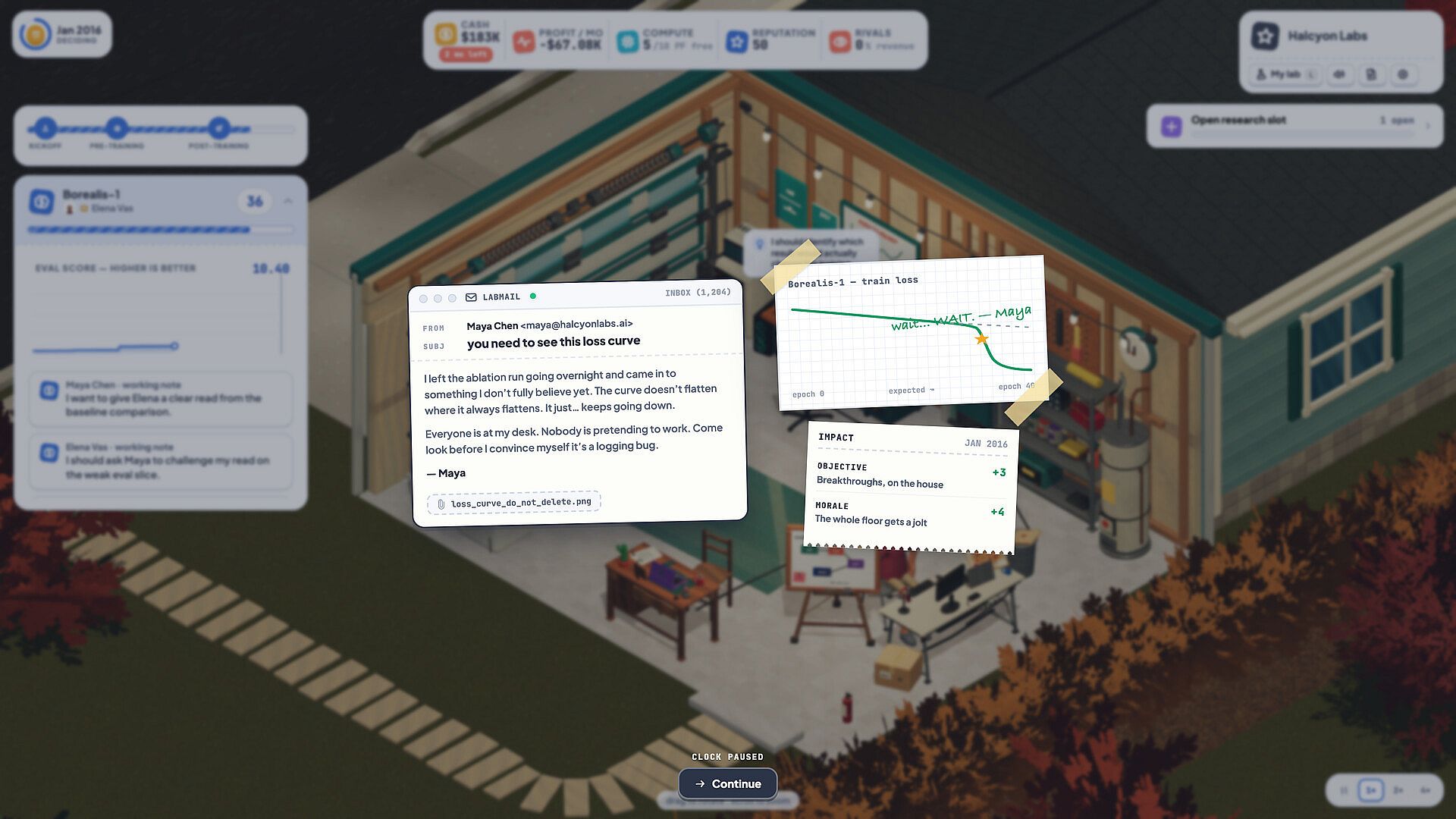
Product launches serve as pivotal moments, where market reception can accelerate growth or expose vulnerabilities. Decisions around research risk versus incremental refinement directly impact trajectory, with mistimed releases allowing competitors to gain ground. These elements combine to create a simulation that rewards foresight and adaptability over rote optimization.
Is It Worth Playing?
AI Lab Tycoon targets players who enjoy detailed management simulations centered on long-term planning and resource trade-offs. Its single-player structure suits those interested in exploring economic and technological systems without external competition. With a planned release in 2026 and no user reviews available yet, the experience remains untested in practice, though the described mechanics align closely with established tycoon and strategy genres. Individuals drawn to themes of technological progress, competitive innovation, and complex decision-making may find the premise compelling once it launches. The game emphasizes thoughtful progression over rapid action, making it a potential fit for dedicated simulation enthusiasts seeking depth in AI-themed management.











