









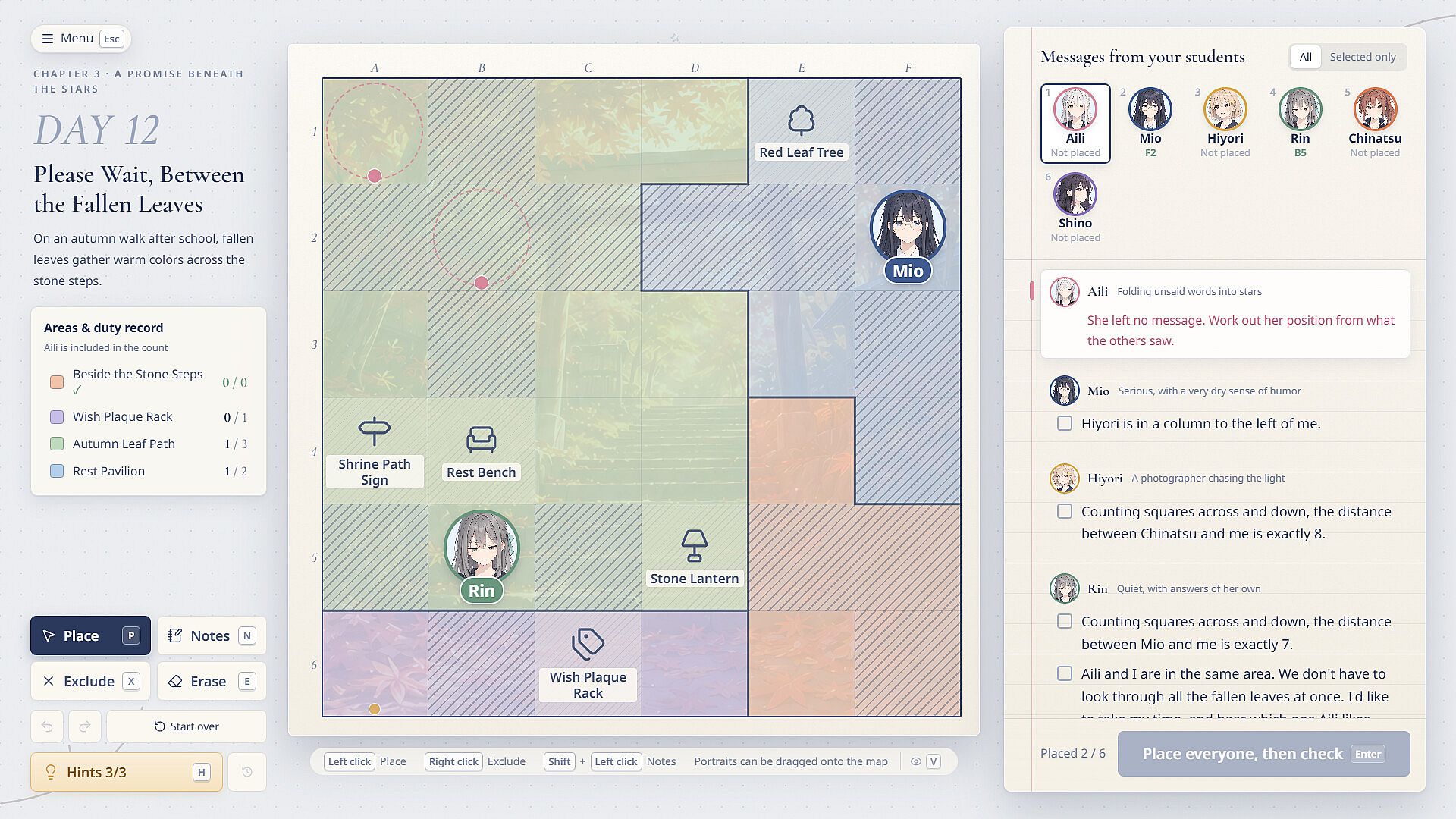
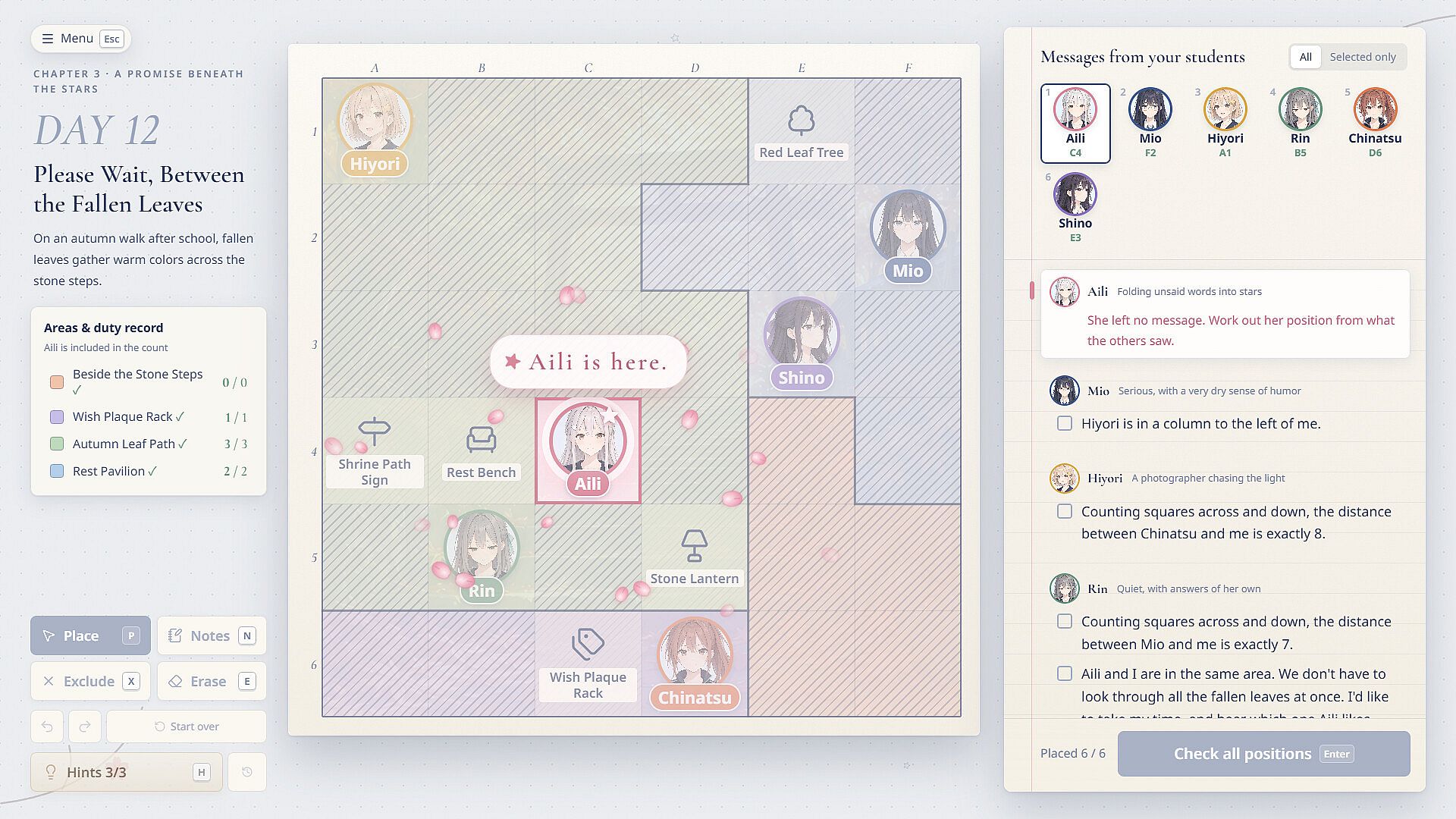








Aili Is Here is an indie casual logic puzzle game for PC in which players take on the role of a teacher piecing together daily notes left by students to locate the quiet classmate Aili each afternoon. The core experience revolves around interpreting short messages, area headcounts, and furniture positions to place everyone correctly on a school map, following strict rules that ensure exactly one person occupies each row and column. Puzzles begin simply and scale in complexity across a prologue plus sixty days of challenges, creating a steady progression that rewards careful observation and logical deduction without relying on timers or competition.
Gameplay
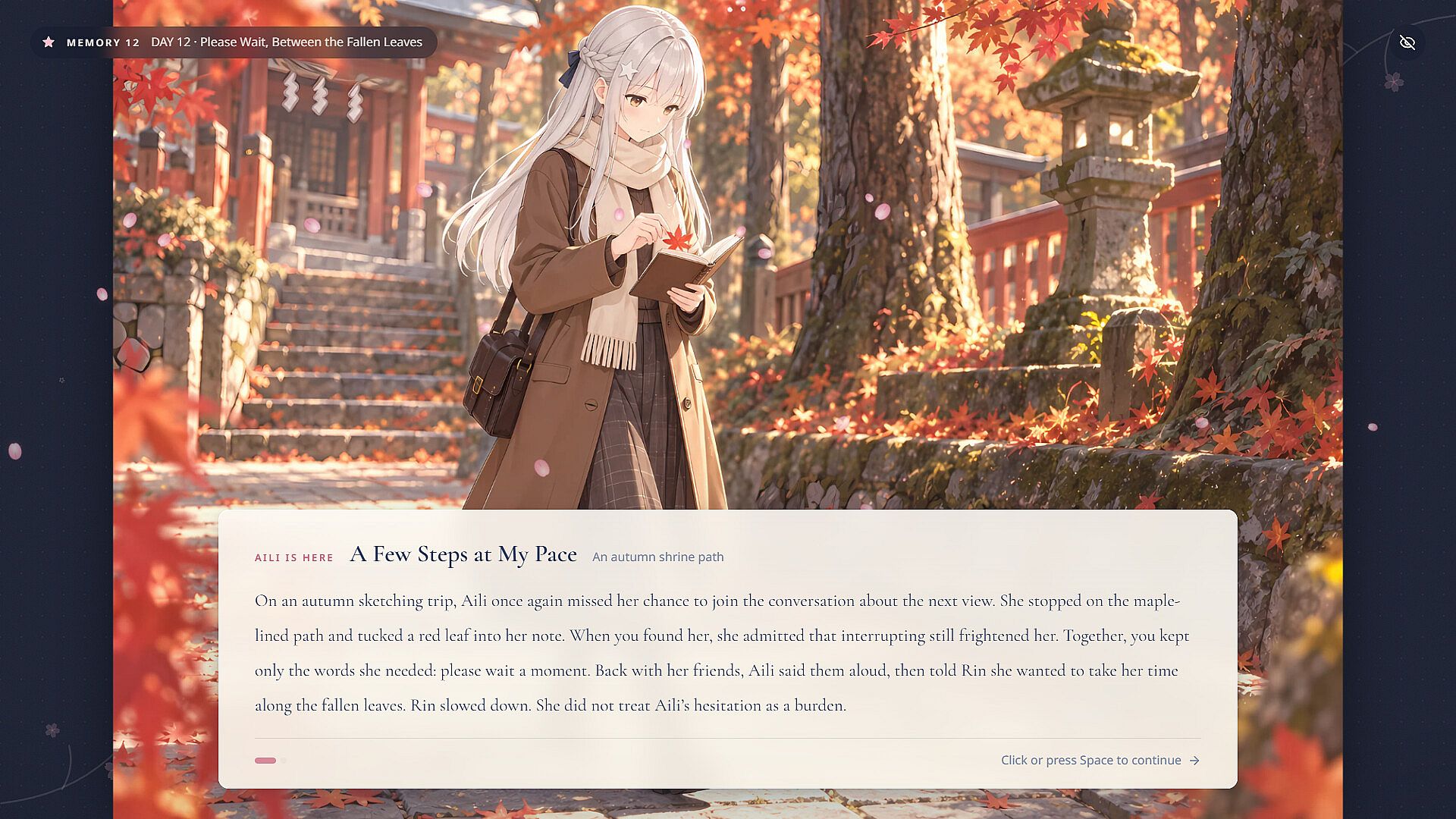
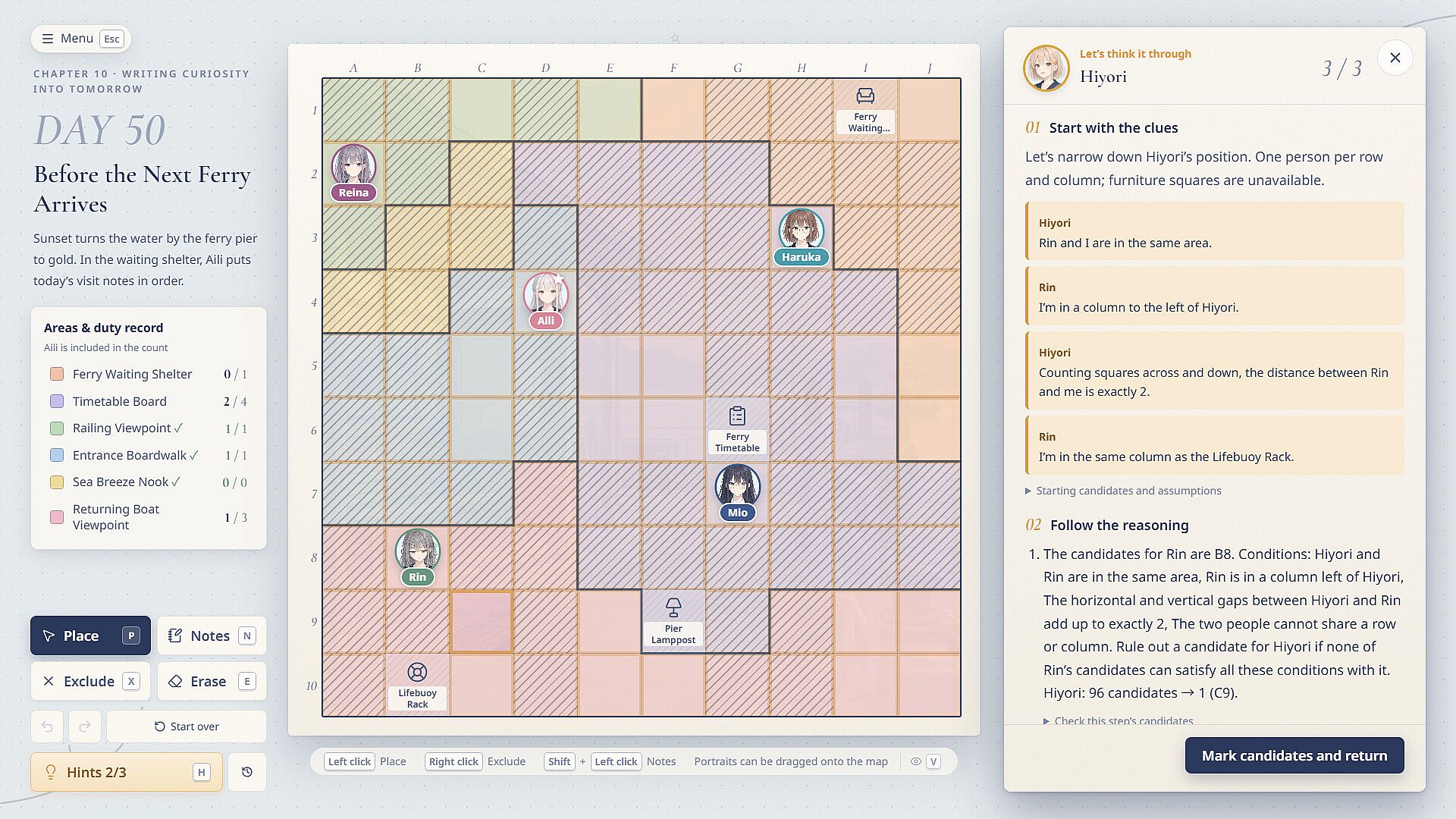
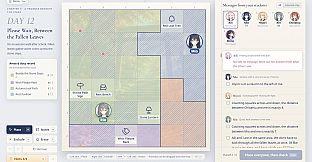
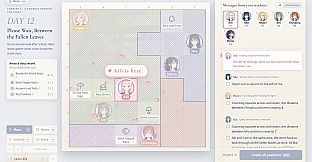
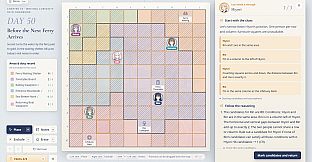
The gameplay centers on daily record book entries that provide clues about student locations after school. Messages might indicate a student is in the reading corner, further west than another classmate, or that Aili was not in a particular spot. These details combine with headcounts in specific areas and the placement of desks or other furniture to form a complete picture. Each puzzle demands that every row and every column contains precisely one person, turning the school map into a grid-based deduction exercise similar to classic logic grids. Puzzles grow from compact 3x3 layouts in early days to larger 10x10 arrangements later, introducing more variables while always maintaining a single correct solution. When progress stalls, built-in hints guide players through the reasoning process step by step, functioning like a thoughtful classmate offering suggestions rather than outright answers. Completing each day unlocks an illustrated memory and a short story snippet that captures the mood of that afternoon, building a personal collection over time.
Game Modes
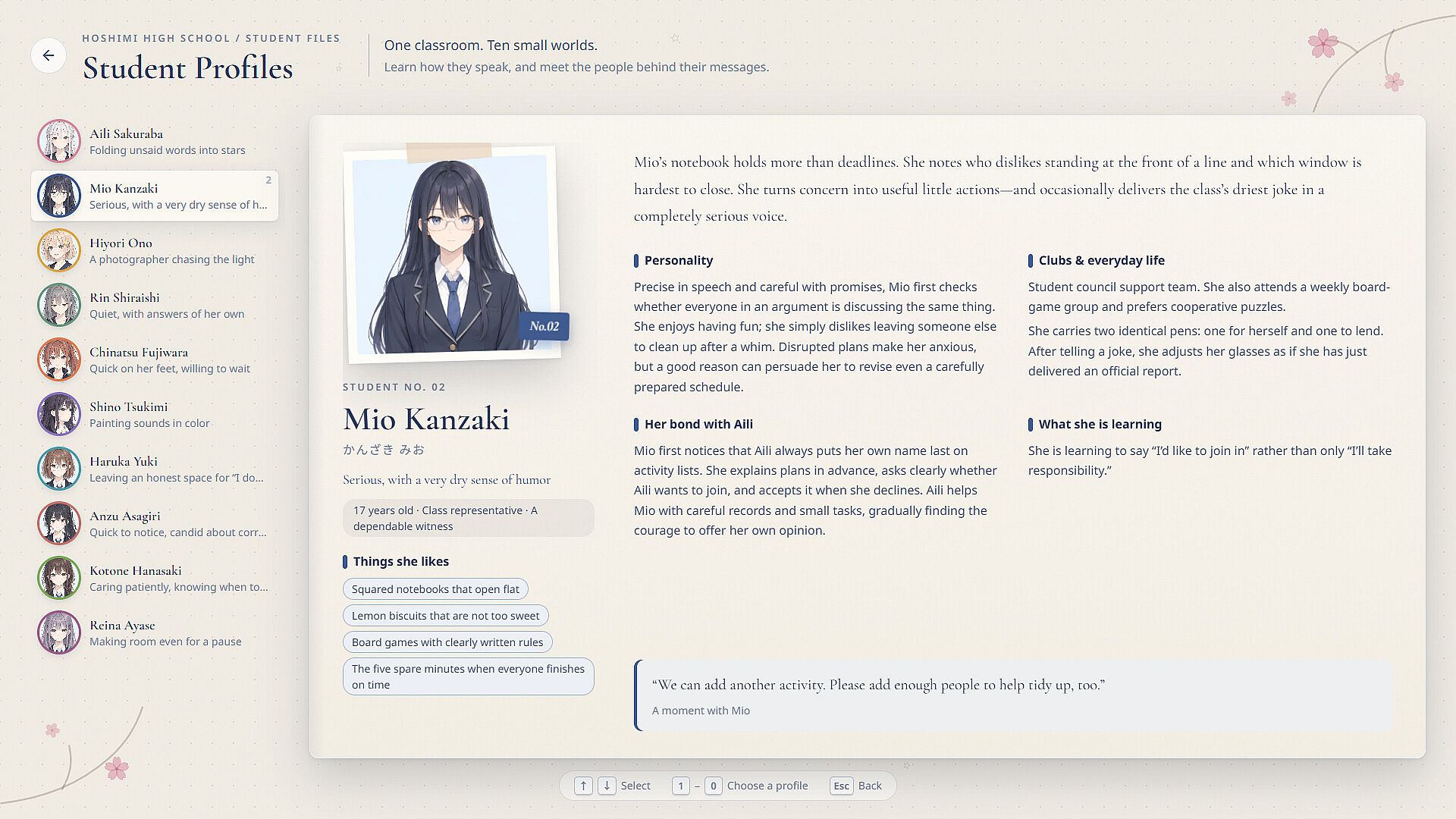
The game offers a single continuous campaign structured around the prologue and sixty sequential days of puzzles. There are no separate competitive modes, multiplayer options, or alternate scenarios; the focus remains entirely on the daily logic challenges and the gradual unfolding of student interactions. Progression is linear, with each completed day feeding directly into the next while expanding the grid size and clue complexity. Optional albums for memories, scenery, and student profiles provide additional layers of engagement after the main sequence, allowing players to revisit collected illustrations and character details at their own pace.
Story and Presentation
The narrative emerges quietly through the daily notes and the memories collected upon finding Aili. Ten distinct classmates appear across the puzzles, each with unique traits that surface in the short stories and profile entries. After the main chapters conclude, an ending theme plays alongside a final album of memories, extending Aili's story in a reflective close. The presentation stays understated and intimate, emphasizing the quiet school setting and the small moments of connection or solitude that the clues reveal. Keyboard and mouse controls handle all interactions through straightforward drag-and-drop placement on the map, with automatic saves preserving progress without interruption.
Who It Appeals To
This title suits players who enjoy methodical deduction puzzles and relaxed singleplayer experiences. Those drawn to grid-based logic challenges with clear rules and incremental difficulty will find the structure familiar yet satisfying as grids expand. The absence of pressure elements like time limits or failure states keeps the pace contemplative, making it accessible for casual sessions or longer focused play. The growing cast of classmates and accumulating stories add a light narrative thread that rewards consistent play without demanding intense emotional investment.
Is It Worth Playing?
Aili Is Here delivers a focused logic puzzle experience built around precise clue interpretation and grid placement rules. Its strength lies in the clean escalation from small to large puzzles and the supportive hint system that teaches reasoning rather than spoiling solutions. The memory and profile collections provide gentle replay value for those who finish the sixty days. Players seeking a calm, thoughtful puzzle game on PC will likely appreciate the consistent design and the way each day builds a small sense of accomplishment. Those preferring action, exploration, or multiplayer elements may find the scope narrower than expected. Overall the game stands as a solid choice for fans of indie casual logic titles who value methodical problem solving and understated storytelling.












