



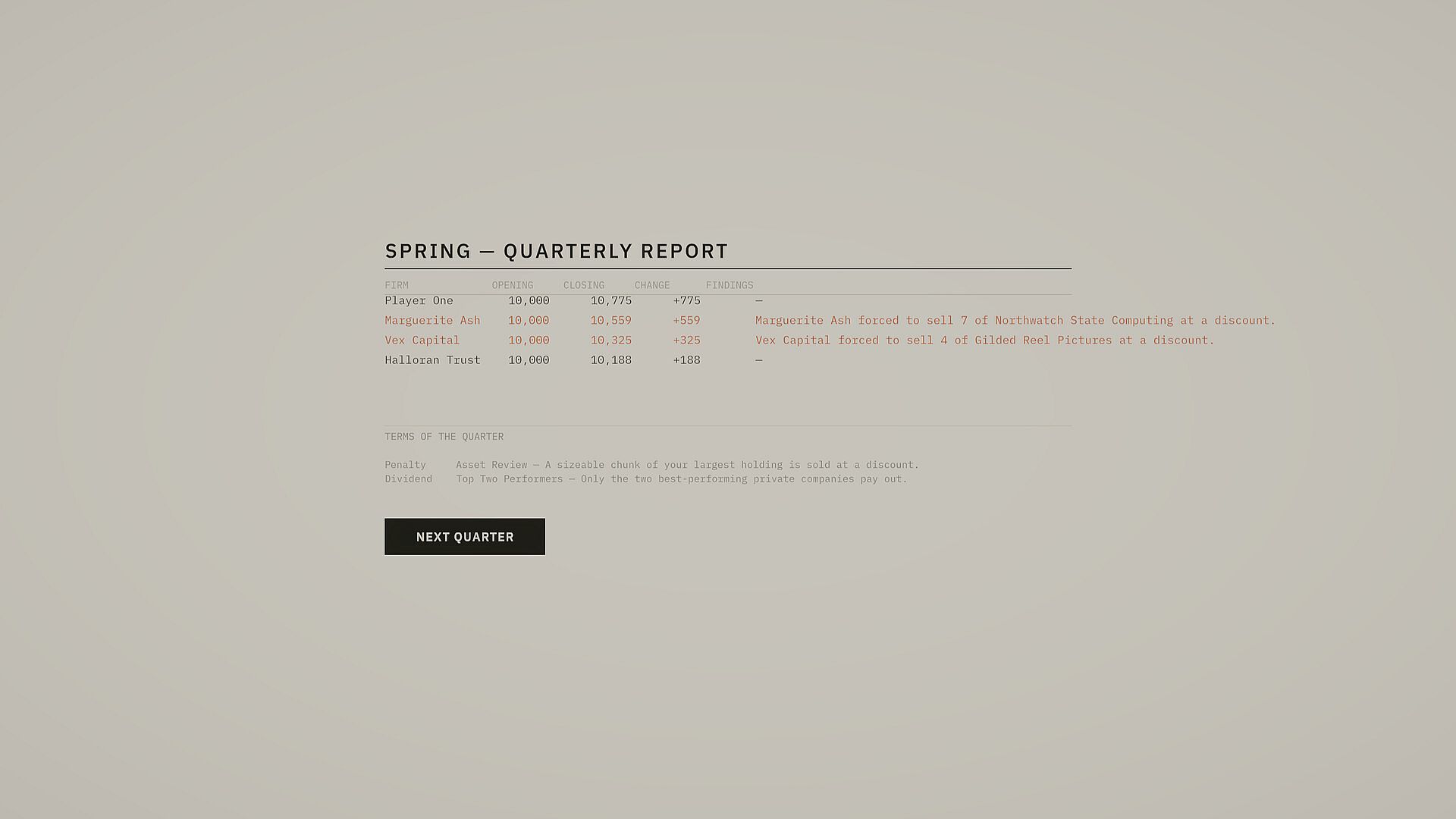
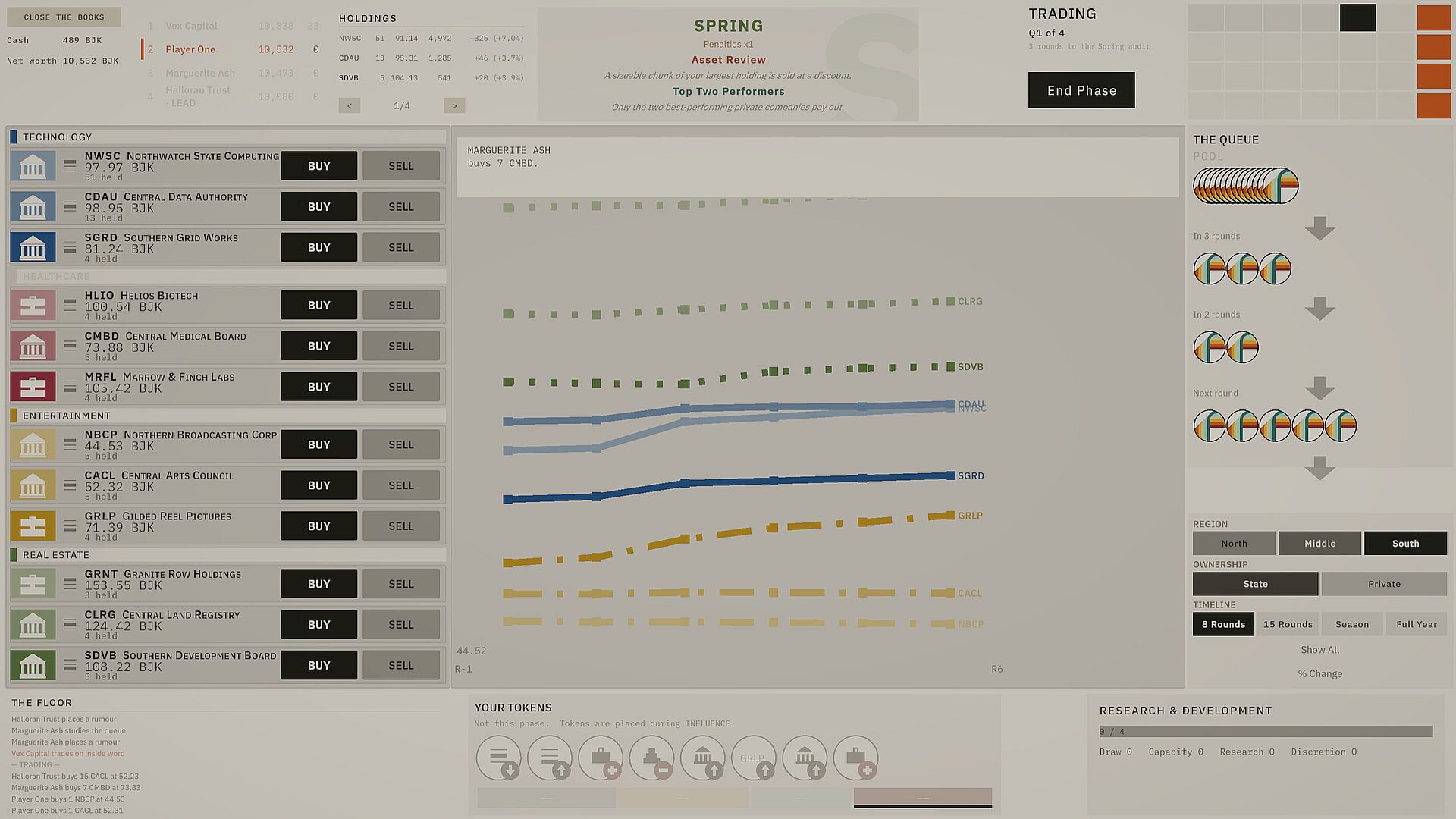
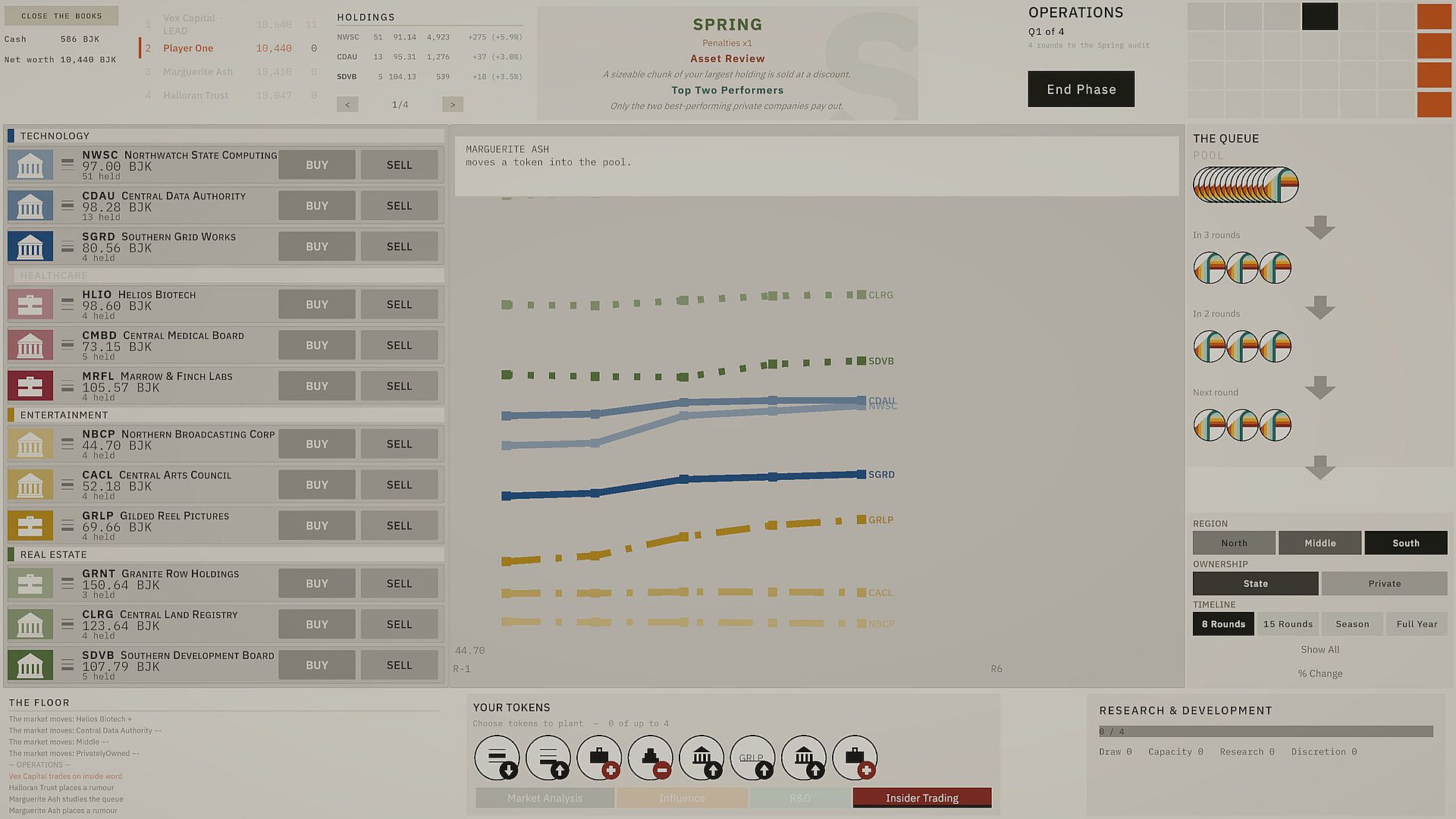
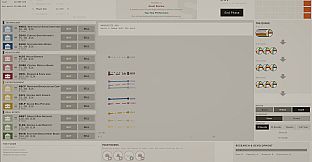
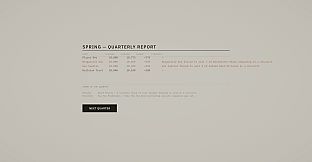
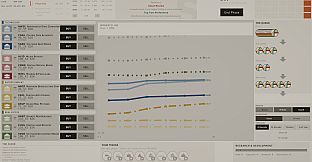
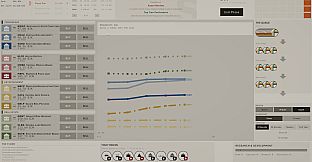
Amalgamated stands out as a turn-based strategy and simulation title centered on stock market manipulation. Players navigate a shared market across multiple rounds, balancing positions in companies while accounting for price shifts triggered by their own actions and external events. The core appeal lies in its blend of foresight, timing, and controlled risk within a compact session structure that supports solo play or group sessions.
Gameplay
The experience unfolds over twenty-eight rounds divided into four seasons of seven rounds each. Victory goes to the player with the highest liquidation value at the end, calculated from remaining cash plus the current market value of holdings. Large positions or rapid exits can shift prices unfavorably, creating natural tension around scale and timing.
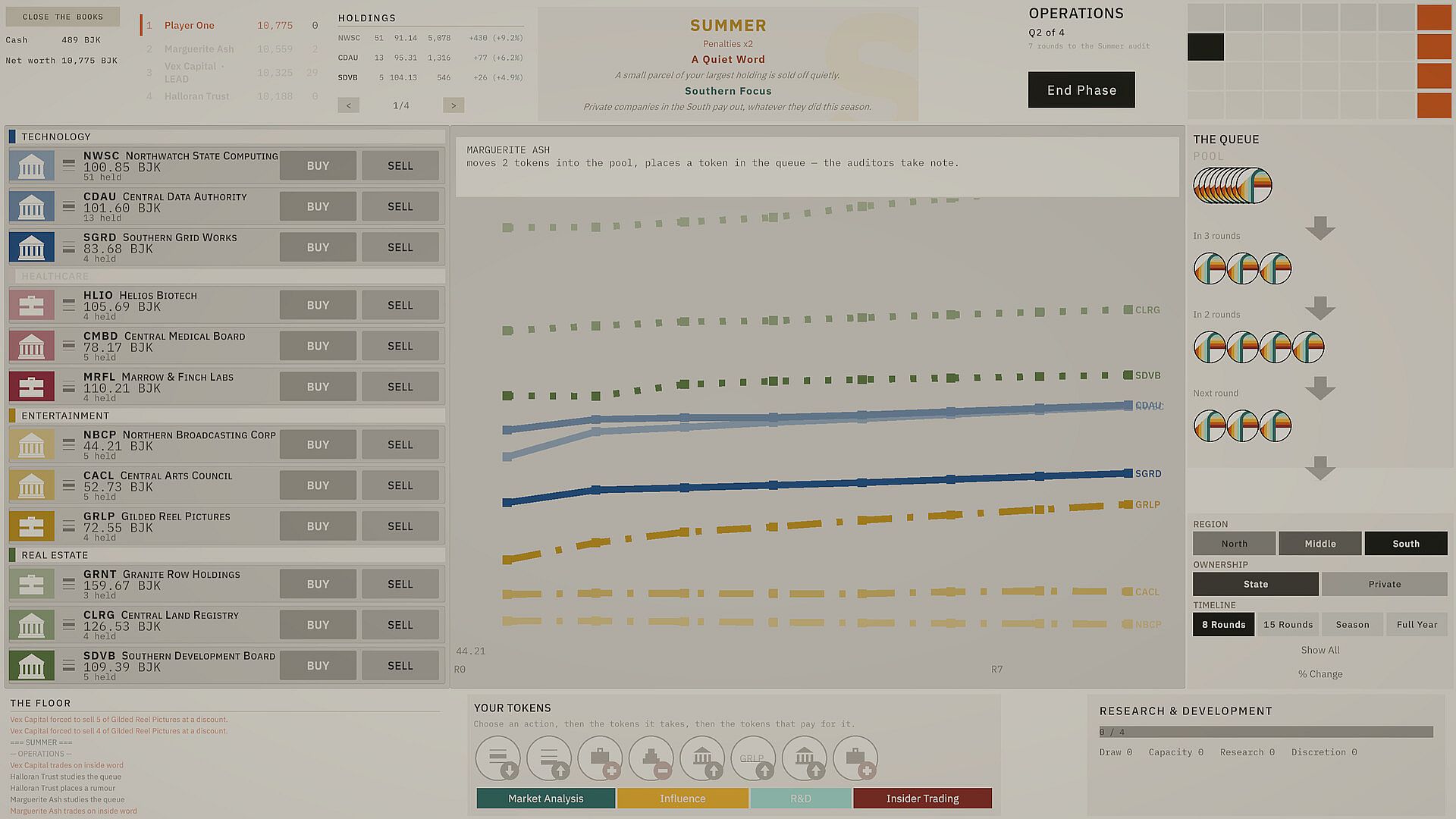
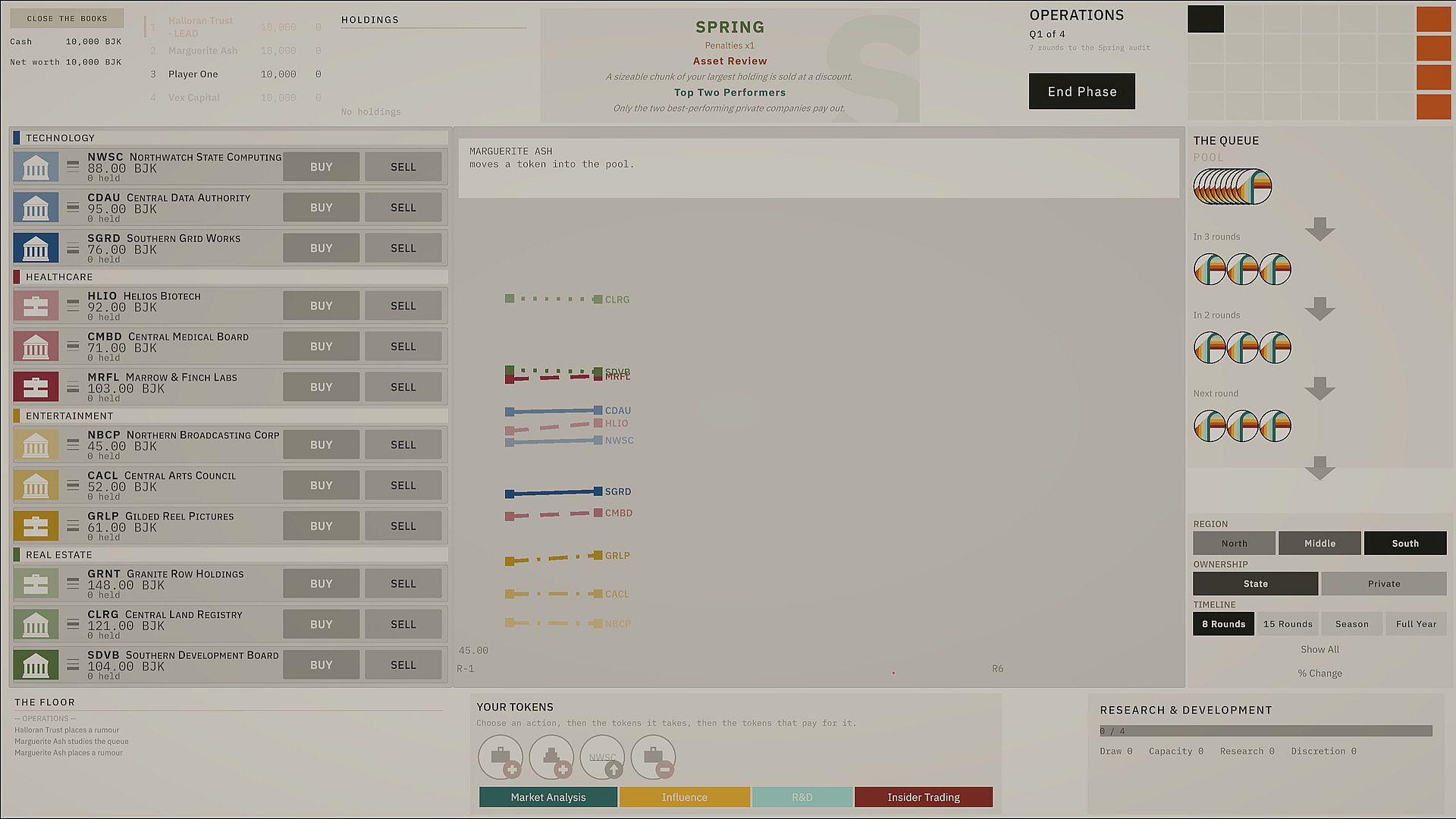
Each round follows a strict sequence of four phases. Trading occurs first, followed by token expenditure, then an events phase that reveals market developments, and finally price updates. This order forces commitments before full information arrives, mirroring real market uncertainty. Seasons begin with two public cards that define auditor behavior for the period and dividend eligibility rules, adding seasonal variety without altering the fundamental loop.
Actions feed into a three-round queue drawn from a face-down pool. Most moves do not resolve immediately, which introduces hidden information that only partially reveals itself over time. Players manage this queue through three token options: Market Analysis grants a view of upcoming queue contents, Influence places a token into the pool to shape future arrivals without controlling exact timing, and Insider Trading inserts an action at a chosen queue stage while carrying detection risks from auditors.
Twelve companies appear each session, selected from a pool of twenty-four, ensuring varied market conditions across plays. The system emphasizes careful position building and exit planning rather than direct confrontation.
Game Modes
Three distinct ways to play accommodate different group sizes and preferences. Single-player mode fills three seats with AI opponents that follow distinct strategies and often interfere with one another as much as with the human player. This setup provides a complete four-player experience without requiring additional participants.
Hot seat mode allows multiple people to share a single screen by passing control around the table. Up to four human players can participate, with AI occupying any empty seats to maintain the full table dynamic. The format suits casual gatherings where devices are limited.
Online mode lets a host create a table and distribute a code for others to join. Two to four humans can connect, each on their own device, while AI completes the roster as needed. All modes preserve the same core rules and market systems, differing only in how seats are occupied.
Seasons, Rounds, and Market Dynamics
The four-season structure layers public information at the start of each period, setting auditor rules and dividend qualifications that influence strategy for the following seven rounds. This creates shifting priorities without introducing new mechanics mid-session.
Company selection from a larger pool keeps each run distinct, while the absence of a time limit supports thoughtful turns. The queue system remains central, rewarding players who anticipate three rounds ahead and use tokens to gather intelligence or exert subtle control.
- Turn-based pacing with no real-time pressure
- Hidden queue information that surfaces gradually
- Seasonal cards that alter auditor and dividend conditions
Is It Worth Playing?
Amalgamated targets players who enjoy deliberate, information-asymmetric strategy games with economic themes. Its compact round count and clear win condition make sessions manageable, while the AI opponents in all modes provide consistent opposition. The combination of queue management, token choices, and seasonal variables rewards repeated plays as players refine their approach to position sizing and timing. With support for solo, shared-screen, and remote sessions on PC, it fits both individual practice and small-group settings. Those drawn to simulation elements around markets and hidden-information mechanics will find the systems align closely with the described design. As a newly available title with no accumulated player feedback yet, its value rests on how well the core loop matches personal taste for turn-based economic strategy.