

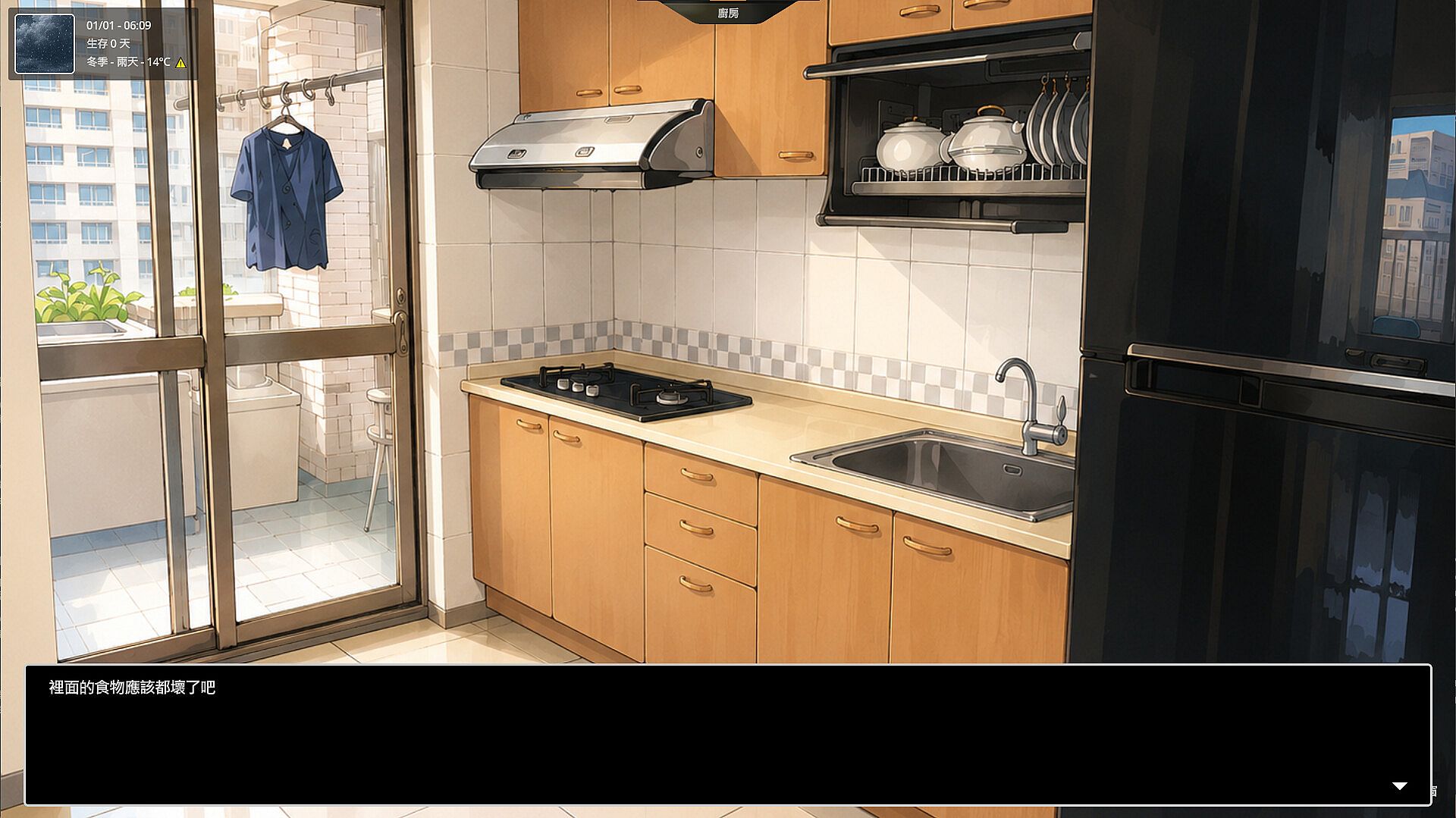




An-pêng: Still Here is an indie survival simulation and RPG set in a single apartment building during the early days of a conflict that reaches the Anping district of Tainan. The game places players in the role of someone who chose not to evacuate, focusing on the ordinary tasks of staying alive without power, reliable food, or external help. Core loops revolve around managing limited resources and time in a realistic, grounded way rather than heroic action sequences.
Gameplay
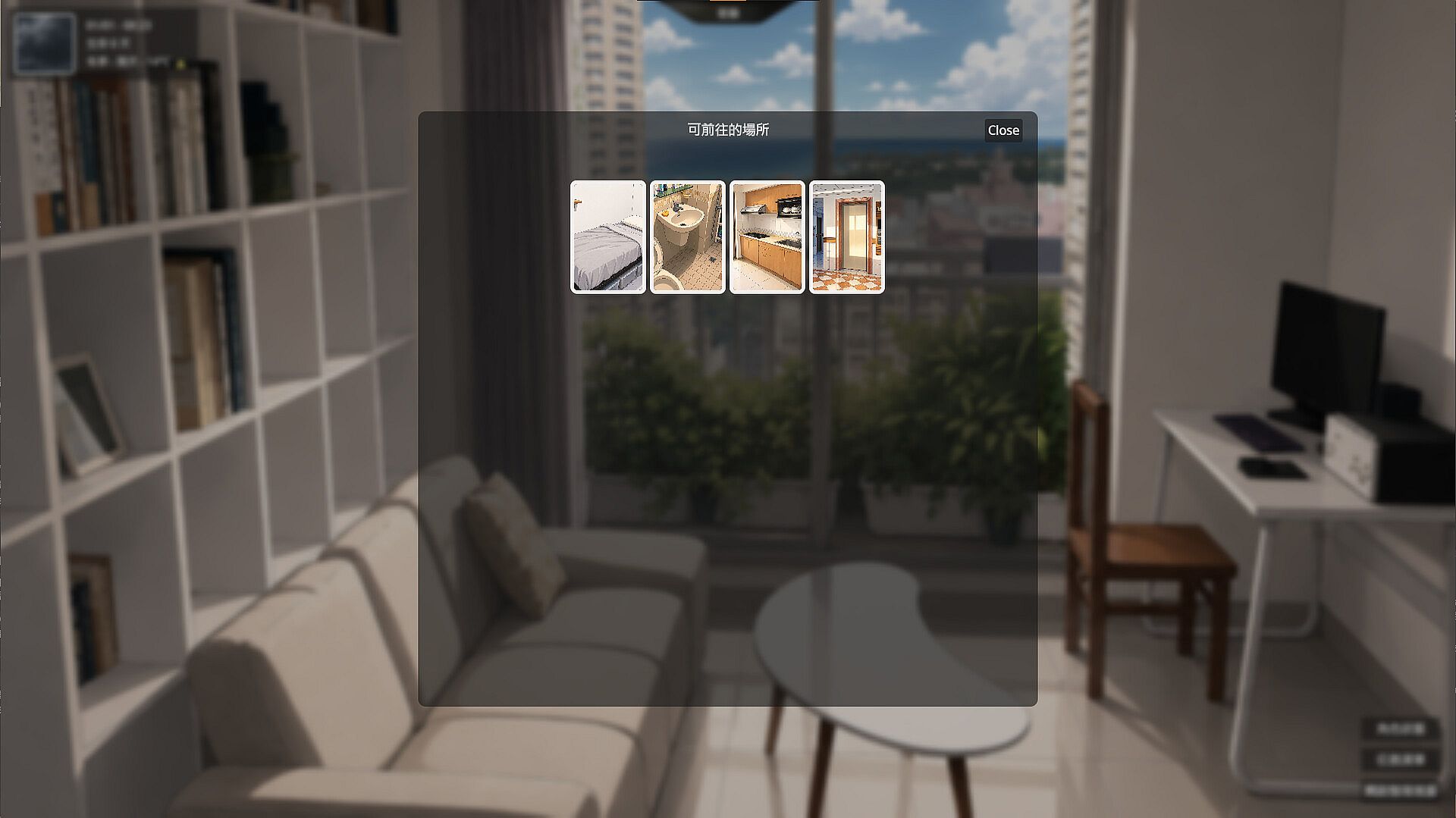
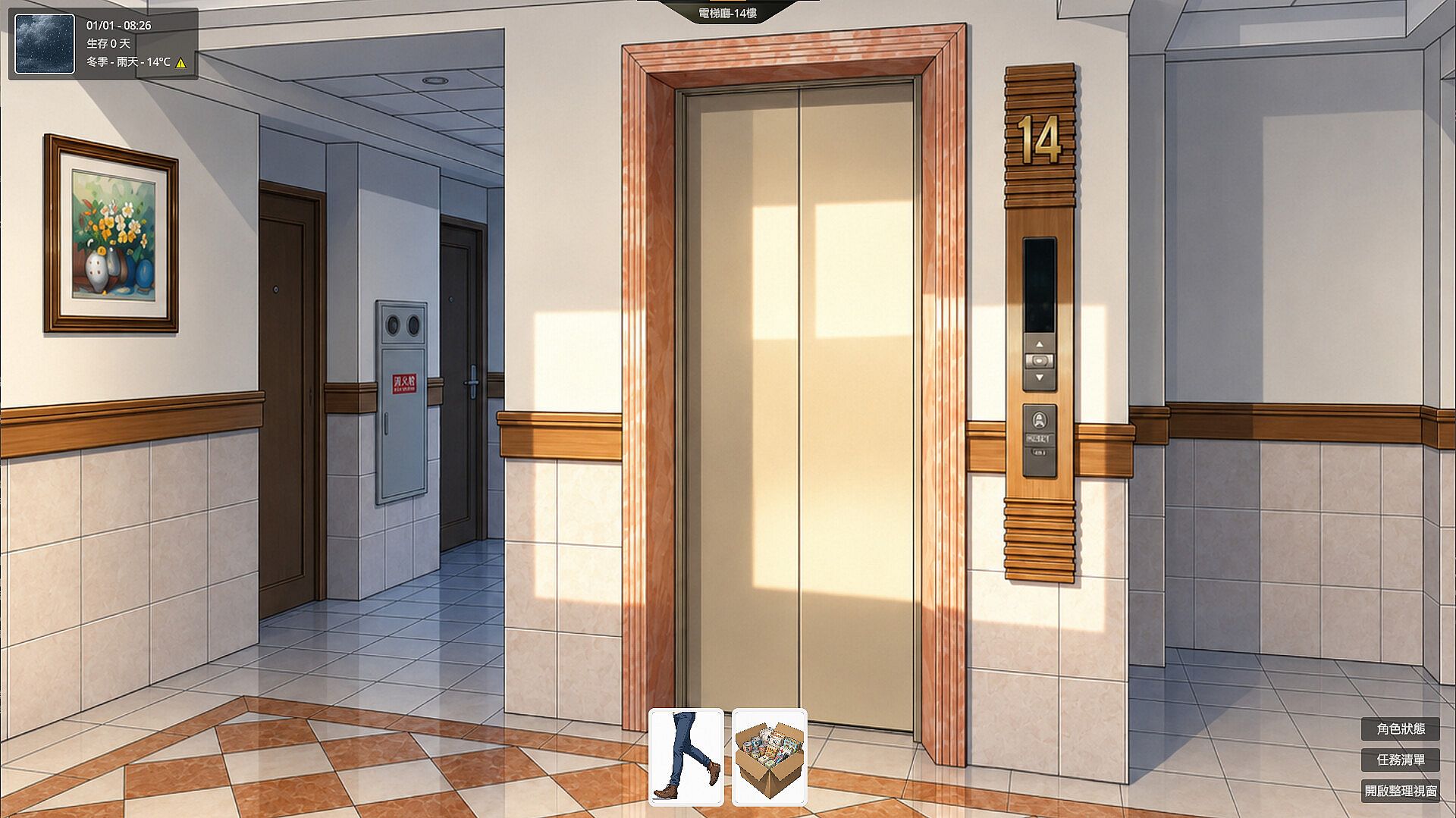
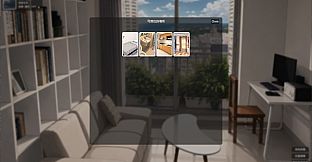
Actions appear as a small set of cards on screen, each representing a stretch of in-game time. Players choose from options such as searching drawers and cupboards, moving between rooms or down stairs, eating or drinking what turns up, sleeping to pass the night, or checking supplies and the codex. Every choice advances the clock by a duration determined by the task itself, so rifling through one cabinet takes far less time than descending fourteen floors without an elevator.
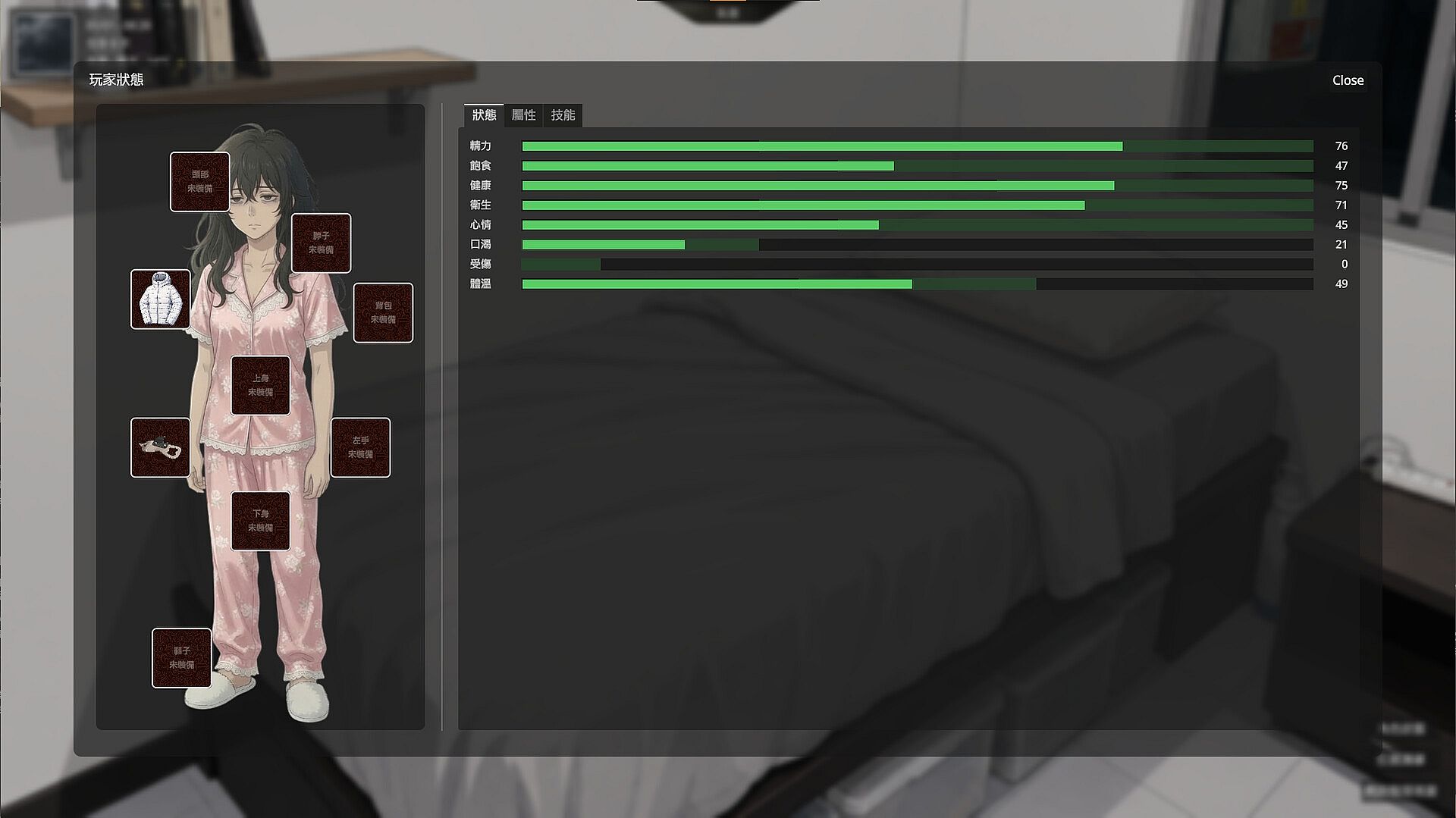
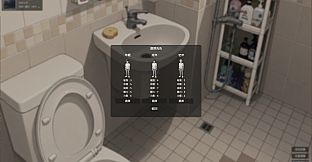
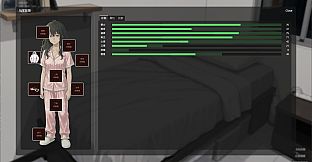
Eight status values track the protagonist's condition: health, fullness, thirst, energy, body temperature, injury, mood, and hygiene. These decline at different rates and each has an optimal range rather than a simple higher-is-better scale. Overeating creates problems just as starvation does, while wet clothes accelerate heat loss in cold weather. A full four-season weather system introduces day-night temperature swings, prolonged rain, and sudden typhoons that cannot be forecast in advance.
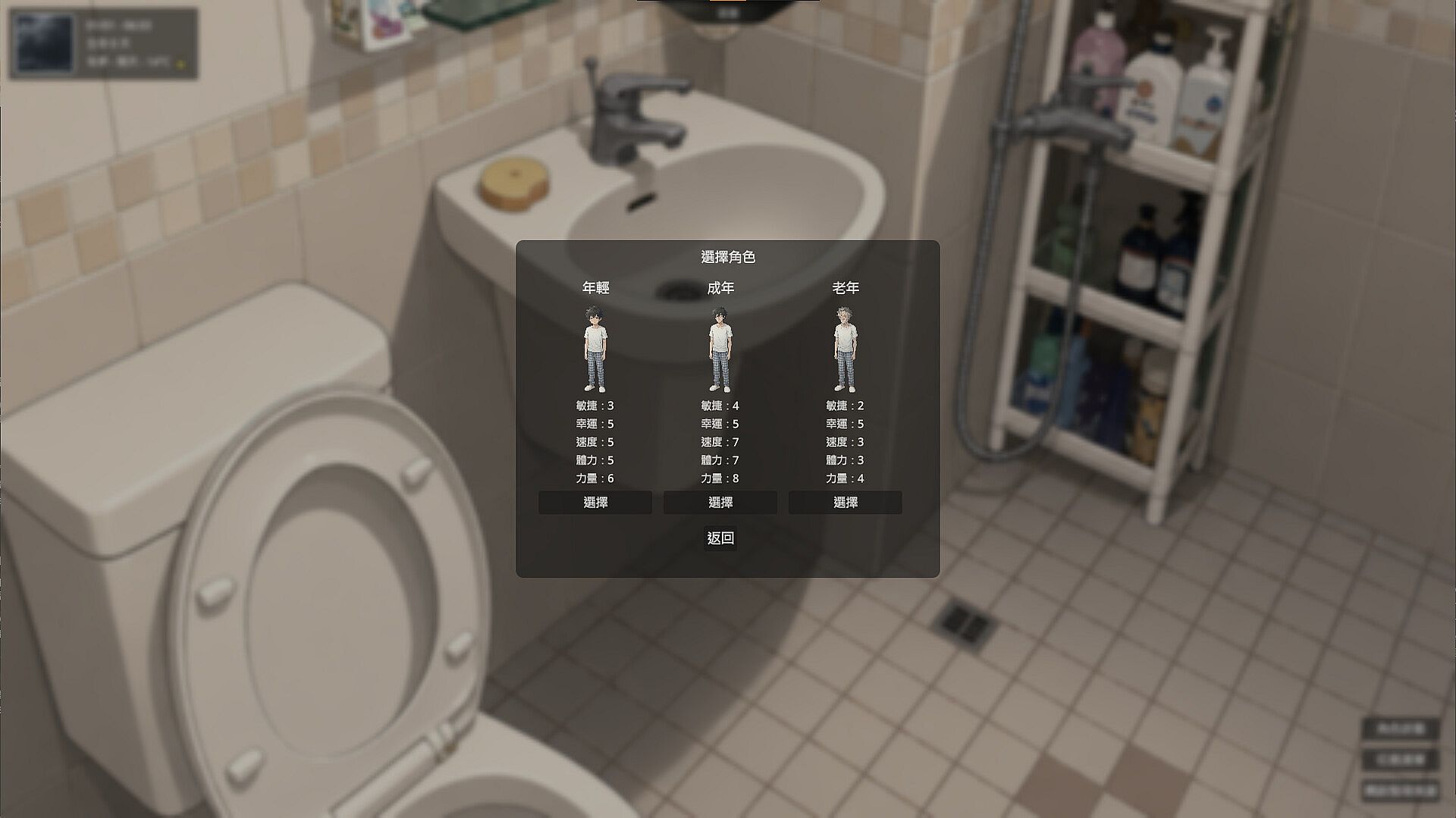
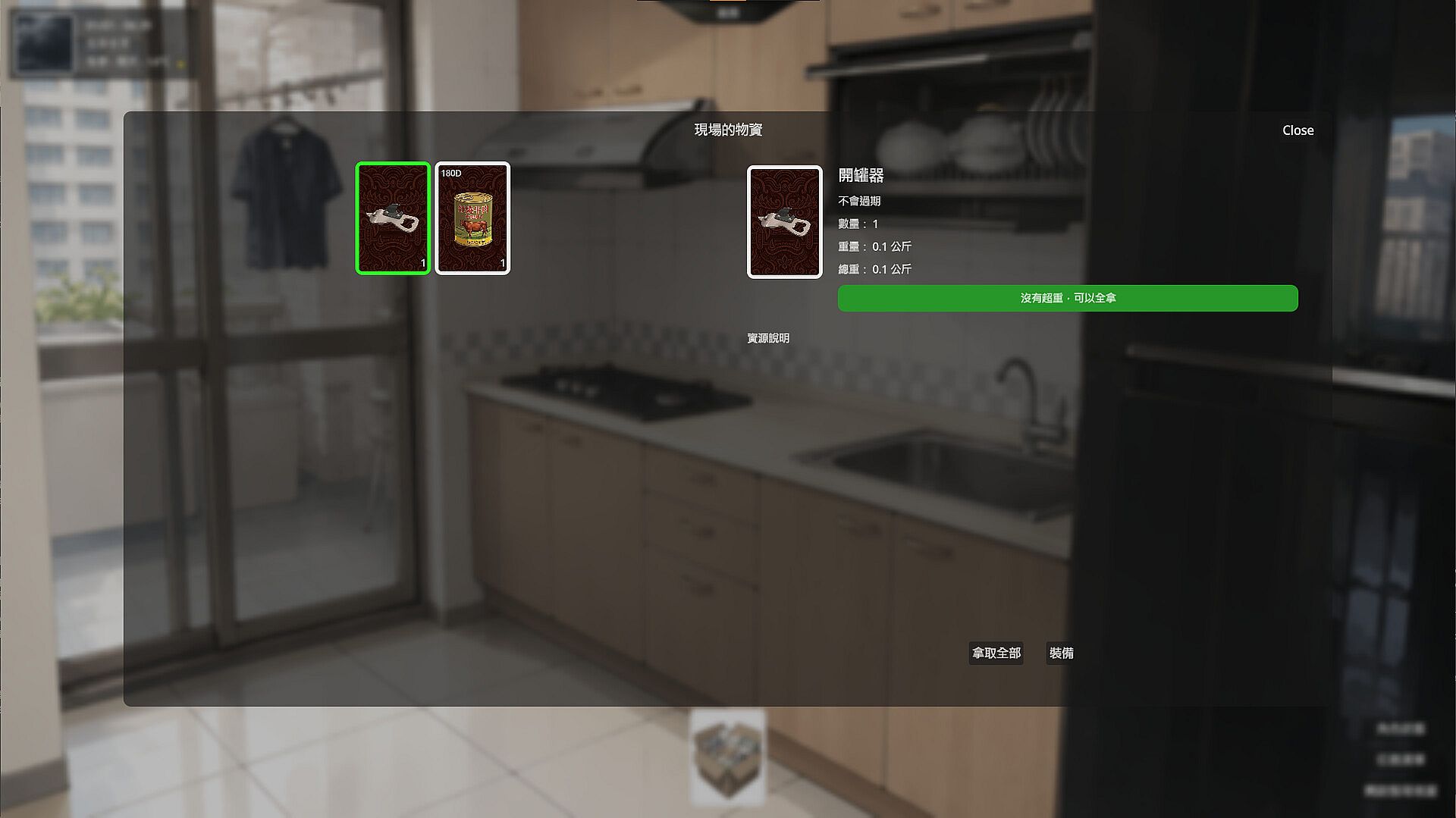
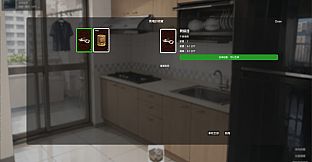
Inventory management adds another layer of decision-making. Items carry weight, and the player starts with only two hands and a backpack, with the option to find a hand cart later. An expired packet might still provide calories but risks other effects, forcing trade-offs at every turn. Physical attributes improve only through repeated use: carrying heavy loads builds strength, while longer walks increase stamina. Character creation at the start offers six body types that begin with different baseline conditions.
Dialogue and story fragments appear in Taiwanese Pe̍h-ōe-jī alongside optional parallel text in English, Traditional Chinese, Japanese, or German. No non-player characters exist, so the only spoken words come from the protagonist's internal monologue. Scattered codex entries provide background on events without affecting survival outcomes.
Game Modes
The experience consists of a single continuous survival scenario with no separate multiplayer, competitive, or cooperative modes. All play occurs in the same apartment setting during Early Access, with progression driven by daily choices rather than branching campaigns or distinct difficulty presets. Weather and status systems operate consistently across sessions, and sleeping serves as the primary save point that advances time to the next vulnerable night period.
Setting and Atmosphere
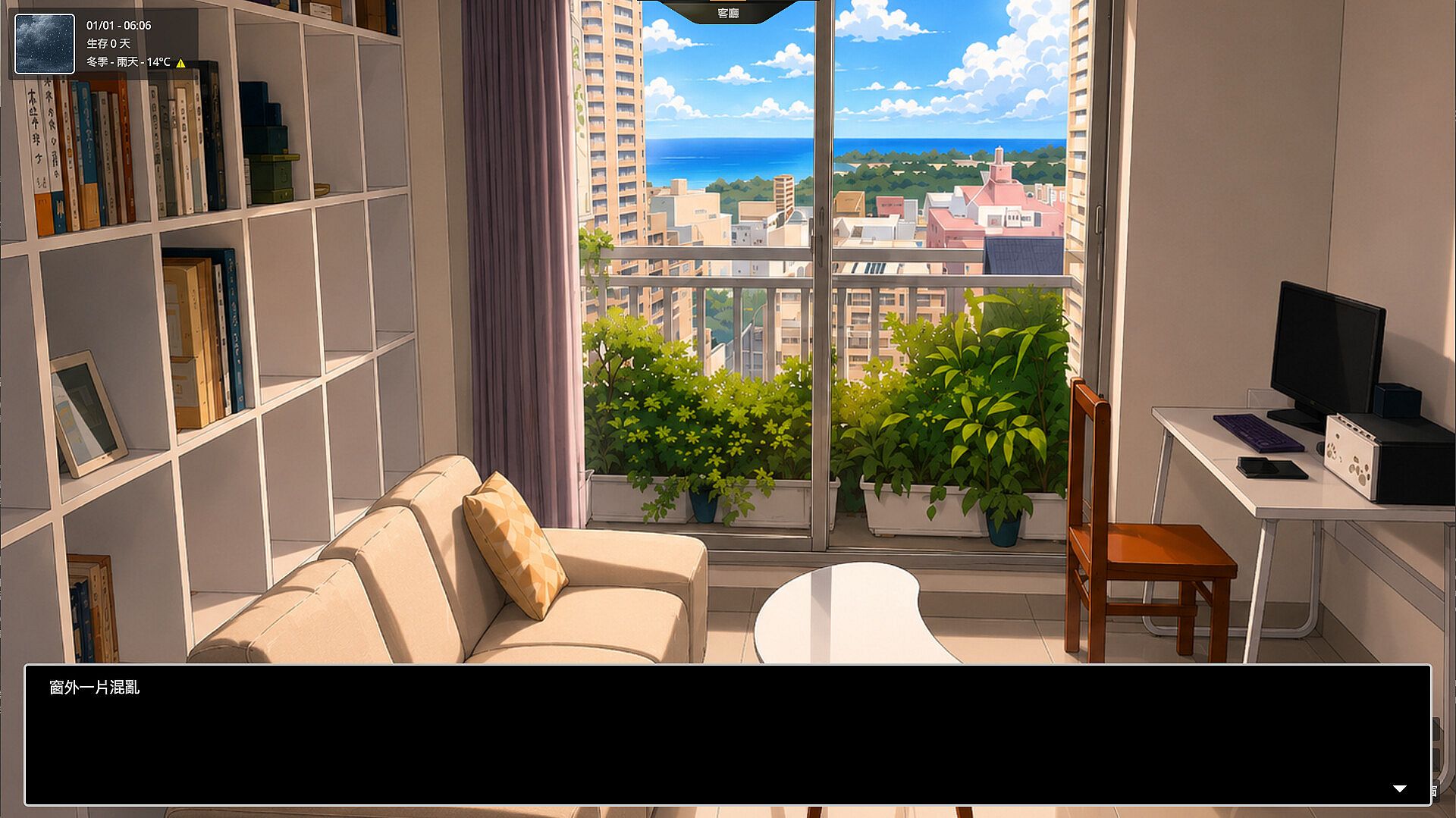
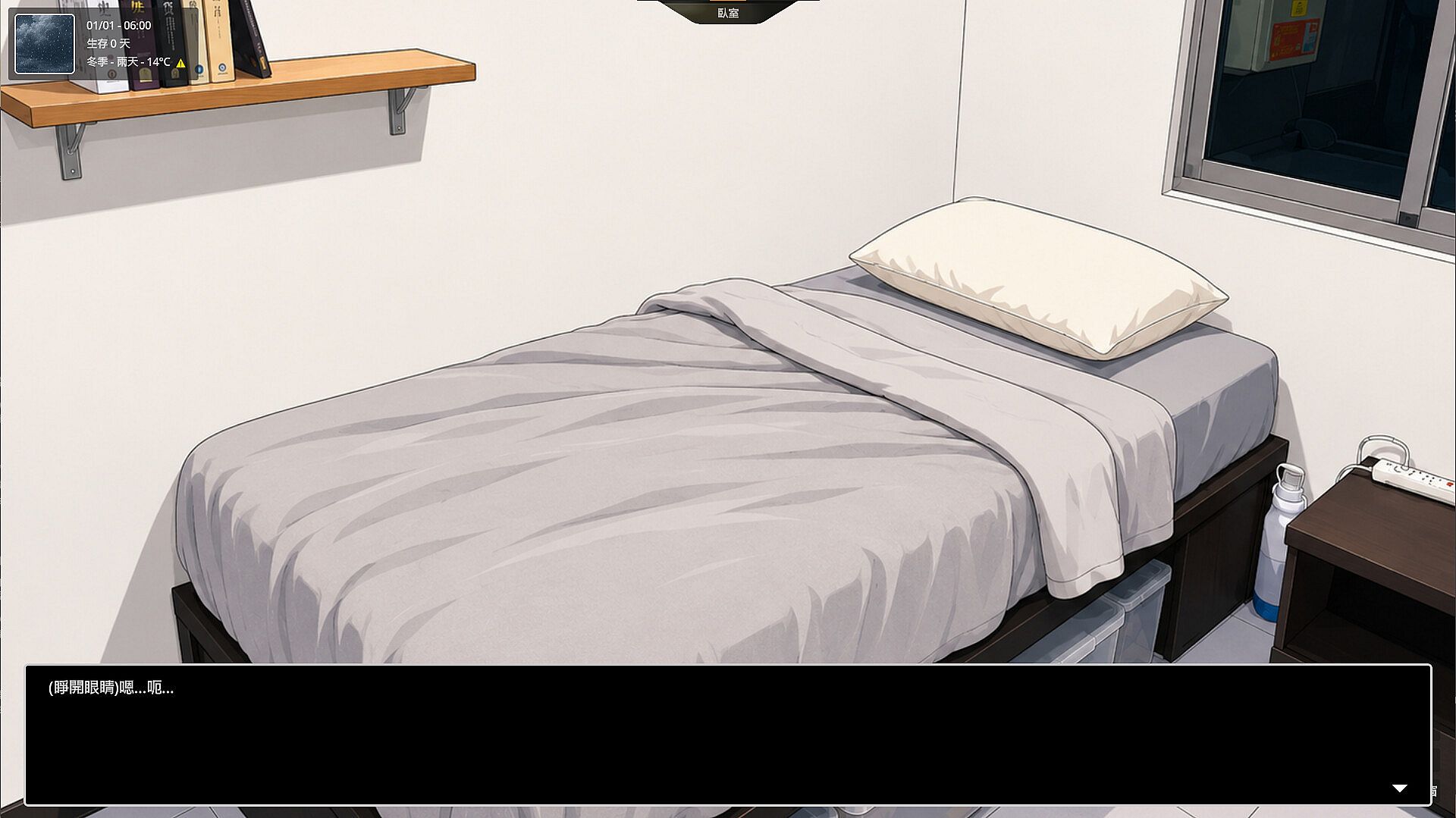
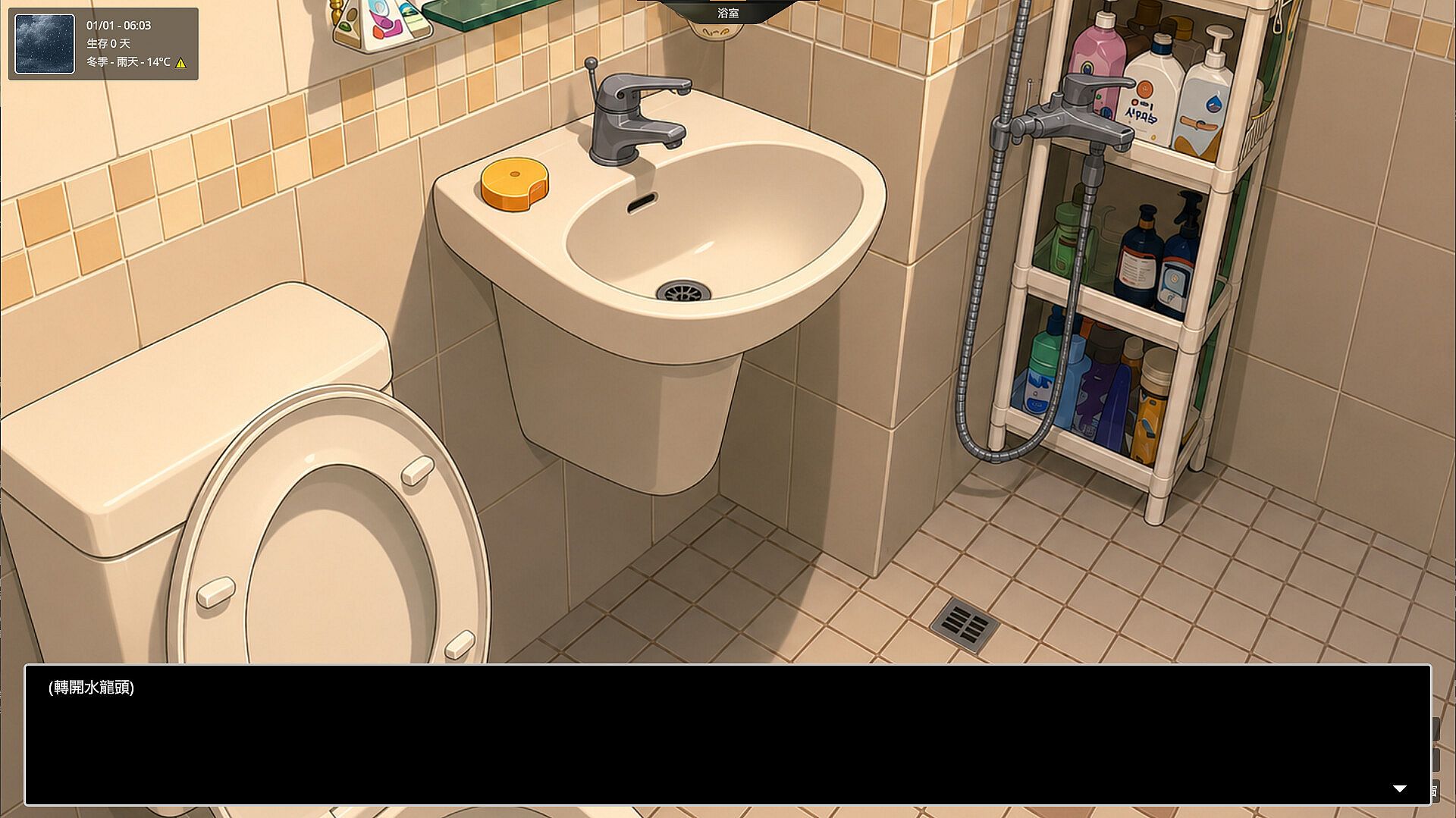
The story unfolds through the protagonist's observations and the codex fragments that detail how ordinary days gave way to evacuation orders. Artwork begins with on-location photographs of Anping lanes, stairwells, and courtyards that are cleaned of commercial elements and privacy concerns before AI stylization into animated scenes. The name itself carries dual meaning: Anping as a place and a reversal of characters that reads as a wish for safety.
Development remains a solo project with core systems for time, weather, status tracking, inventory, and scripting already functional. Early Access, planned for late 2026, will expand the environment with additional indoor and outdoor scenes while the interface receives dedicated design work to replace default engine styling.
Is It Worth Playing?
This title suits players who enjoy deliberate, systems-driven survival simulations that emphasize resource scarcity and personal routine over combat or large-scale conflict. The absence of other characters and the focus on internal decision-making create a quiet, introspective tone that rewards careful planning around the eight status values and realistic time costs. Those drawn to games with cultural language elements or procedural weather effects will find distinctive features here. Because the project is still in active development with an interface yet to be finalized, interested players may prefer to follow updates before committing, especially if they value polished presentation alongside the mechanical depth already in place. The single-player structure offers a self-contained loop that can be revisited through different starting body types and play styles without requiring additional modes or expansions.