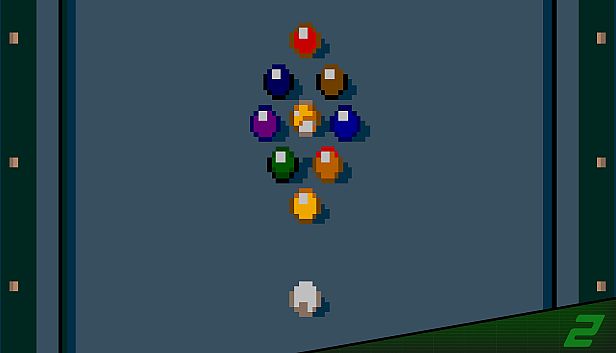


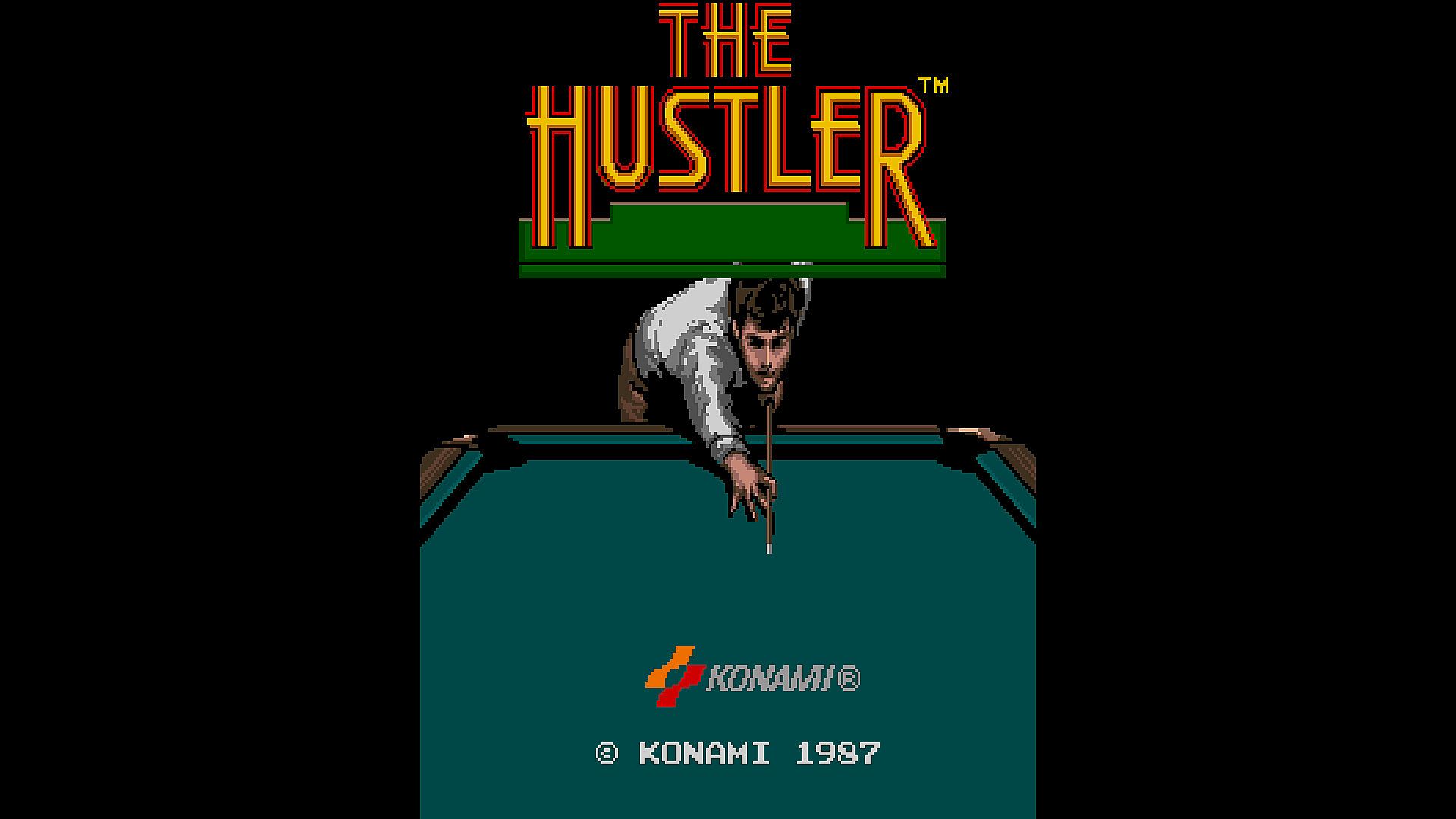
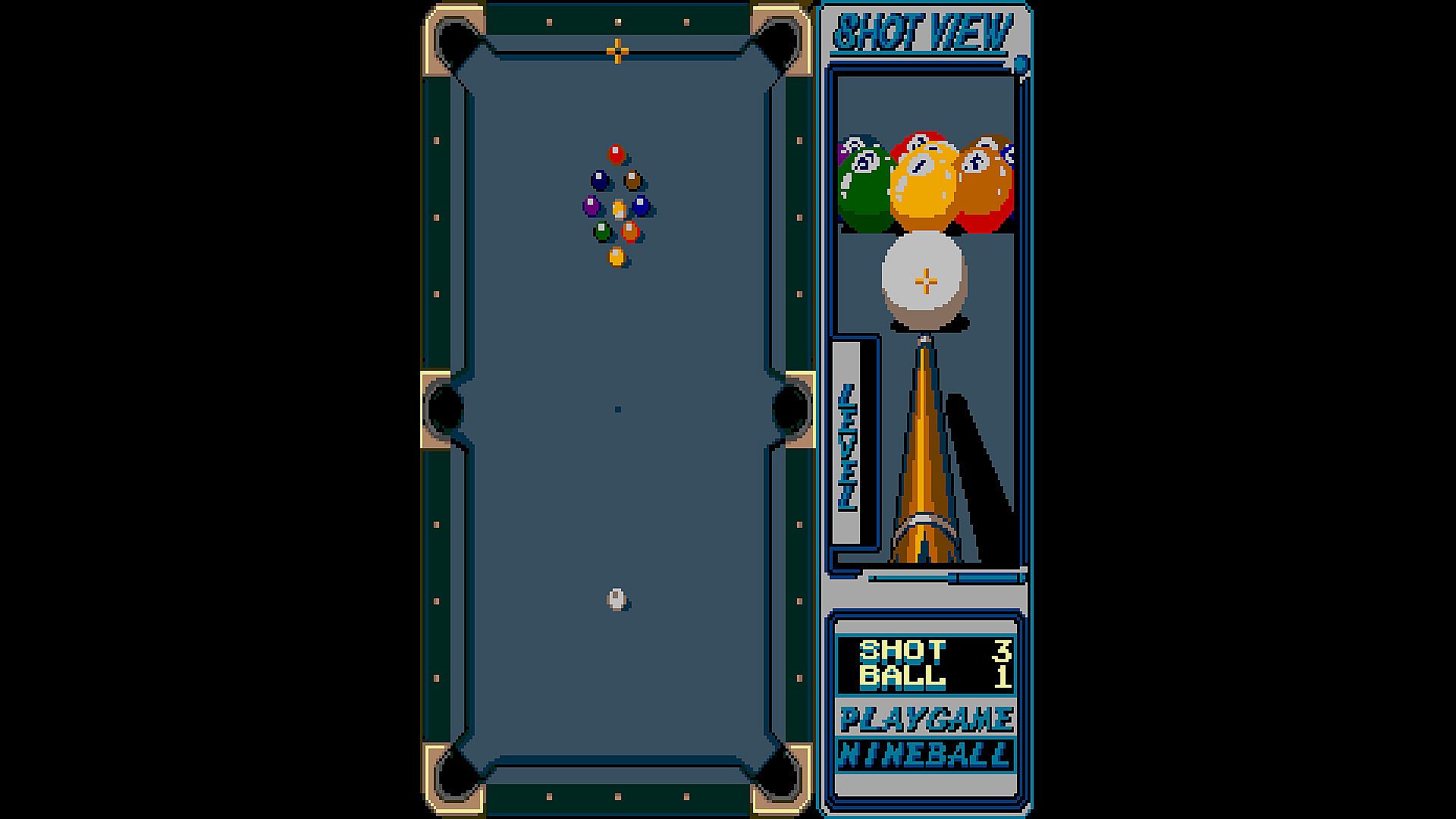

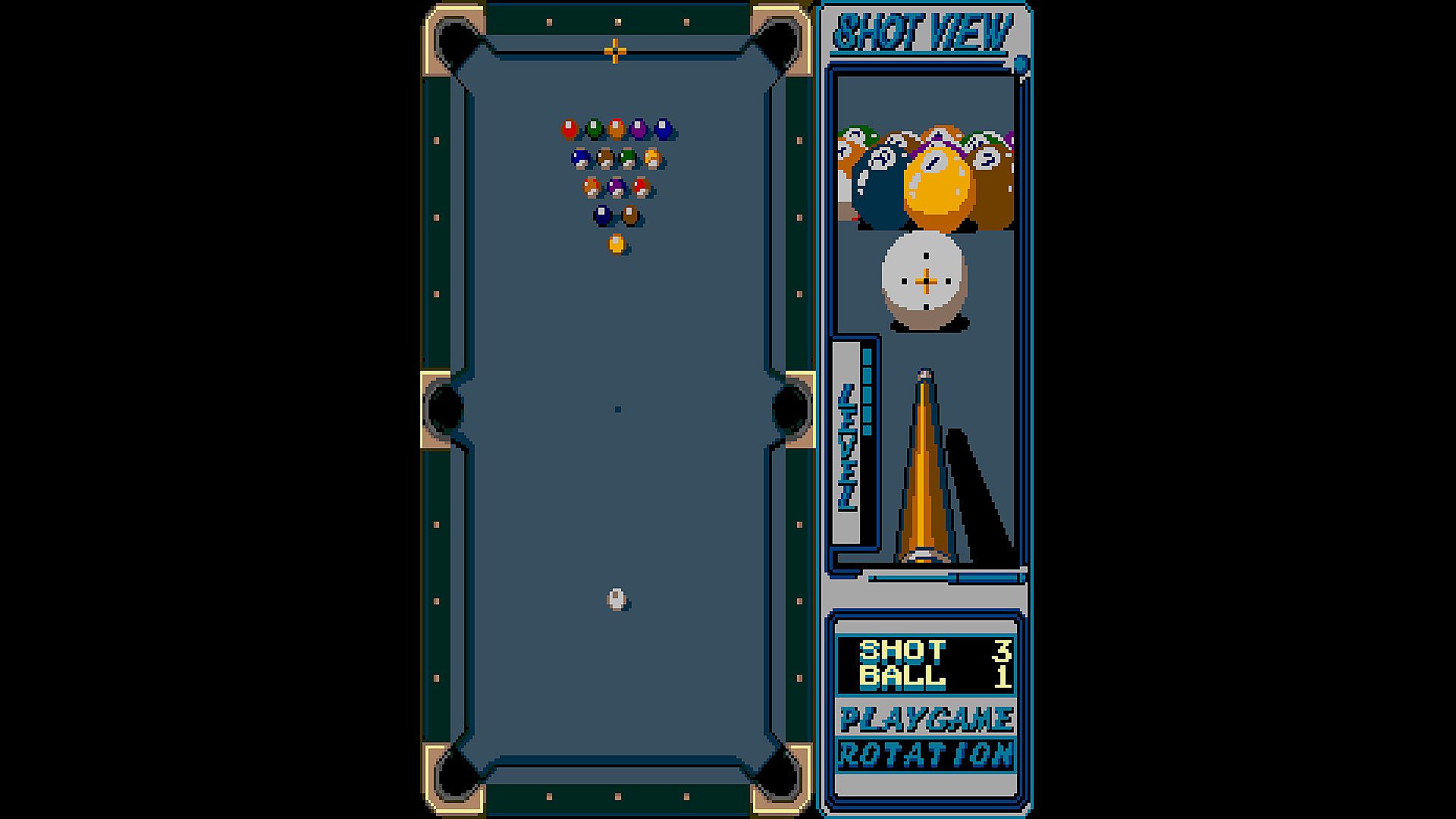
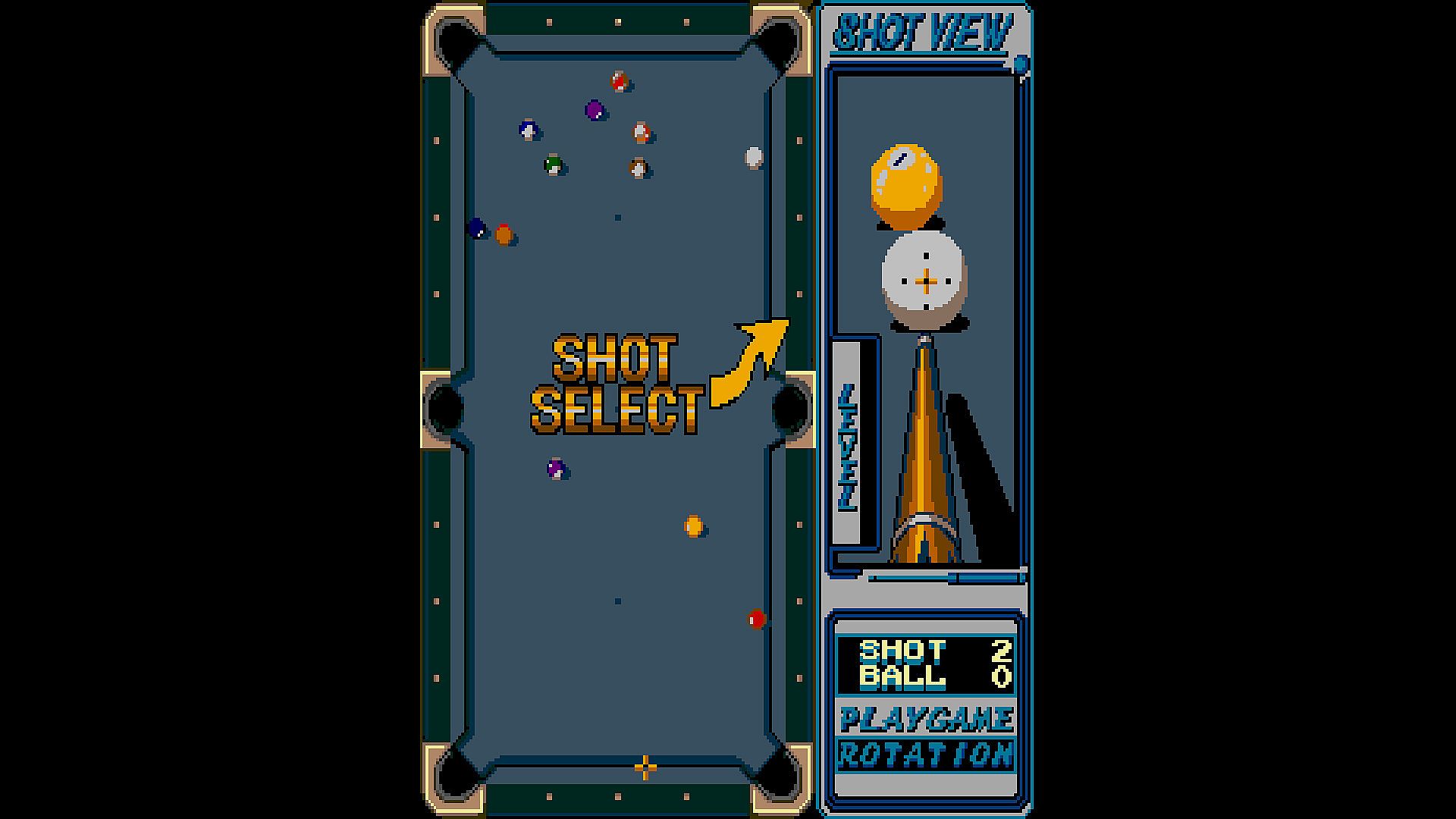


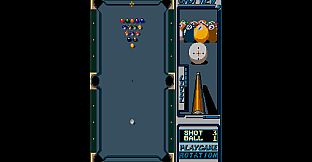
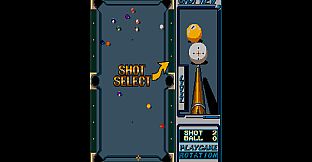
Arcade Archives 2 RACK'EM UP is a sports action game that recreates the 1987 KONAMI arcade title of the same name for Xbox Series X|S. It centers on pocket billiards played under Nine-Ball or Rotation rules, where players aim to pocket balls in specific sequences while managing cue ball control and positioning. The core loop involves lining up shots on a virtual table, applying spin and power, and adapting to the layout of object balls after each strike.
Gameplay
The mechanics revolve around precise cue strikes in a two-dimensional top-down view that switches to a three-dimensional perspective for checking ball positions. This 3D screen lets players assess angles and distances more accurately before committing to a shot. Spin mechanics allow for draw, follow, and side English on the cue ball, which influences its path after contact and helps set up subsequent plays. The game supports one or two players locally, with rulesets that emphasize strategy over raw power. Nine-Ball requires pocketing balls in numerical order until the nine ball is sunk, while Rotation focuses on clearing groups of balls in sequence. These systems reward careful planning and consistent execution rather than speed alone.
Controls remain faithful to the original arcade hardware, with adjustments available for difficulty, screen orientation, and input response. The reproduction includes options to alter ball physics slightly or tighten the tolerance on pocket entries, letting players tune the experience to match their preference for challenge or accessibility. Visual feedback highlights the cue ball path and potential collisions, supporting repeated attempts at the same setup without restarting the entire match.
Game Modes
Four distinct modes shape how sessions unfold. Original Mode replicates the arcade experience exactly, including the standard progression through matches and scoring based on successful shots and completions. Hi Score Mode tracks cumulative points across multiple games, encouraging players to refine techniques for higher totals. Caravan Mode limits play to a set number of balls or a fixed time window, shifting focus toward efficiency within constraints. Time Attack Mode, introduced in the Arcade Archives 2 version, removes score considerations entirely and instead challenges players to finish a full game in the shortest possible time, regardless of points earned.
These modes integrate with series-wide tools such as rewind for correcting errors, rapid-fire options for quicker menu navigation, and multiple save slots for preserving progress across different rule sets. Online rankings allow global comparison of best performances in each mode, adding a competitive layer without requiring live opponents.
Technical Features and Presentation
Variable Refresh Rate support ensures smooth frame pacing that matches the original hardware timing more closely than previous ports. Screen settings let users adjust aspect ratio, scanlines, or color filters to evoke the look of a 1980s cabinet while maintaining clarity on modern displays. The audio retains the original sound effects and music cues, with no alterations to timing or pitch. These elements combine to deliver a consistent experience across short practice sessions or extended play periods.
Is It Worth Playing?
The game suits players who enjoy deliberate, skill-based sports simulations and those interested in classic arcade titles. Its straightforward rules and adjustable difficulty make it approachable for newcomers, while the 3D positioning tool and spin options provide enough depth for experienced billiards fans. Multiple modes support varied session lengths, from quick time trials to score-chasing runs, and the two-player option adds local competition. Availability on Xbox Series X|S with modern enhancements like VRR positions it as a reliable way to experience the 1987 original without emulation hassles. Those seeking fast-paced action or complex narratives may find the focus on shot precision too narrow, but it delivers consistent value for anyone drawn to pool mechanics or preserved arcade history.