


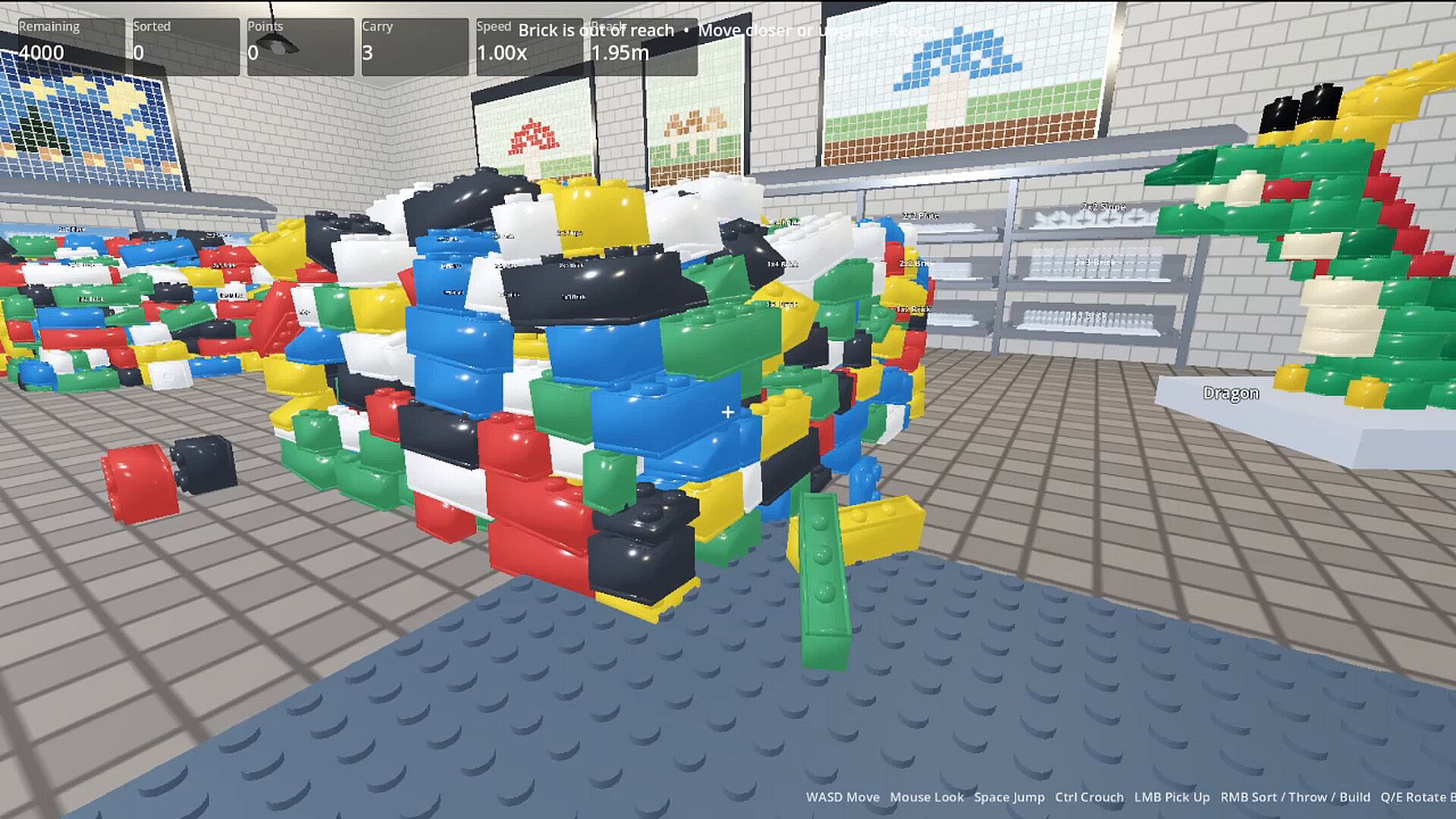

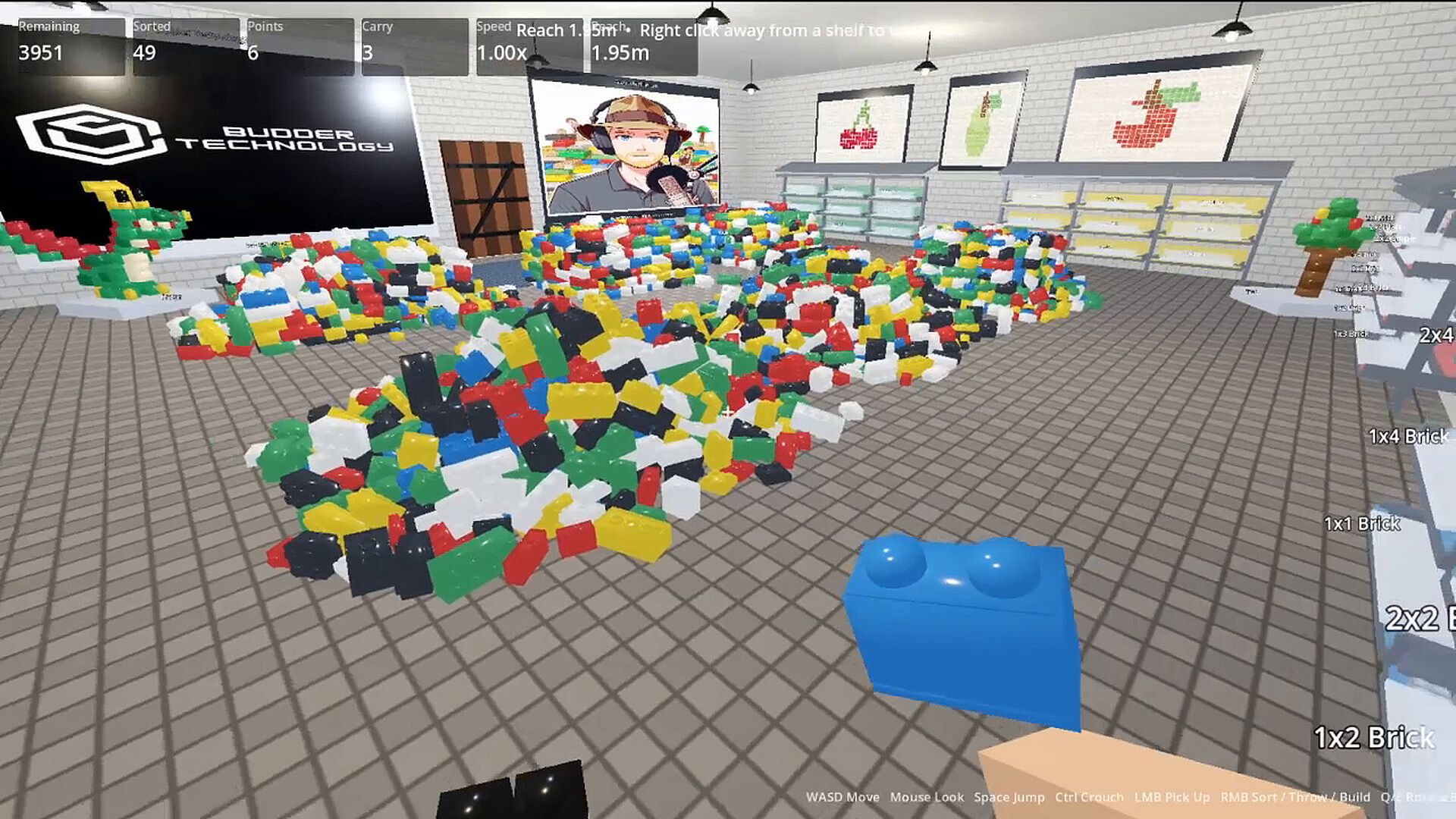
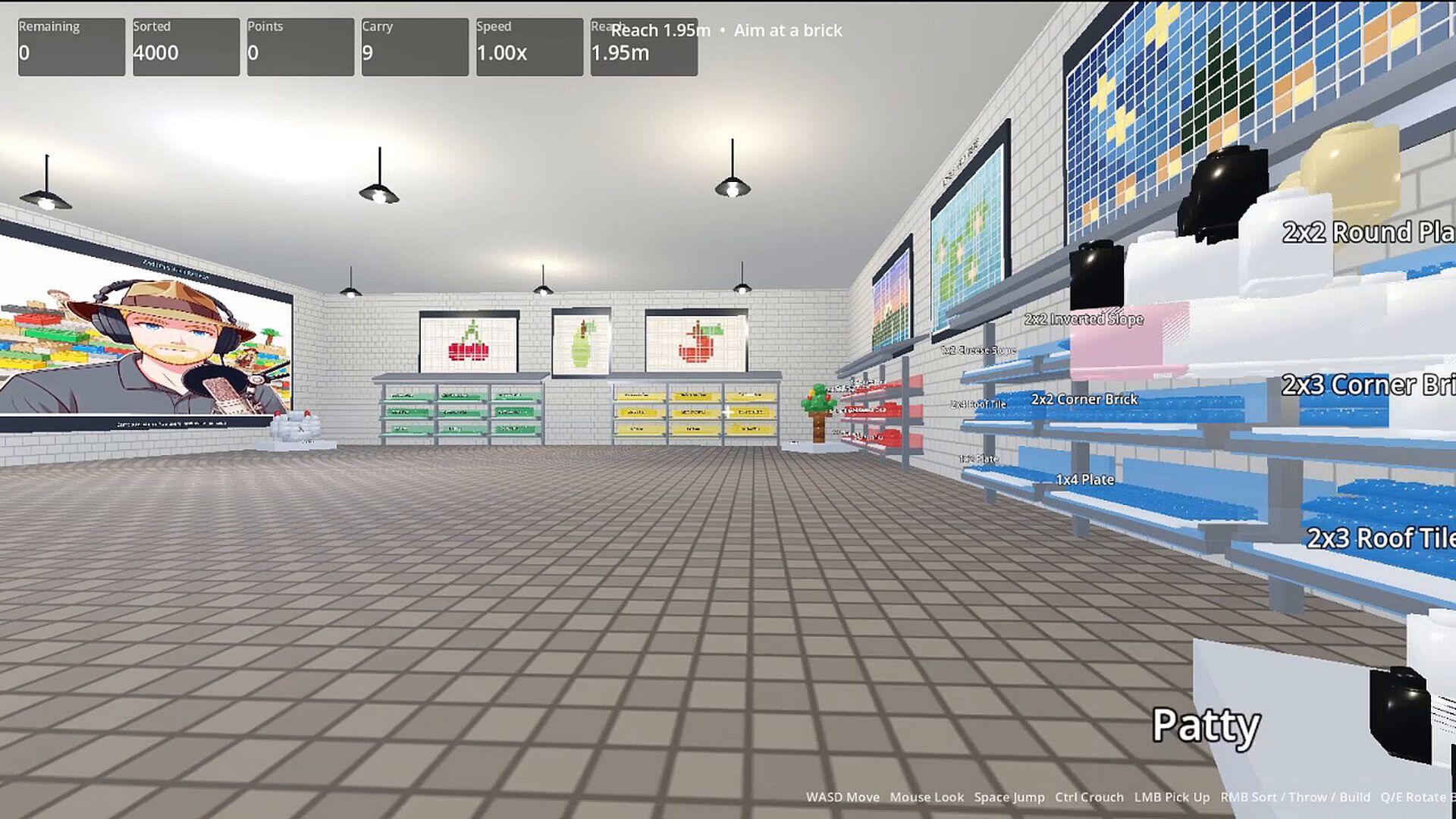

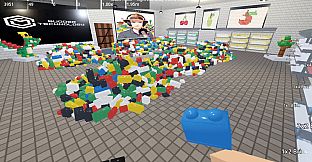
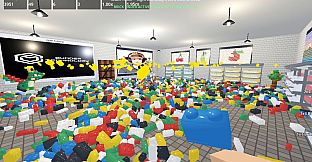
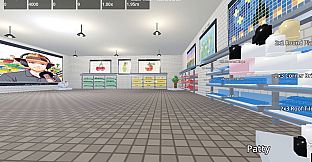
Brick by Brick is a first-person sorting and building sandbox that blends casual simulation elements with relaxed organization and creative construction. Players begin with large piles of loose bricks in an empty room and methodically place each piece on designated shelves according to style and color. The experience emphasizes steady progress without timers or pressure, allowing short sessions or extended play as shelves gradually fill and the space transforms.
Gameplay
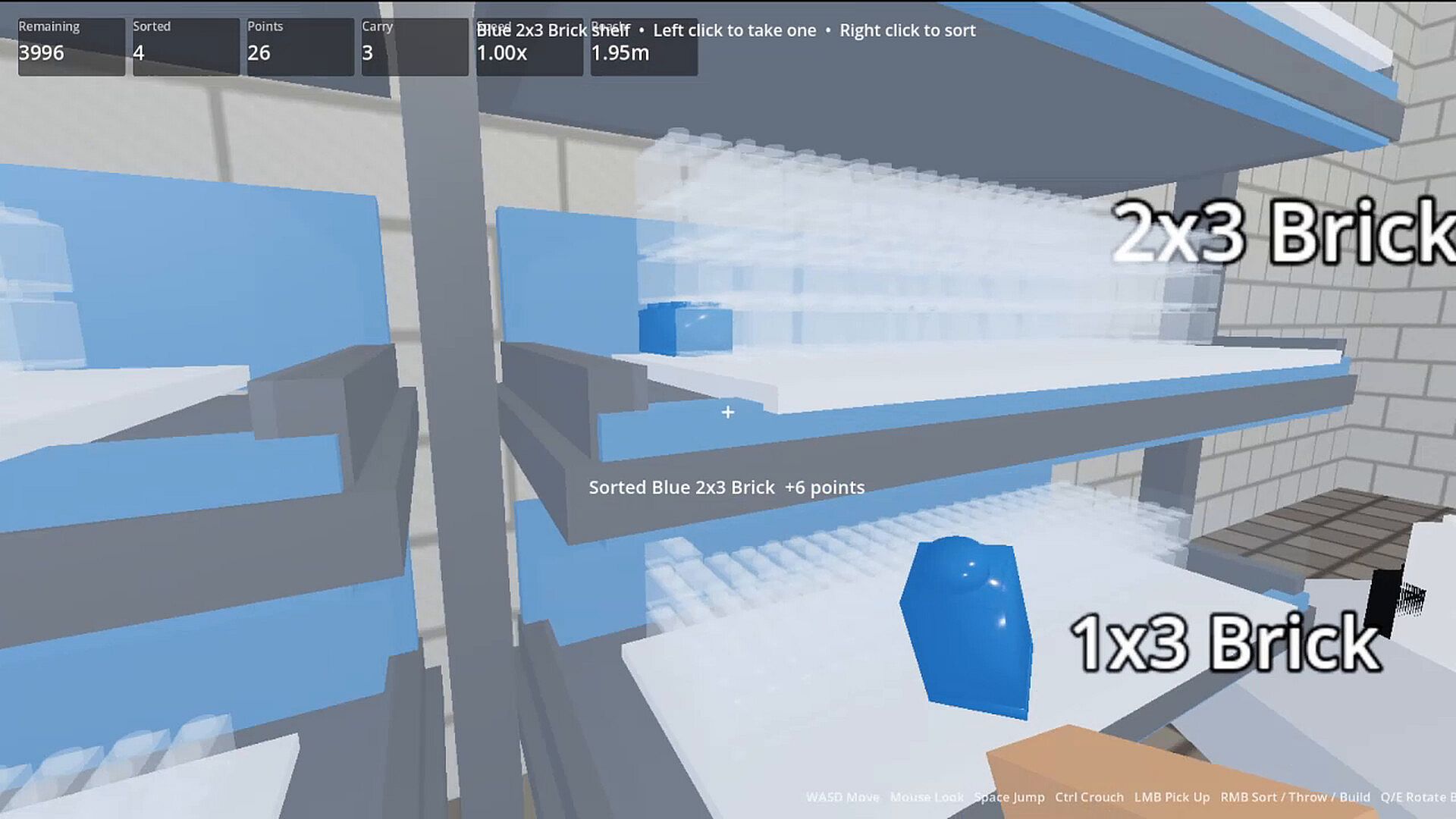
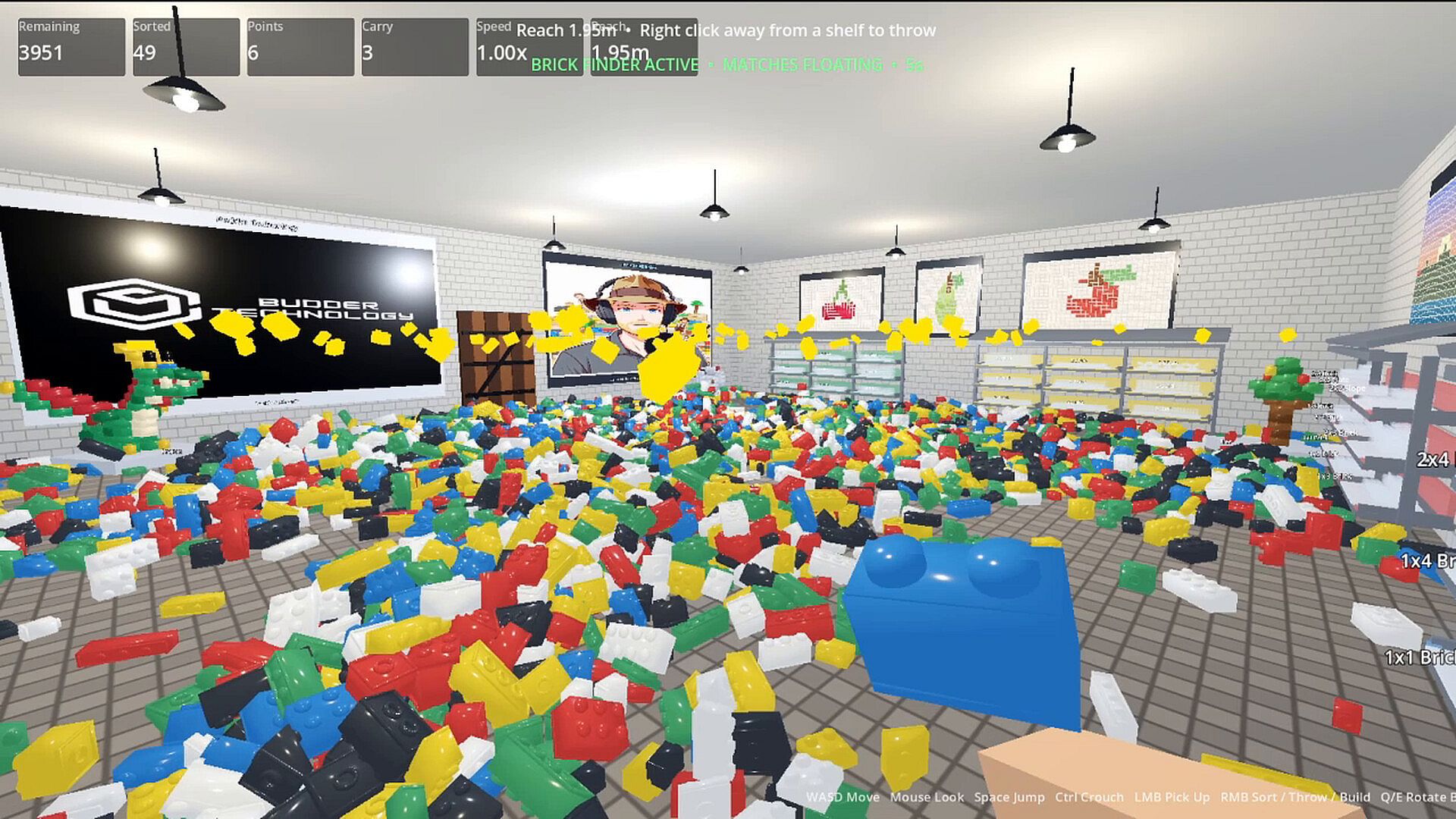
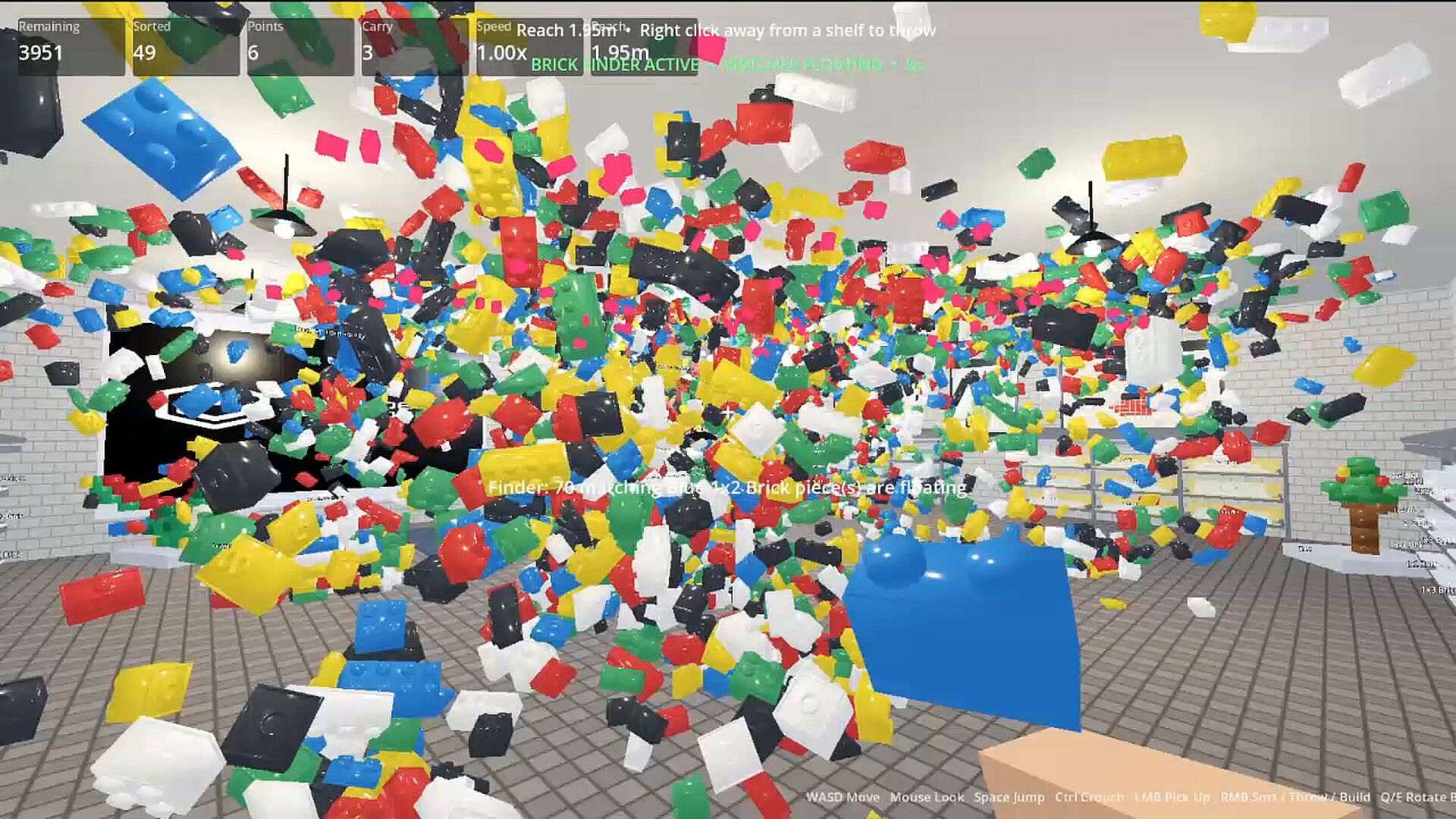
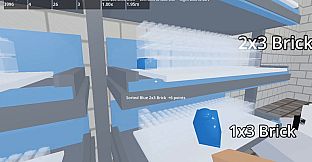
The core loop centers on picking up individual bricks from scattered piles, identifying their correct shelf location, and storing them to earn points based on the number of studs on each piece. Thousands of bricks populate the starting collection, and the room evolves visibly as organization advances. Players can sort at their own pace, returning to the task whenever time allows. As progress continues, abilities become available to assist with the workload. Finder locates specific bricks in the piles, while Summon draws pieces directly to the player. These tools grow more effective with continued sorting, easing the handling of larger collections over time.
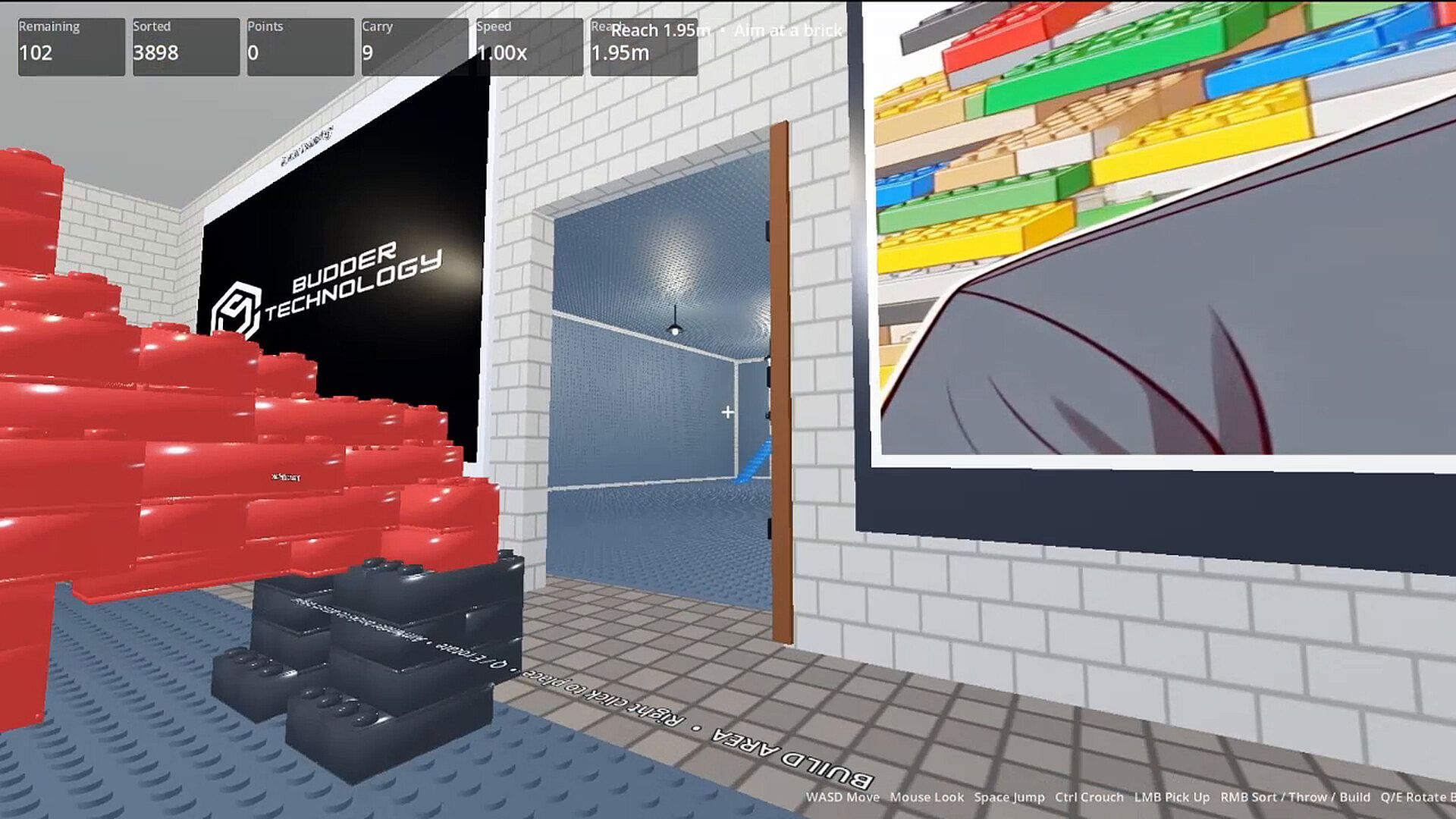
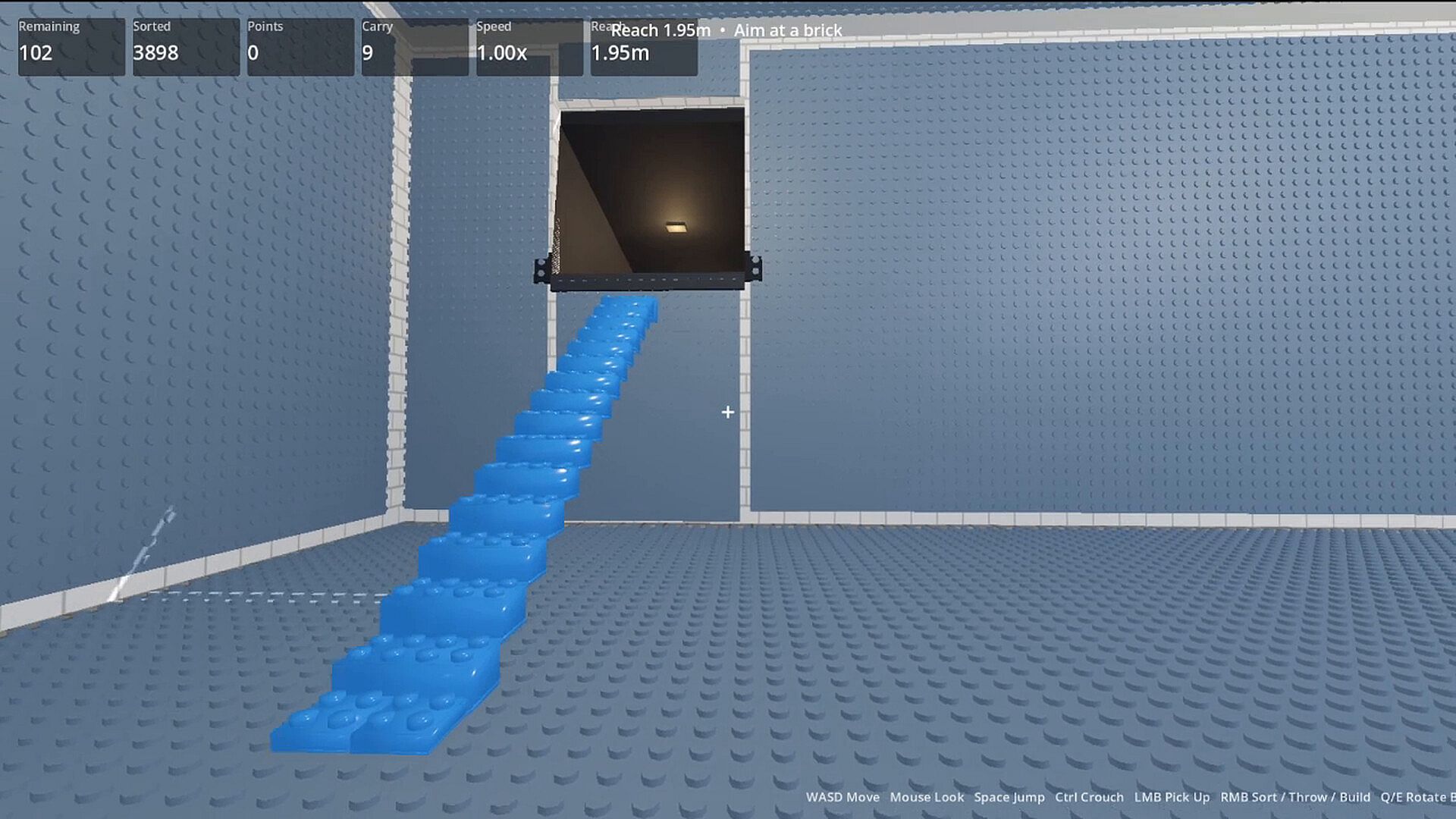
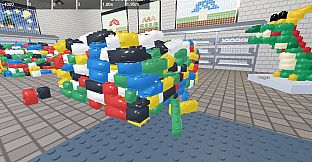
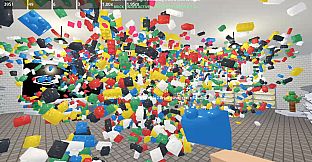
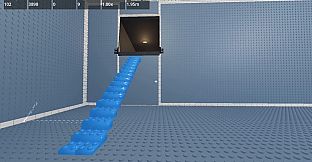
Physics govern how bricks interact during movement and placement, creating natural stacking and occasional spills that add to the tactile feel. Once shelves hold more pieces, additional space opens for building activities. Free-building areas and build plates support piece-by-piece construction using any available bricks, colors, and shapes. No fixed instructions limit designs, so structures can range from simple stacks to elaborate forms. Persistent save files track progress across sessions on PC.
Game Modes
Brick by Brick supports solo play as the primary way to engage with the sorting and building systems. A single player can work through the entire collection independently, unlocking abilities and experimenting with builds at leisure. Online multiplayer extends the same activities to shared sessions. One player hosts a room and shares a code, allowing a friend to join over the internet. Both participants sort bricks together, explore the room, and collaborate on builds without altering the core mechanics.
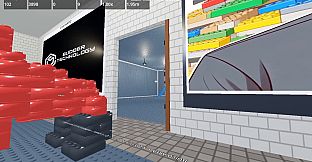
No separate competitive or timed modes exist. The focus remains on cooperative organization and creation in the shared space. Players can also trigger an earthquake at any point to scatter the organized collection back into chaos, or manually return pieces to shelves for a reset. This cycle of sorting, building, and optional disruption forms the main activities available in both single-player and multiplayer contexts.
Building and Experimentation
After sufficient sorting, dedicated areas encourage free-form creation. Bricks from the collection transfer to build plates or open spaces where players arrange them without restrictions. Different shapes, colors, and sizes combine in any configuration, supporting iterative testing of ideas. Completing more of the main collection expands these building opportunities further. The same physics that affect sorting also influence how constructed elements hold together or shift under movement.
Keyboard and mouse controls handle precise placement, while full controller support provides an alternative for those who prefer it. Achievements and statistics track milestones such as total bricks sorted or points earned, adding light progression markers without competitive elements.
Is It Worth Playing?
Brick by Brick suits players who enjoy methodical organization tasks combined with open-ended building in a low-pressure environment. The absence of timers or failure states makes it accessible for casual sessions, while the ability to reset progress through earthquakes offers replay value for those who want to repeat the sorting process. Multiplayer works well for pairs seeking a shared activity focused on cooperation rather than competition. Those drawn to simulation games centered on sorting, collection management, and creative assembly without narrative or combat elements will find the systems align closely with that preference. The game runs on PC with support for both input methods and includes built-in save tracking for ongoing play.