


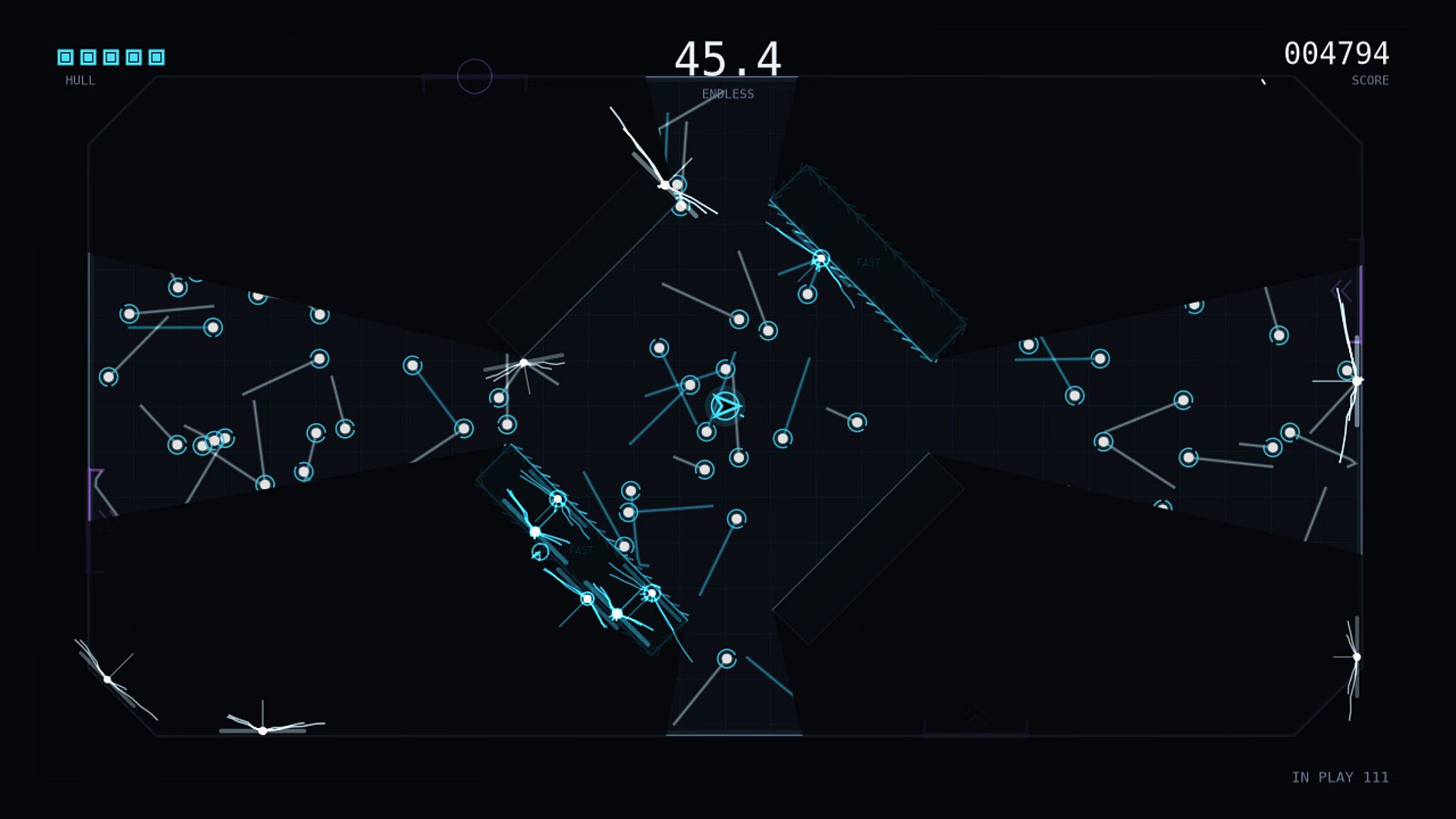
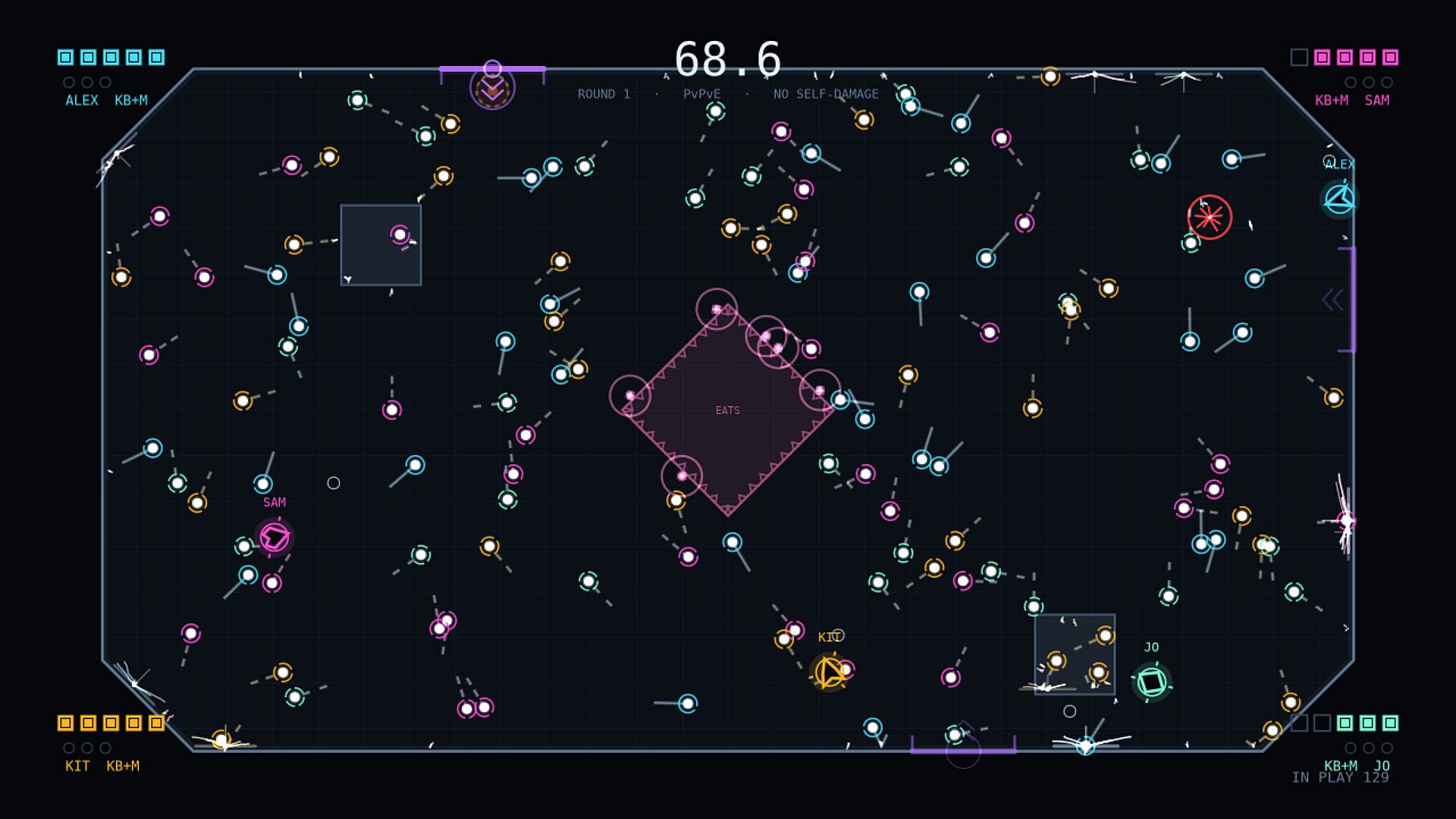

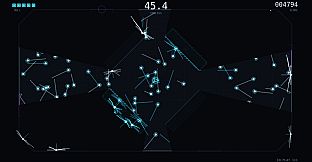
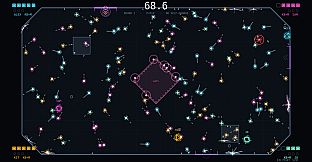
Bullet Debt is an action game that puts players in control of a minimalist arcade arena shooter on PC. Its core premise revolves around bullets that never disappear, turning every shot into a lasting element of the battlefield that bounces off walls and surfaces until it connects with a target.
Gameplay
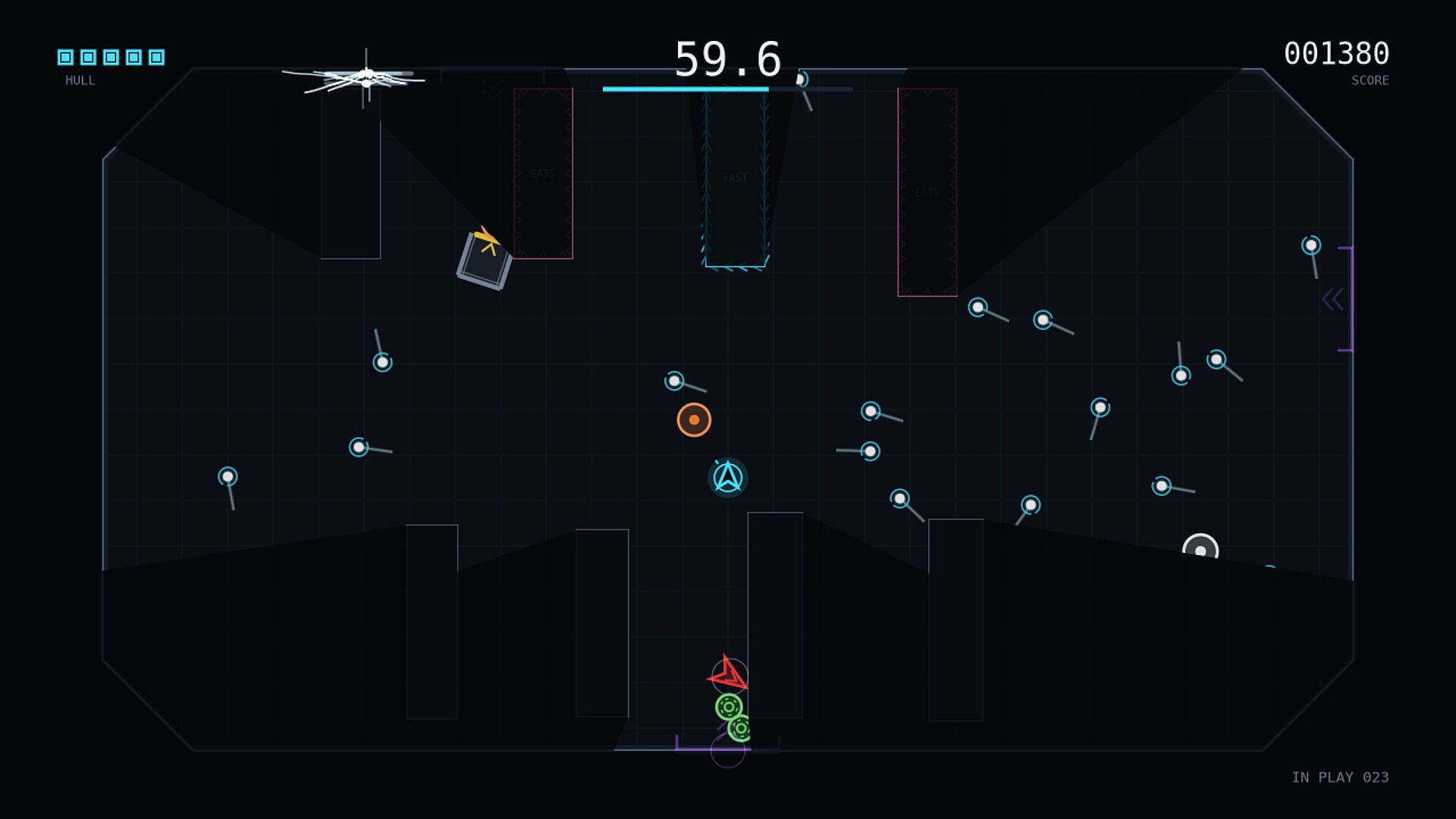
The central mechanic requires careful planning because missed projectiles continue traveling and ricocheting indefinitely. This creates a dynamic arena where the player must navigate their own accumulating fire while dealing with enemies. Reflections follow exact mathematical angles, rewarding precise aiming and an understanding of the environment's geometry rather than relying on random spreads or auto-aim systems.
Four distinct enemy types add variety without returning fire. Chasers pursue directly, chargers telegraph powerful dashes before committing, splitters divide into faster fragments upon impact, and reflectors protect most sides while deflecting shots away from their vulnerable face. Special surfaces further alter projectile behavior, with boosters increasing speed, dampers reducing power, splitters dividing shots, and absorbers removing bullets from play entirely.
Line-of-sight considerations play a key role, as shadows and cover obscure threats until they emerge. Difficulty stems from combinations of enemies, surface interactions, and spatial awareness instead of scaled health pools or bullet sponges. The entire experience supports full controller input, with mouse controls available as an option, and runs smoothly on devices like the Steam Deck.
Game Modes
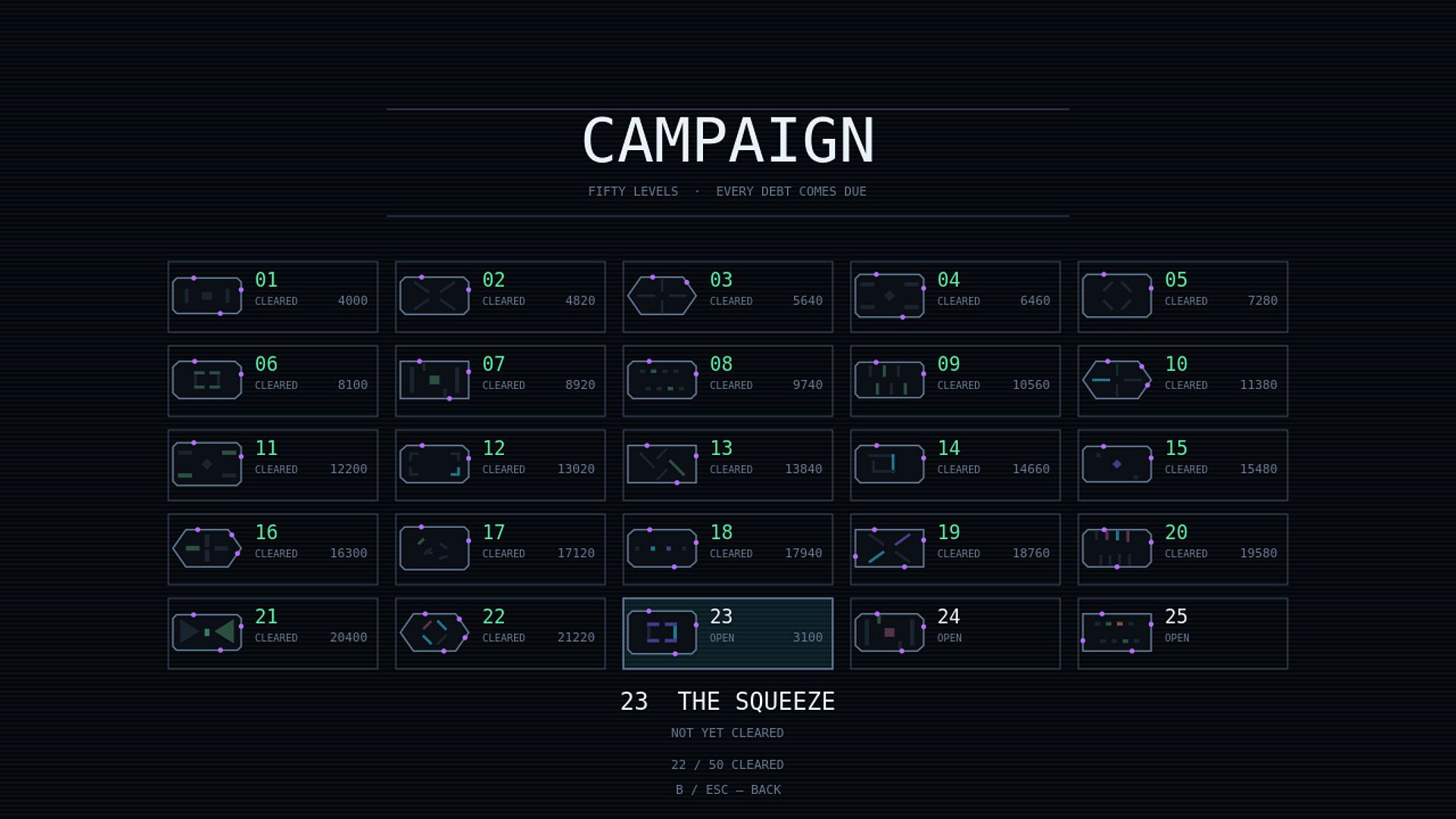
A handcrafted campaign consists of fifty short levels, each lasting around ninety seconds, that unlock progressively. These focus on mastering geometry and enemy patterns in a single-player setting. An endless mode extends play indefinitely, tracking scores and survival times for leaderboard competition.
Local versus supports two to four players on a shared screen, keeping the full arena visible without splits or hidden information. Rulesets include timed score matches with respawns where eliminations award points, stock matches limited by lives until one remains, and rounds played as best-of series with rotating starting positions. Enemies can be enabled for a PvPvE twist, and options allow friendly fire toggles alongside limited ammunition that reloads only through hits on opponents or catching ricochets.
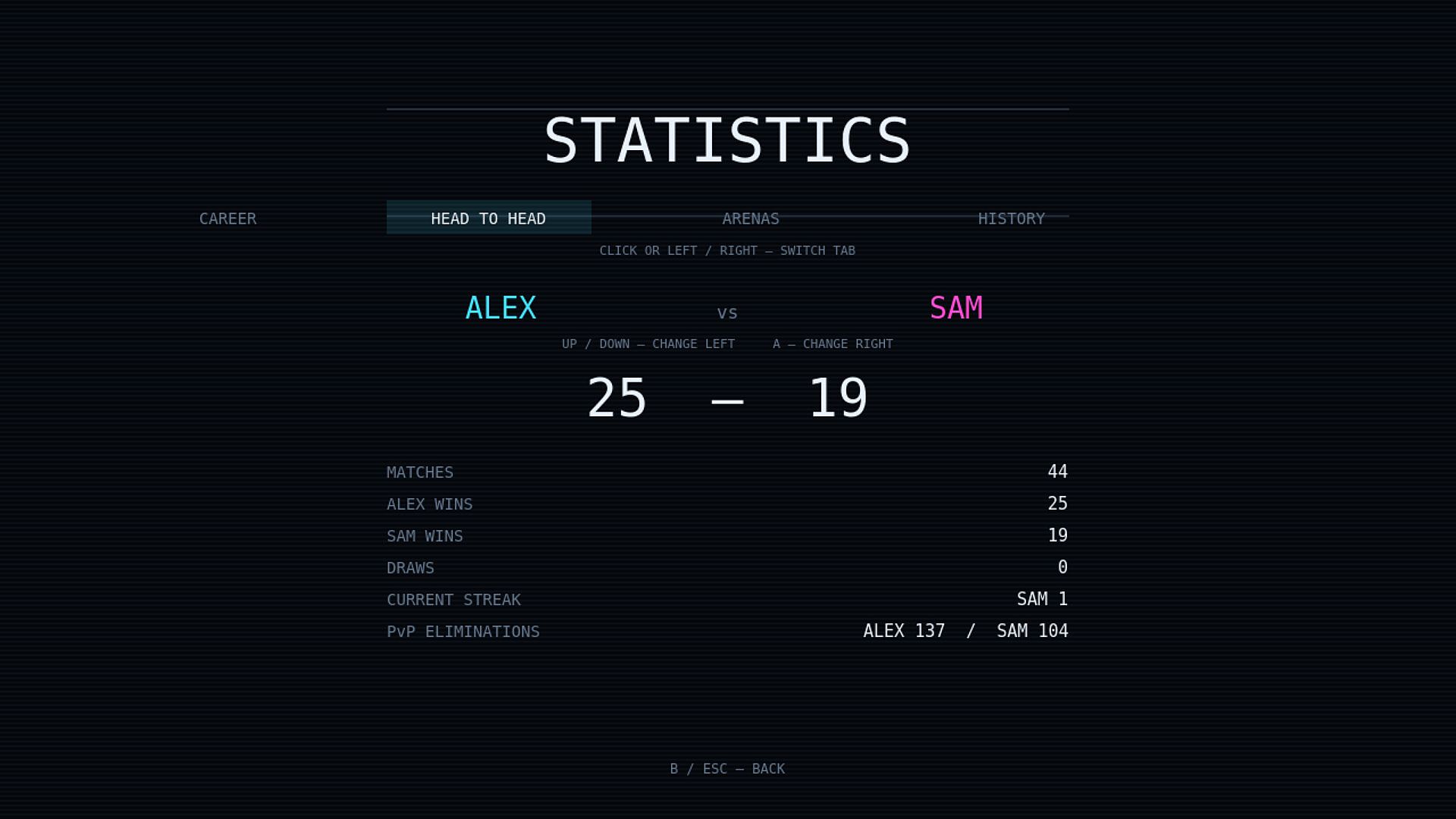
Persistent profiles track wins, losses, streaks, accuracy, eliminations, and head-to-head records across sessions. Tournament structures such as round robin, single elimination brackets, and leagues with standings tables save progress for ongoing rivalries.
Multiplayer Arenas and Features
Fifteen dedicated arenas complement the campaign levels for versus play. The design emphasizes visibility and shared information, making it suitable for couch sessions where all participants see every projectile in motion. Offline functionality ensures play without internet, and remote play together extends access for separated groups.
Player profiles function like a sports record book, logging detailed statistics that persist across multiple users on the same device. This supports long-term tracking without external accounts or online requirements.
Is It Worth Playing?
Bullet Debt targets players who enjoy precise, geometry-driven action in an arcade format. Its single rule of persistent bullets creates tension through self-inflicted hazards, appealing to those who prefer skill-based aiming over randomized elements. The local multiplayer focus, with its clear visibility and varied rulesets, suits groups seeking competitive sessions without complex setup.
As an upcoming title with no released version yet, its value depends on interest in minimalist arena shooters that emphasize planning and environmental awareness. The campaign provides structured practice, while endless and versus modes offer replayability through score chasing and social play. Controller support and offline capability broaden accessibility for different setups.
Fans of short, intense levels combined with persistent projectile management will find the mechanics distinctive. Those prioritizing local group play with trackable stats and tournament options may appreciate the social depth built into the versus systems. The absence of online elements keeps the experience focused on immediate, shared-screen interaction.