









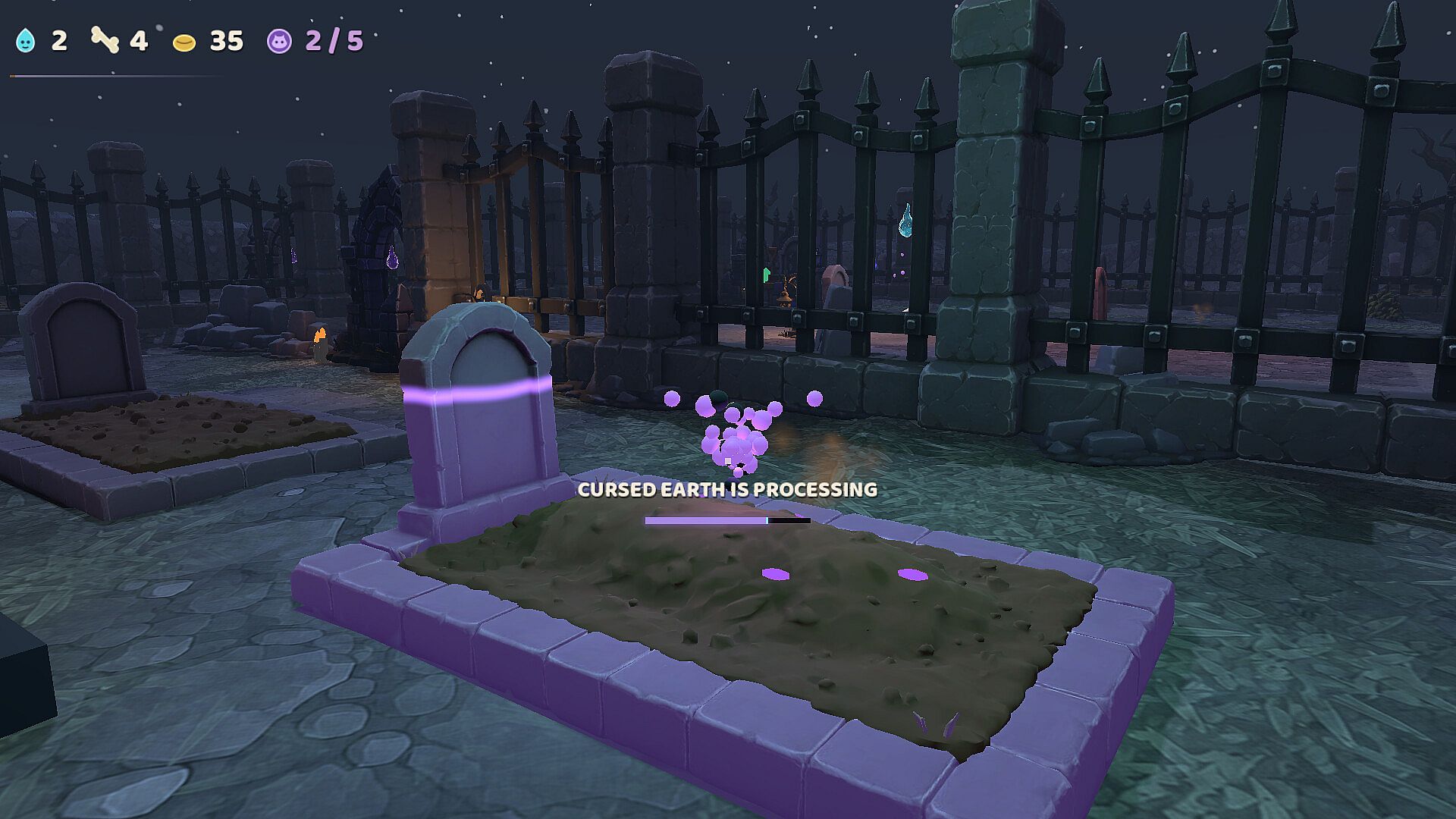









Bury the Debt is an indie casual simulation game for PC that places players in charge of a neglected cemetery during an endless night. The core premise involves settling a debt to Death by turning incoming coffins into payments through a hands-on management process that evolves from manual effort into automated production.
Gameplay
The gameplay centers on a physical production chain within the graveyard. Coffins arrive through Death's portal, and every step requires direct player involvement at the start. This includes digging and preparing reusable graves, carrying and placing each coffin, burying the dead, and then collecting the Souls, Bones, and Gold that remain after the cursed earth processes the remains. The work stays deliberately simple and physical, with tools like a better shovel improving efficiency while the layout of the yard influences how smoothly tasks flow.
Progress comes from spending earned resources to hire skeleton workers who handle specific roles. Carriers transport coffins, gravediggers manage the soil, and collectors recover useful remains. Players improve these workers' professions and organize the space so each has a clear task. Further upgrades target the portal, personal tools, and overall graveyard infrastructure to open more space and refine the operation into a streamlined supernatural production line. The eternal night setting removes any pressure from timers or failure conditions, allowing players to advance at their own pace.
Game Modes
Bury the Debt operates as a single-player management experience without separate named modes or multiplayer elements. The entire game revolves around one continuous loop of receiving coffins, processing them through the burial chain, collecting resources, and deciding how to allocate earnings. Expansion happens by opening additional working areas and scaling the crew and infrastructure, while payments to Death increase future demands and push strategic choices about when to grow versus when to deposit Souls at the altar.
Progression and Automation
Early stages emphasize personal labor across every part of the job, from grave preparation to resource collection. As earnings accumulate, hiring and upgrading skeleton workers shifts the focus toward oversight and optimization. Players arrange the yard for better workflow, enhance worker capabilities, and invest in portal and tool improvements that support larger volumes. This creates a satisfying shift where routine tasks move from hands-on execution to managed automation, turning the initial manual chore into an efficient operation that still requires thoughtful layout and hiring decisions.
Is It Worth Playing?
Bury the Debt suits players who enjoy casual simulation games built around incremental management and the transition from manual tasks to automated systems. The absence of failure timers or external pressure supports a relaxed pace, while the resource collection and worker organization provide clear goals tied directly to paying off the debt. Those drawn to indie titles that reward careful planning and gradual expansion will find the compact single-player structure rewarding, as every upgrade and hire directly contributes to scaling the graveyard operation without unnecessary complexity.











