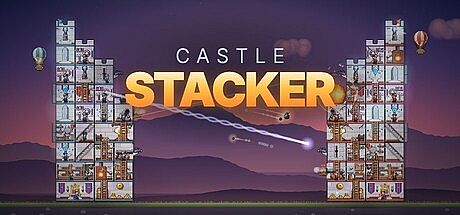


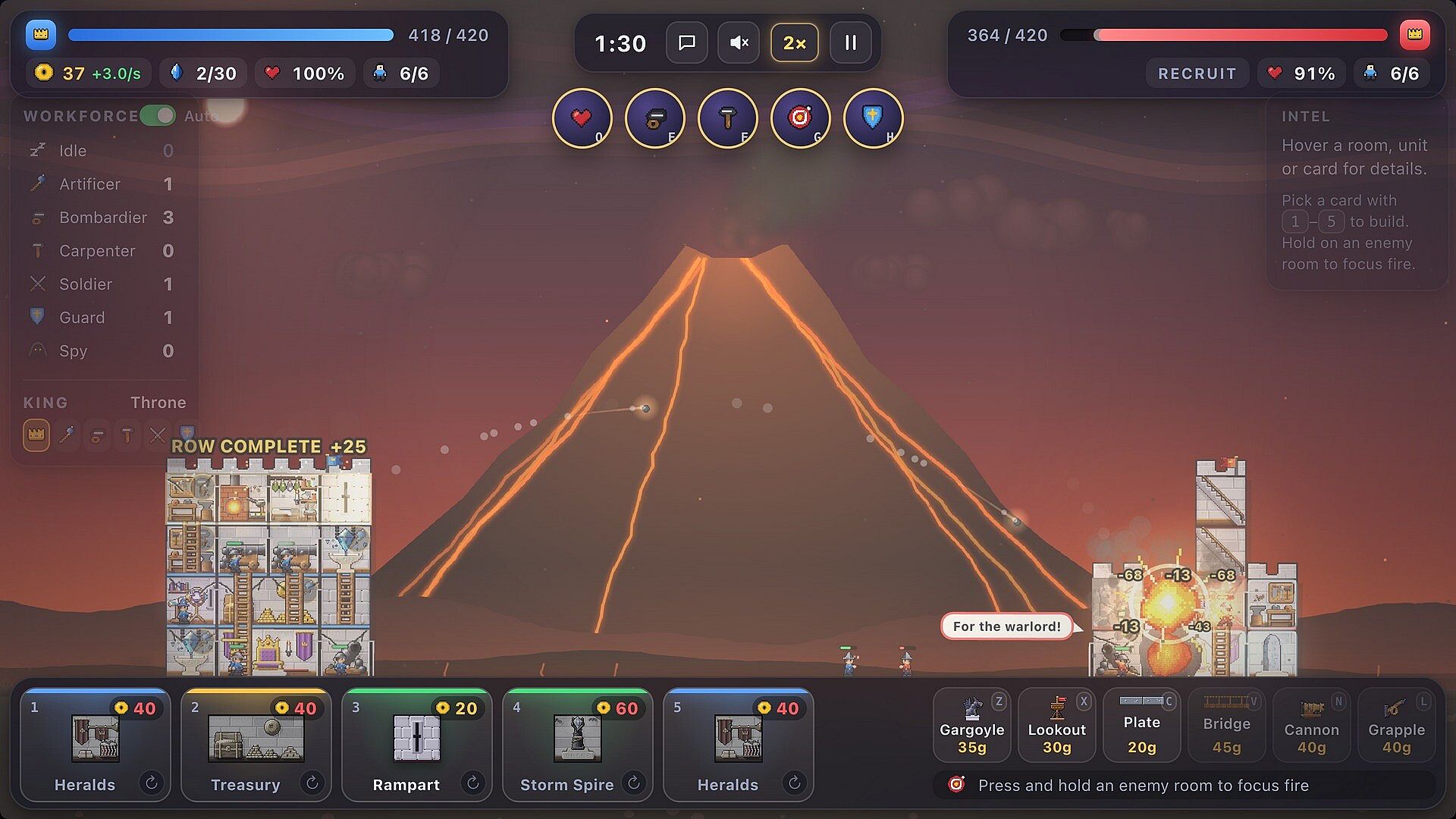
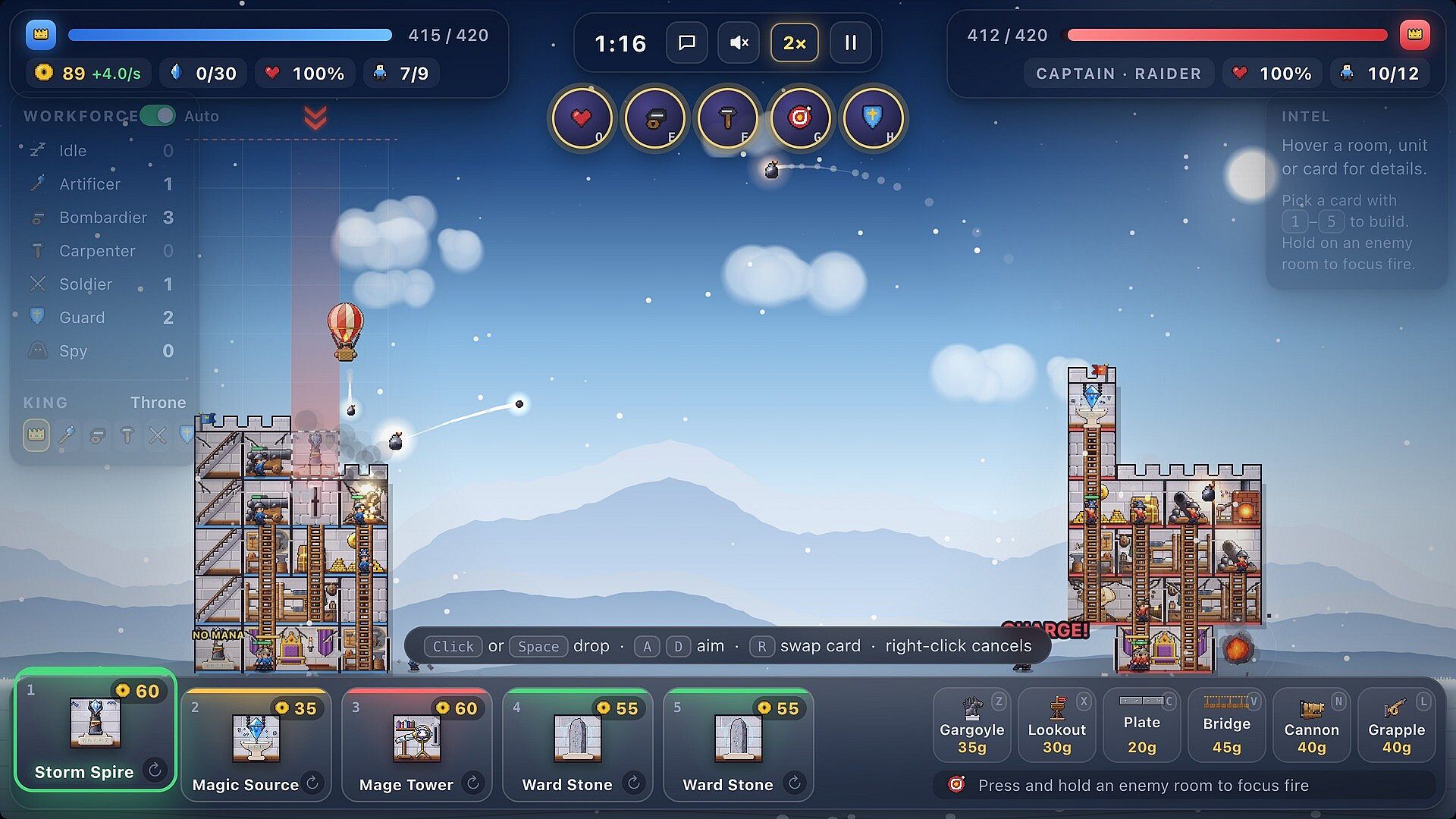
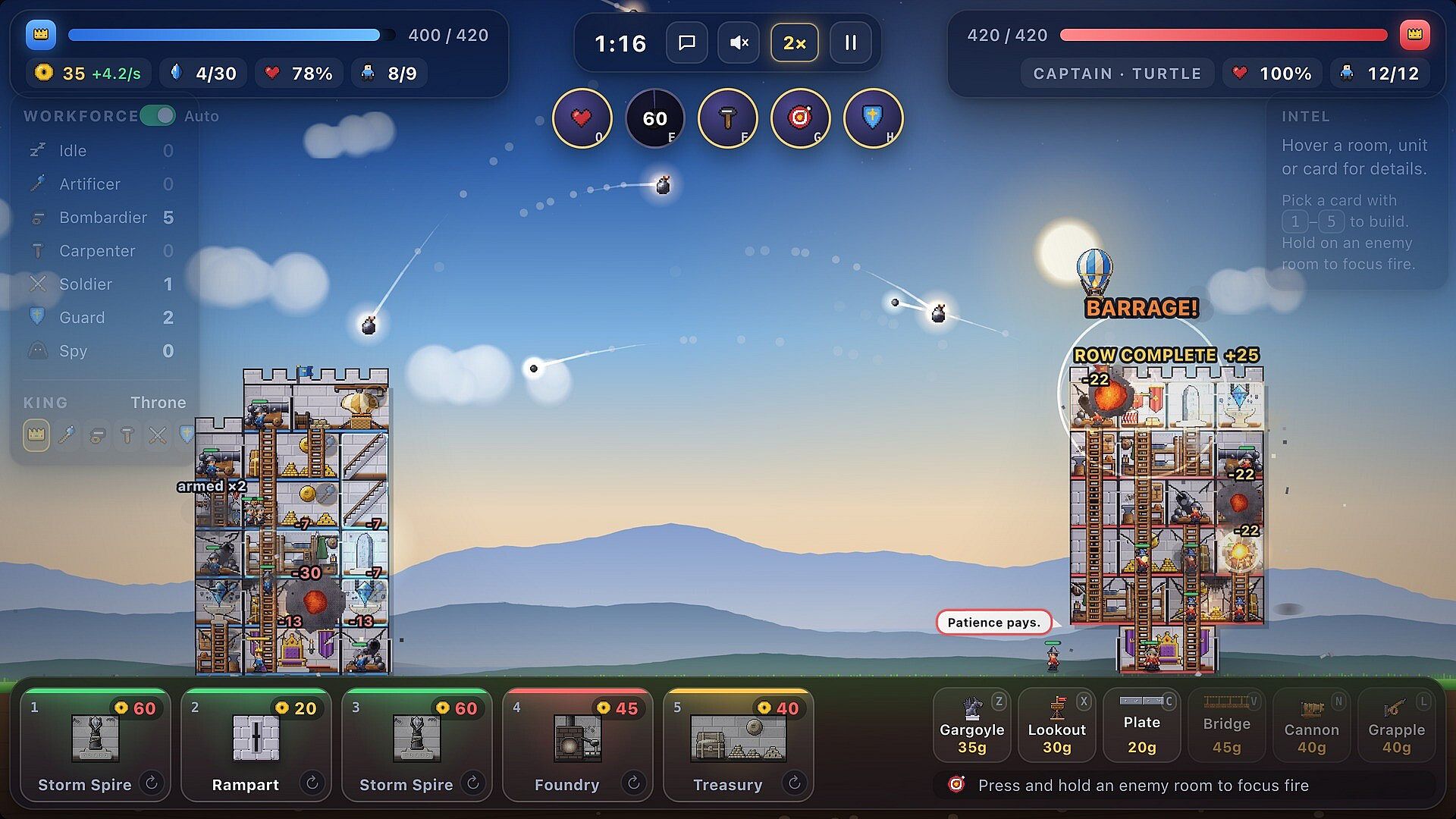






Castle Stacker is a strategy game built around real-time castle sieges on PC. Players construct fortresses by dropping individual rooms from above, then watch as automated units defend and attack while the structures evolve through stacking, damage, and collapse.
Gameplay
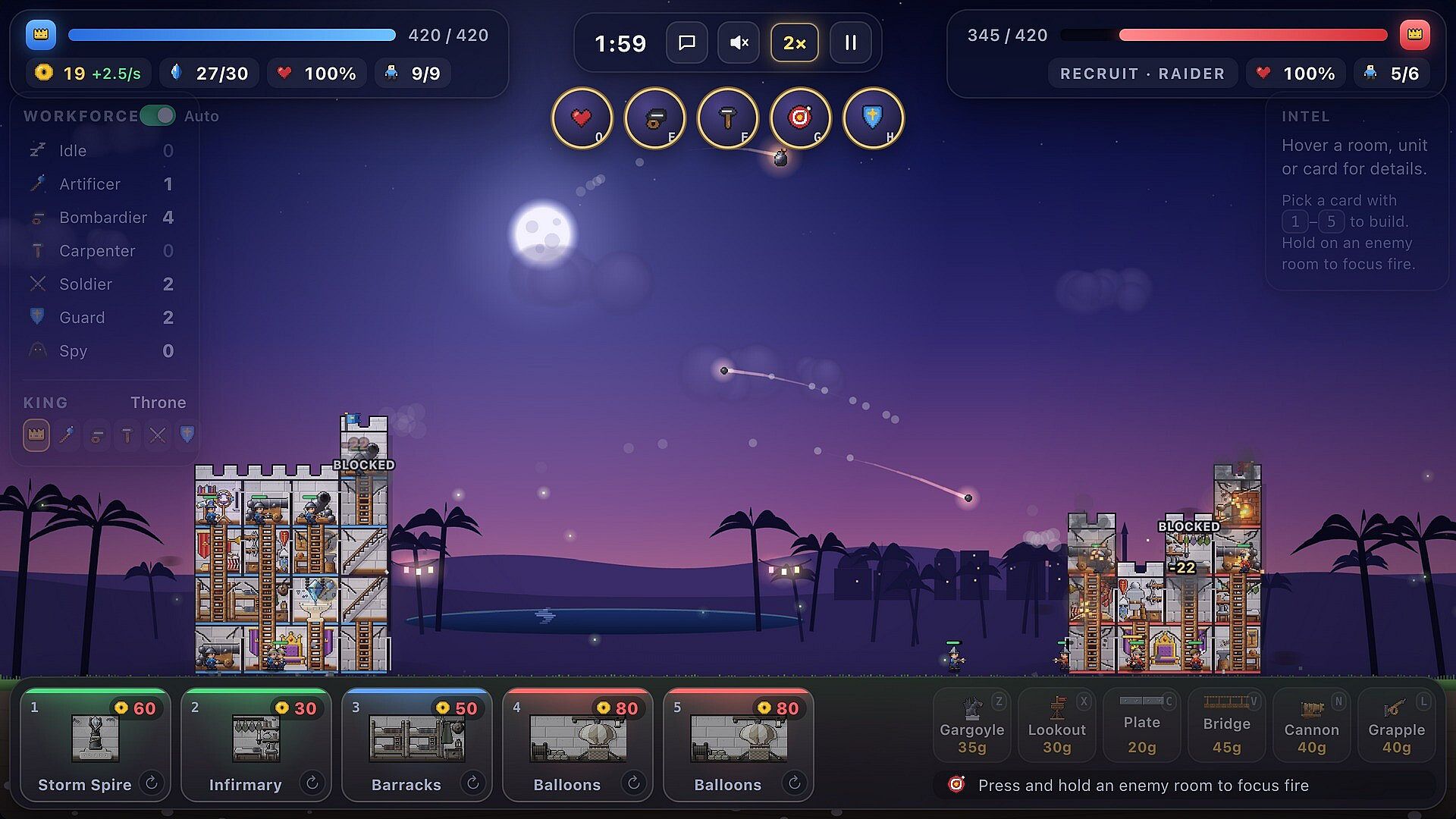
The core loop centers on card selection and precise placement. Each room added to the stack provides specific functions, such as cannons for ranged fire, barracks for troop production, or treasuries that generate resources when rows fill completely. Gaps in the structure invite enemy fire, forcing quick repairs by artificers who climb ladders to patch walls. Units operate independently once placed, with bombardiers loading artillery, guards securing stairs, and soldiers charging from armories across the battlefield toward the enemy king.
Defensive and offensive rooms create layered puzzles. Mage towers launch arcane bolts, ward stones project shields, and storm spires deliver chained lightning. Balloons drift in to drop hazards, mortars arc shells over walls, and gargoyles perch on battlements. Additional attachments like drawbridges or grappling lines let soldiers slide directly into enemy keeps, while spies can be inserted for internal sabotage. Explosions propagate realistically, so a hit on a foundry might collapse an entire section of tower.
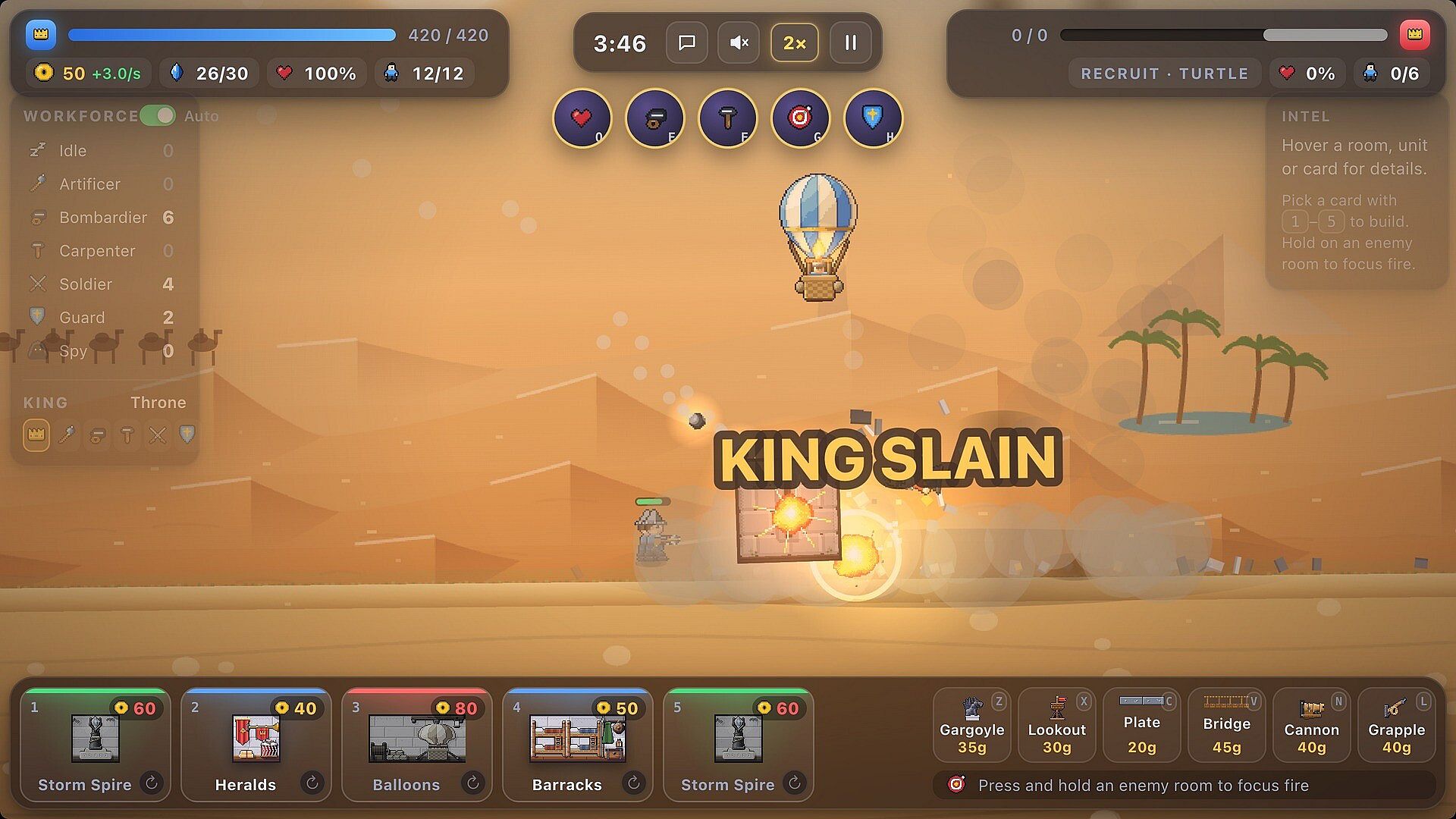
Environmental hazards affect both sides equally across eight distinct battlefields. Lightning strikes, earthquakes, blizzards, meteor showers, pirate broadsides, volcanic eruptions, sandstorms, and flash floods alter the flow of each engagement. Supply balloons periodically drop crates into contested ground for soldiers to claim.
Game Modes
Quick battles pit players against one of four commanders scaled from Recruit to Warlord difficulty. A daily challenge rotates with two rule modifications each day. Replays of the previous ten battles can be viewed at speeds up to eight times normal.
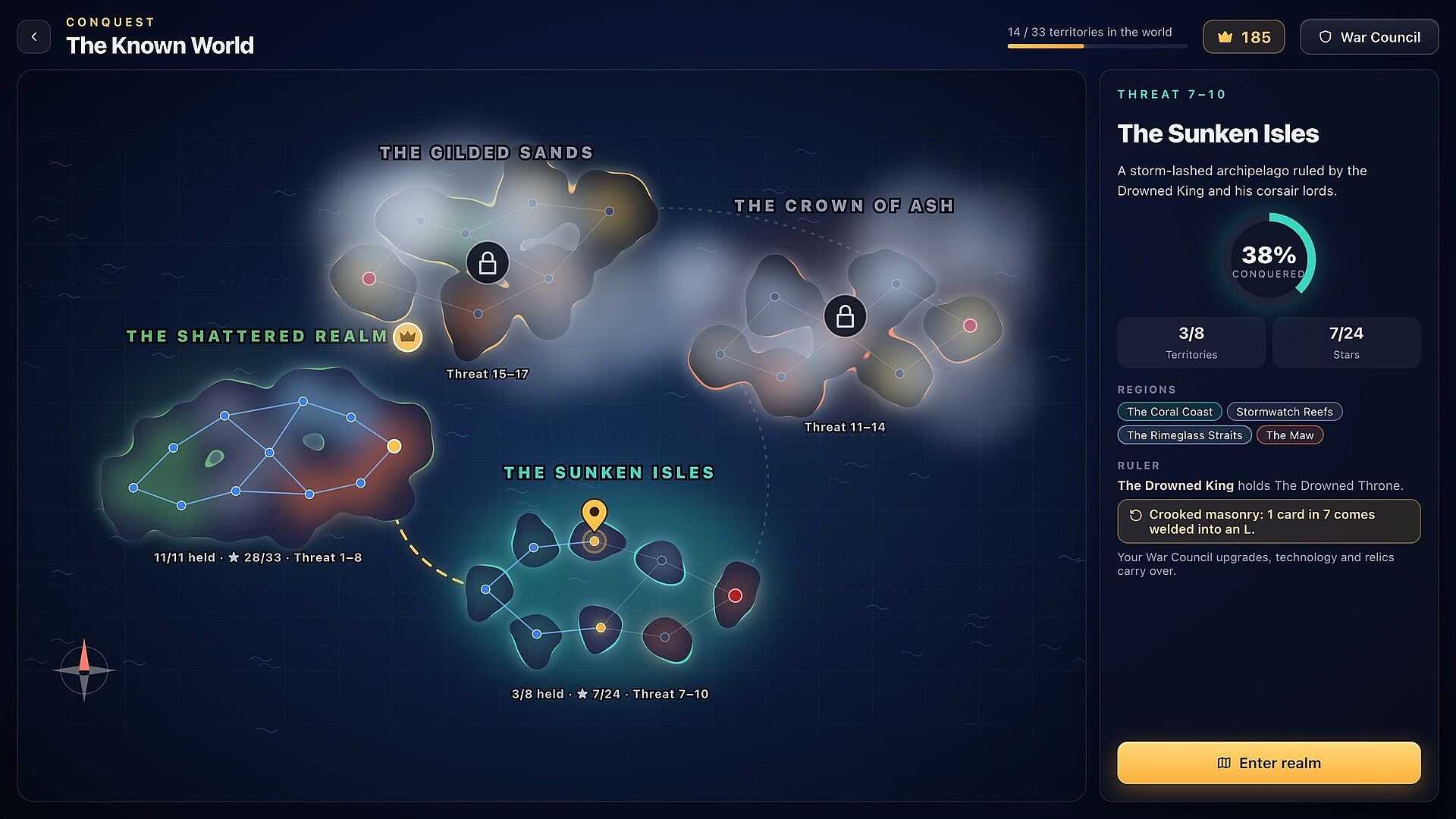
The campaign spans four realms containing 33 territories total. Each realm features unique enemy warlords and concludes with a boss encounter. These bosses deploy signature abilities such as Iron Rain, Undertow, Firestorm, or Mirage. Persistent progression occurs through the War Council, where crowns purchase upgrades, new rooms, and customized decks. Before each match, players select a doctrine such as Iron Walls, Siege Masters, Merchant Princes, Vanguard, or Master Builders. Royal decrees provide temporary battlefield effects, and court petitions allow choices like hiring mercenaries or taxing caravans. Relics claimed from defeated bosses offer permanent advantages, with only one option available per boss.
Progression and Customization
Upgrades in the War Council carry across campaigns, allowing players to refine room availability and deck composition over time. Doctrines shift tactical emphasis, rewarding different room combinations and unit behaviors. Relic selection adds meaningful trade-offs, as two of three options are permanently lost after each boss. Environmental variety and battlefield events ensure repeated encounters feel distinct even when facing similar opponents.
Is It Worth Playing?
Castle Stacker suits players who enjoy strategic placement puzzles combined with automated unit management and destructive feedback. The single-player focus with optional online PvP elements supports both solo campaigns and competitive matches. With no reviews available ahead of its November 2026 release, expectations rest on the detailed systems described: varied battlefields, boss encounters, and persistent upgrades that reward experimentation with room stacks and doctrines. Those drawn to real-time strategy without direct unit control will find the autonomous garrison and chain-reaction collapses central to its appeal.