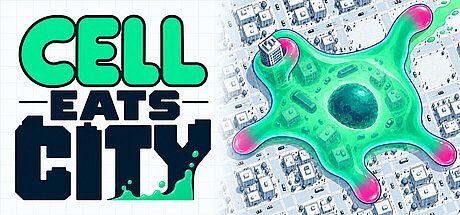


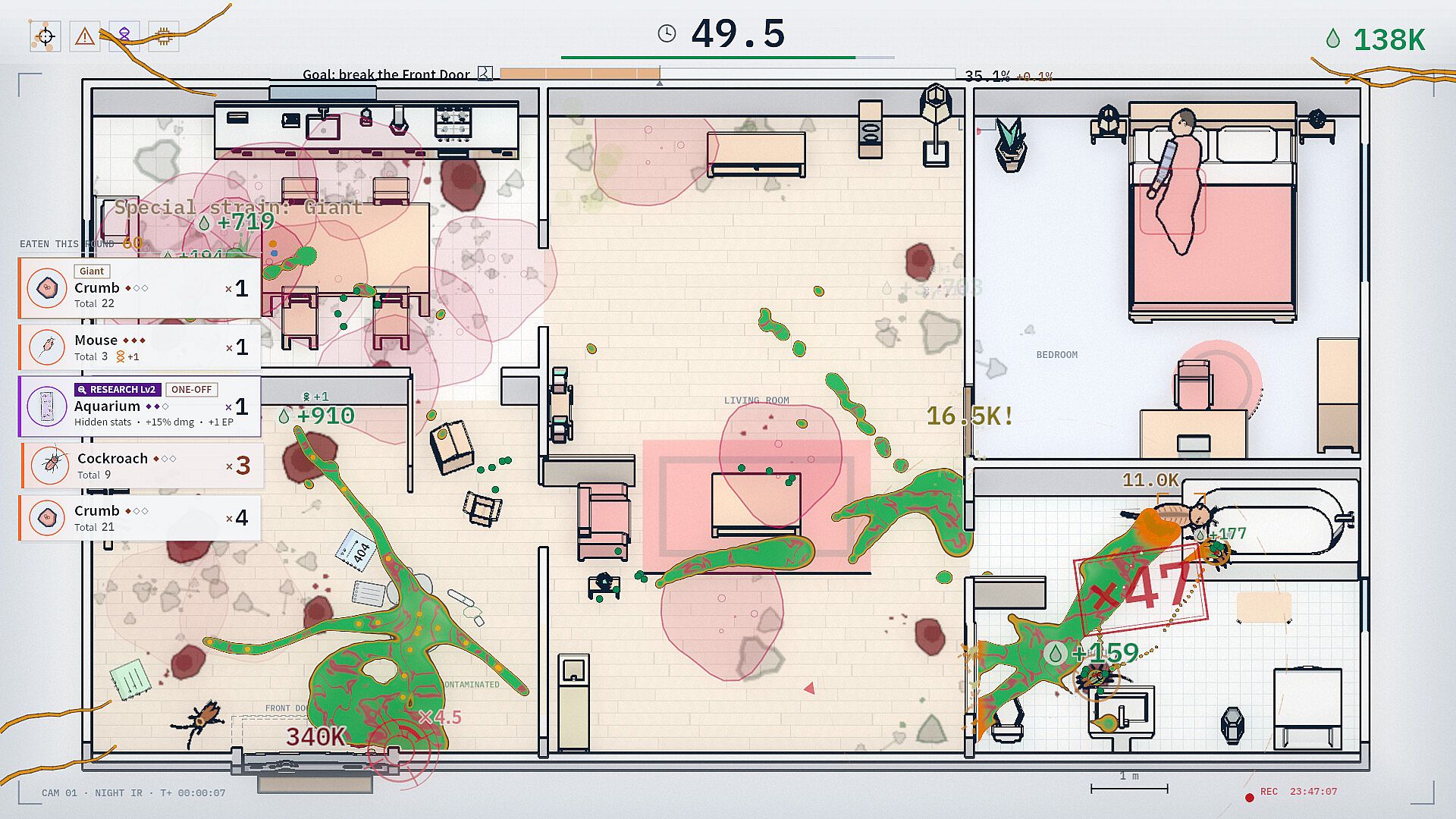
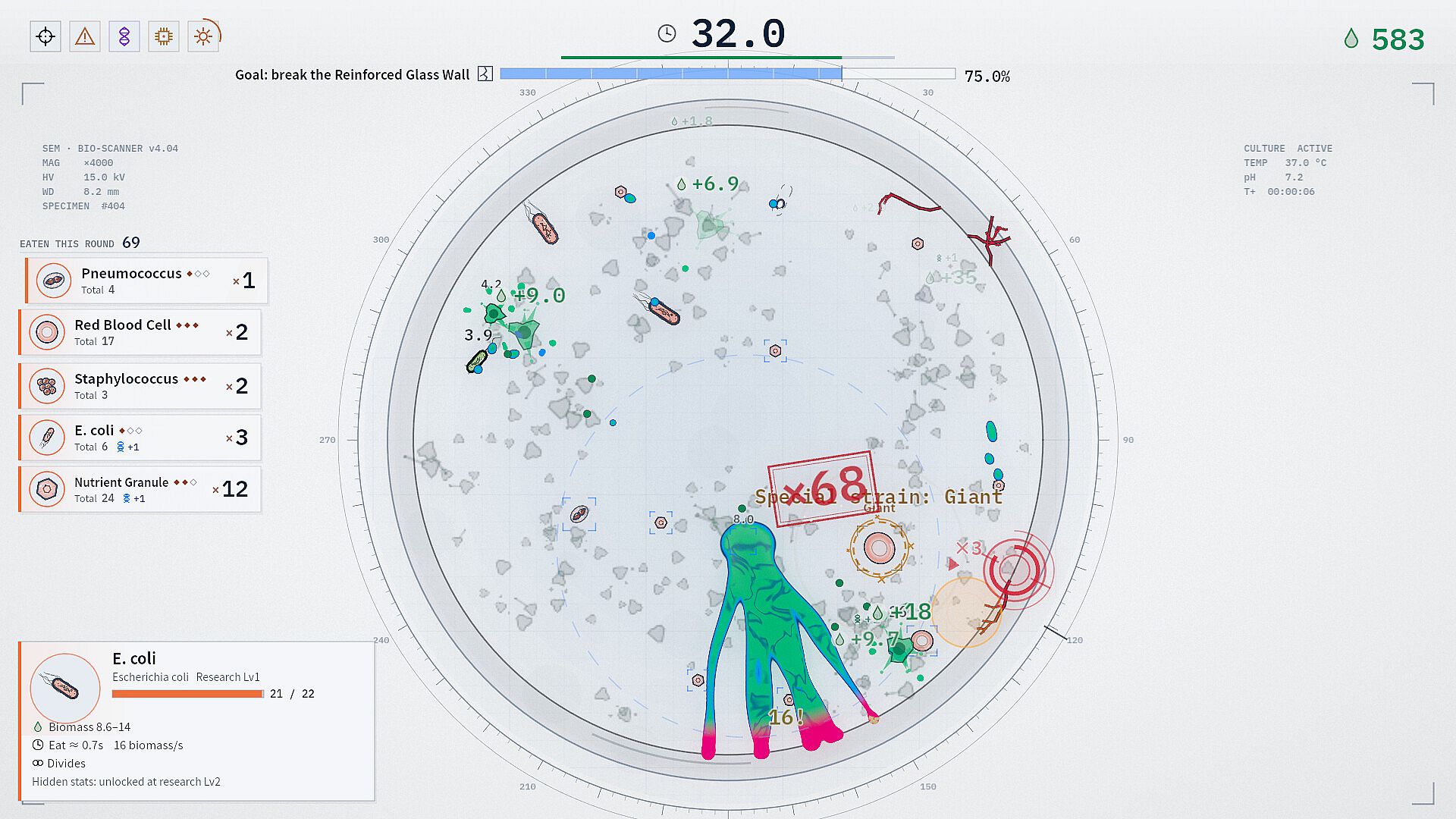

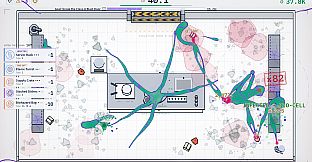
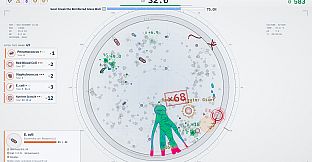
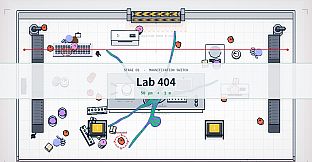
Cell Eats City is an indie casual incremental game on PC where a single experimental cell escapes its petri dish and grows by consuming everything in its path. The core experience centers on guiding Specimen #404 with the mouse cursor as it extends tendrils to grab and ingest edible matter, expanding in size with each meal without any direct attack inputs until the final moments of a round.
Gameplay
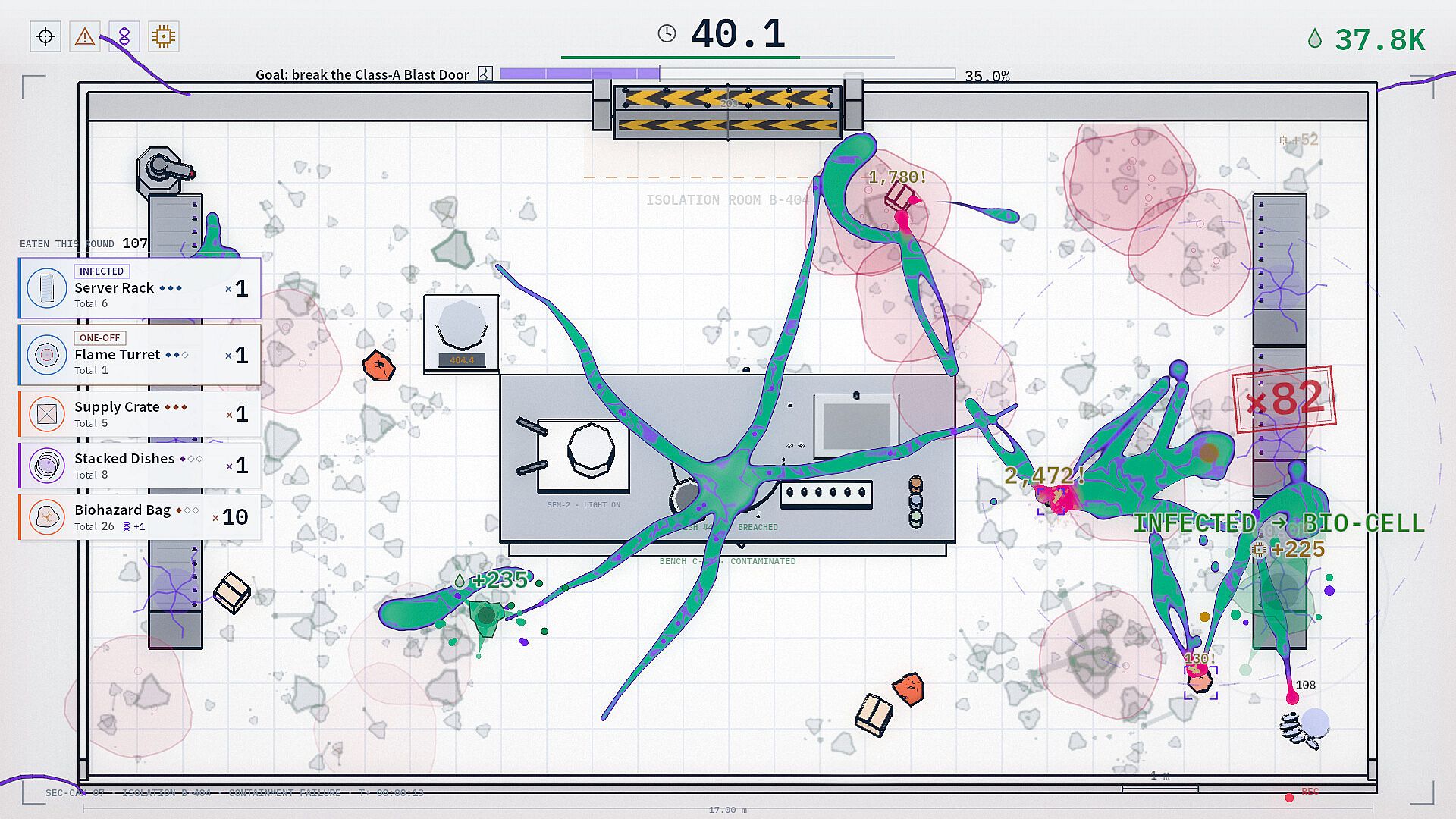
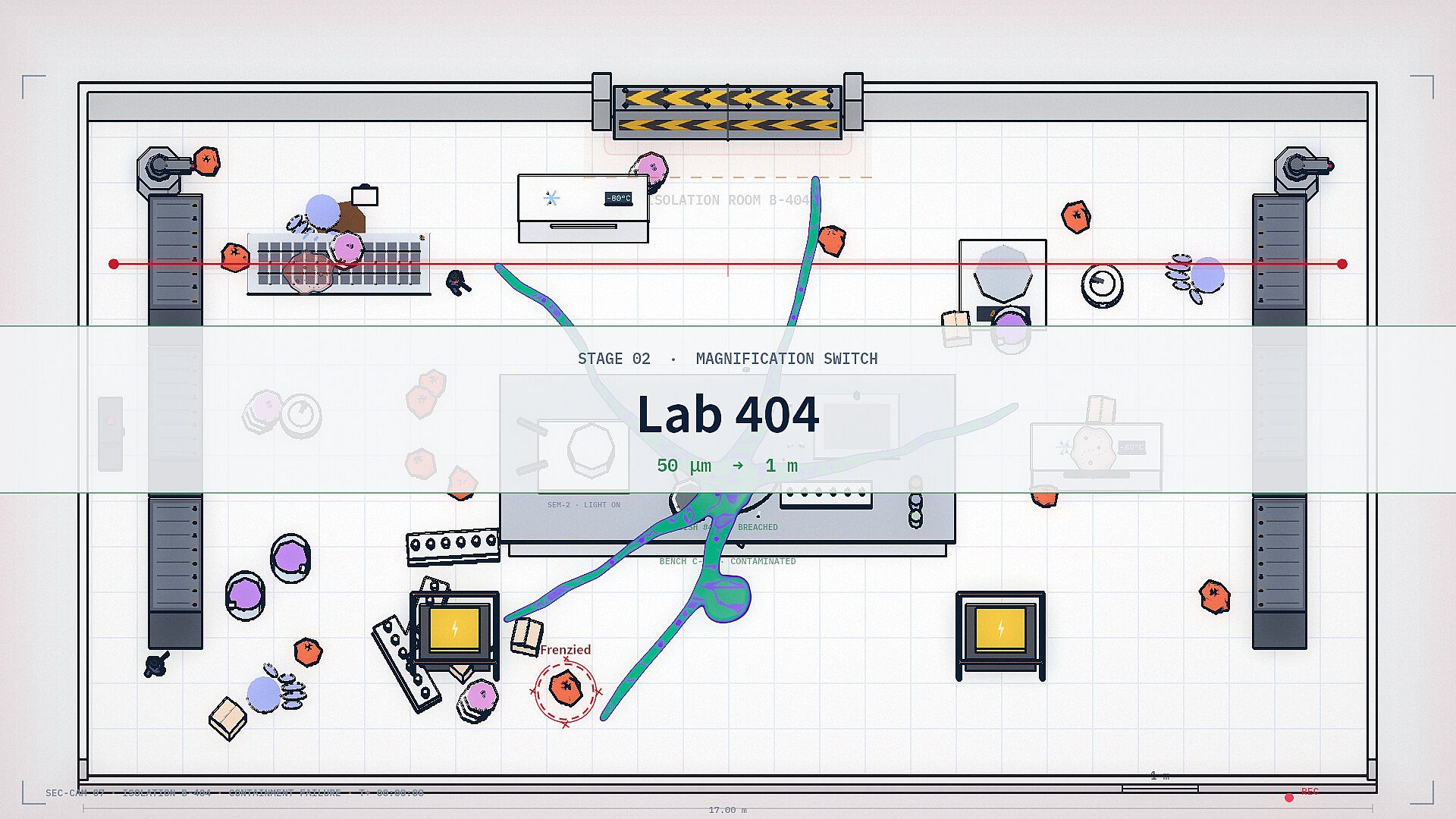
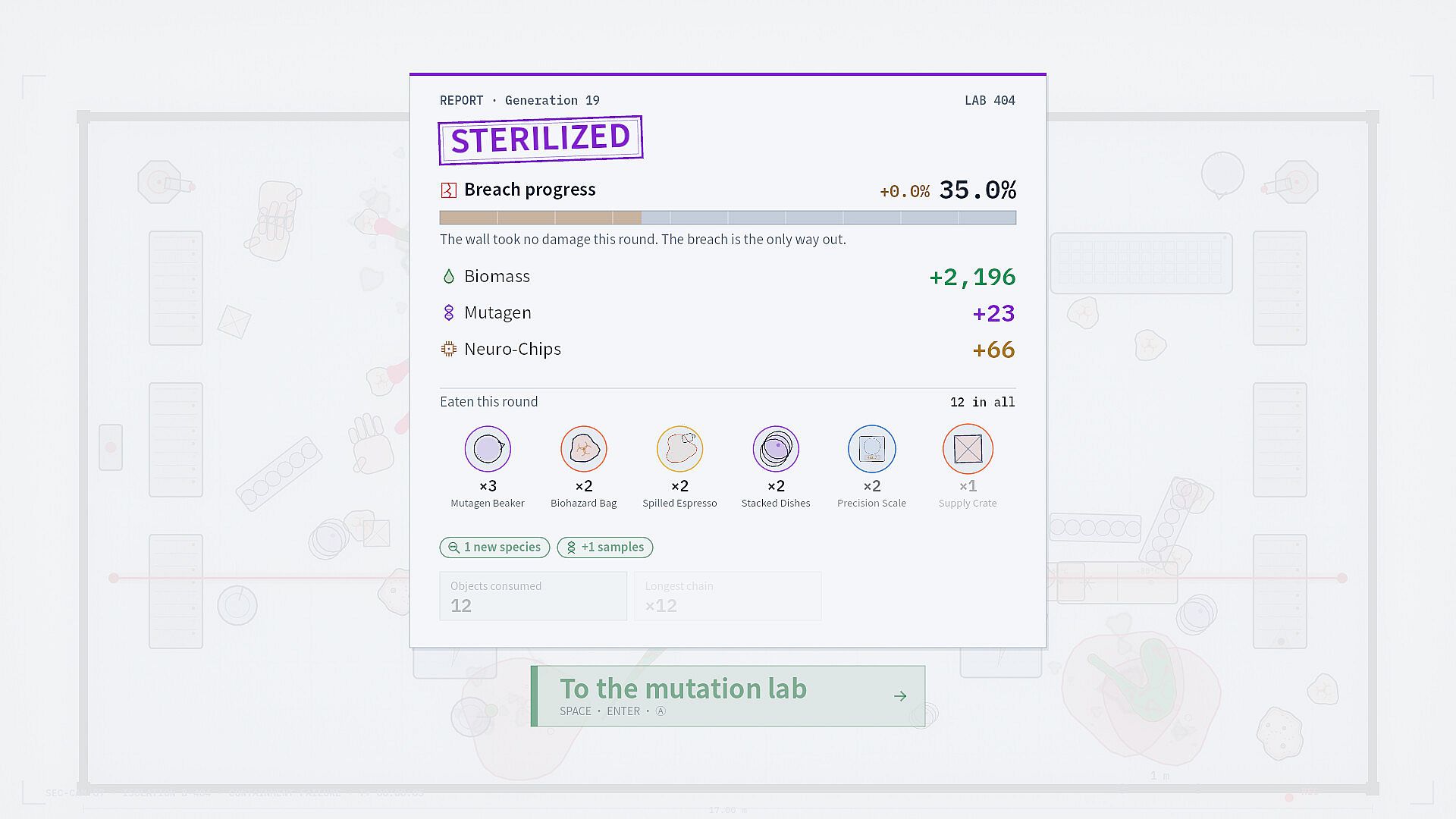
The loop begins in a contained lab environment where the cell follows cursor movement to feed on microbes and other items. Time limits trigger UV sweeps that reset progress, allowing players to invest consumed resources into a mutation system before the next attempt. This cycle repeats across expanding locations, with each barrier breach shifting the view outward to reveal prior areas as smaller elements in a larger setting.
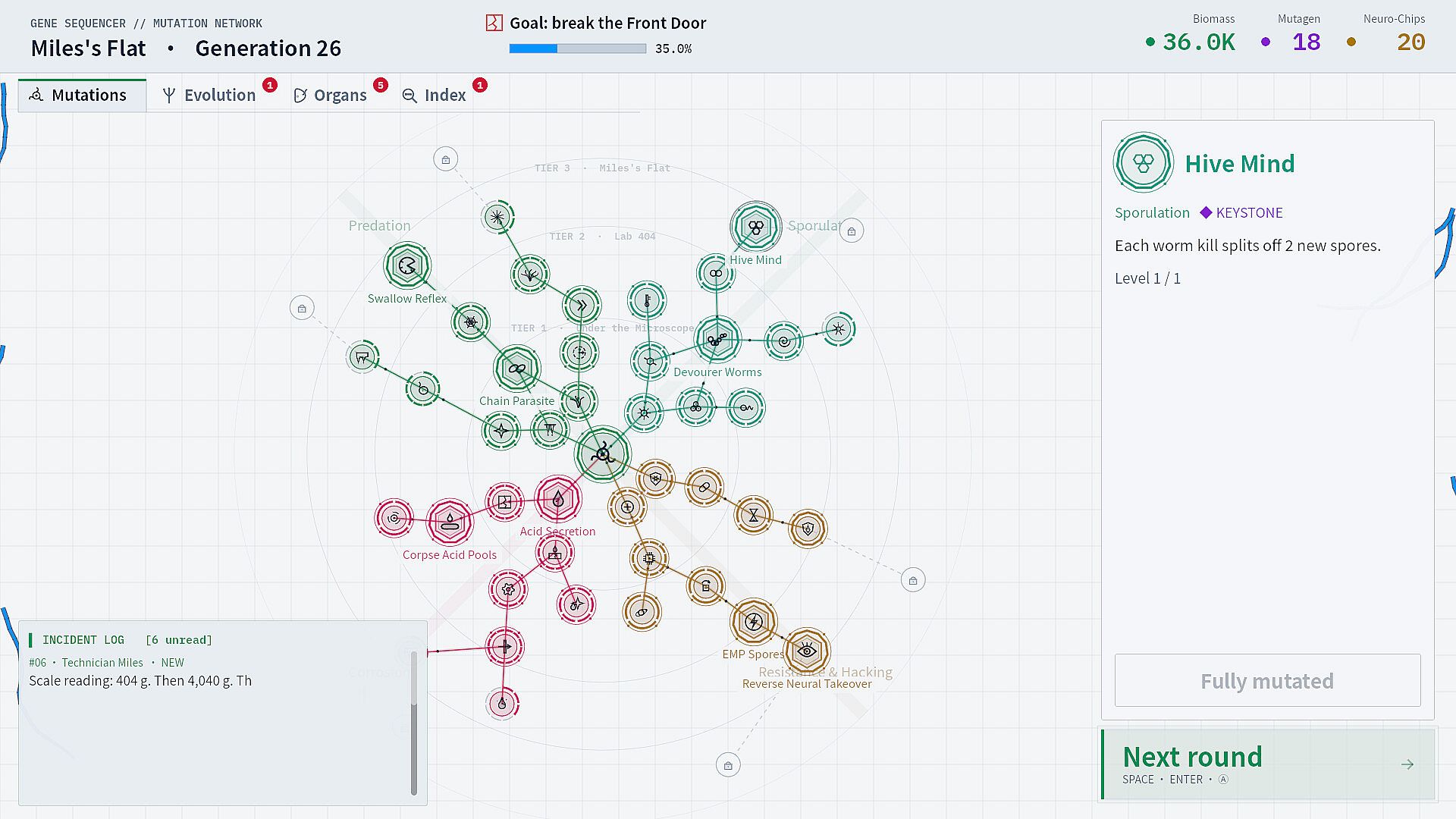
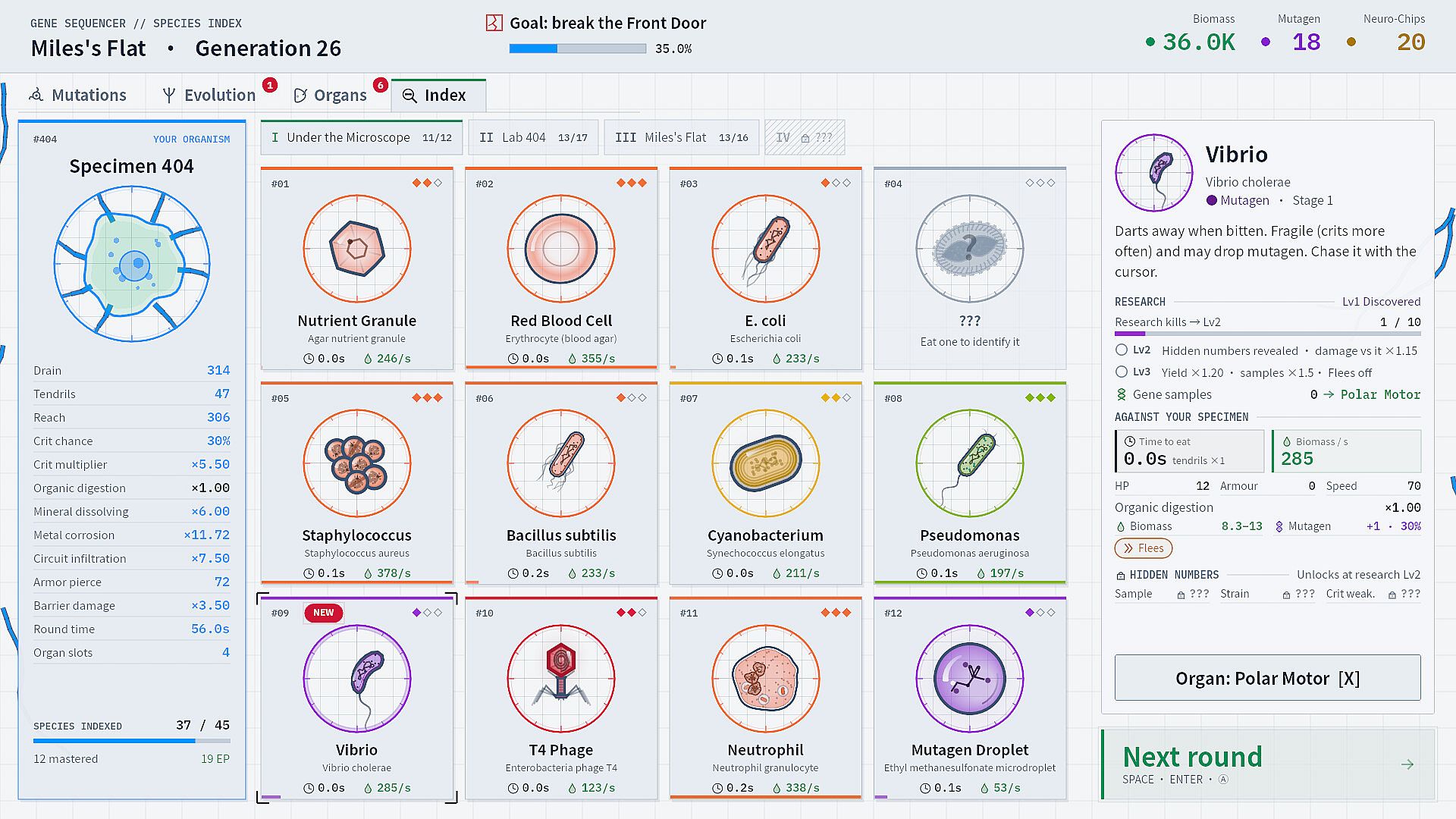
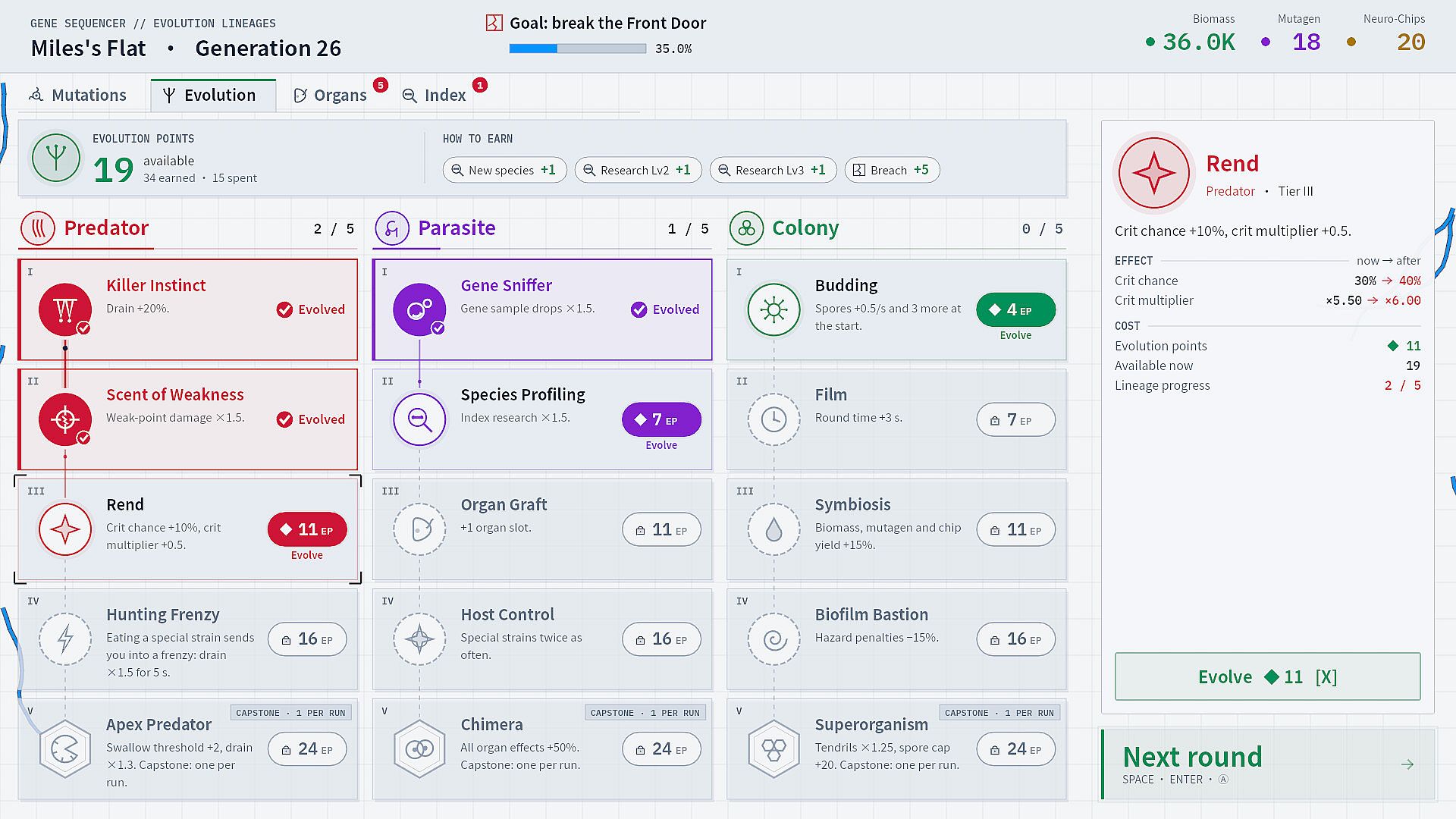
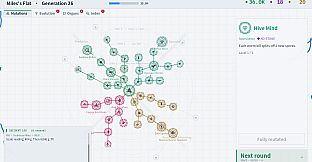
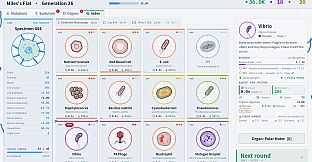
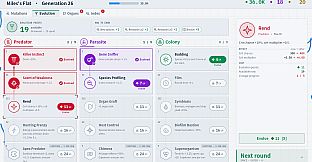
Mutations form a network of 49 nodes divided into four branches focused on predation, sporulation, corrosion, and resistance with hacking elements. A separate nine-node Colossus ring activates during city-scale play. Eleven keystones alter hunting behavior, such as Chain Parasite or EMP Spores, while 25 organs develop from gene samples of consumed species. Four evolution lineages guide overall development: Predator, Parasite, Colony, and Colossus. An index tracks 69 edible items, each with researchable hidden stats and vulnerabilities.
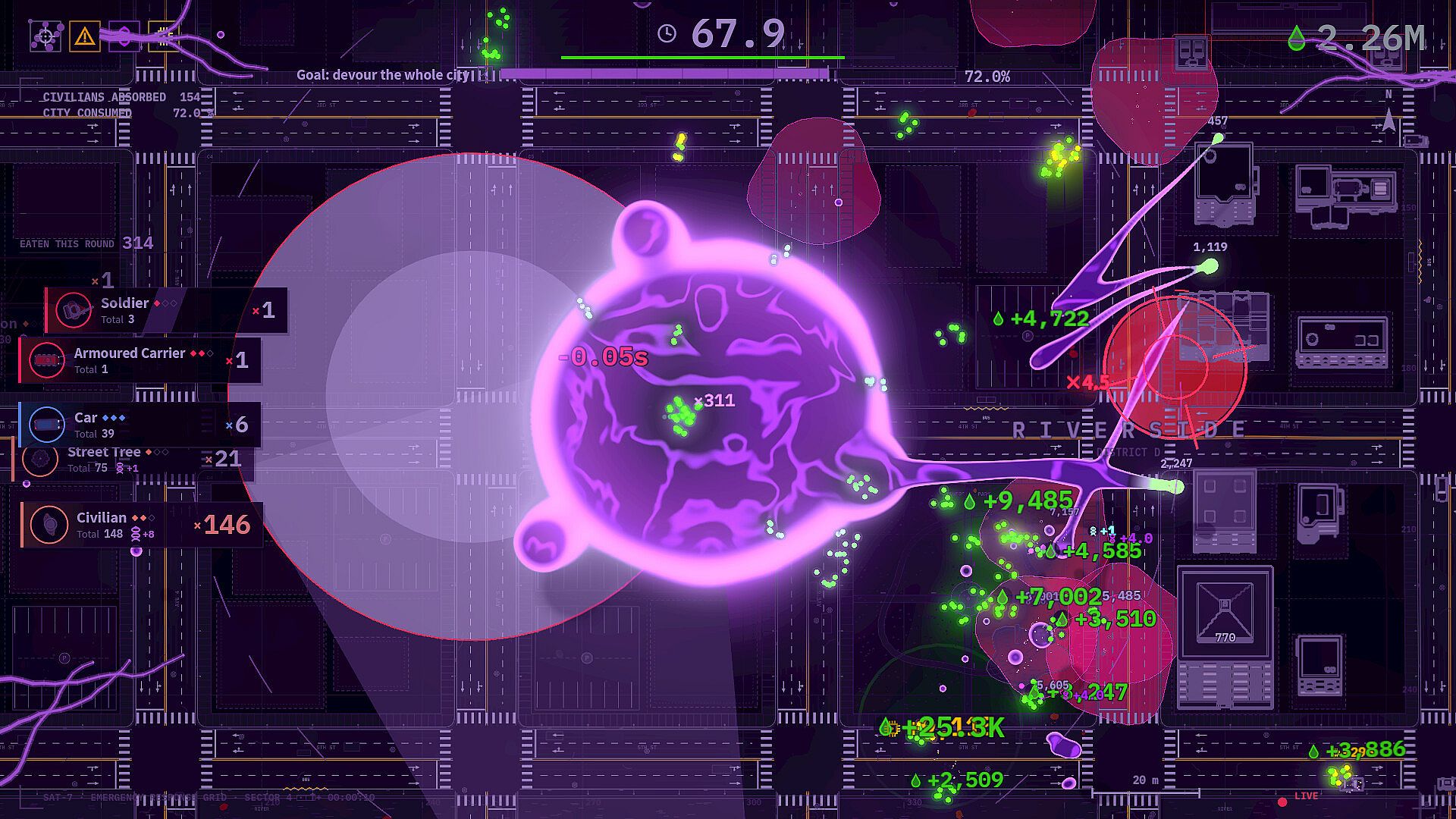
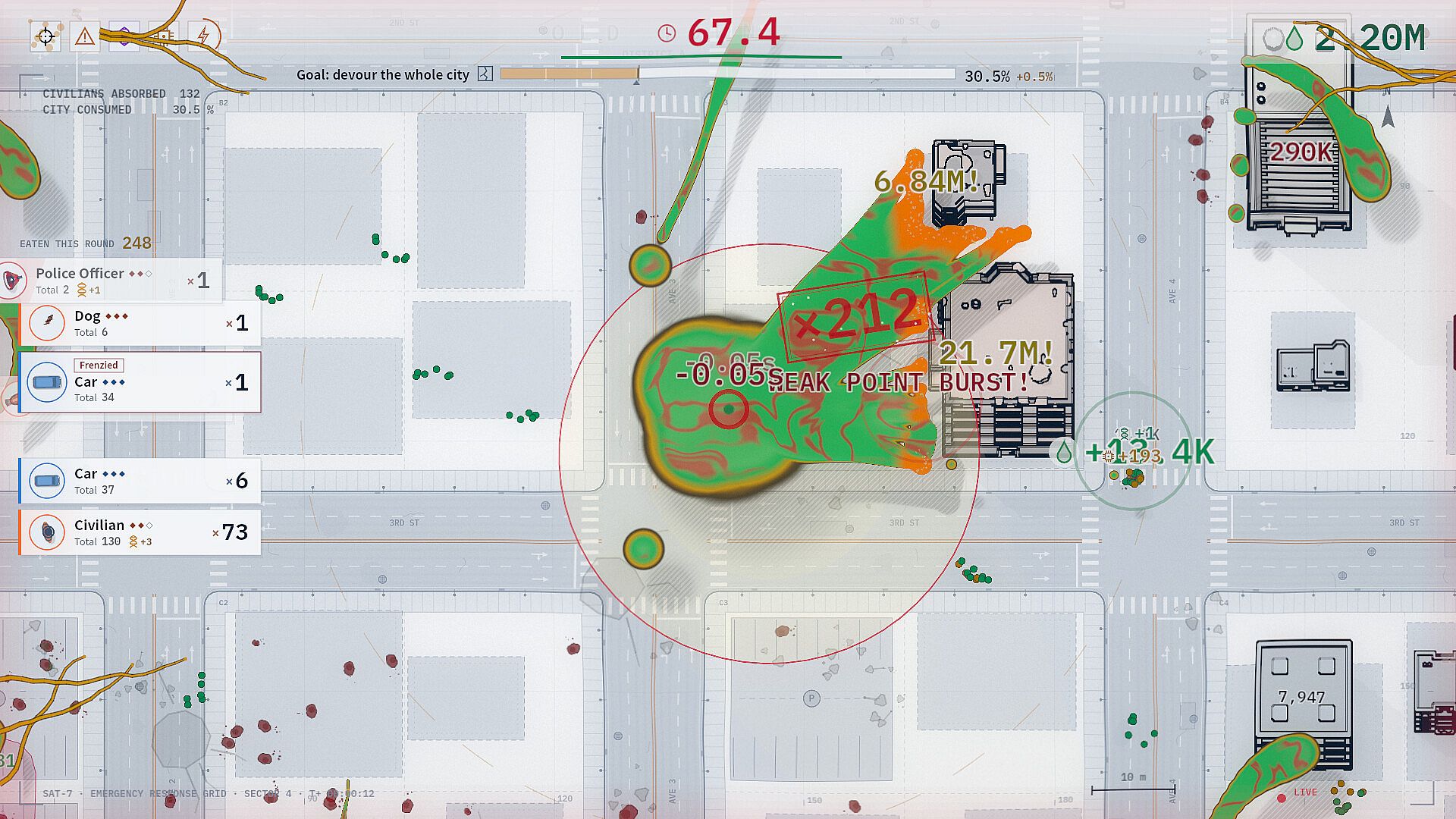
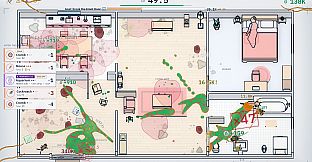
Progression tracks damage counters, combos, and a breach meter that advances steadily. Real microbes like E. coli and phages appear alongside lab hazards such as turrets and guards, then transition to urban elements including crowds, police responses, and helicopters. The clinical line-art style renders these stages in 3D until night falls on the city after 65 percent consumption.
Game Modes
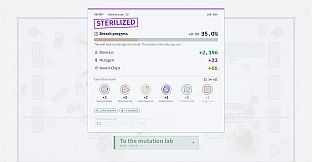
The main story mode follows the cell from its initial dish through the lab, a technician's flat, and into the city districts, culminating at the Central Tower with its sterilization beam. Players cut power, survive the beam, topple the structure, and finish the remaining mass, leading to one of two endings. This path takes roughly two hours to complete.
Experiment Mode unlocks after the story and introduces five additional specimens, each operating under distinct rules and its own mutation network. Deinococcus thrives on radiation, Phage Swarm infects targets for later bursts, Cyanobacteria relies on light that can be disrupted, Magnetospirillum forms chains to ram and retrieve metal, and Physarum establishes feeding points for network growth. Five protocols, ranging from Standard Culture to Protocol 404, layer extra constraints, with each experiment number creating fresh dish and city layouts under varying conditions like incubator warmth, rain, or martial law.
Progression and Mutations
Short rounds encourage repeated attempts, with resources from each session funding upgrades that carry forward. The mutation network expands options for different playstyles, from aggressive predation to colony-style spreading or corrosion effects. Organs and lineages provide further customization based on what the cell consumes during runs.
Visual feedback includes growing scale as the cell breaches barriers, pulling the camera back to show the escaped area shrinking in context. Numbers for damage and combos rise with efficient feeding, while the breach bar pushes toward the next stage threshold.
Is It Worth Playing?
Cell Eats City suits players who enjoy cursor-driven incremental mechanics and short-session progression in a single-player casual indie format. The verified systems deliver consistent feedback through feeding, mutation choices, and escalating scale without requiring constant input. A free demo is available on PC, allowing direct testing of the core loop and mutation network before any purchase decision.
Those drawn to games with clear growth loops, branching upgrades, and a contained campaign length will find the structure rewarding. Experiment Mode adds replay value through varied specimens and protocols once the story concludes. The game runs on standard PC hardware with mouse support and optional controller input, making it accessible for focused play sessions.