




Chip Builder is an indie simulation game centered on digital logic and circuit design. Players take on the role of a junior engineer at ChipCorp and construct a functional computer starting from basic components. The experience unfolds through a narrative that teaches the principles of binary processing and hardware architecture one step at a time.
Gameplay
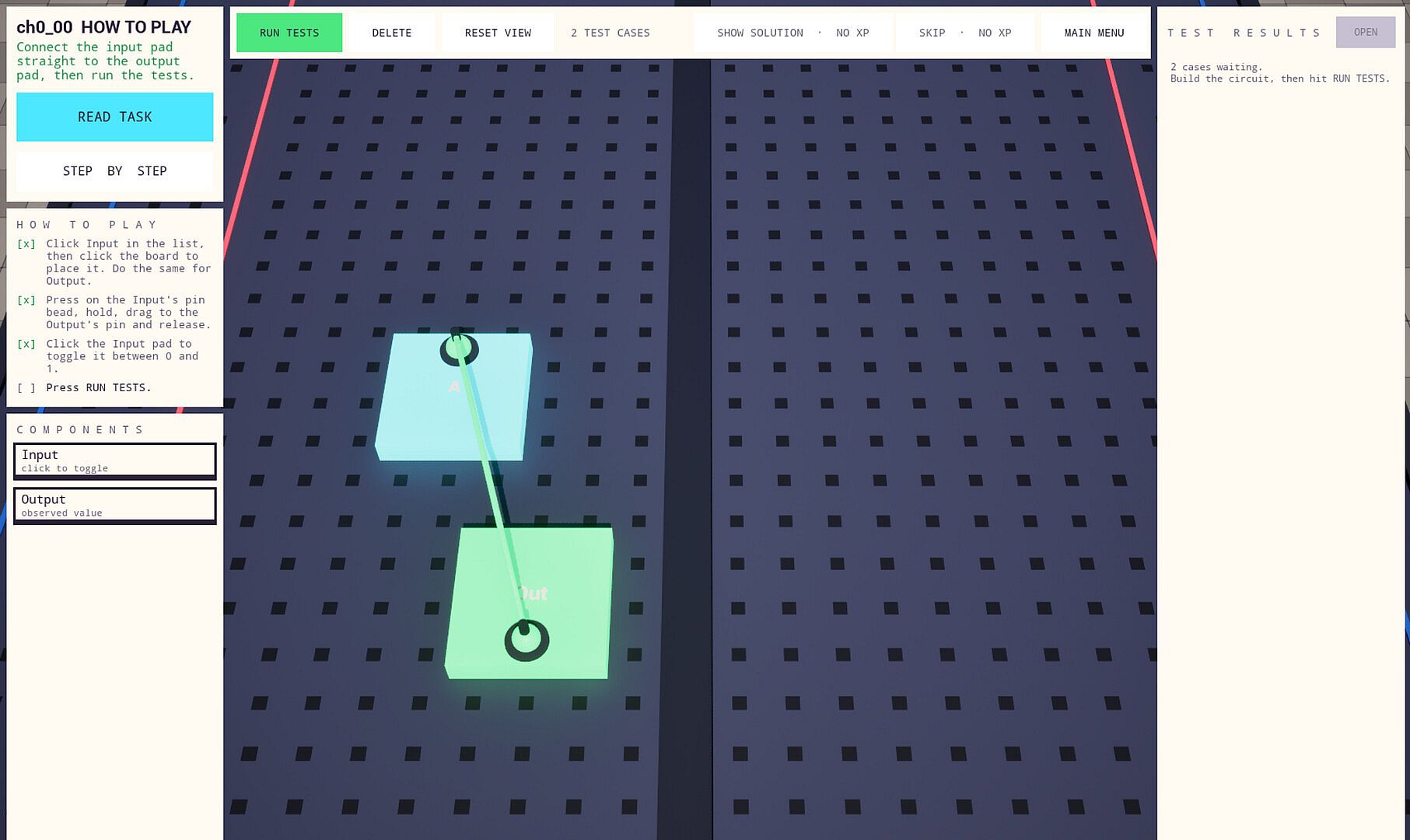
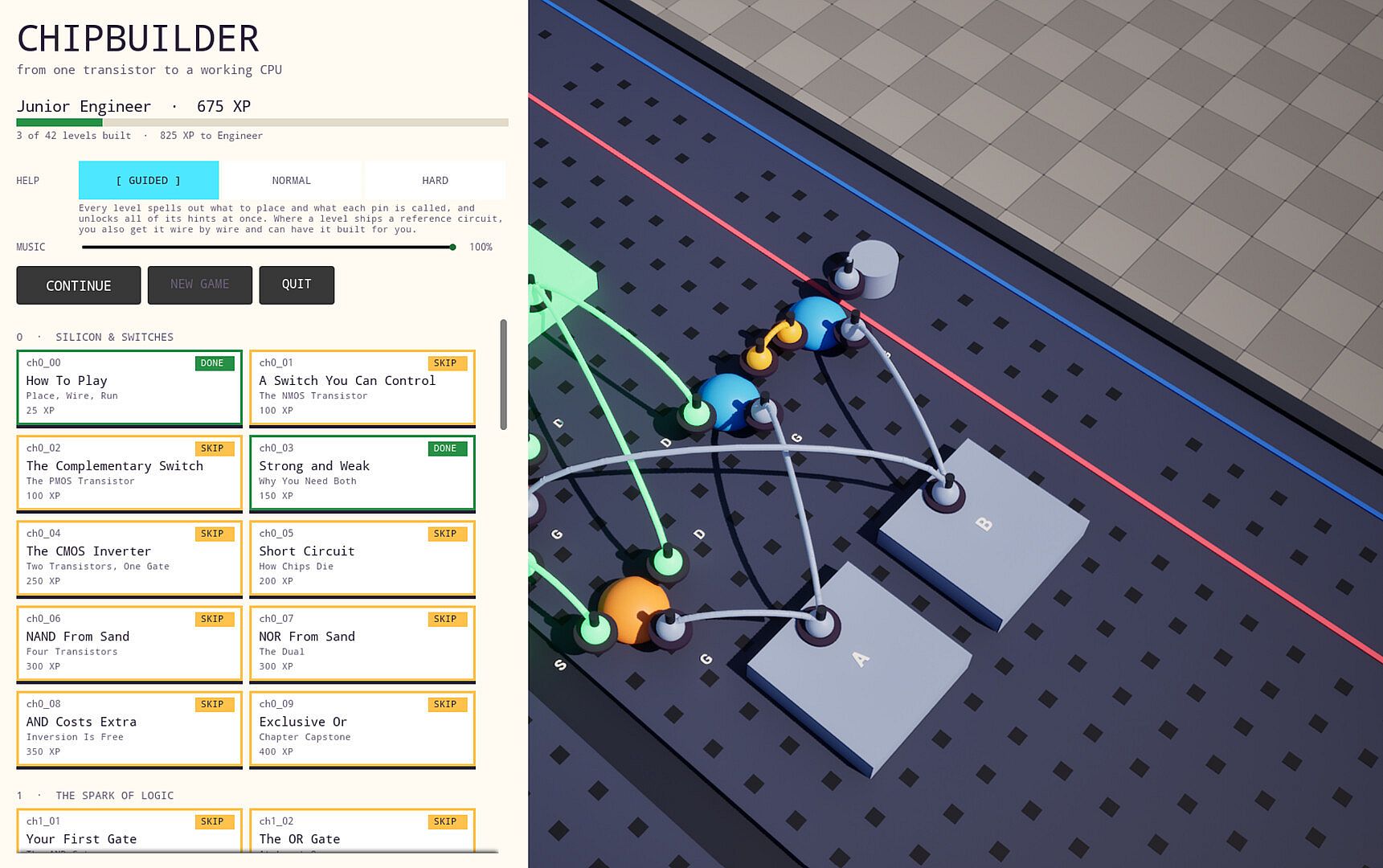
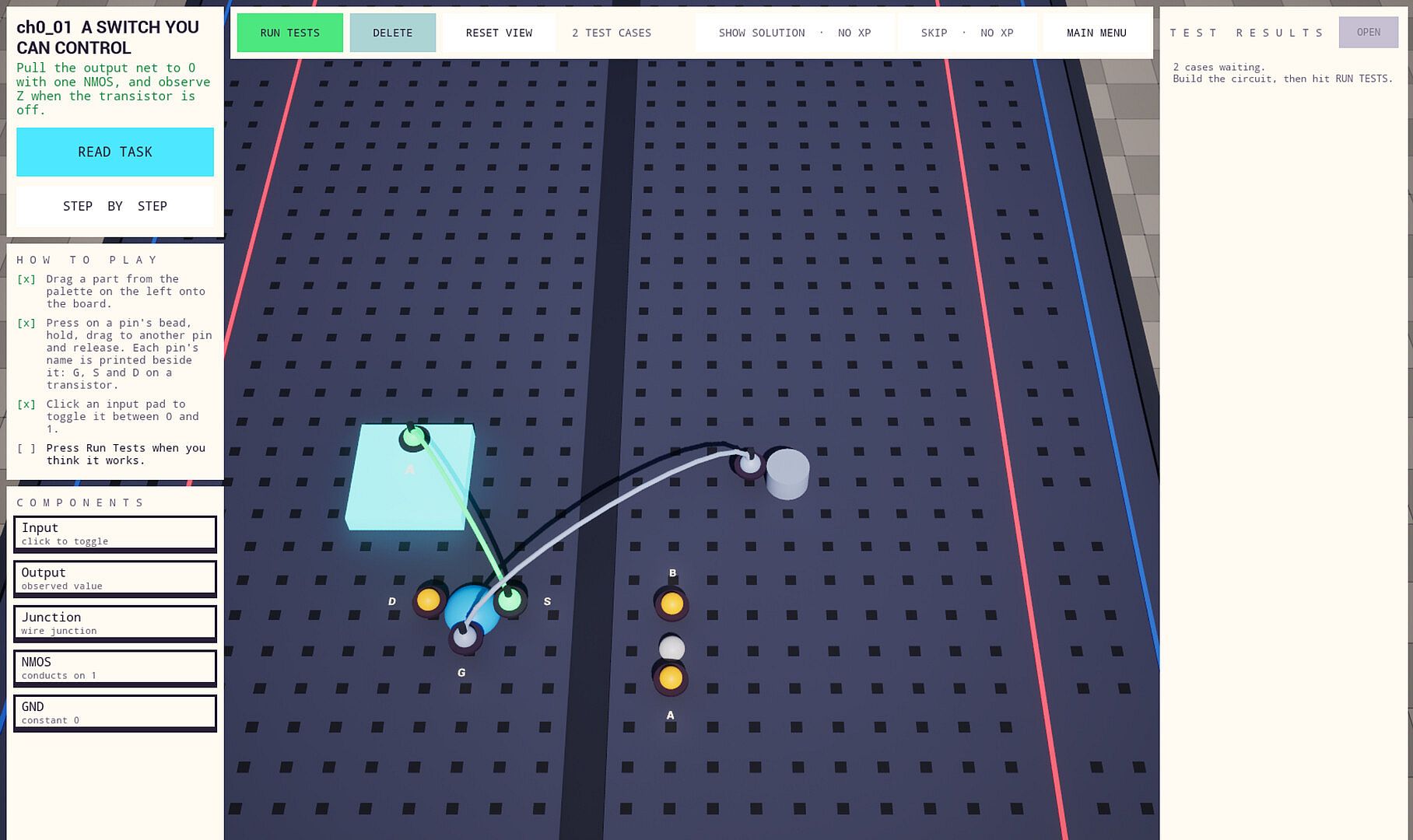
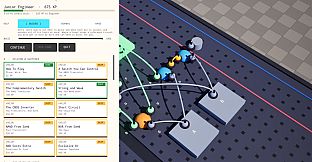
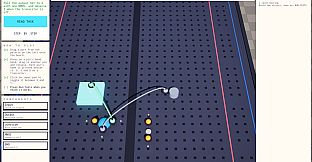
The core loop revolves around an interactive circuit canvas where components are dragged from a palette and connected with wires. Signals propagate in real time, allowing immediate observation of how inputs affect outputs. Each completed circuit undergoes verification against its required truth table, enforcing precise logic without room for approximation or shortcuts. This system builds understanding progressively as players advance through structured lessons that introduce gates, combinations, memory elements, and larger systems.
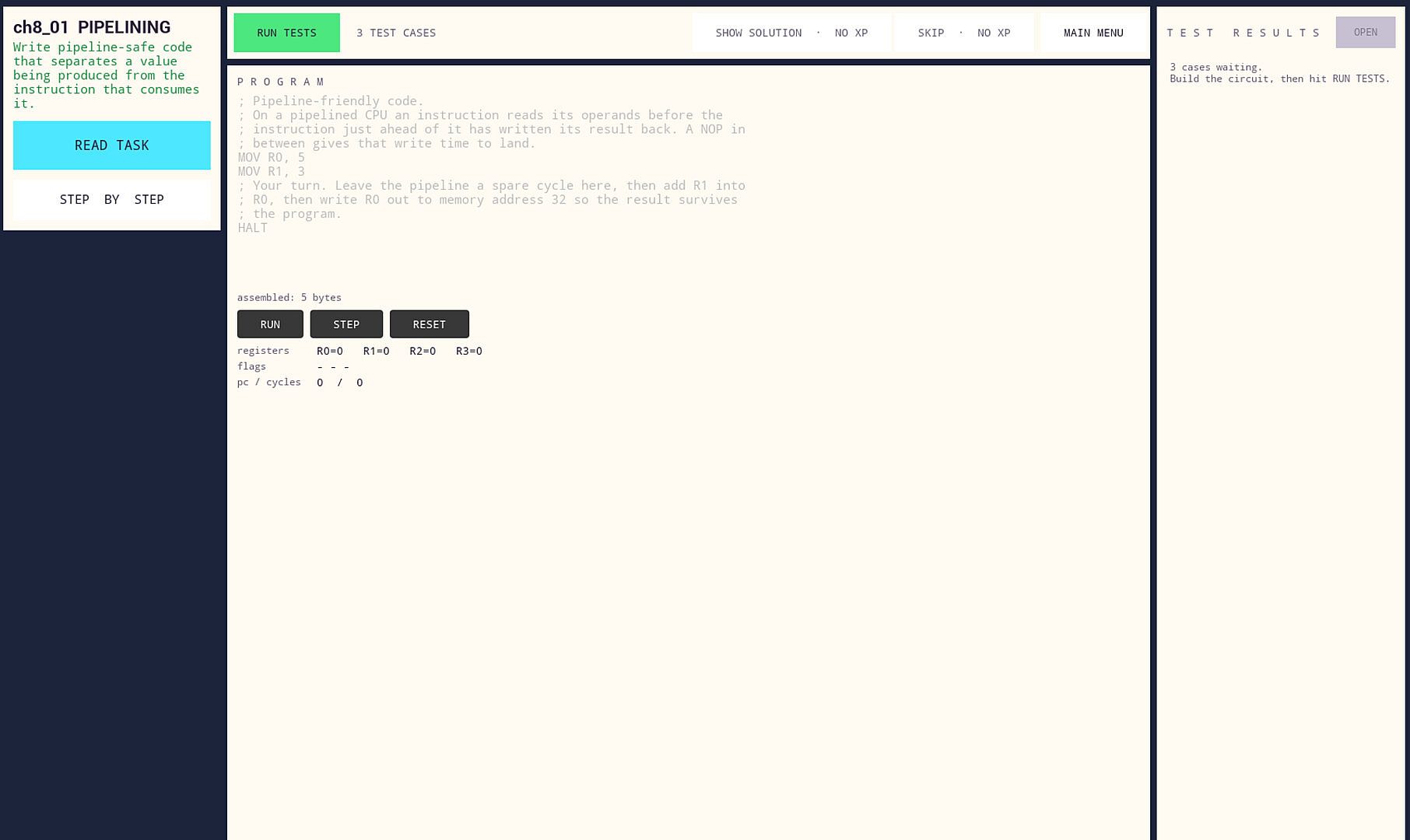
Progression follows a clear sequence of topics that mirror real computer engineering concepts. Early stages focus on fundamental gates that handle 0s and 1s. Later stages require combining those gates into functional units such as adders and multiplexers, then incorporating memory with latches, flip-flops, and registers. Advanced sections cover memory hierarchies, arithmetic logic units, full CPU assembly including program counters and control units, machine code interpretation, and finally architectural features like pipelining and caching. The entire journey culminates in a working CPU assembled entirely by the player.
Game Modes
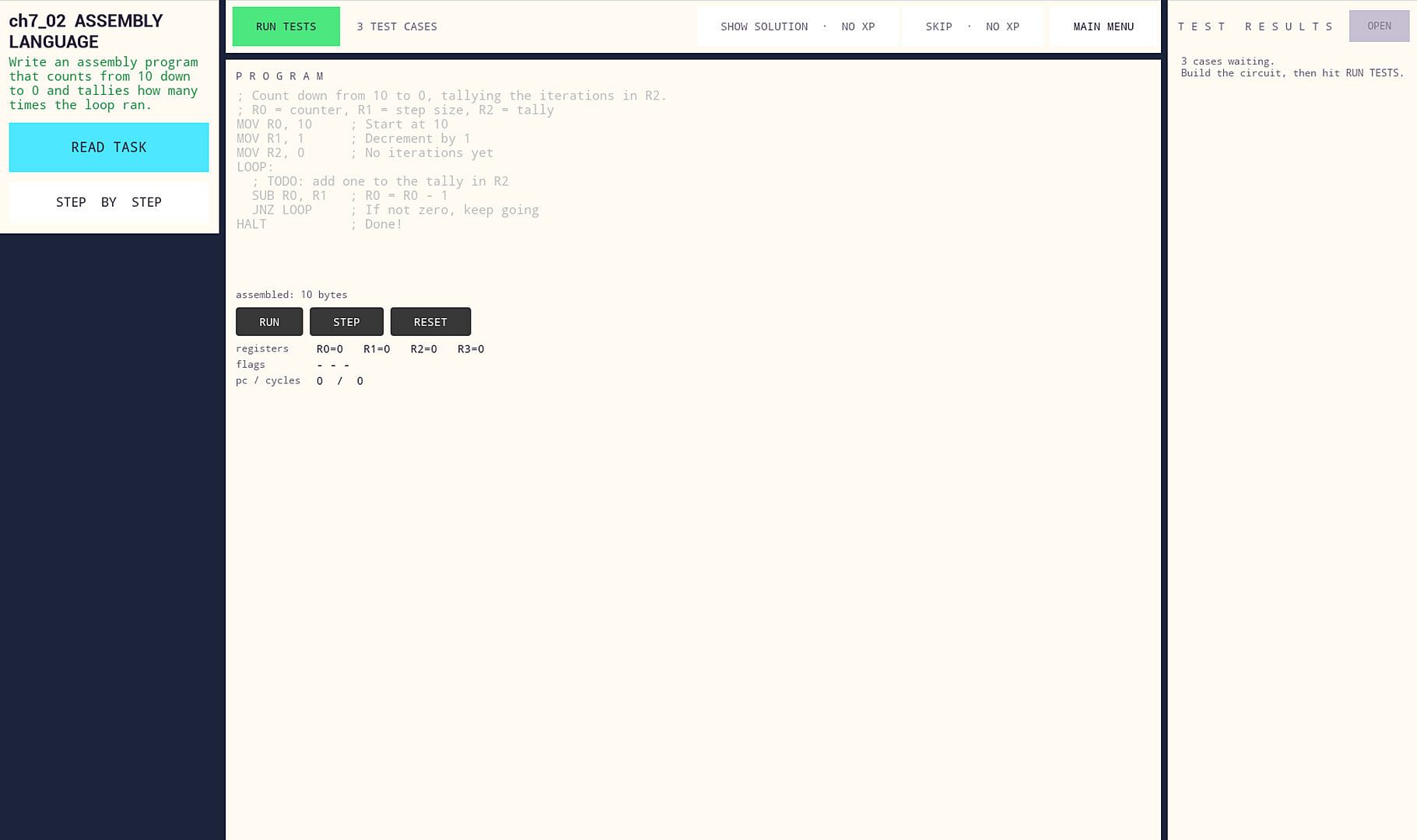
Chip Builder offers a single-player narrative campaign structured across eight chapters and thirty-two levels. Each chapter presents a focused set of puzzles tied to a specific stage of computer construction. Chapter 1 introduces basic logic gates. Chapter 2 covers combinational circuits. Chapter 3 explores sequential memory elements. Chapter 4 addresses storage systems and address decoding. Chapter 5 centers on the arithmetic logic unit. Chapter 6 assembles the complete CPU datapath. Chapter 7 bridges hardware and software through machine code and assembly. Chapter 8 provides open-ended exploration of advanced topics including pipelining, caching, and custom instruction set design. No separate competitive or multiplayer modes exist; the emphasis remains on guided, story-driven problem solving.
Narrative and Progression
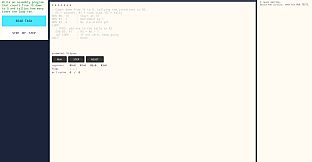
A story-driven framework connects the technical challenges. Players advance as a junior engineer learning the trade at ChipCorp, with lessons framed as professional milestones. The narrative provides context for each new concept without overshadowing the hands-on circuit work. Completion of earlier chapters unlocks the tools and knowledge required for later ones, creating a steady sense of building capability. The final stages allow freer experimentation once the foundational CPU is operational.
Is It Worth Playing?
Chip Builder suits players interested in logic puzzles, computer architecture, or educational simulations. Its truth-table verification and live signal propagation deliver immediate feedback that reinforces accurate design. The campaign structure of eight chapters and thirty-two levels provides a complete path from basic gates to a functional CPU. Those who enjoy methodical problem solving and technical depth will find the experience rewarding. Availability is limited to PC, and the game stands alone without additional modes or expansions. Individuals seeking fast-paced action or social features may prefer other titles, while those drawn to digital logic and hardware fundamentals will appreciate the focused, hands-on approach.