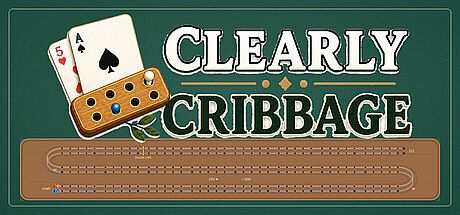


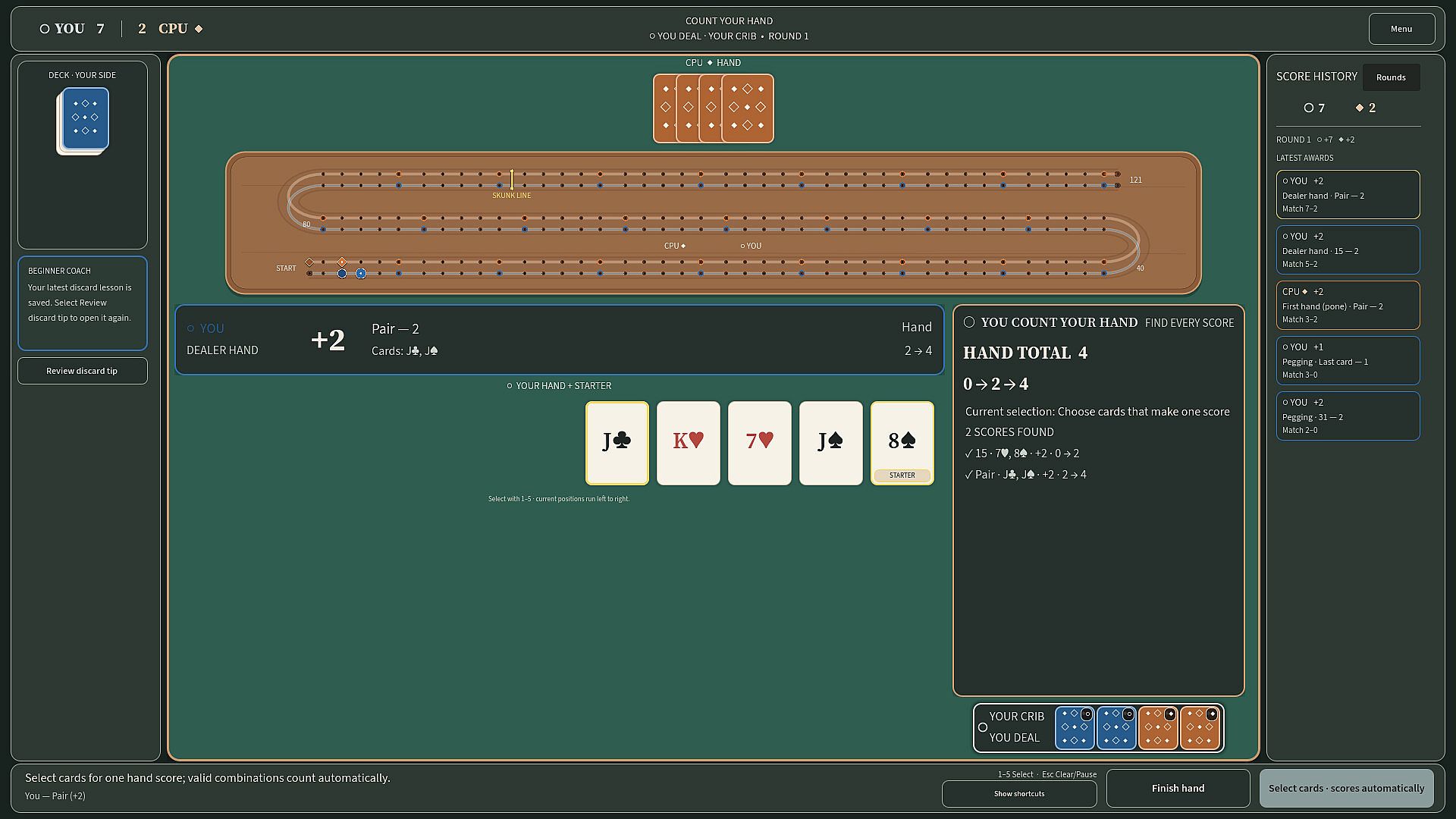
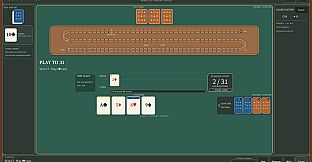
Clearly Cribbage is a single-player strategy card game built around the traditional rules of cribbage. Players face a computer opponent on PC in matches that center on discarding to the crib, pegging during the play phase, and counting combinations to reach 121 points first. The experience stays faithful to core cribbage mechanics while adding tools that support both newcomers and returning players who want to sharpen their counting and decision-making.
Gameplay
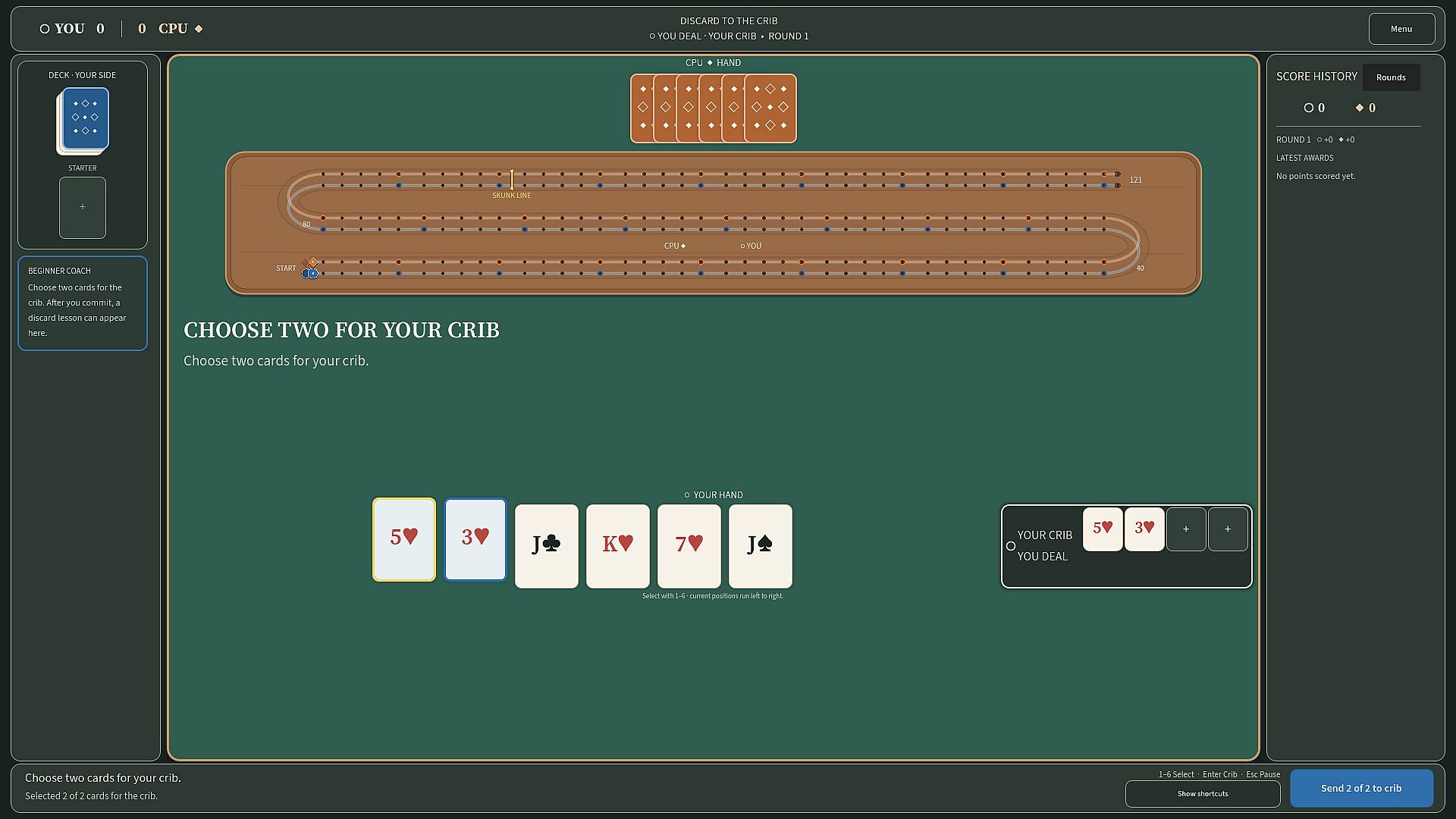
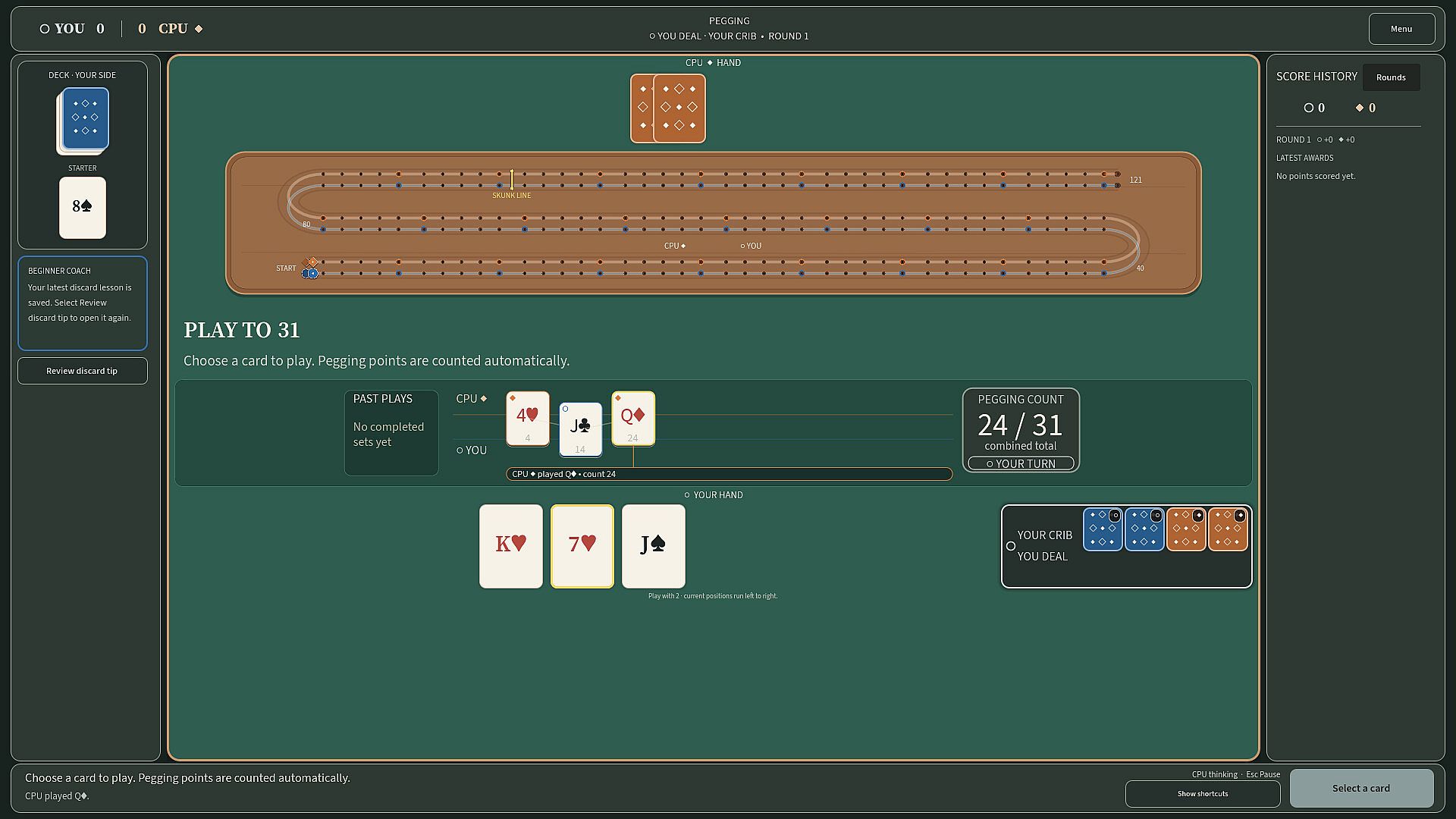
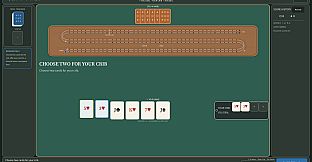
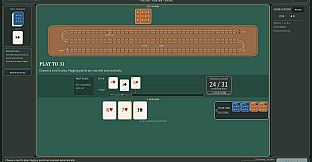
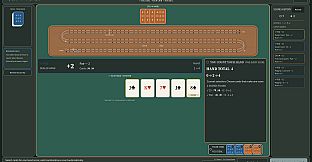
Each match begins with a cut to determine the first dealer. Players receive six cards and select four to keep while sending the remaining two to the crib. The play phase follows, with cards turned face up in turn as the running total climbs toward 31. Points accumulate for pairs, runs, and combinations that total fifteen during this pegging sequence. Once the cards are exhausted, scoring shifts to the show phase where each player tallies points from their own hand and the dealer additionally counts the crib. The game tracks the overall score automatically, yet players must identify every scoring combination themselves, including subtler opportunities such as a second fifteen that might otherwise go unnoticed.
The flow repeats across multiple hands until one side reaches or passes 121. Every decision carries weight because discards shape both the immediate hand and the potential value of the crib later in the round. Pegging requires attention to the running total and the cards already played, while the final count demands systematic review of fifteens, pairs, runs, and nobs. The computer opponent follows consistent rules, allowing players to focus entirely on their own strategy without external distractions.
Game Modes
Four distinct difficulty settings adjust how much assistance the computer provides during scoring. Beginner mode identifies any points a player overlooks and automatically adds them to the score. Intermediate mode reveals missed points after the fact but requires the player to claim those points through their own actions. Advanced mode withholds all feedback until the entire match concludes. Cutthroat mode introduces the strictest challenge by allowing the computer to invoke Muggins and claim any points left uncounted by the player.
These settings scale the level of guidance and penalty without altering the underlying cribbage rules. A player can move between difficulties across different sessions to match their current comfort with counting or to practice under greater pressure. The progression encourages gradual improvement in spotting combinations quickly and accurately.
Learning the Game
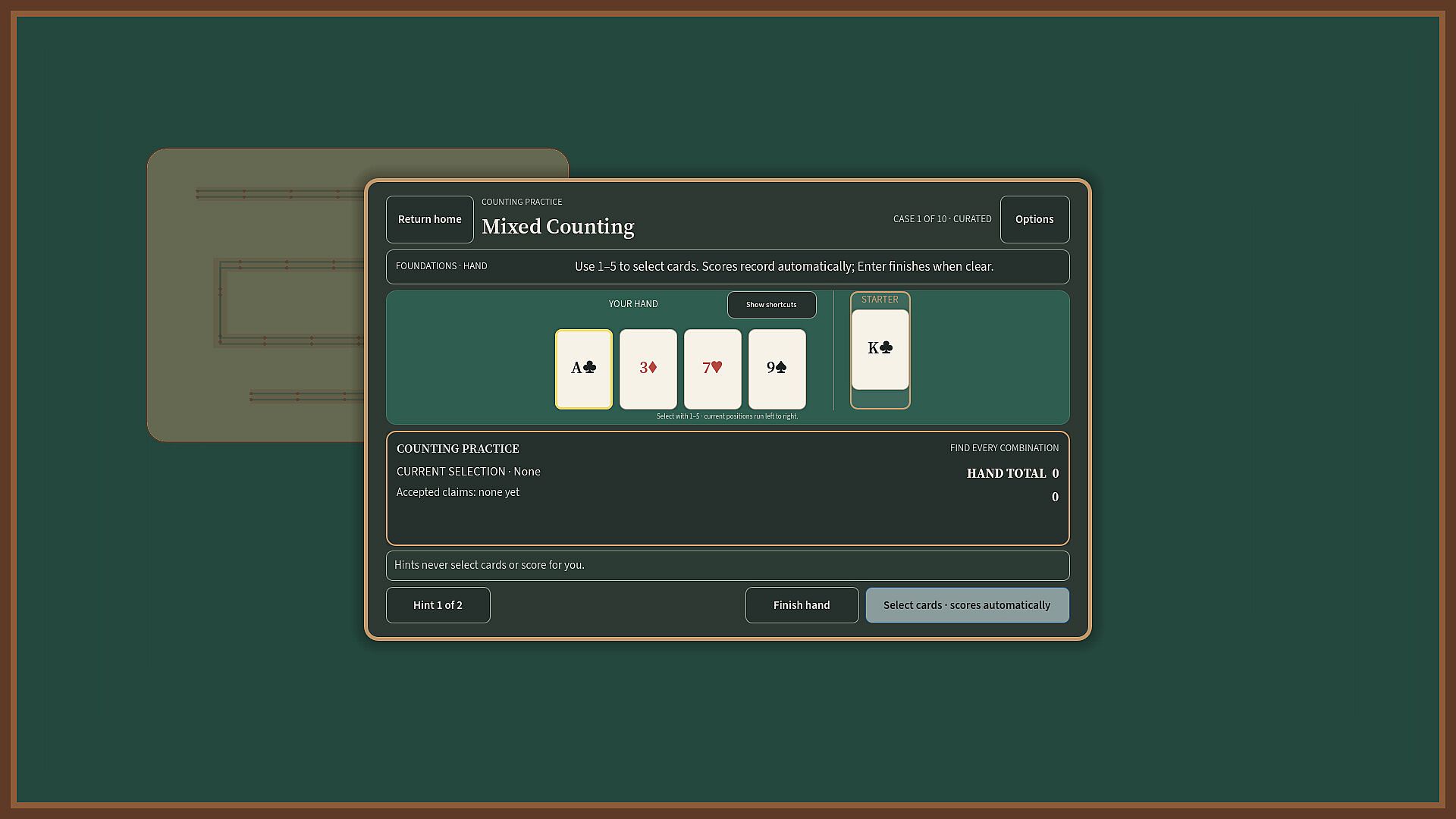
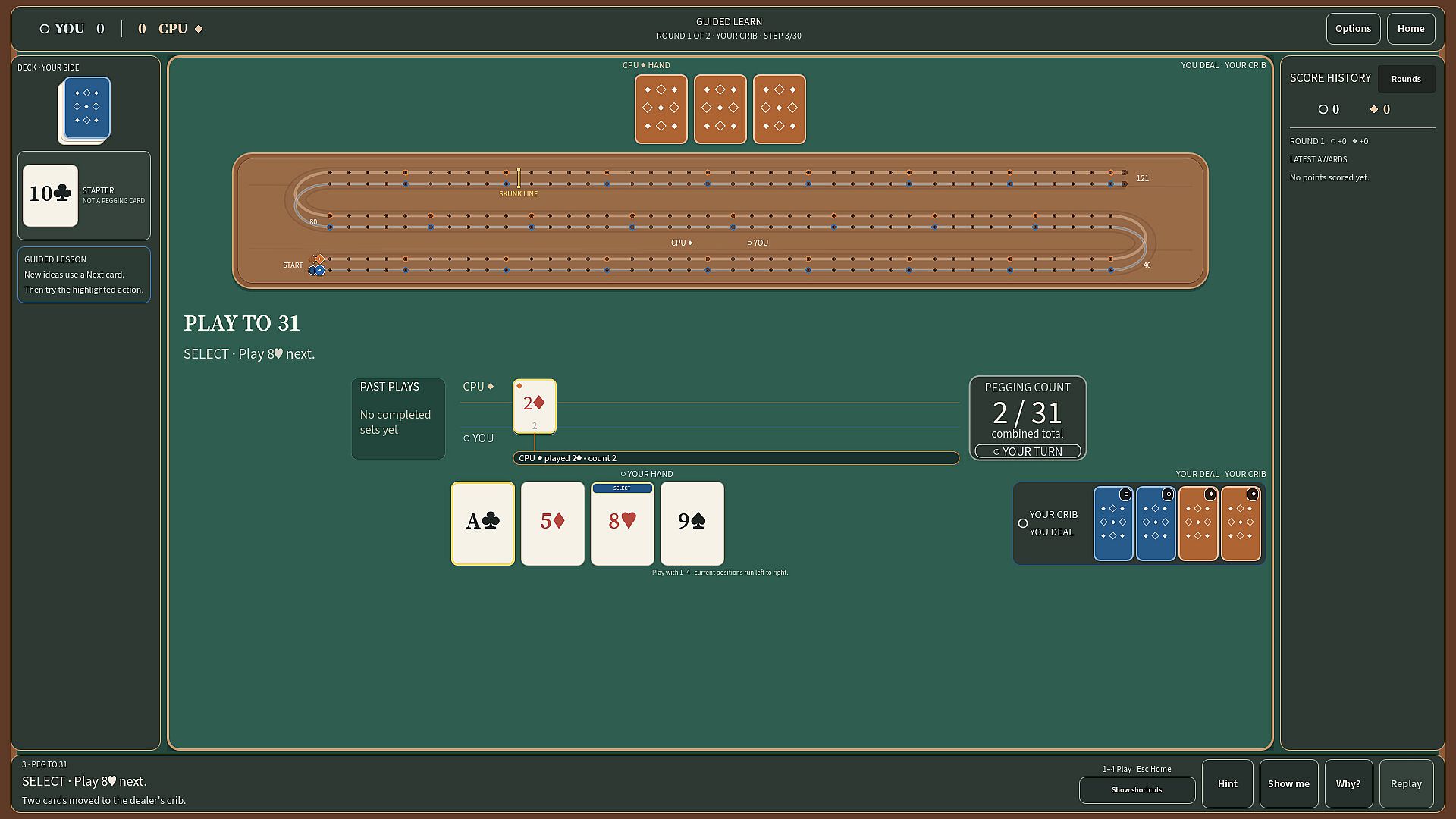
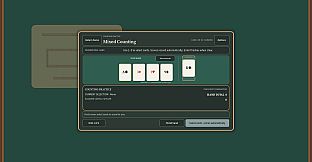
New players receive several built-in options to build familiarity before committing to full matches. A short guided lesson walks through the basic sequence of deal, discard, pegging, and show. A table tour highlights the layout and explains where cards move during each stage. Separate practice activities let users count sample hands without any match on the line, reinforcing recognition of fifteens, pairs, runs, and other combinations. Rules and examples remain accessible at any time for quick reference during play.
These resources focus on the exact mechanics that appear in actual games rather than abstract tutorials. Players can repeat the practice counting sessions as often as needed to develop speed and confidence before facing the computer opponent at any difficulty level.
Is It Worth Playing?
Clearly Cribbage suits anyone seeking a straightforward, single-player cribbage experience that emphasizes personal counting skill over automated scoring. The four difficulty settings provide clear progression paths for beginners who need explanations and for experienced players who prefer minimal assistance or even penalties for missed points. The guided lesson, table tour, and dedicated counting practice give new players concrete ways to learn without frustration, while the core loop of crib selection and pegging remains unchanged from traditional rules.
Players who enjoy deliberate card games and want to improve their ability to spot scoring opportunities will find consistent value in repeated sessions. The free-to-play model removes any barrier to trying different difficulties or returning for additional practice. Those who prefer purely competitive or multiplayer formats may find the single-player focus limiting, yet the adjustable assistance levels make the game accessible across a wide range of skill levels and time commitments.