

Color Factory is an indie simulation game centered on building automated factories through color production and management on PC. Players begin with primary colors and expand into intricate networks that generate, transform, and deliver specific shades to meet production goals.
Gameplay
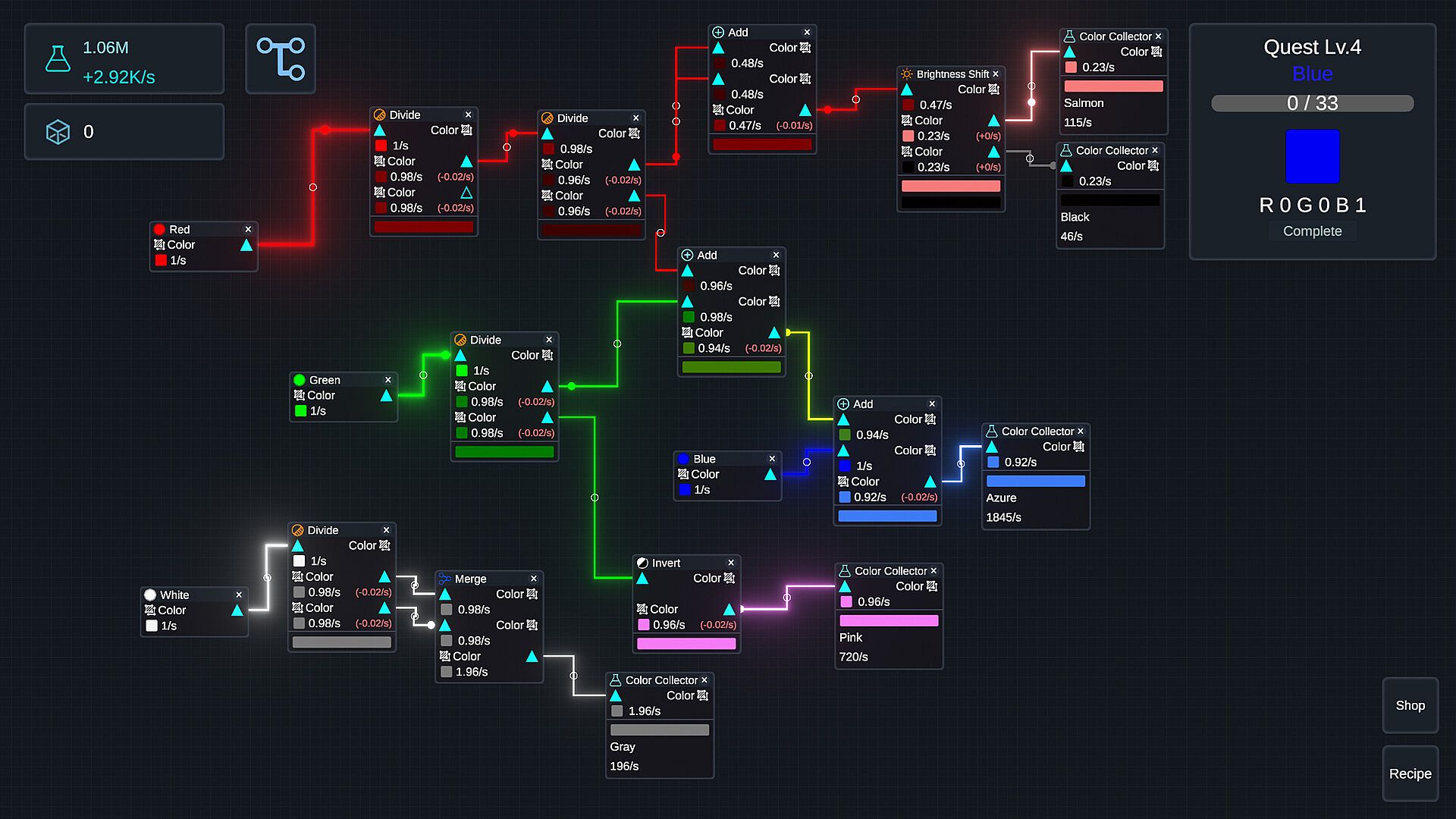
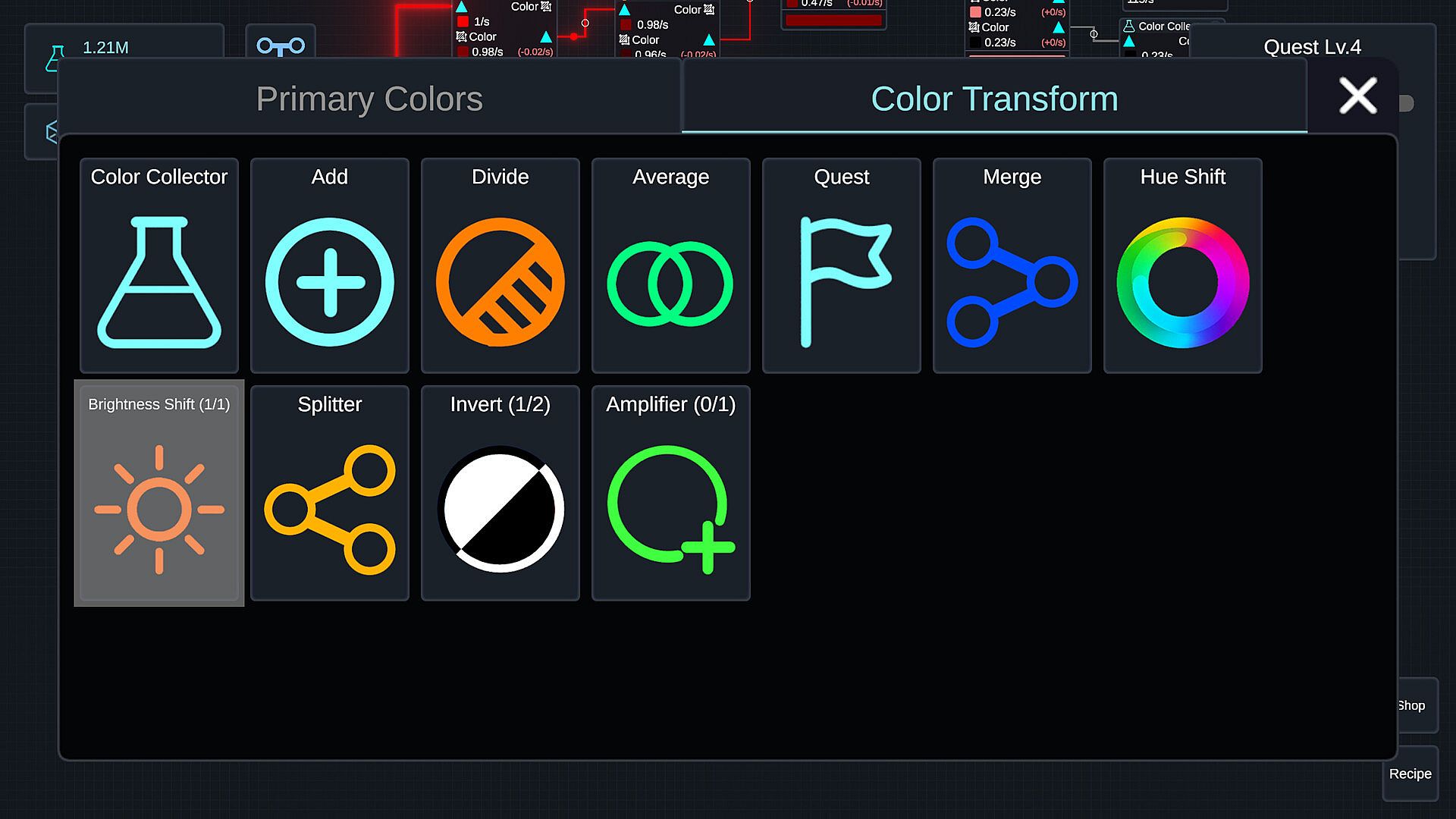
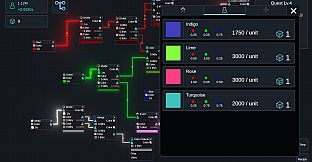
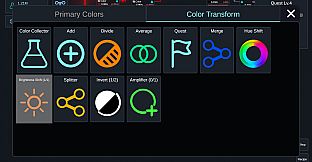
The core loop revolves around connecting nodes to handle color operations. Each node executes a defined function such as generating base red, green, or blue values, blending them through RGB combinations, splitting flows, or adjusting properties before routing outputs onward. Production lines form directly via these links rather than traditional conveyors, allowing compact or sprawling layouts that evolve with available tools.
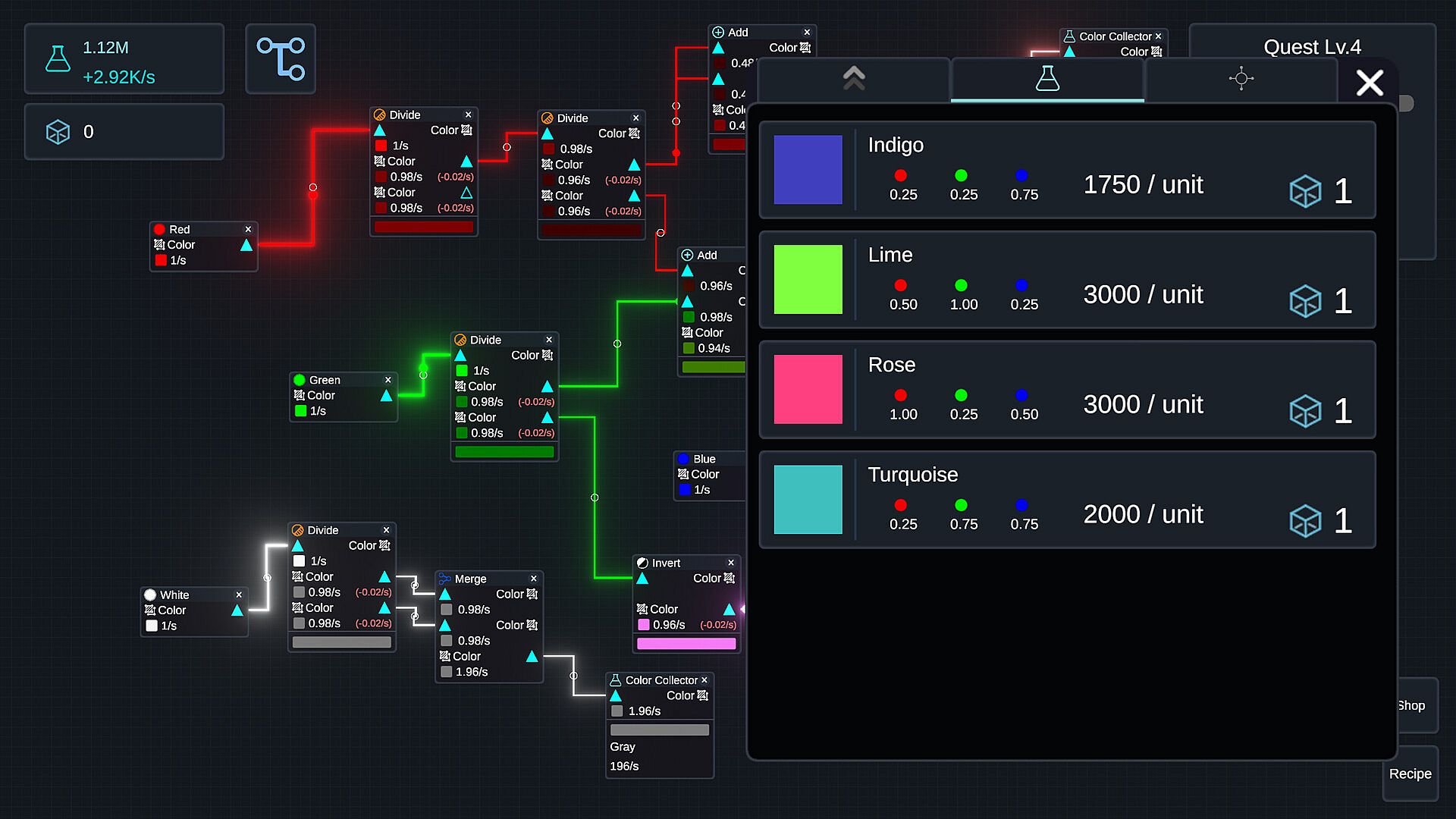
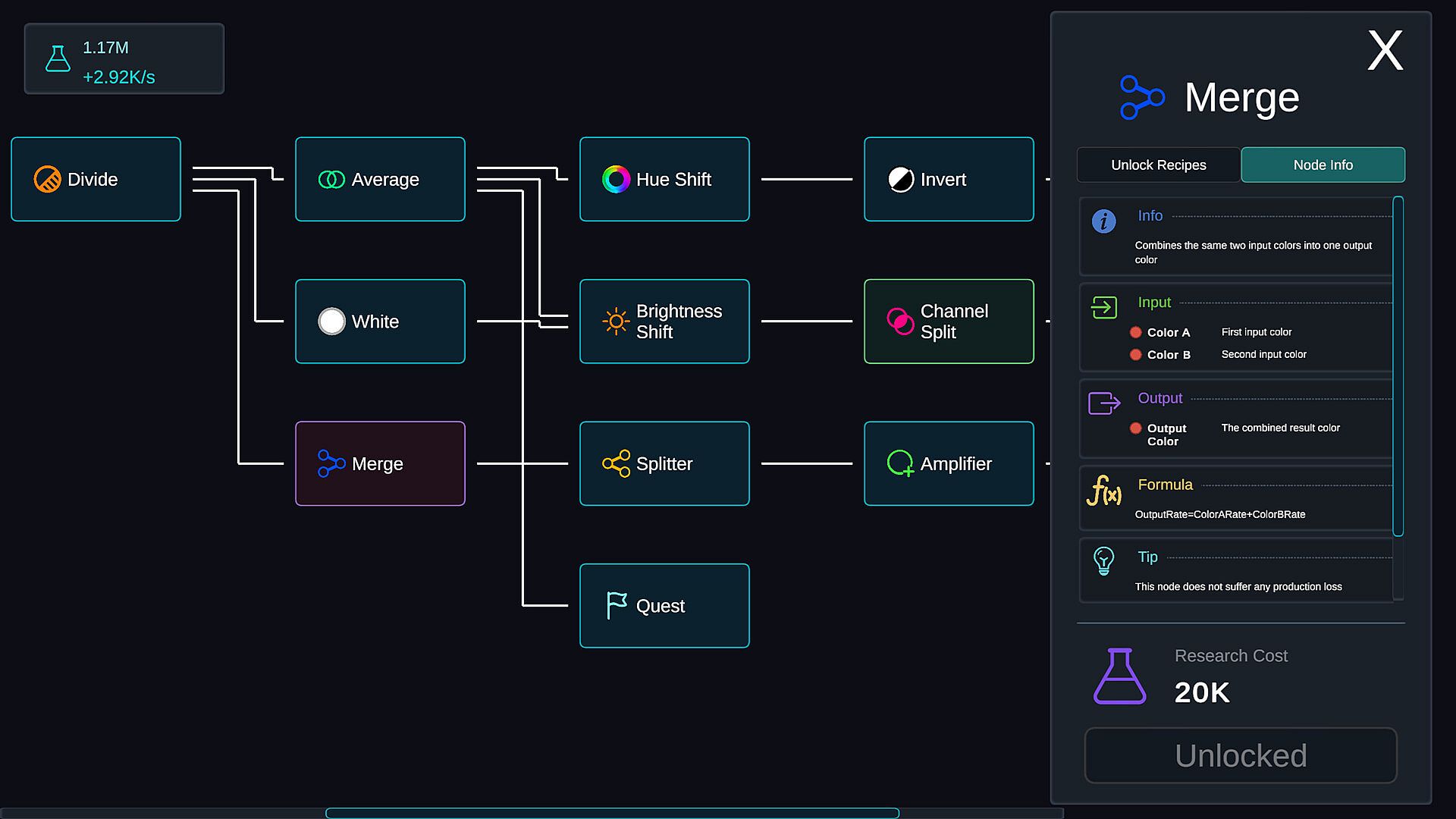
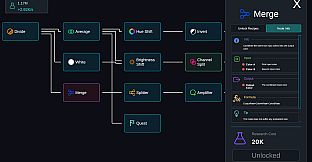
Recipes serve as objectives, requiring exact color outputs to complete tasks. Initial successes provide rewards while ongoing production yields research points. These points unlock new nodes, additional recipes, and expanded systems through a technology tree. Experimentation reveals hidden combinations, encouraging redesigns as capabilities increase.
Efficiency becomes central once basic setups function. Players balance input rates against losses, divide resources across branches, and refine connections to maximize throughput. Color movement remains visible in real time, highlighting bottlenecks or idle segments for immediate adjustments.
Game Modes
Color Factory operates as a single-player experience focused on creative automation and progressive expansion. There are no competitive or multiplayer elements, allowing uninterrupted focus on personal factory designs and optimization challenges.
Progression ties directly to recipe completion and research investment. Early stages emphasize basic color generation and simple blends, while later stages introduce complex transformations and multi-output networks. The absence of time pressure or external threats supports a deliberate pace suited to iterative building and testing.
Factory Building Mechanics
Node connections form the foundation of every production system. Direct links carry both color data and production volume, enabling precise control over how materials combine or separate. Specialized operations include splitting streams for parallel processing or merging flows to concentrate resources toward demanding recipes.
Redesign remains frictionless throughout. New unlocks often render prior layouts obsolete, prompting players to simplify branches, add efficiency nodes, or expand into specialized sub-networks. This flexibility supports multiple valid approaches, from tightly integrated compact factories to broad interconnected webs producing diverse outputs simultaneously.
Is It Worth Playing?
Color Factory delivers a focused automation simulation that rewards careful planning and iterative refinement. Its node-based system and color-mixing mechanics provide a distinct twist on factory building, appealing to players who enjoy systems management without combat or resource scarcity pressures.
Reception has been very positive, with 88 percent approval from available user reviews. The game suits those seeking a relaxing yet strategic single-player title where experimentation and efficiency improvements drive long-term engagement. Current development includes planned additions such as a level editor and weekly challenges, indicating ongoing support for the core experience.
Overall, it stands as a solid choice for fans of indie simulation games centered on production networks and discovery through trial and adjustment.