









Connection Empire is a strategy simulation game set in Germany beginning in 1983. Players start a small data and terminal service company and guide its growth into a full internet provider through careful planning and ongoing decisions. The experience blends business management with historical technology progression in a single-player format focused on network building and customer relations.
Gameplay
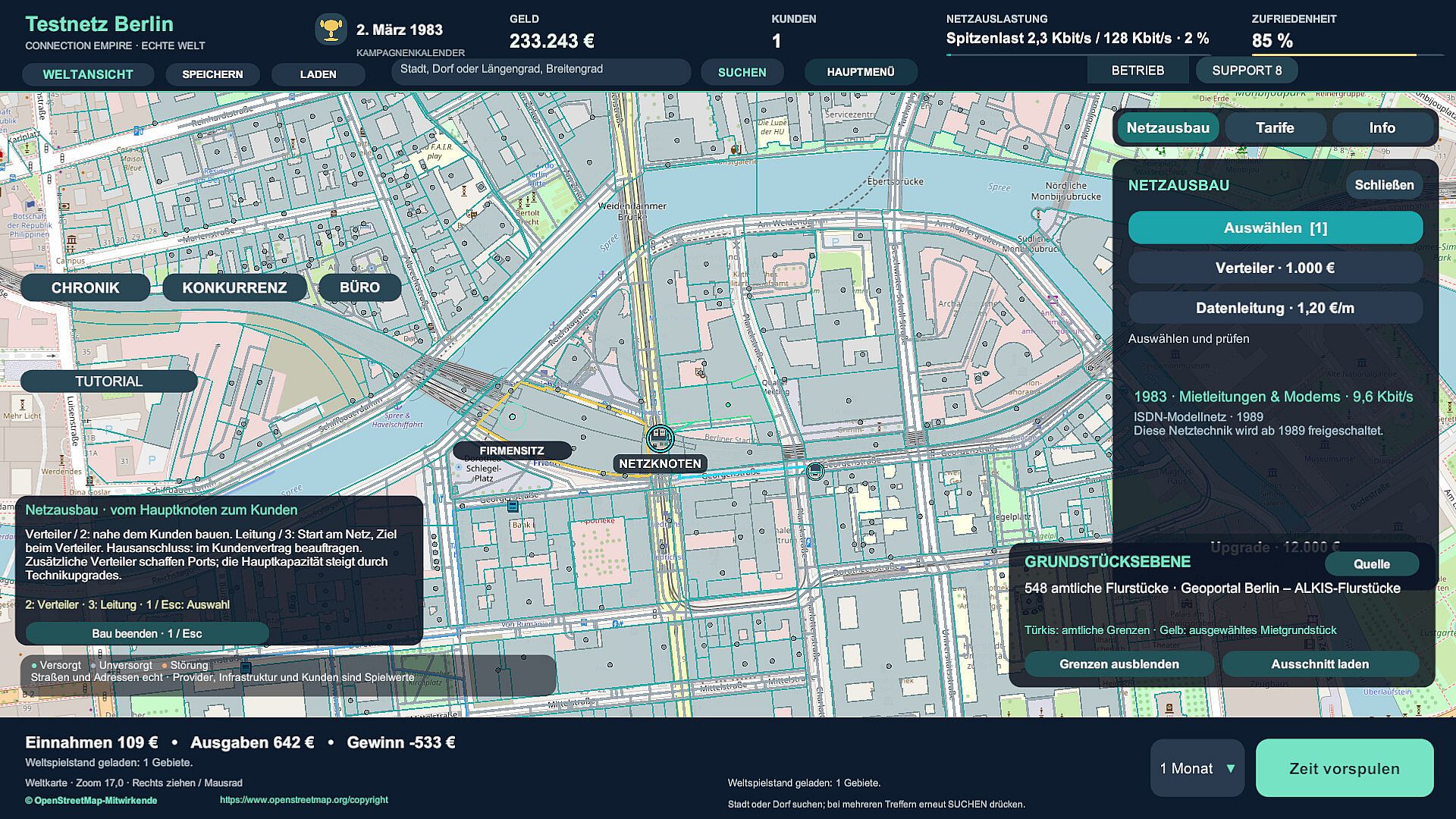
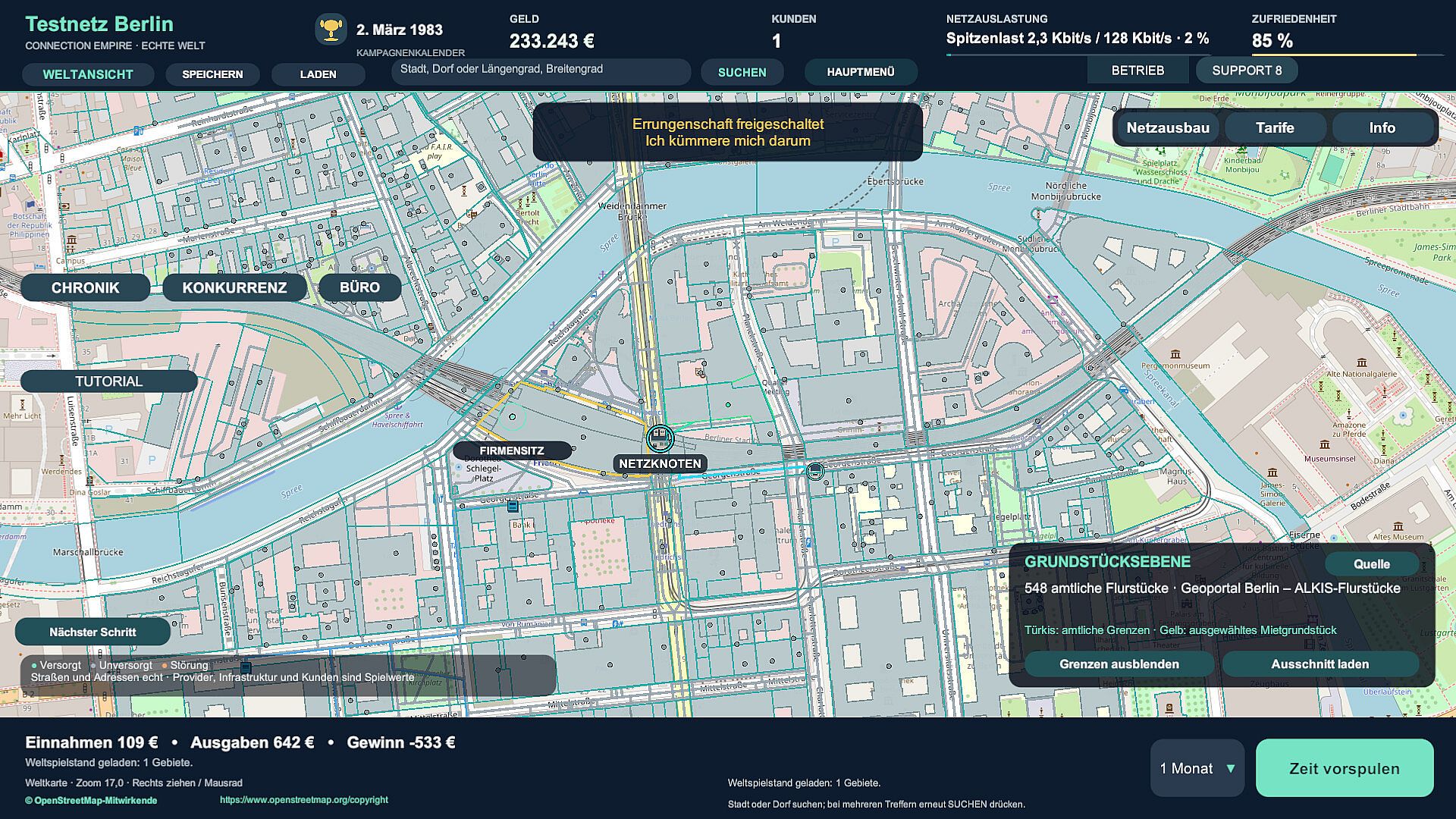
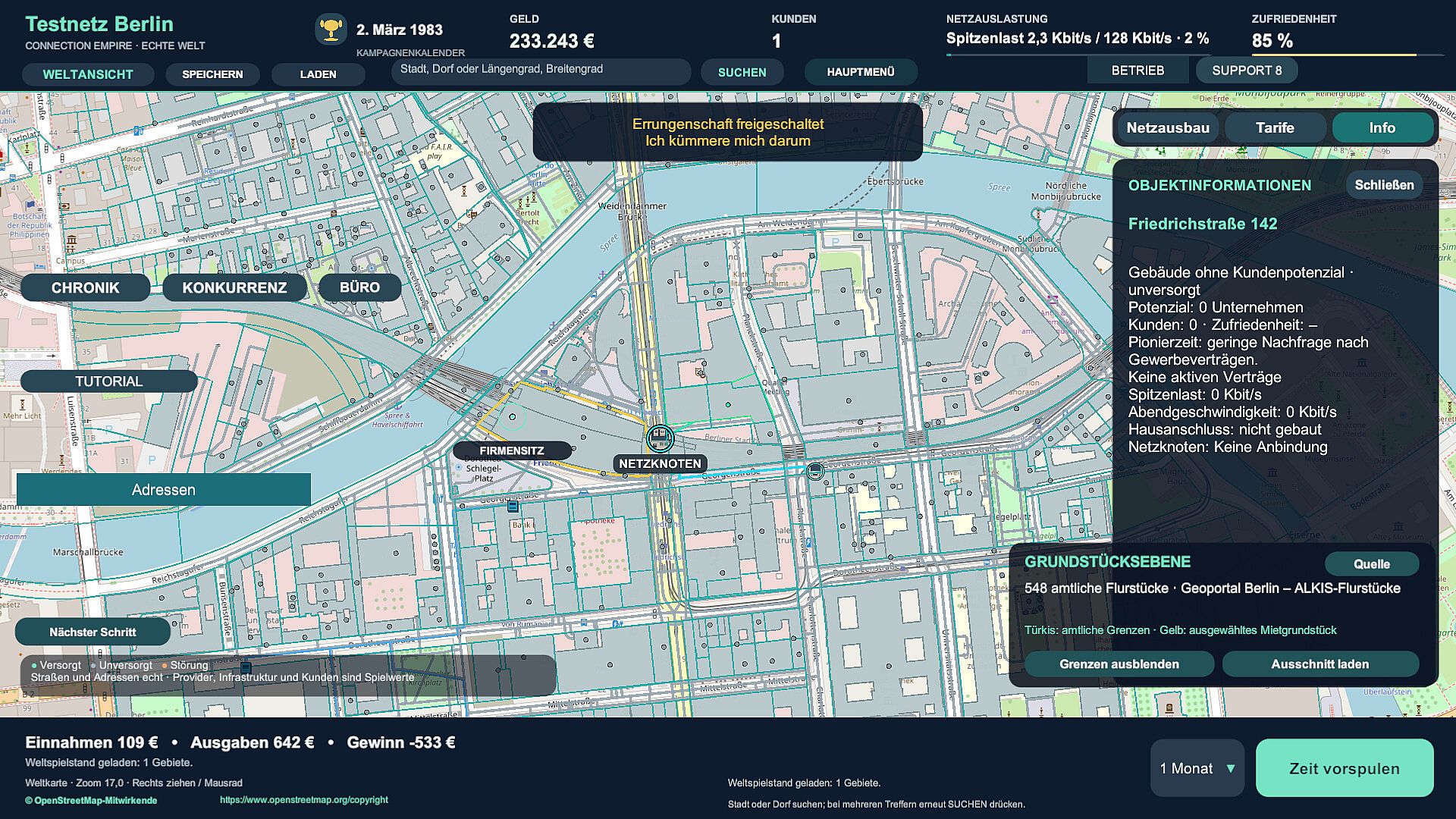
The core loop centers on expanding a reliable network while managing finances and customer needs. Players select a headquarters location on a map using real OpenStreetMap data for streets, buildings, and addresses. From there, they connect structures, install distribution cabinets, and route lines along existing roads, with every connection consuming capacity that must be maintained.
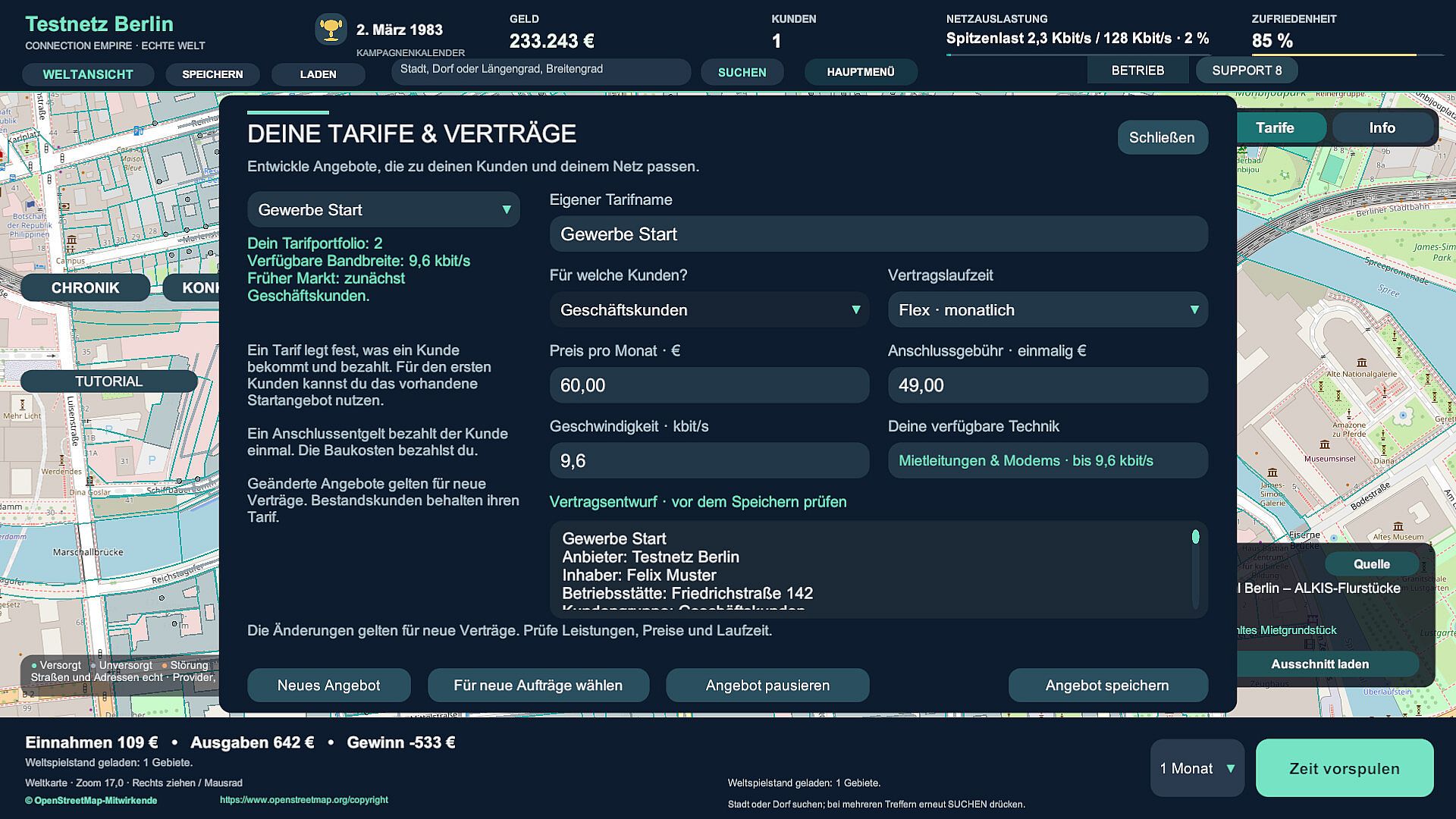
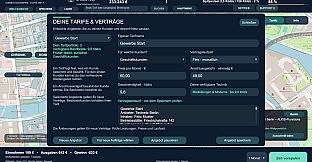
Early connections represent leased lines and installation work. Over time, the game advances through eras that introduce ISDN, DSL, and fibre technologies. Costs for expansion, operation, and repairs accumulate, requiring players to balance income against expenses at the end of each month. Tariff design plays a key role, as price, speed, and reliability influence how quickly customers are acquired and how satisfied they remain.
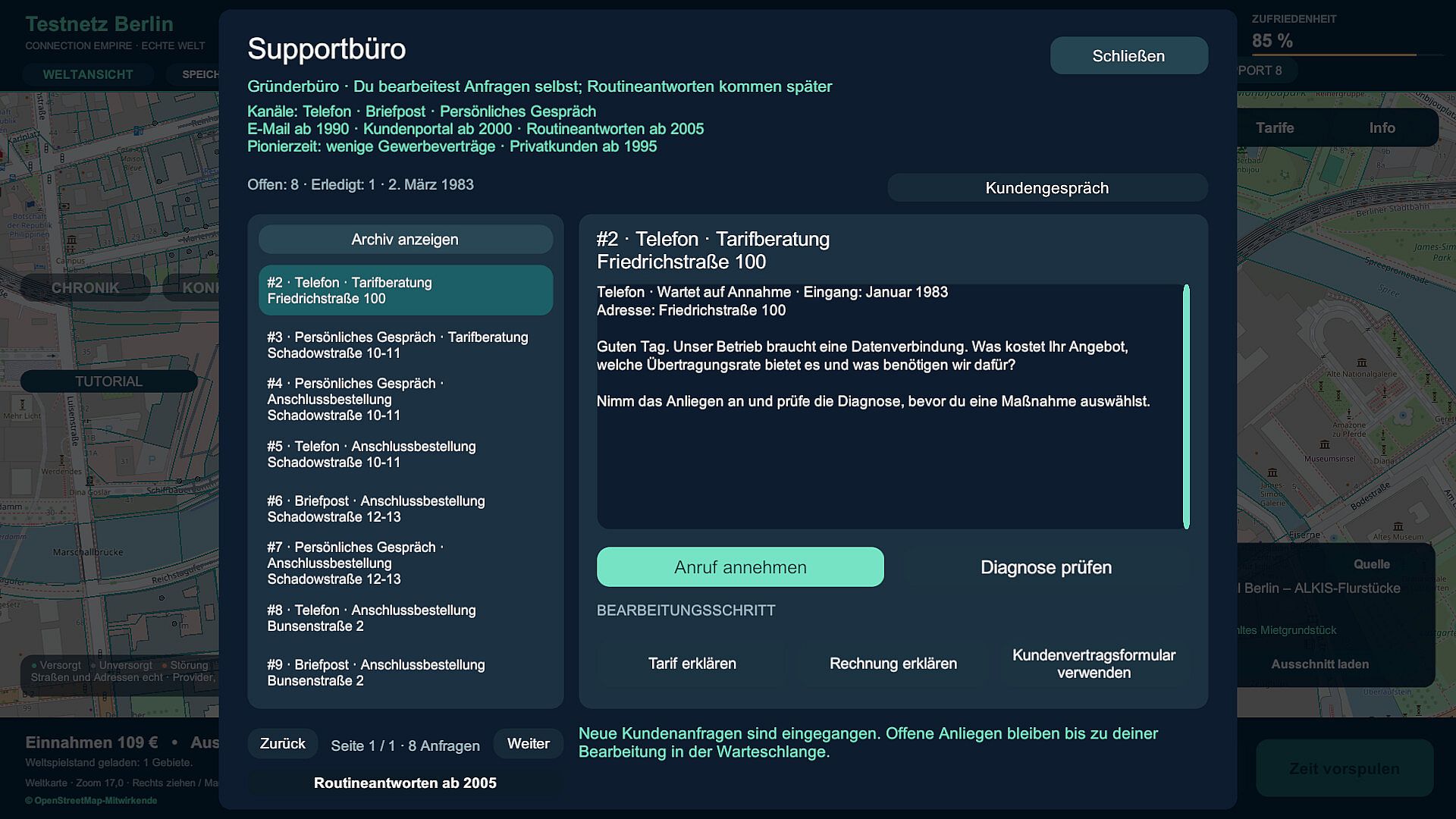
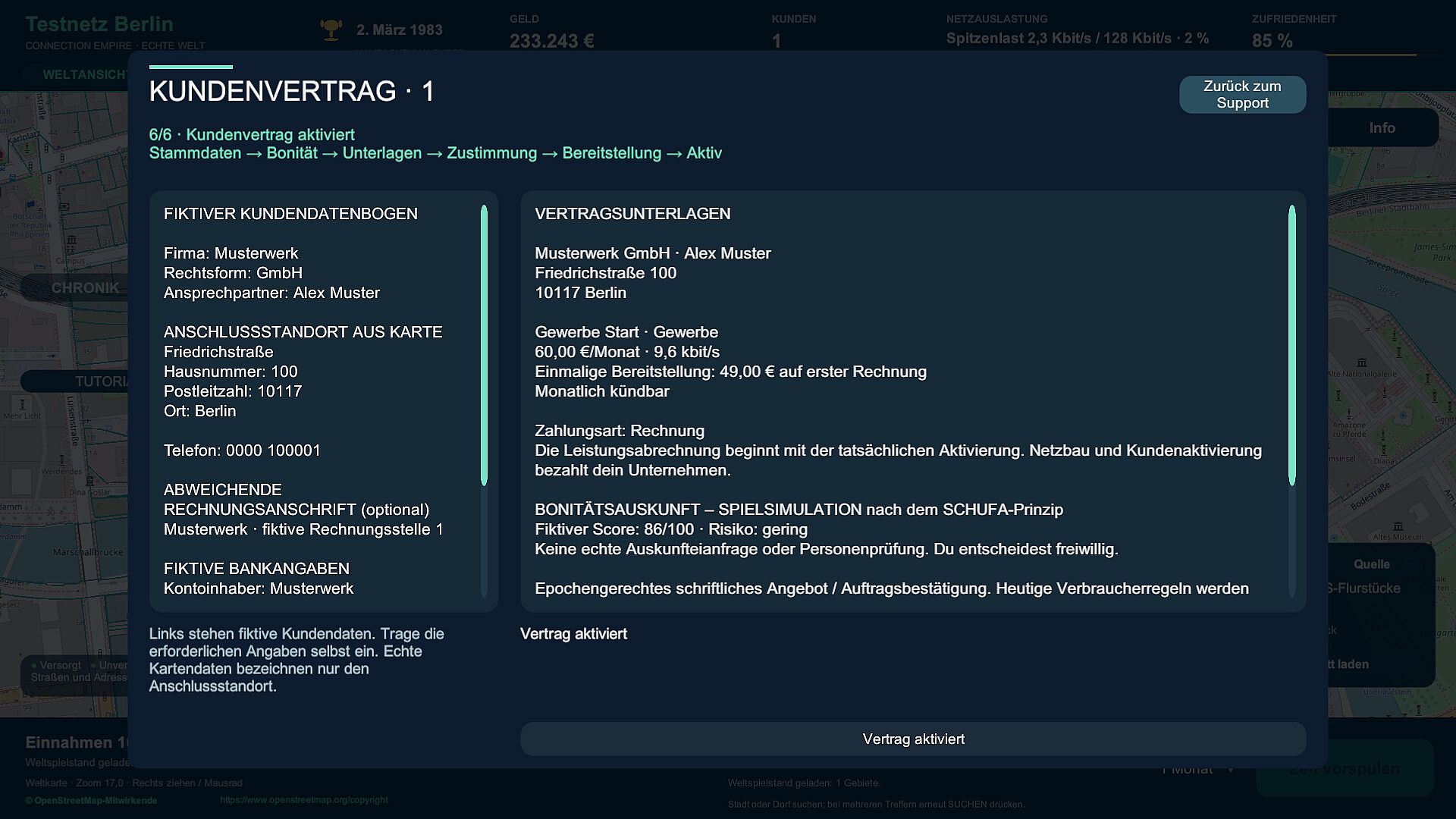
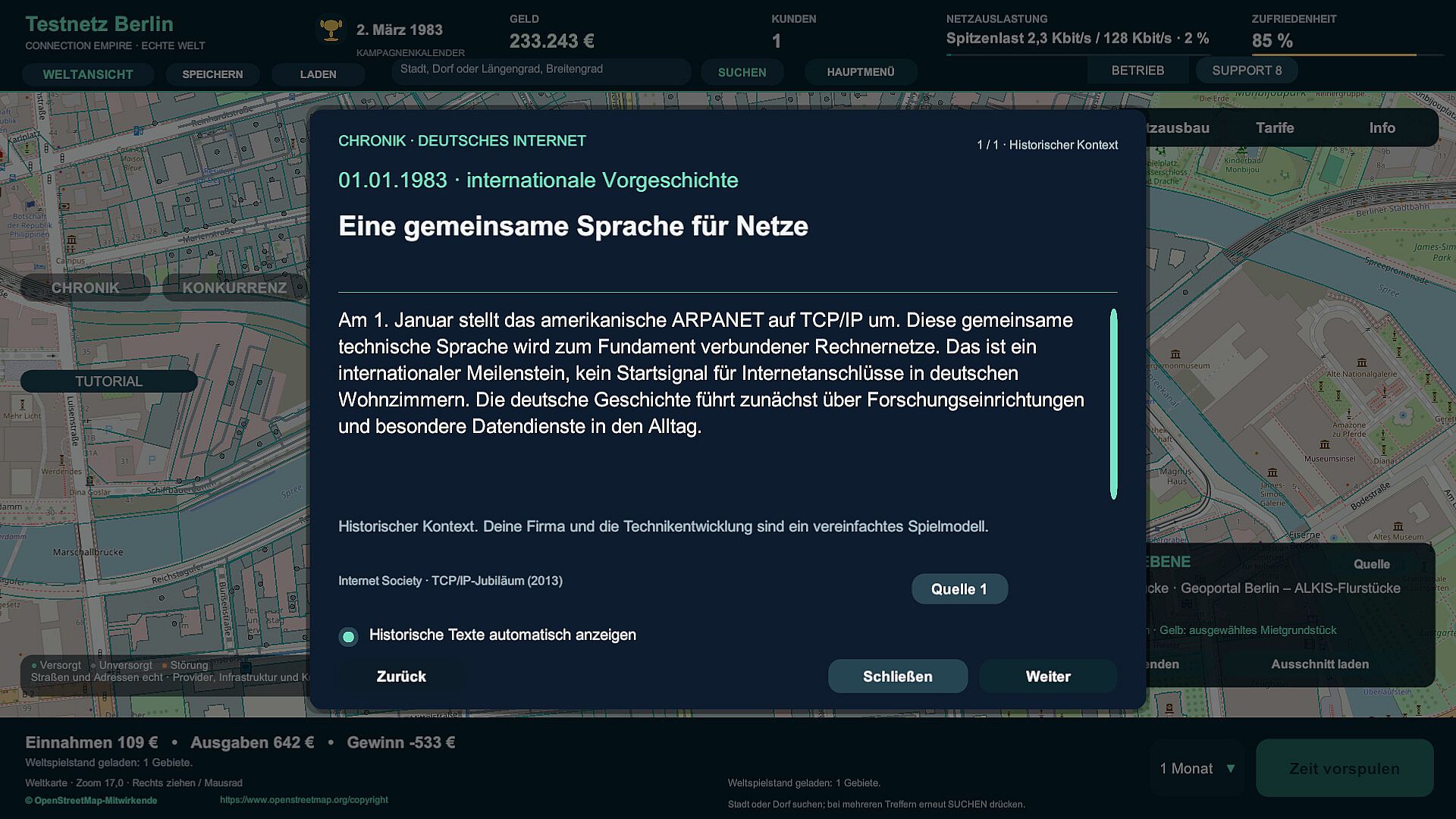
At the outset, players handle customer support directly. Orders arrive via telephone, letter, or personal contact, and each request must be assessed for connection requirements before installation is organized. As the in-game calendar advances, communication methods evolve alongside the business. Historical events appear as cards that cover developments such as videotex, early research networks, market liberalisation, and broadband rollout, providing context without interrupting core play.
Game Modes
Connection Empire offers a single-player experience built around a progressive campaign structure. The main mode follows the company from its founding through multiple decades, with technology upgrades and market changes occurring on a fixed calendar. Players can choose their starting location and adjust elements such as company name, owner details, office setup, and initial budget via a founding dossier.
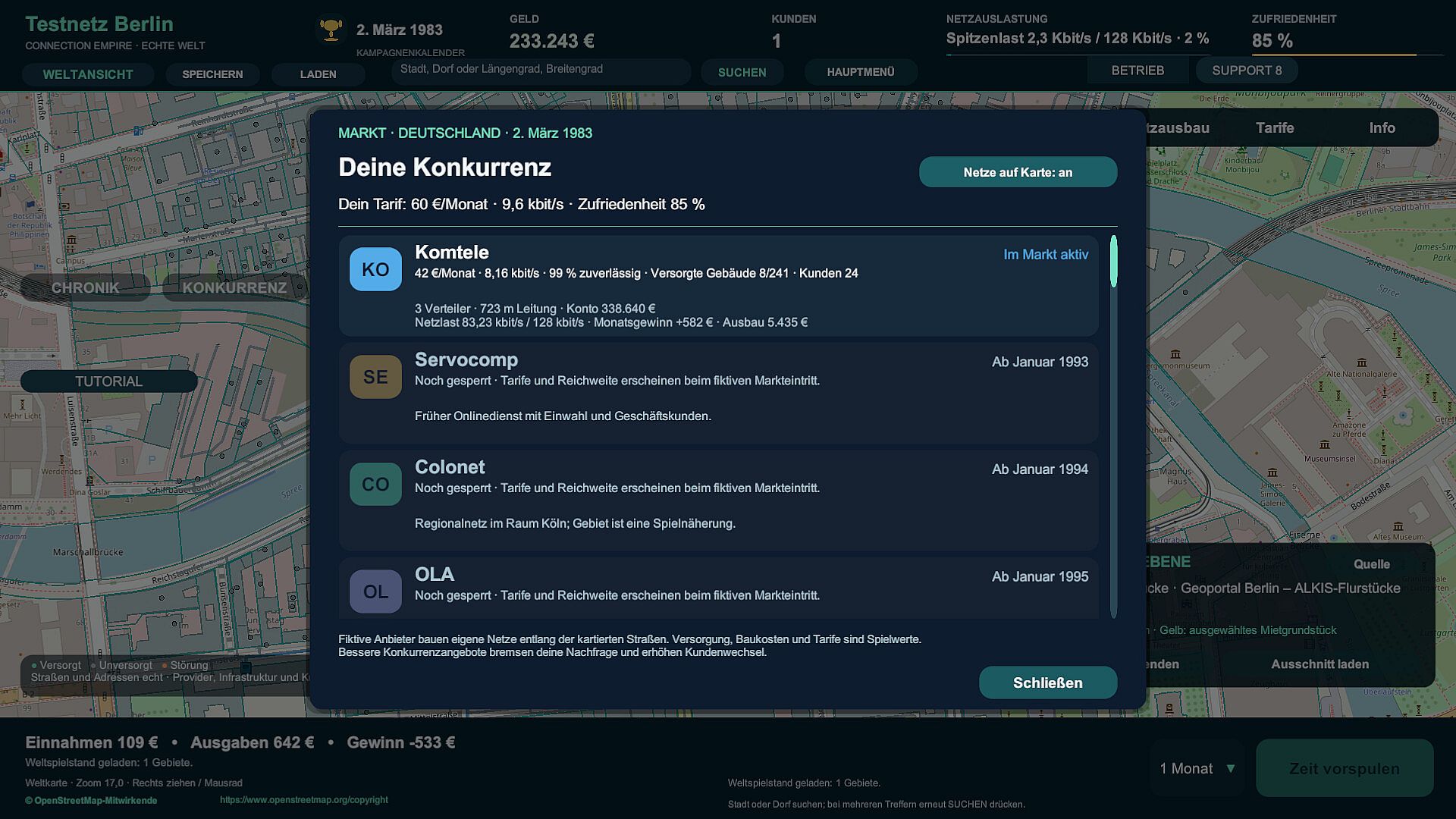
Progression is driven by monthly financial settlements and technology milestones rather than separate named modes. Fictional competitors enter the market over time, and references to former provider brands appear in their respective eras. Historical cards can be viewed on demand or disabled entirely for a more streamlined run. The simulation remains single-player throughout, with interface and text available in both German and English.
Map and Network Building
Germany serves as the initial playable country, with map detail varying by location. Players place connections that respect real street layouts and building positions drawn from present-day data. Capacity limits force strategic choices about where to expand first and how to allocate resources for maintenance or repairs when outages occur.
Network planning requires attention to both short-term customer orders and long-term infrastructure. Distribution cabinets and line routes must be positioned efficiently to avoid wasting capacity while still reaching new addresses. As technology levels rise, older connection types become less relevant, encouraging players to upgrade existing infrastructure alongside new builds.
Is It Worth Playing?
Connection Empire suits players who enjoy deliberate business simulations with a historical technology theme. The combination of map-based network construction, customer management, and monthly financial decisions creates a steady pace that rewards planning over rapid action. Those interested in the evolution of internet infrastructure in Germany will find the era-specific details and technology upgrades particularly engaging.
The game remains in Early Access, so the feature set continues to develop. Its single-player focus and emphasis on realistic map data and simplified economic systems make it a specialized title rather than a broad strategy experience. Players who appreciate methodical expansion and the satisfaction of watching a small service grow into a regional provider are most likely to find it rewarding.