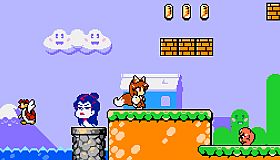



Console Archives Ripple Island brings the 1988 Sunsoft adventure game to PlayStation 5 as a faithful reproduction of the original Famicom release. Players step into the role of Kyle, a young villager who sets out to rescue Princess Nasareru after the self-proclaimed Emperor Groaker kidnaps her from Ripple Island. The experience centers on careful observation and command selection to navigate the island, interact with its inhabitants, and uncover the path to different conclusions.
Gameplay
The core loop revolves around selecting from nine command icons displayed below the current scene. These commands allow movement in cardinal directions, examination of objects or characters, conversation with animals and people, collection of items, use or giving of inventory objects, entry into buildings, striking or knocking on targets, pushing elements, and accessing a password system in the original version. A cursor appears after choosing most actions so players can pinpoint the exact spot on screen for interaction.
Progress unfolds across five distinct areas that advance in linear order. Once an area is cleared, return visits are not possible, and items collected within it do not carry forward. This structure keeps focus on the immediate set of puzzles without inventory bloat or backtracking. Each area contains roughly twenty to thirty screens arranged in a grid-like layout, with movement limited to available arrows. Animals often provide direct hints about required items or actions, though locating those items demands precise cursor placement and trial of different commands.
The modern Console Archives presentation adds practical tools that ease repeated attempts. Button layouts can be customized, rapid-fire options are available, and multiple save points replace the original password system. Screen adjustments and visual filters let players recreate the look of period hardware or optimize for contemporary displays. These features support completion without altering the underlying command-driven mechanics or Japanese-only in-game text.
Game Modes
The title offers a single continuous adventure that branches into multiple endings based on the sequence of actions and choices made throughout the five areas. Four conclusions exist in total, with one reachable even before confronting the final antagonist. The remaining outcomes hinge on whether specific conditions are met before advancing to later areas. Only the true ending triggers the full staff credits sequence.
No separate multiplayer or alternative modes appear in the release. The entire experience remains single-player, with the emphasis placed on careful command use and attention to environmental details rather than combat or timed challenges.
Story and Setting
Ripple Island depicts a peaceful land where humans and animals coexist until the arrival of the monstrous Emperor Groaker disrupts that harmony. The narrative follows Kyle as he travels the island, gathers information from its residents, and works toward restoring order. Character interactions and item exchanges drive the plot forward, with the heroine Cal joining the journey and adding her own perspective on events.
The visual style retains the original's straightforward pixel art and gentle tone, while the command interface encourages methodical exploration of each screen. Difficulty stems primarily from the need to test every available action on subtle elements rather than from complex combat or resource management.
Is It Worth Playing?
This release suits players interested in classic Japanese command-selection adventures from the late 1980s. The addition of modern save functionality, customizable controls, and visual options makes the original mechanics more approachable on current hardware while preserving the requirement for precise interactions and attention to detail. Those who enjoy puzzle-focused experiences with multiple endings and linear area progression will find the structure rewarding, particularly if they appreciate the challenge of uncovering the conditions for the true conclusion without external guidance.
The Japanese-only in-game text requires familiarity with the language or willingness to navigate via icons and context. At its modest price point, the package delivers a compact retro adventure enhanced by quality-of-life improvements that reduce frustration from the era's limitations. Players seeking a straightforward single-player journey through a short, self-contained story with branching outcomes will find the experience aligns closely with that preference.