



Conversation Simulator is a casual simulation game built for rehearsing everyday and professional conversations on PC. Players engage with locally running AI characters to practice responses in structured scenarios, then receive performance feedback without any online connection during sessions.
Gameplay
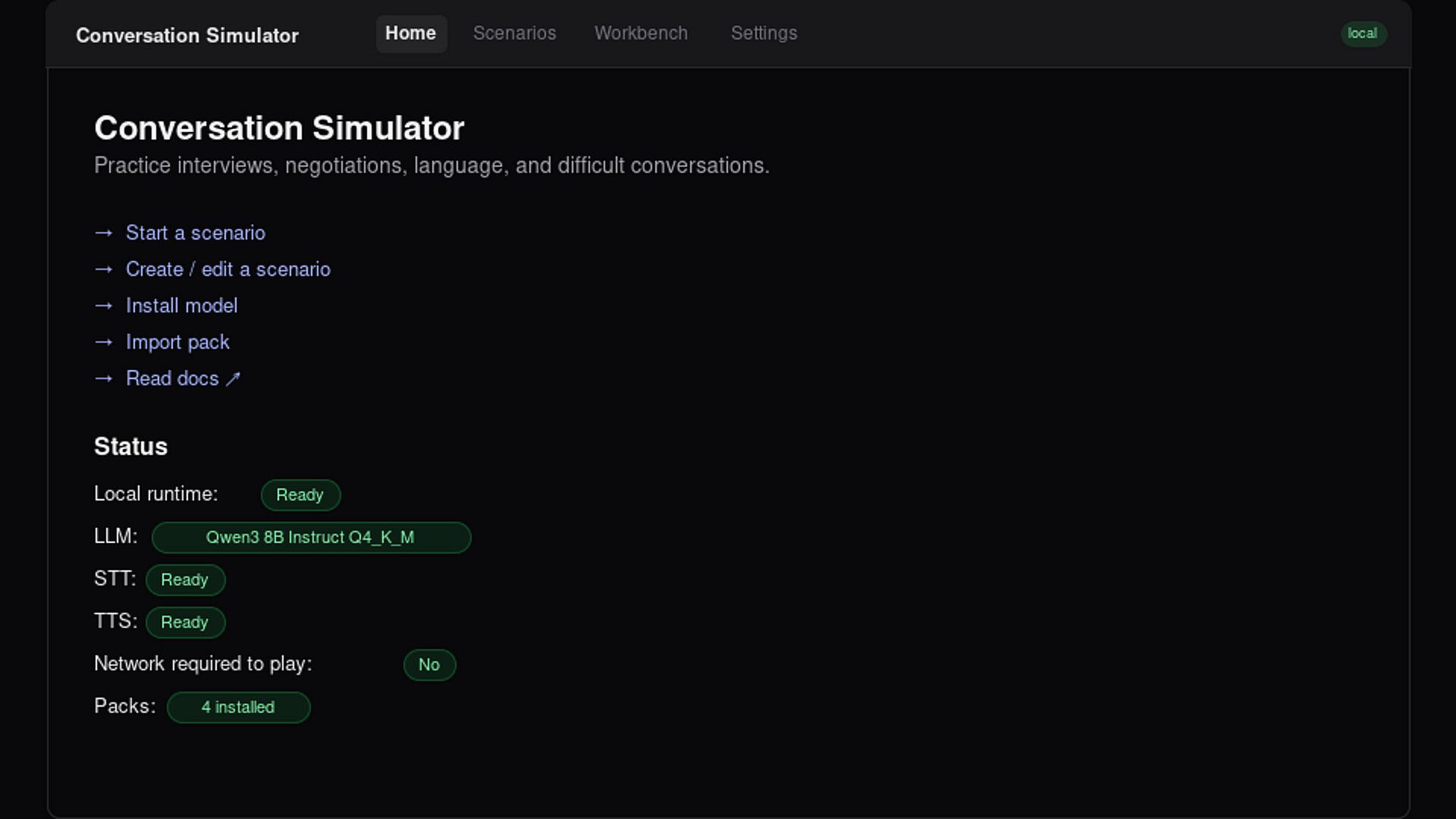
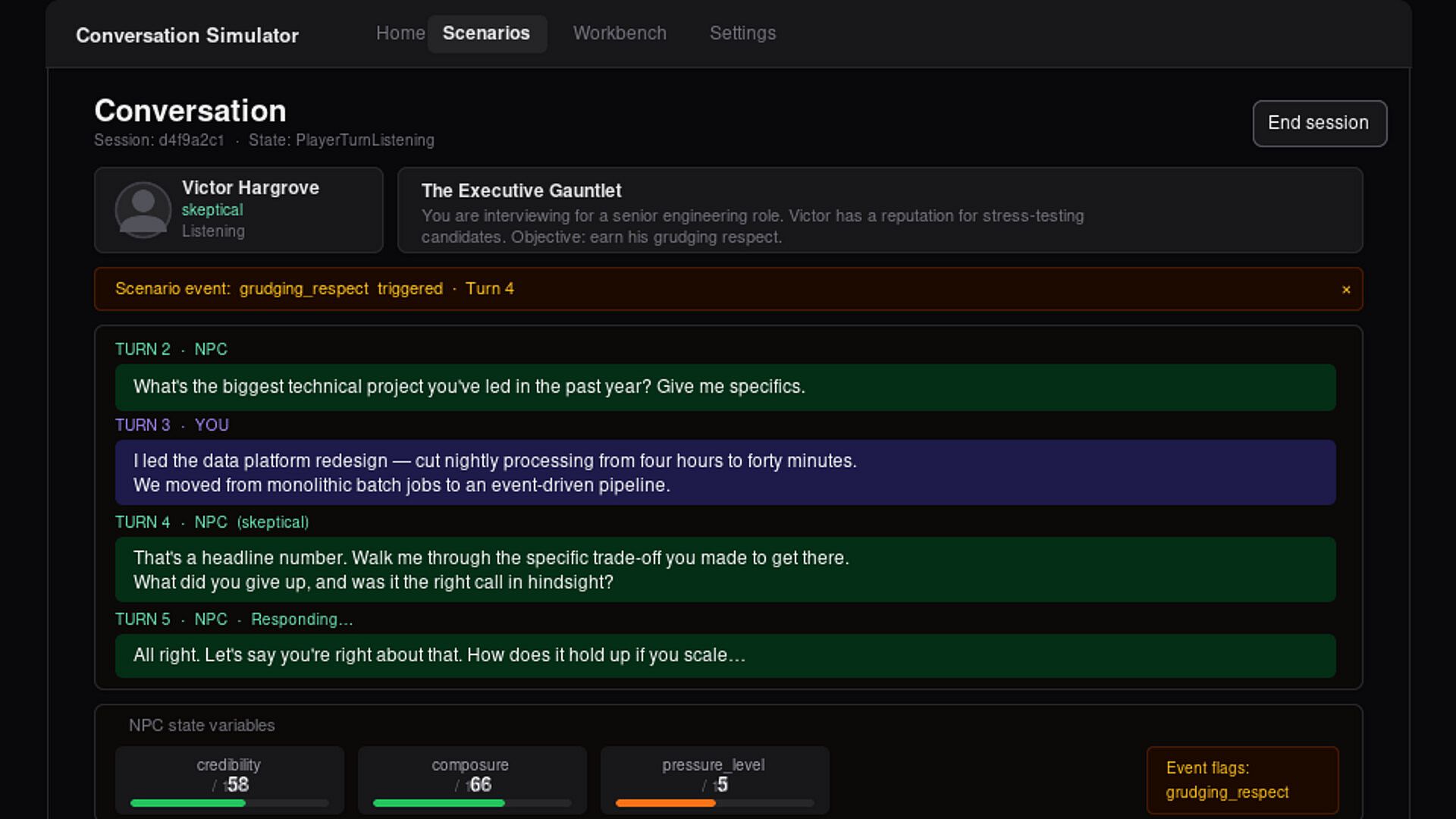
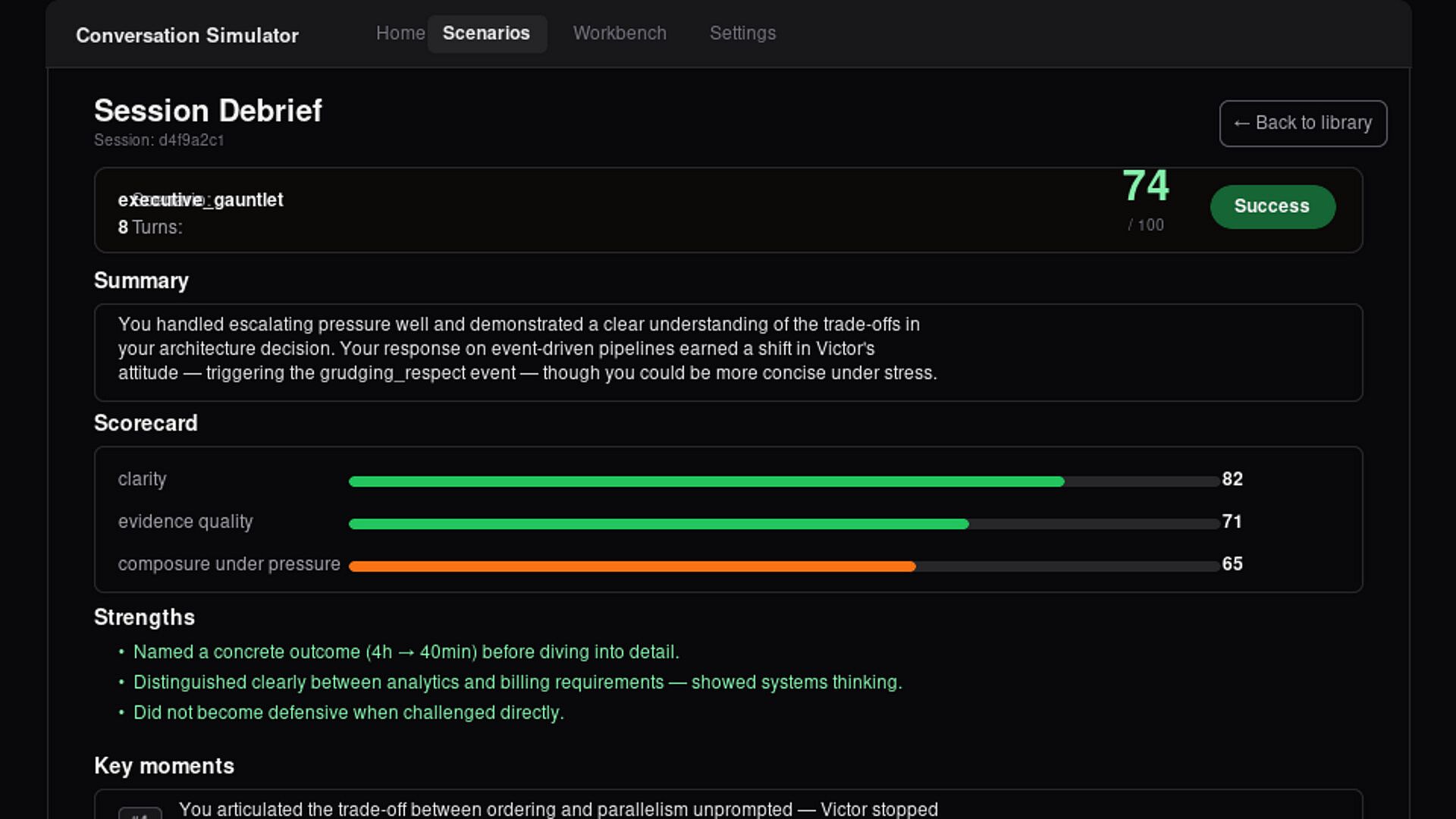
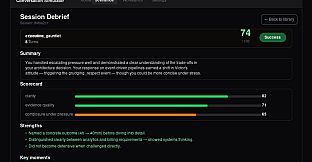
The core loop centers on selecting a scenario and conducting a back-and-forth exchange with an AI character. Input occurs through typing or optional voice capture via local speech recognition. The AI processes each response in real time and adjusts its replies based on the evolving context of the exchange. Sessions conclude with an automated debrief that evaluates clarity, hedging, and pivotal moments according to a predefined rubric for that scenario. All processing stays on the user's machine through llama.cpp integration, with models downloaded once in advance.
Voice output uses a local text-to-speech engine for character responses when enabled, though text-only operation functions fully without audio hardware. Performance scales with chosen model size, where smaller variants run efficiently on standard hardware while larger ones deliver more nuanced dialogue. The system tracks conversation state variables internally to maintain consistency within each session.
Game Modes
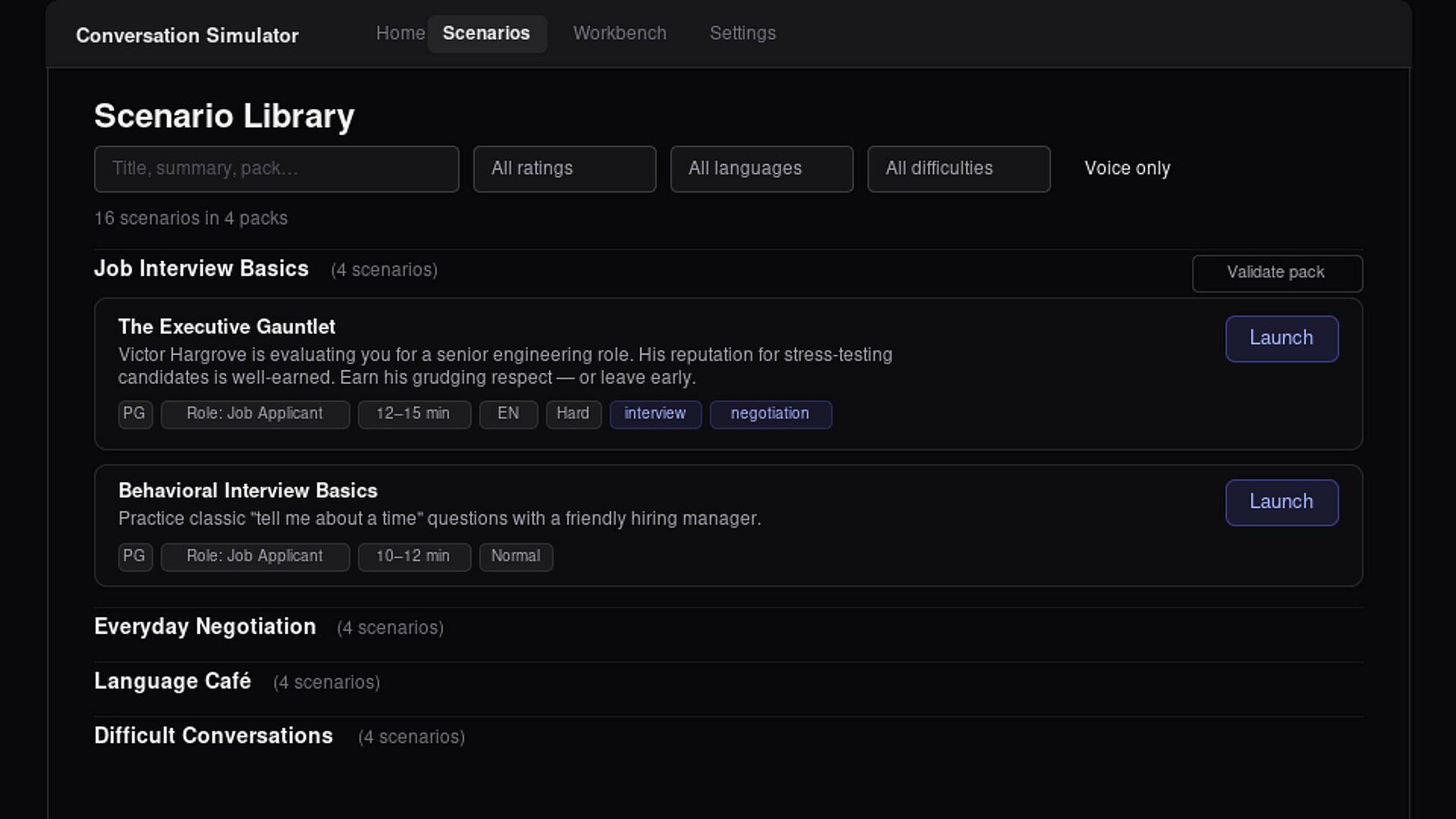
Four built-in scenario packs define the available practice environments. Job Interview Basics covers four distinct interview styles, ranging from approachable HR discussions to intense executive questioning. Everyday Negotiation includes car price haggling, lease discussions, freelance boundary setting, and customer service resolutions. Difficult Conversations addresses coworker feedback delivery, deadline apologies, personal limit enforcement, and salary requests. Language Café supports low-pressure exchanges in Spanish, French, Japanese, and English, such as ordering at a cafe or completing a store purchase, with optional gentle guidance on phrasing.
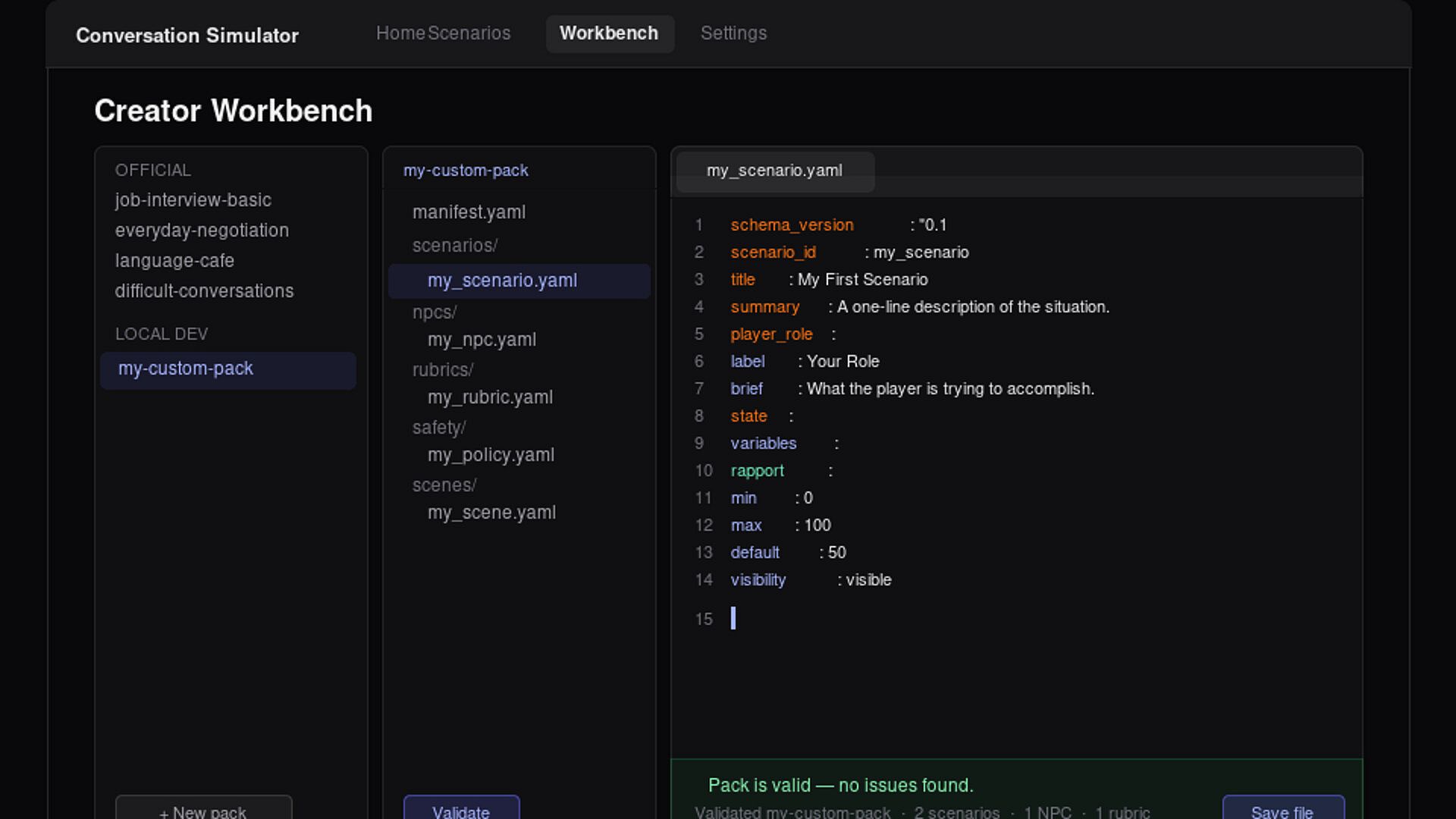
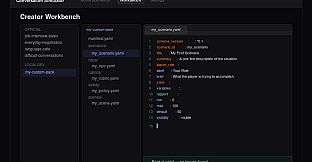
Each pack contains multiple specific situations that players can repeat or vary through their choices. The Creator Workbench allows extension of these options by defining new NPCs, opening conditions, evolving variables, and custom scoring criteria in YAML format for personal or shared use.
Key Features
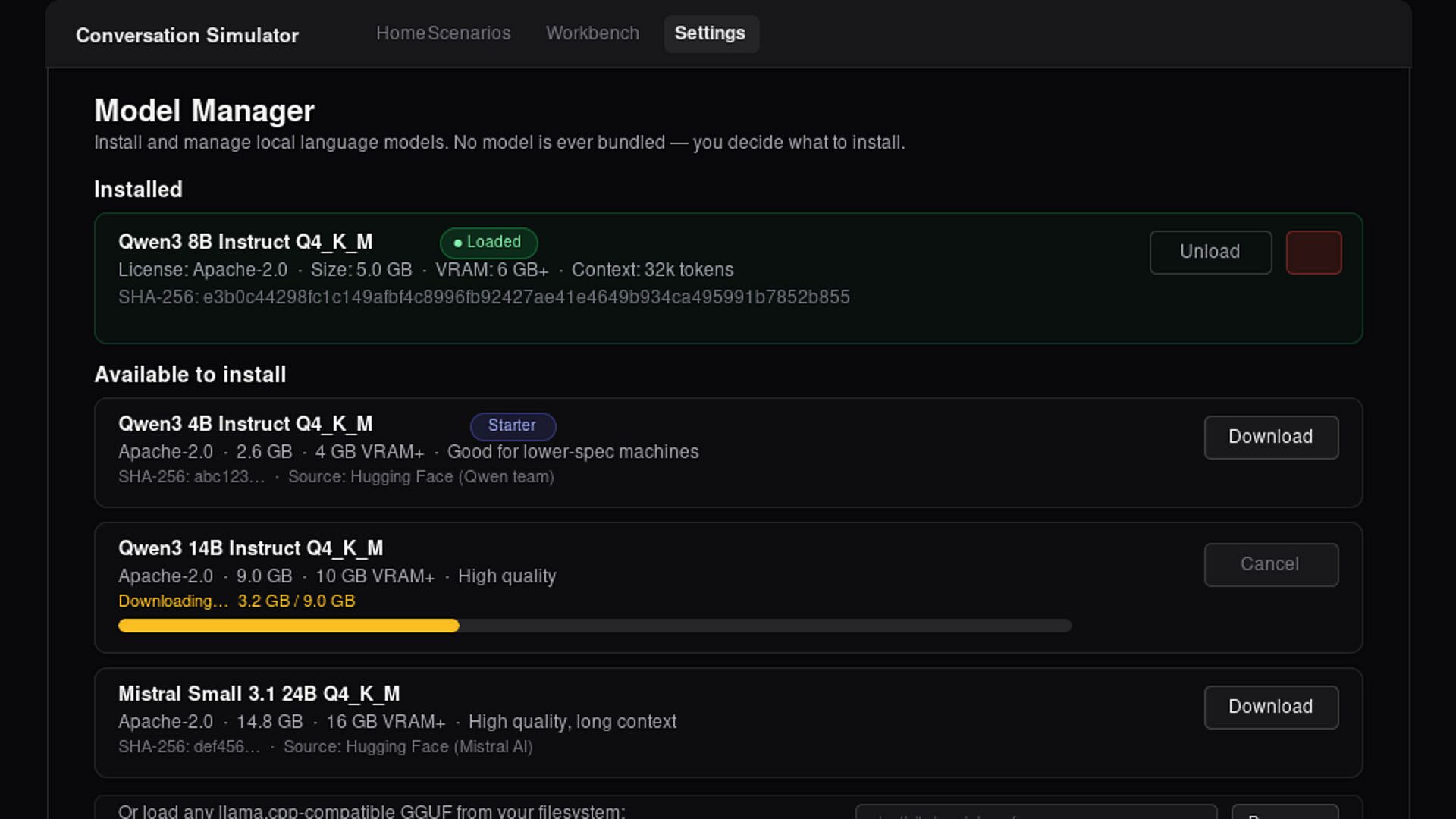
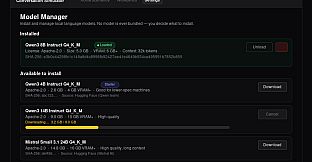
Local execution ensures complete privacy, with conversation data stored solely in a user-controlled directory that can be cleared at any time. No analytics or external transmissions occur once models are installed. Model selection happens through an in-game manager that supports switching between open-weight options based on hardware capabilities and desired response quality. Steam Deck compatibility includes full text input via the on-screen keyboard and recommendations for smaller models due to shared memory constraints.
Content remains within PG to PG-13 limits across all packs, with enforced boundaries against prohibited topics that cannot be bypassed. The game operates as a practice utility rather than any form of therapeutic or professional service.
Technical Setup
Installation requires a 64-bit operating system with modest processor and memory specifications. Models occupy additional storage space after the initial download, which is the only internet-dependent step. Text mode runs without peripherals, while voice features need a compatible microphone. Cross-platform support covers Windows, macOS, and Linux distributions, with optimized performance on Apple Silicon hardware.
Is It Worth Playing?
Conversation Simulator suits individuals seeking private, repeatable practice for interviews, negotiations, or language skills without external judgment or recurring costs. Its local-first design and open-source availability appeal to users prioritizing data control and customization. With no subscription model and free core content, the experience delivers consistent value for those who value structured feedback on communication habits. The upcoming release in Q3 2026 positions it as a specialized tool for deliberate skill-building rather than entertainment-focused play.