

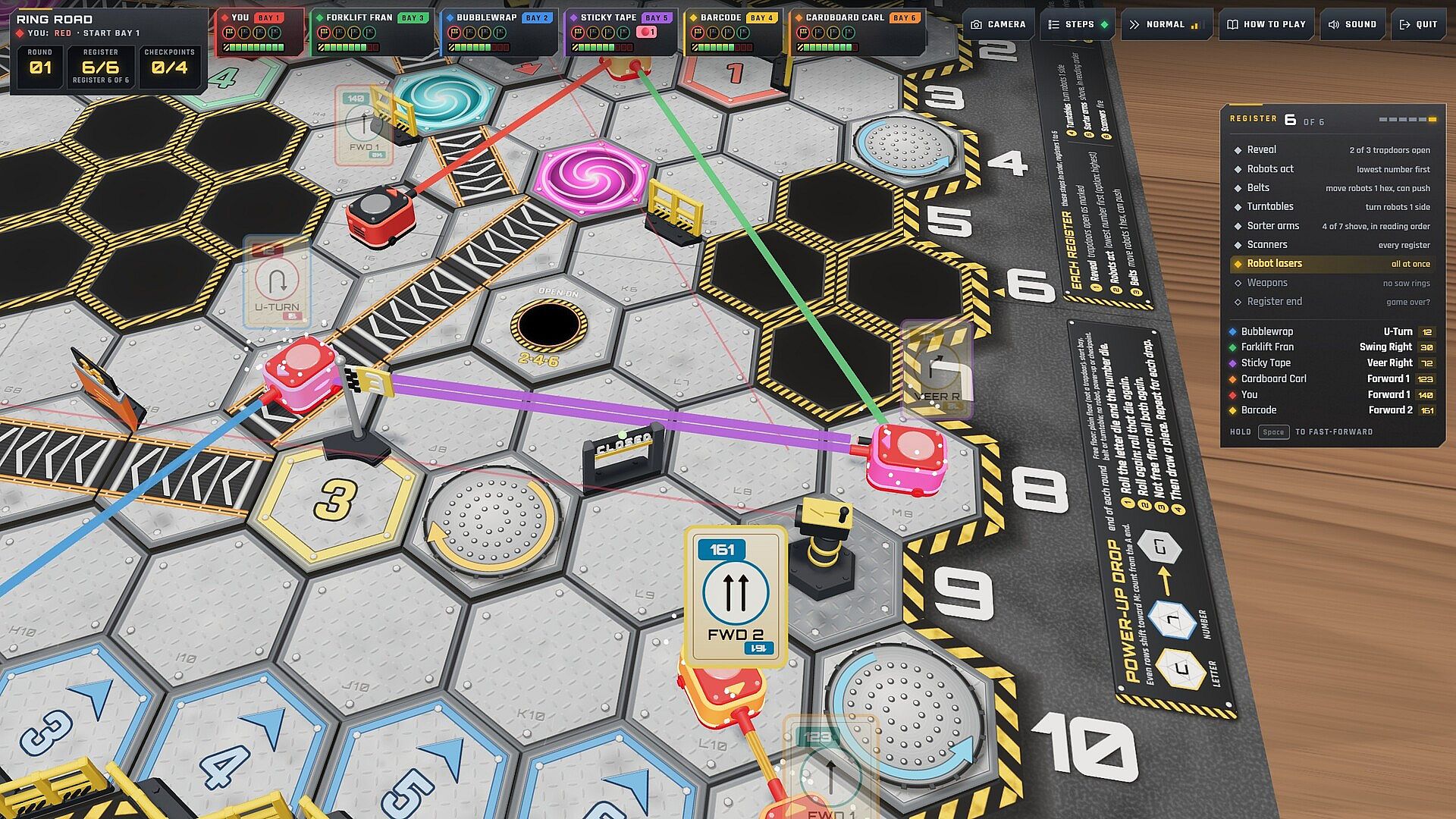
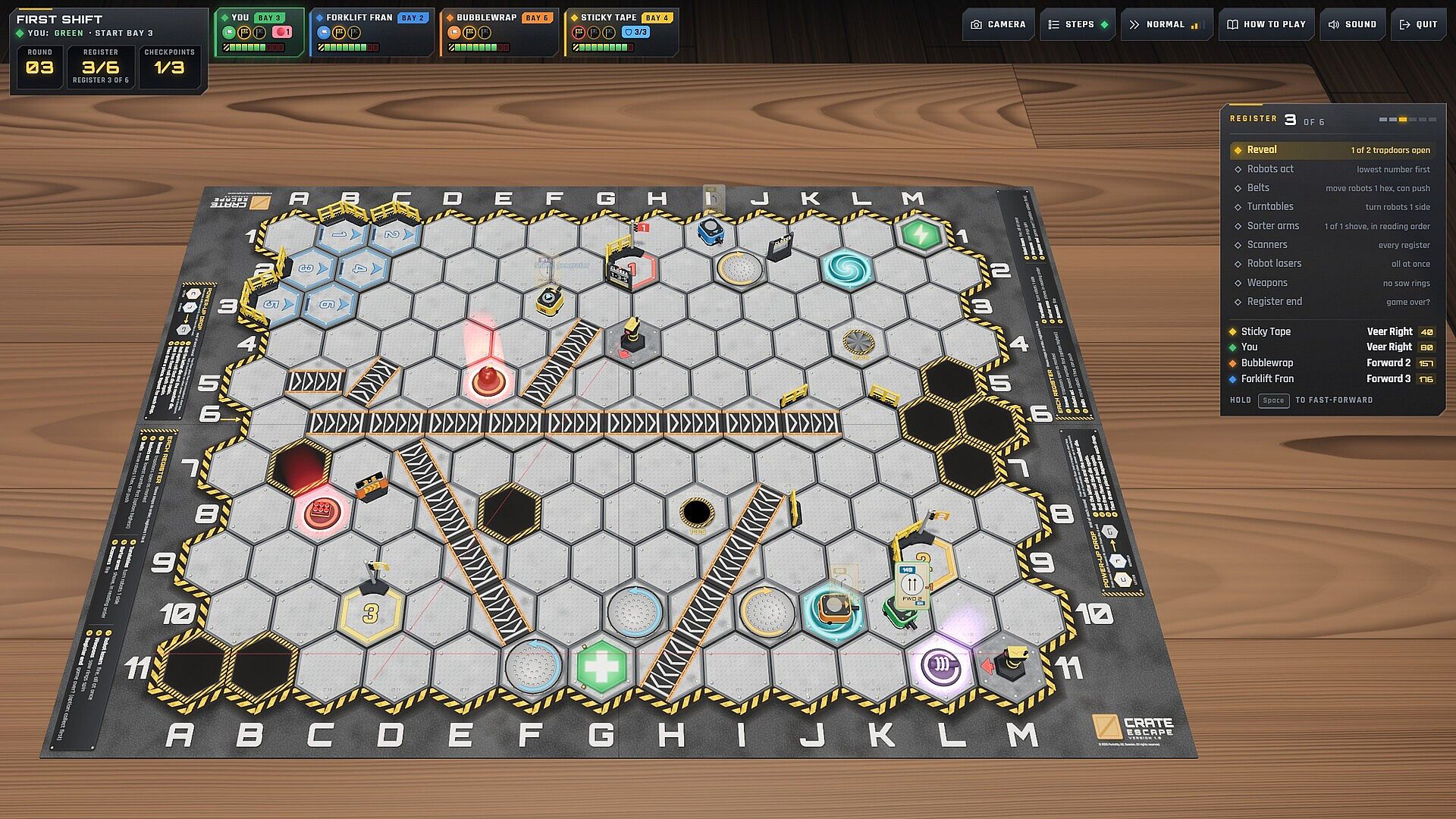
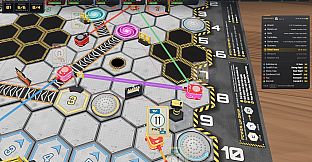
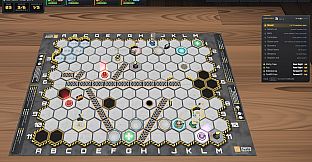
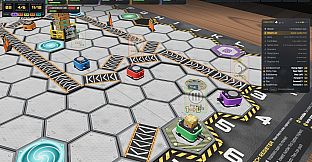
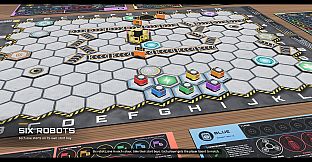
Crate Escape: Program & Deliver is a strategy game that puts players in control of warehouse robots through a unique programming system. In this indie title available on PC, participants secretly plan robot movements using a limited set of cards before executing actions simultaneously across a hazardous factory floor filled with conveyors, lasers, and interactive machinery. The core loop revolves around anticipating chaos from both opponents and the environment itself.
Gameplay
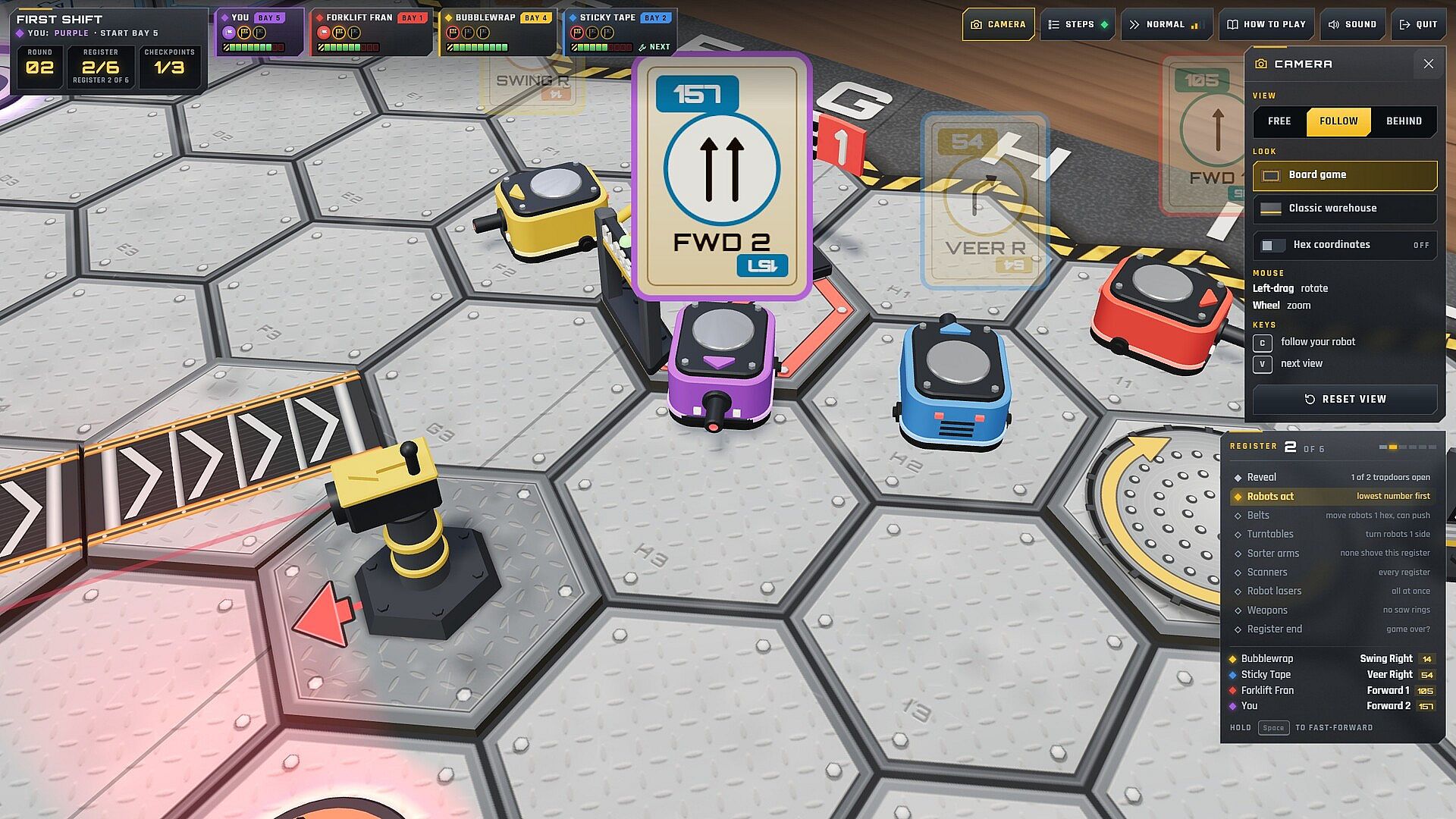
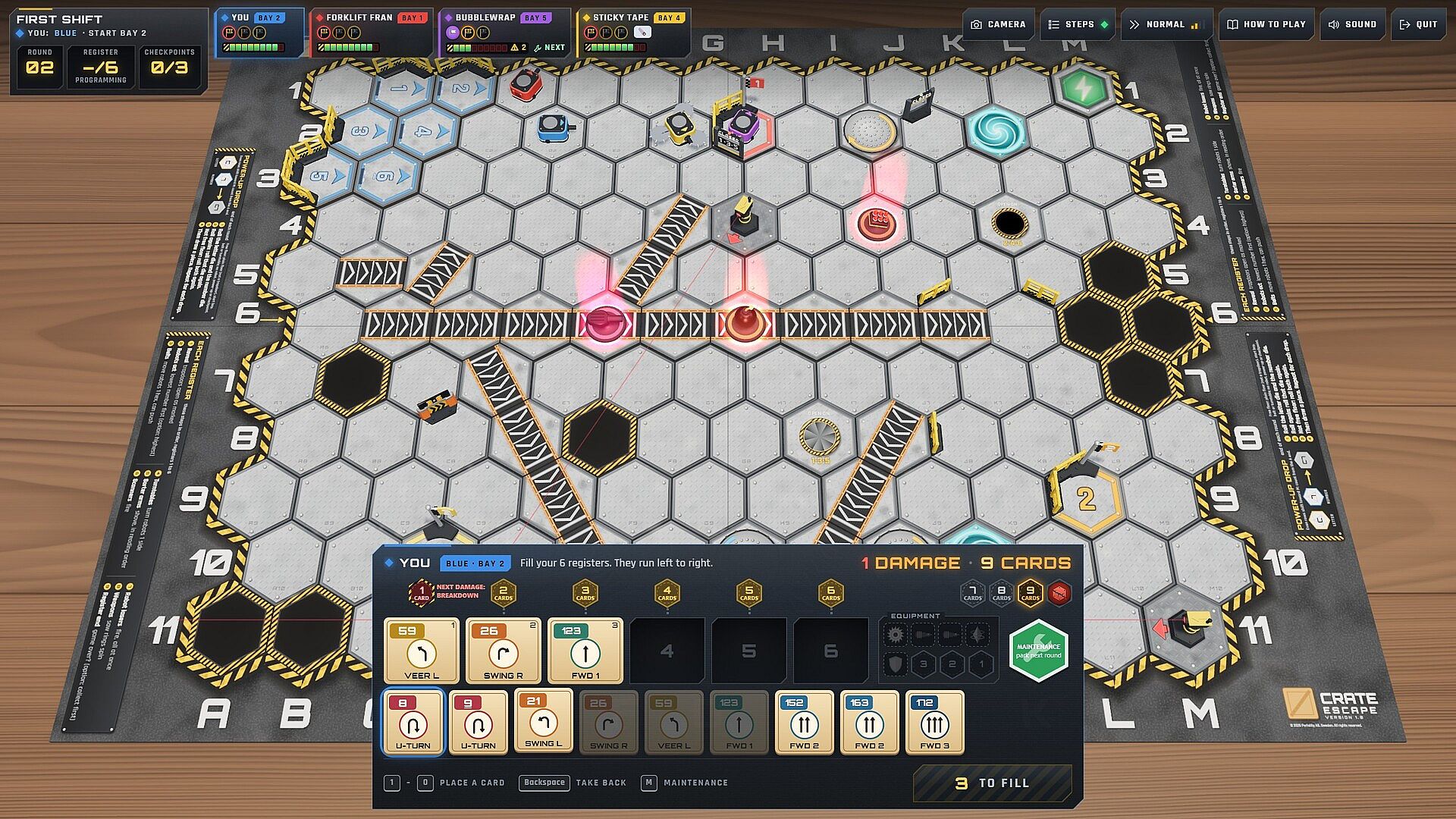
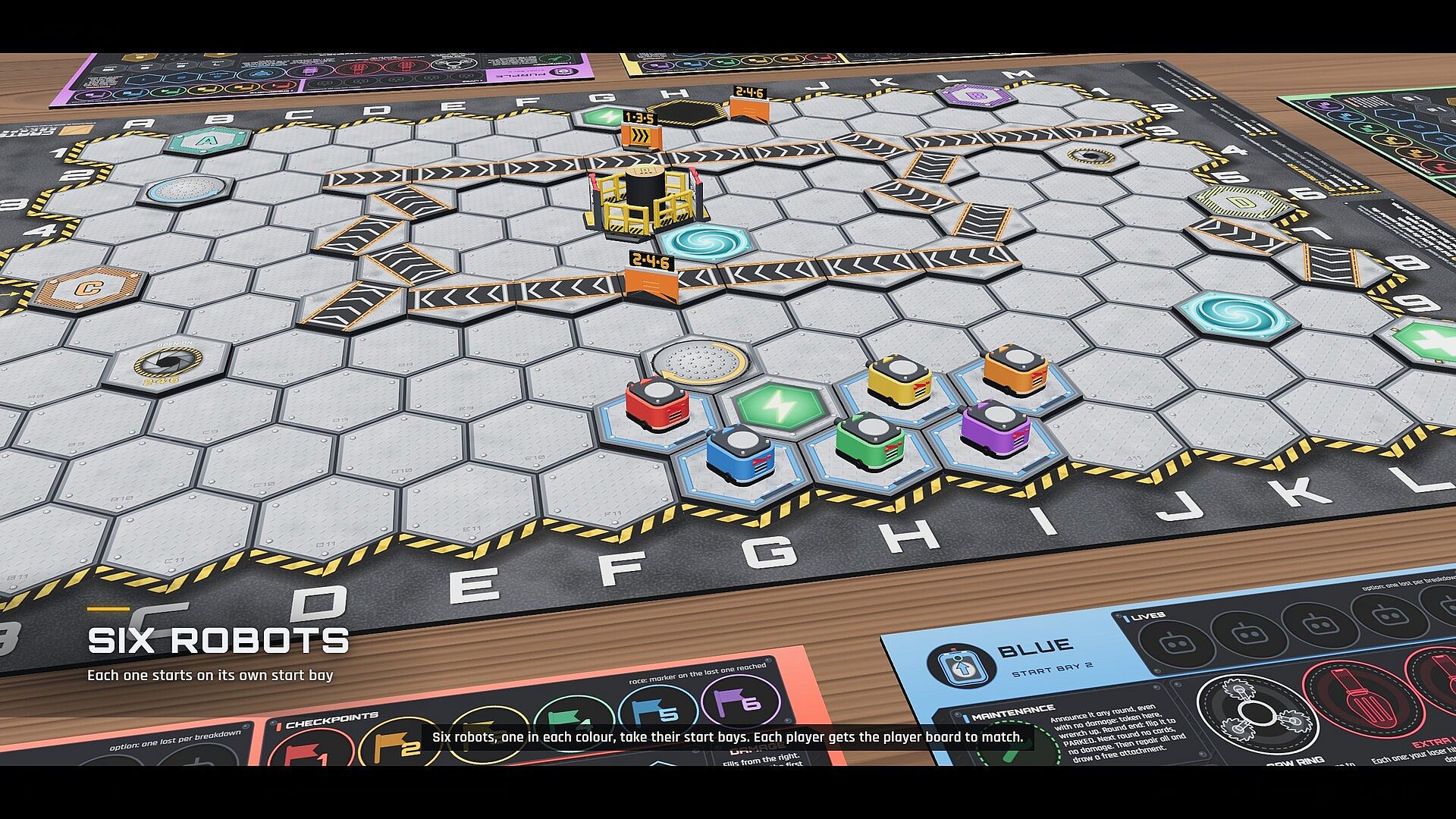
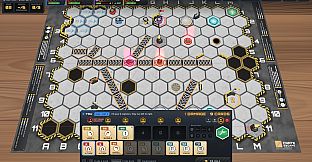
Each round begins with a hand of ten program cards that include options such as move forward, reverse, veer, swing, and U-turn. Players assign six of these cards to their robot's registers in secret, then lock in their choices. Priority numbers on the cards determine execution order, allowing faster or shorter actions to resolve first. Damage from lasers or collisions reduces available cards on subsequent turns, and a robot that suffers ten points of damage shuts down entirely. Once all programs are revealed register by register, the warehouse floor activates with elements like conveyor belts that carry robots, turntables that rotate them, sorter arms that shove, scanners that fire, and trapdoors that open. Robots also shoot lasers straight ahead during their turns, adding another layer of risk. Power-ups such as bombs, repair kits, extra lasers, saw rings, missile pods, shield generators, and rail coils appear on the floor to alter strategies mid-game. The system demands careful planning because one miscalculation can send a robot into a hole or off course due to an unexpected push or belt movement.
Game Modes
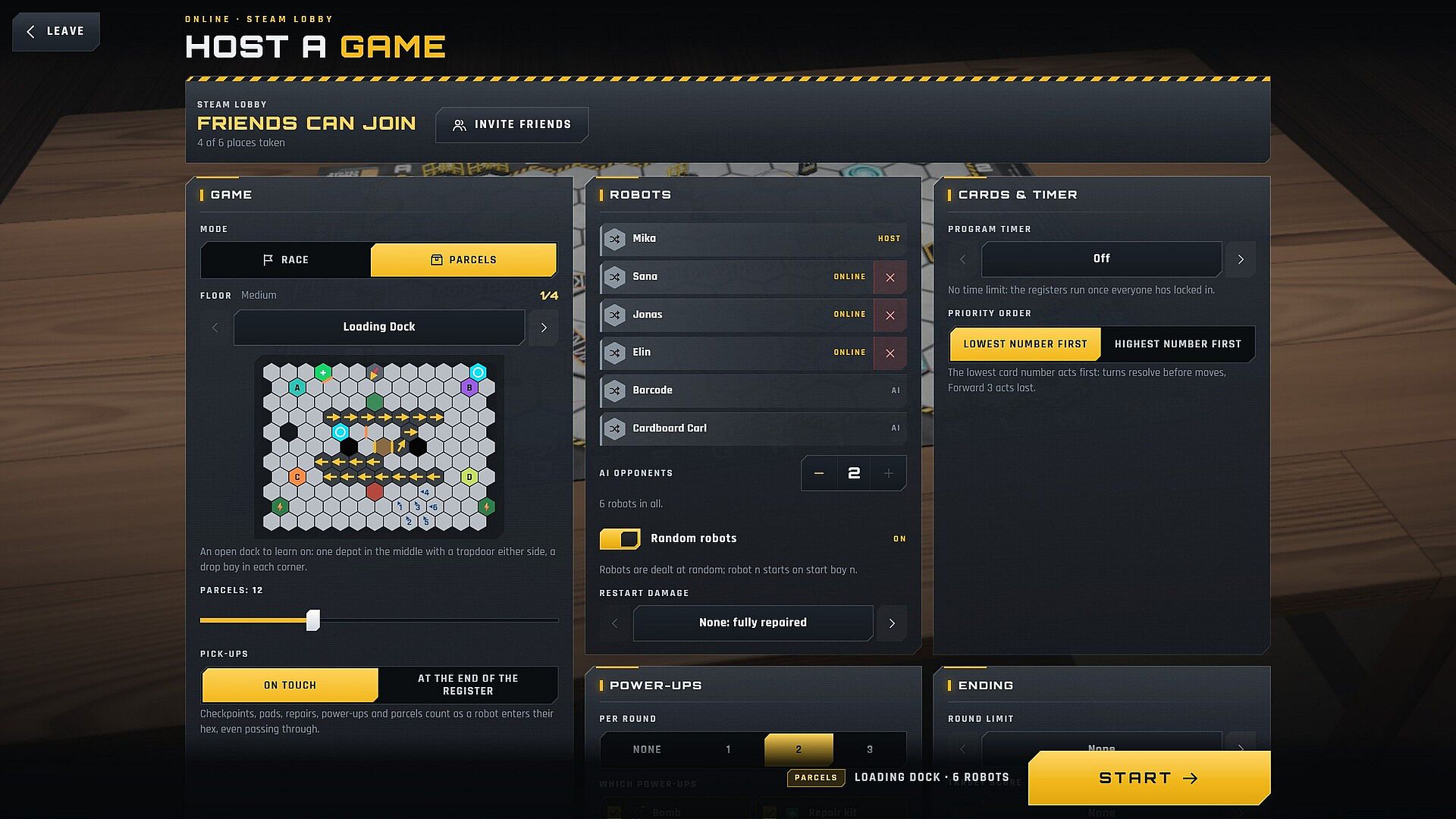
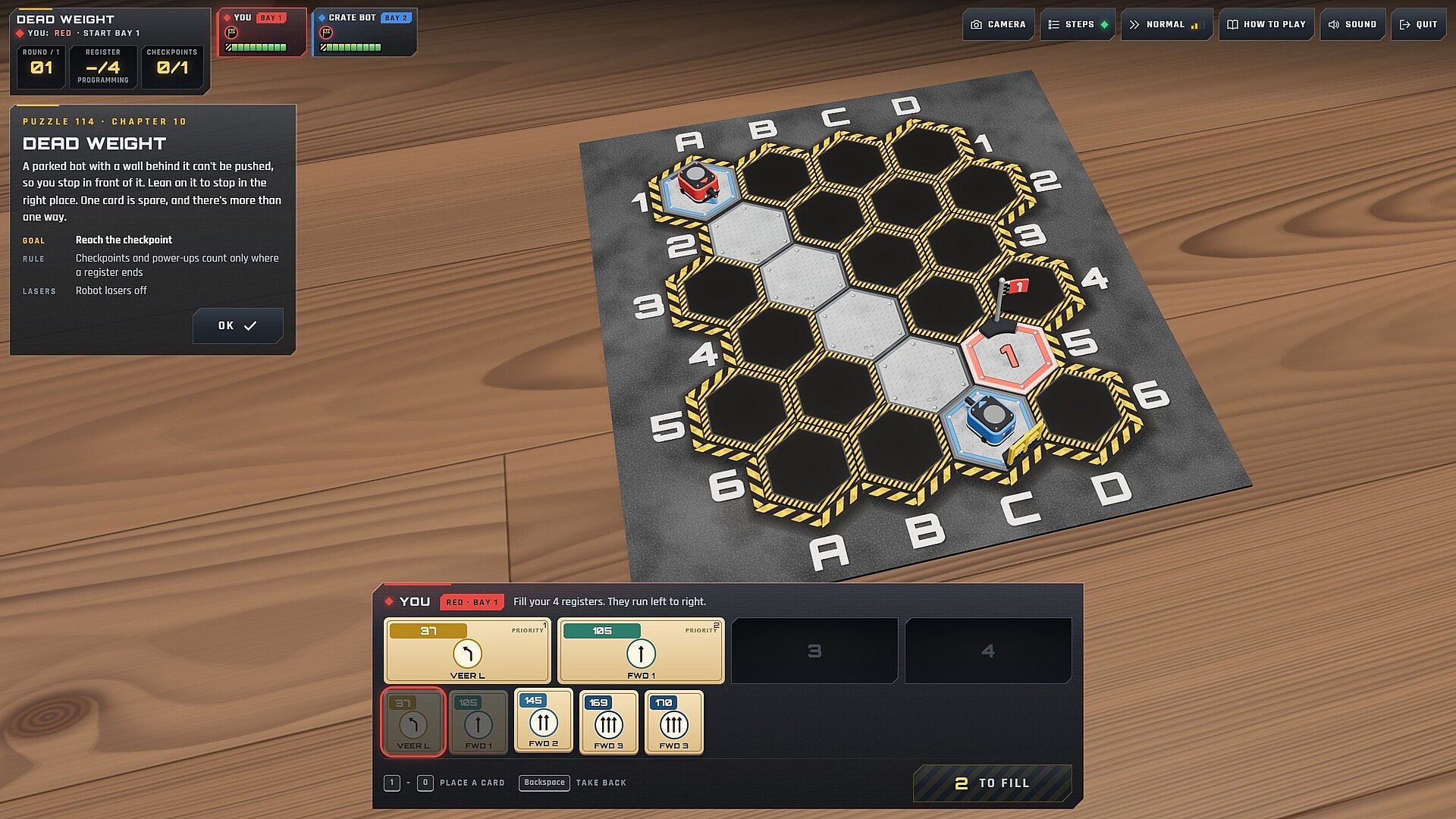
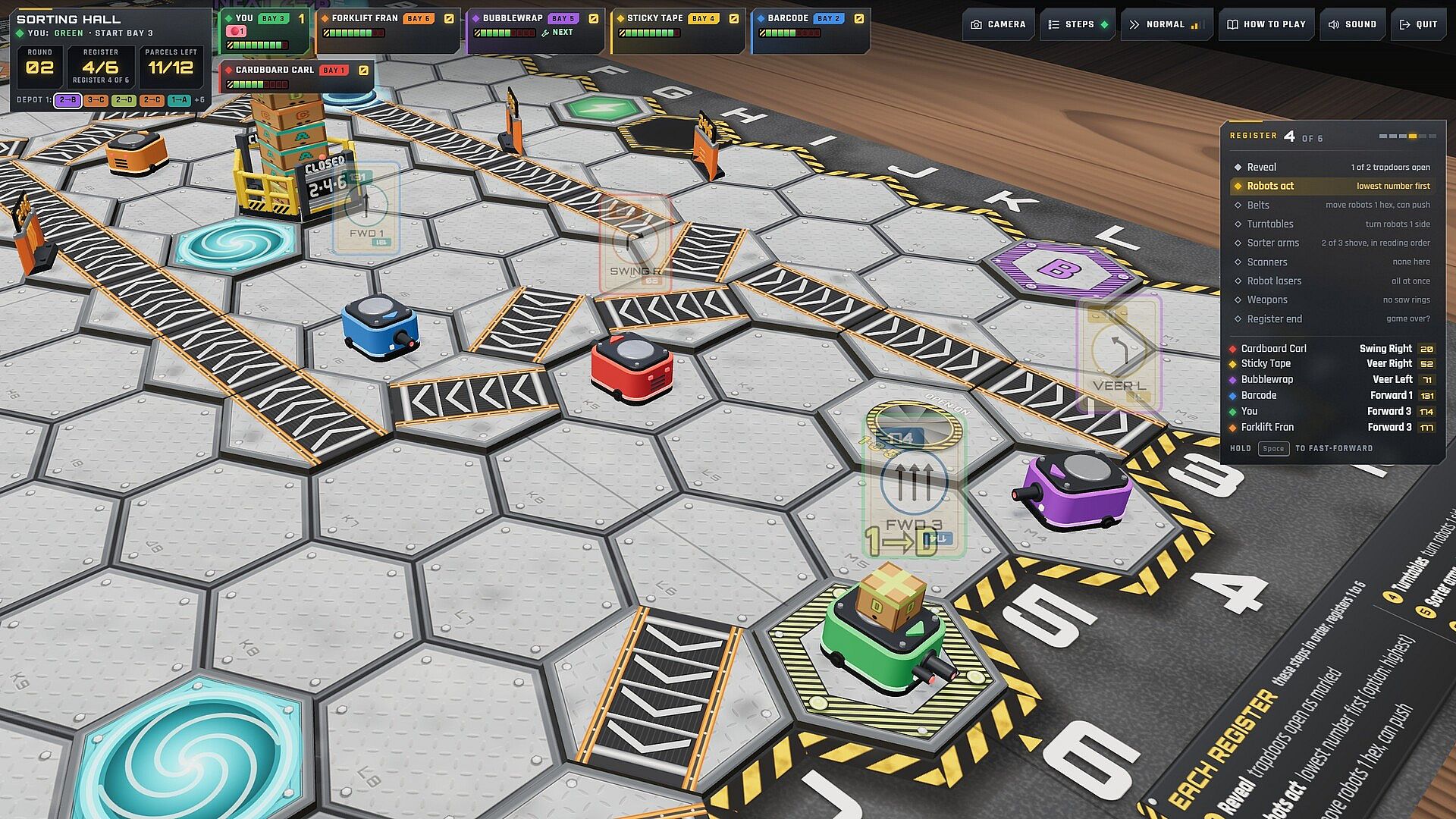
Two primary modes define the experience. In Race, players guide their robots to numbered checkpoints in sequence, with the first to reach the final checkpoint declared the winner. In Parcels, robots collect items from depots and must deliver each one to the specific drop bay listed on it. A broken-down robot drops its carried parcel, allowing others to pick it up and continue the objective. These modes support both competitive and cooperative play styles depending on the group composition. Additional single-player content includes 165 puzzles spread across 13 chapters, where a fixed set of cards and a compact floor layout challenge players to find a working program in one round. Sixteen full floors provide variety, with twelve dedicated to race tracks and four focused on parcel delivery.
Multiplayer and Customization
Up to six participants can join, mixing human players with AI opponents that follow the complete rule set. Local couch play accommodates everyone on a single screen using keyboard, mouse, or gamepads. Online sessions allow Steam friends to connect through hosted lobbies, with AI stepping in if someone disconnects. Extensive options mirror the original board game design, including toggles for a program timer, priority order from lowest or highest numbers, robot lasers enabled or disabled, power-up frequency, and round limits. Every floor layout in the digital version matches what can be constructed physically with the board game components, preserving exact rule fidelity across formats.
Is It Worth Playing?
This title suits players who enjoy simultaneous programming mechanics and environmental interaction in a compact strategy package. Its indie roots and casual accessibility pair well with deeper tactical layers that reward foresight over raw speed. With a November 2026 release date approaching and no player reviews available yet, early interest centers on its faithful adaptation of proven board game systems. Those drawn to robot programming, chaotic simultaneous resolution, and flexible local or online sessions with AI support will find strong alignment with the described features. Availability on PC supports both solo puzzle solving and group matches without additional hardware beyond standard input devices.