

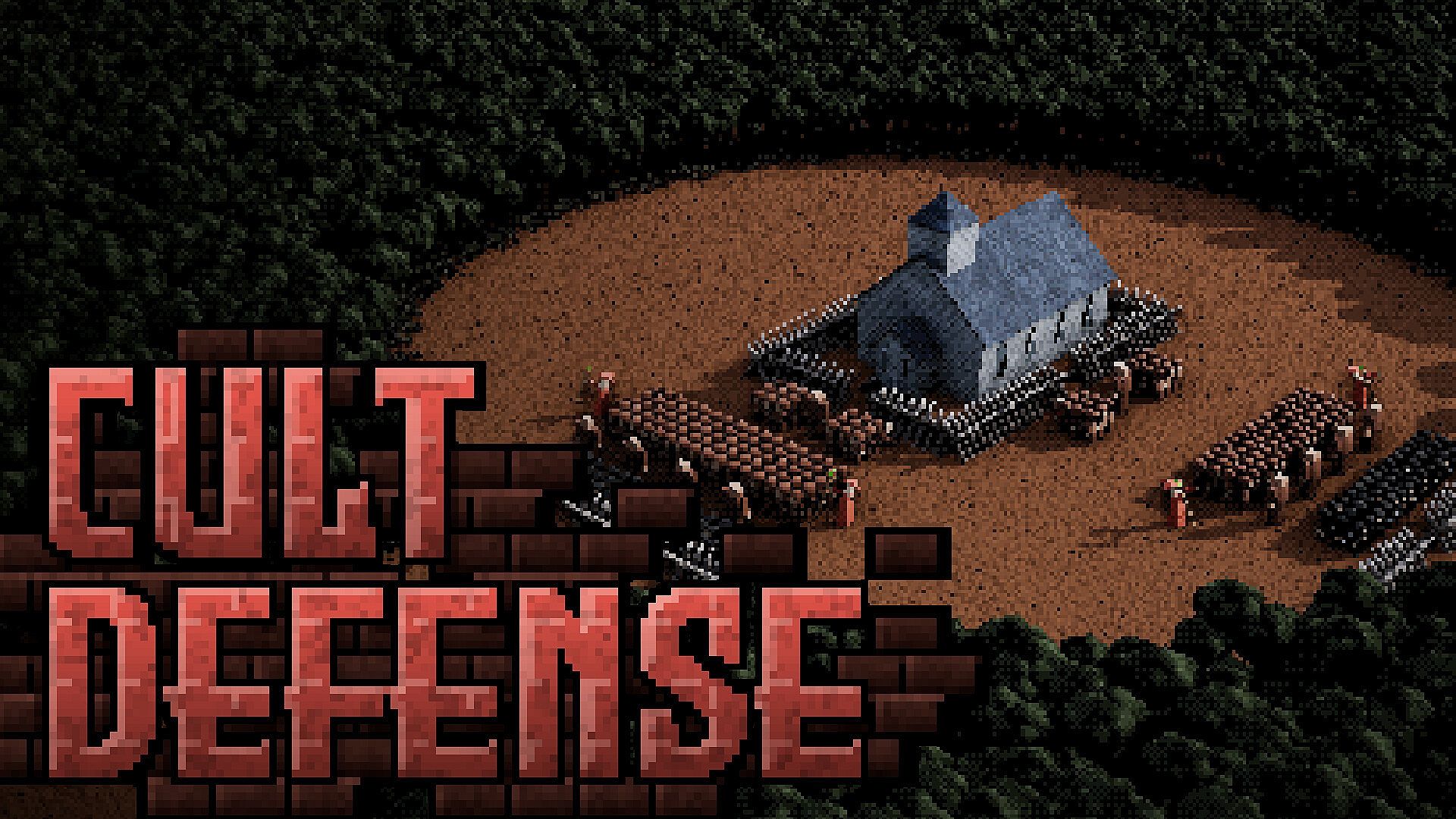
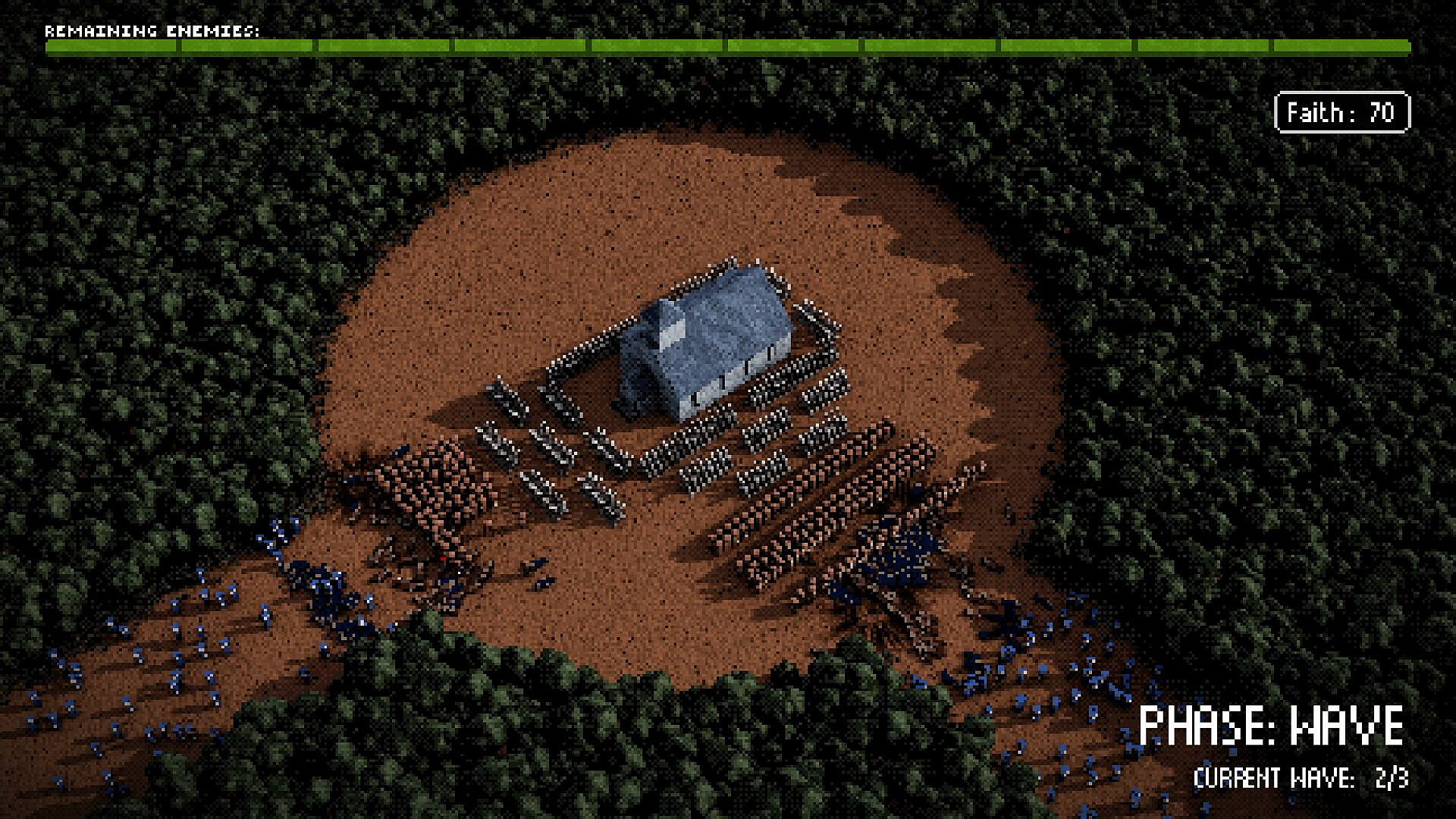
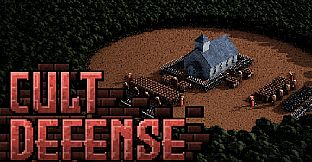
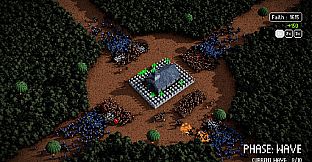
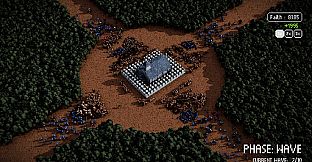
Cult Defense is an action and strategy indie game for PC that places players in command of a besieged congregation. Law enforcement advances along roads in successive waves, growing stronger with each assault, and the defense rests entirely on the followers and structures assembled to block their path to the church.
Gameplay
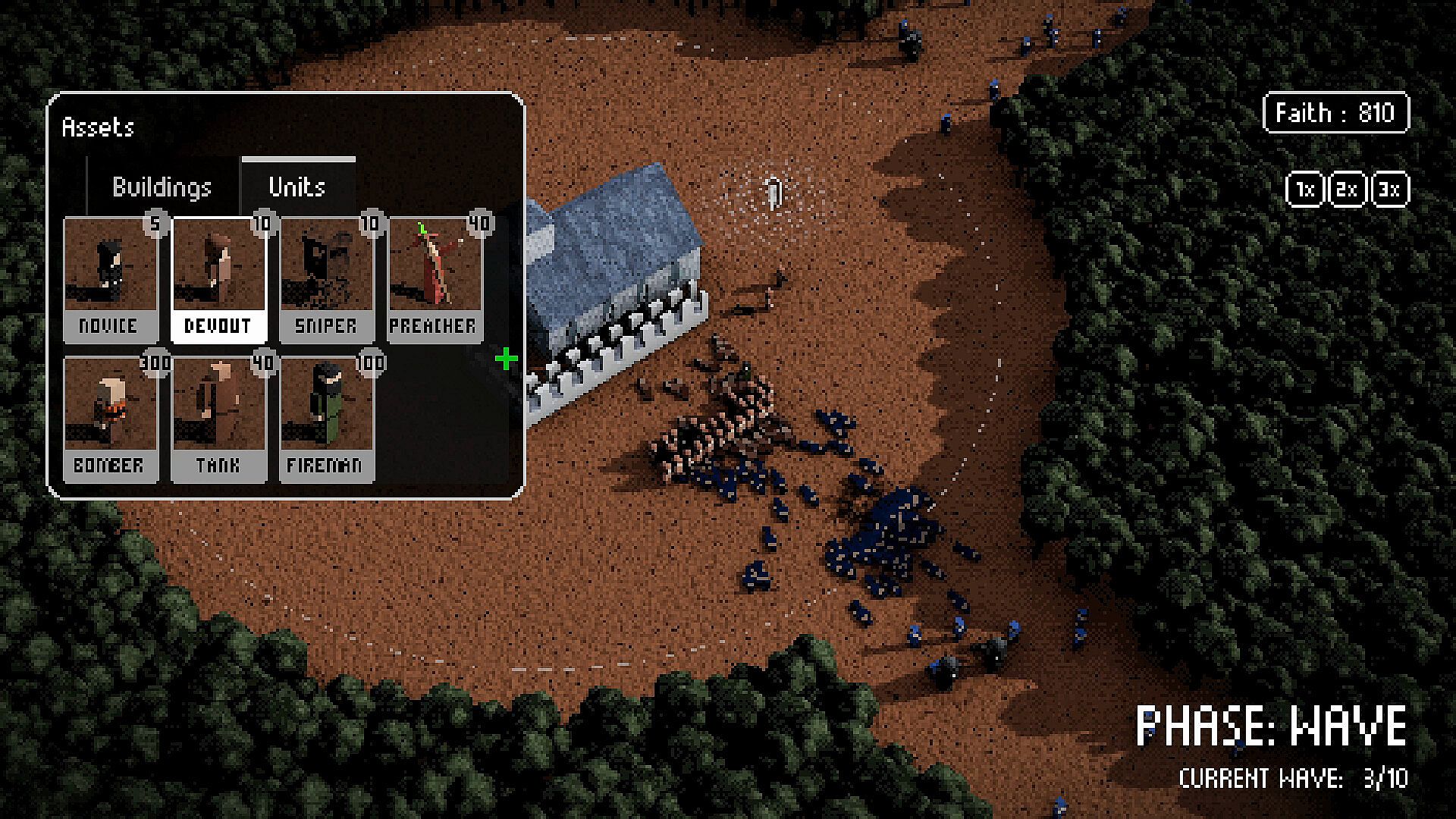
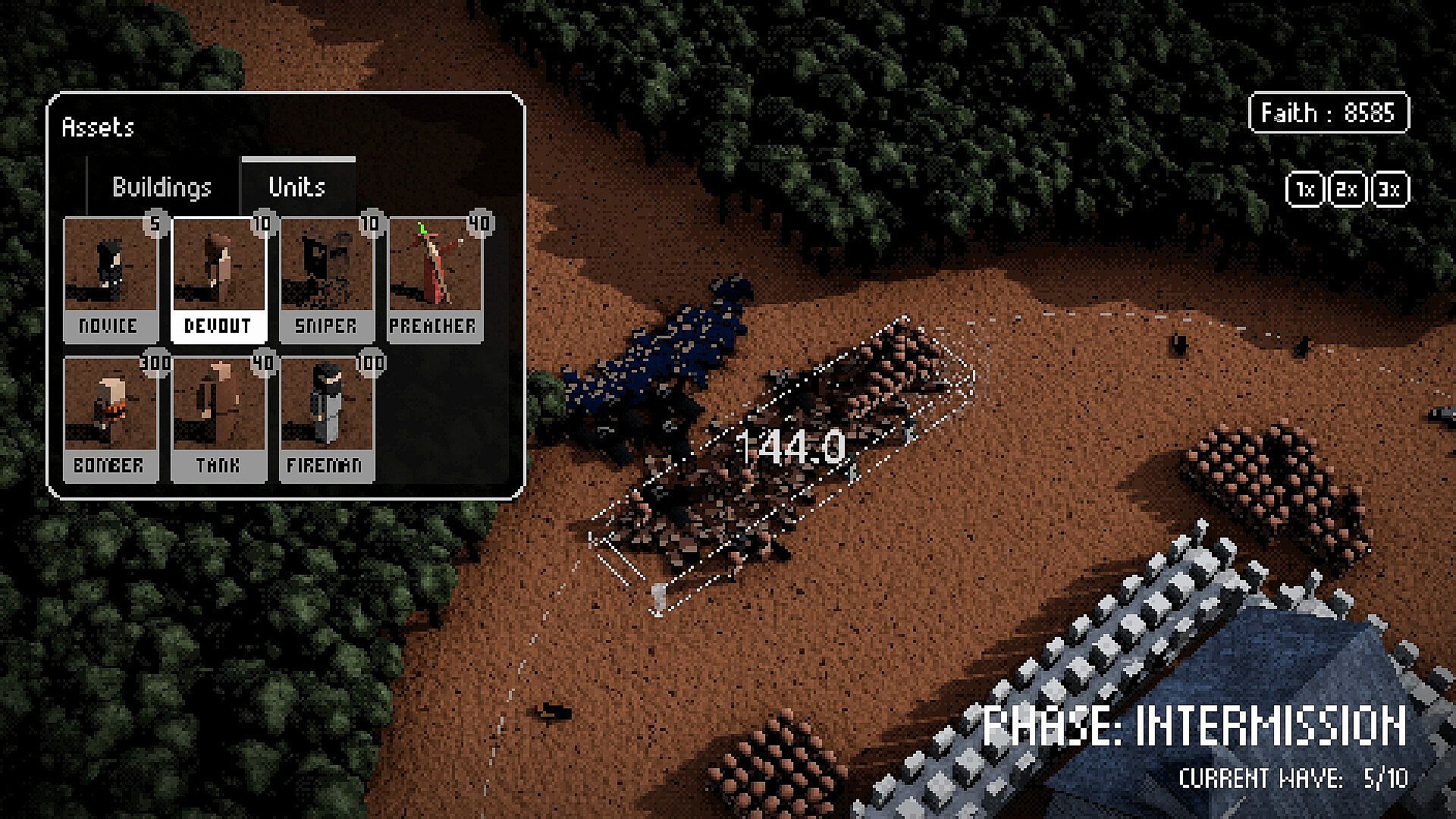
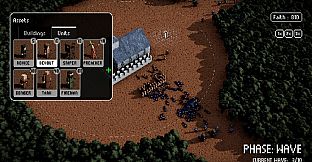
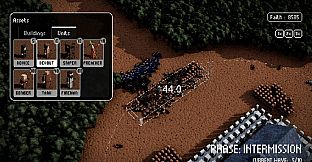
The core loop revolves around resource generation and tactical placement during ongoing fights. Shrines produce faith that funds new recruits, ranging from basic knife-wielding members to specialized units such as snipers, firebombers, and preachers capable of converting enemies. These followers can be positioned at any moment while waves are active, allowing adjustments as threats evolve.
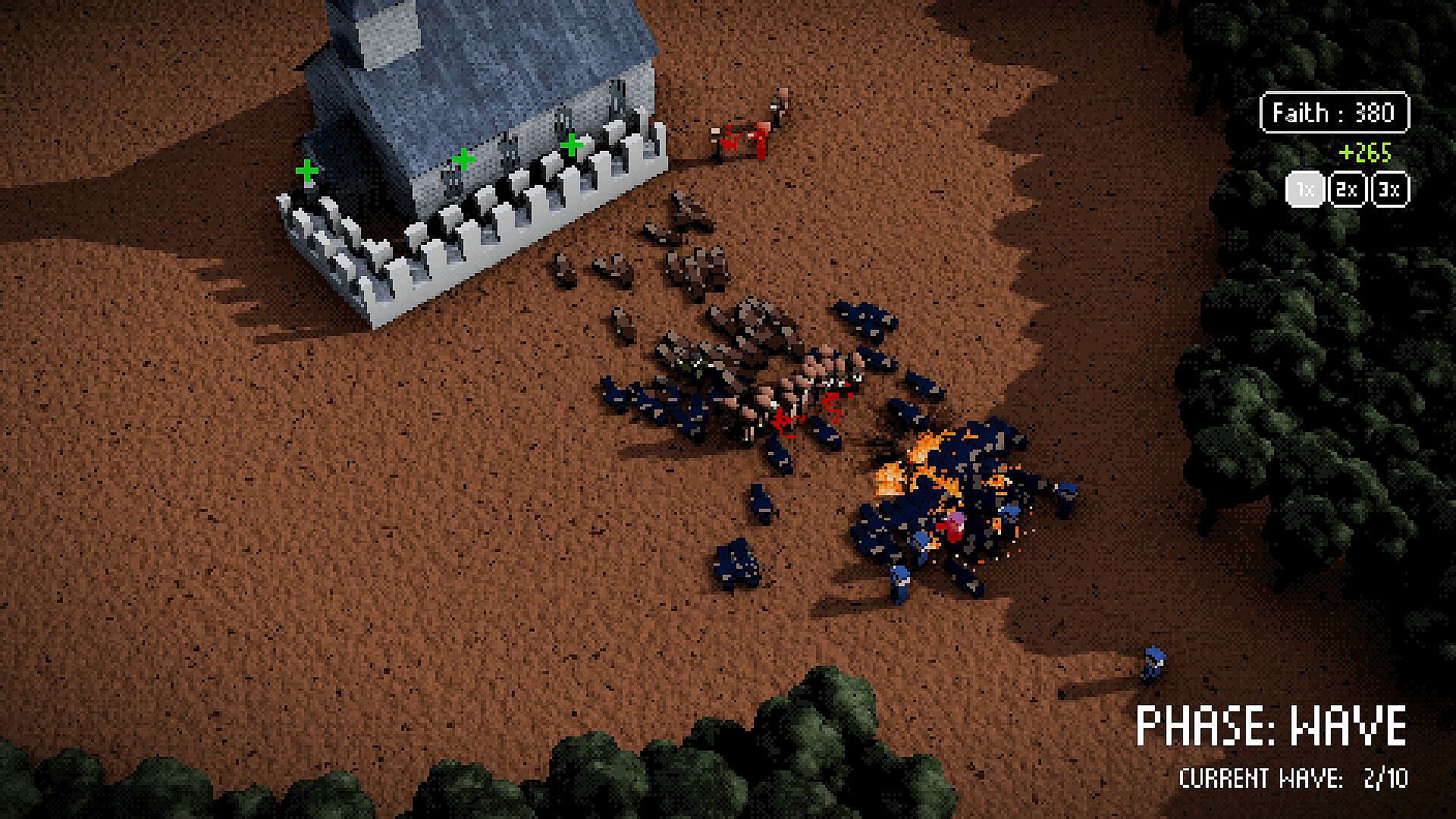
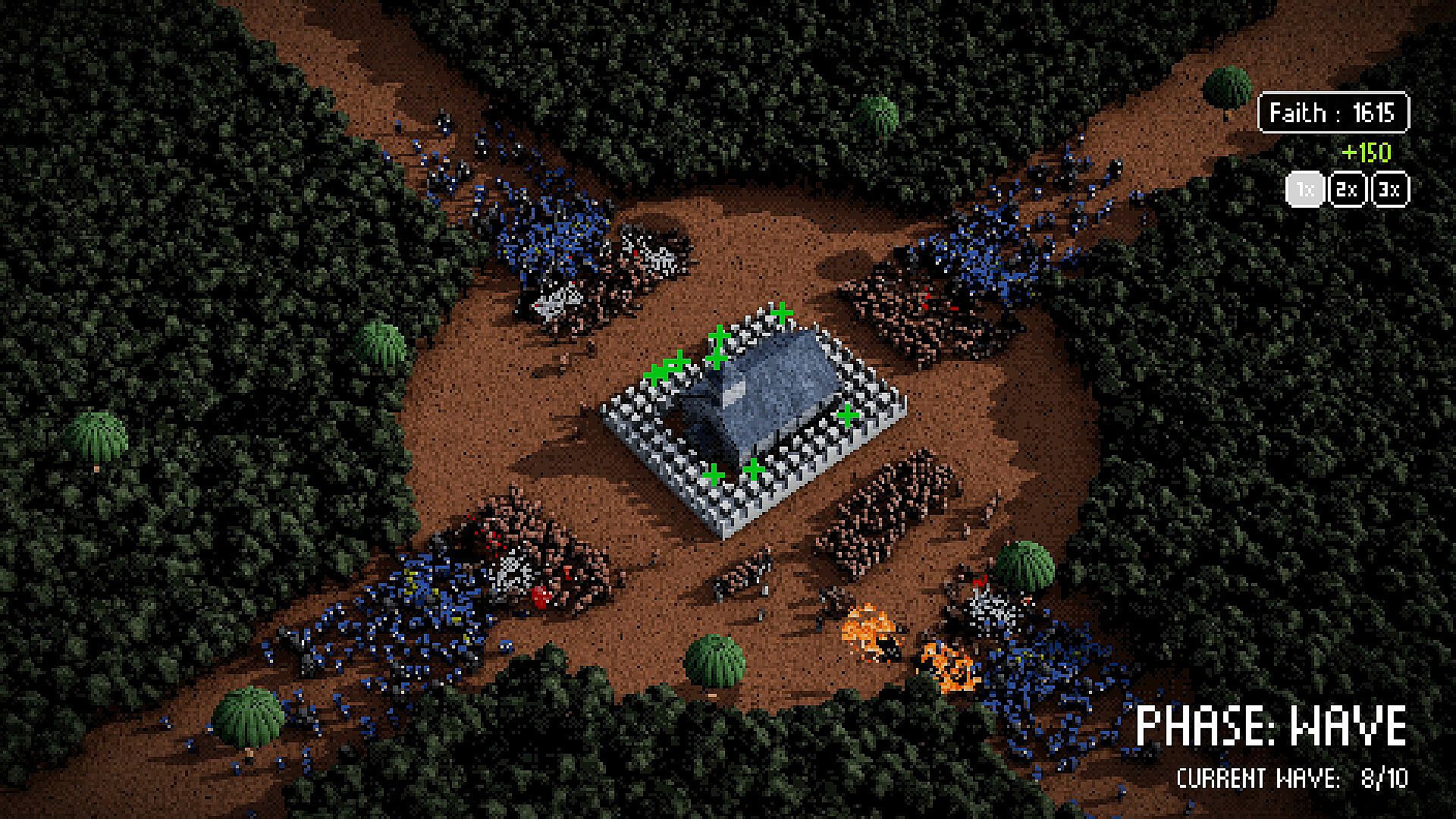
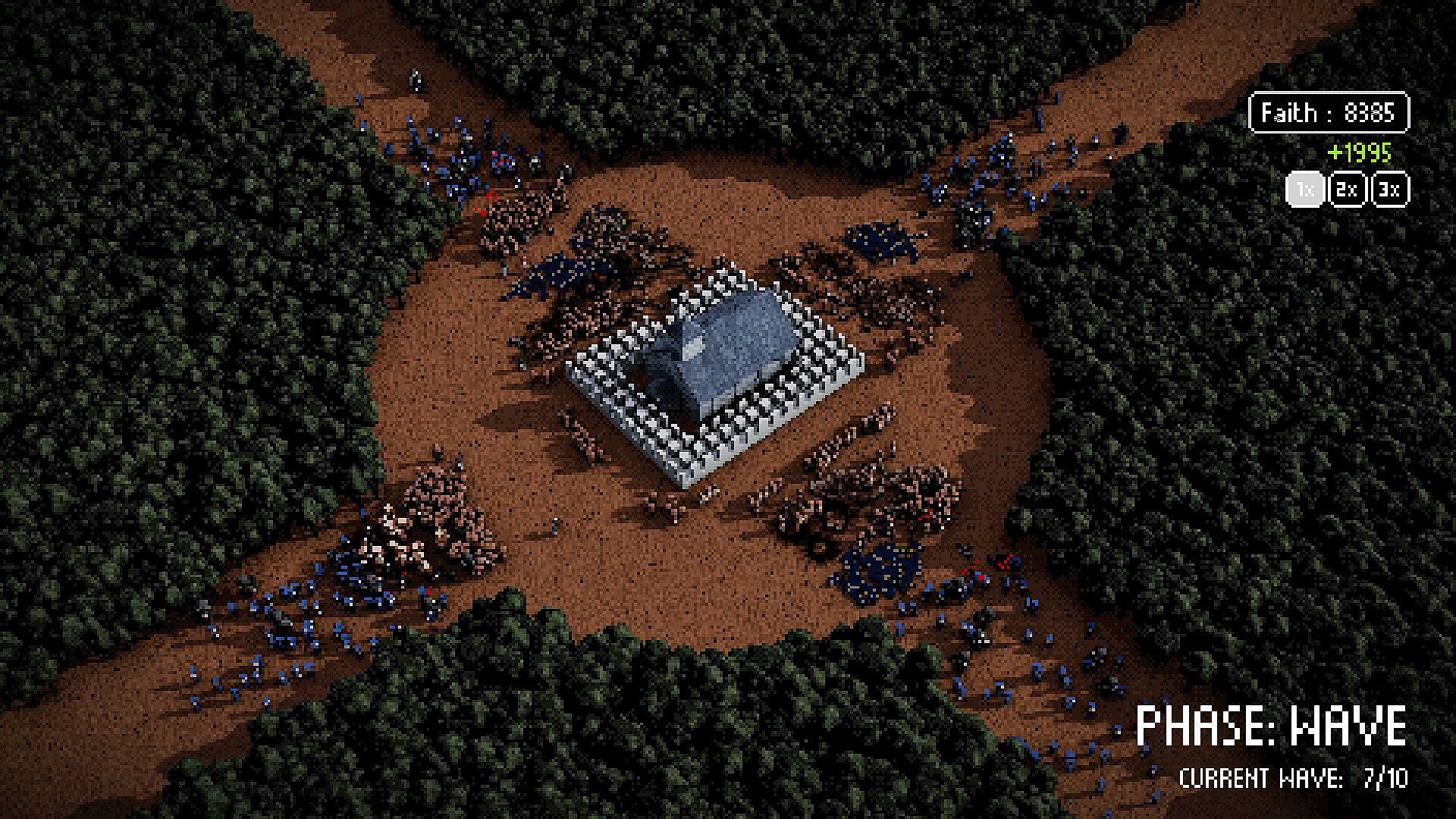
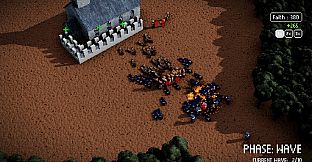
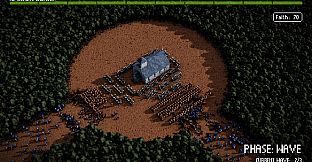
Defensive setup includes erecting walls along roads and planting mines in open areas to control engagement zones. Waves arrive without pause and eventually approach from multiple directions simultaneously, forcing constant repositioning and prioritization of threats. Certain enemy types demand specific counters: grenadiers target clustered positions, armored units advance through lines without stopping, and airborne or flanking troops bypass front defenses to strike shrines directly.
Faith management remains central, as spending too freely early leaves later waves under-defended while hoarding resources risks being overrun before reinforcements arrive. The system rewards careful observation of enemy patterns and timely use of conversion abilities to turn the tide.
Game Modes
The experience focuses on a continuous siege format where waves escalate in number, armament, and approach vectors. Players must adapt placements on the fly as attacks shift from single-road advances to coordinated multi-directional pressure. No separate named modes appear in available information, so the gameplay emphasizes survival across increasingly complex wave sequences rather than distinct variants.
Success hinges on balancing immediate defensive needs with long-term shrine protection, as losing key structures ends the run. The format encourages repeated attempts to refine layouts and unit compositions against the same escalating threats.
Core Mechanics and Progression
Followers serve distinct battlefield roles that complement one another. Cheap recruits provide early volume, while higher-cost units deliver ranged fire or area denial. Preachers add a layer of dynamic control by flipping enemy units to the defensive side. Placement flexibility means strategies can shift mid-wave without pausing the action.
Environmental tools like walls and mines create chokepoints and punish overextended advances. As pressure mounts from several roads at once, these static defenses become essential for funneling enemies into kill zones covered by snipers and firebombers. The interplay between mobile followers and fixed obstacles forms the main tactical depth.
Is It Worth Playing?
Cult Defense suits players who enjoy resource-driven tower defense blended with real-time placement decisions under pressure. The wave-based structure rewards experimentation with unit mixes and defensive layouts against varied enemy behaviors. Those drawn to indie strategy titles that emphasize holding a fixed position against mounting odds will find the mechanics align closely with that preference.
Without published review aggregates or confirmed update schedules at present, the decision rests on interest in the described siege loop. The game remains available on PC through standard digital storefronts for those seeking a focused action-strategy session centered on cult defense against law enforcement assaults.