










Cyber Sword Immortal: The Heavenly Dao Protocol is a strategic deck-building roguelike that merges ancient cultivation practices with advanced technology in a single-player experience on PC. Players build and refine decks across multiple runs while navigating a universe where Heaven functions as an observable protocol that tracks actions and adjusts battle conditions dynamically.
Gameplay
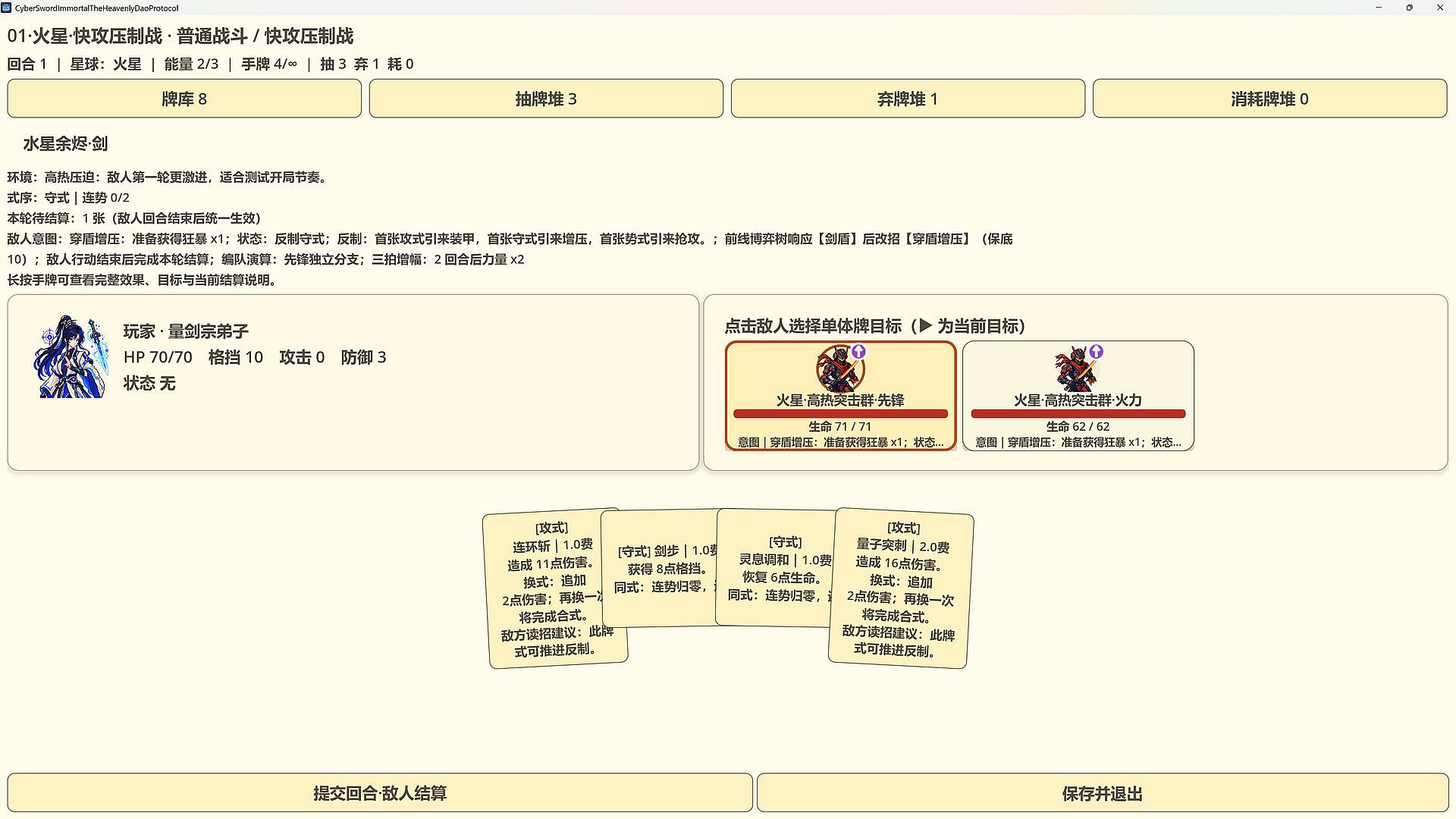
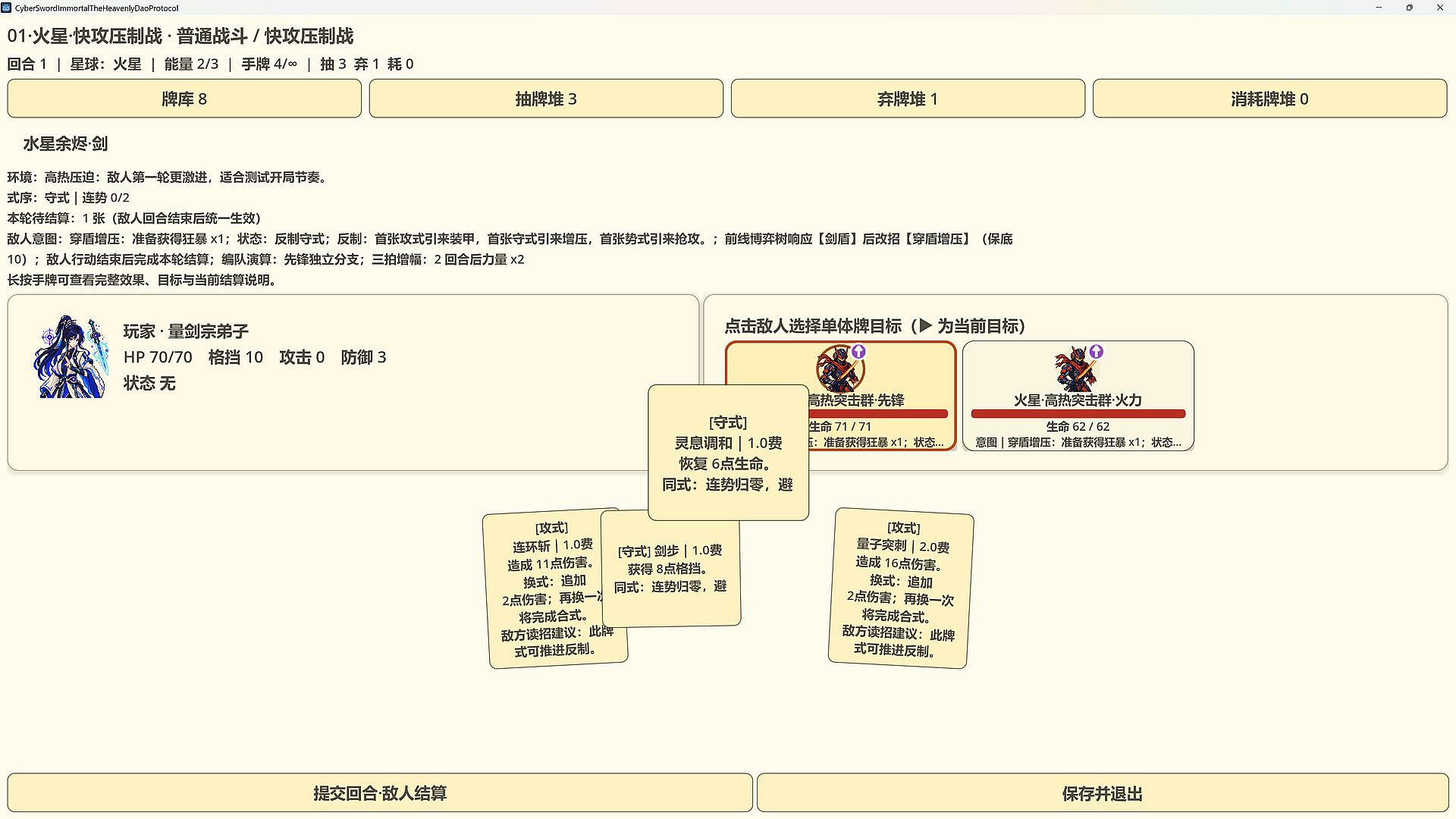
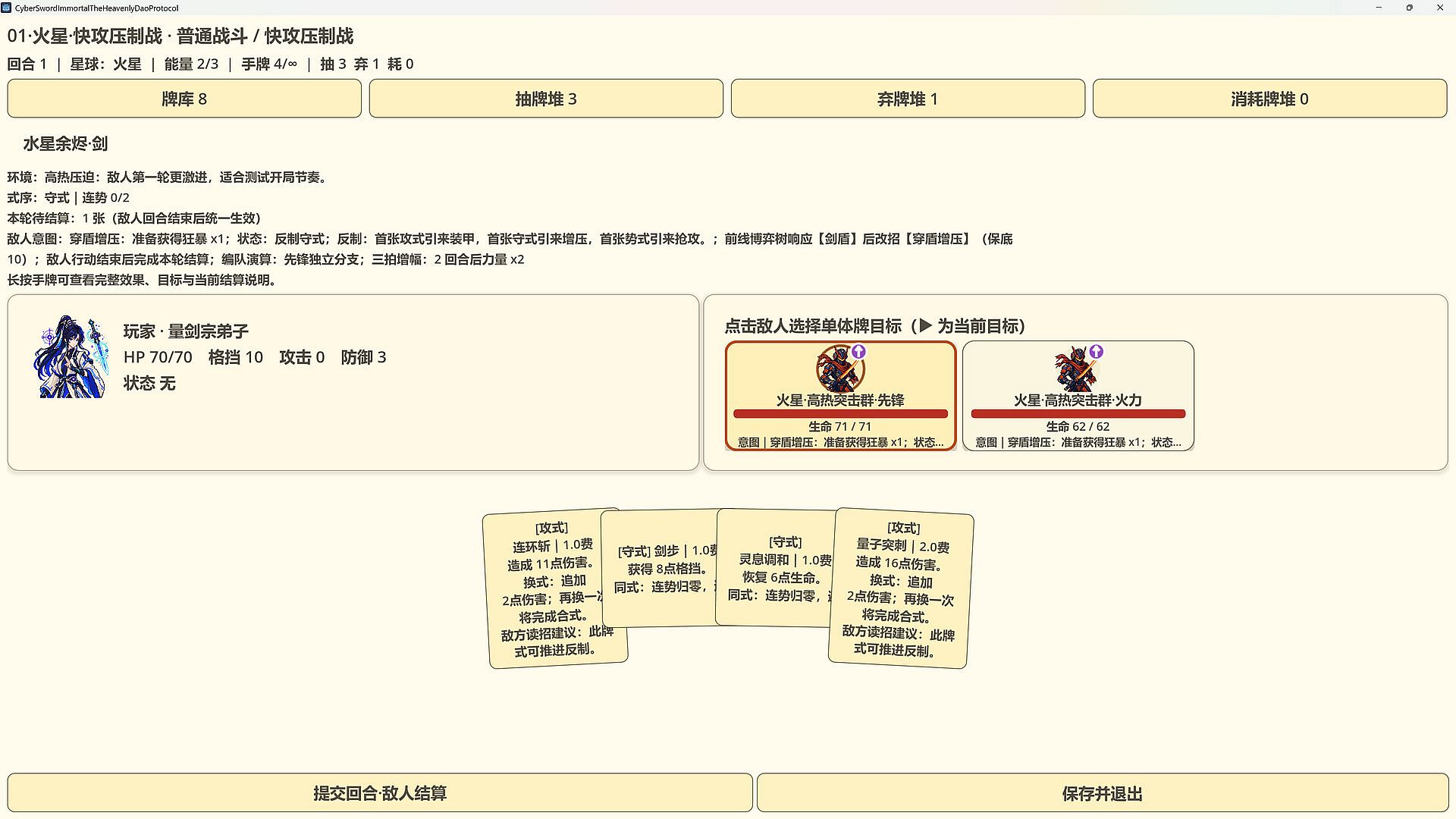
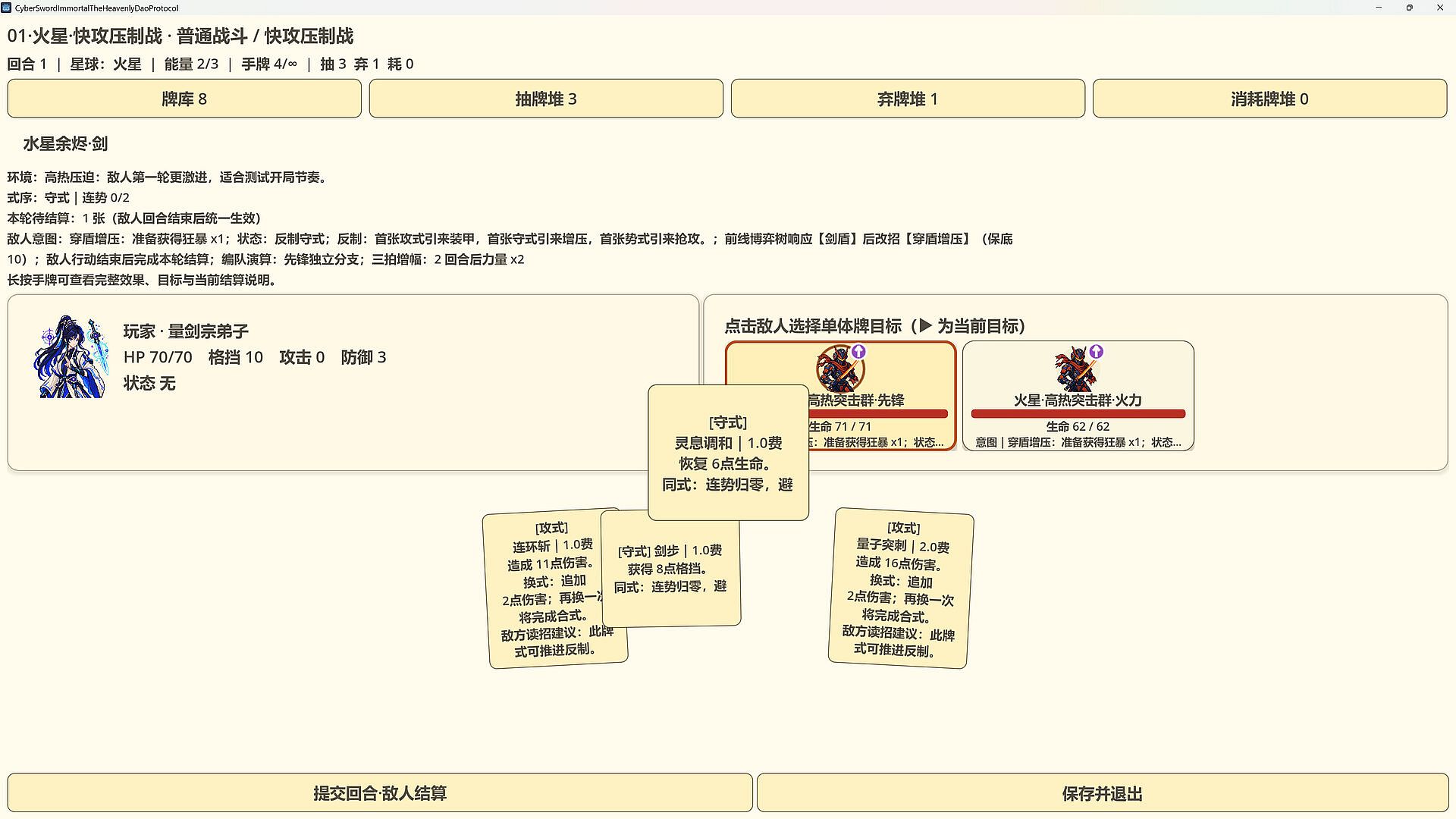
The core loop centers on constructing a cultivation deck from one of four distinct classes. Each class brings unique cards, resources, and tactical approaches that shape how combat unfolds. Players collect techniques during runs, upgrade valuable cards, remove weaker ones, and integrate planetary relics to strengthen their overall engine. Card order carries significant weight because sequences determine the outcomes of combinations across the three combat forms: Attack, Guard, and Momentum. Switching forms accumulates power for effects such as extra damage, energy generation, card draws, defensive boosts, or enemy disruption.
Combat resolves at the end of each round after both player and enemy actions are committed. Enemies display their planned moves in advance yet remain responsive, potentially altering tactics based on observed player choices. This setup rewards careful prediction and timing rather than raw power output. A well-timed sequence can interrupt enemy protocols entirely, turning their adaptations into openings for the player.
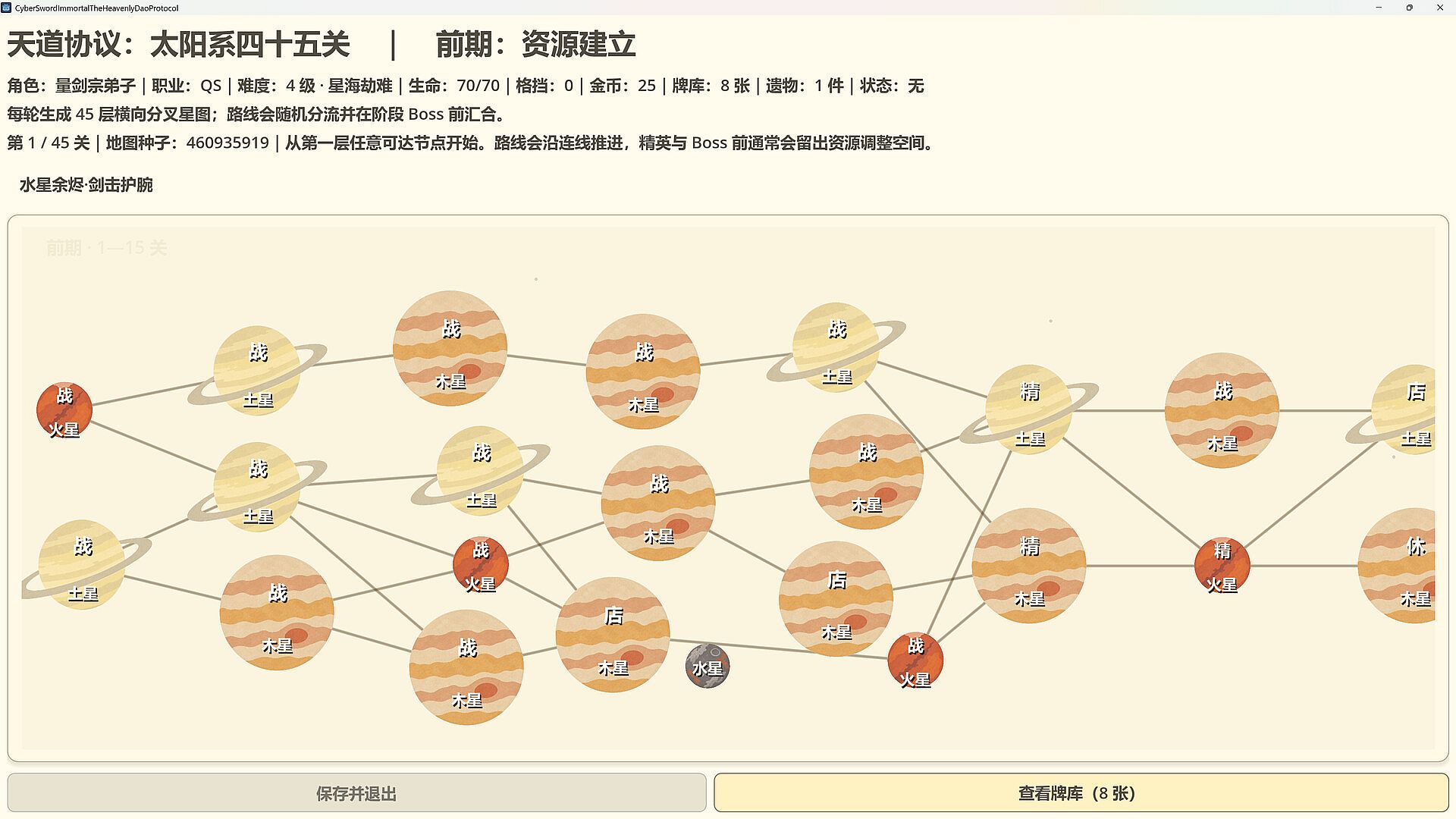
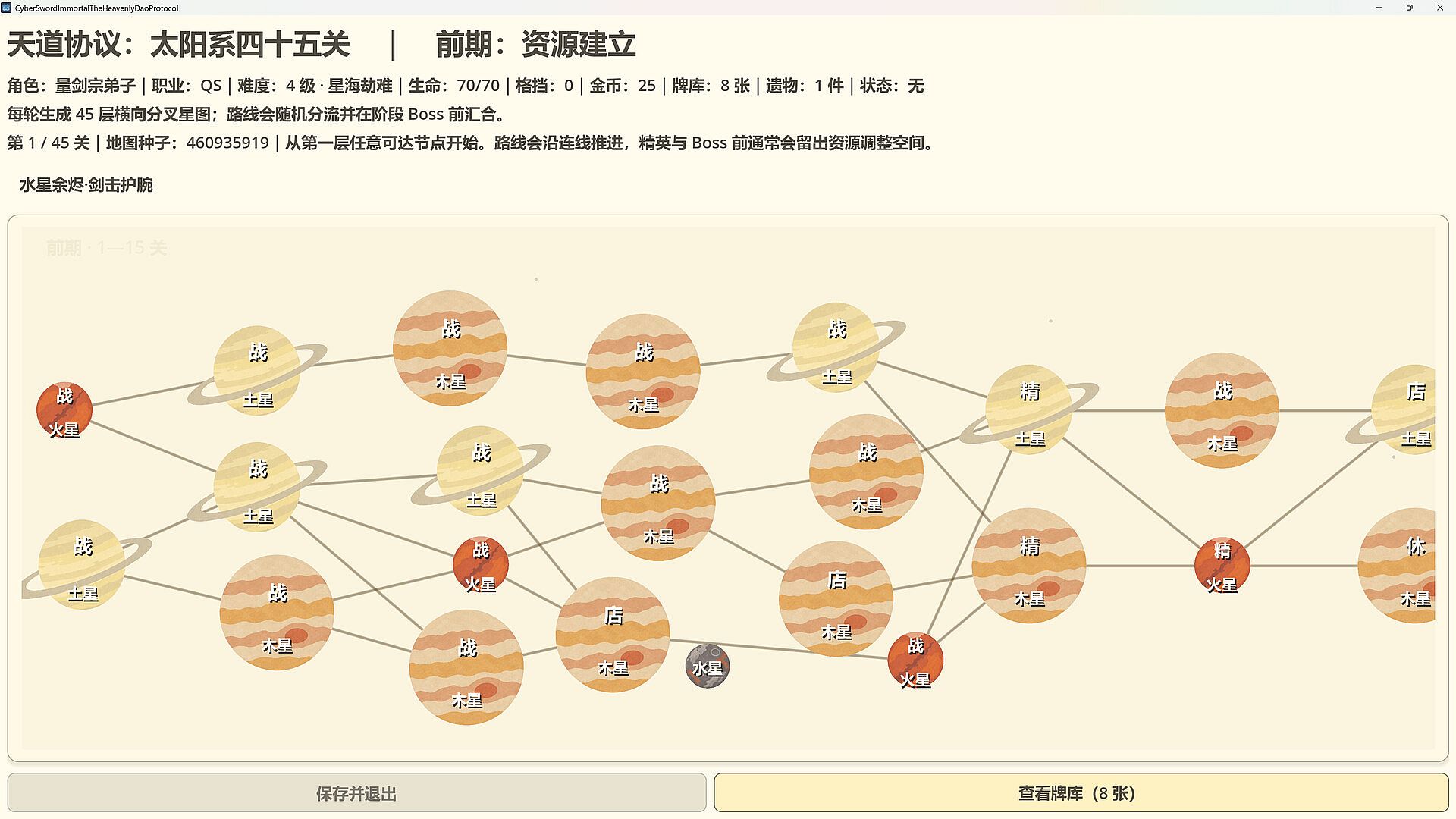
Progression occurs along randomized 45-node interplanetary routes. Nodes include standard battles, elite encounters, random events, shops for card management, rest sites for recovery, and opportunities to acquire treasures or relics. Environmental threats intensify as the route advances, forcing ongoing adjustments to the deck. Ten difficulty levels scale enemy capabilities and external pressures, encouraging repeated attempts to refine strategies and overcome the protocol's predictive systems.
Game Modes
The game operates through a single core roguelike structure focused on individual runs. Each attempt follows the 45-node route format with escalating challenges tied to the chosen difficulty level. Players select from the four classes at the start and then adapt their deck through the nodes encountered. There are no separate multiplayer or co-op options described, keeping emphasis on solo strategic decision-making across successive attempts.
Difficulty selection serves as the primary variation, with higher levels increasing demands on resource management, form switching, and enemy prediction. Runs emphasize experimentation with card synergies and relic combinations rather than fixed progression paths. The structure supports multiple playthroughs as each failure provides insight into enemy behaviors and protocol mechanics for future refinements.
Is It Worth Playing?
This title suits players who enjoy deck-building roguelikes that prioritize tactical sequencing and adaptive opponent responses over straightforward power progression. The integration of cultivation themes with technological oversight creates a distinct identity within the genre, where success hinges on reading intentions and disrupting enemy plans at the right moment.
Those drawn to games with layered combat forms and route-based decision points will find consistent depth in how decks evolve across runs. The ten difficulty tiers provide a clear ladder for improvement without introducing unrelated systems. Availability on PC makes it accessible for those seeking a focused single-player experience centered on strategic refinement rather than expansive narratives or external content.
Overall, the game appeals to enthusiasts of roguelike deck-builders who value prediction mechanics and class-specific identities. Its structure rewards persistent analysis of combat interactions, making it a solid choice for players comfortable with iterative learning through repeated runs.