


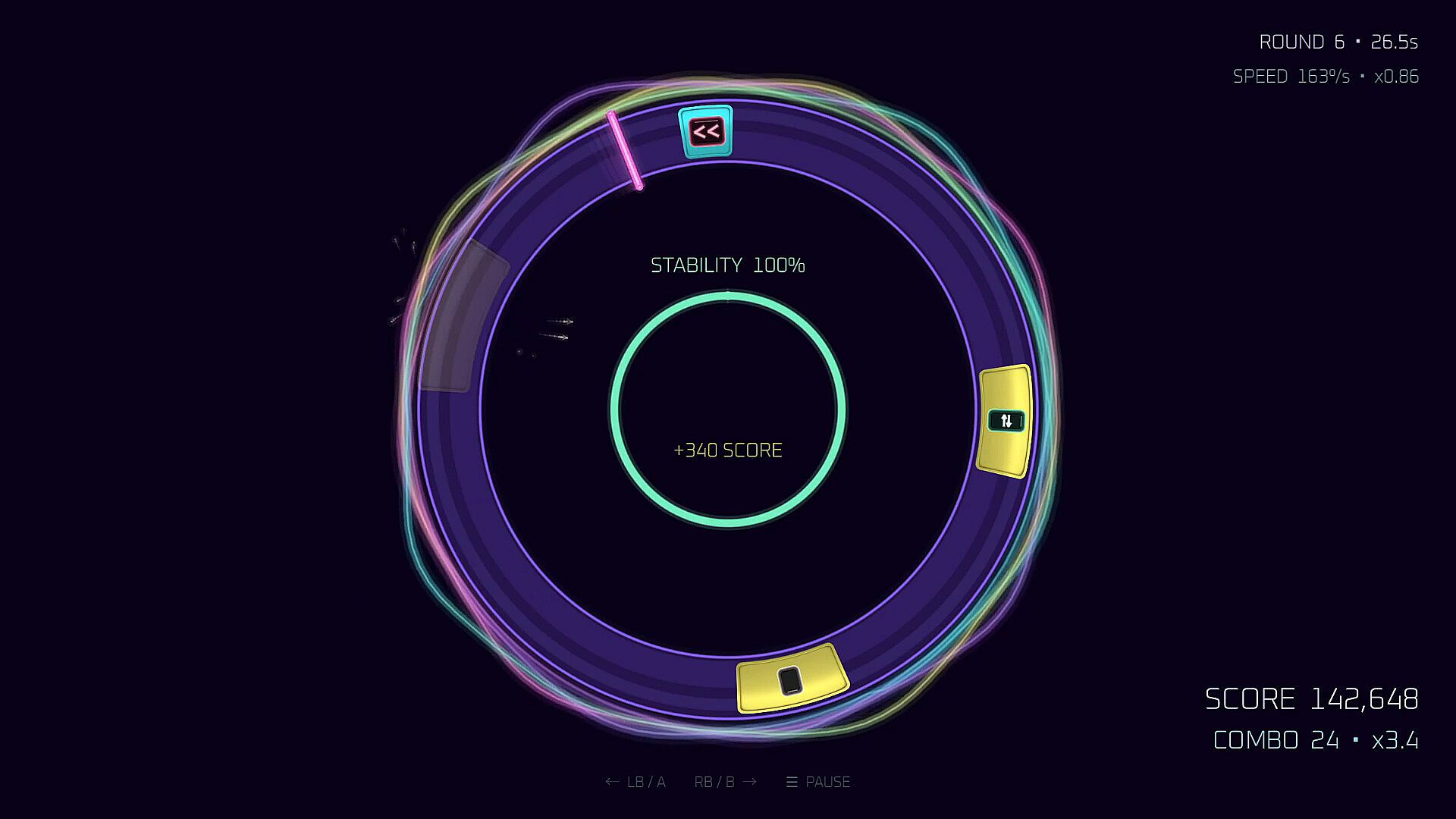
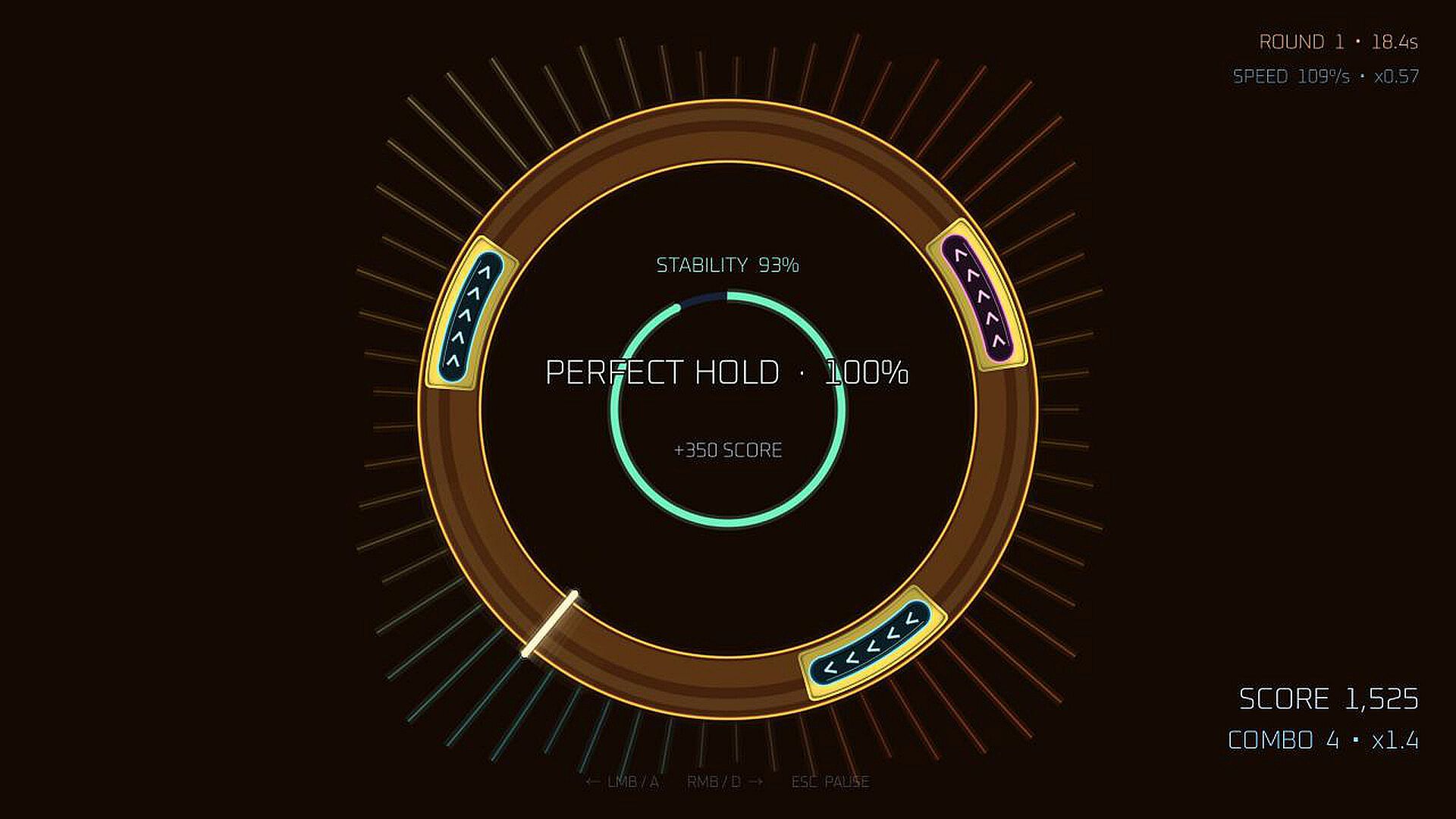
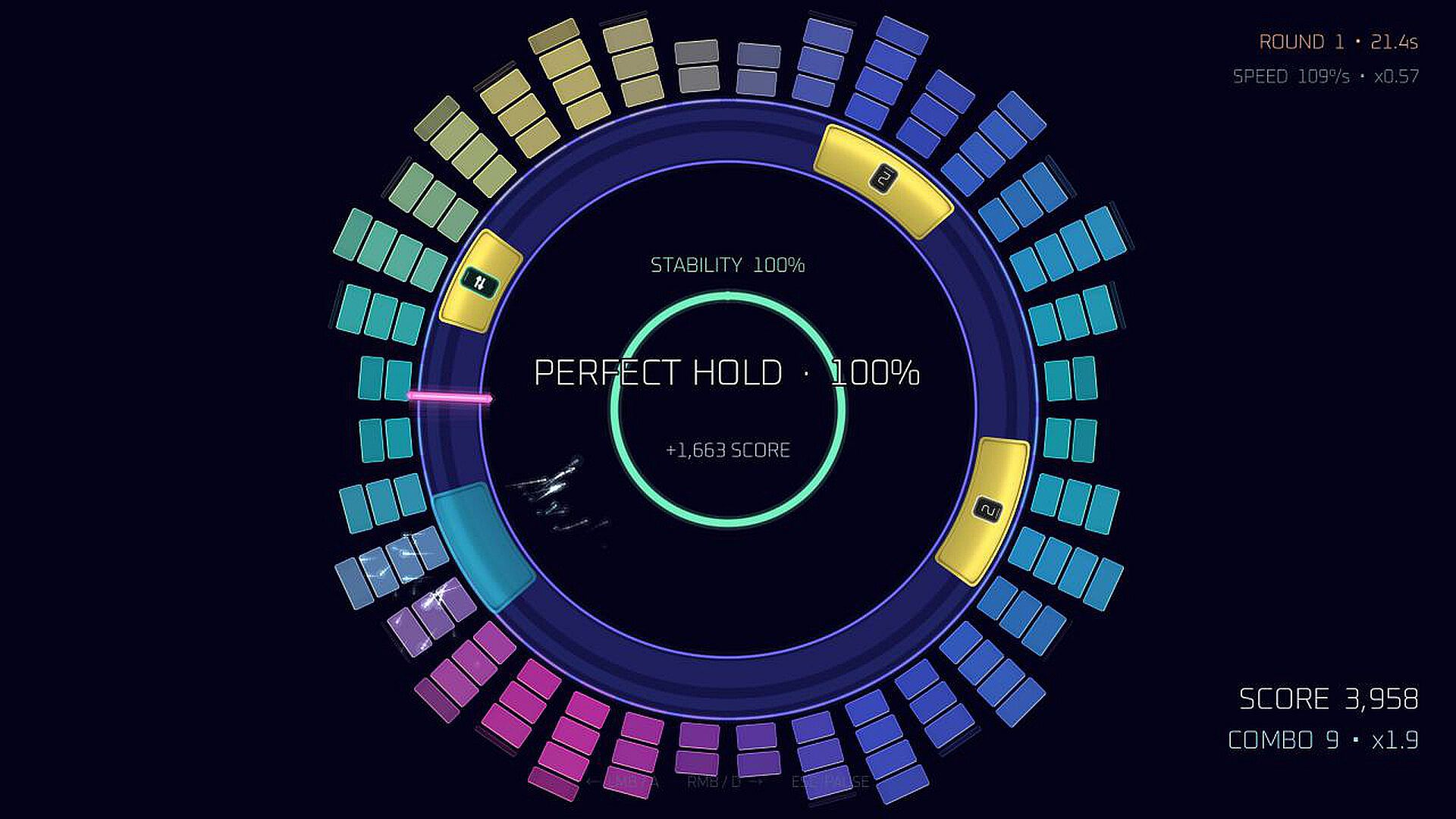
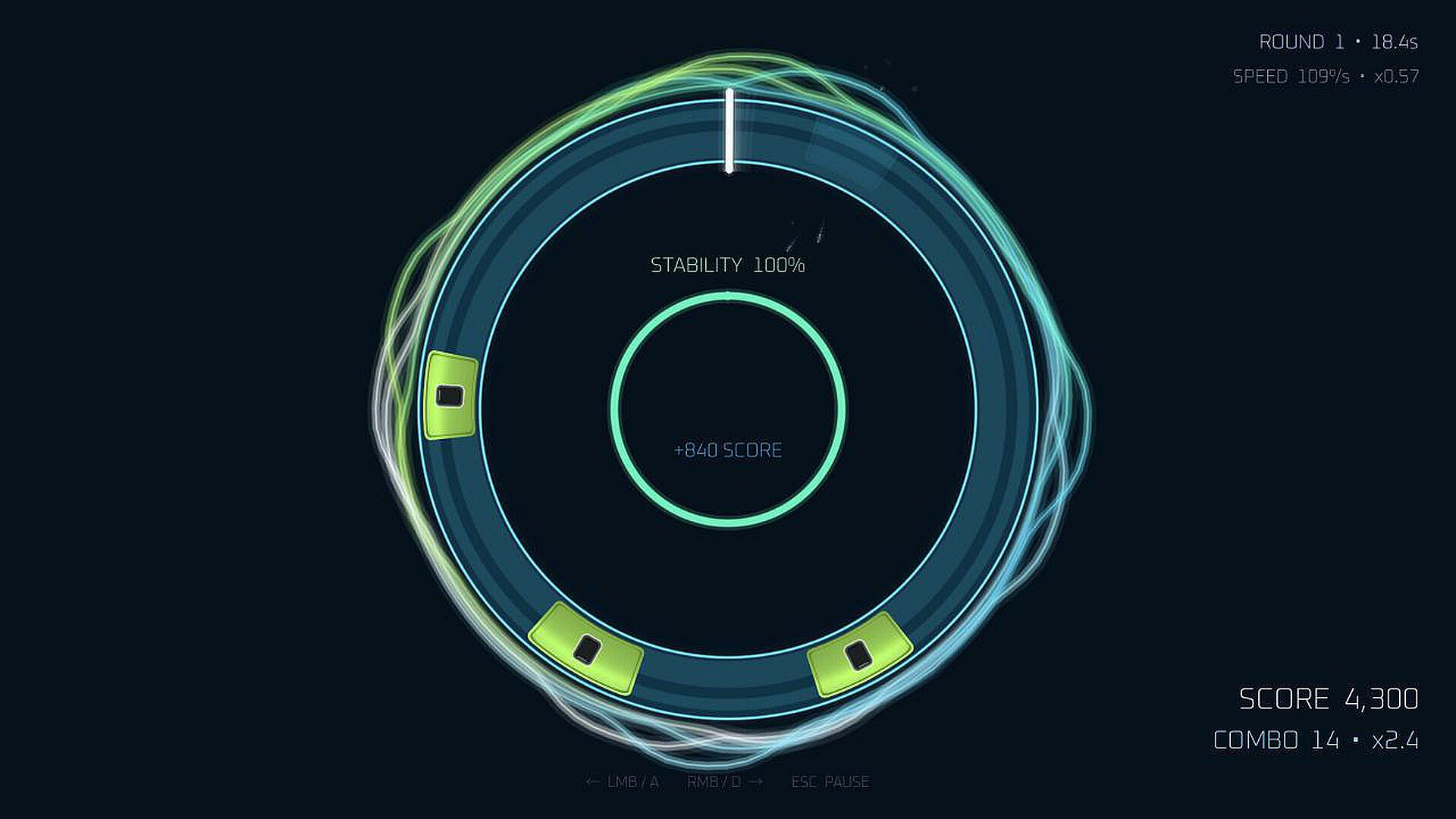
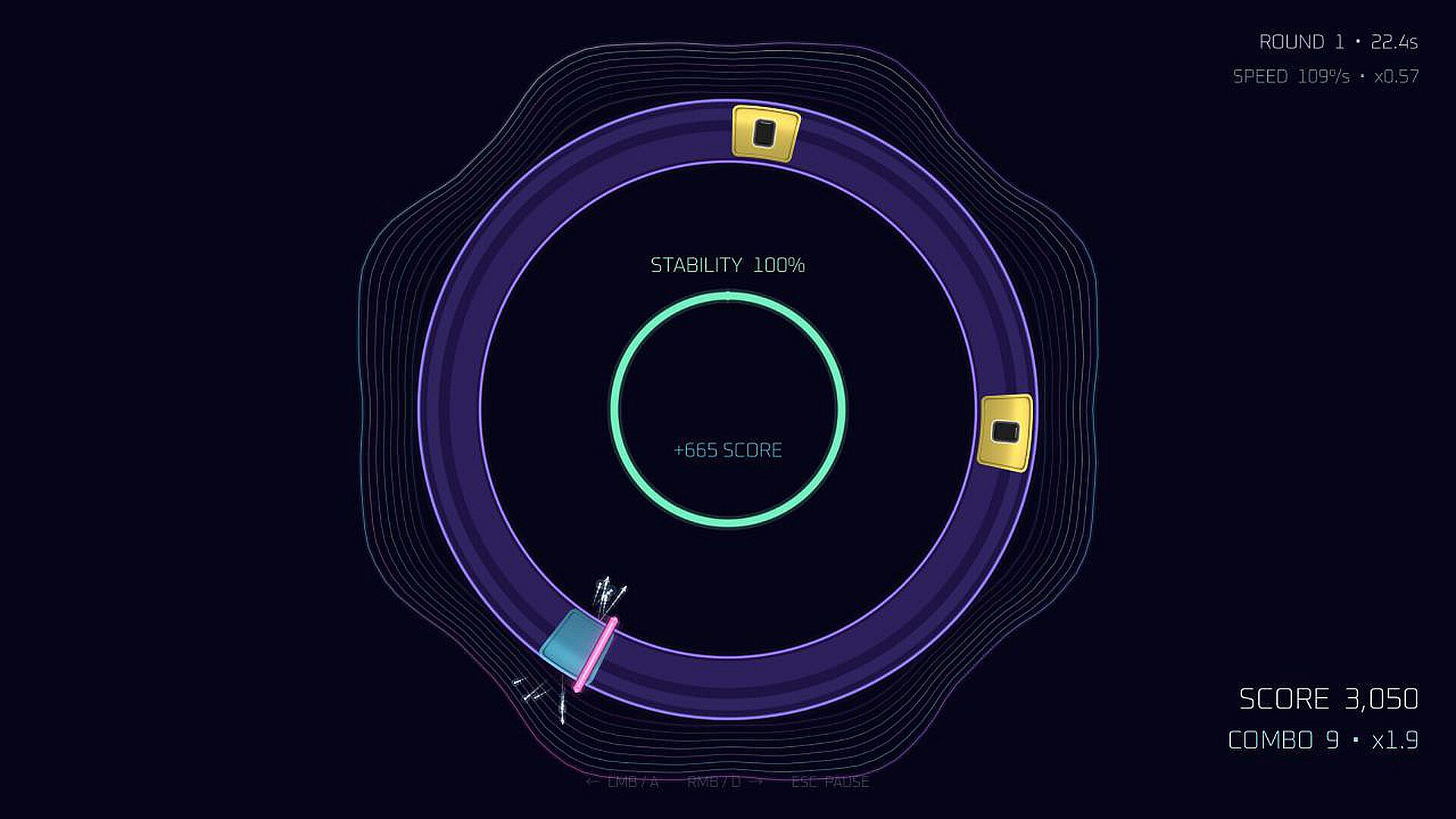



Dialshift is an action indie casual game for PC that centers on precise timing and directional control in a minimalist ring-based setup. Players manage a constantly moving cursor around a circular dial, selecting between clockwise and counterclockwise movement with every input to land hits on targets. The core loop rewards consistent accuracy to maintain combos while safeguarding stability, as errors cause the system to unravel quickly. This setup creates a tense, reflexive experience where each decision influences the immediate path forward and the overall run.
Gameplay
The fundamental system revolves around uninterrupted cursor motion on a single ring. Inputs flip the direction without pause, turning every action into a potential hit attempt. Success builds and sustains combos, while misses erode stability and end the attempt. Beyond basic timing, players must anticipate how one hit positions the cursor for the next target. A well-placed turn can chain opportunities efficiently, whereas a rushed reversal often strands the cursor far from the ideal spot. Speed increases progressively, demanding sharper route planning across the entire dial rather than isolated reactions. The result is a compact yet demanding loop that emphasizes foresight and control over raw speed alone.
Game Modes
Seven distinct modes alter the rules while retaining the same core input system. Classic focuses on straightforward timing challenges. Extreme removes any initial warmup period for immediate intensity. Flow requires following a prescribed direction throughout. Switch inverts the player's direction with every successful hit. Hold demands remaining locked in one direction across full arcs. Pulse breaks targets through repeated strikes rather than single contacts. Ultimate combines elements from all other modes into one demanding session. Each mode tracks separate scores, ranks, and online leaderboards, encouraging repeated attempts to refine performance and reach the highest tiers such as S+.
Progression and Features
Runs emphasize chasing perfect hits and extended combos within the constraints of each mode. Steam achievements provide additional goals tied to specific feats like high ranks or sustained performance. The structure supports short, repeatable sessions where a single miss resets progress and restarts the countdown. Leaderboards allow direct comparison against other players on identical mode rulesets. This setup suits players who enjoy refining technique across multiple variations without complex systems or external elements.
Who the Game Appeals To
Dialshift targets those seeking focused, high-precision action in a casual indie package. The two-button directional choice combined with constant motion creates accessible entry points that scale into significant challenge as speed rises. Individuals who appreciate rhythm-adjacent timing games or minimalist designs with clear feedback loops will find the mechanics engaging. The variety across modes offers different flavors of the same core tension, from relaxed direction-following to chaotic combined rules. Singleplayer runs with optional leaderboard competition fit players who prefer personal improvement over multiplayer coordination.
Is It Worth Playing?
The game delivers a tight, self-contained experience built around directional flips and hit accuracy on a persistent ring. Its seven modes provide meaningful variety while keeping the fundamental systems consistent, allowing focused practice on timing, positioning, and stability management. Online leaderboards and ranked progression add replay motivation for those who enjoy chasing personal bests or competing globally. The design rewards deliberate route choices and combo maintenance, making each clean run satisfying. Players drawn to precise, reflexive indie action games with straightforward controls and escalating difficulty will likely find value in repeated attempts across the modes. The current state supports ongoing leaderboard competition without additional layers, keeping the focus squarely on core execution.