




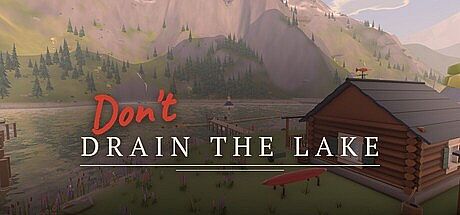


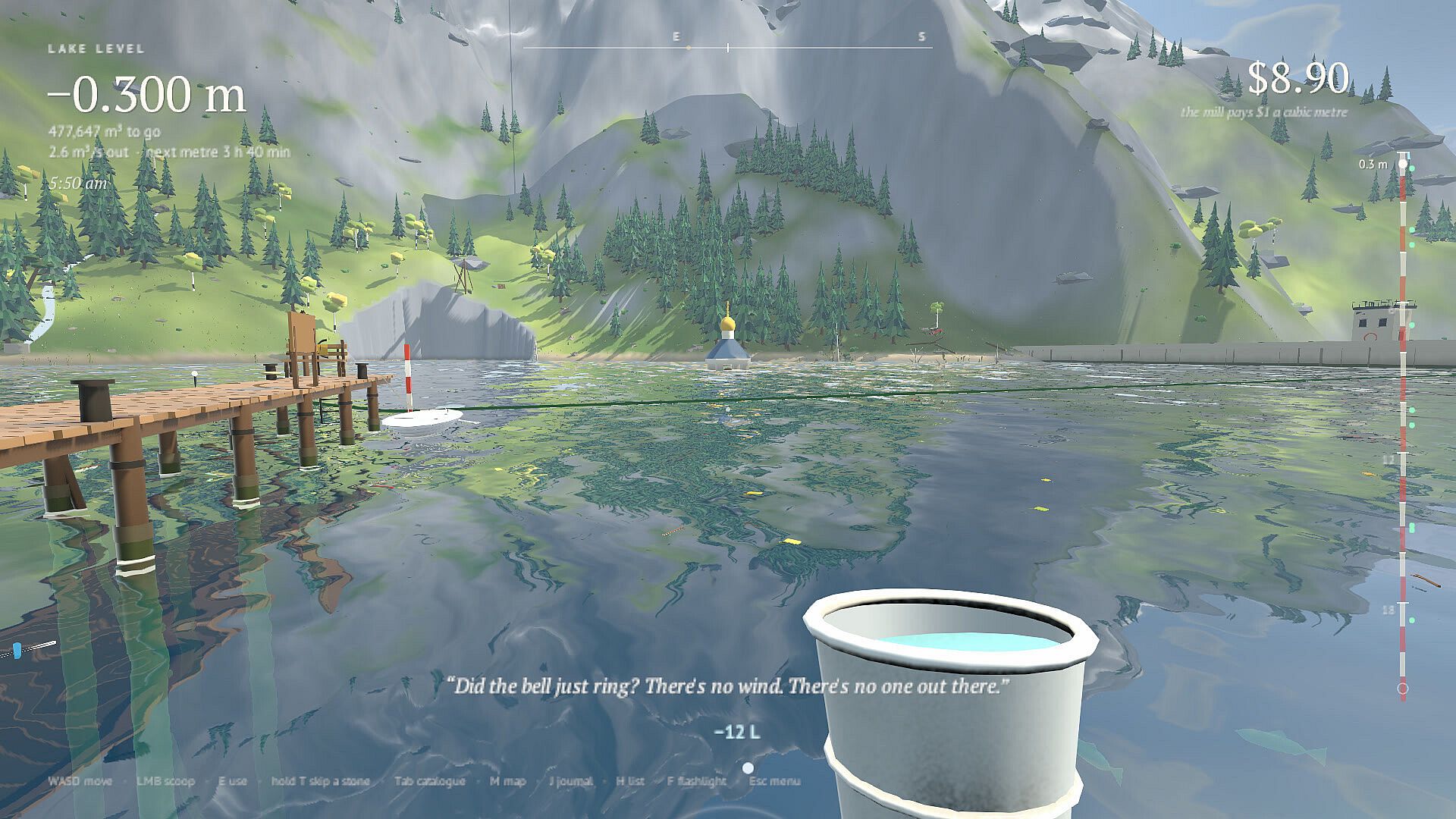
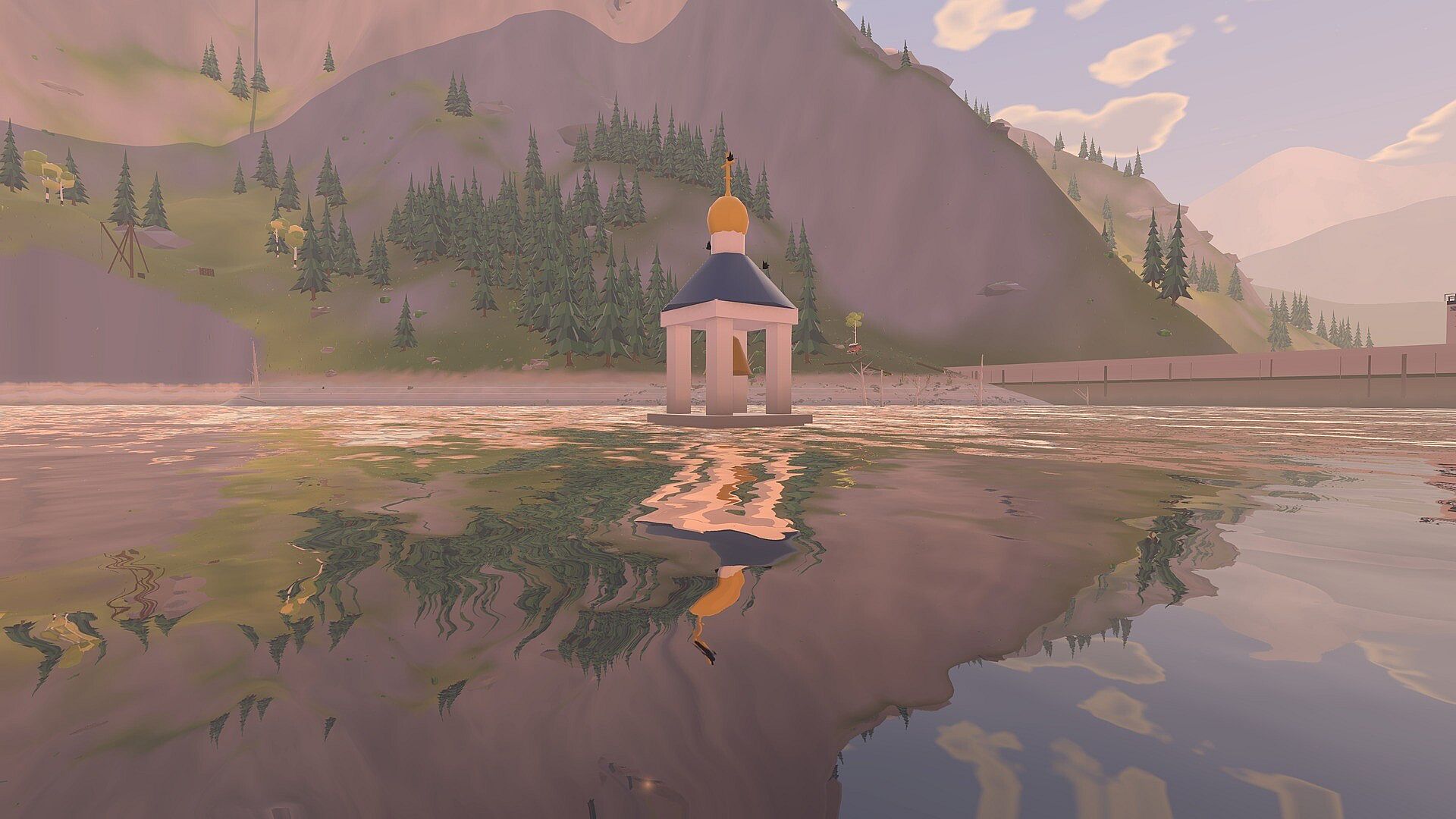
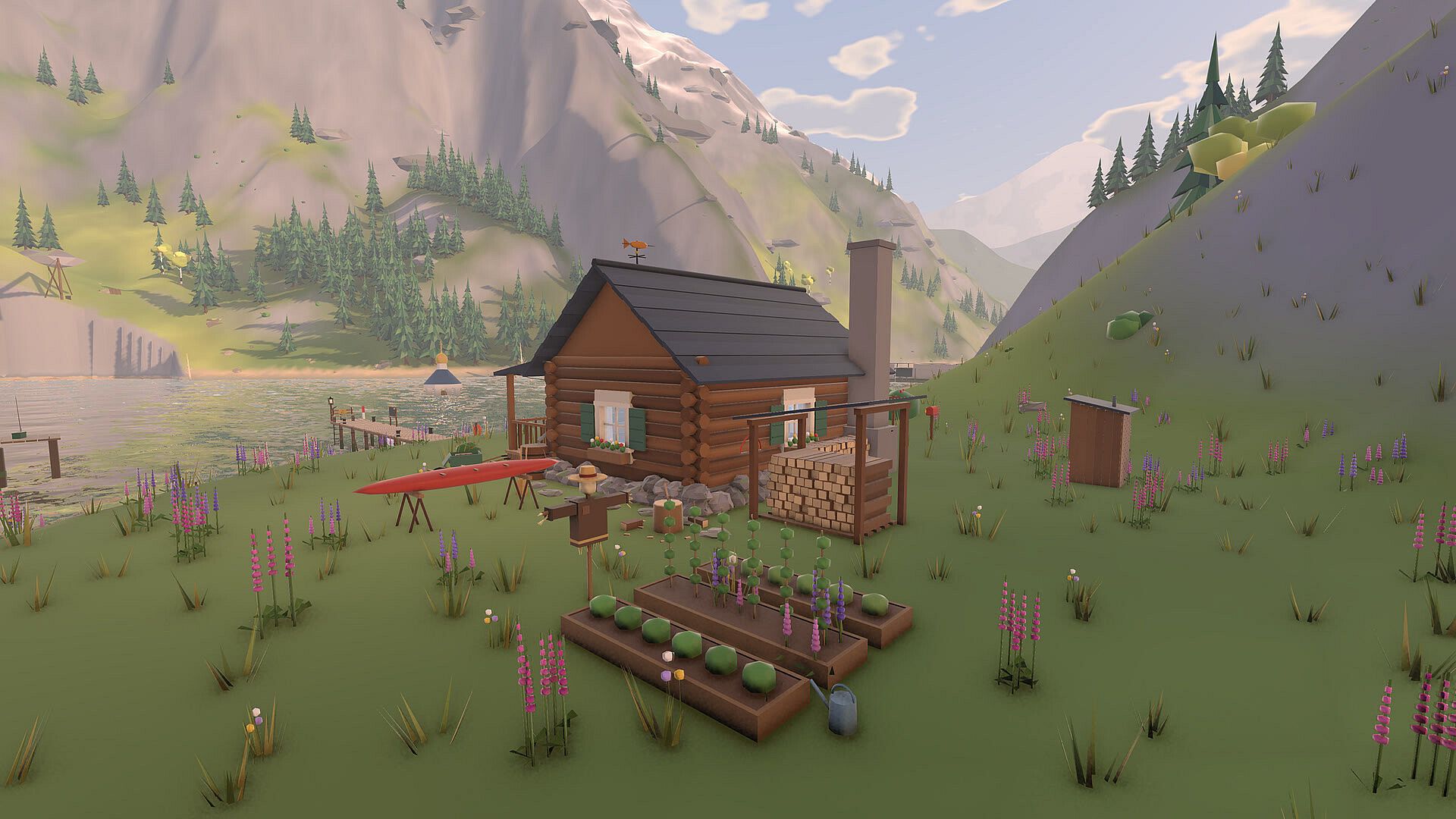
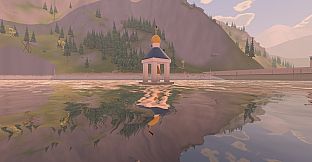

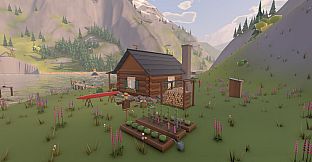
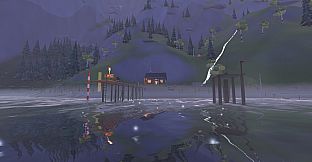
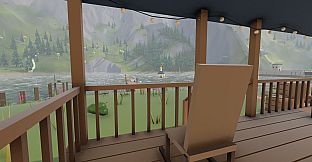
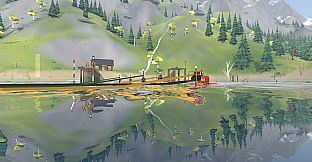
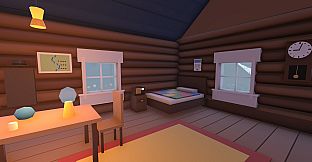
Don't Drain The Lake is a first-person incremental simulation game set on PC. Players inherit a lakeside cabin and face a simple but binding instruction from Grandpa: whatever happens, do not drain the lake. The bank demands payment by the first frost, while the downstream mill offers payment for every cubic metre sent over the dam. A mysterious bell tower stands in the middle of the water where none should exist. Armed with a bucket, the player begins the deliberate work of lowering the reservoir one scoop at a time.
Gameplay
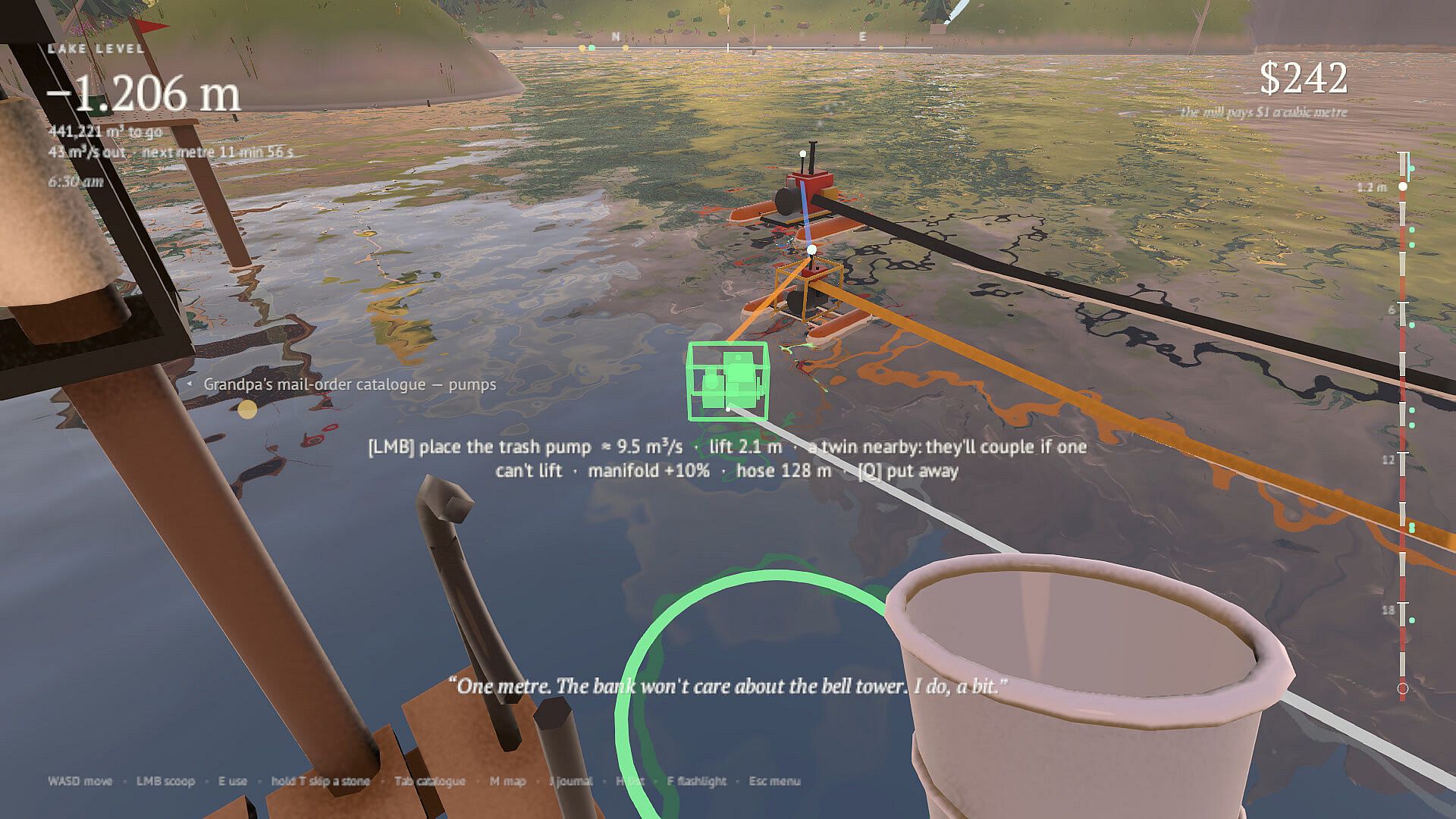
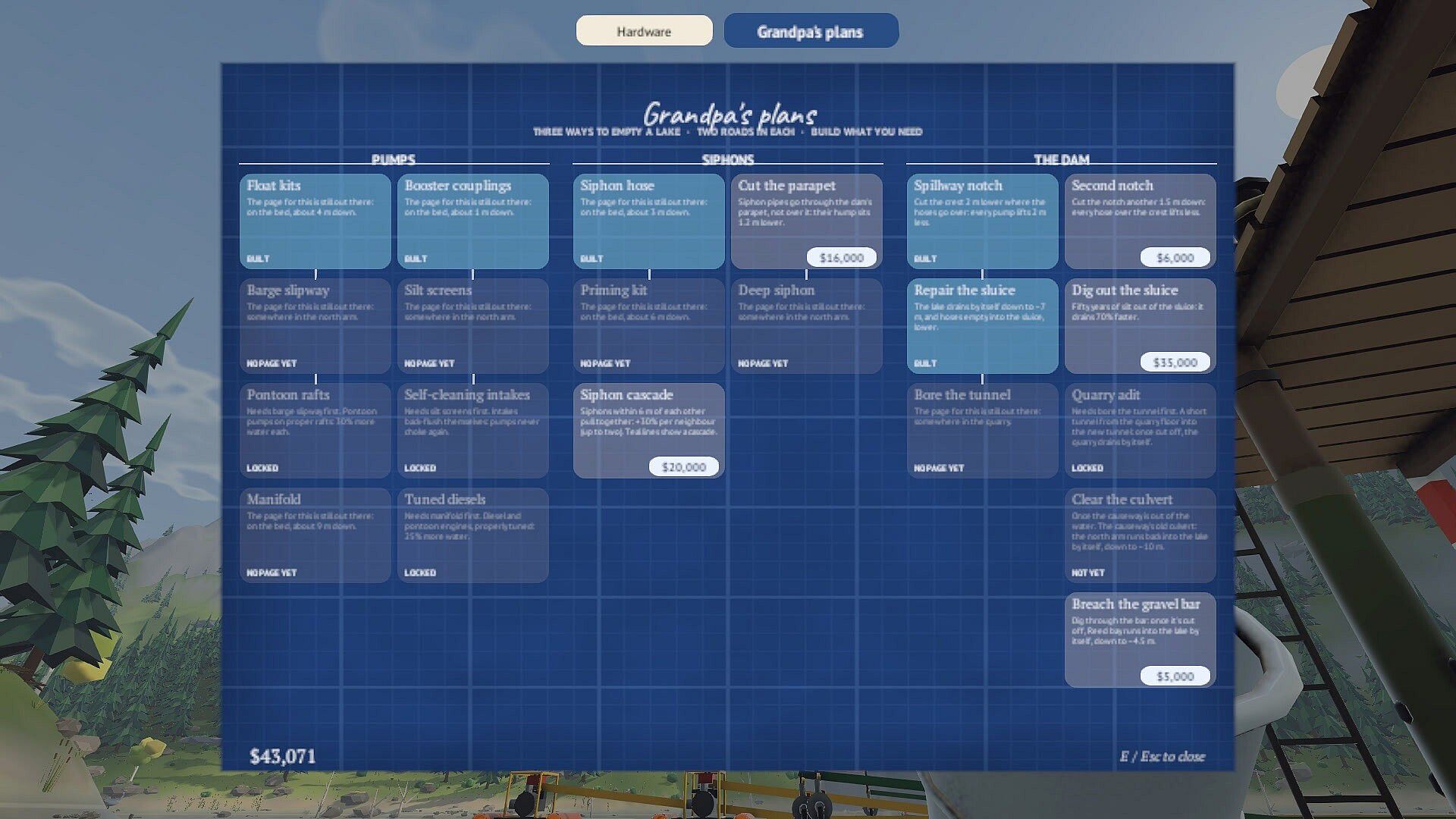
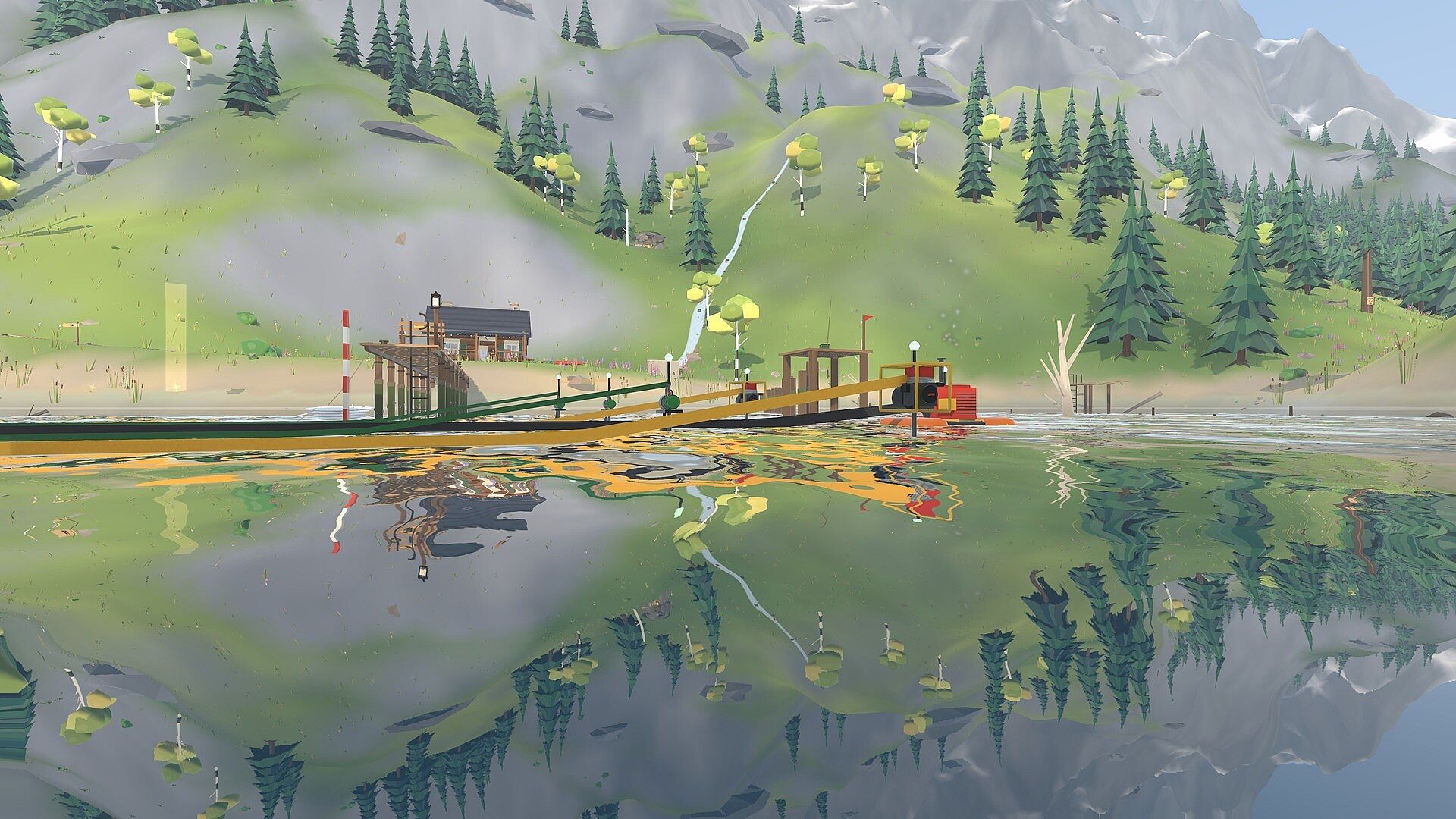
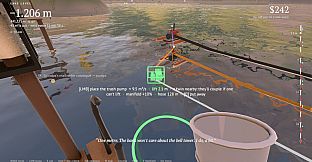
The core loop centers on emptying roughly half a million cubic metres of water from Hollow Creek Reservoir. Early efforts rely on manual scooping with the bucket. As progress continues, players place pumps directly in the water at optimal locations. Pumps lift water over the dam, and their efficiency increases as the lake level drops. Strategic placement allows pumps to operate in series or grouped on a manifold. A siphon can be primed using a bucket of lake water, and a notch can be cut into the dam itself. These choices form a gentle hydraulic puzzle where positioning and timing matter more than speed.
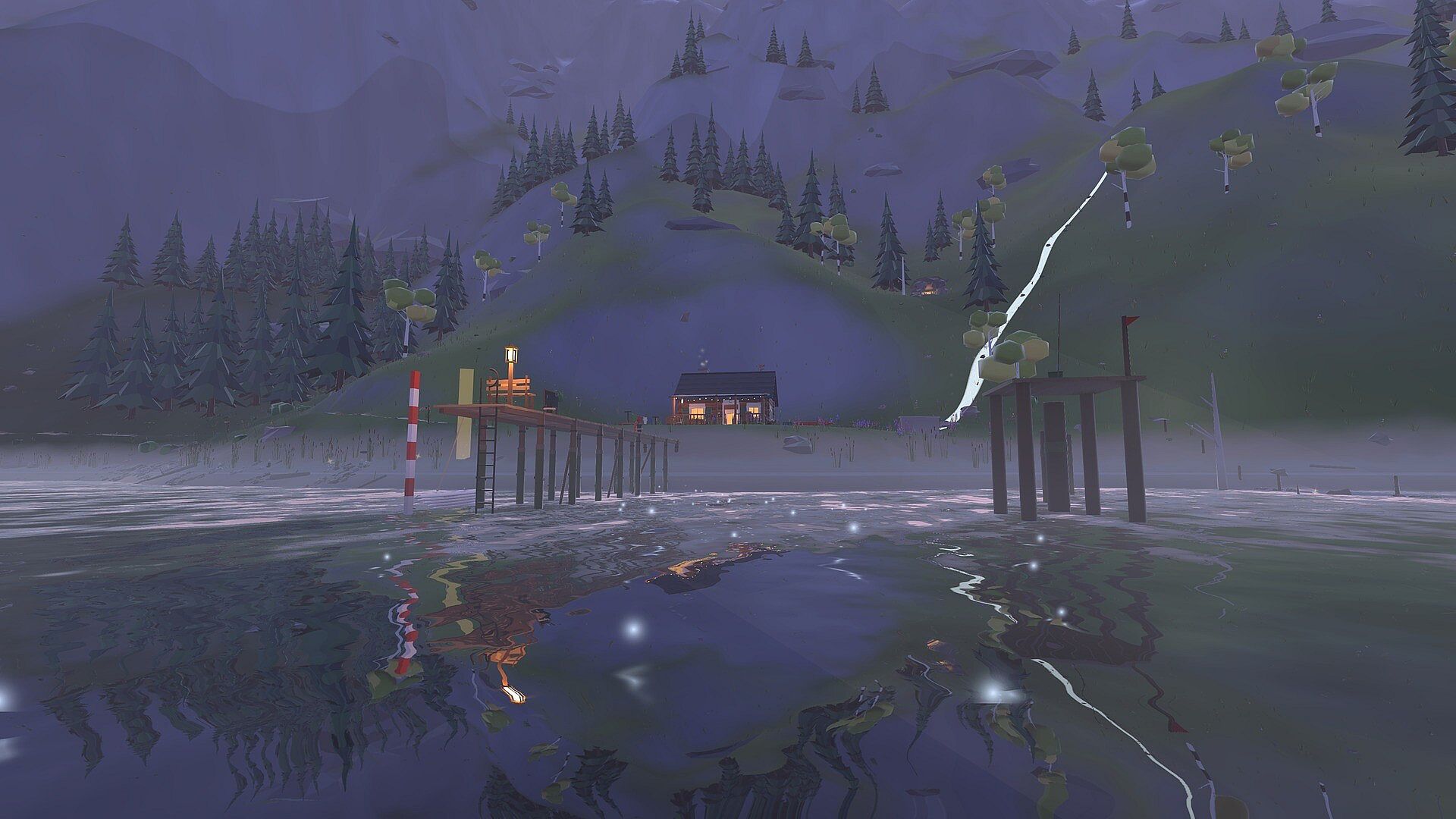
Water removal advances the day-night cycle. A full lake begins at dawn, and each metre drained shifts the sun across the sky until night falls near the bottom. Lighting, music, and weather all respond to the changing water level. The lake fragments as it recedes, revealing a reed bay, a flooded quarry, and an isolated arm of the valley, each becoming its own separate pond behind natural sills. There is no traditional progress bar; the visual and environmental changes mark advancement instead.
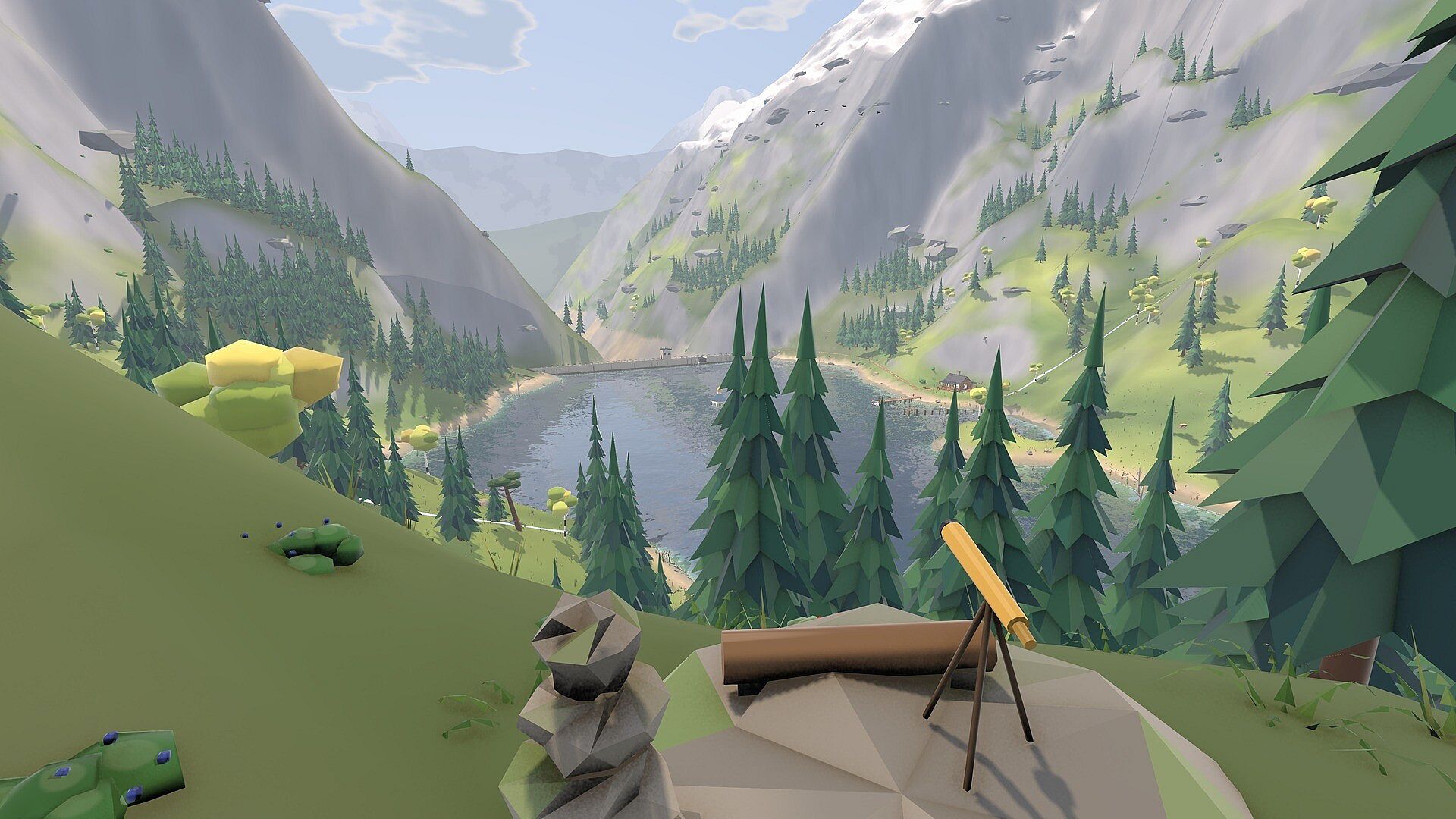
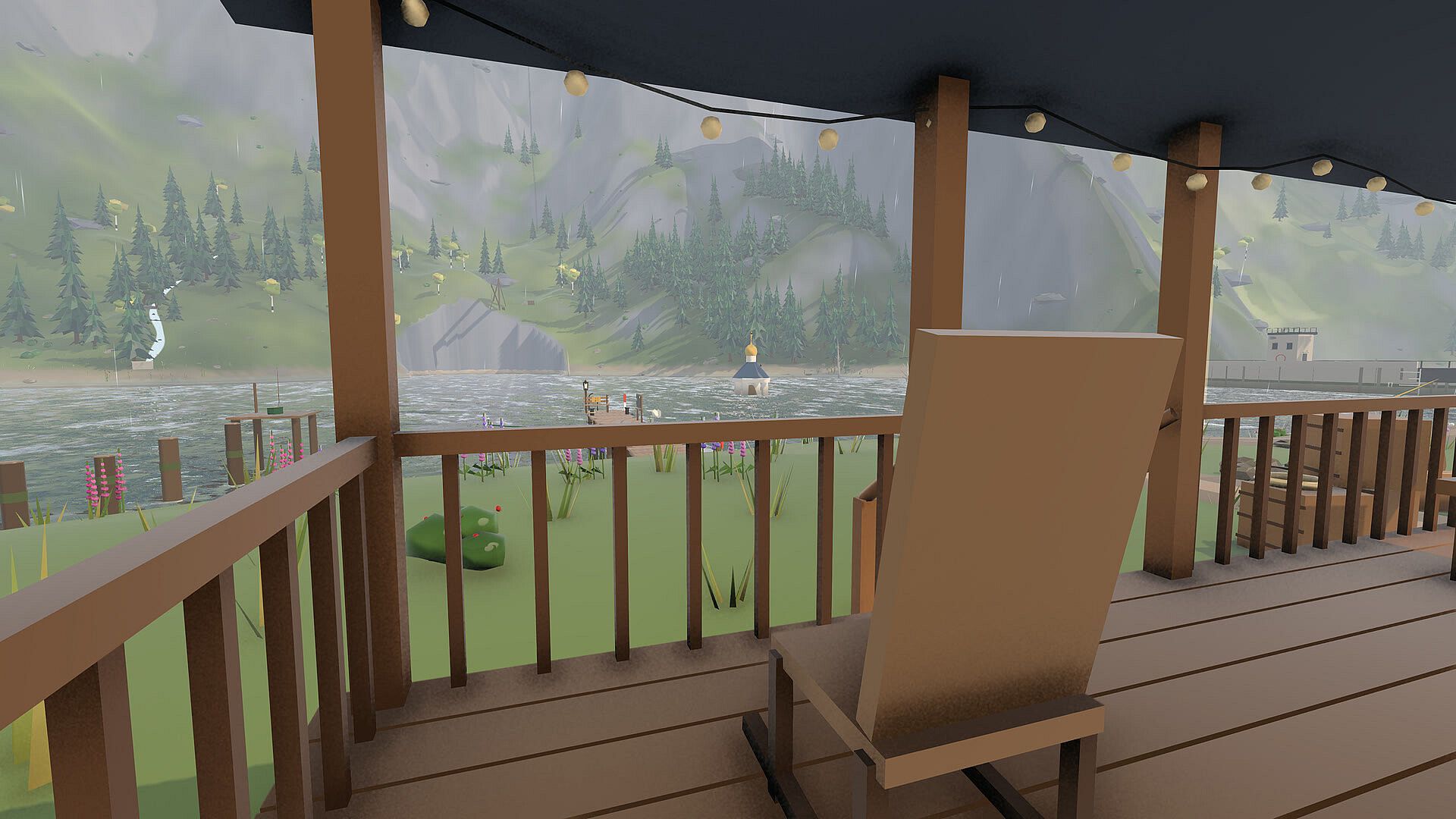
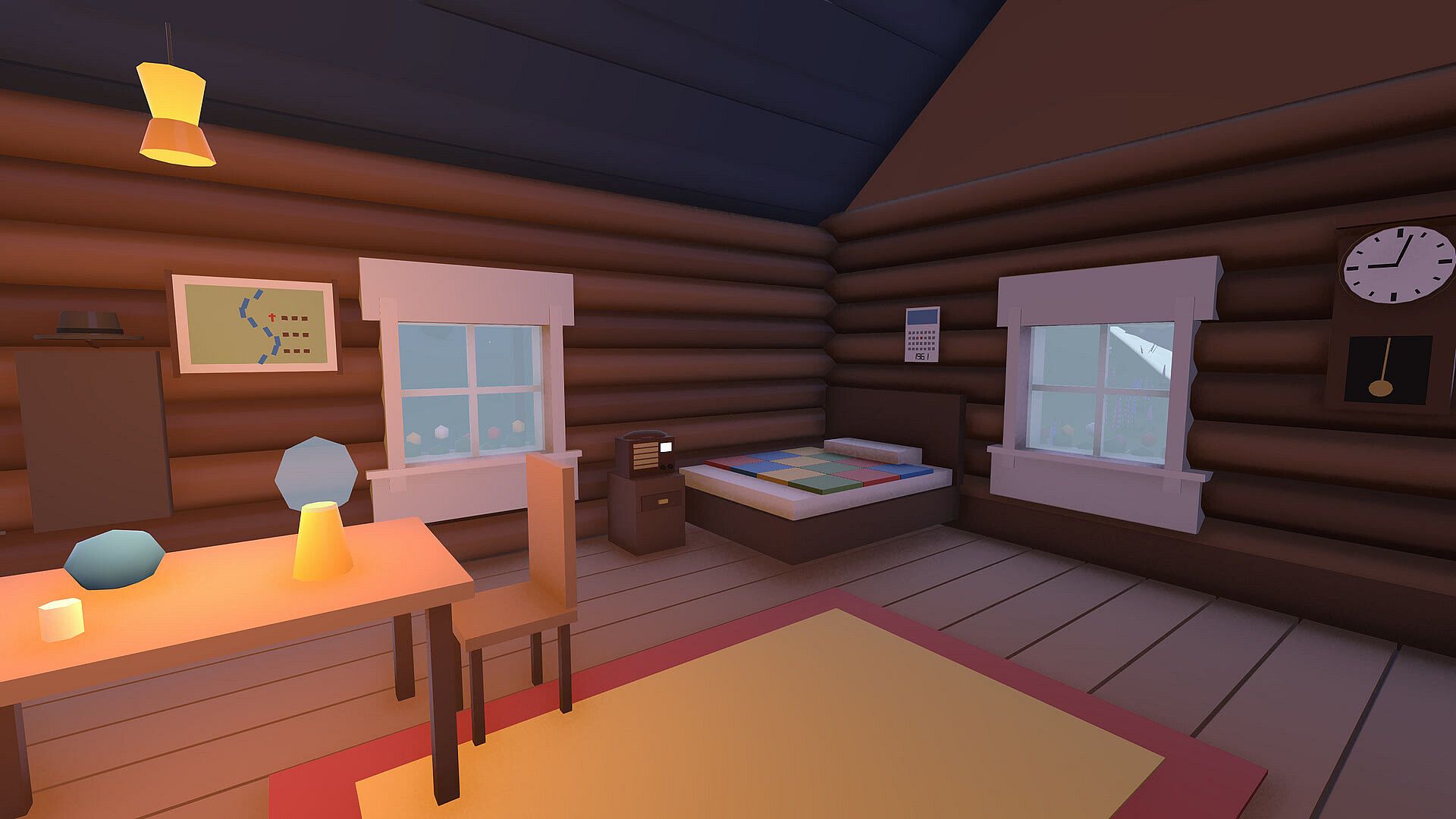
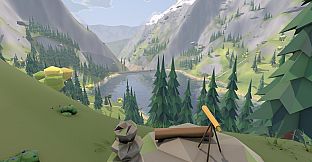
More than fifty finds await on the exposed lakebed. Grandpa's notes appear in bottles at greater depths. Exploration extends beyond the water to hidden spots around the valley, including a candle-lit grotto, a rope swing, a lookout equipped with a brass telescope, and an old pickup truck with a birch growing through its bed. Grandpa's clock continues to keep time, and his radio plays with increasing static the farther the player walks from the cabin. Optional activities provide brief breaks, such as skipping stones from the pier or sitting in the rocking chair to watch the water level fall unattended.
Game Modes
The experience consists of a single continuous session with no separate game modes or multiplayer options. Players work through the reservoir at their own pace in one uninterrupted first-person simulation. The structure encourages experimentation with pump placement and water management rather than competitive or cooperative play. All progression ties directly to the central task of lowering the lake while uncovering its secrets.
Exploration and Atmosphere
Discovery drives much of the appeal. The lakebed reveals layered secrets that reward careful observation rather than frantic action. Notes from Grandpa provide context and motivation as depth increases. Side locations scattered through the valley offer quiet moments of reflection away from the main task. The changing light and soundscape reinforce the sense of gradual transformation, turning the act of draining water into a meditative process that unfolds over a complete playthrough.
Is It Worth Playing?
This title suits players who enjoy deliberate, atmospheric simulation experiences with incremental mechanics and environmental storytelling. The 60 to 90 minute runtime delivers a complete, self-contained session that ends with a clear resolution. Those drawn to first-person puzzle elements, water management systems, and the satisfaction of revealing a hidden landscape will find the mechanics engaging. The game rewards patience and thoughtful placement over rapid clicking or complex builds. If the premise of a quiet, story-driven incremental task appeals, the focused single-player format provides a worthwhile session without unnecessary padding or repeated content.











