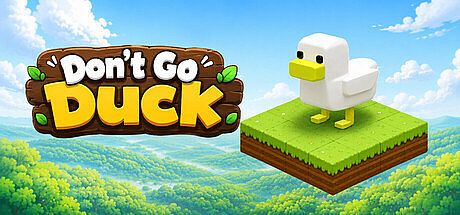


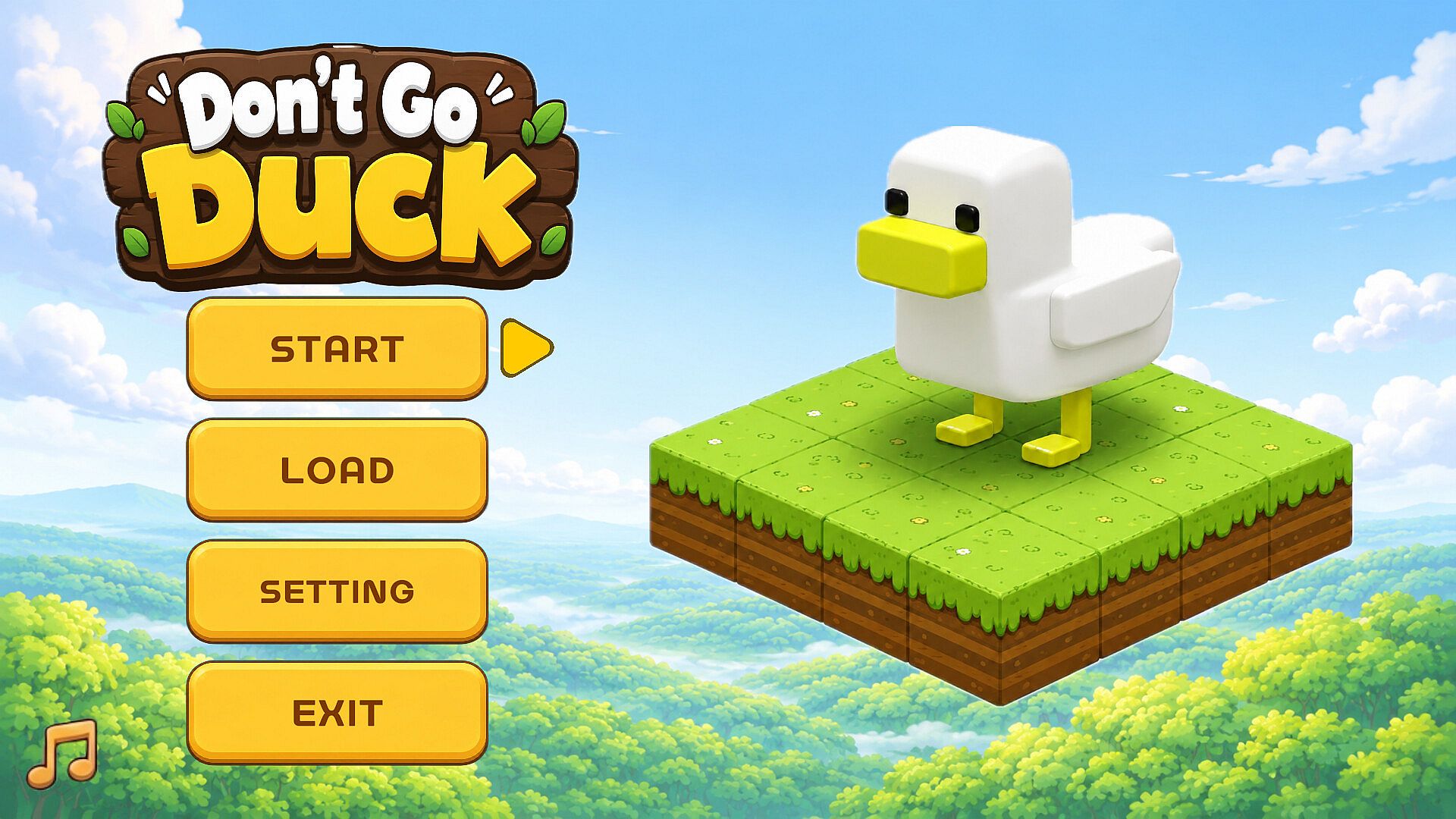
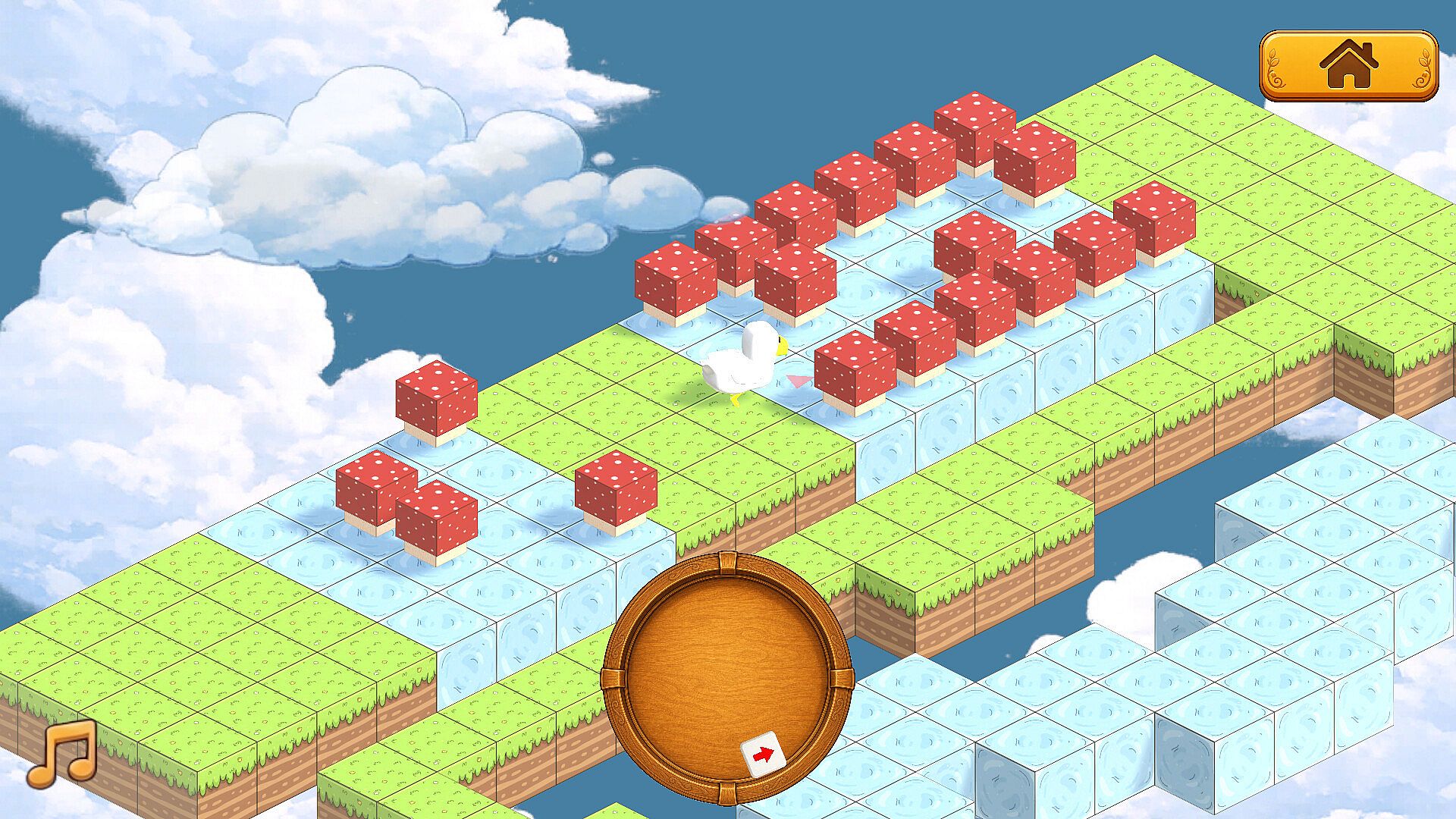
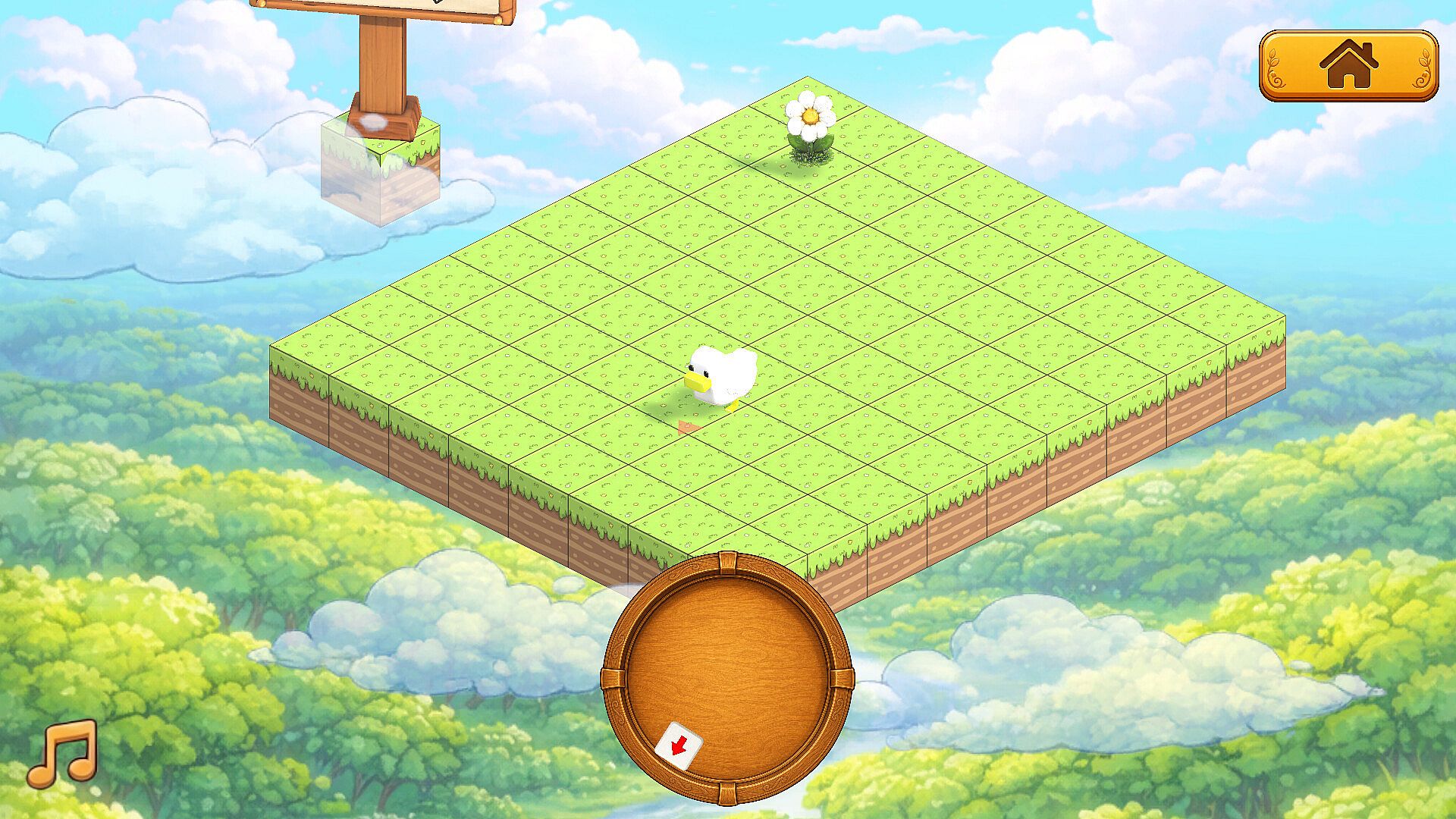
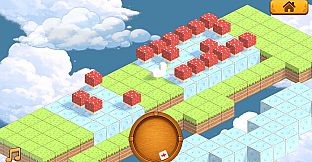
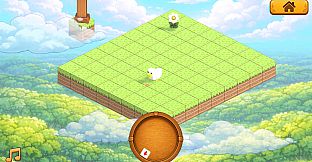
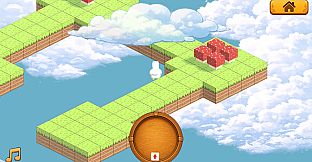
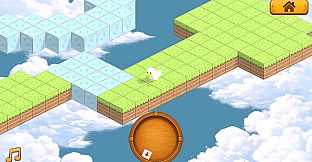
Don't Go Duck is a casual adventure platformer built around precise physics and directional control. Players guide a determined yellow duck upward through layered cloud platforms in a bid to reclaim his kidnapped partner from an eagle. The core loop revolves around timing rolls of a marked die that dictates movement direction while navigating gravity and unstable footing.
Gameplay
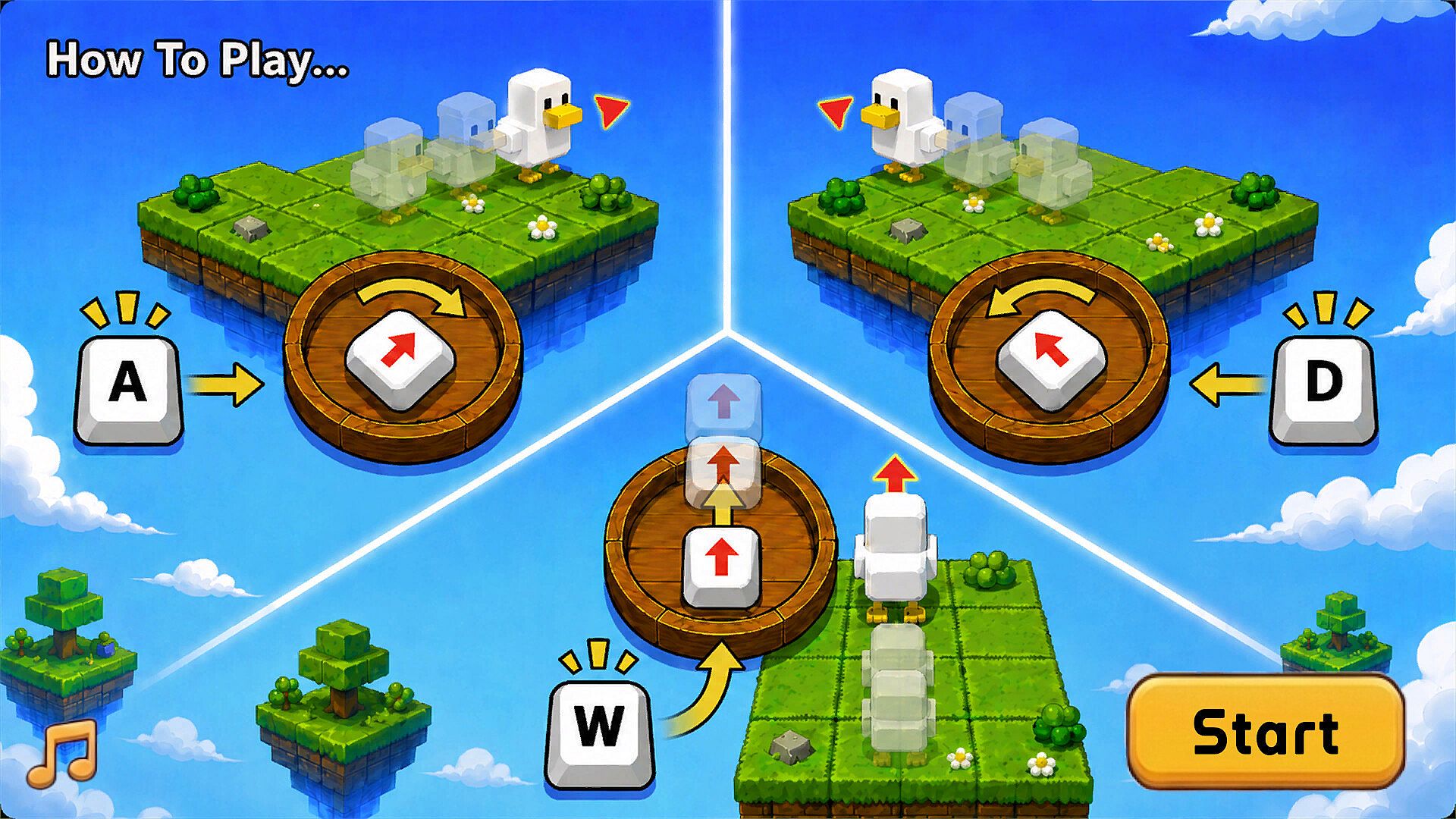
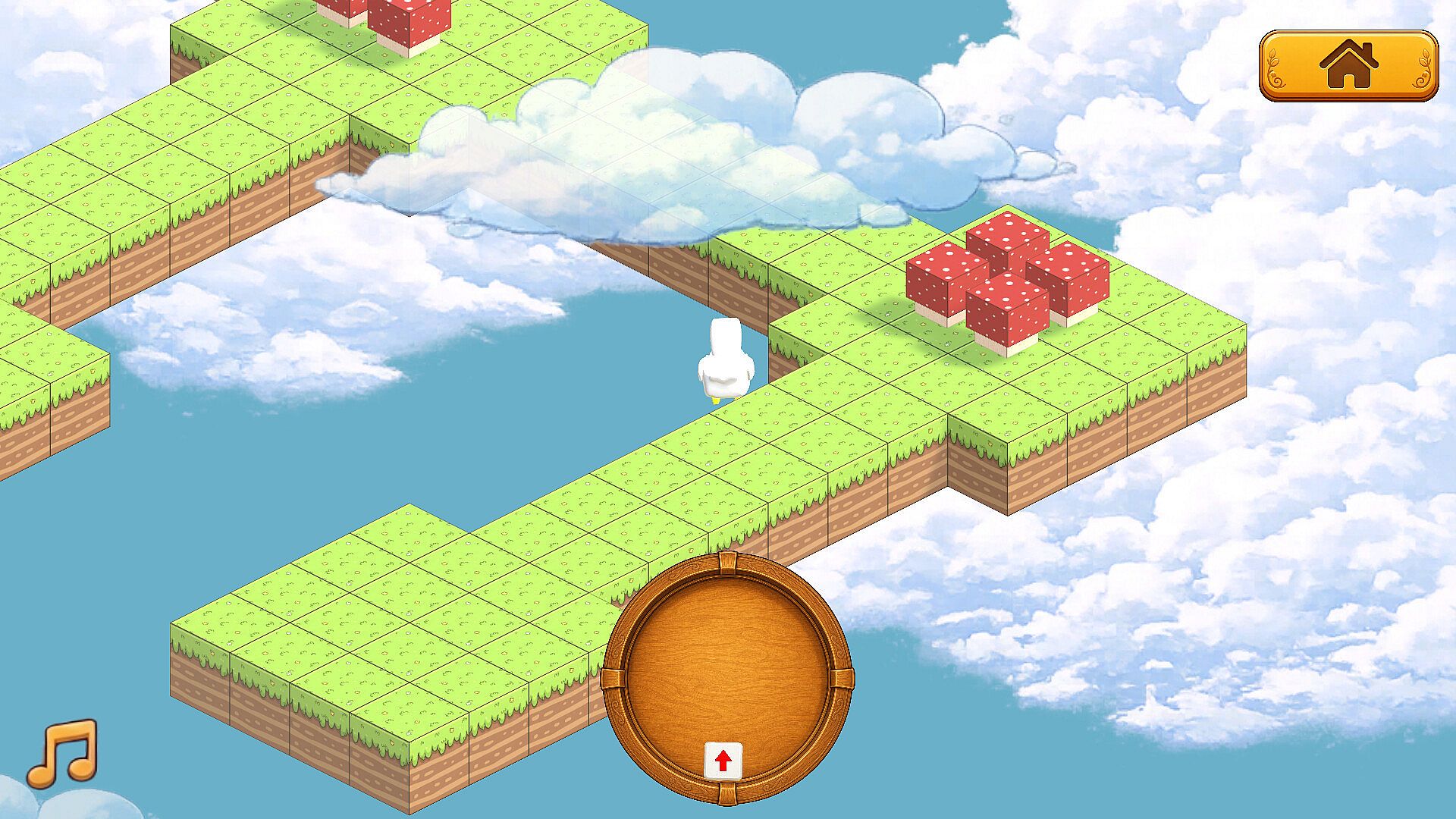
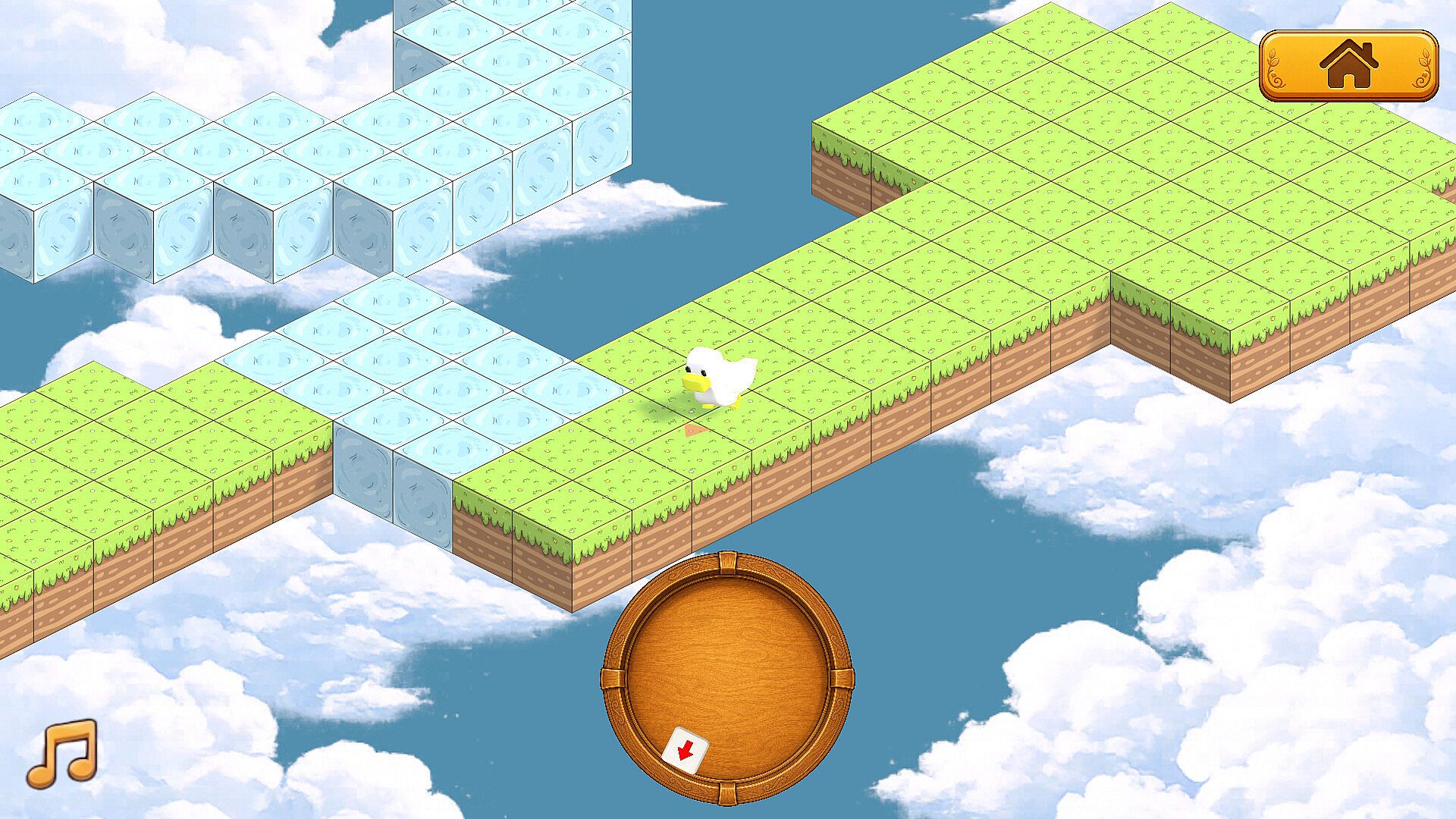
The central mechanic places an arrow-marked die inside a cylinder. Each roll positions the arrow on the top face to set the duck's next direction. Players must time these rolls and subsequent jumps to advance across precarious cloud platforms that ascend steadily higher. Gravity pulls constantly, so misjudged rolls send the duck tumbling downward and reset progress on that section.
Platforms vary in stability and spacing, forcing repeated adjustments to the die's orientation. The duck moves only according to the arrow's indication, turning every roll into a deliberate decision rather than free movement. This creates a rhythm of observation, roll, and leap that repeats across increasingly demanding vertical stretches.
Visual cues remain minimal and focused on the duck, the die, and the shifting cloud formations. The environment emphasizes height and exposure, with no lateral safety nets once momentum carries the character forward. Success depends on consistent timing rather than speed or combat.
Game Modes
Don't Go Duck operates entirely in single-player. The experience consists of one continuous climb broken into sequential platform sequences that build in complexity. There are no separate multiplayer options, competitive leaderboards, or alternate modes listed in the available details.
Progression follows a linear path upward, with each segment requiring mastery of the die-roll mechanic before advancing. Players restart from the last stable point after a fall, reinforcing the need for precise repetition without additional variants or branches.
Core Mechanics and Controls
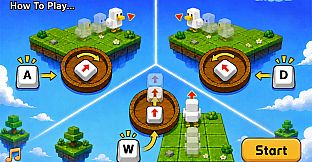
Control centers on the cylinder and die system. Rolling the die changes the arrow direction visible on the top face, which then propels the duck forward or sideways as needed. Jumps occur automatically or on input once direction is set, but the timing window remains narrow due to platform movement and gravity.
The physics simulation governs every interaction. The duck's momentum carries through rolls, and slight misalignments compound quickly across multiple platforms. No power-ups or external tools alter this system, keeping focus on the die itself as the sole variable.
Platform layouts incorporate gaps, moving sections, and narrowing paths that test directional accuracy. The absence of combat or collection elements keeps attention fixed on navigation and recovery from errors.
Story and Setting
The narrative follows a straightforward rescue premise. An eagle has taken the duck's partner, prompting the small protagonist to ascend through the skies despite the obvious mismatch in power. The story unfolds through environmental progression rather than cutscenes or dialogue, with the duck's determination conveyed through persistent upward movement.
Cloud platforms form the entire playable space, creating a vertical world defined by height and instability. The eagle appears as the distant antagonist whose presence motivates the climb but does not intervene directly in gameplay.
Is It Worth Playing?
Don't Go Duck suits players who enjoy deliberate, physics-driven platforming without additional systems or distractions. The single-player structure delivers a focused challenge centered on timing and directional control through the die mechanic.
With a planned release on July 31, 2026, the game remains in a pre-launch state and carries no user reviews or aggregated scores at present. Those drawn to short, repeatable precision challenges in a casual adventure wrapper may find the core loop engaging once it becomes available.
The experience targets individuals comfortable with trial-and-error progression and vertical navigation puzzles. Its minimal feature set avoids complexity that might appeal to players seeking variety or social elements, making it a niche fit rather than a broad recommendation.