




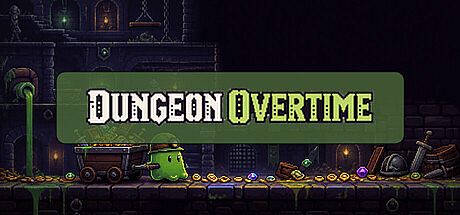


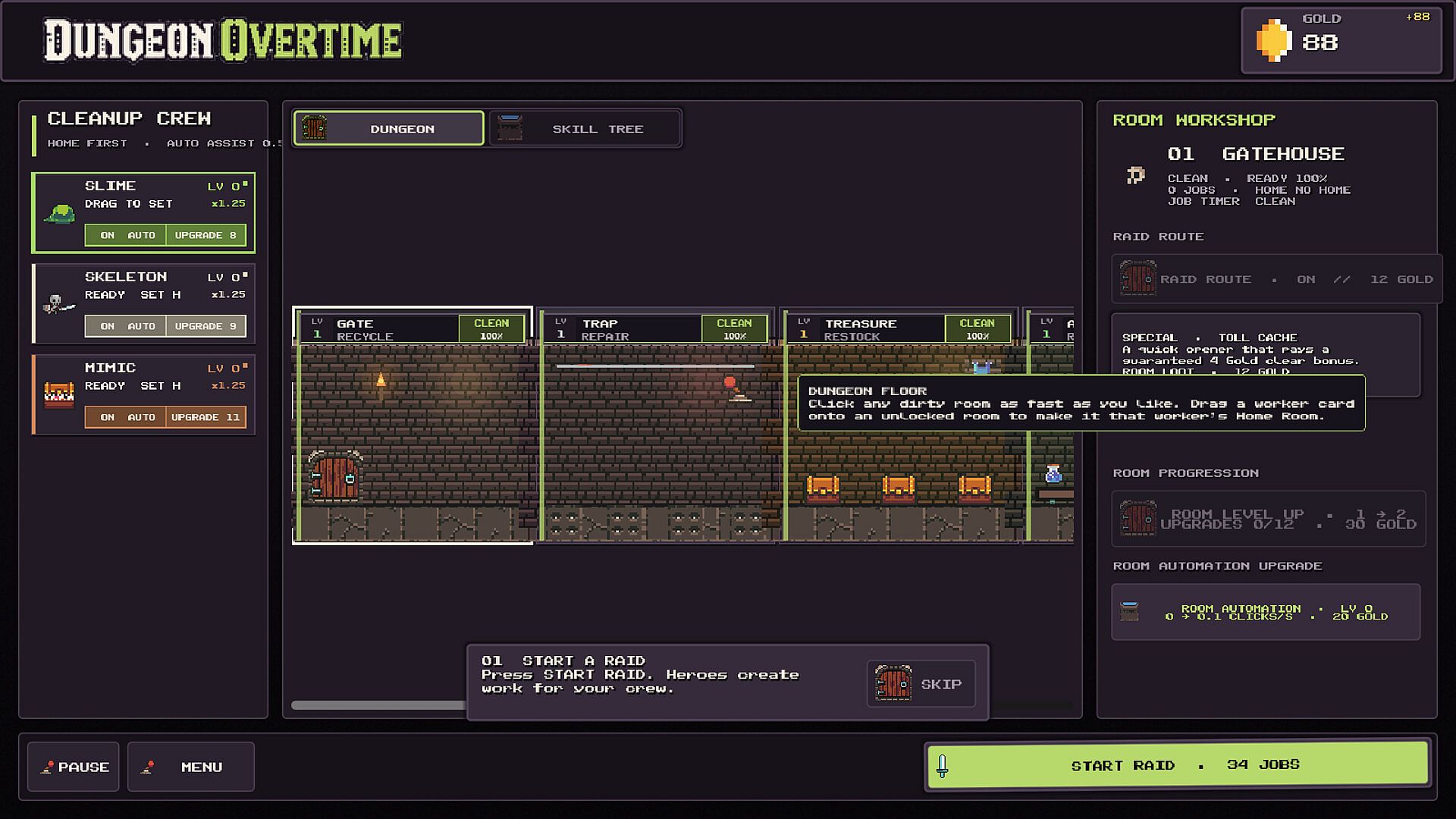
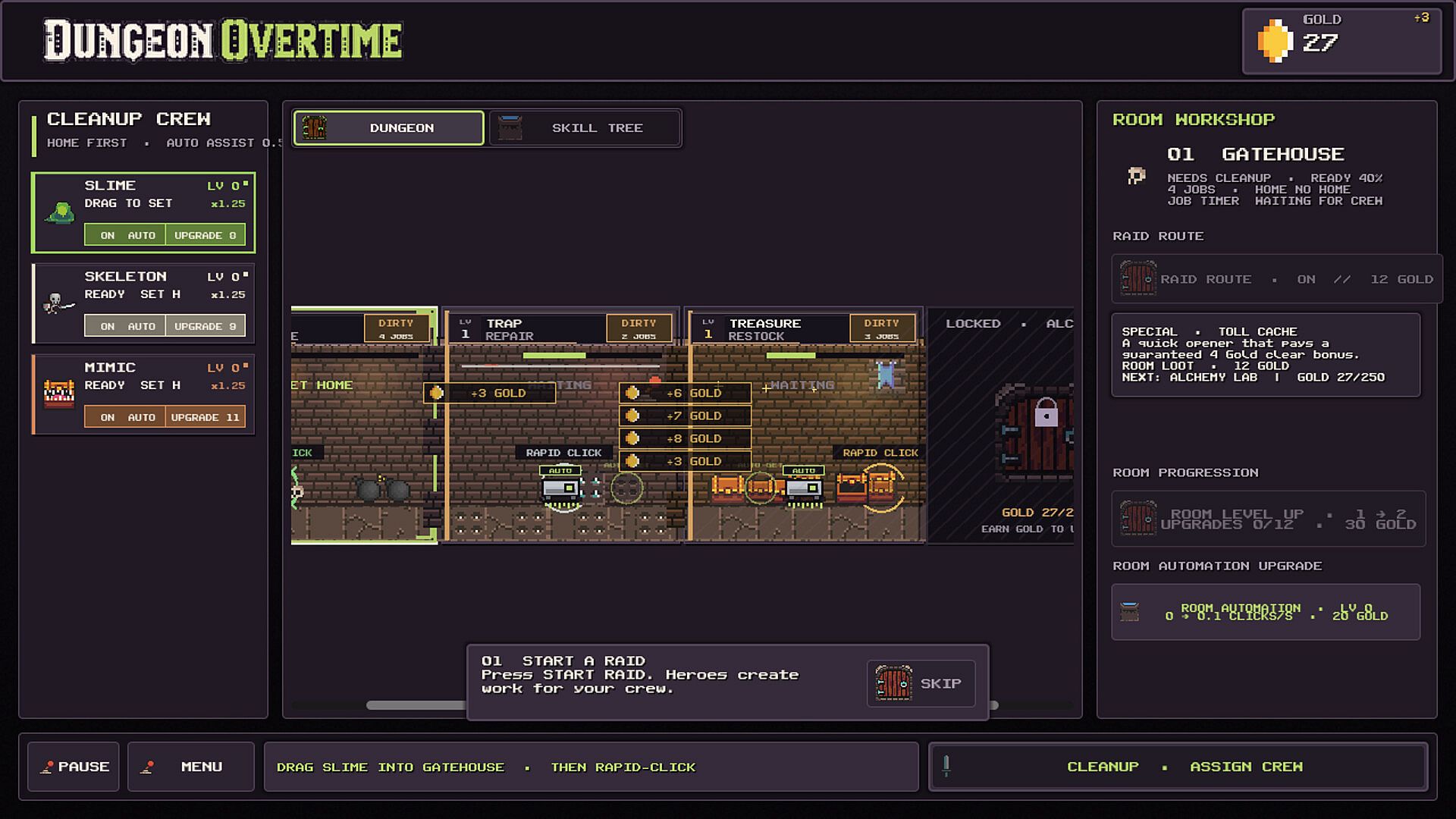
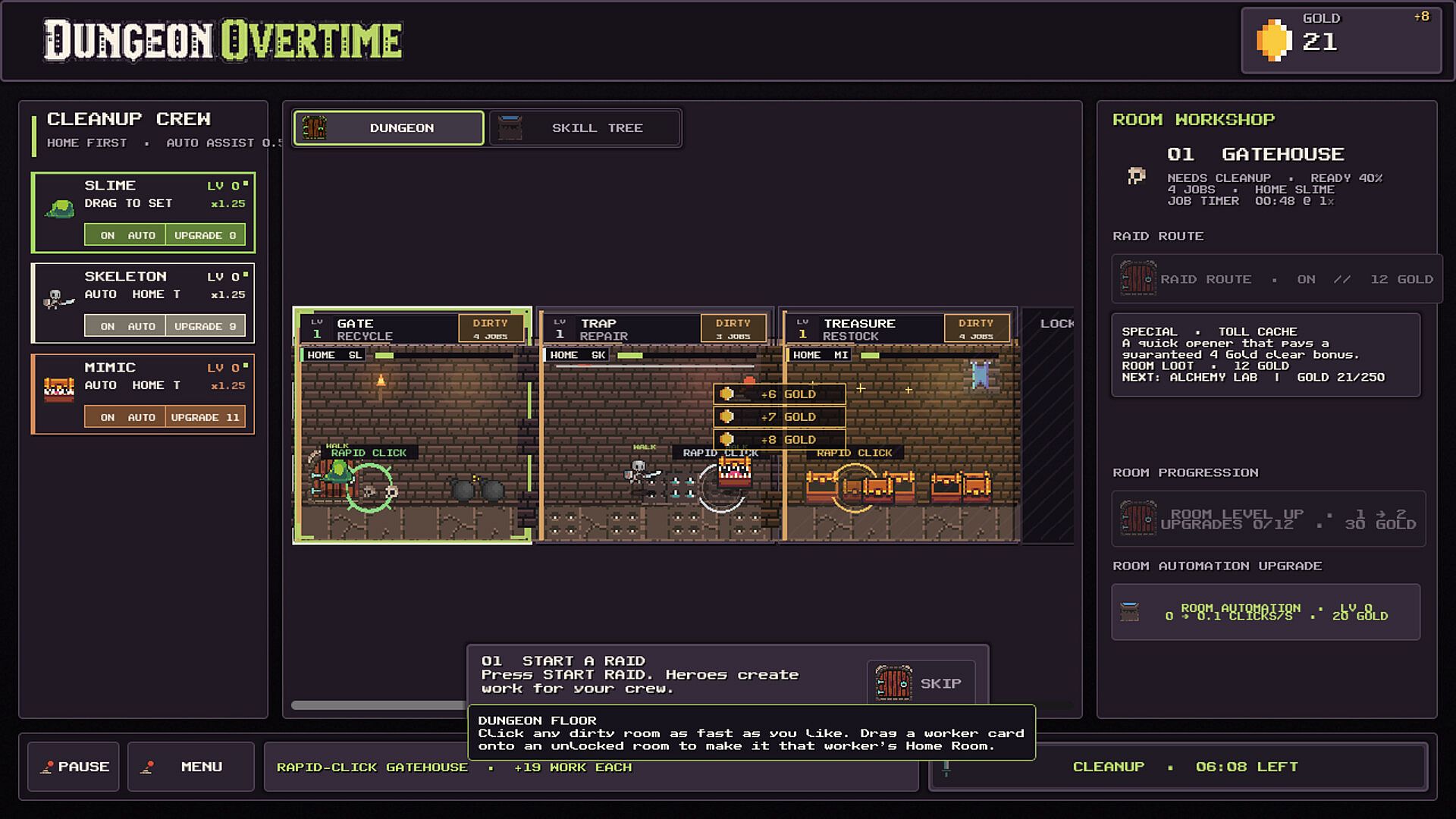
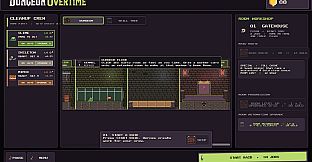
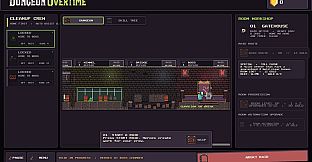
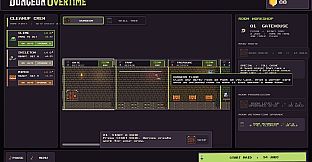
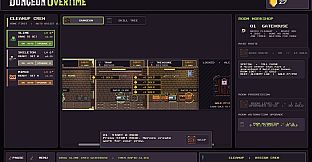
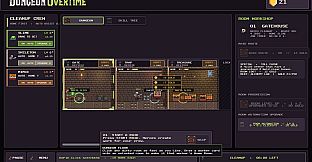
Dungeon Overtime is a singleplayer strategy and simulation game that blends idle management mechanics with casual desktop play. Players manage the cleanup and preparation of a fantasy dungeon during the quiet hours after heroic raids, turning scattered chaos into an efficient operation that readies the space for the next profitable invasion. The experience centers on incremental progress through clicking, worker assignment, and automation upgrades, all within a compact pixel-art window suited for background use alongside other tasks.
Gameplay
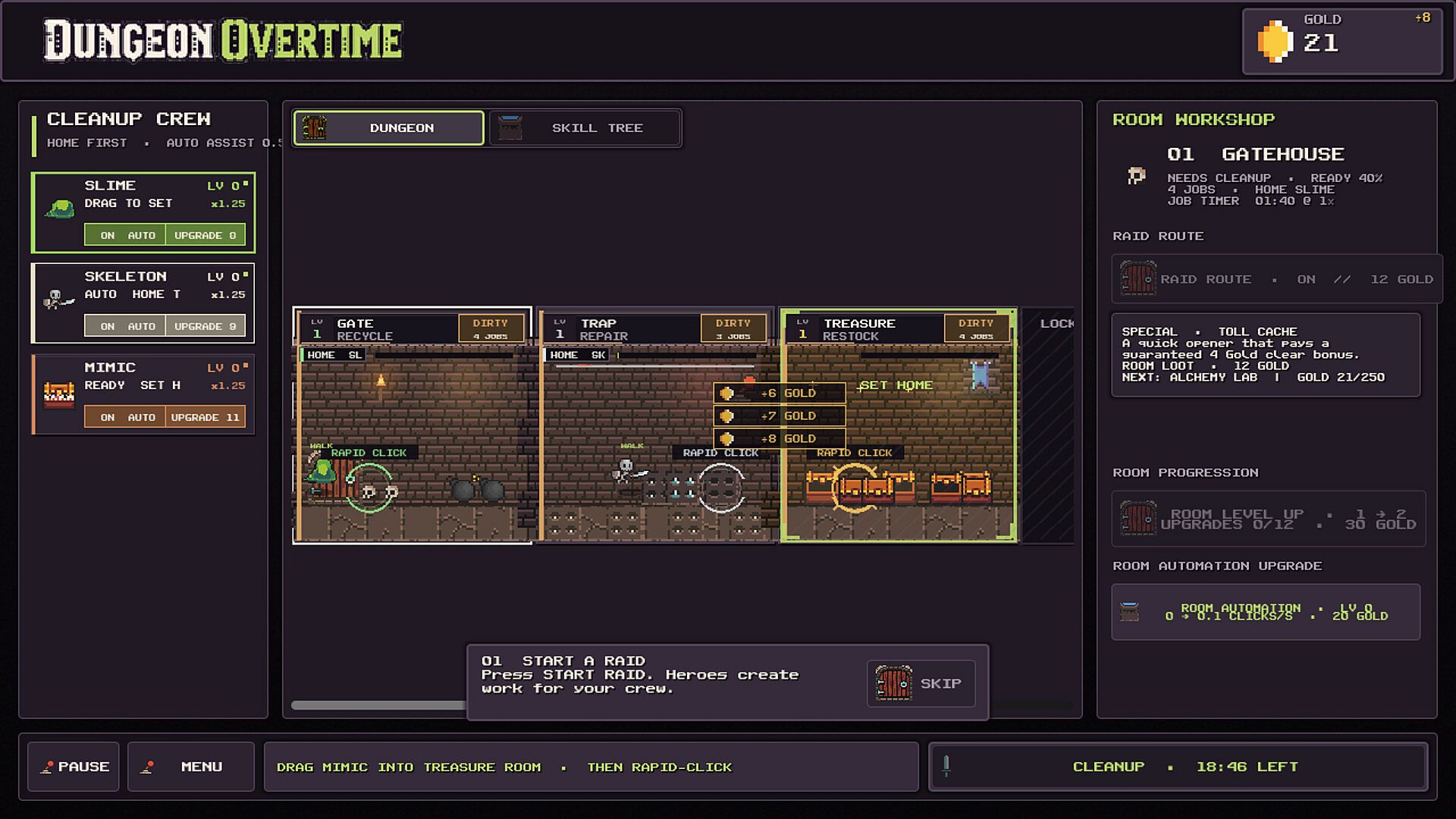
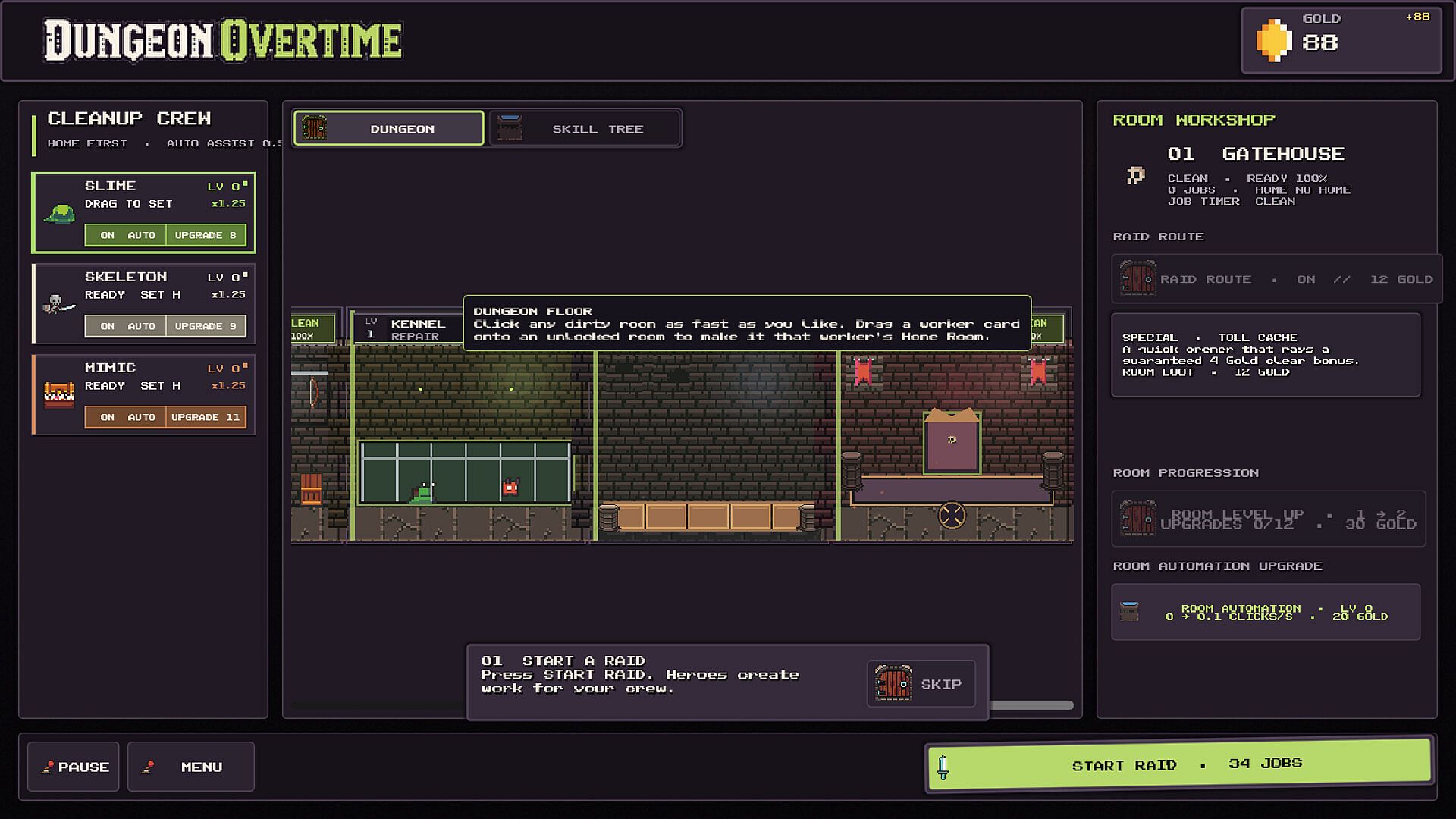
The core loop involves clearing debris left by adventurers, such as collecting loot, repairing traps, restocking treasure chests, and rebuilding structural elements like bridges across the dungeon's rooms. Direct interaction starts with manual clicks to handle initial tasks, but the system quickly shifts toward automation as players unlock and assign helpers including slimes, skeletons, and mimics. These workers can be repositioned between rooms based on shifting priorities and leveled up to boost both hands-on efficiency and passive output.
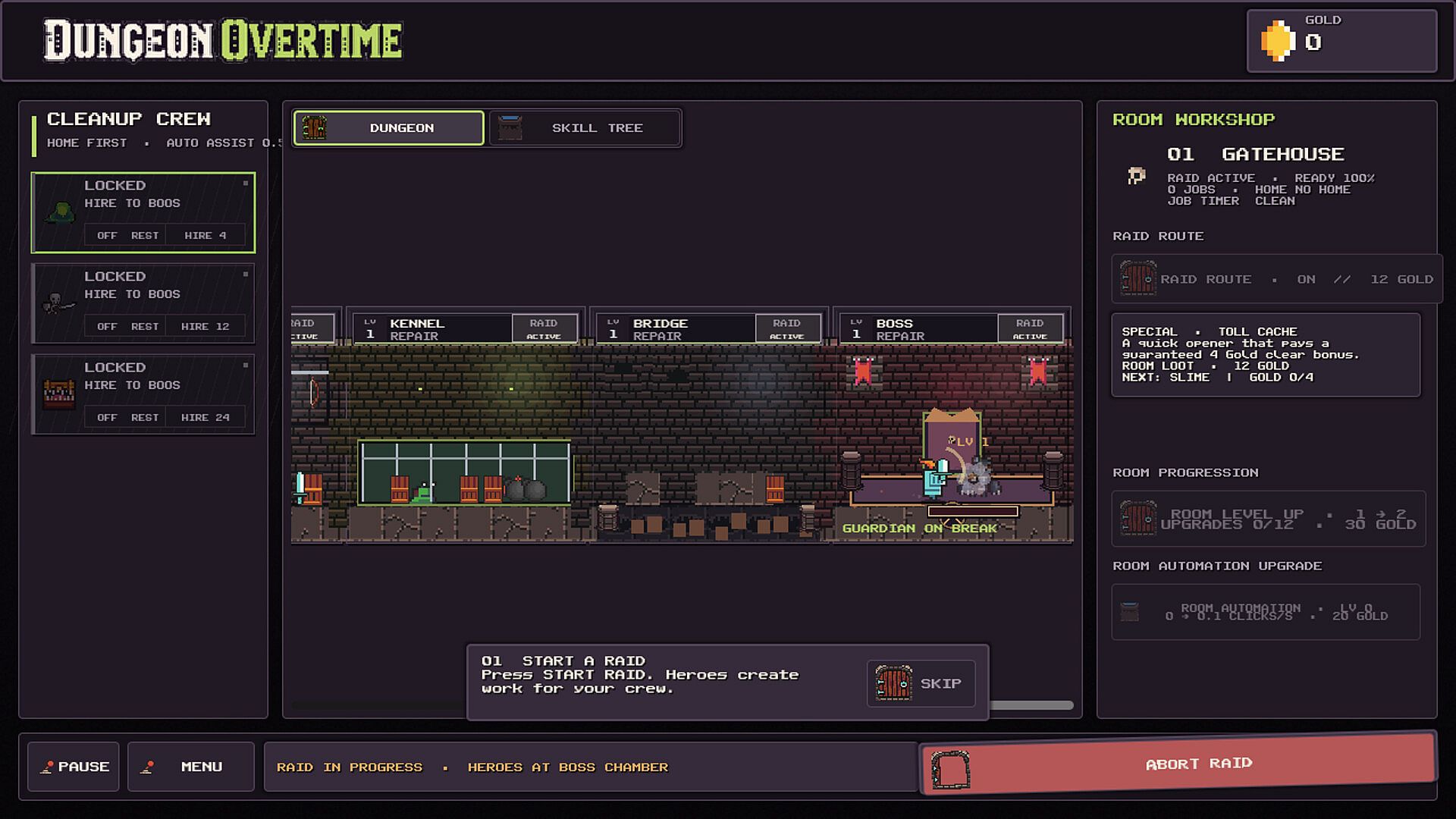
Room upgrades enhance automation speeds and output quality, while a draggable global skill tree offers branching perks that influence raid strength, click power, cleanup rates, and loot value. Players also engage in light combat elements during raids by timing clicks to support their own raider, pursuing random loot goblins, and deciding when to deploy saved potions for enhanced runs. Enemy scaling ties directly to the number of active rooms chosen for each raid, creating a balance between risk, cleanup duration, and reward size.
Game Modes
Progression revolves around customizable raid preparations where players select the depth and scope of the next invasion. Deeper or more extensive raids activate additional rooms, which increases enemy difficulty and extends the subsequent cleanup phase but yields greater rewards in loot and resources. Optional auto-raids allow the system to handle invasions independently once sufficient automation is in place, freeing players to focus on optimization.
Active play is rewarded through encounters with wandering loot goblins and the strategic use of potions, while speed controls unlock over time to accelerate various processes. The setup supports both short focused sessions and longer background management, with eight distinct handcrafted rooms each offering unique tasks and returns that tie into the overall automation machine.
Key Mechanics and Progression
Workers carry unique multipliers that encourage experimentation with assignments and upgrades across the dungeon layout. Room leveling compounds these effects, and the skill tree introduces global changes that alter how raids and cleanups interact. The compact interface keeps everything visible in a small window, making it practical for multitasking without demanding full attention at all times.
Random events like loot goblins add moments of direct engagement that complement the idle elements, while potion management and raid depth choices provide layers of decision-making. All systems build toward faster, more valuable cycles that prepare the dungeon repeatedly for new groups of adventurers.
Is It Worth Playing?
Dungeon Overtime targets players who enjoy idle management simulations and casual strategy titles that fit into daily routines. Its desktop-oriented design and gradual shift from manual clicks to full automation suit those seeking low-pressure progression without requiring constant focus. The game remains in development with a planned release in November 2026 and currently has no user reviews available, so expectations should center on the described systems of room management, worker assignment, and raid preparation. It appeals most to fans of incremental builders who value a self-contained experience with branching upgrades and scalable automation rather than high-intensity action or multiplayer elements.











