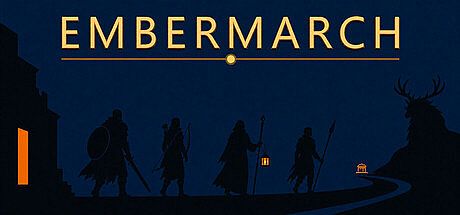



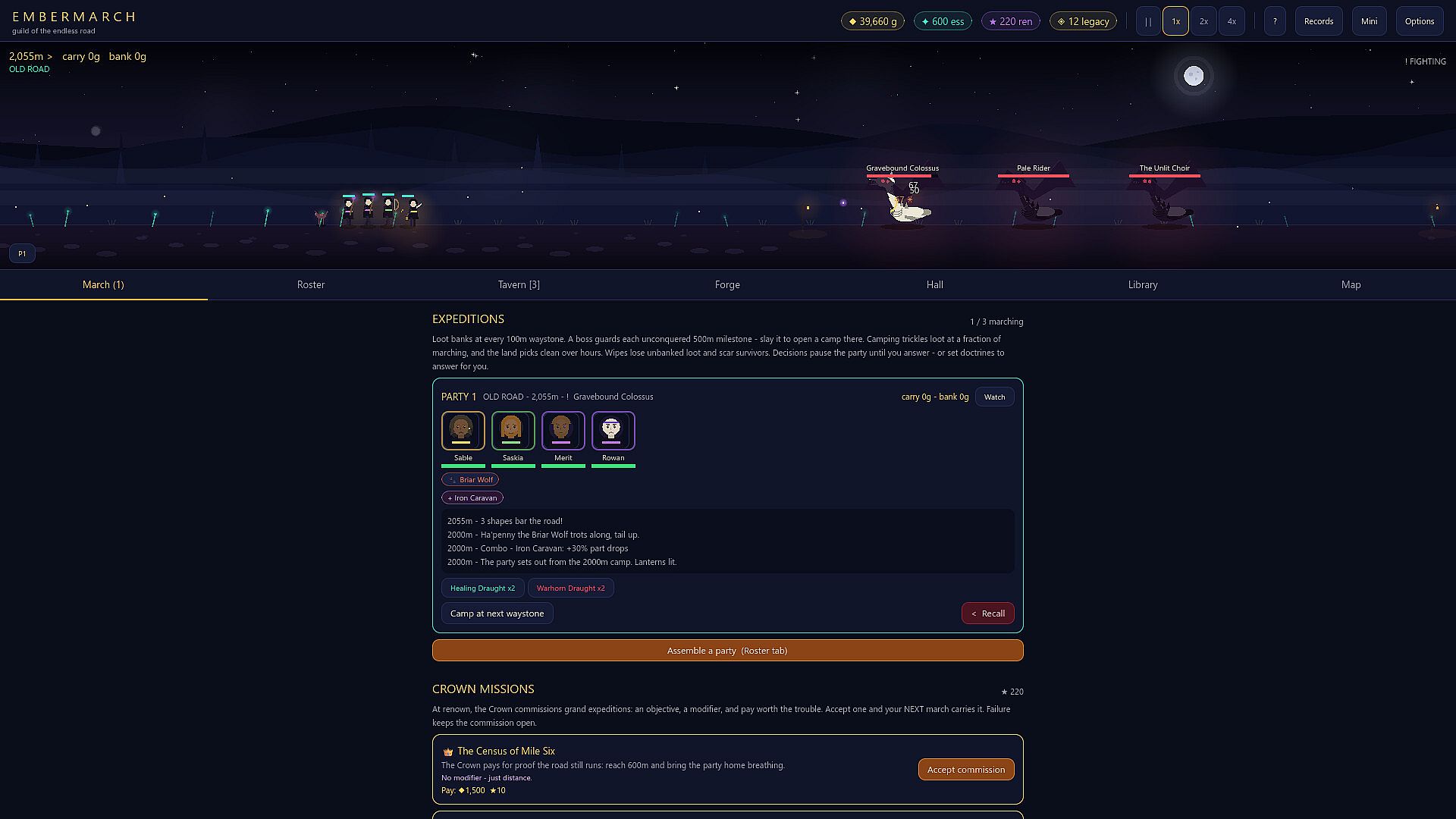
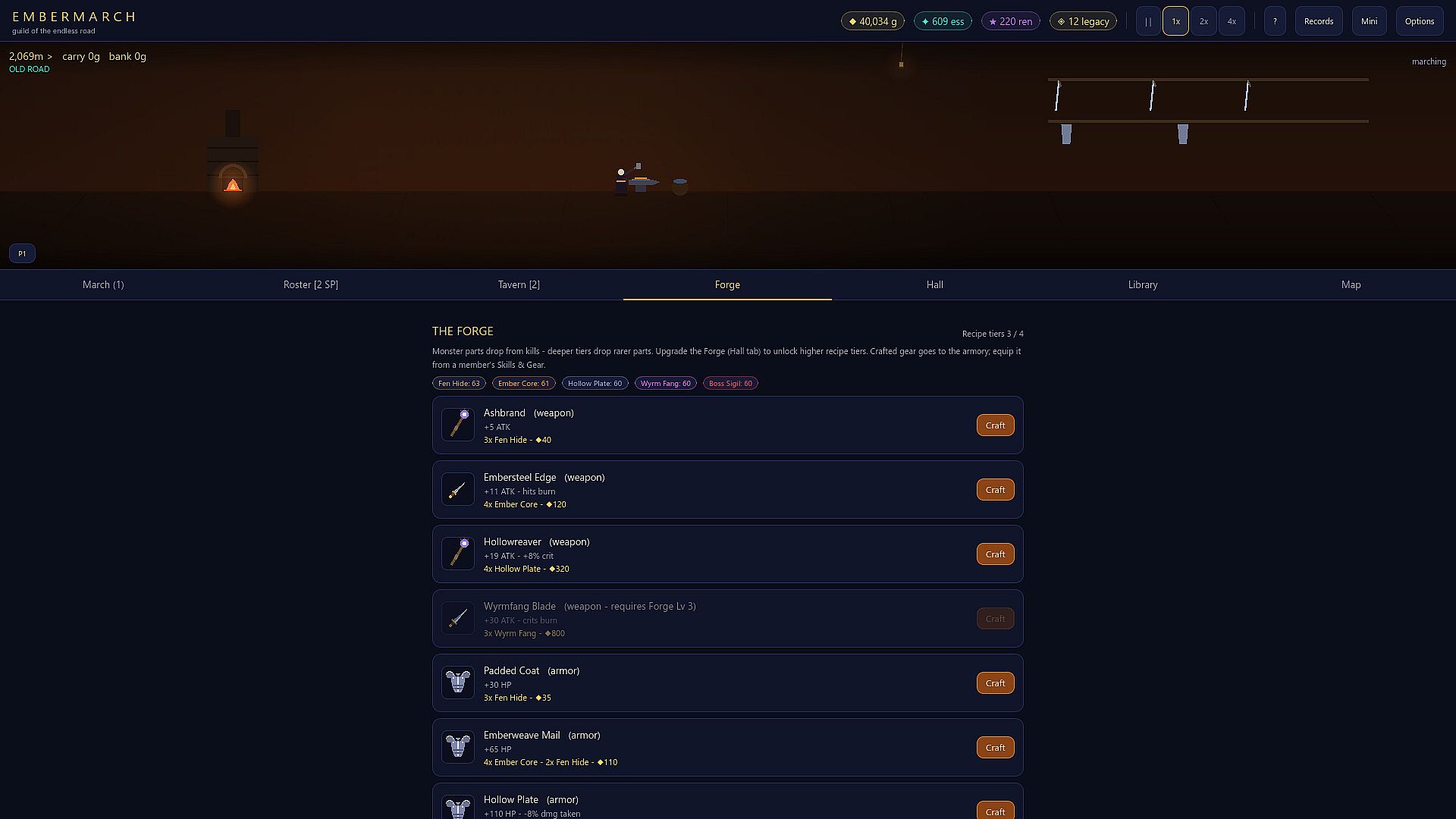
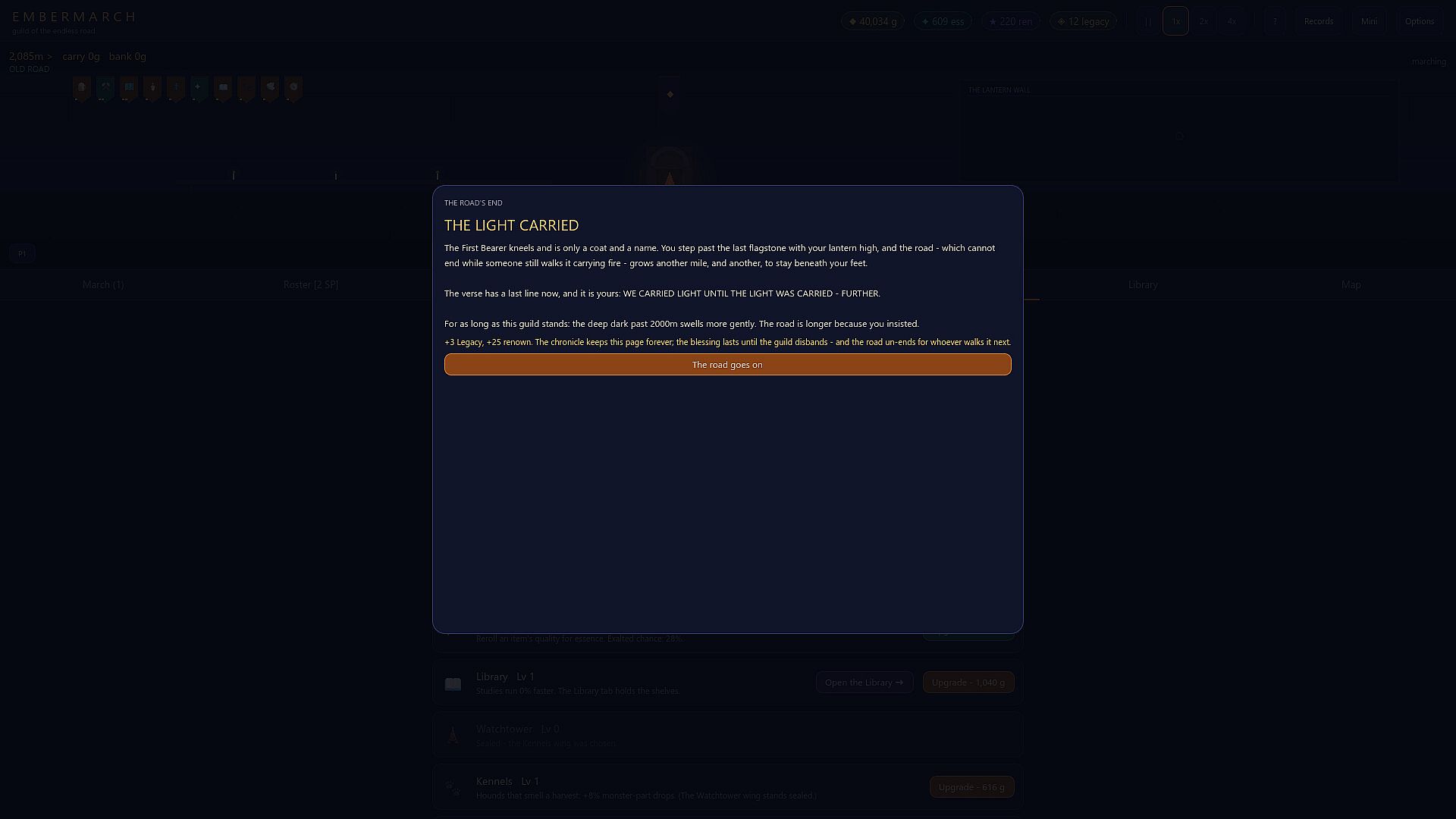







Embermarch is an indie idle guild-management RPG set on PC where players oversee a company of lantern-bearers who travel an endless night road. The experience centers on recruitment, planning, and long-term guild development rather than direct combat control. Players draft parties, assign doctrines that dictate behavior such as boldness in fights or decisions on when to camp or retreat, and then send groups forward while the simulation runs independently.
Gameplay
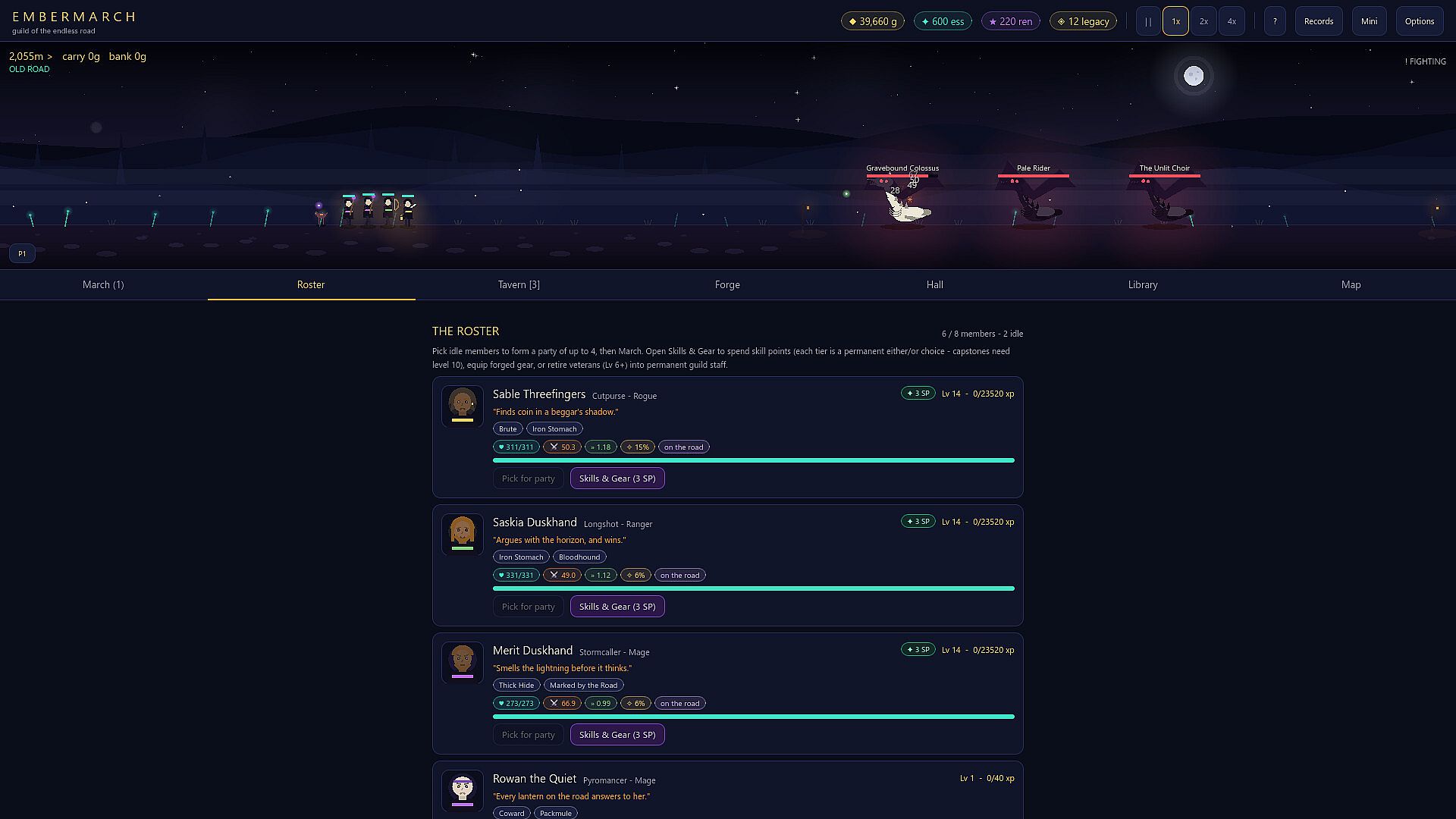
The core loop revolves around managing individual characters who possess classes, traits, and personal histories. These members form bonds during marches, accumulate scars from injuries, and face permanent loss after three scars if another disaster strikes. Bonded partners can intervene to save a fallen ally at a cost. Gear returns to the guild, and fallen members are memorialized on the Lantern Wall, with the possibility that their kin may later join the roster. Traits evolve over time, allowing characters to overcome initial flaws like cowardice through repeated survival.
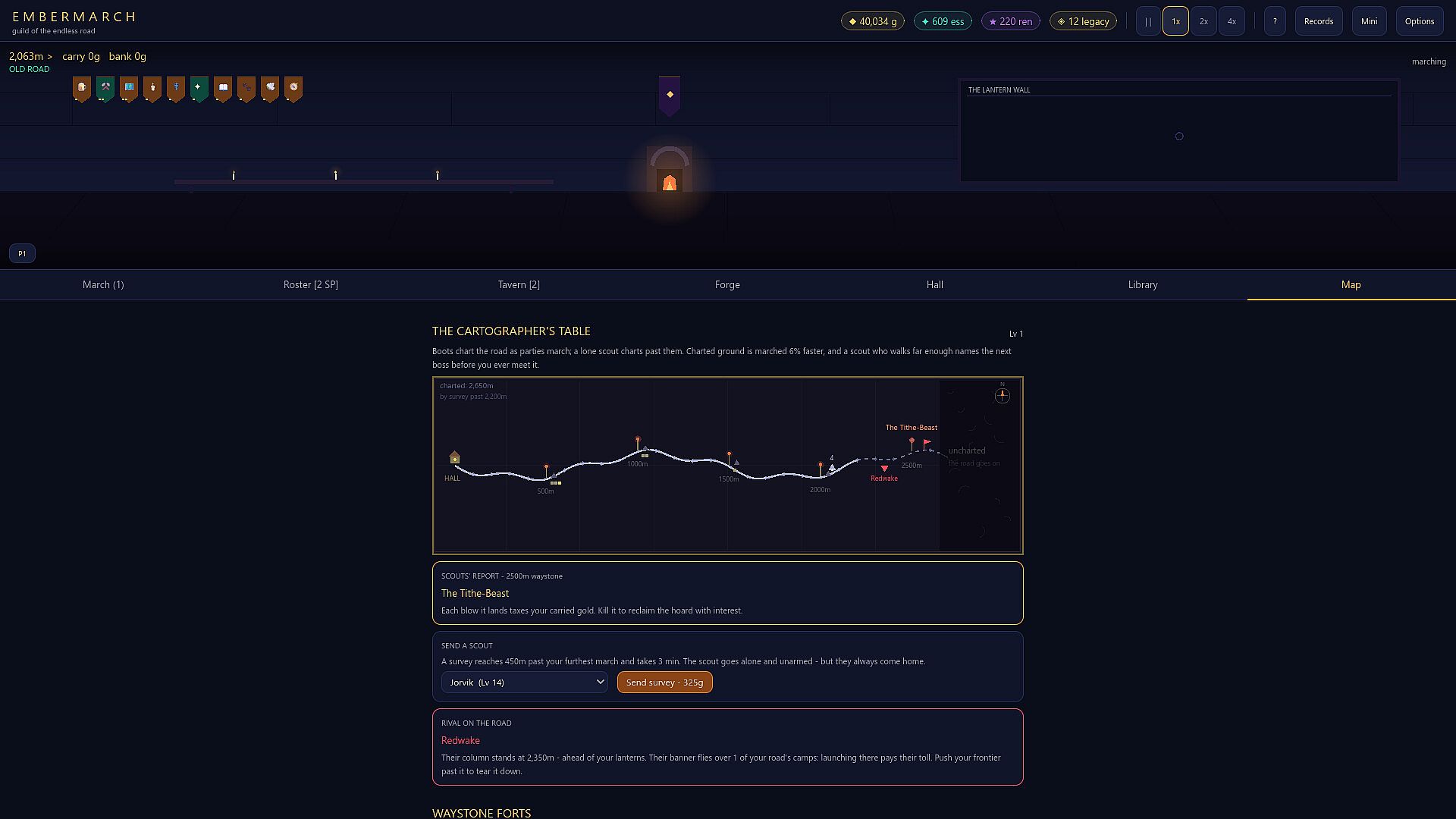
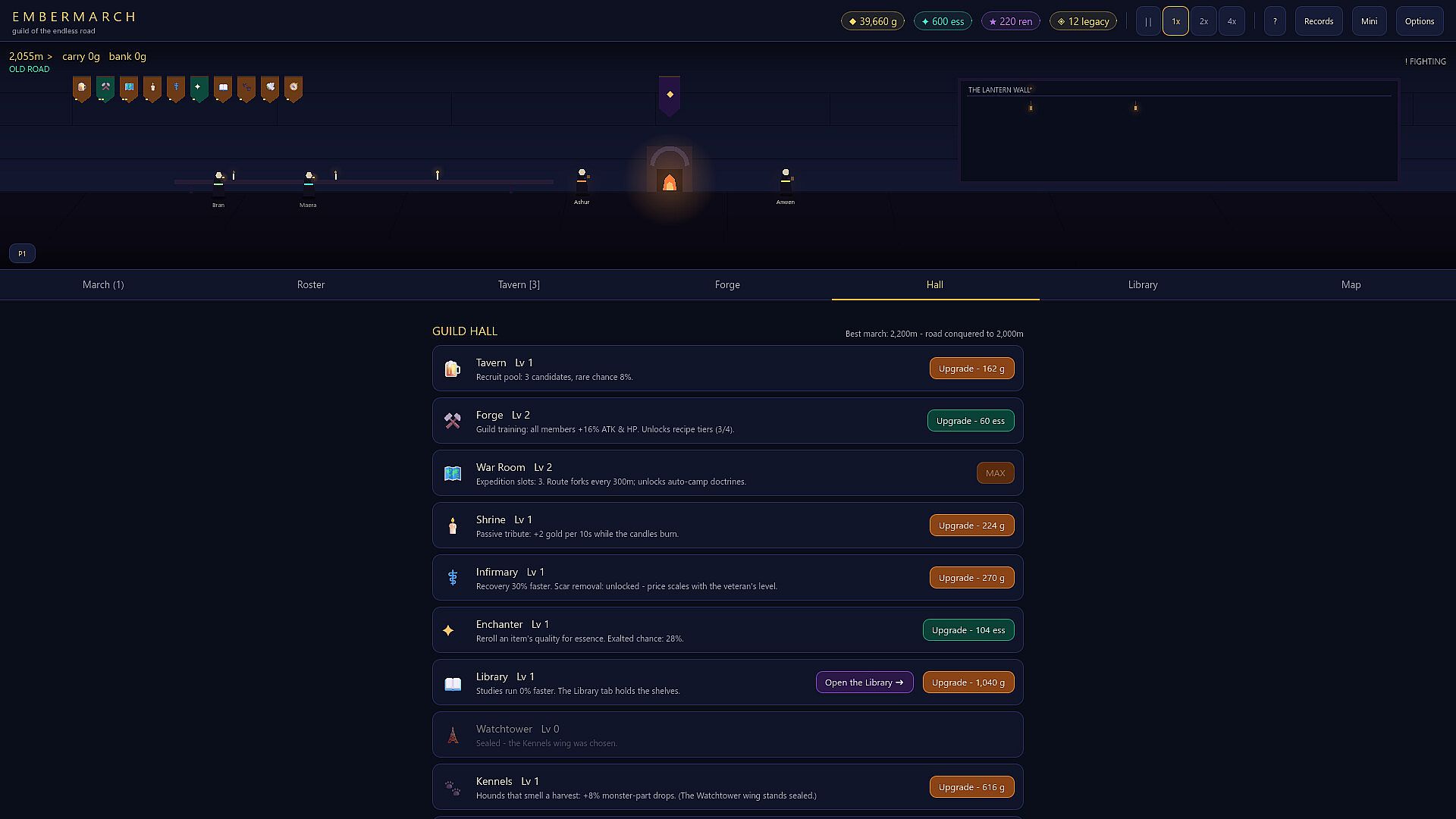
Progression occurs through construction of a Hall featuring specialized rooms that present meaningful either-or choices. The Forge generates gear variants and rarities while enabling upgrades and potion creation. A Library supports real-time research that continues offline. The Cartographer's Table allows mapping of upcoming threats via scouts. Conquered camps can be fortified, and commissions from the Crown provide additional objectives. A rival guild operates on the same road, creating opportunities to contest control of key locations.
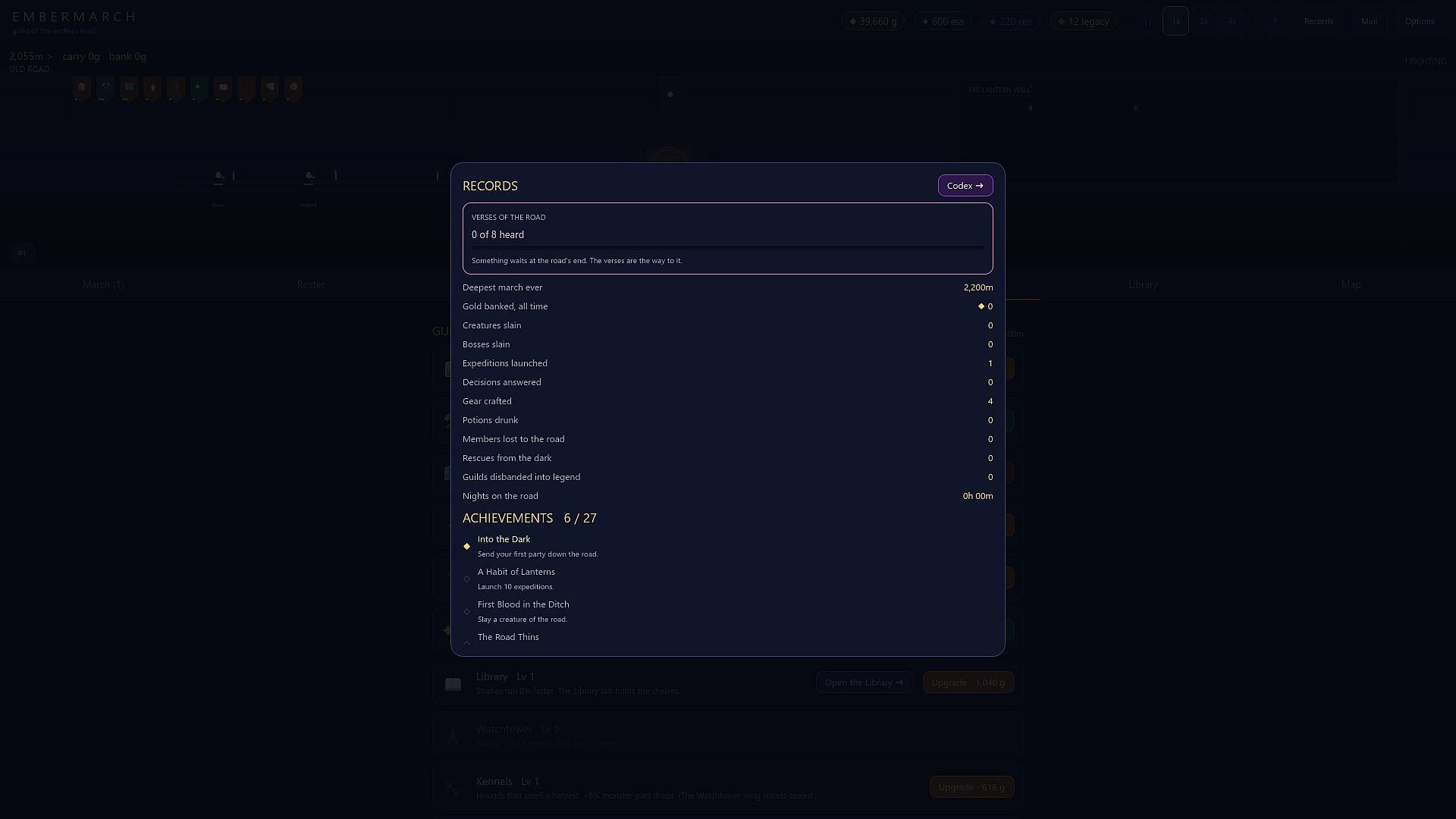
The simulation itself runs accurately even when the game is closed, delivering a detailed report after up to twelve hours. An animated road strip offers optional live viewing, and the application can minimize to the system tray with minimal resource use. Five biomes, eight bosses with distinct mechanics, and over 130 hand-written events populate the road alongside a mystery arc that concludes with a definitive ending.
Game Modes
Embermarch operates as a single-player idle experience without separate competitive or cooperative modes. The primary structure involves repeated marches along the road, each shaped by chosen doctrines and party compositions. Legacy runs introduce a persistent layer where disbanding a completed guild carries forward elements such as heirloom gear and inherited traits into subsequent attempts. This creates a cycle of rediscovery where each new guild encounters the road differently while building on prior progress.
Progression elements like research trees, prestige systems, and contested map features integrate directly into the idle framework. Crown missions and rival interactions add layers of strategic decision-making within the same continuous simulation rather than isolated modes.
Progression and Systems
Character development emphasizes memory and consequence. Scars and bonds alter future performance, while the Lantern Wall serves as both record and potential recruitment source. Gear management through the Forge supports experimentation with variants and rarities, feeding back into stronger parties for later marches.
The road itself functions as a living environment with forks, waystones, and events that accumulate resources including gold, essence, and renown. Scouts dispatched from the Cartographer's Table provide advance intelligence, and fortified camps offer defensive advantages against the rival guild's advances.
Is It Worth Playing?
Embermarch suits players who enjoy idle management combined with narrative weight around permadeath and legacy. The absence of microtransactions or energy systems allows uninterrupted progression through offline simulation and branching choices in guild building. The structure of doctrines, bonds, and permanent consequences rewards careful planning across multiple runs, while the road's events and bosses provide variety within the idle format.
Those drawn to deep character histories, resource accumulation without timers, and a clear endpoint followed by meaningful restarts will find the systems align closely with the described experience. The game remains in a pre-release state with no available player feedback at this time, so interest depends on affinity for its specific blend of guild oversight and simulated expeditions.