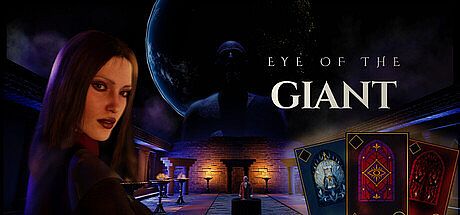


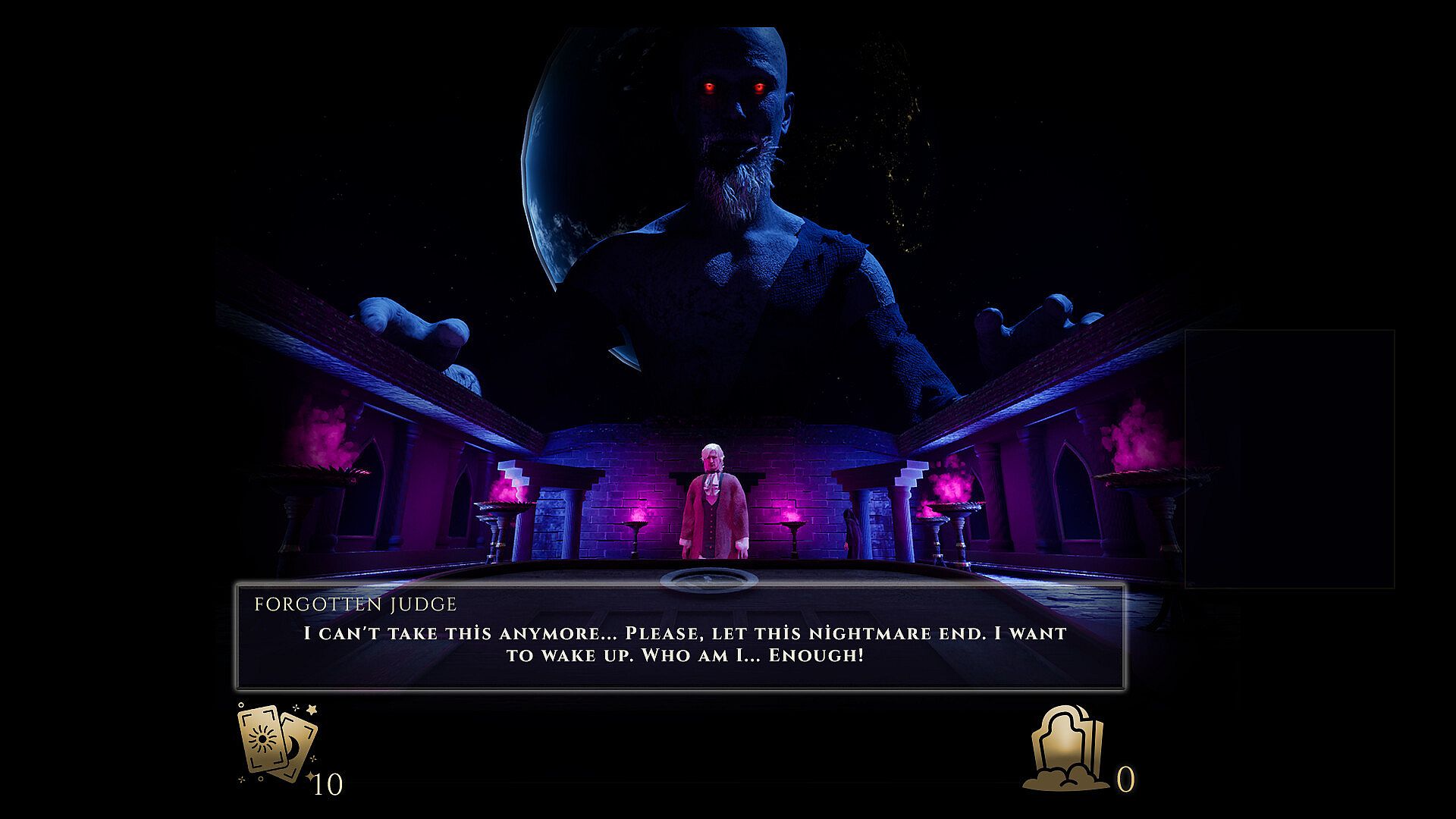
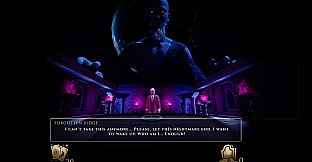
Eye of the Giant is a roguelike deckbuilder that casts players as a judge in a courtroom suspended outside time. This strategy, indie, and adventure title for PC in Early Access pits the player against real historical figures through interrogation and psychological pressure rather than conventional battles. Defendants such as Isaac Newton, Genghis Khan, and Odin enter with layered mental defenses that must be dismantled card by card until a confession emerges or forgiveness is granted.
Gameplay
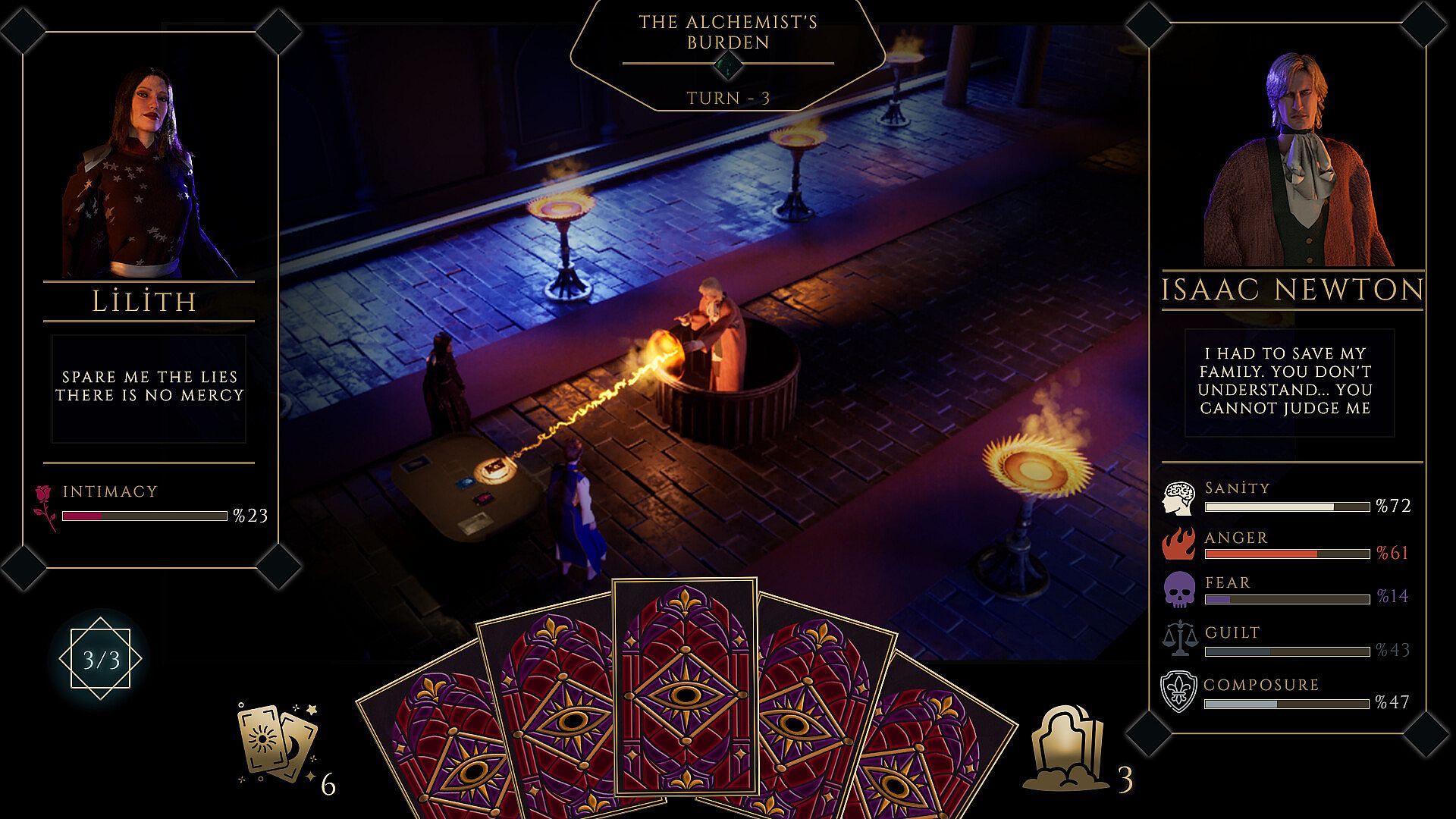
The combat system replaces health bars with four psychological states that evolve during each trial. Sanity tracks a defendant's grip on reality, and excessive pressure can trigger paranoia that alters their available responses. Conviction measures their belief in past actions and determines how aggressively they resist. Arrogance represents defensive barriers that deflect threats or accusations. Guilt serves as the key to unlocking a confession once the other states weaken.
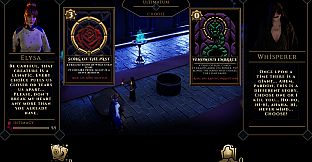
Cards function as targeted accusations placed into a central Decision Point. Each placement consumes the card and prompts a reaction based on the defendant's current mental profile. Responses range from barriers and justifications to counterattacks or unexpected revelations. A single well-chosen accusation might reduce guilt while inadvertently boosting arrogance, requiring careful sequencing rather than raw damage output.
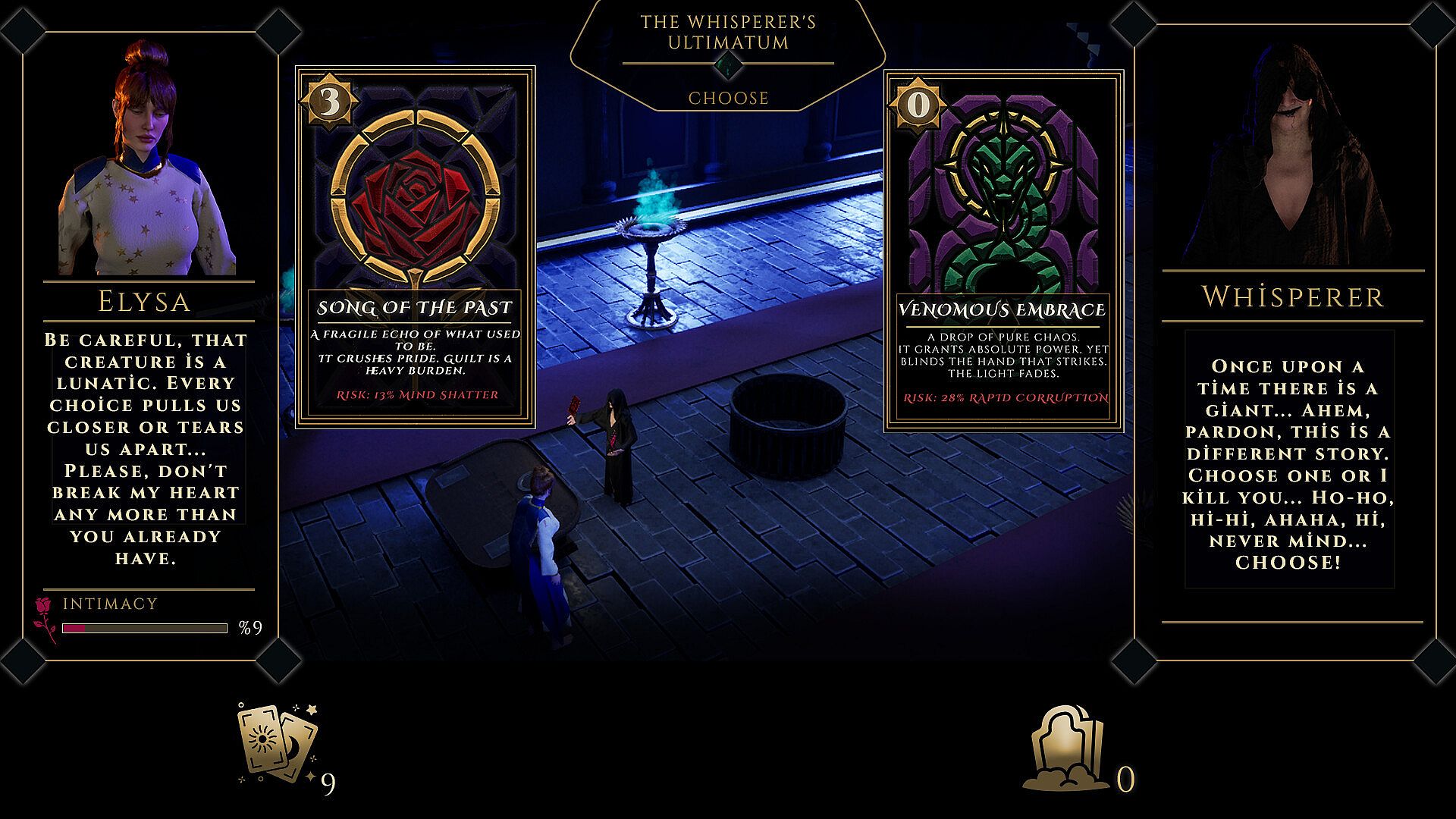
Two jurors named Lilith and Elysa circle the bench and offer competing advice. One leans toward mercy while the other favors severity. Their shifting affinities alter available cards and trial choices. Only one juror can remain at the end of a session, and the choice carries lasting consequences for future proceedings.
Game Modes
The experience centers on successive trials against historical defendants. Each session follows the same core loop of psychological manipulation through the Decision Point system, with outcomes determining how the world below the courtroom changes. Failure resets the immediate trial while preserving player memory, creating a roguelike progression where prior knowledge informs later attempts.
Early Access currently includes the opening trials that begin with the Whisperer's tale and extend through the Judgment of Sir Isaac Newton. These sessions demonstrate the full four-state psychological system, the Decision Point mechanics, and the jury affinity interactions between Lilith and Elysa. Multiple verdict paths exist for each defendant, leading to different world alterations.
Consequences and Setting
Every verdict feeds into the Daily Paradox, a newspaper delivered after each session that reflects the altered timeline. Headlines may reference familiar events, describe entirely new occurrences, or contradict established history. Some editions even reference the judge directly, underscoring the personal stakes of each decision.
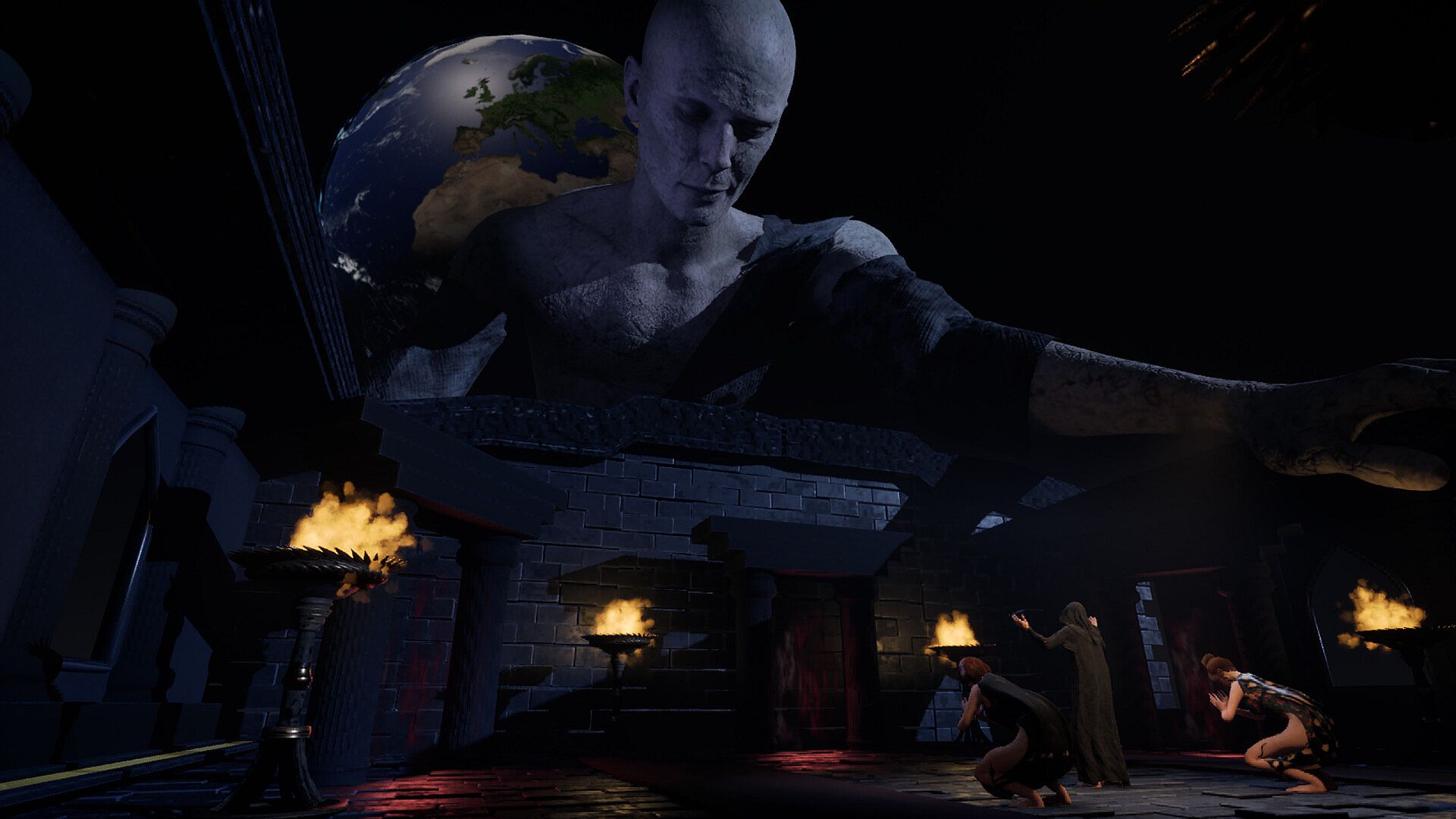
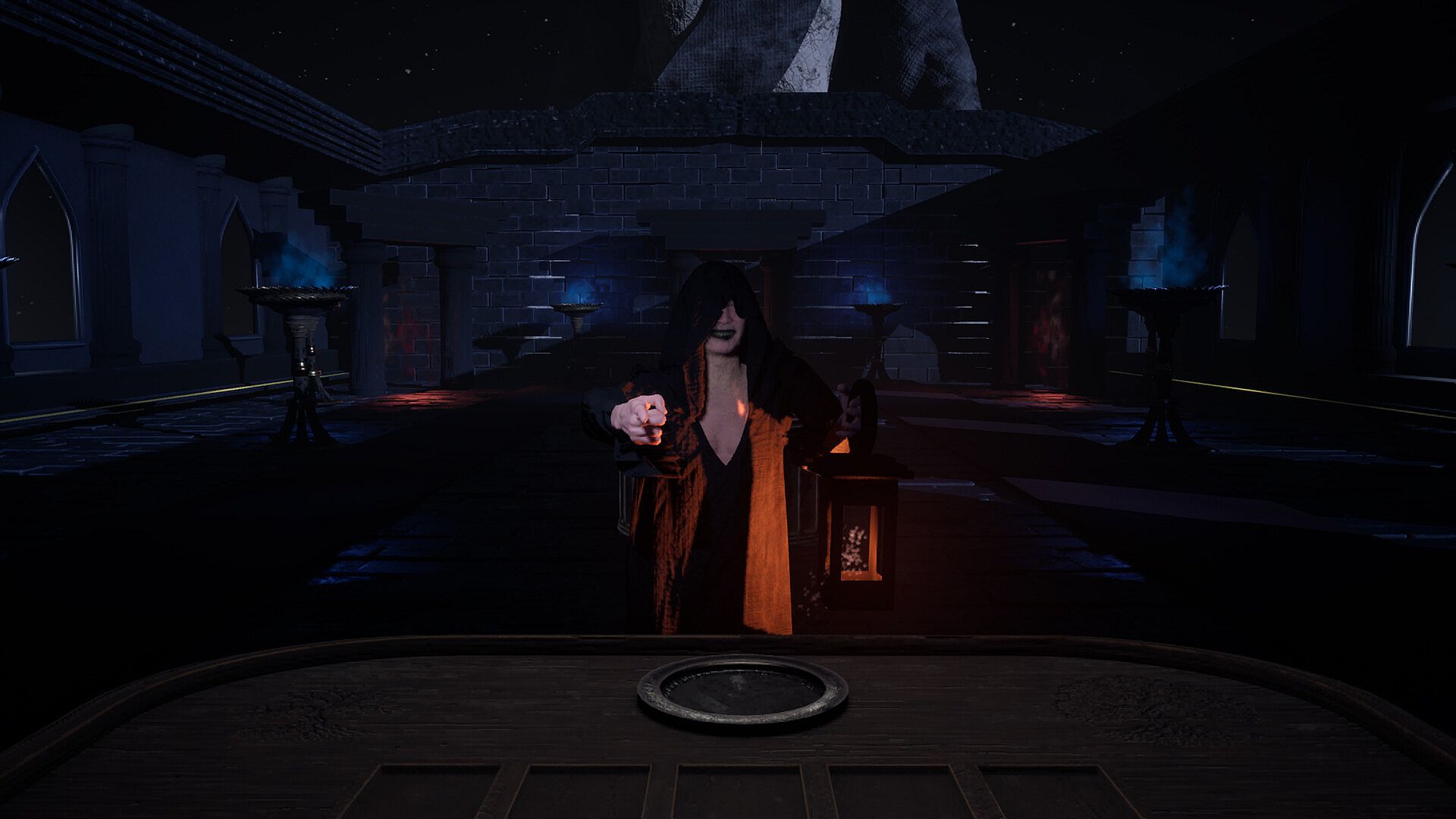
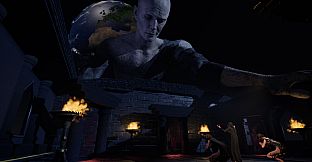
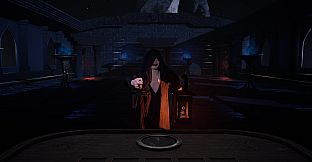
The player character exists without a physical body or the ability to die in the conventional sense. A higher authority known as the Giant oversees the proceedings and resets failed judgments. The bailiff Sadık provides context about previous judges and the endless stream of defendants. No explicit reason for the player's selection is given, leaving the purpose of the courtroom open to interpretation through repeated play.
Is It Worth Playing?
Eye of the Giant suits players who enjoy deliberate, narrative-driven strategy games that emphasize choice and consequence over fast-paced action. The psychological combat system rewards observation and adaptation rather than optimization of damage numbers. Those drawn to roguelike structure with persistent memory across resets will find the trial format engaging, especially once multiple verdict outcomes and world-altering effects come into play.
The Early Access build already delivers the core four-stat system, Decision Point card placement, and jury mechanics across its opening trials. Players interested in unique interrogation gameplay and the ripple effects of judgment will likely appreciate the current content while the title continues to expand. Those seeking traditional deckbuilding combat or multiplayer elements should look elsewhere, as the focus remains firmly on single-player psychological trials against history's notable figures.