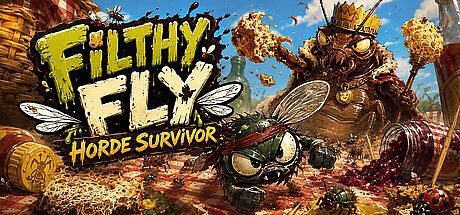


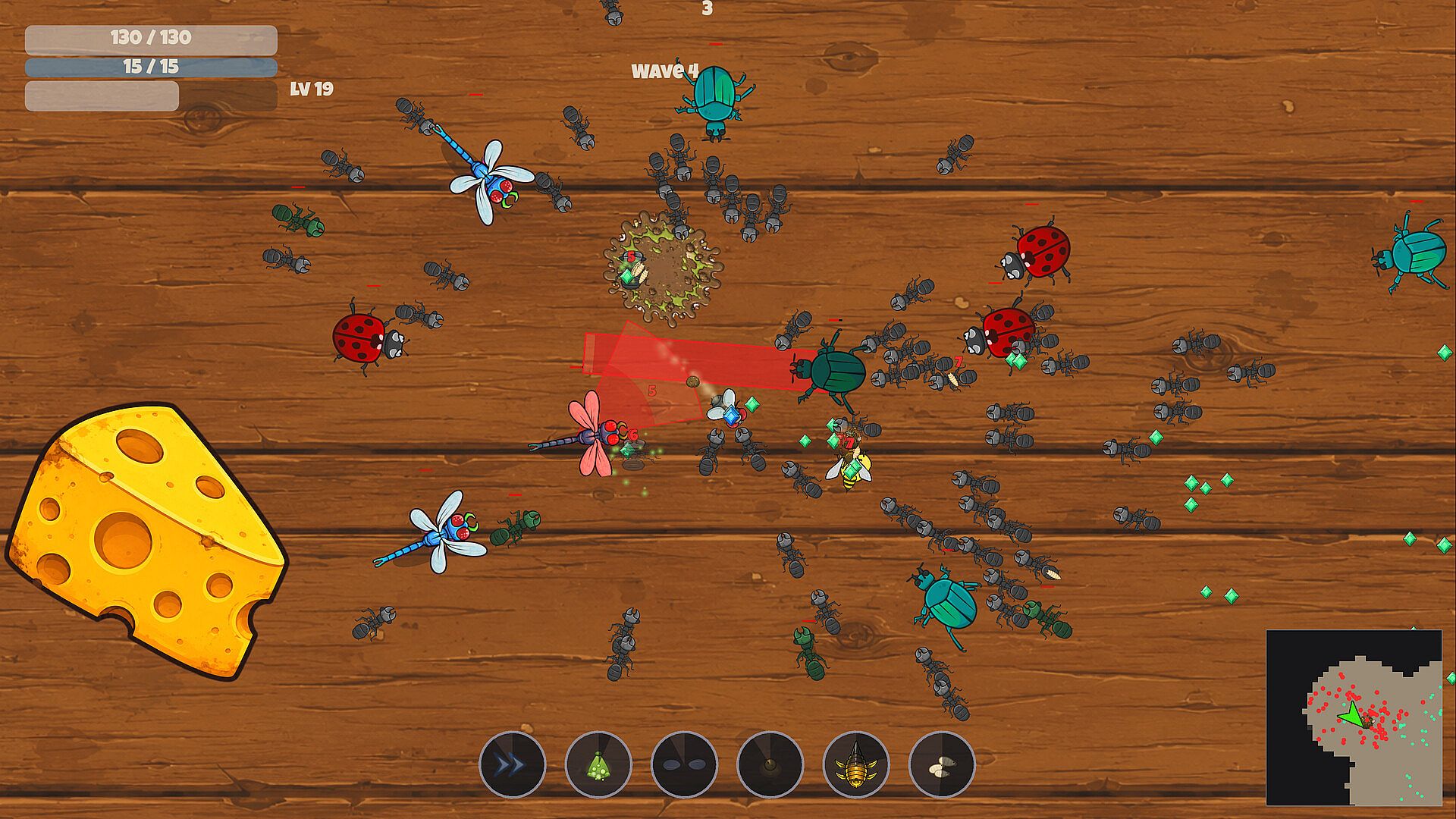
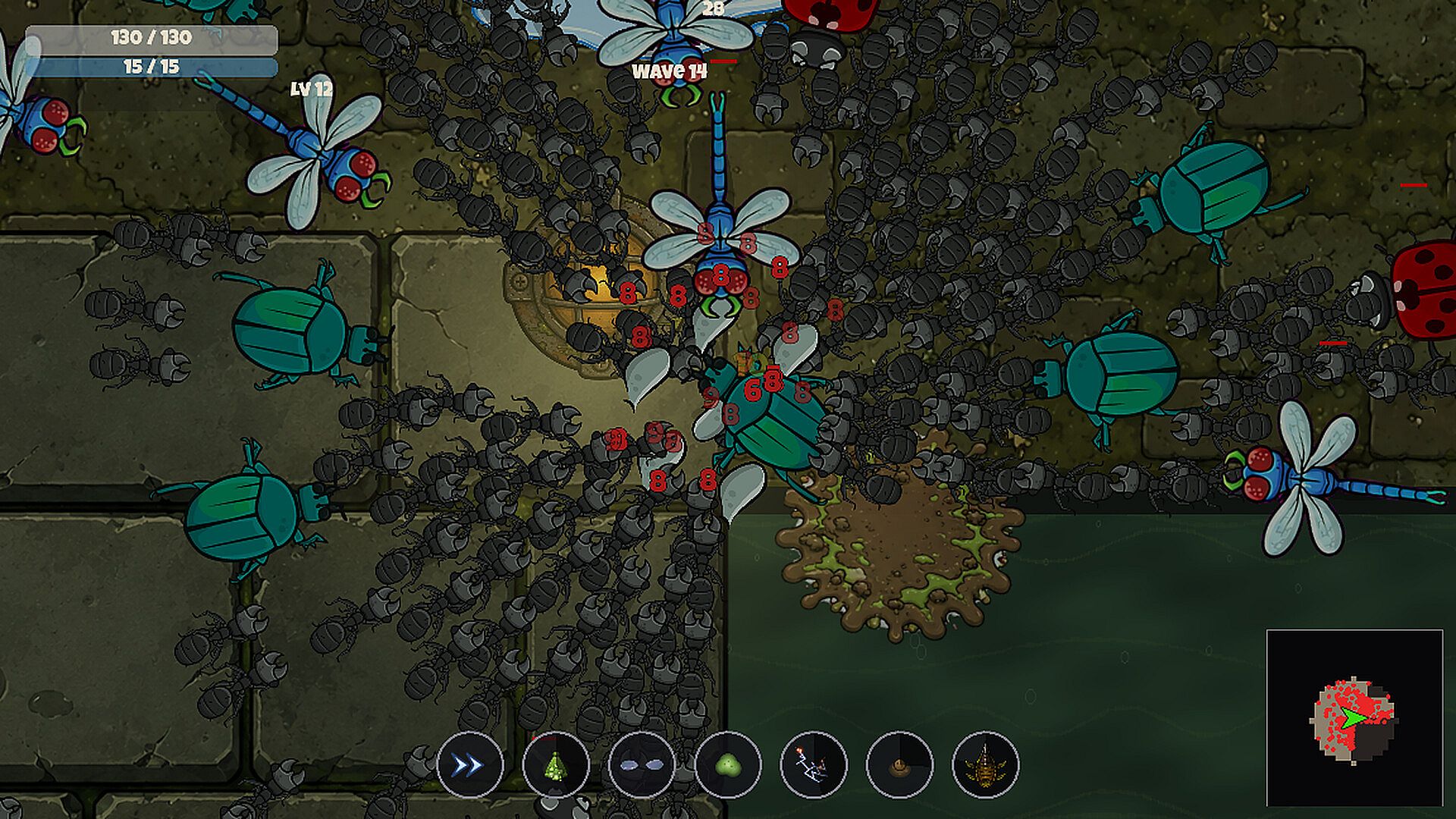
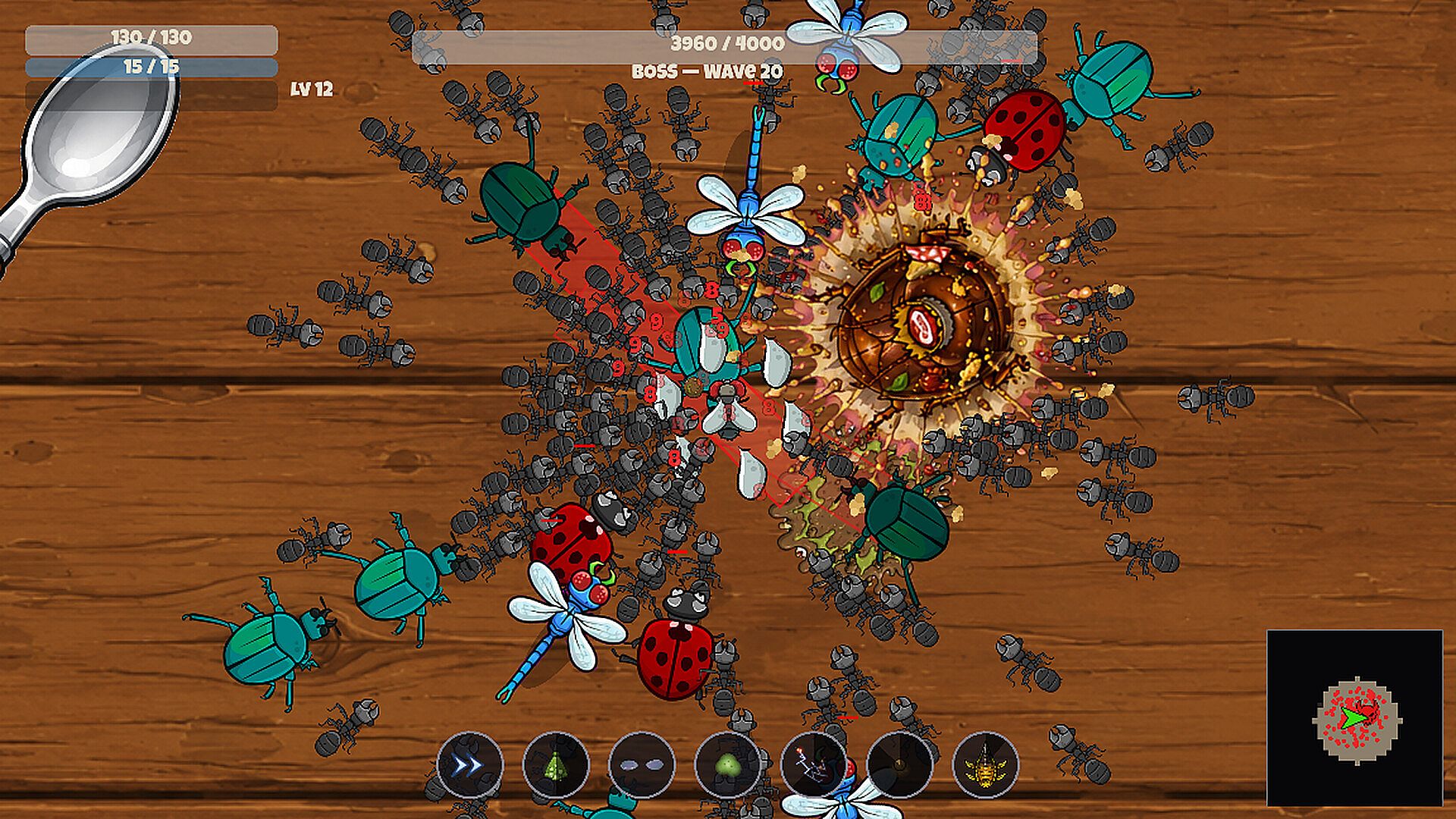
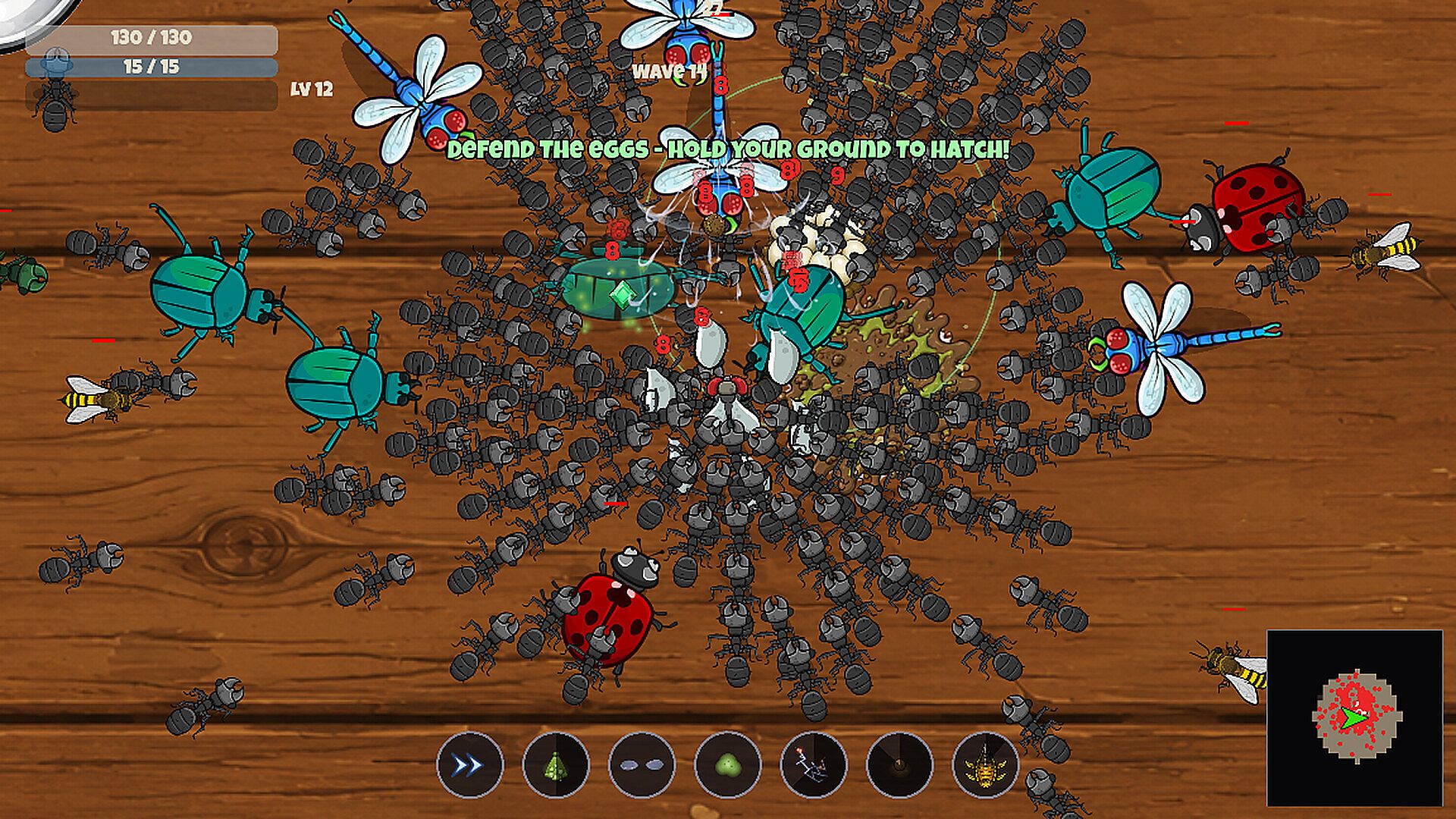
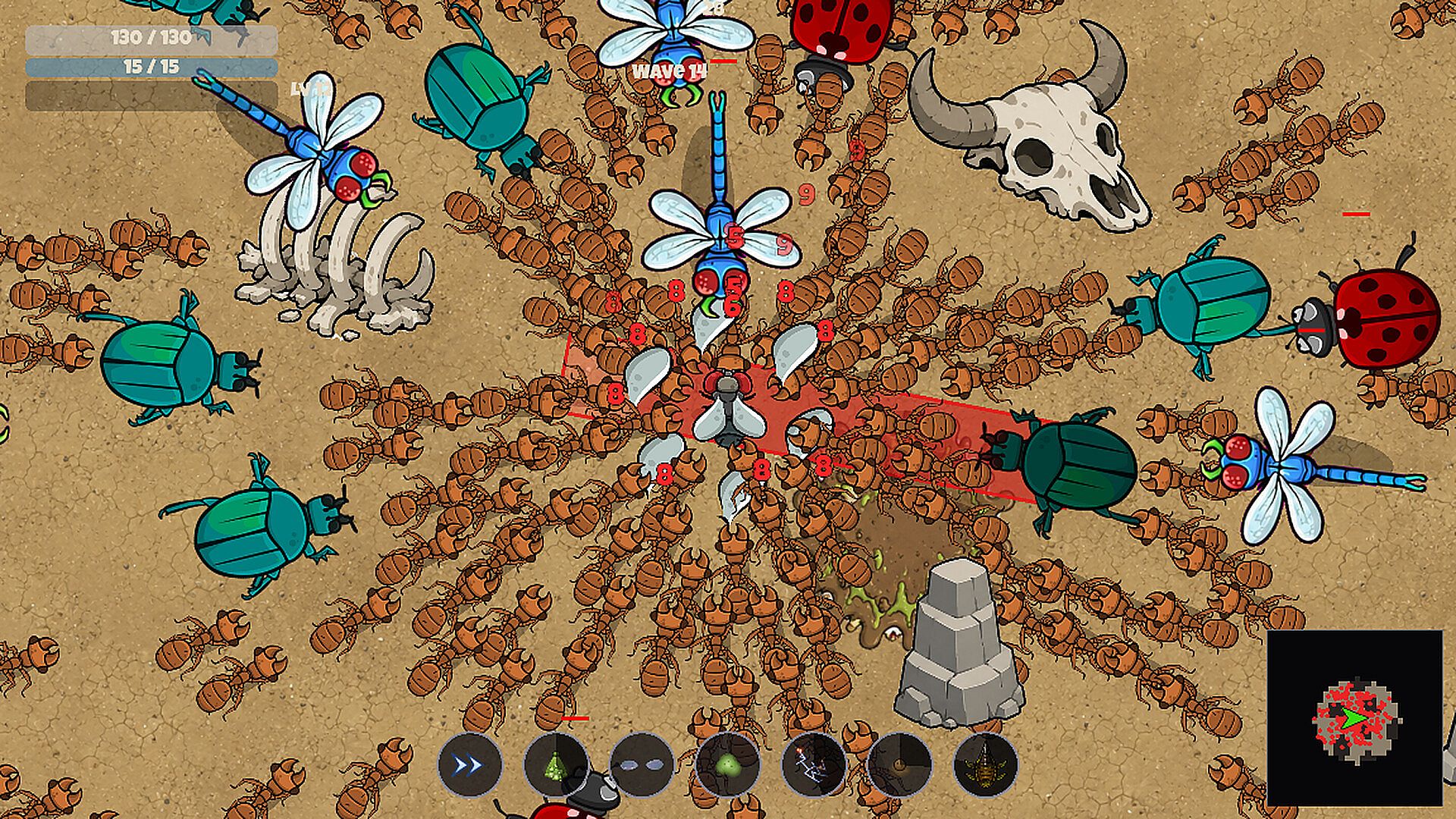
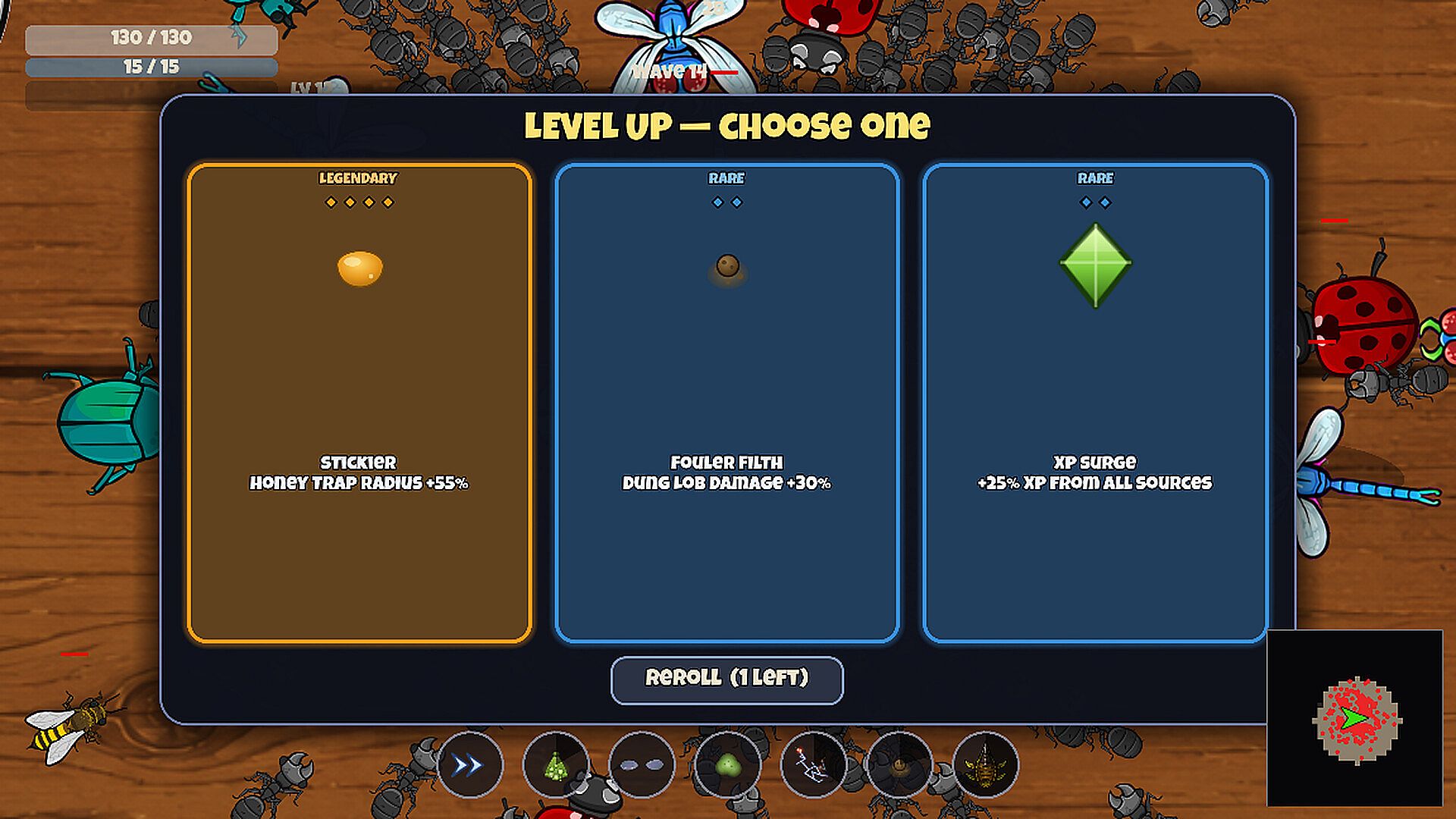
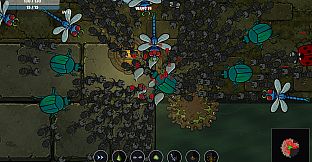
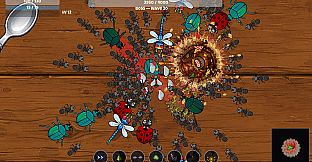
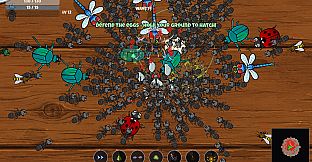
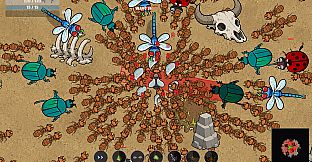
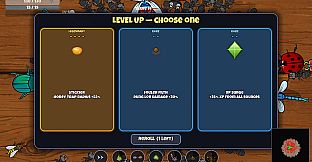
Filthy Fly: Horde Survivor is a single-player action indie horde survivor game in which players control a lone fly battling waves of insects across tabletop and sewer environments. The core loop centers on surviving escalating enemy swarms, collecting experience, and selecting from a pool of revolting weapons that can be stacked and upgraded during each run.
Gameplay
The player controls a fly equipped with a bandana, facing ants, bees, beetles, and other bugs that arrive in increasing numbers. Combat involves nine distinct weapons that can be carried six at a time per run. These include acid spit, an ovipositor firing eggs rapidly, orbiting wing blades, a miasma cloud, chain lightning, arcing dung bombs, homing stingers, maggot minions, and honey traps placed during dashes. Weapons combine in real time, and successful combinations evolve into three powerful golden forms known as Tesla Swarm, Fecal Storm, and Hive Mind.
An egg defense mechanic appears mid-wave. The player must hold position inside a shrinking circle for ten seconds amid incoming enemies to hatch it for maggots and experience, or abandon it for no reward. Four bosses appear at later waves, each with distinct telegraphed attacks: a tarantula that webs the player, a praying mantis with a multi-directional burst after its pounce, a toad that uses its tongue across the sewer canal, and the Crumb King cockroach that trails slowing jelly and delivers shockwave slams. All attacks follow readable patterns that reward observation and positioning.
Death returns the player to The Heap, a permanent mutation tree purchased with maggots earned across runs. Upgrades include thicker carapace, faster wings, better luck, extra rerolls, additional weapons in the draft pool, and the capstone Maggot Rebirth revive. No progress is lost on death, allowing steady improvement to the starting state.
Game Modes
Three arenas provide the main play experiences, each with its own hazards and a dedicated boss. The Picnic features baskets, spilled jam, toothpicks, and breakable water glasses that create slowing puddles. The Dust Bowl offers cracked earth and limited rock cover with few safe spots. The Undergut consists of a sewer divided by a flowing canal where experience gems drift away and only flying enemies cross freely.
Each arena supports Easy, Hard, and Nightmare difficulty tiers that increase enemy density and rewards. Runs last between ten and twenty minutes. The free demo includes the complete Picnic arena with all nine weapons, every evolution, full Heap access, and the twenty-wave climb to the Crumb King, after which the Botfly character unlocks for the full game along with carried-over mutations.
The Heap and Progression
The Heap functions as a persistent upgrade system outside individual runs. Maggots spent here unlock permanent improvements that carry forward, expanding weapon options and adding defensive or utility mutations. This structure supports repeated attempts without resetting core power, while each run still relies on draft choices and on-the-fly weapon combinations for success.
Is It Worth Playing?
The game targets players who enjoy short, repeatable single-player horde survival sessions with strong emphasis on weapon stacking and permanent progression. The free demo provides the full Picnic experience and all listed systems, allowing direct evaluation of the combat loop, boss patterns, and mutation tree before the February 2027 release. Those who prefer learning telegraphed enemy attacks and managing greedy risk-reward decisions during waves will find the core systems intact in the available build. The absence of multiplayer keeps focus on solo runs against the insect swarms.