















Football Manager 27 is a strategy simulation sports game that places players in the role of a football club manager. The title emphasizes deeper decision making and a more connected experience within the broader football landscape through refined systems and returning elements that heighten seasonal narratives.
Gameplay
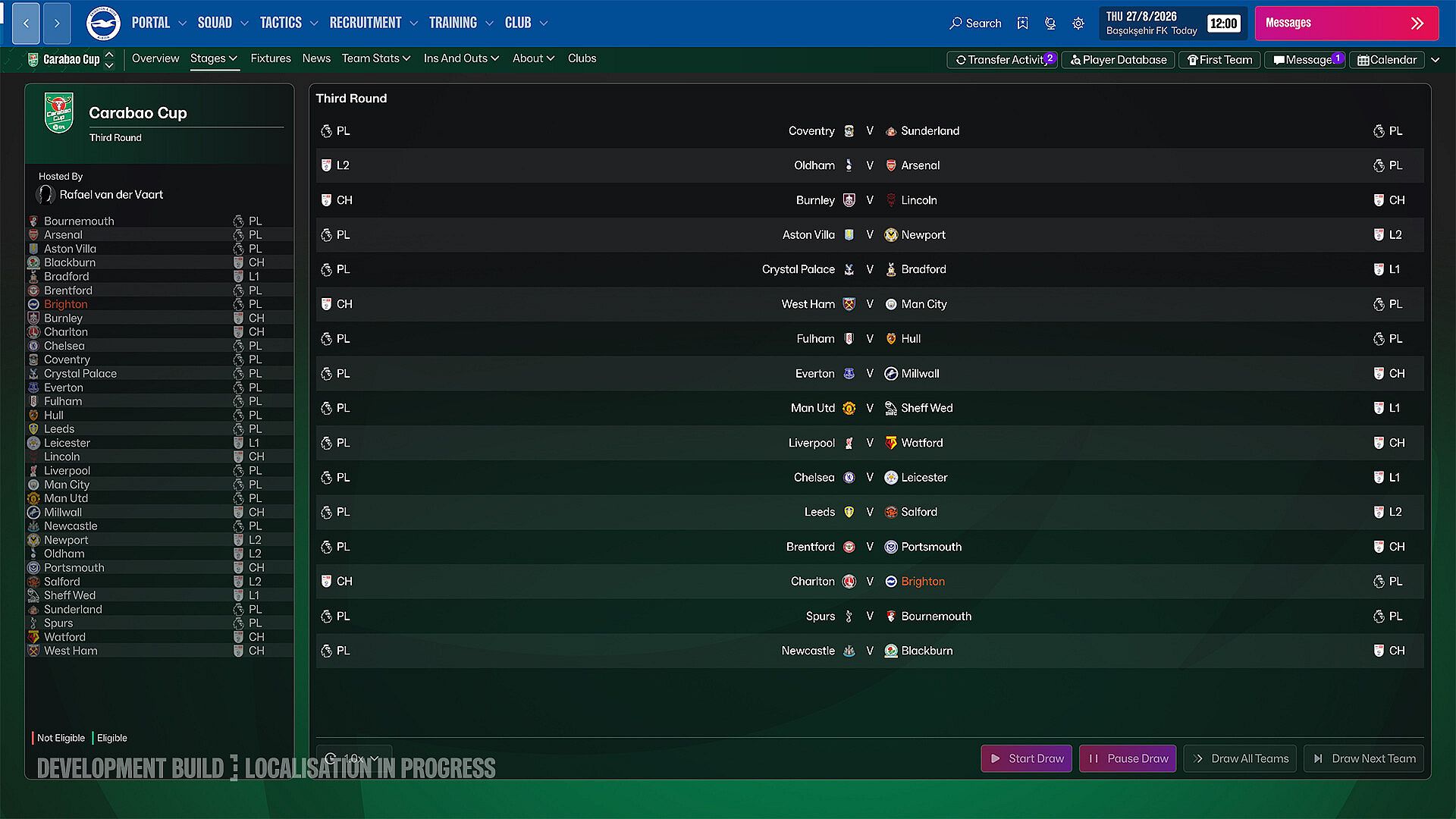
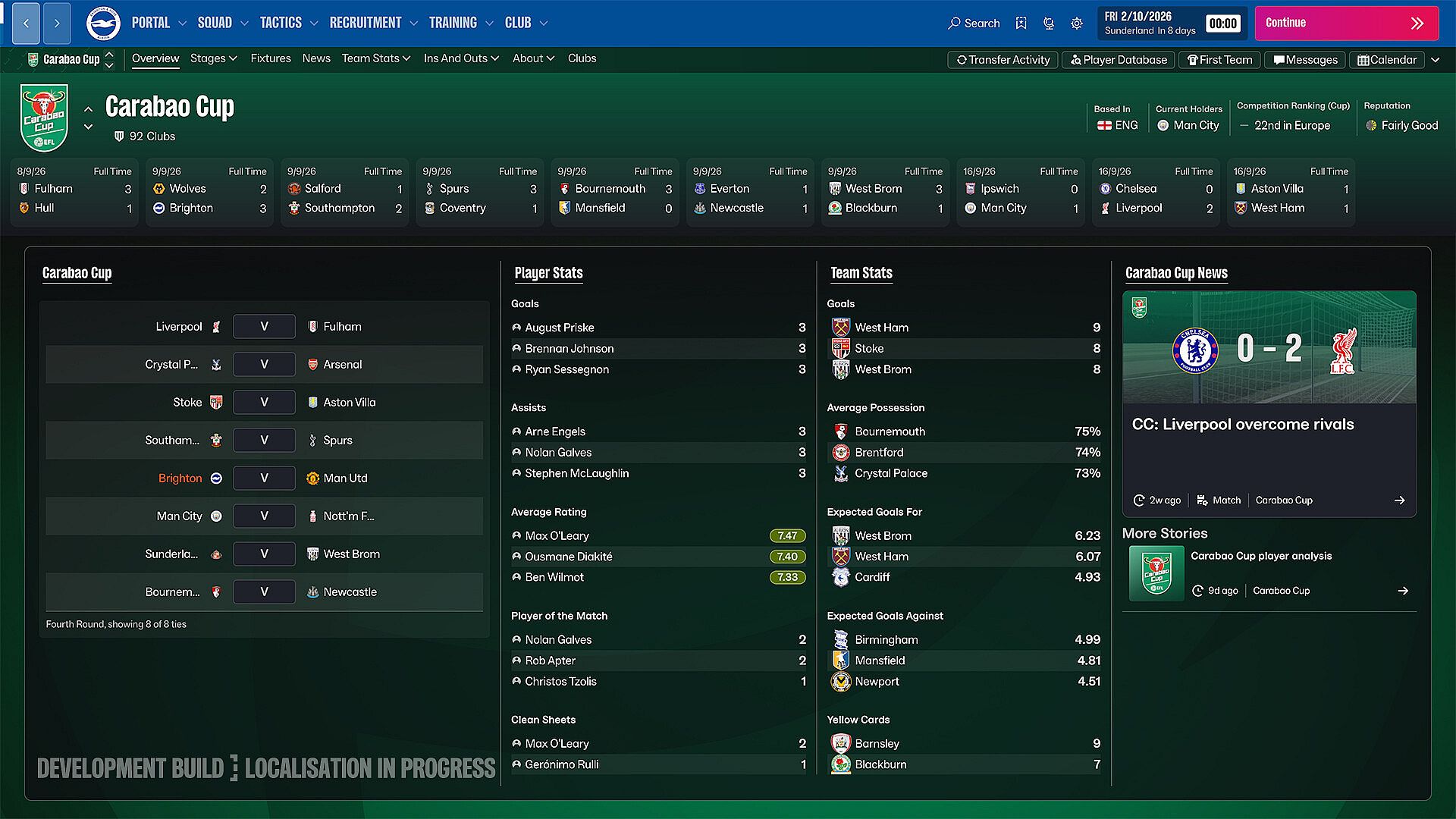
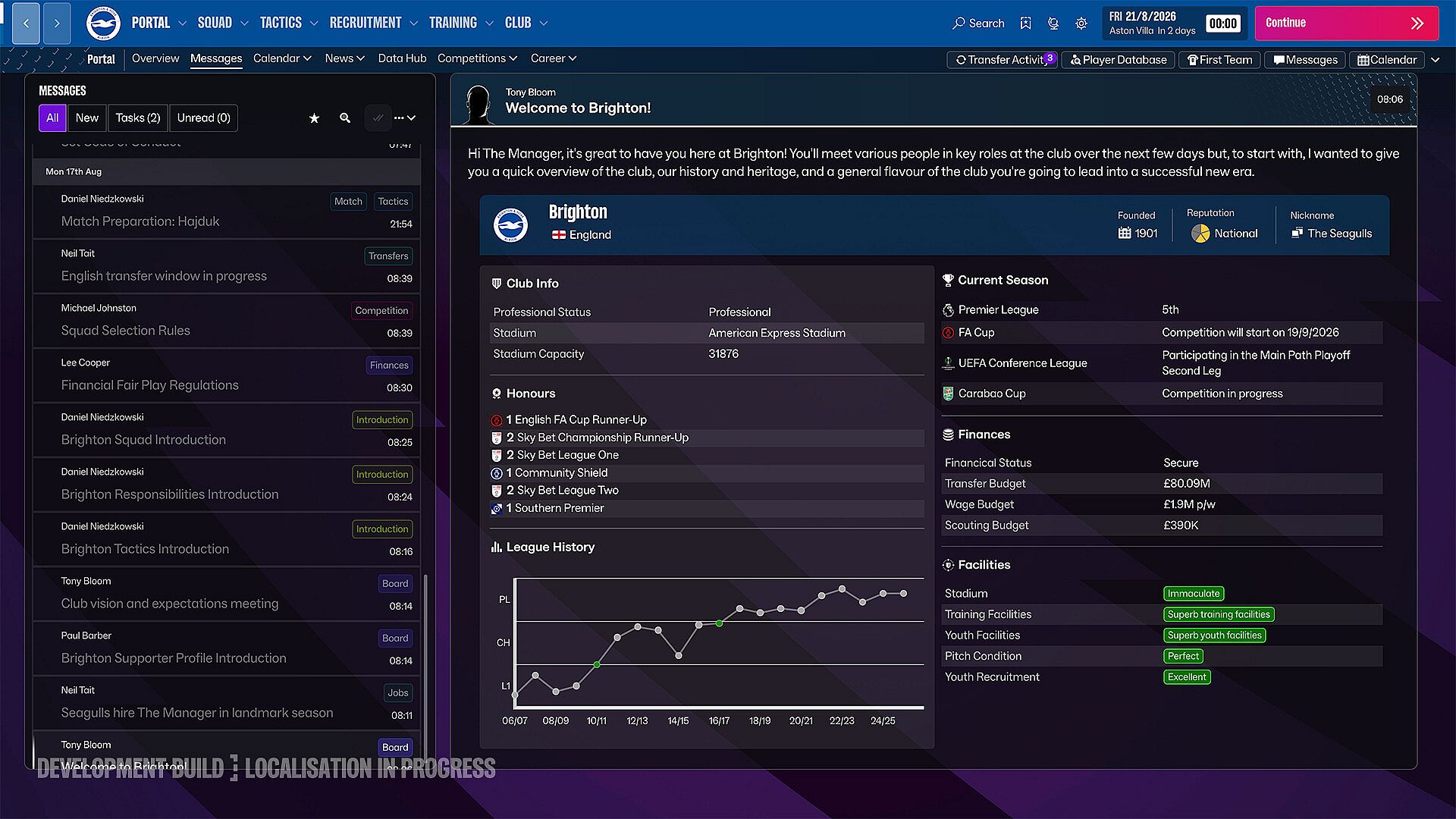
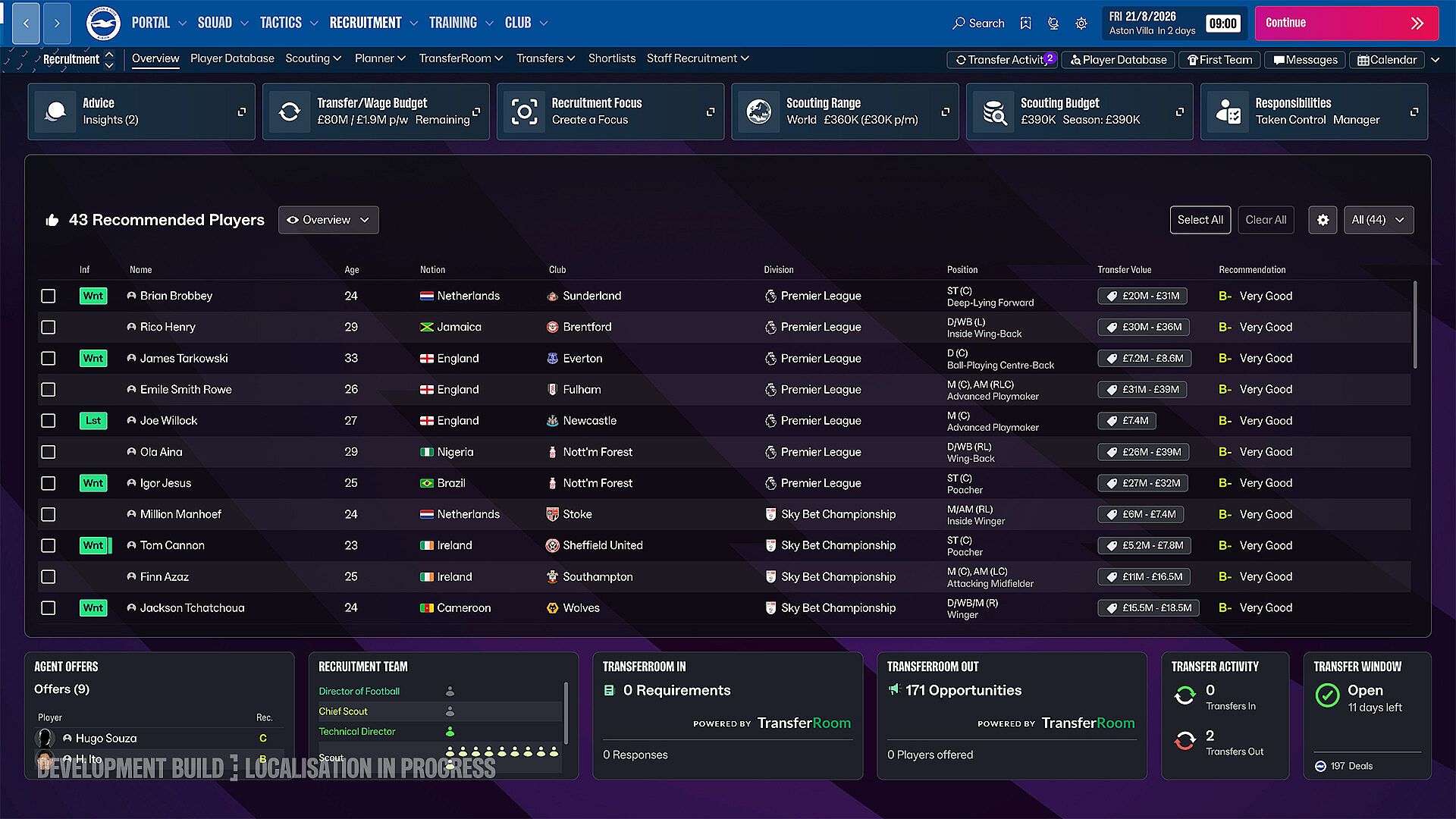
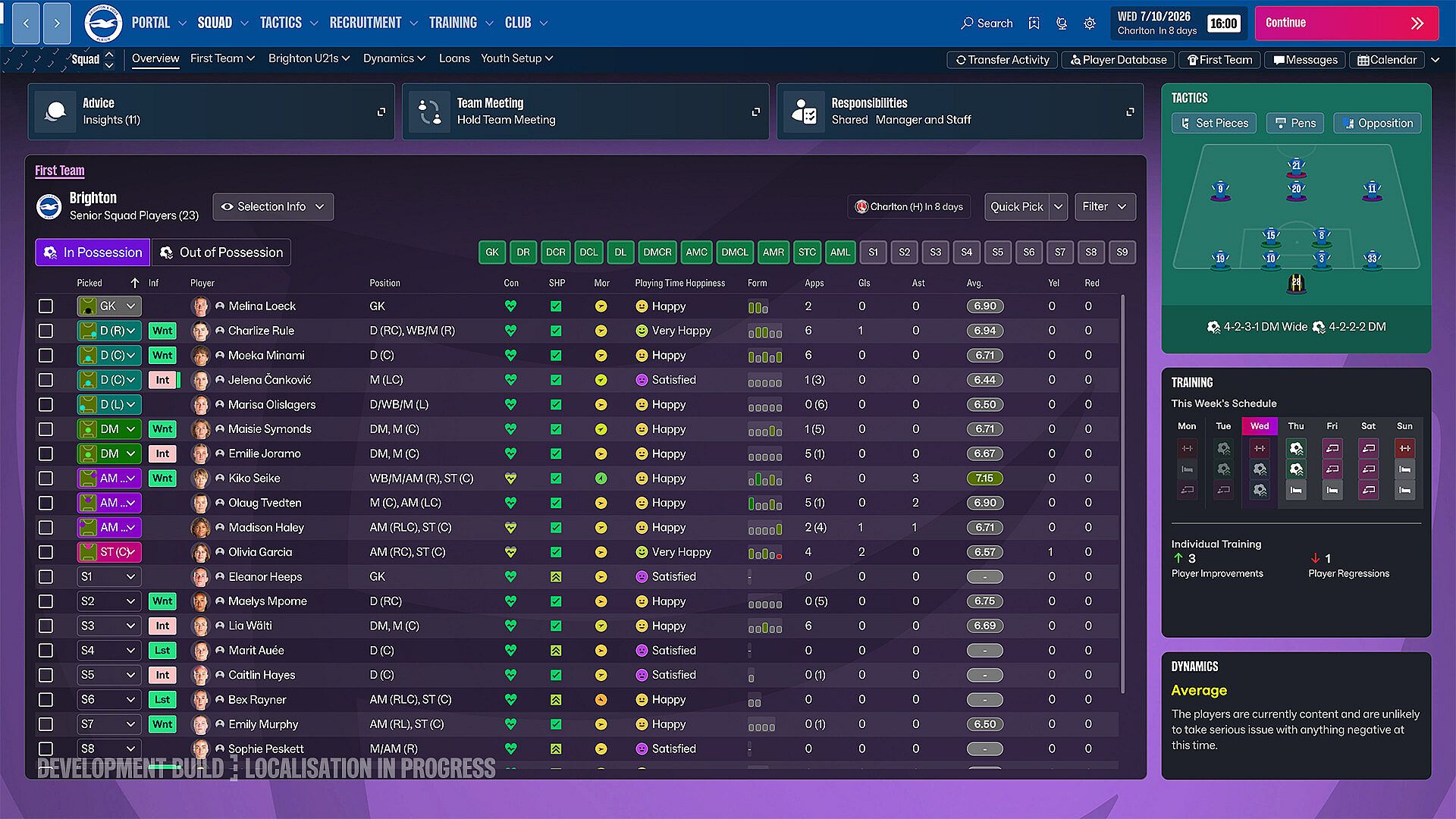
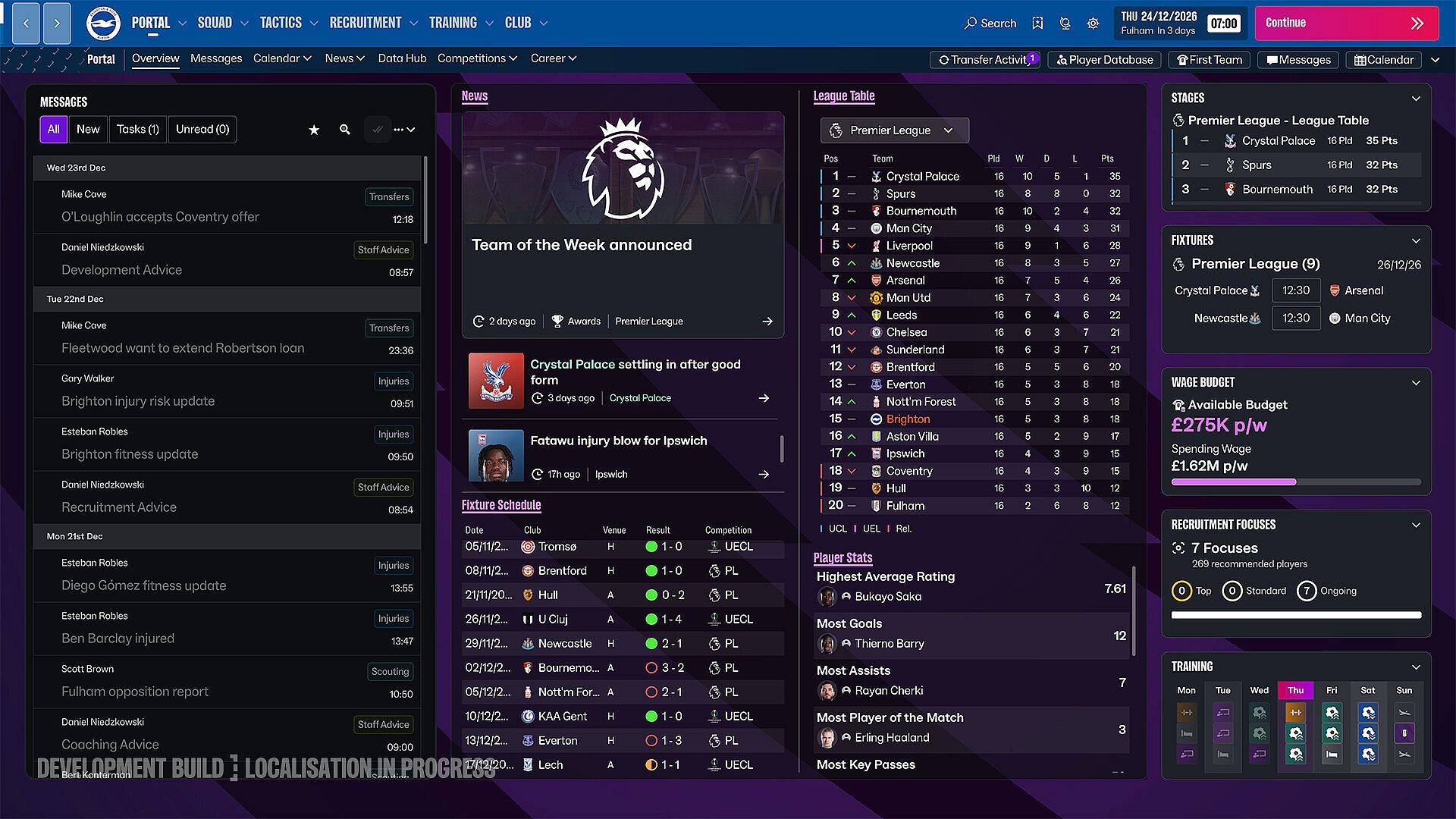
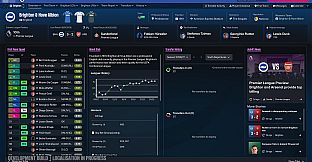
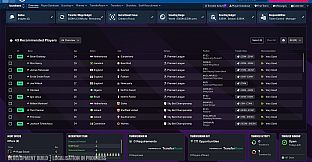
The core loop centers on managing every aspect of a club from squad building to match preparation. Players handle recruitment, training schedules, tactical setups and club operations while responding to events that unfold across the season. A rebuilt interface reduces navigation steps with a primary menu organized into Portal, Squad, Tactics, Recruitment, Training and Club sections. Each area includes a control panel for quick actions such as adjusting budgets or reviewing staff advice.
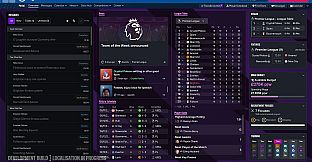
Customisation options allow managers to tailor the experience further. Tile swapping lets users exchange information summaries on key screens, while bookmarks and keyboard shortcuts can be remapped for personal workflows. Scaling modes adjust information density across resolutions, supporting clearer views on ultrawide monitors. Messages now carry color coding and embed relevant reports or grouped offers directly, streamlining inbox management.
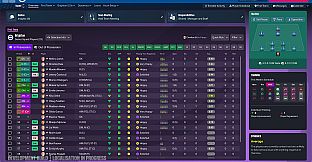
A new Tactical Effectiveness system integrates into training and tactics views. It evaluates each tactic across Tactical Understanding, Player Ability, Player Buy-In and Next Match Info, displaying overall levels alongside Intensity, Complexity and Effectiveness metrics. This replaces earlier familiarity concepts with a more comprehensive check on readiness and opponent awareness. Heat maps return to visualise data patterns, and improved stats reporting keeps performance tracking precise.
Game Modes
Career mode forms the central experience, allowing managers to build and sustain a club over multiple seasons. Setup choices at the start of a new save influence how real-world transfers and squad states align with the simulation start date. A Continue Flow system offers preset options that control the pace and frequency of updates, ranging from streamlined progress toward the next match to more comprehensive interruptions for news and events.
Beyond the club, the wider football ecosystem receives attention through returning features that shape seasonal stories. Cup draws appear in a live format hosted on screen, with controls to reveal one team at a time, all teams together or accelerate the process. Transfer Deadline Day returns as a focused period where agent offers intensify, adding tension to late-window negotiations. An overhauled news feed separates content into relevant categories and highlights emerging narratives across leagues and competitions.
Interface and World Immersion
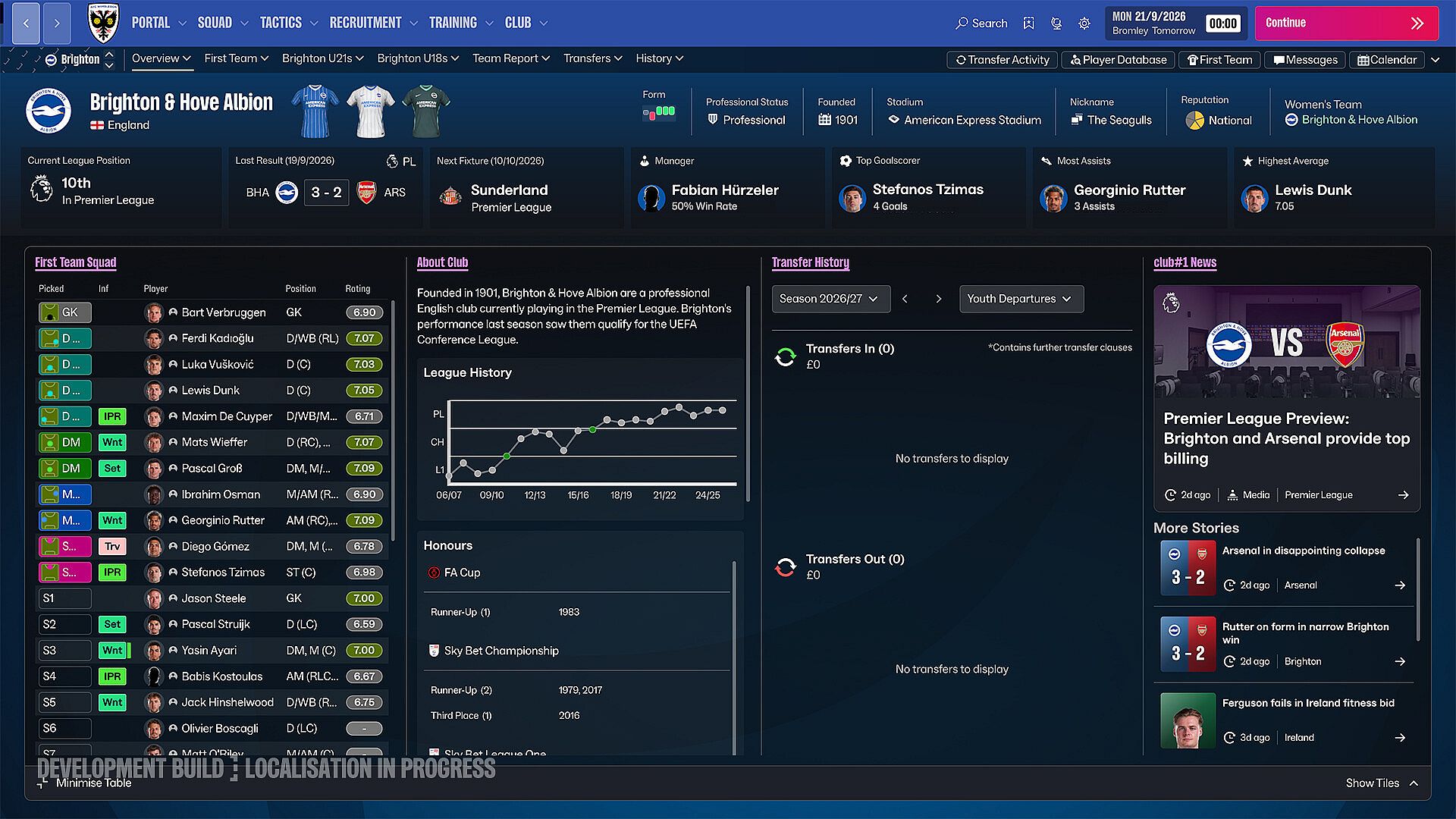
Navigation improvements aim for efficiency without sacrificing depth. Secondary menus restore toggle functionality so managers can switch between related screens without returning to an overview. Quick flicks enable rapid cycling through player or club profiles. Redesigned club and competition screens consolidate history, key personnel, top scorers and recent transfers into single views for faster orientation.
The football world beyond the managed club feels more alive through expanded seasonal content. Previews, mid-season check-ins and title race updates appear alongside transfer speculation and club-specific developments. These elements encourage exploration of rival performances and league standings while maintaining focus on personal objectives.
Is It Worth Playing?
Football Manager 27 targets players who enjoy detailed long-term management and strategic planning in a football context. The updates address navigation friction and restore high-impact seasonal moments that many valued in earlier entries. Those who appreciate customising workflows and tracking data through new effectiveness metrics will find meaningful tools for refining their approach.
With a November 2026 release on PC, the game arrives as a single-player focused simulation that supports extended careers. Managers seeking greater control over information flow and a stronger sense of the surrounding football calendar stand to benefit most from the refinements. The emphasis on immersion through cup draws, deadline drama and dynamic reporting creates a compelling environment for repeated play sessions.