



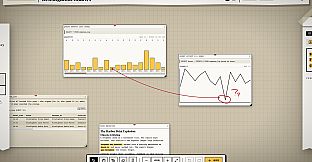
Ghost in the SQL Data is a strategy and simulation game built around real SQL queries. Players step into the role of an investigator who examines evidence stored in actual databases rather than through traditional point-and-click mechanics or scripted dialogue. The title places emphasis on writing functional code to surface facts, compare records, and resolve cases that range from unexplained fires to financial discrepancies.
Gameplay
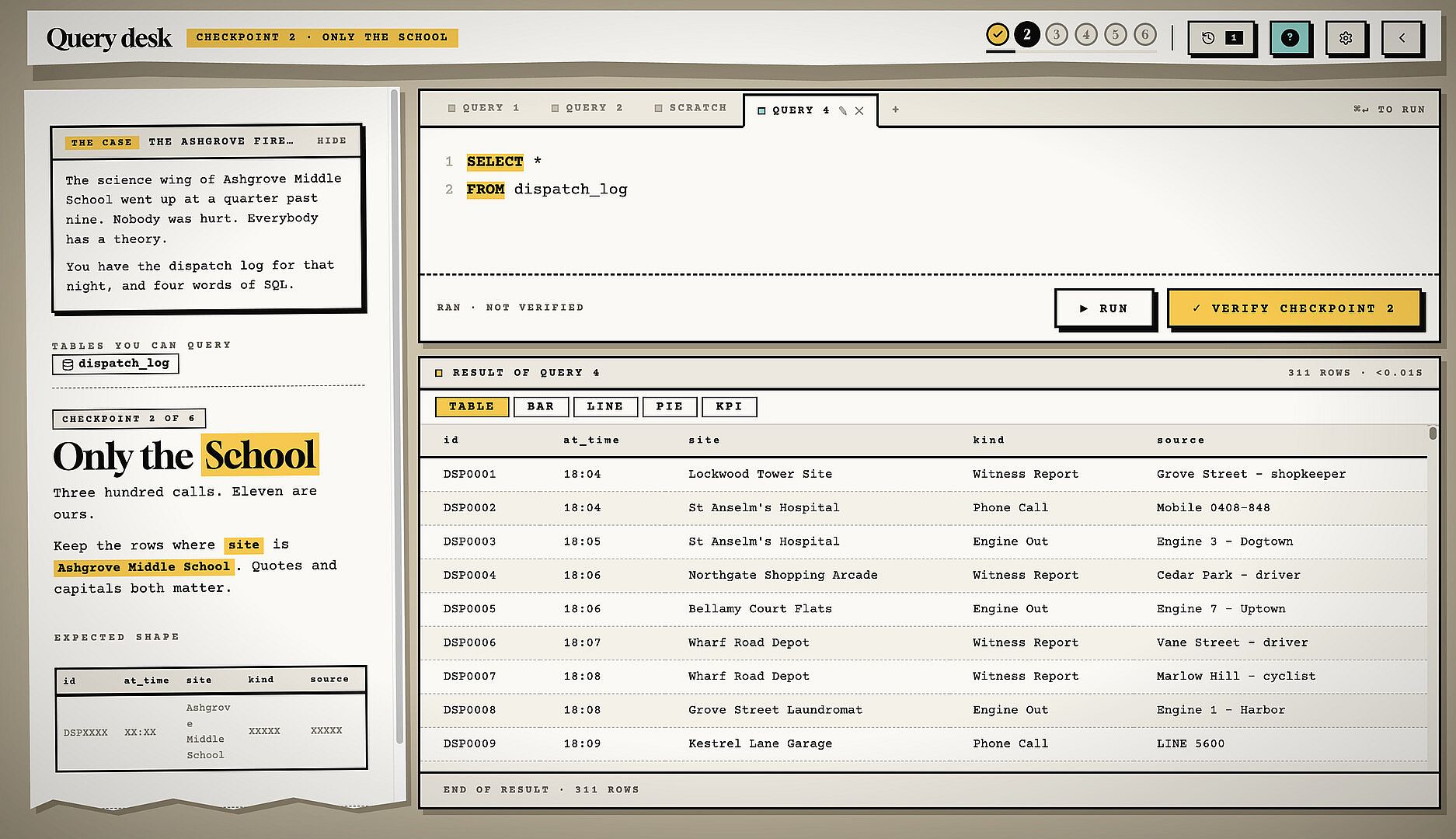
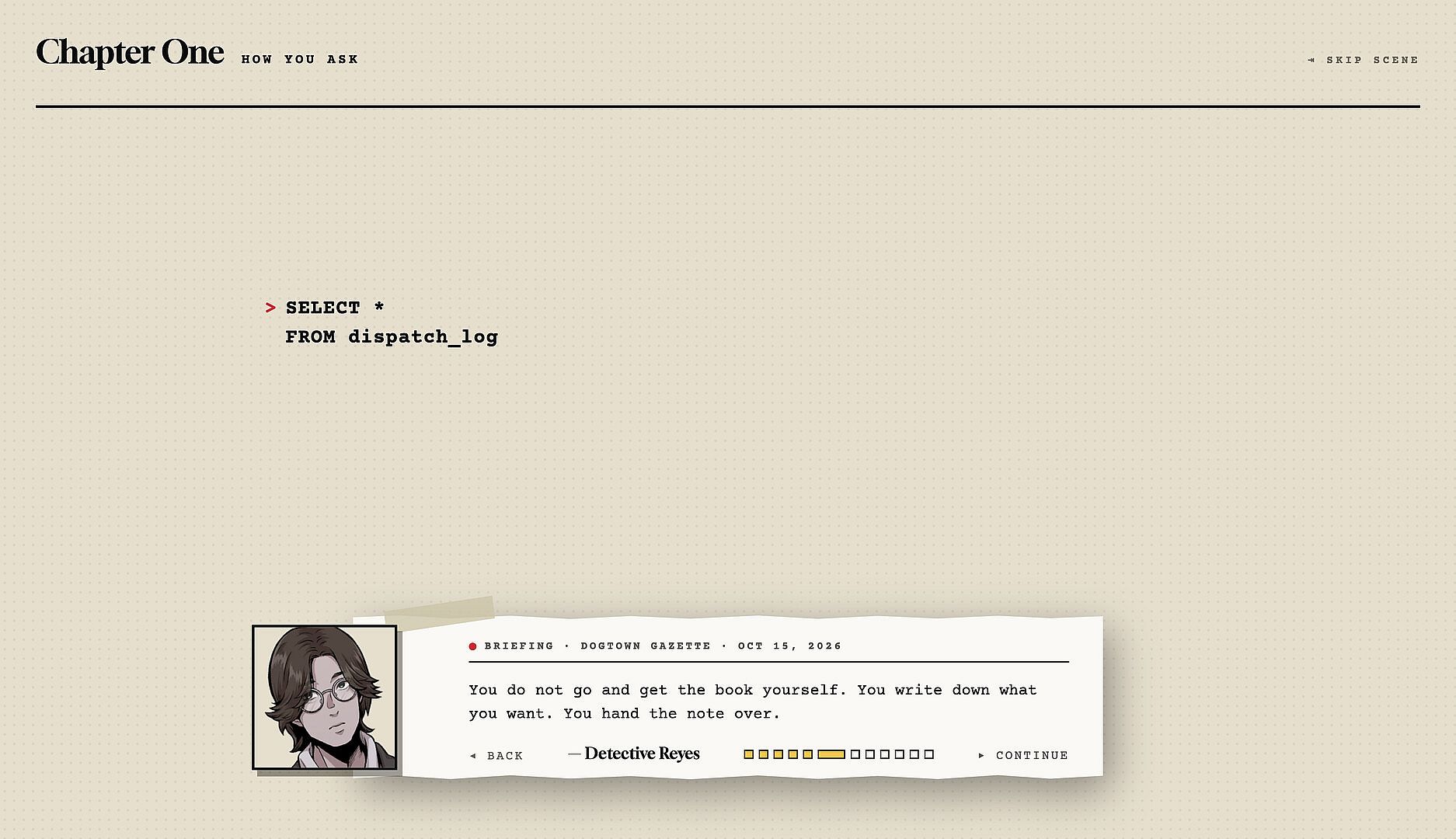
The core loop centers on receiving a case brief that outlines what occurred, followed by direct interaction with a database constructed from the incident's own files. Each row represents a piece of evidence, and columns hold the details that matter. Players write SQL statements in an editor that executes against the live data, then review the returned rows for accuracy against the expected outcome. Errors receive specific feedback that points to the exact clause or keyword causing the issue, allowing refinement without guesswork.
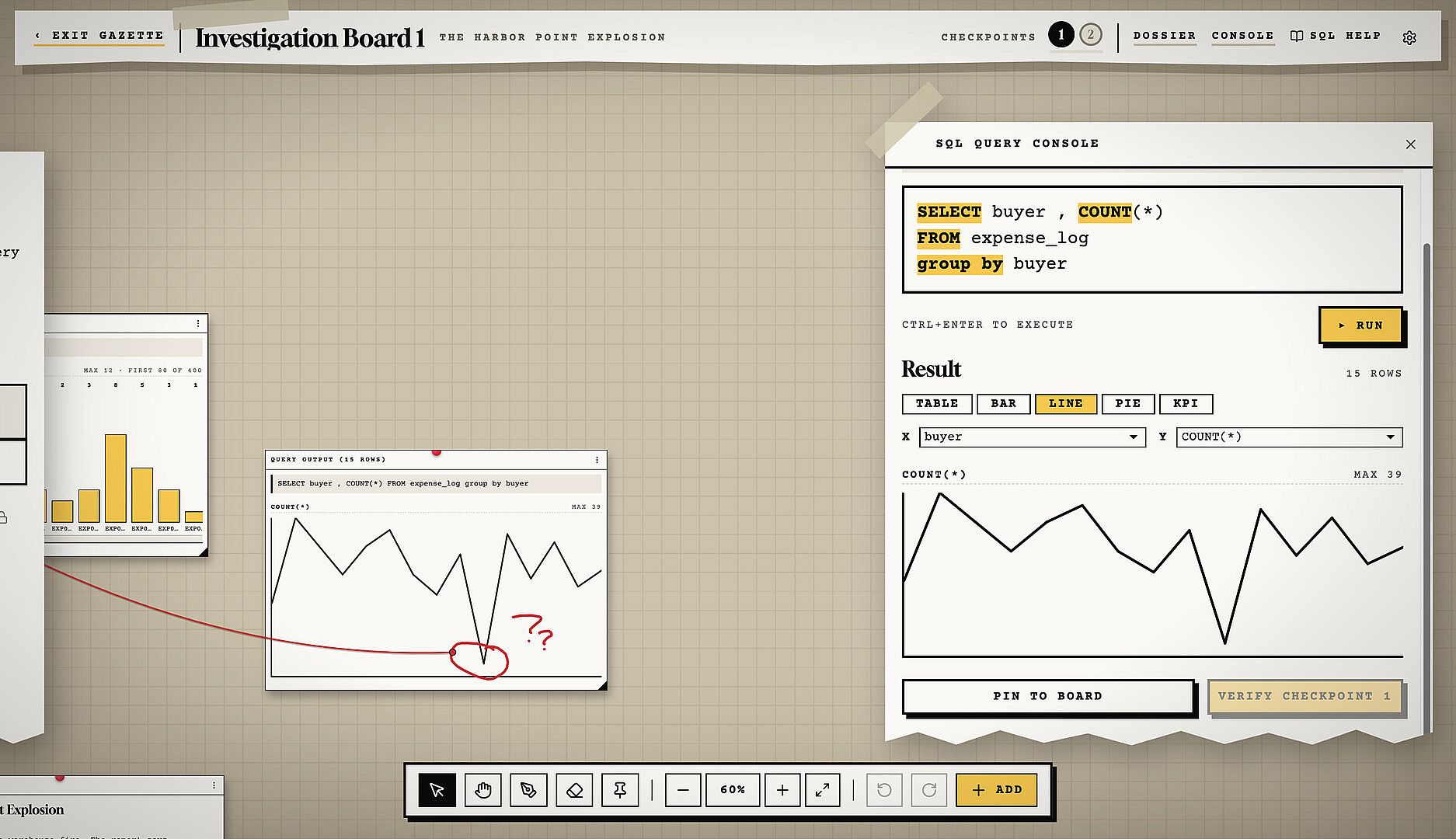
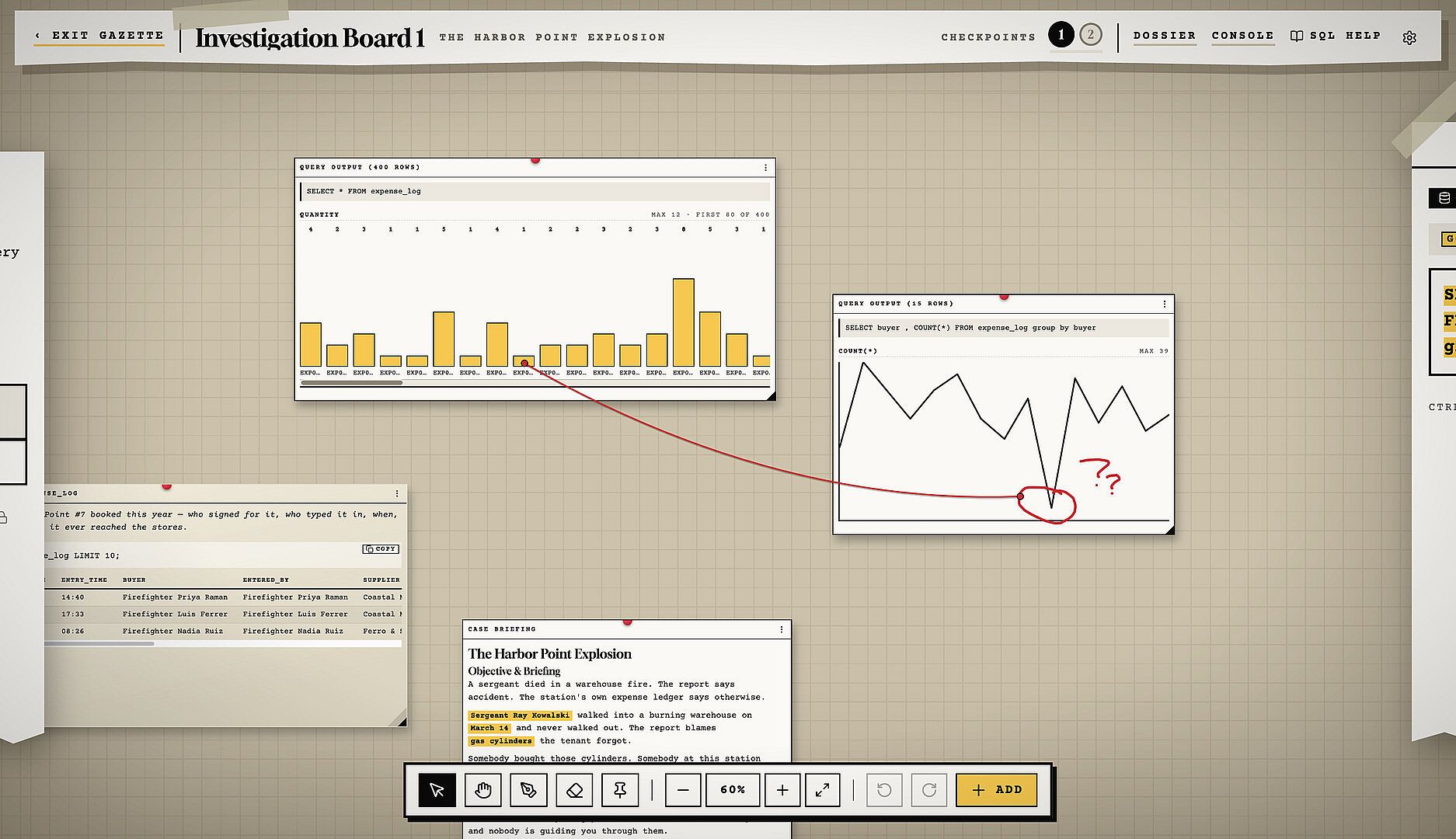
Progression introduces SQL concepts one at a time through the demands of each case. A reference card builds automatically as new clauses and structures are used successfully. The system rewards precise queries that produce usable results, which can then be charted or retained for later reference. The visual presentation uses a physical collage style with torn paper, tape, pushpins, and handwritten notes on graph paper to frame the digital investigation.
Game Modes
All activity takes place within a growing collection of standalone cases. Each case functions as an independent investigation with its own evidence files and required SQL techniques. Cases cover varied incidents such as fires, deaths, missing funds, and malfunctioning equipment. New cases continue to expand the available set, each designed to introduce or reinforce specific query skills while remaining self-contained.
There are no separate multiplayer or competitive modes. The experience stays focused on single-player case resolution, where success depends on producing correct result sets rather than speed or resource management.
Learning Curve and Accessibility
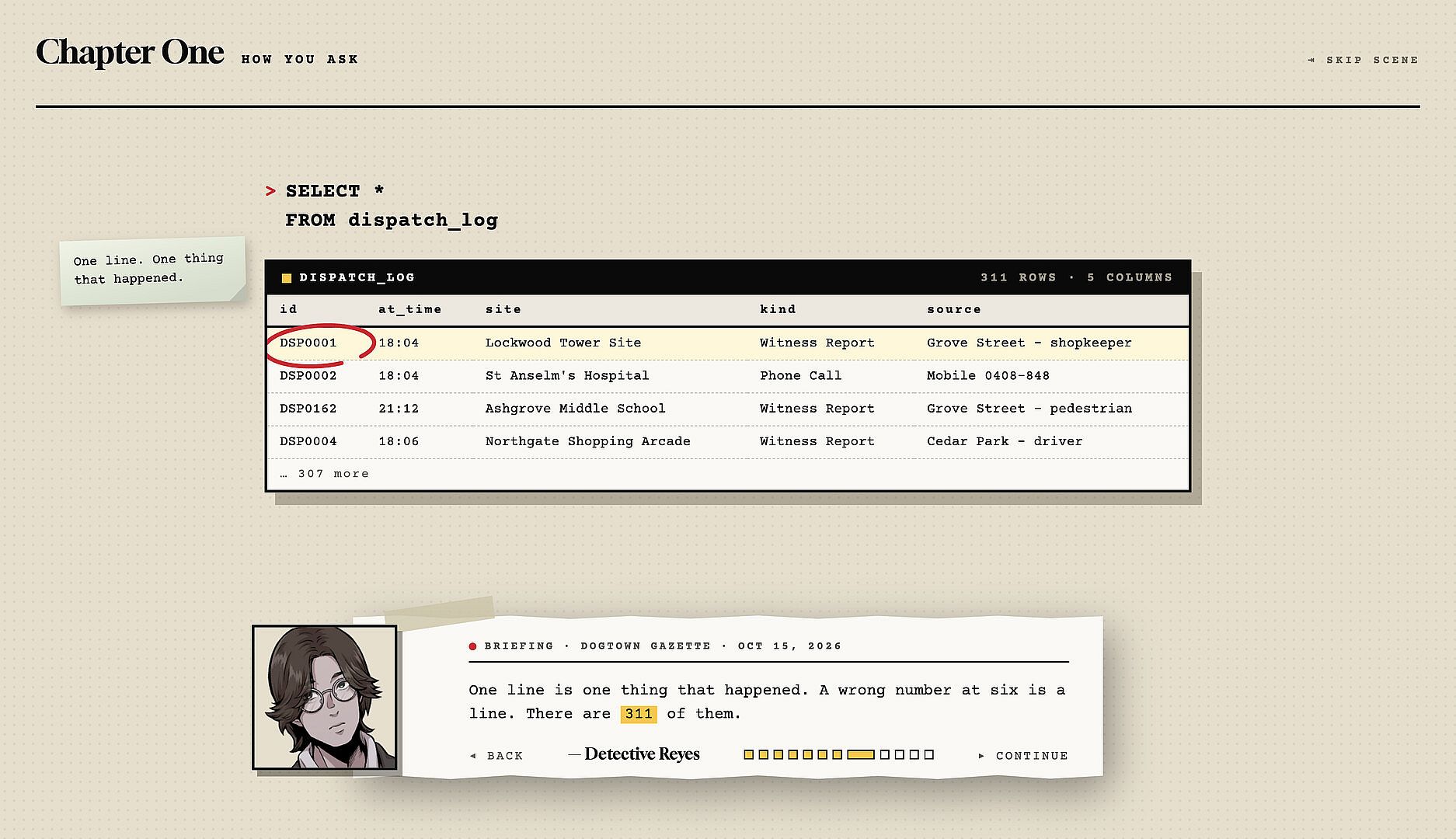
The game assumes no prior SQL knowledge. Briefings explain the structure of the data before any code is written, and each checkpoint adds one new idea that is immediately applied. Feedback on syntax and logic errors helps players correct mistakes in context. The same queries practiced here transfer directly to real database work outside the game.
Controls remain minimal because the interface prioritizes the code editor and result viewer. No lockpicking, dialogue trees, or combat systems appear. The emphasis stays on understanding data relationships through SELECT statements, joins, filters, and aggregations as each case demands them.
Is It Worth Playing?
Ghost in the SQL Data suits players who want to learn or sharpen SQL skills through practical problem solving. Because it is free to play, the barrier to entry is low, and each completed case leaves behind reusable query patterns. The physical collage presentation and error-focused feedback create a distinct atmosphere compared with typical tutorial apps or puzzle collections.
Those seeking fast-paced action or narrative-driven adventures will find the deliberate pace and code-centric design less engaging. For anyone interested in databases, data analysis, or investigative logic puzzles that produce tangible skills, the title delivers a focused and functional experience that grows with additional cases.