




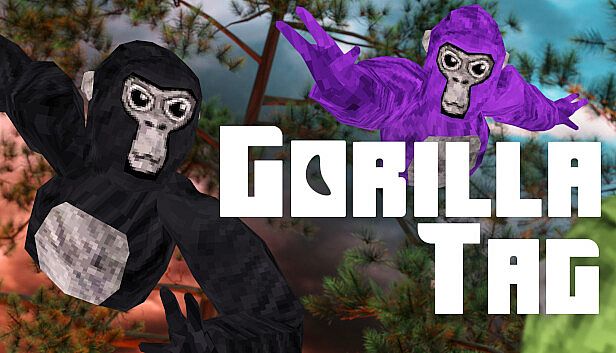








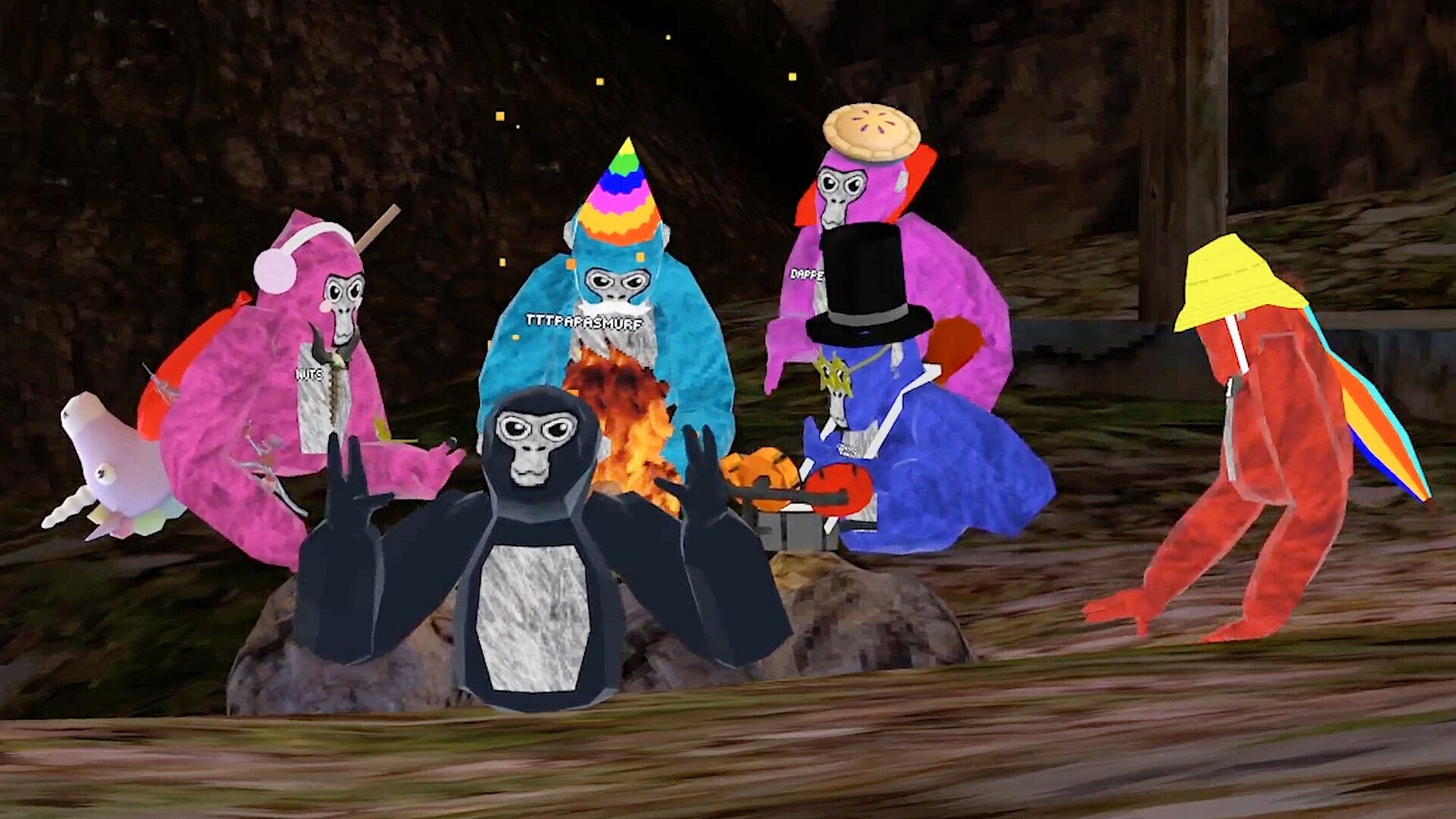
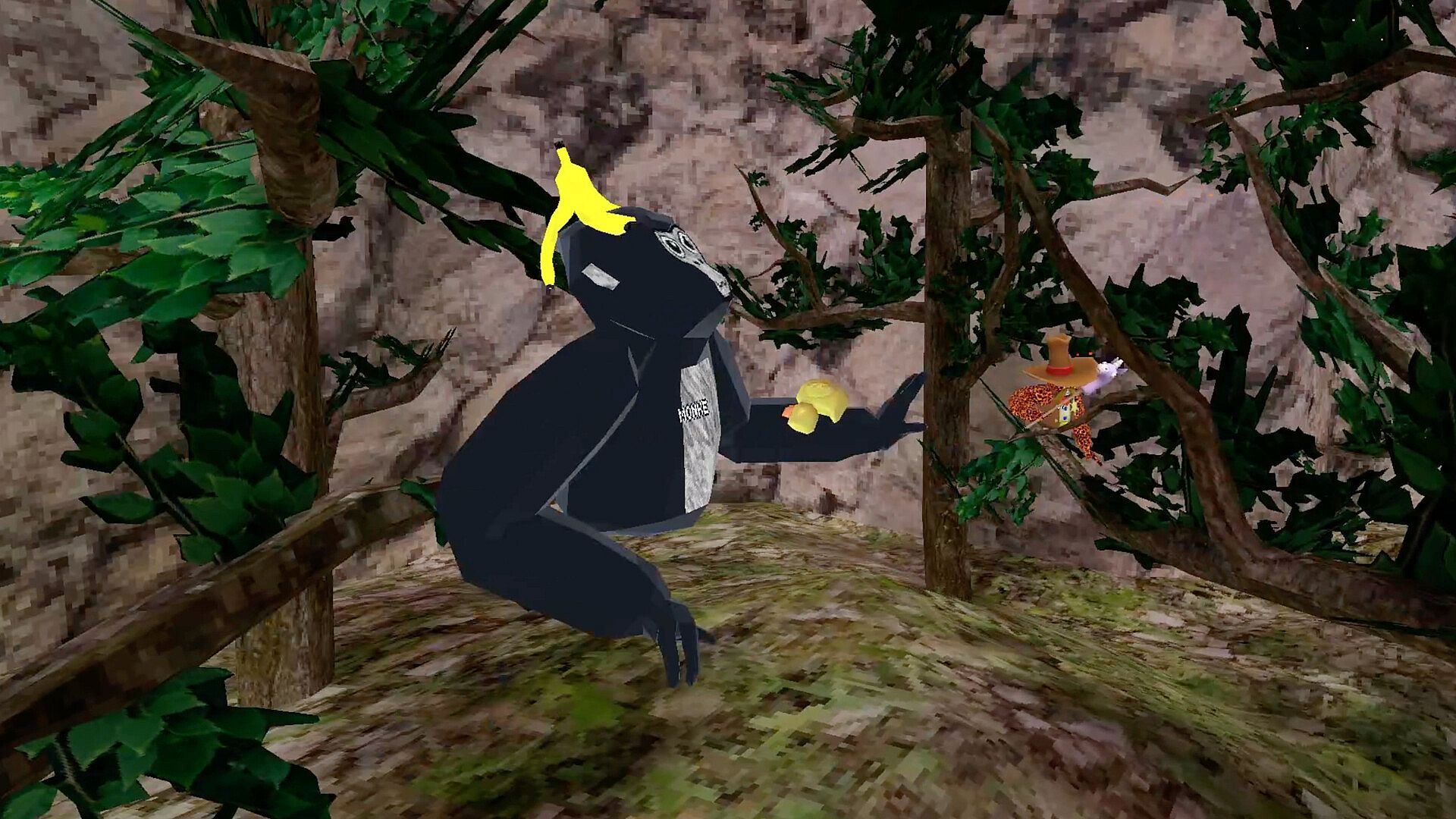
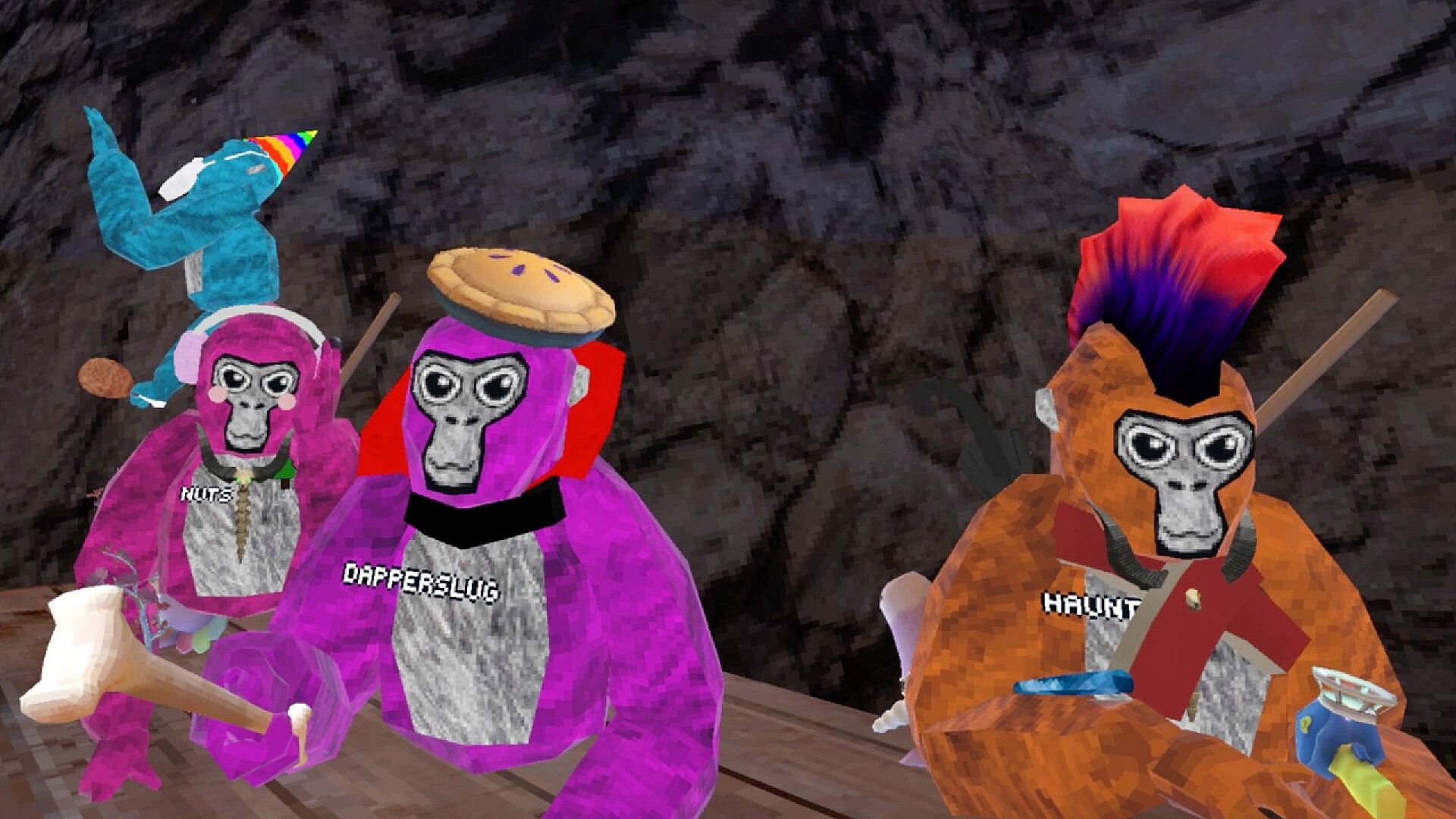
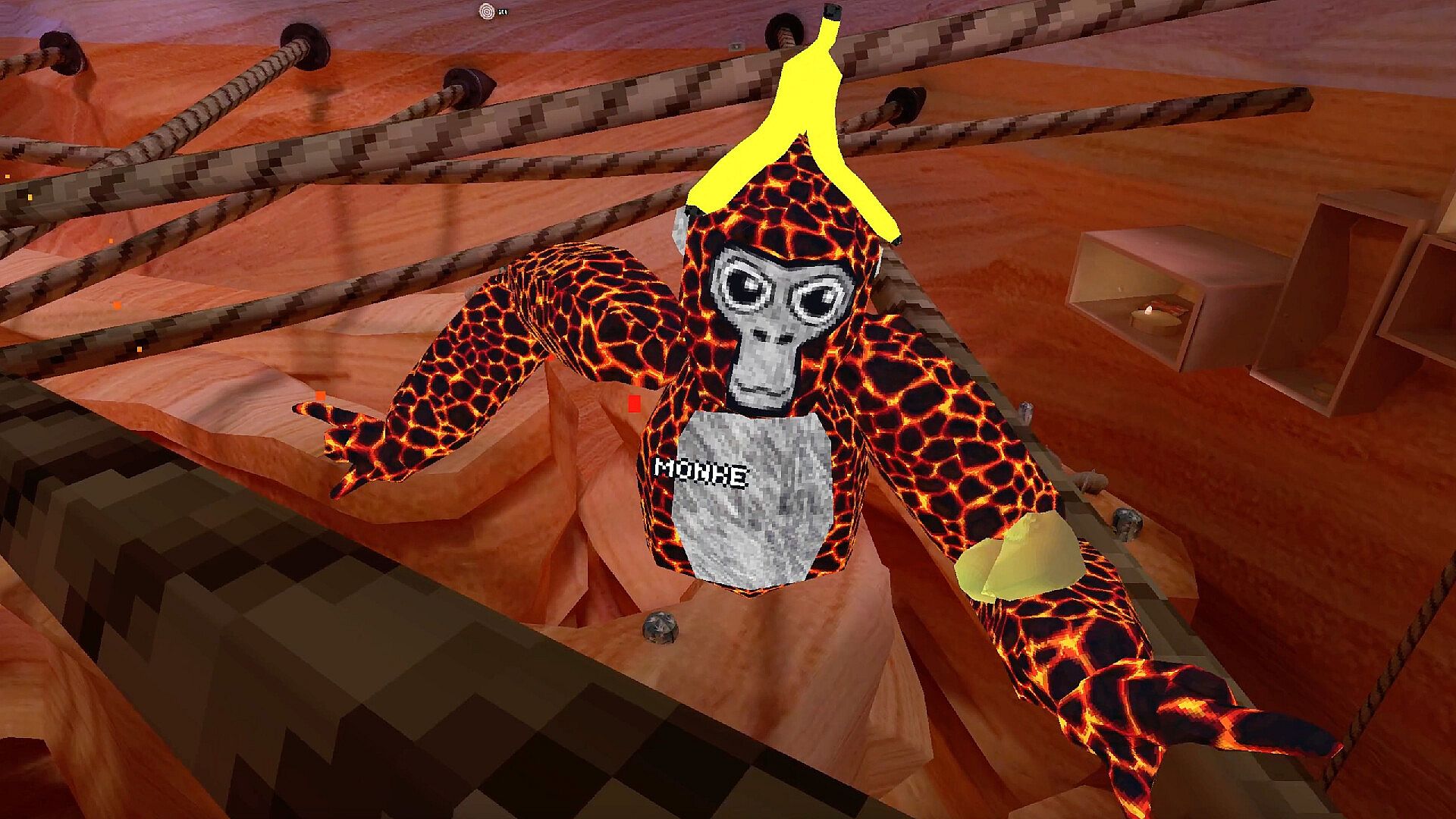
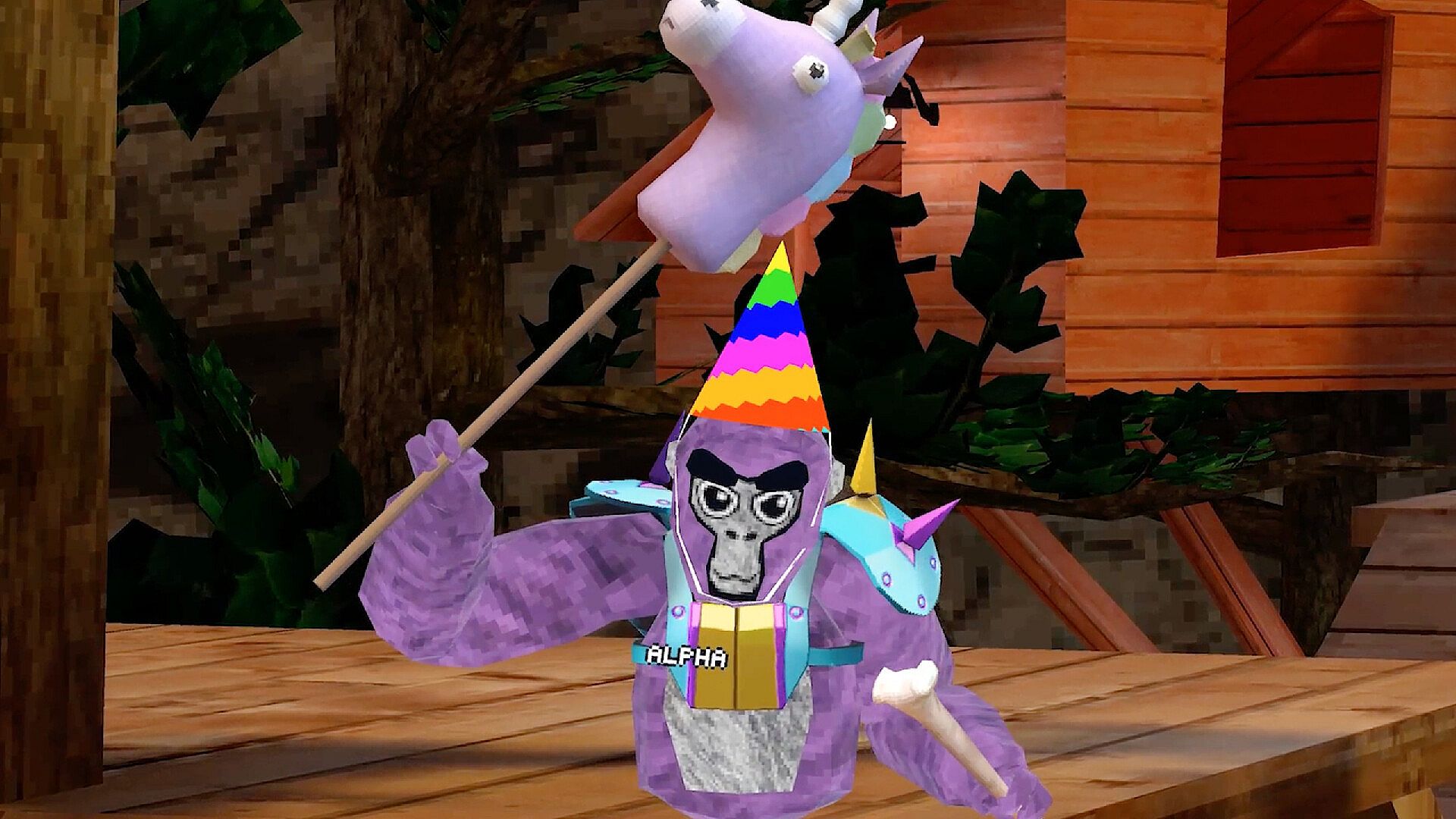
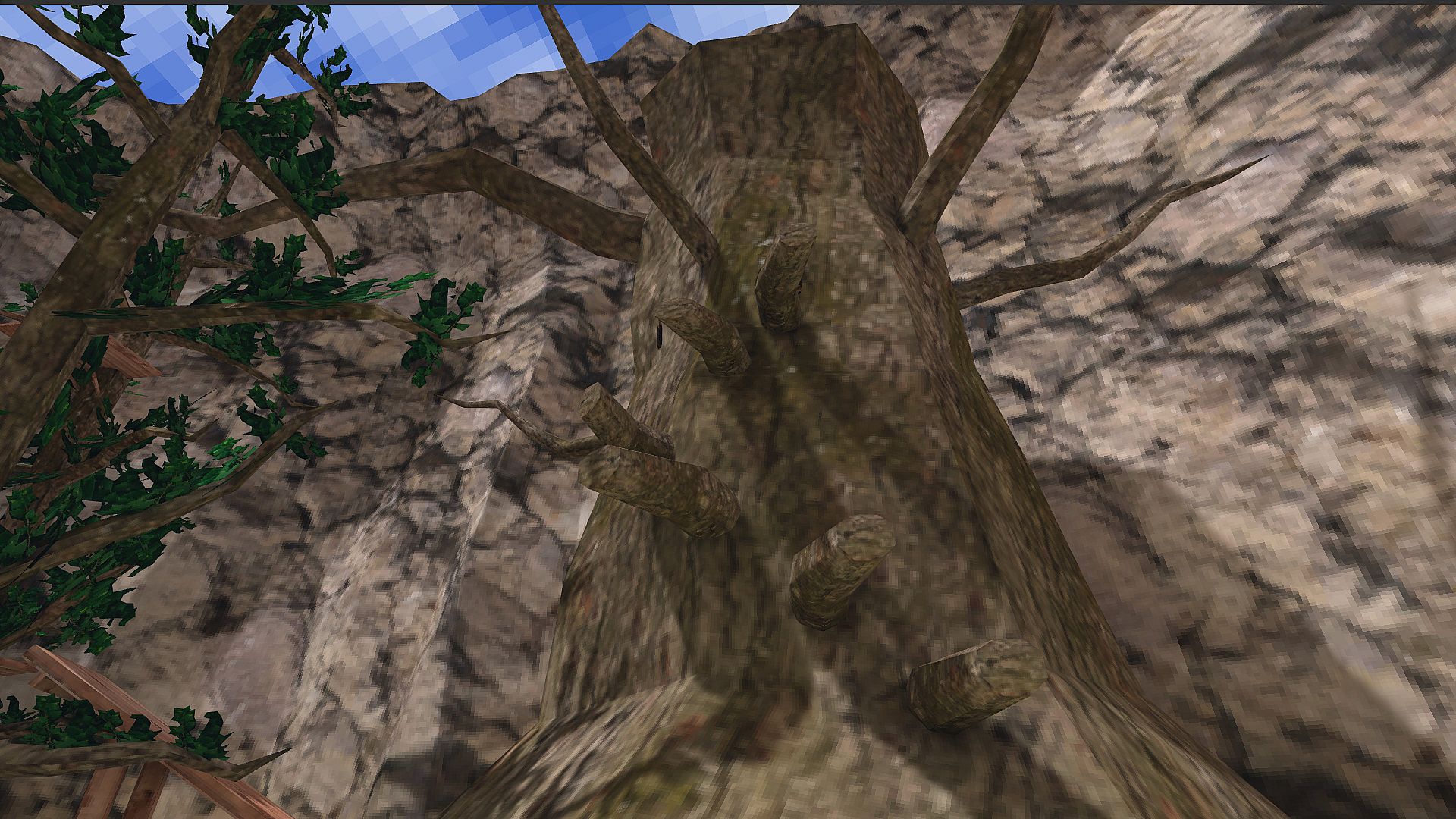
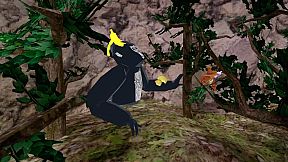
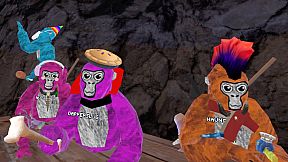
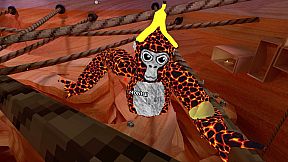
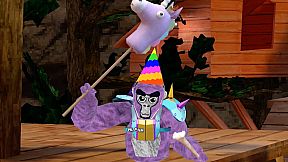
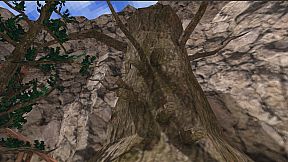
Gorilla Tag stands out as a VR multiplayer action casual game that turns players into agile gorillas in a virtual jungle. Released initially for Meta Quest and later expanded to other platforms, it emphasizes physical movement and social interaction without traditional controls, drawing in crowds for its chaotic fun and community vibes.
Gameplay
In Gorilla Tag, you control a legless gorilla using just your hands and arms for all movement. Push off surfaces to jump, squeeze with both hands to climb, and swing around environments like forests or canyons. This arm-based locomotion skips buttons or joysticks, creating an immersive experience that's straightforward to pick up but challenging to perfect. Voice chat lets you communicate on the fly, whether coordinating chases or just hanging out. Cosmetics, bought with in-game currency called Shiny Rocks, allow personalization, and the low-poly visuals keep things light and focused on physics-driven antics.
The core loop revolves around evasion and pursuit across varied maps, with parkour elements like scaling trees or cliffs adding strategy. Matches form via queues, and while the setup lacks formal tutorials, it encourages trial-and-error learning. Some players note motion sickness from the intense physics, but the system's expressiveness shines in social settings.
Game Modes
Gorilla Tag offers several modes to suit different group sizes and playstyles. Infection mode starts with one Lava Monke tagging others to infect them, turning survivors into pursuers until everyone's caught. Hunt mode assigns each player a unique target to chase, with tagged ones becoming Ice Monkes that can slow down hunters.
Paintbrawl pits teams against each other in slingshot battles, where popping opponents' balloons leads to elimination. Casual mode keeps things relaxed for exploration and chat without competitive pressure. Additional options like Super Infection add themed twists, such as Halloween elements, while Monke Blocks lets you build and save structures.
Updates and Current State
Since its launch, Gorilla Tag has received regular updates every few weeks, introducing modes like Ghost Reactor and supporting modding tools for custom maps. By 2026, it boasts over 110,000 concurrent players at peaks, with live events like meteor impacts or giant creatures fostering shared experiences. The game remains free on Meta platforms, with crossplay enabling sessions across VR headsets.
Its community thrives on social media and Discord, though moderation challenges persist in lobbies, sometimes leading to chaotic interactions. Revenue has exceeded $100 million, driven by in-app purchases, and it continues to attract a young audience aged 7 to 14.
Is It Worth Playing?
Gorilla Tag holds up in 2026 for those craving unscripted social VR chaos and physical movement. Player reception highlights its deceptively simple controls, earning praise like the 2021 UploadVR award for Best Competitive Multiplayer. With millions of active users monthly, it excels as a hangout spot, but criticisms include stagnant visuals and toxic behavior in some sessions.
If you enjoy multiplayer tag with friends or randoms and don't mind occasional nausea, it's a solid pick. For structured experiences or polished graphics, look elsewhere, but its enduring community makes it worthwhile for casual VR fun.














