






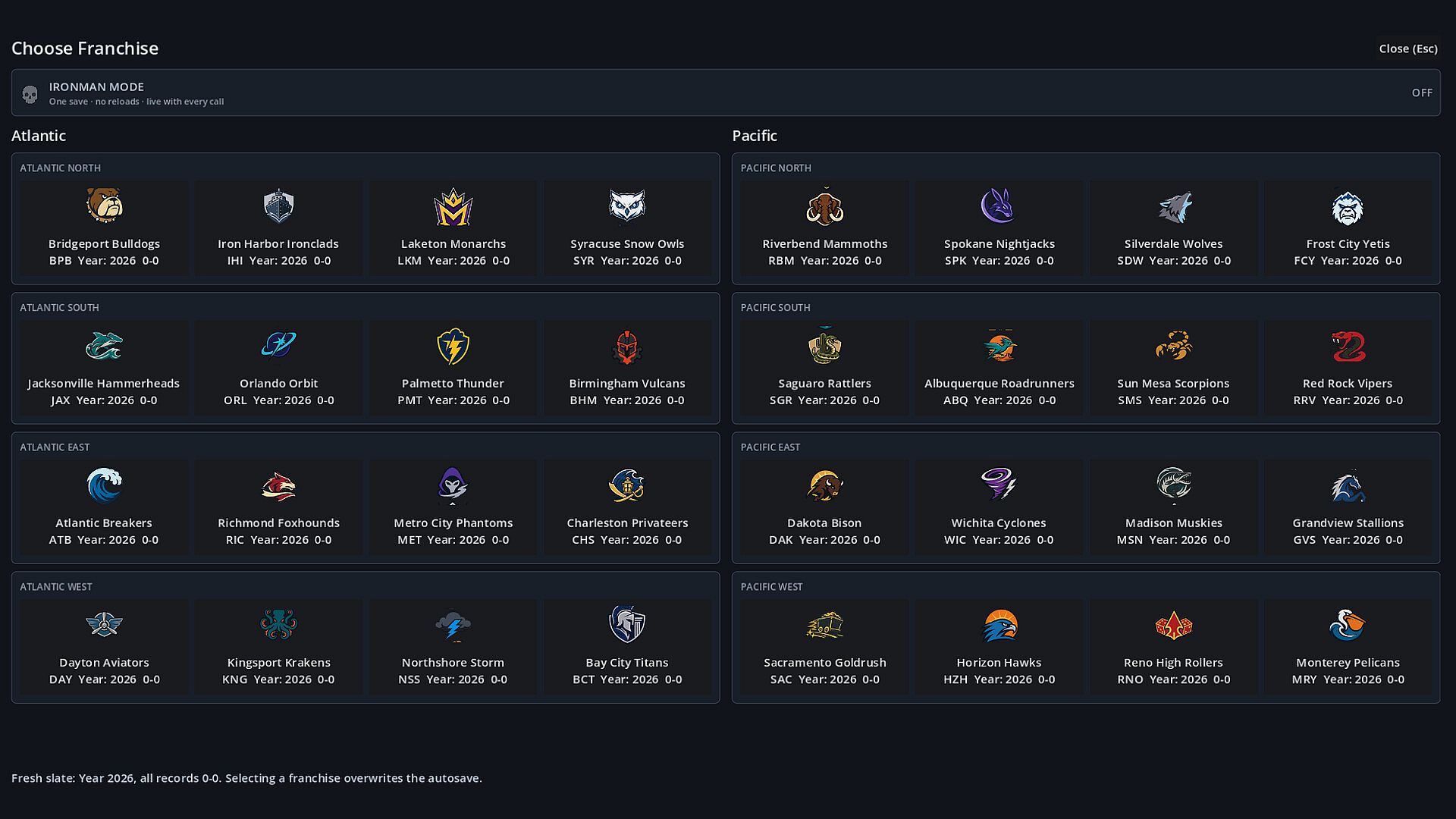
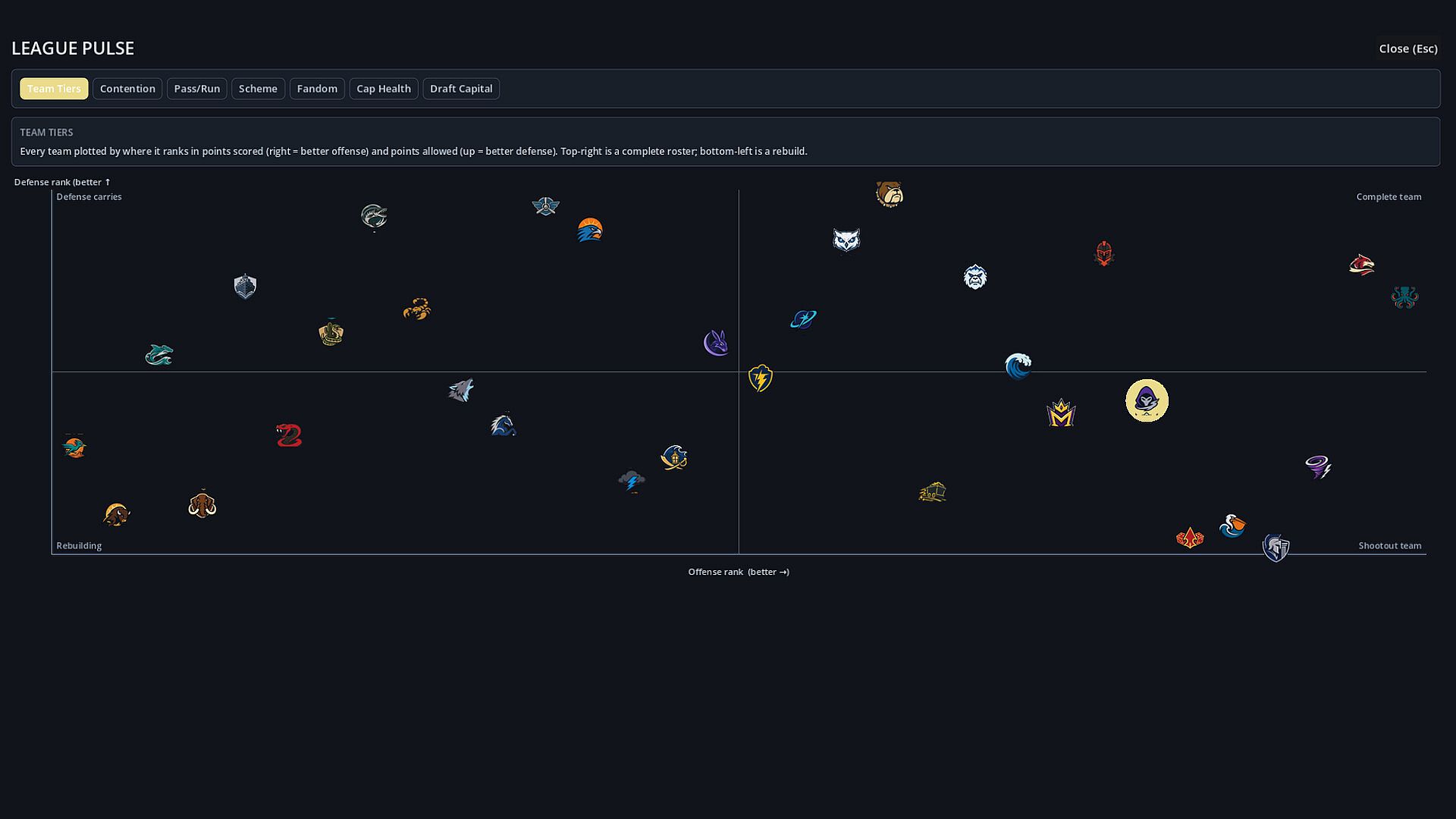
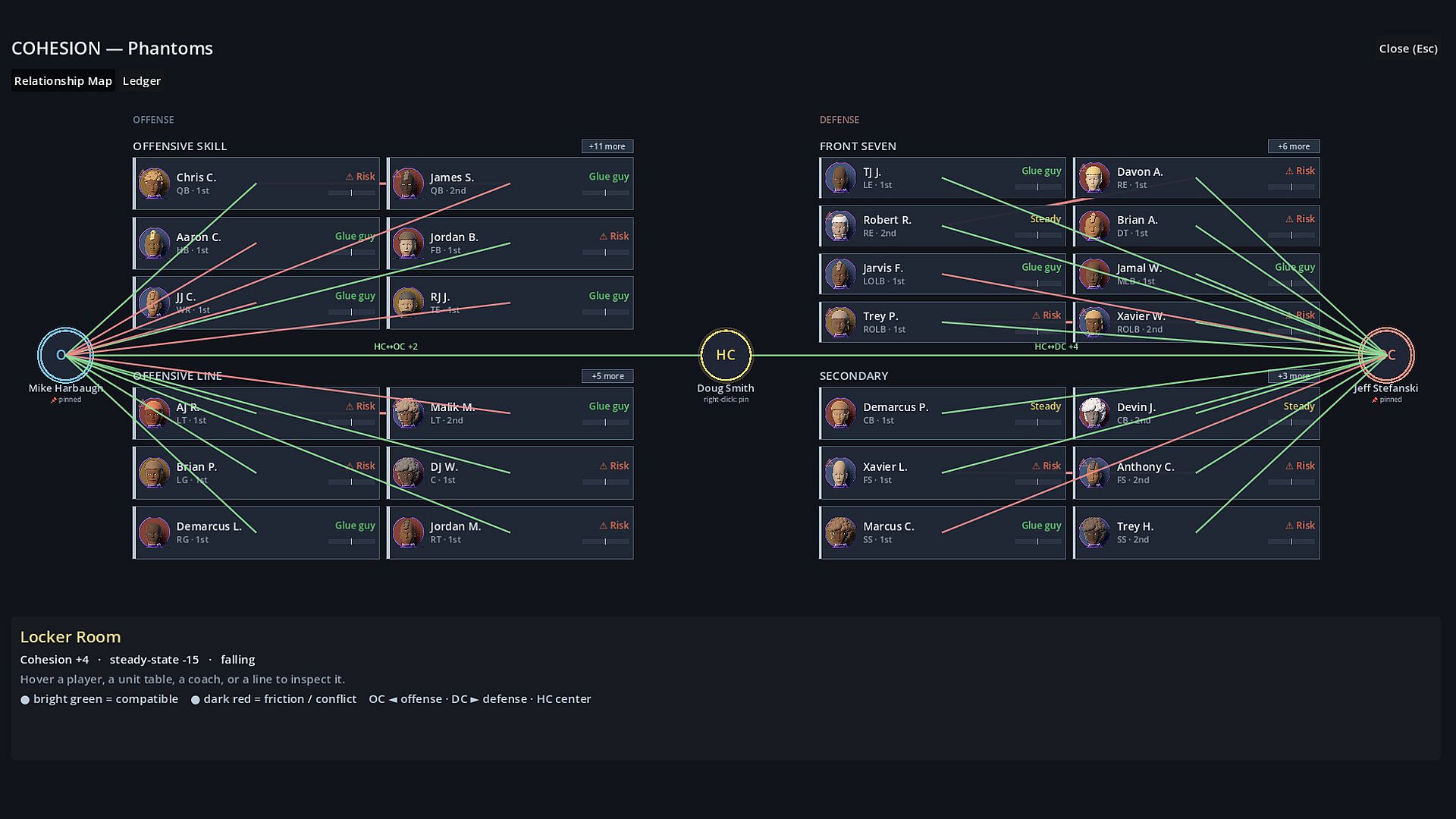
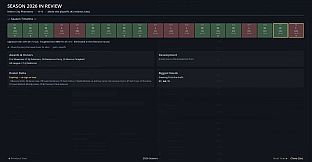
Gridiron Grit is a strategy, RPG, simulation, and sports game that places players in the role of a professional football general manager. The experience centers on building and sustaining a franchise through roster construction, contract negotiations, scouting, and long-term planning rather than direct control of players on the field. Set in a fully fictional 32-team league, the title emphasizes front-office decisions that shape seasons and careers over multiple decades.
Gameplay
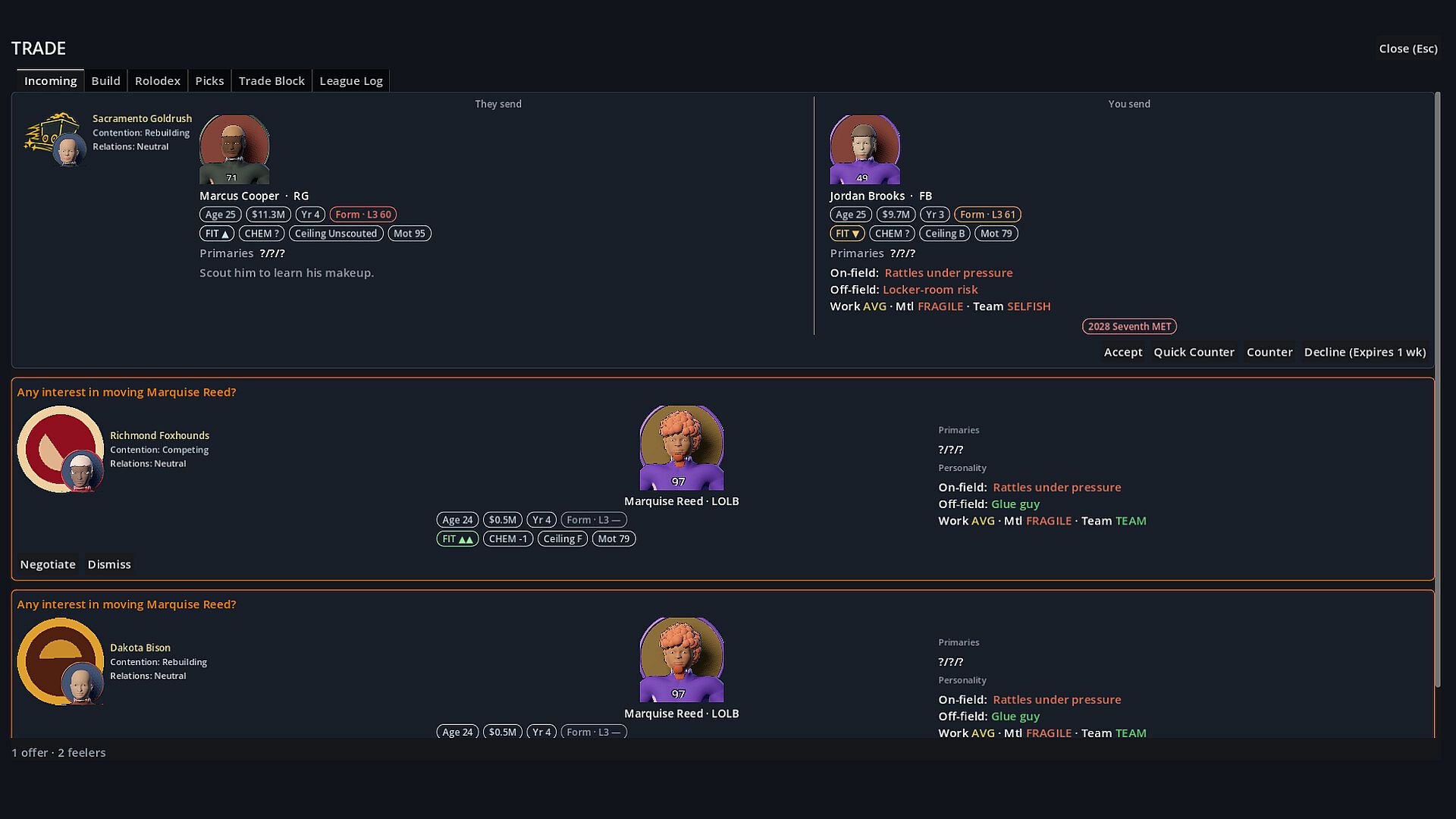
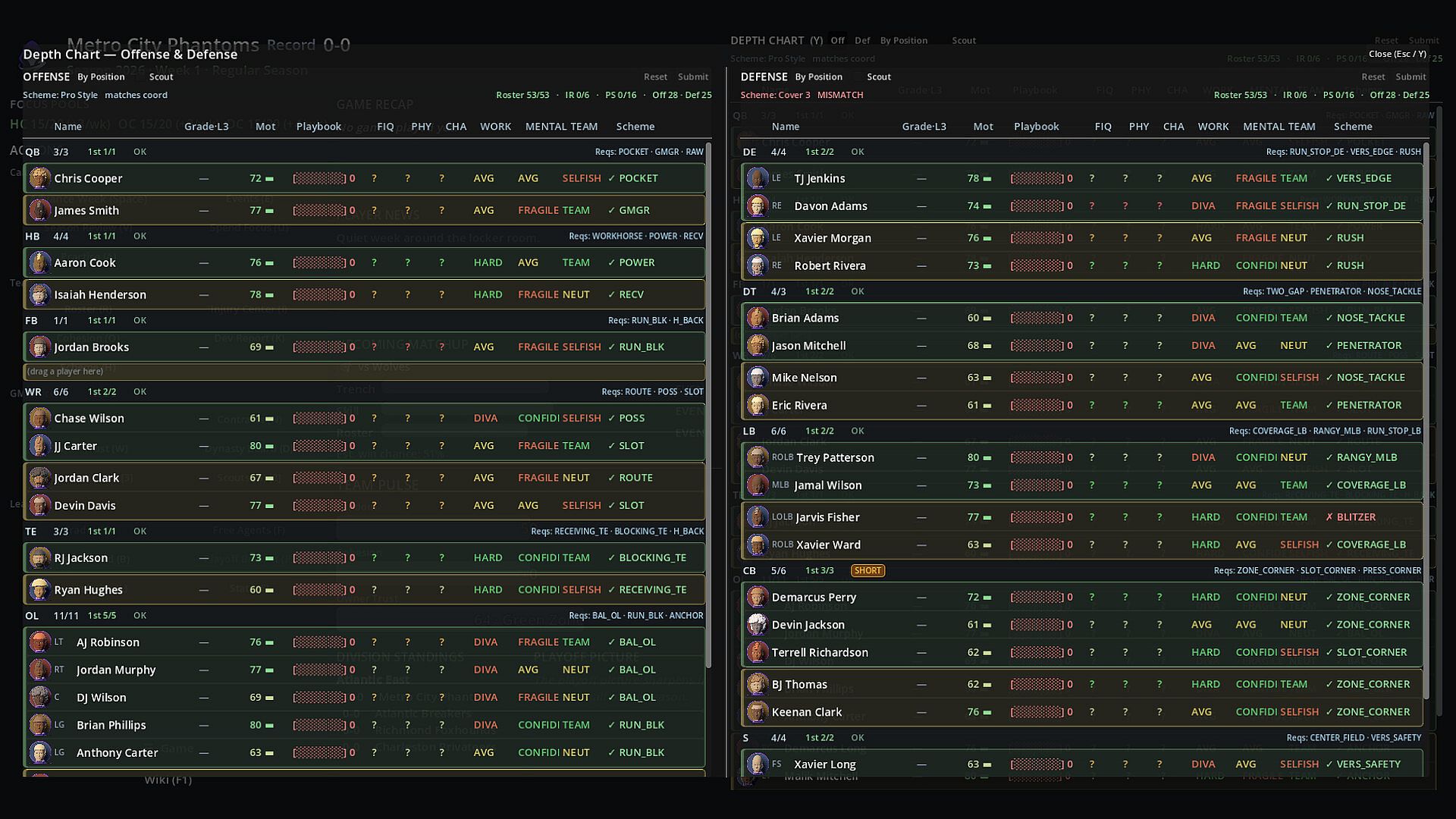
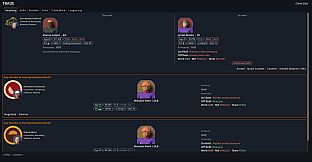
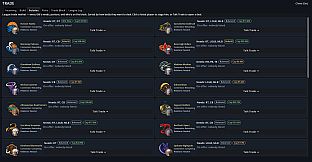
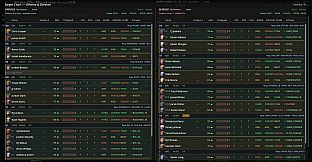
The core loop revolves around managing every aspect of a single franchise while competing against 31 AI-controlled general managers. Players handle drafts, trades, free agency signings, cuts, extensions, and tags to assemble competitive rosters. Depth charts and schemes are set by the user, after which simulated games produce results that reflect those choices. Contract details include base salaries, bonuses, guarantees, void years, restructures, and dead money, with the salary cap serving as a persistent constraint that grows each offseason.
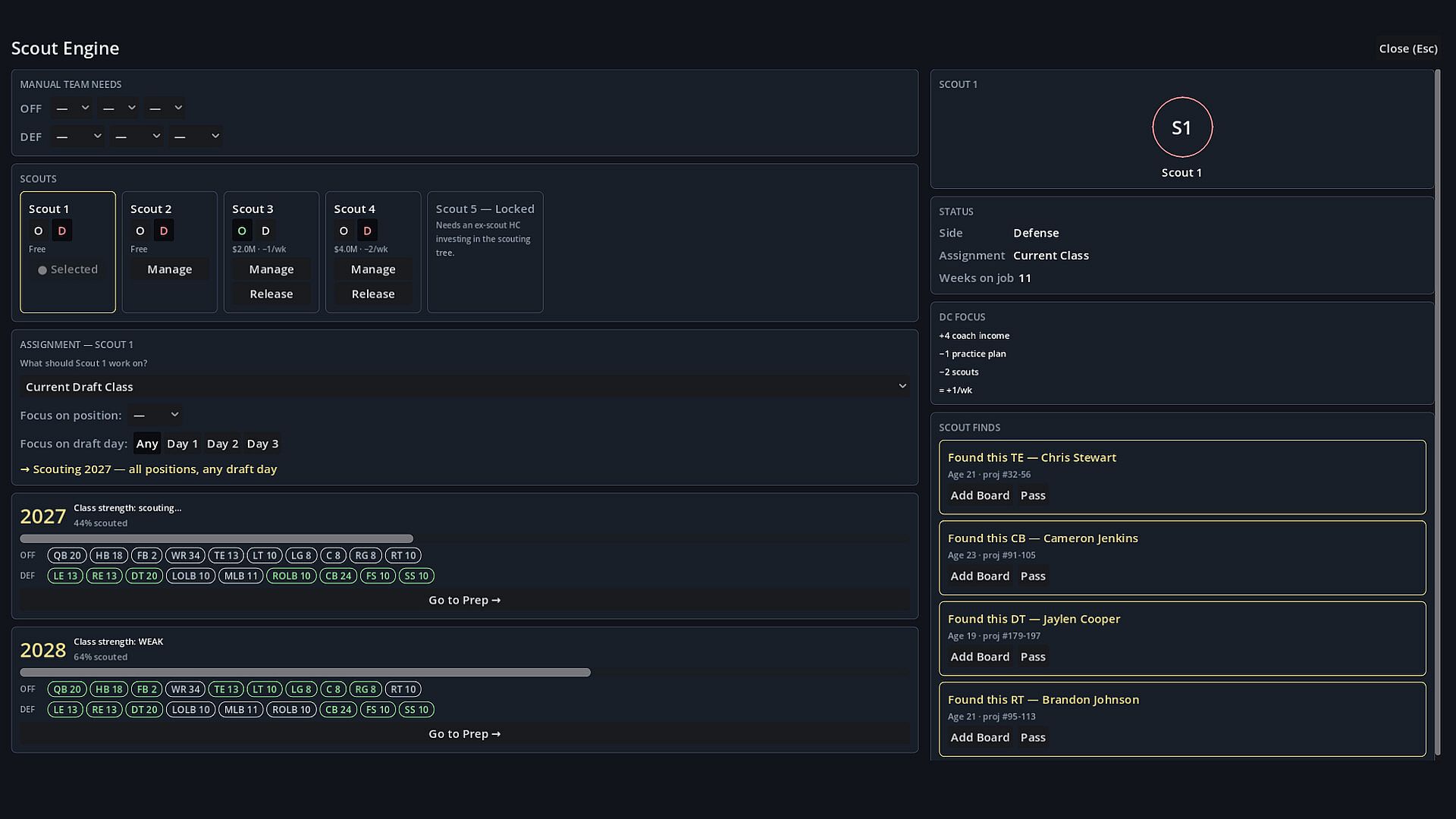
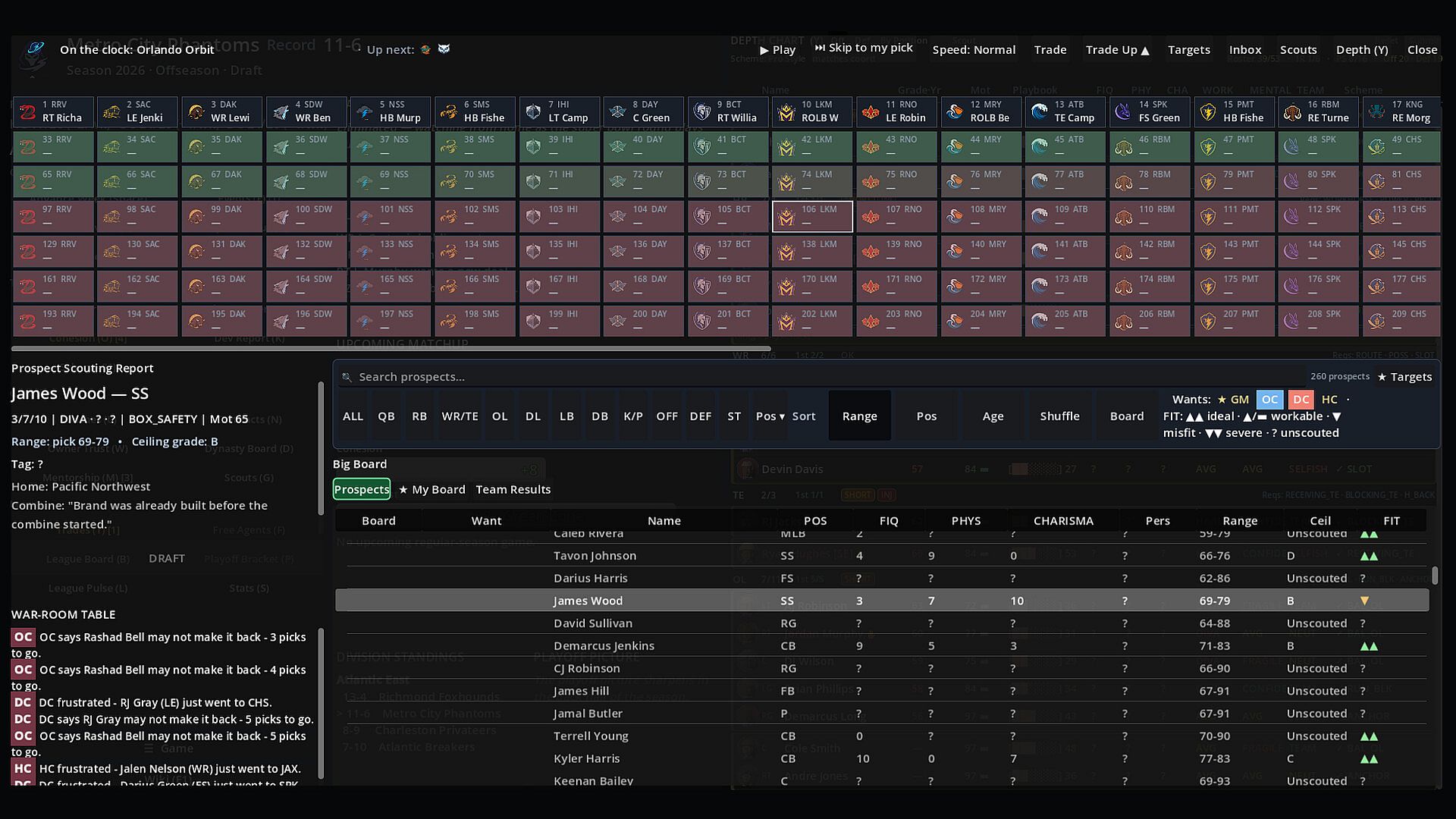
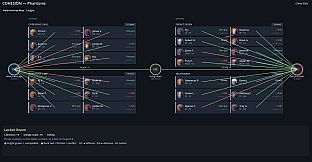
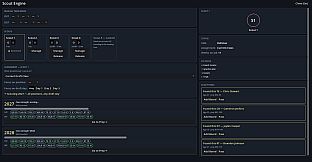
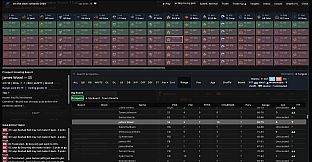
Scouting provides imperfect information that must be earned and interpreted. Scouts offer conflicting evaluations, requiring players to build a big board and run a live draft room where offers and the clock create tension. Player attributes such as work ethic, ego, and temperament remain hidden until they influence performance, holdouts, or locker-room dynamics. Multi-year development tracks breakouts, plateaus, busts, and late bloomers, with grading applied both immediately after the draft and after careers conclude.
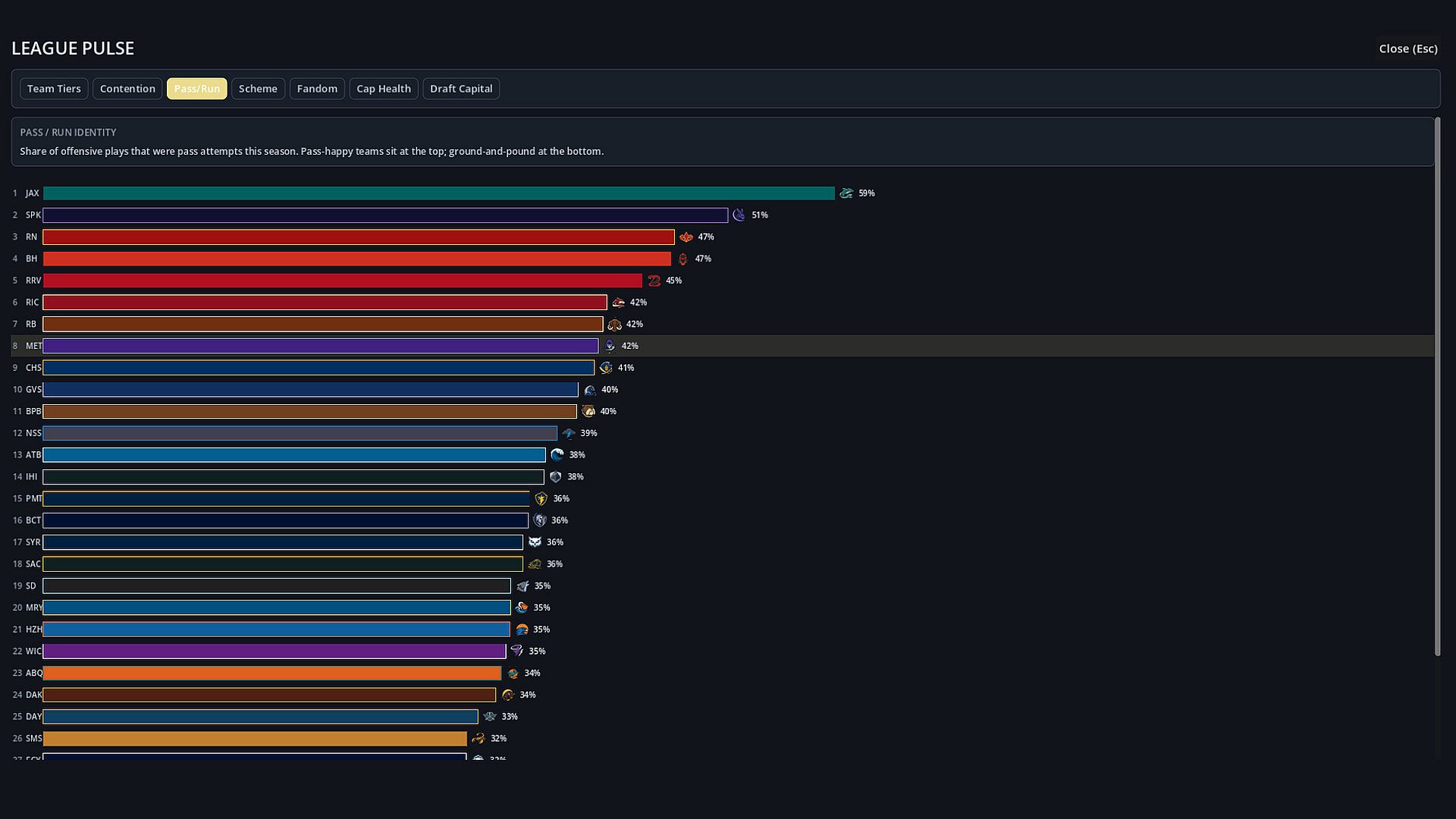
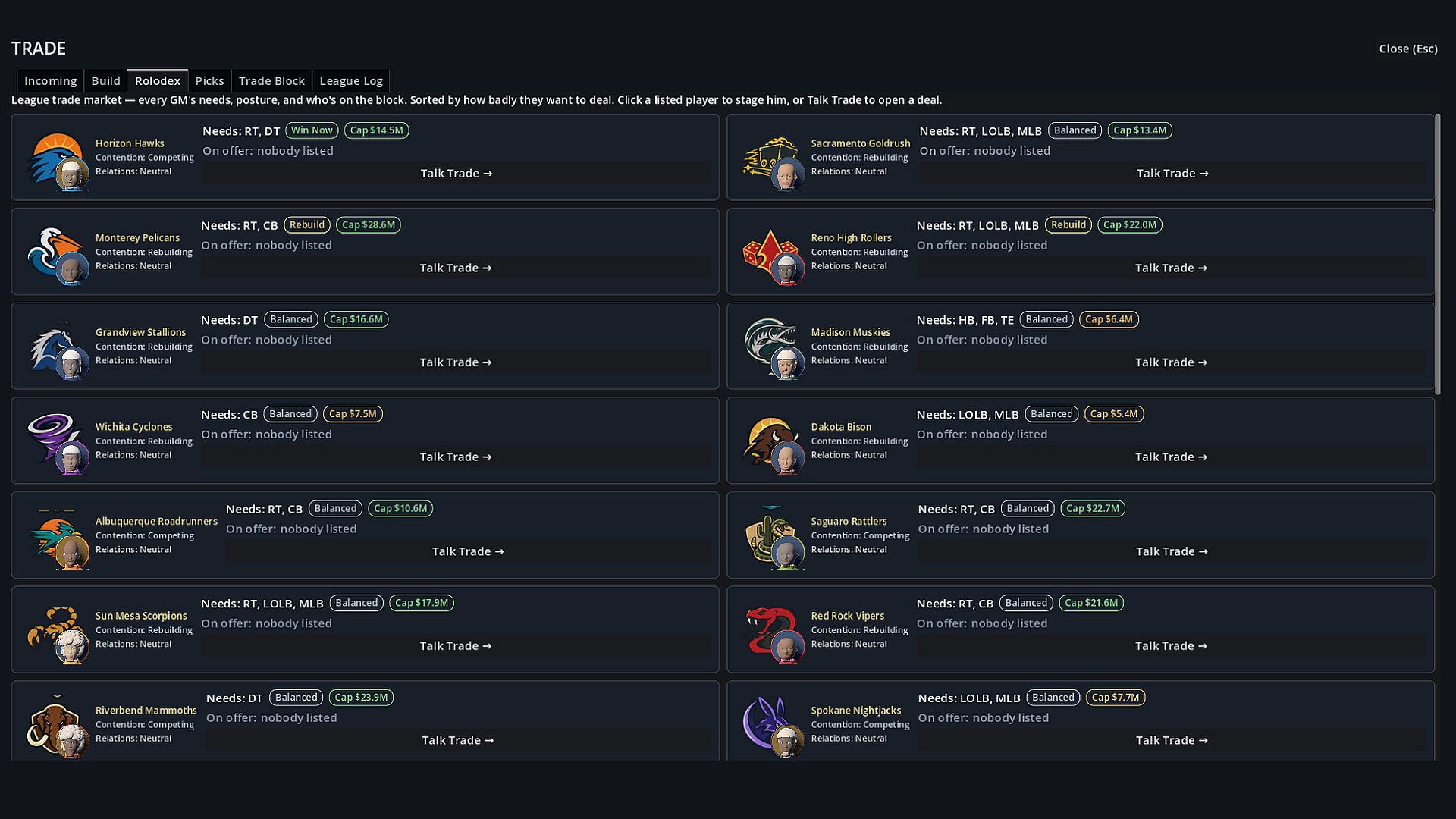
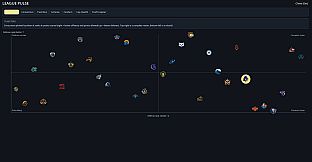
Owner mandates and trust levels add pressure. Meeting expectations grants flexibility, while repeated poor performance leads to dismissal. A fired general manager can then pursue rebuild opportunities with other teams or retire based on accumulated legacy. Rival AI general managers exhibit distinct styles, blind spots, and grudges, creating a living trade market with bidding wars and shifting relationships throughout the season.
Game Modes
The primary experience is a single-player career that spans decades within one or multiple franchises. Players start with a chosen team and pursue sustained success through careful drafting, cap management, and player development. The simulation handles on-field outcomes, leaving all strategic and personnel decisions to the user. Custom league packs allow full reskinning of team names, cities, colors, logos, and player-name pools via simple folder drops, supporting extensive personalization without additional tools.
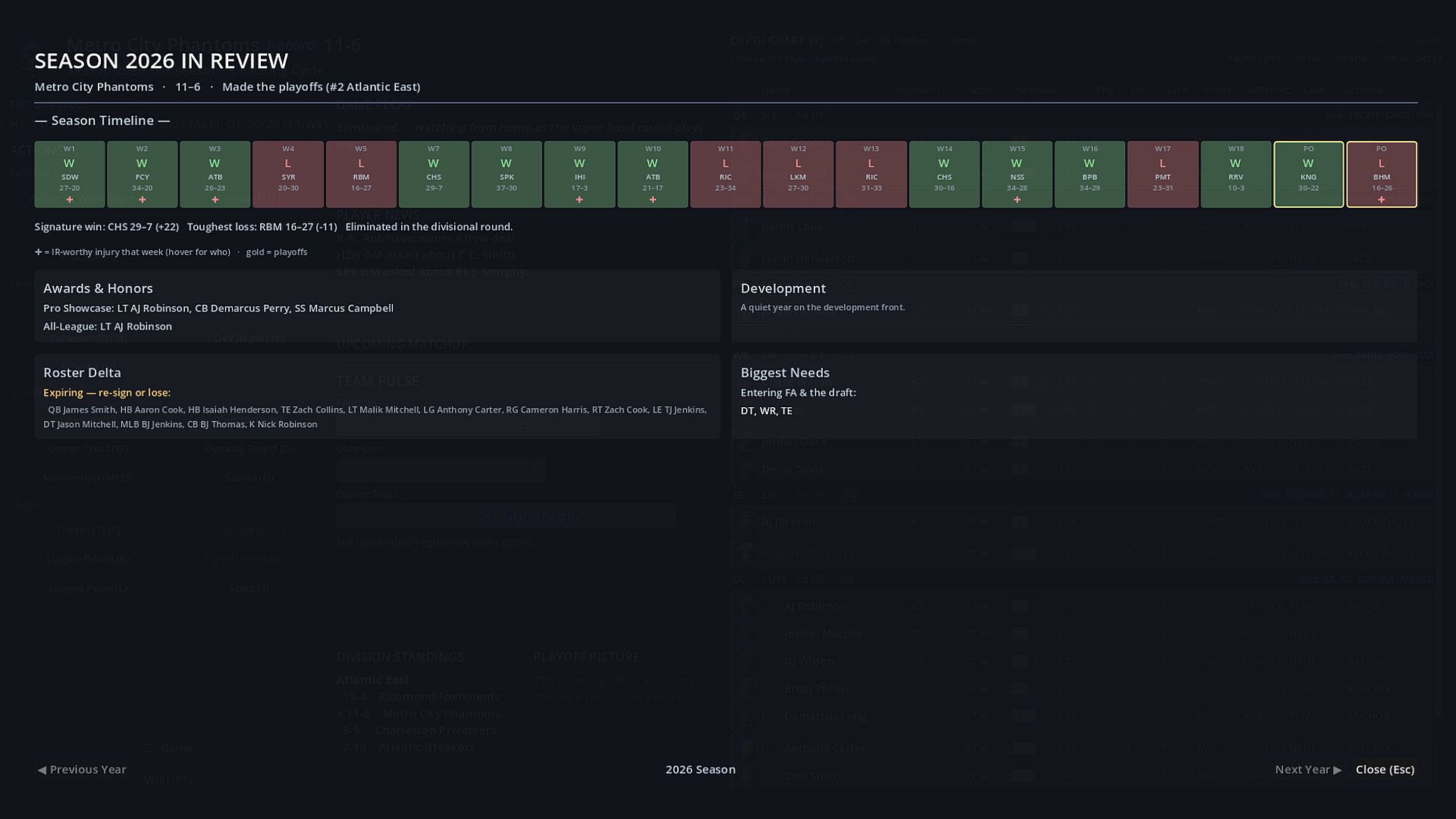
Progression includes building a Hall of Fame presence, earning league awards, and tracking a permanent legacy score that rewards homegrown talent over short-term acquisitions. The structure supports long-term saves where a core group of players can be developed and retained across many seasons, with the goal of establishing a dynasty that outlasts individual tenures.
Customization and Modding
Gridiron Grit includes built-in support for community modifications from launch. All 32 teams can be altered through plain-folder changes that require no external software or game rebuilds. Mods can be shared as zip files and are designed to integrate with Steam Workshop. An in-game wiki and hover tooltips provide explanations for complex systems, helping new players navigate the depth of contract mechanics, scouting reports, and roster management without prior expertise.
Is It Worth Playing?
Gridiron Grit targets players who prefer deliberate, high-stakes decision-making over real-time reflexes or on-field execution. The absence of joystick control and the focus on cap sheets, war-room drafts, and multi-year roster building create a distinct niche within sports simulations. With the game still listed as coming soon and no user reviews available, suitability depends on interest in pure management gameplay. Those drawn to long-term franchise building, imperfect information challenges, and the consequences of personnel choices will find the systems align closely with that preference. The single-player structure and mod support further suit dedicated fans seeking repeated playthroughs across custom leagues.











