

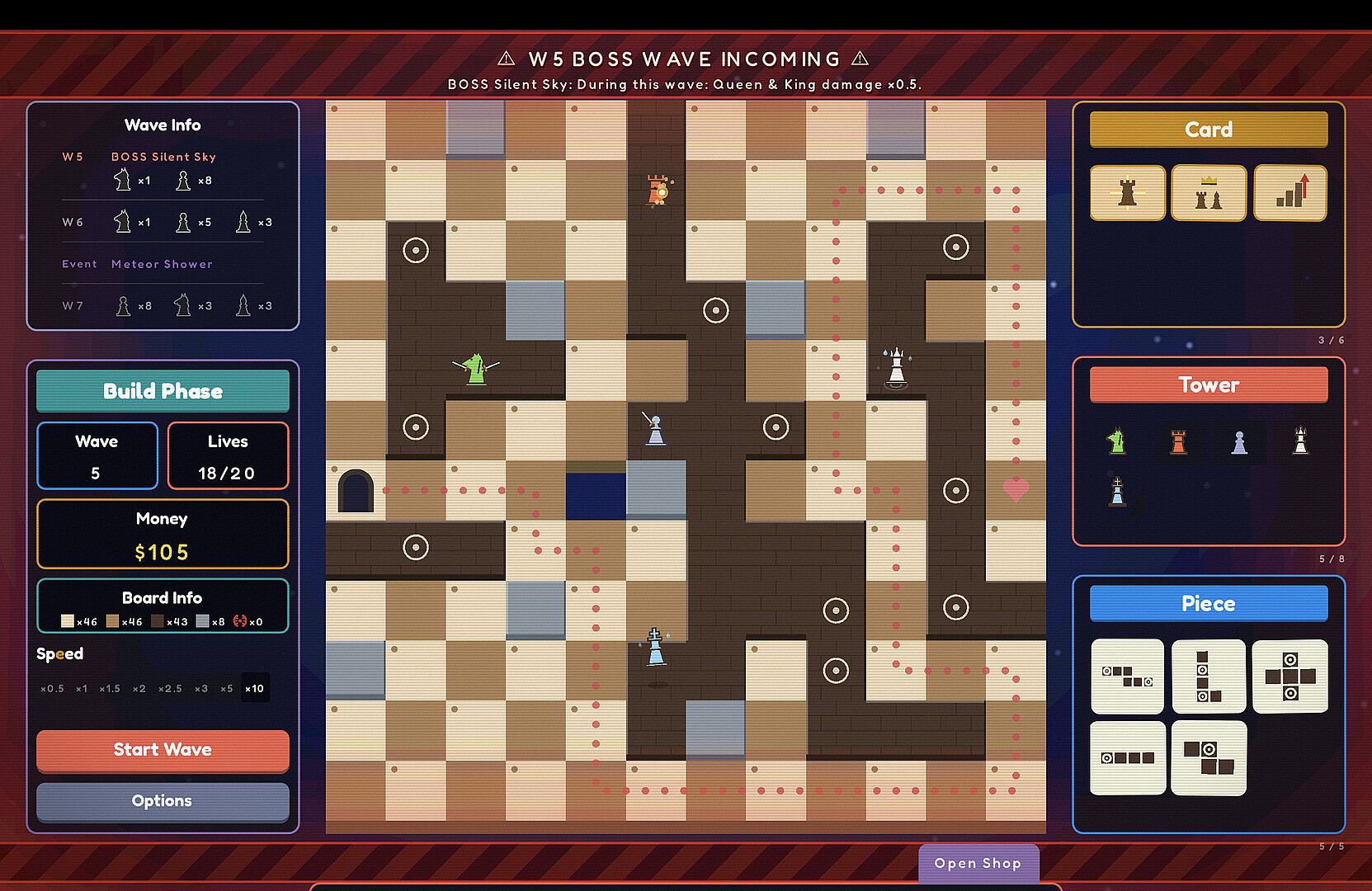
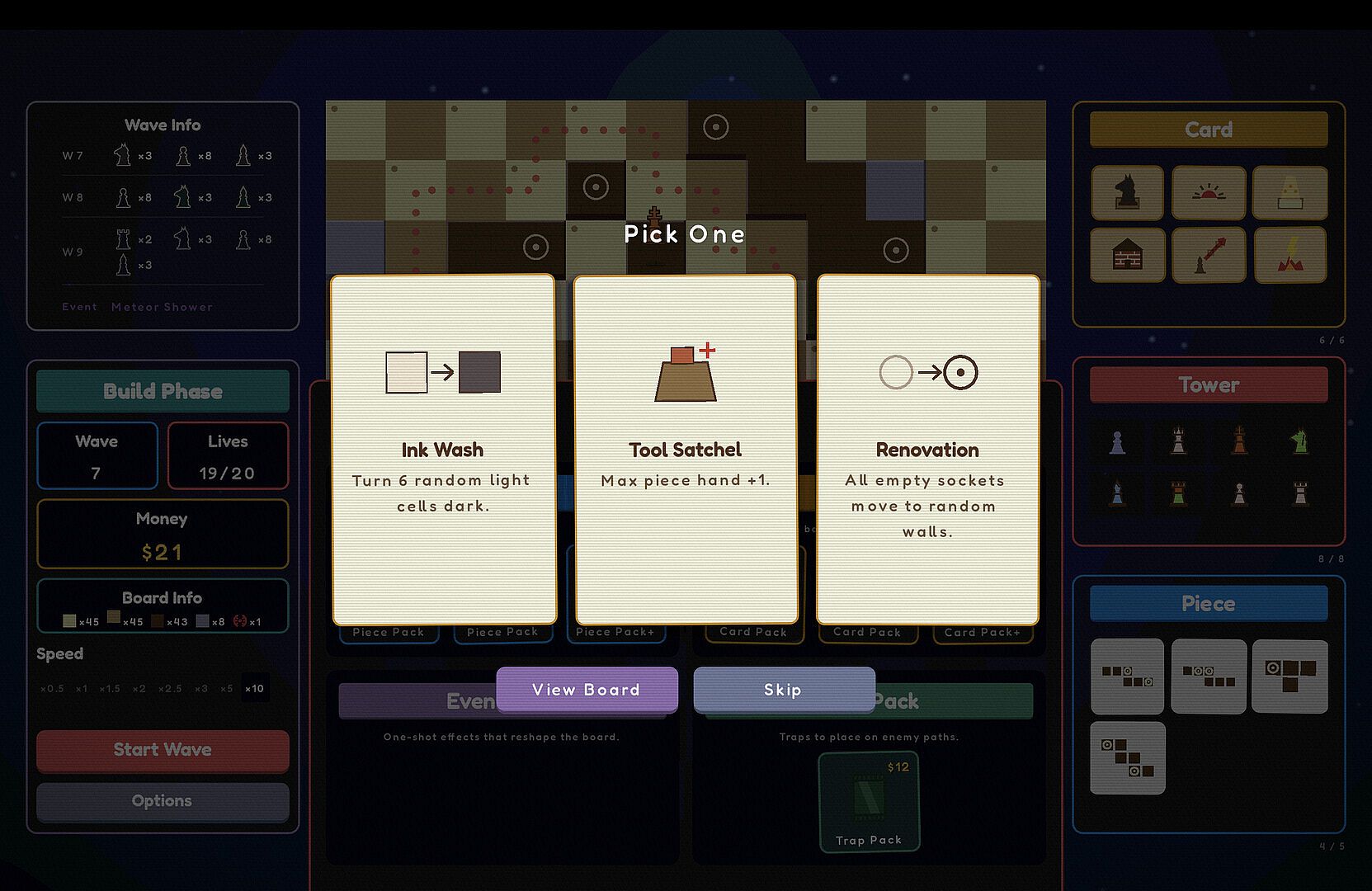
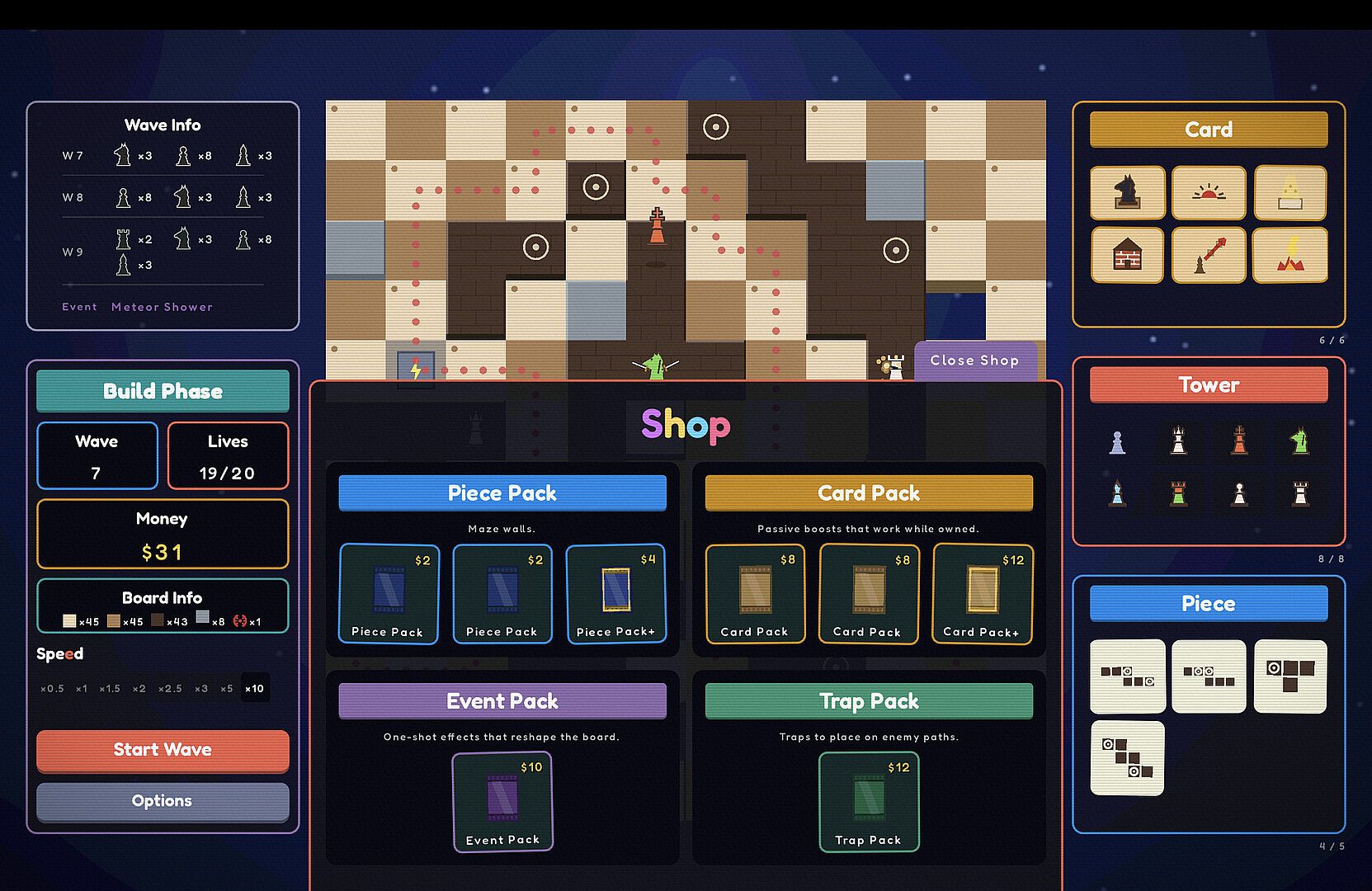
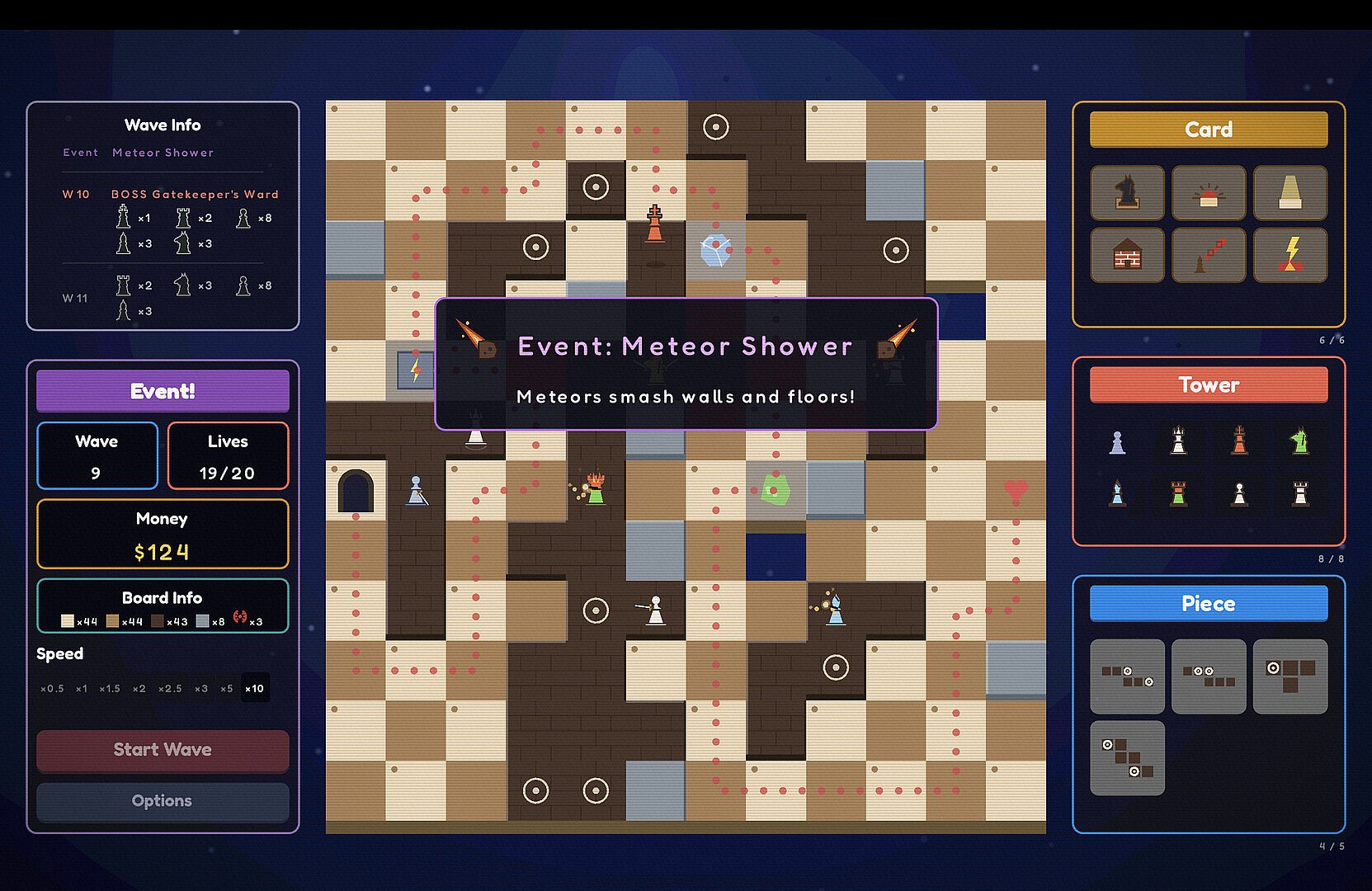
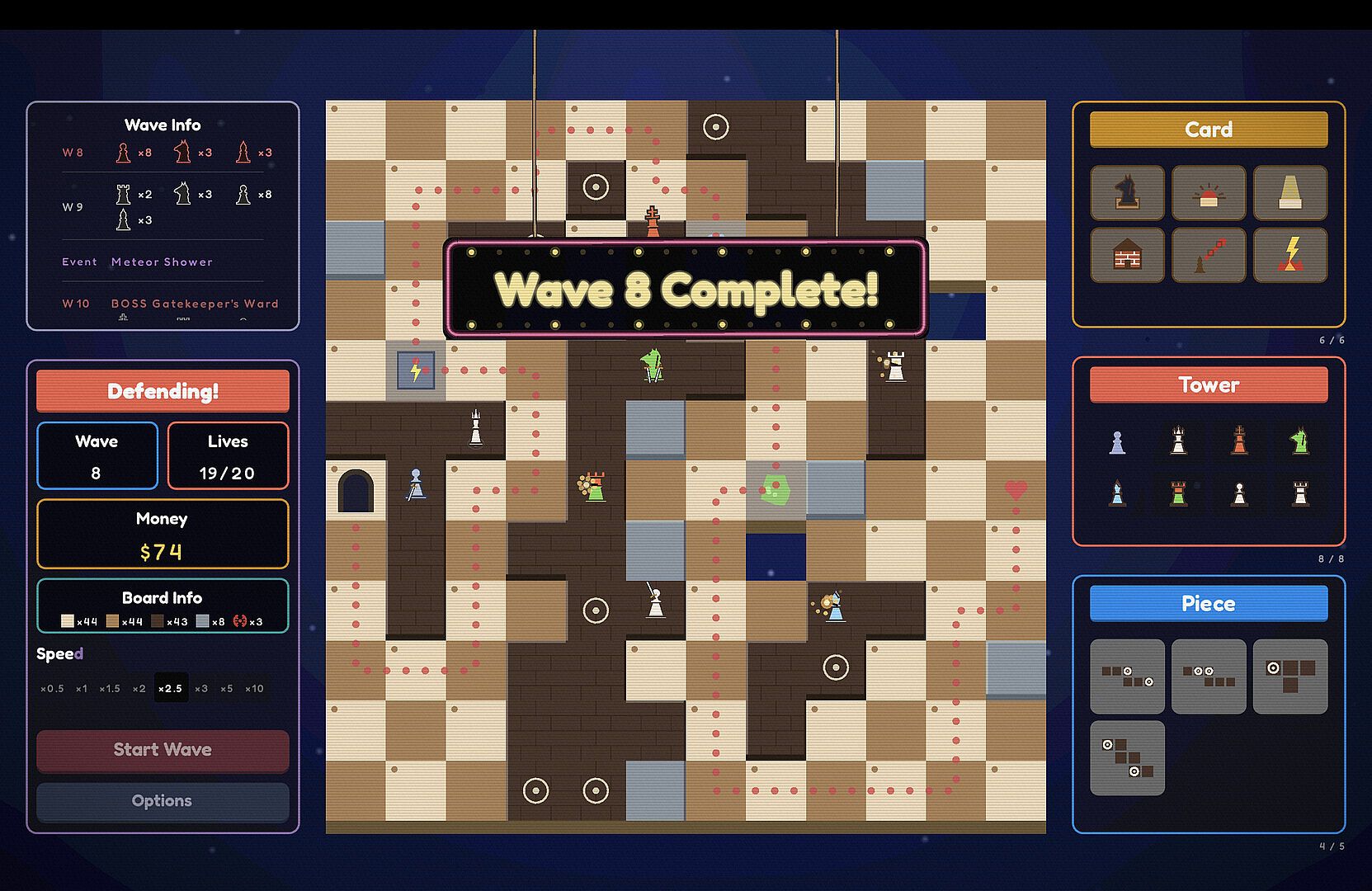
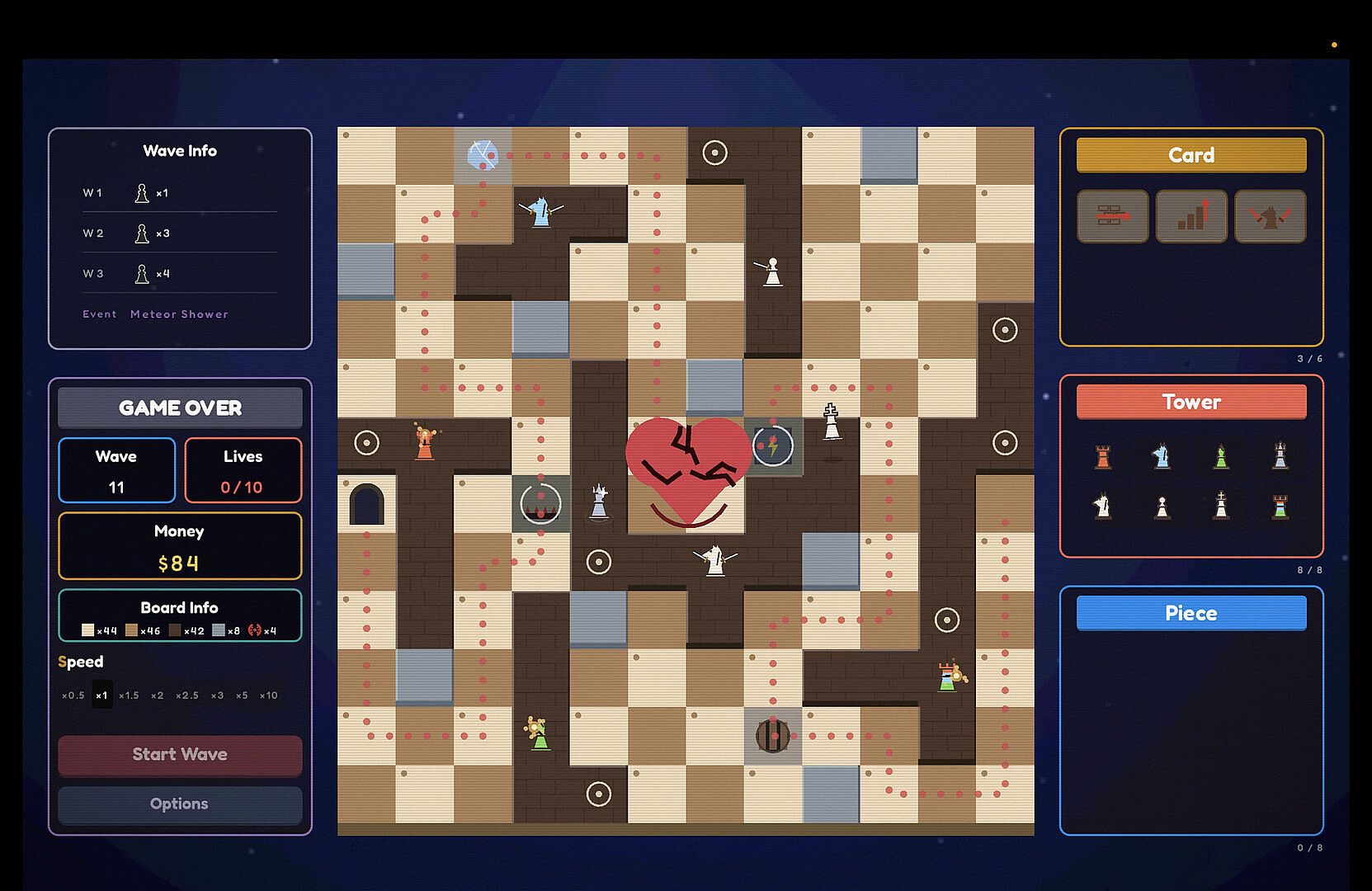
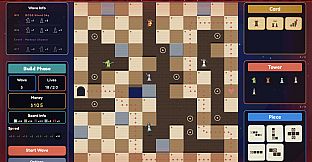
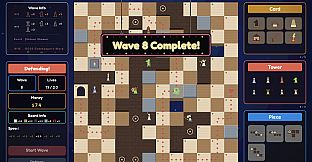
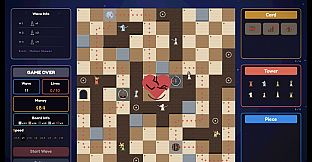
GRIDLOCK GAMBIT is a single-player strategy indie game that blends roguelike progression with tower defense mechanics on a dynamic chessboard. Players construct defensive mazes using chess pieces as towers while managing limited resources and adapting to a board that reshapes each turn. The core loop centers on placement strategy, trap deployment, and card-based deck building to repel waves of advancing black chess pieces.
Gameplay
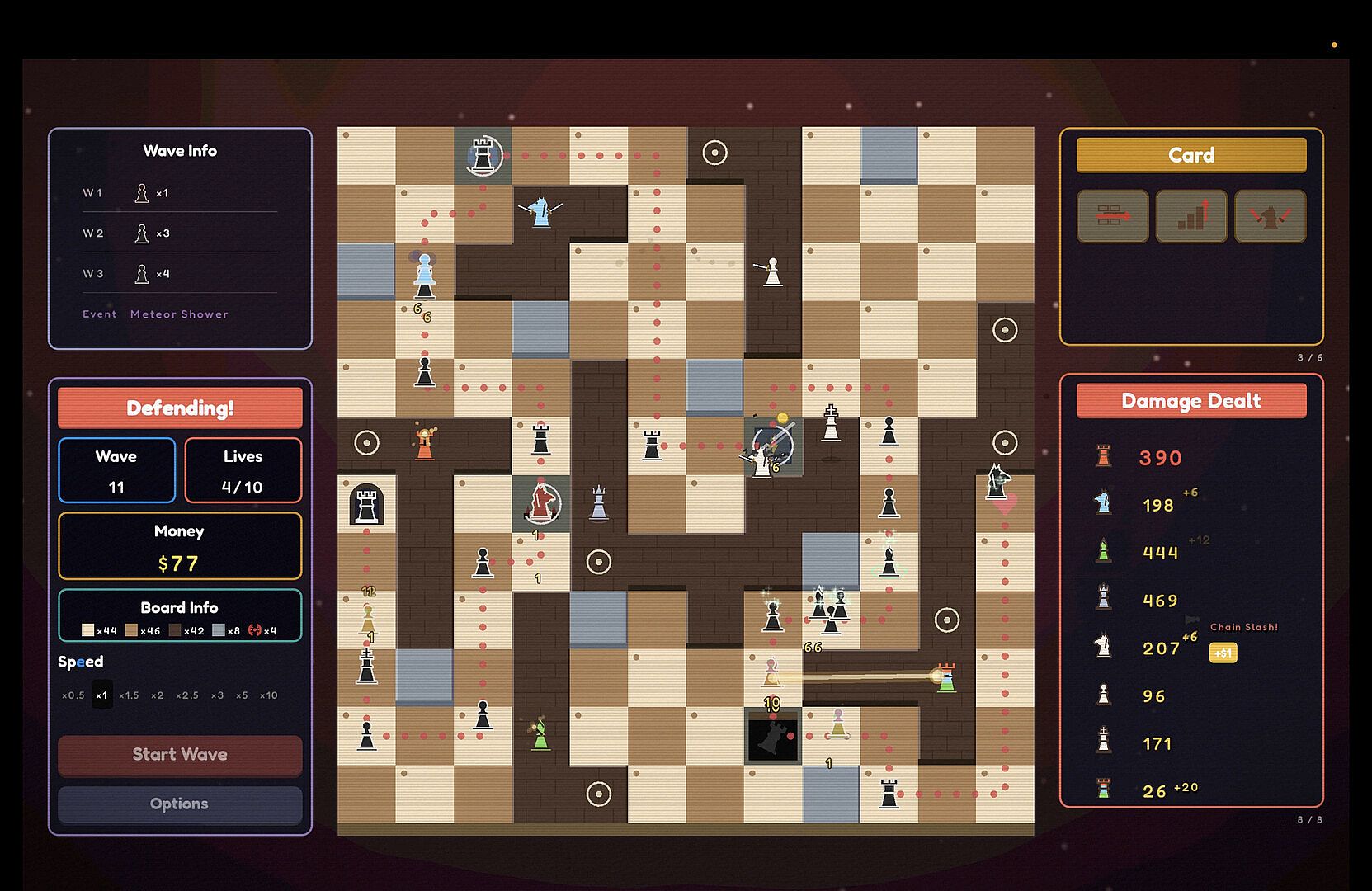
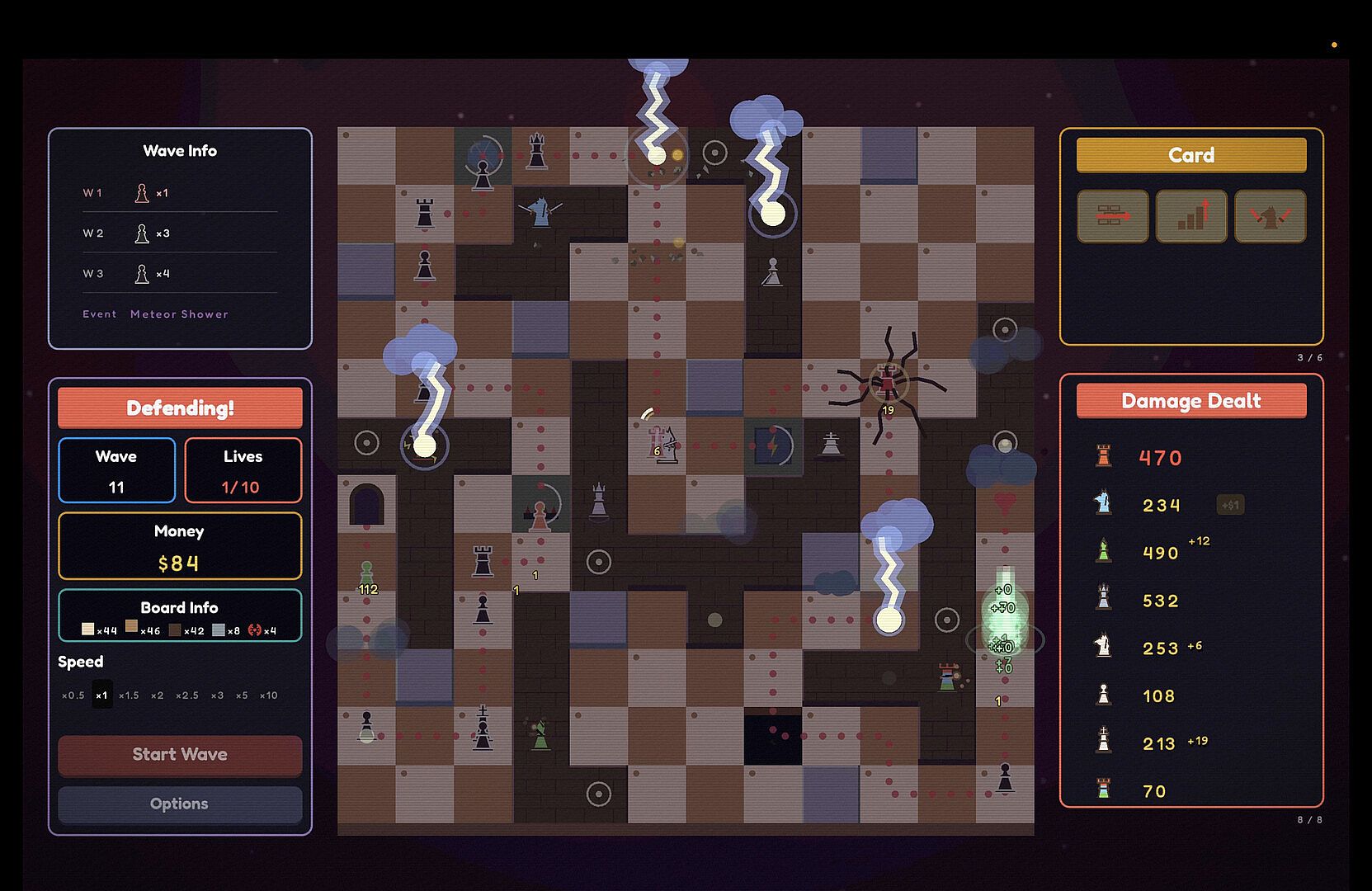
The game places white chess pieces in the role of towers on a chessboard grid. Each piece type offers distinct attack patterns. Pawn and Knight towers focus on single-target strikes. Bishop and Rook towers cover lines along diagonals and straight paths. The Queen summons lightning across multiple enemies in range. The King delivers heavy single-enemy damage. Resource limits force careful decisions about which piece occupies each square, turning placement into the primary tactical layer.
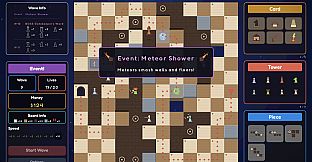
Unlike standard tower defense titles, the player actively shapes the enemy path by positioning blocks and walls. Certain enemies can leap single-tile barriers, warp along straight lines, or stun towers on contact. Reading these abilities becomes essential because the board itself alters its layout every turn, requiring constant maze reconstruction to maintain effective chokepoints.
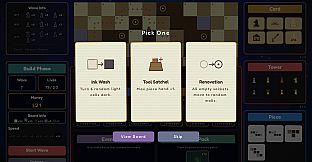
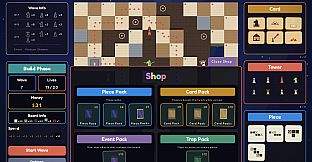
Traps add another layer of disruption. Electric shocks halt enemy movement, poison swamps inflict ongoing damage, and pitfalls create sudden hazards. These can be placed anywhere on the grid to complement the towers and blocks. Cards purchased from a shop each run allow deck construction that supports different approaches, such as emphasizing line attacks from Bishop and Rook pieces, single-target focus with Knight and Pawn, maze-shape synergies that boost tower power, or trap-heavy compositions.
Game Modes
GRIDLOCK GAMBIT operates entirely in a single-player format built around repeated runs. Each run presents a fresh chessboard configuration and enemy wave sequence. Players select starting pieces, gather resources, and progressively refine their maze, traps, and card deck across turns. The roguelike structure means failure ends the current attempt, but successful runs carry forward knowledge of enemy behaviors and effective combinations for future attempts. No separate multiplayer or competitive modes appear in the available details.
Core Mechanics and Strategy
Resource management ties every system together. Limited placement slots mean every tower, block, and trap competes for space on the reshaping board. Enemy abilities force reactive adjustments rather than static setups. Deck building from shop purchases encourages experimentation across runs, rewarding players who test combinations of line attacks, single-target focus, or trap synergies. The chess theme extends beyond visuals into the attack patterns and movement rules, creating a cohesive tactical identity.
Is It Worth Playing?
GRIDLOCK GAMBIT targets players who enjoy deliberate strategy sessions and iterative problem solving in tower defense and roguelike formats. Its emphasis on path carving and turn-by-turn board changes sets it apart from conventional entries in the genre. Because the game remains in a pre-release state with no user reviews available yet, potential buyers should monitor updates from the developer for launch timing and any refinements to balance or features. Those drawn to chess-inspired mechanics, adaptive maze construction, and card-driven builds will find the described systems align closely with that interest. Availability is confirmed for PC through standard digital storefronts once released.