



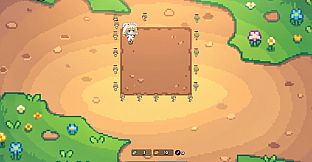


Grurong Random Defense is a strategy indie game for PC that blends roguelike randomness with wave-based defense. Players summon units at random and manage limited resources to survive escalating enemy assaults across a fixed path.
Gameplay
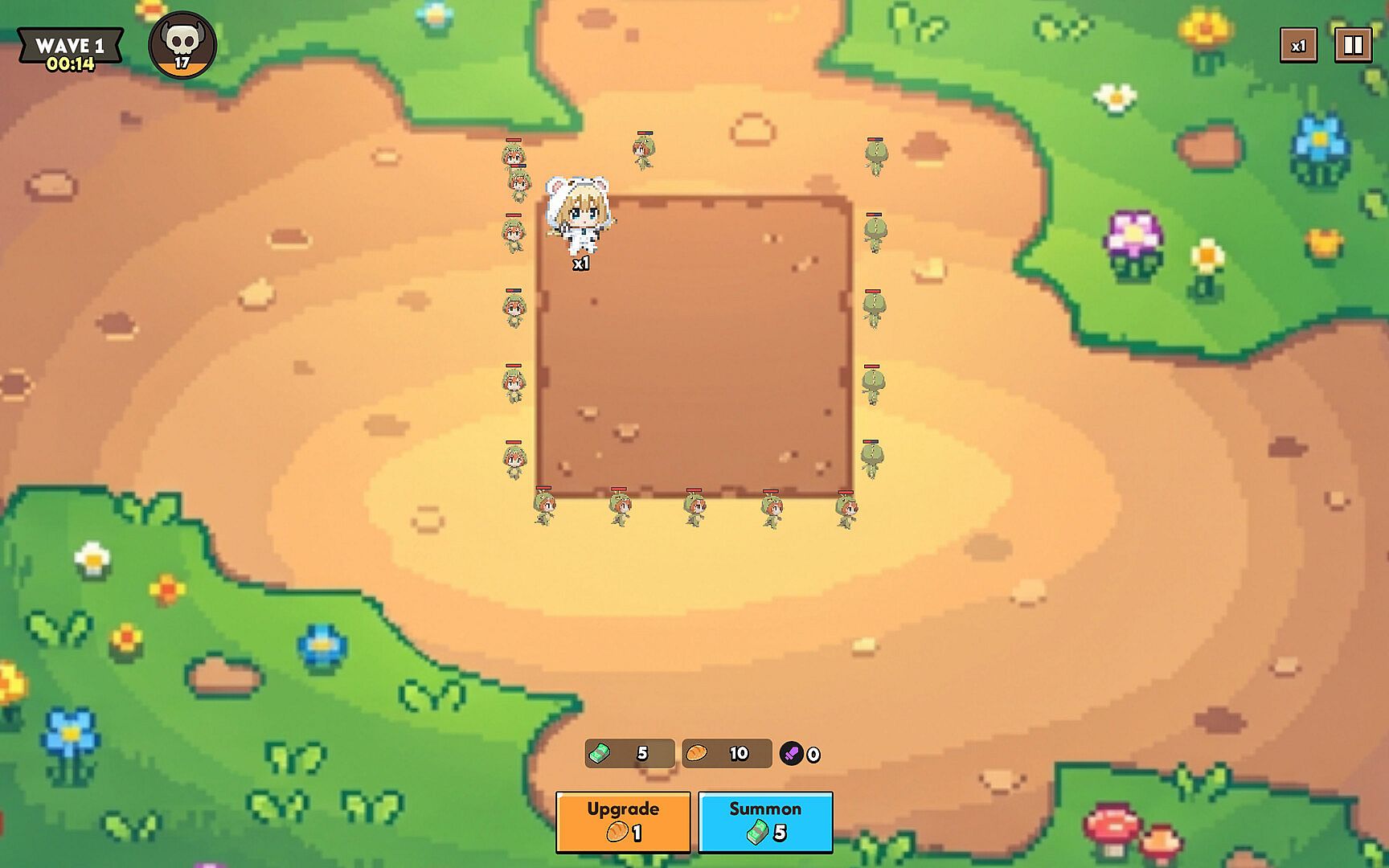
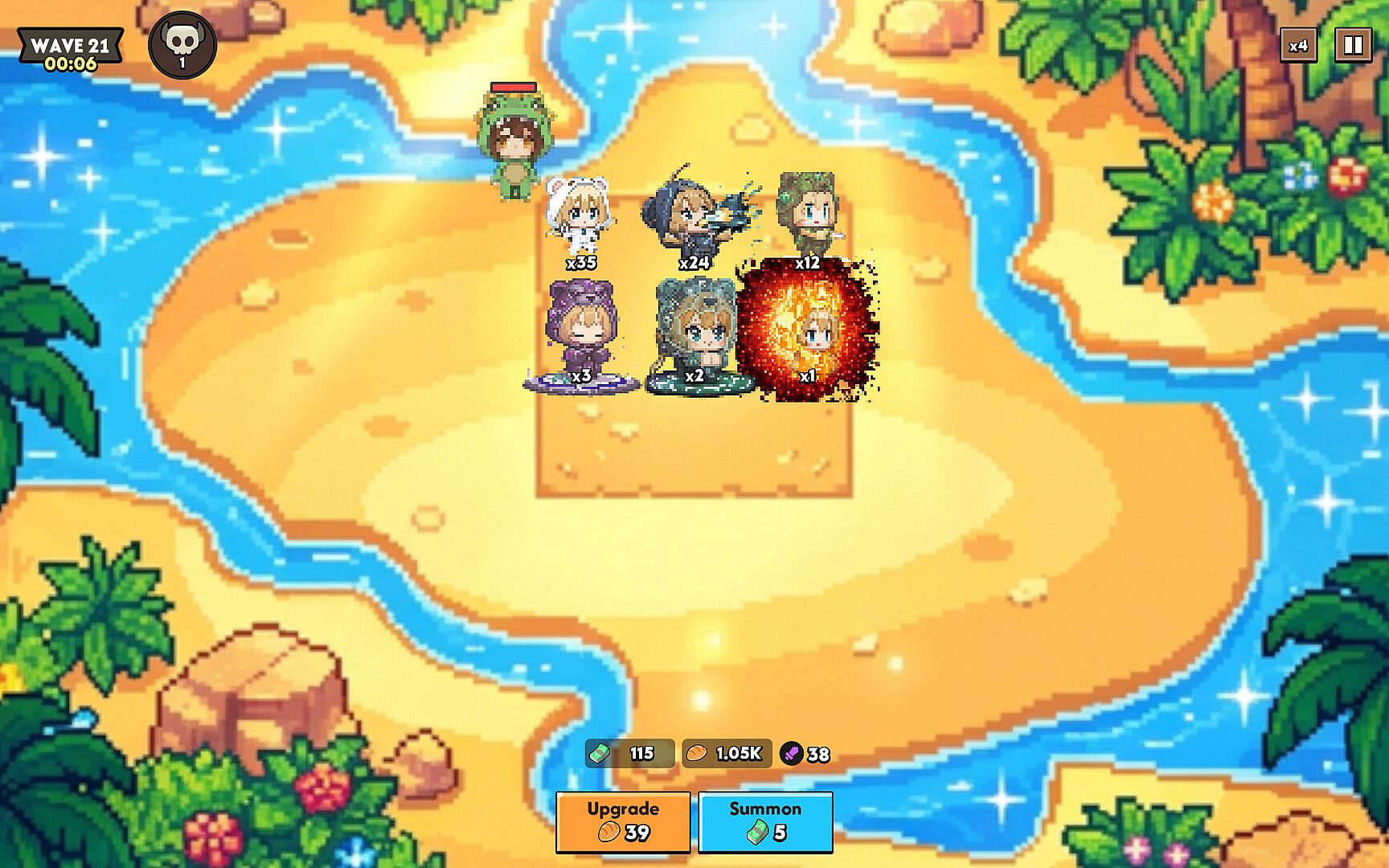
The core loop centers on summoning units with earned resources from enemy kills. Each summon draws from nine ranks, ranging from common troopers to rare heavy hitters, so every run depends on the luck of the draw. A strong early summon can carry progress far, while weaker draws require careful upgrades to compensate.
Units attack automatically once placed, leaving the player to focus on timing summons, choosing which unit types to upgrade, and spending resources efficiently. Upgrades multiply damage output for specific ranks and can turn average rolls into viable defenses. Kills generate the currency needed for further summons and upgrades, but the field has a hard limit: allowing 80 enemies to accumulate ends the attempt.
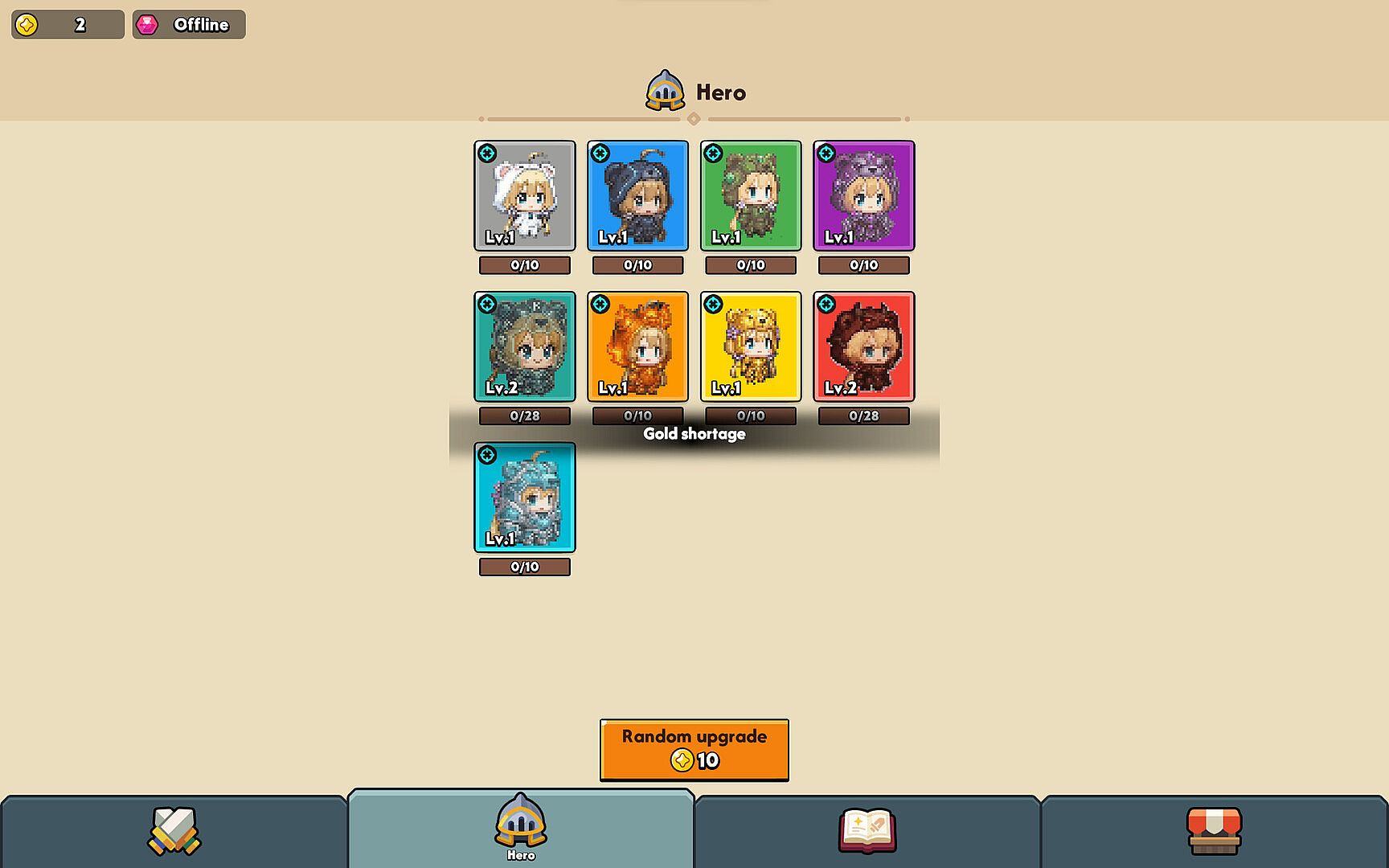
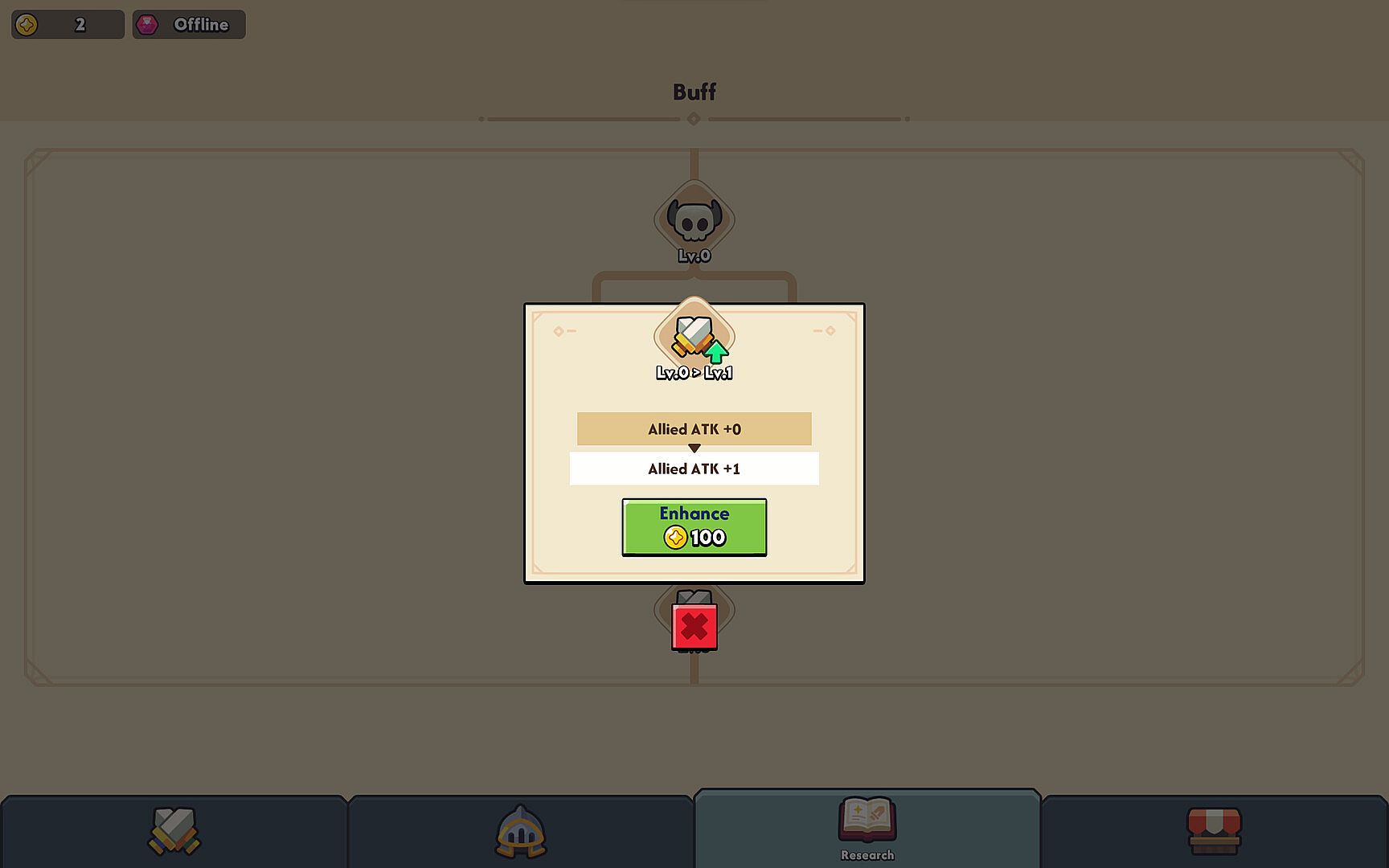
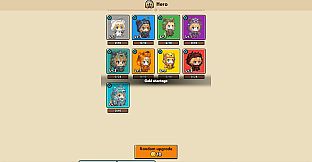
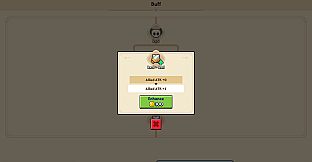
Permanent progression comes from gold earned at the end of runs. Successful clears yield larger payouts that fund eight account-wide upgrades covering attack power, attack speed, starting resources, and damage bonuses against small, medium, and large enemies. Gold also randomly levels units by rank, mirroring the summon system and adding another layer of chance to squad strength.
Game Modes
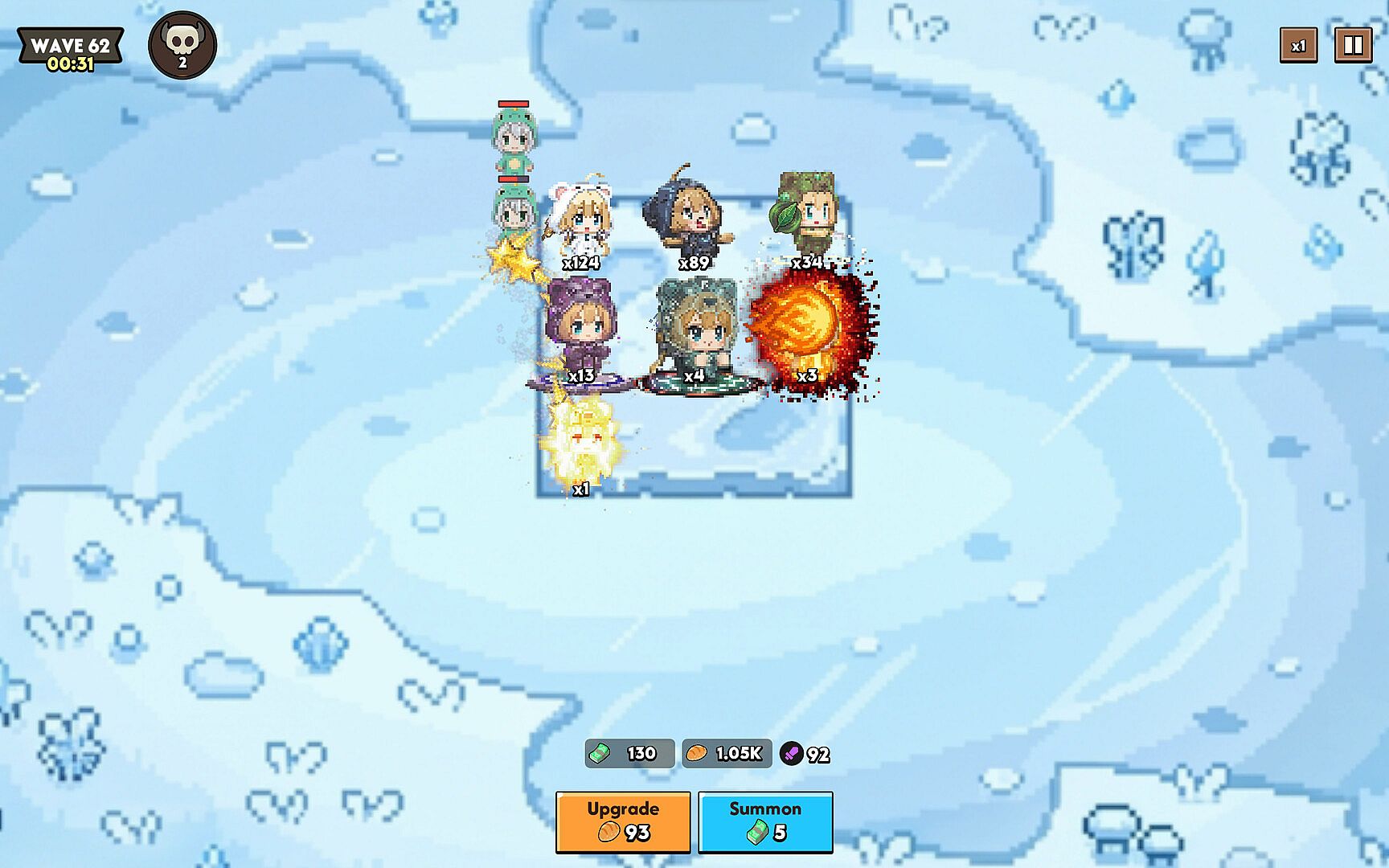
Grurong Random Defense features a single continuous survival format built around 100 waves. New waves arrive every 40 seconds regardless of readiness, forcing steady decision-making under pressure. Boss encounters appear at waves 20, 40, 60, 80, and 100, each acting as a timed checkpoint that must be cleared or the run ends immediately.
Within each attempt the player summons units, spends resources on targeted upgrades, and reacts to the accumulating enemy count. The format rewards quick kills and efficient resource use while punishing hesitation or poor summon luck. No separate modes or variations are present; every session follows this wave progression structure.
Core Mechanics and Progression
Resource management sits at the heart of each run. Kills provide the bread needed for summons and upgrades, yet the pressure to clear enemies quickly remains constant because of the 80-enemy failure threshold. Players decide when to summon, which rank to bolster, and how to allocate limited funds before the next wave timer expires.
The nine-rank summon pool introduces consistent risk and reward. Common units appear frequently and form the backbone of early defense, while rare heavy hitters offer high damage but arrive unpredictably. Upgrading a rank multiplies its effectiveness across all instances of that unit, creating meaningful choices even when the roll feels unfavorable.
Account-level progression rewards repeated attempts. Gold collected from completed or partial runs purchases permanent upgrades that improve future starts and overall damage output. Random unit leveling further ties short-term luck to long-term growth, as experience points distribute automatically to random ranks.
Is It Worth Playing?
Grurong Random Defense suits players who enjoy roguelike randomness combined with straightforward defense management. The fixed wave structure and automatic unit combat keep sessions focused on high-level decisions rather than micro control. Runs last long enough to feel substantial yet allow multiple attempts in one sitting.
Those who appreciate games where luck influences outcomes but skill in resource allocation and upgrade timing can still turn poor rolls around will find the systems engaging. The permanent upgrade path provides steady motivation to keep attempting clears, and the boss checkpoints add clear milestones without complicating the core loop.
Because the game relies entirely on its random summon and upgrade mechanics, it appeals most to fans of chance-driven strategy rather than players seeking precise control or extensive customization. The single-player format on PC delivers a complete experience centered on surviving the 100-wave challenge through repeated runs and gradual account improvement.