


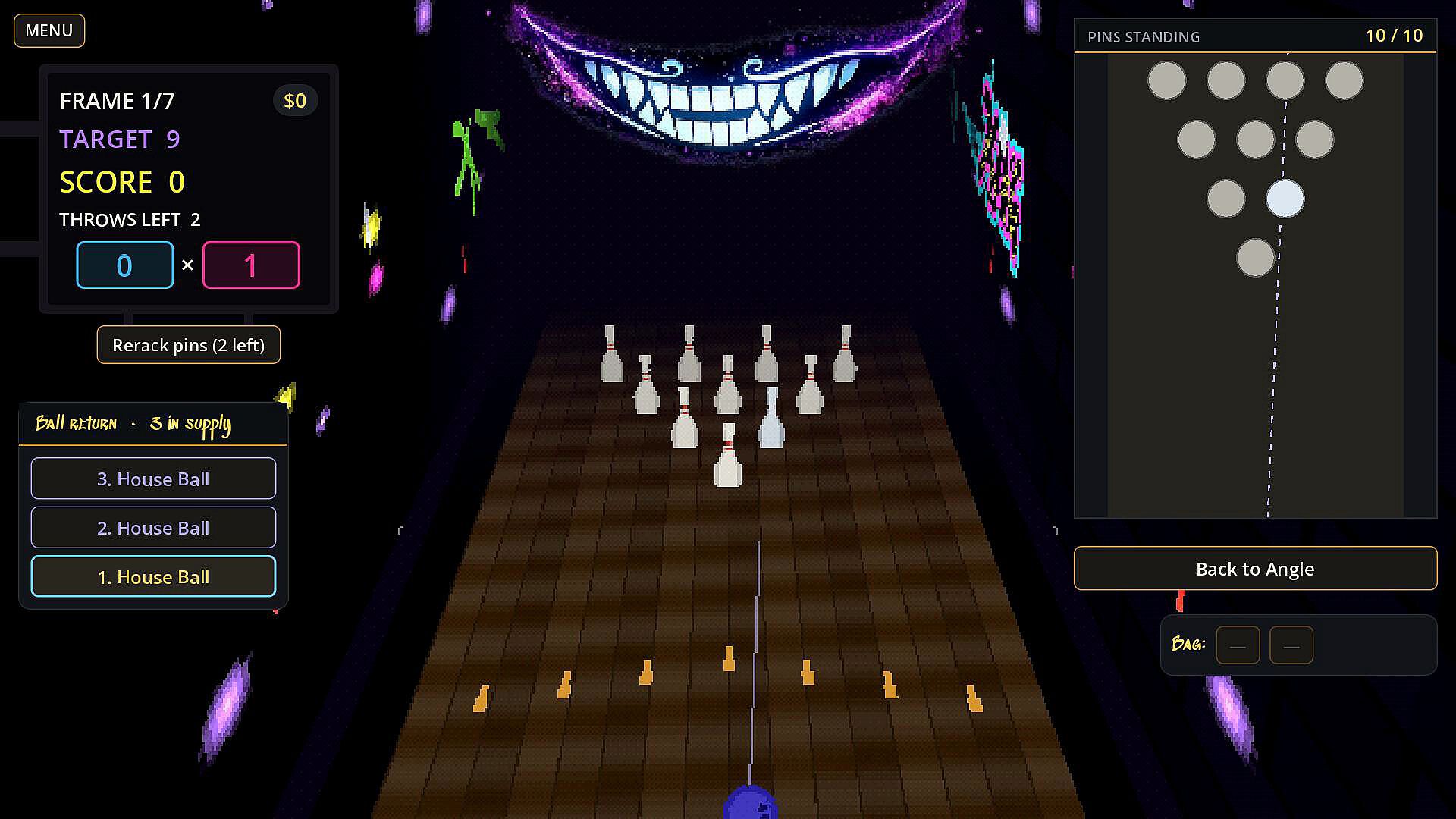
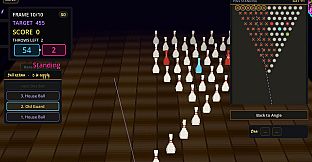

Hambone Alley is a strategy indie game for PC that blends deckbuilding with bowling alley mechanics in a compact, run-based format. Players build and manage a supply of specialized pins while navigating an endless-feeling lane that grows more complex with each frame. The experience centers on chaining effects across large groups of pins rather than traditional reflex-based action.
Gameplay
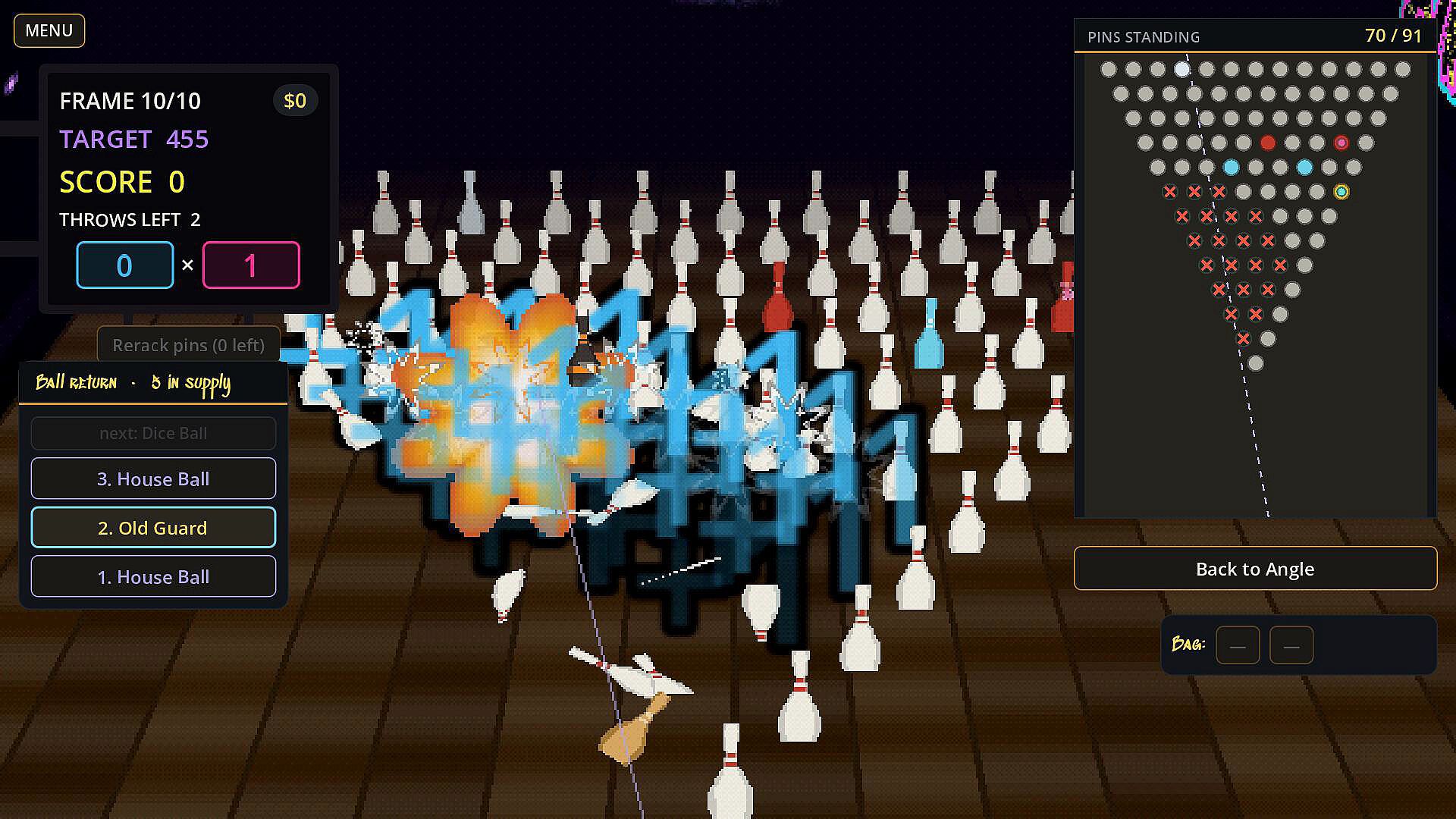
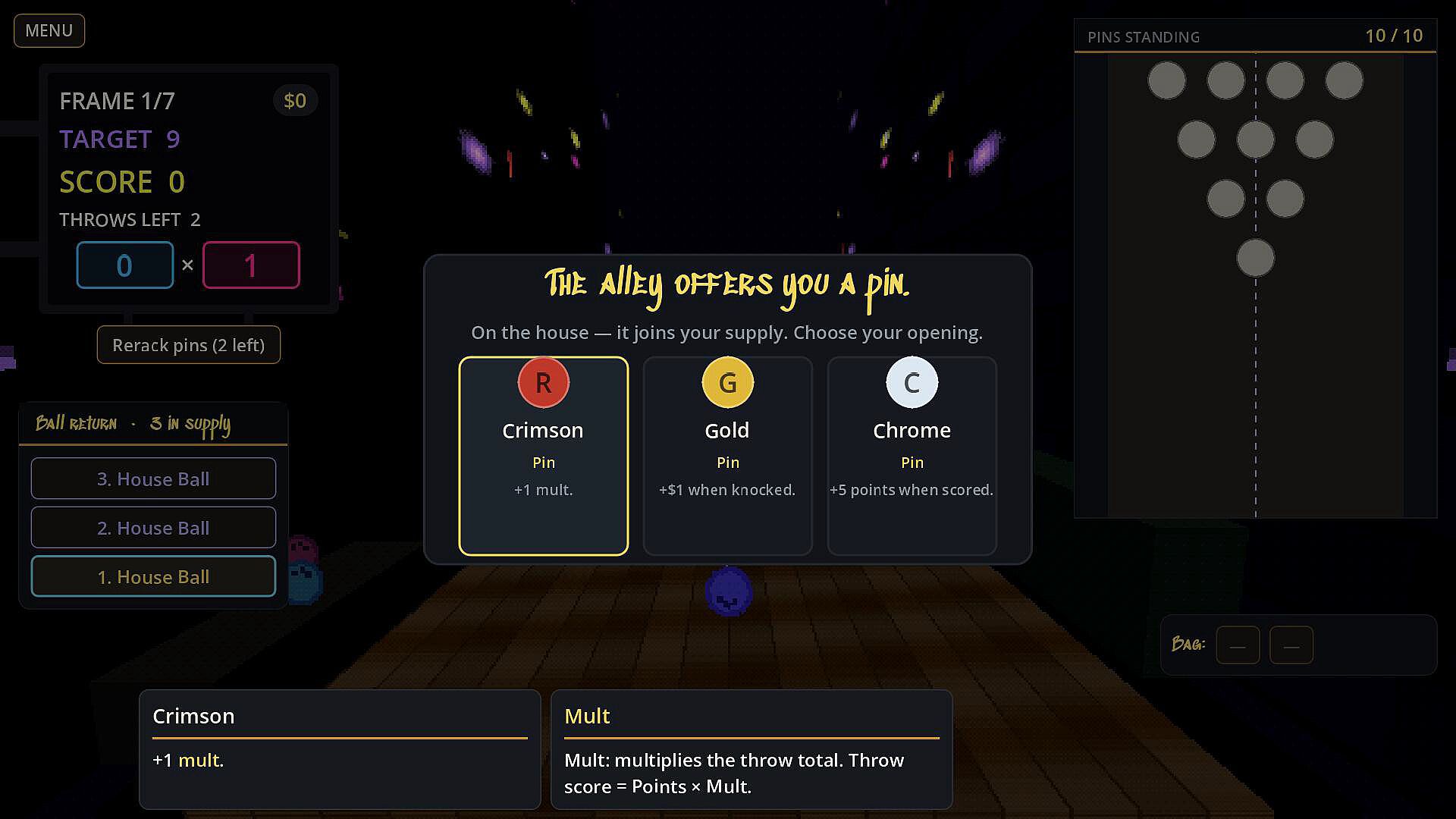
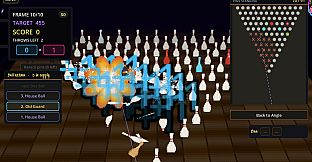
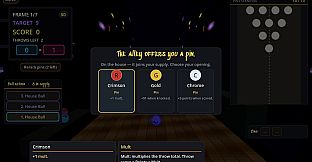
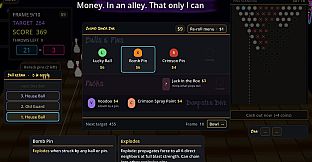
The core loop revolves around clearing racks of bowling pins using a deck of custom pins that players assemble before each run. Explosive pins trigger chain reactions on neighbors, gold pins generate resources, and aura pins boost the value of surrounding pieces when left standing. Charms and upgraded balls add further layers, turning individual pins into combo engines that multiply scores across hundreds of targets in later frames.
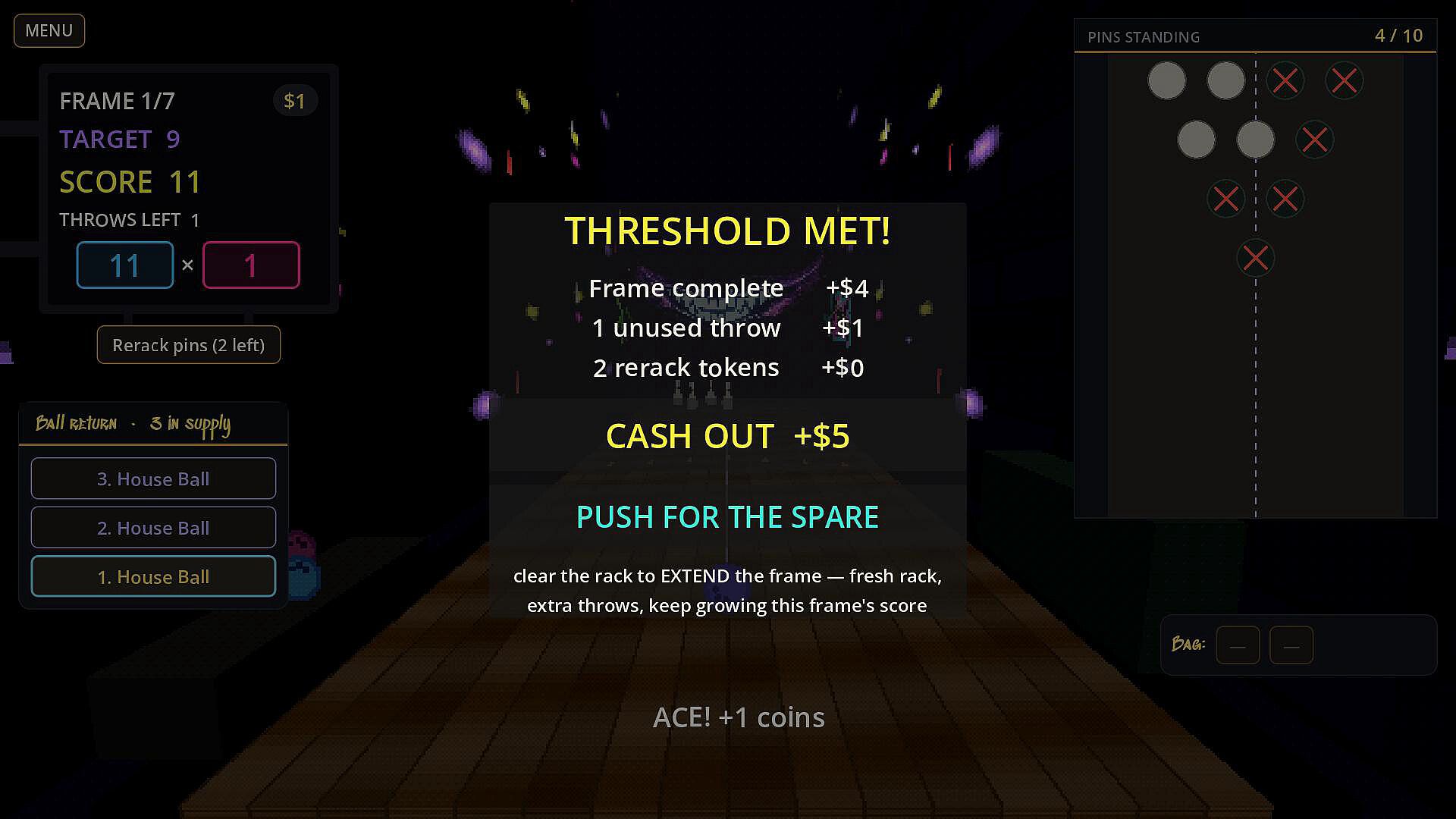
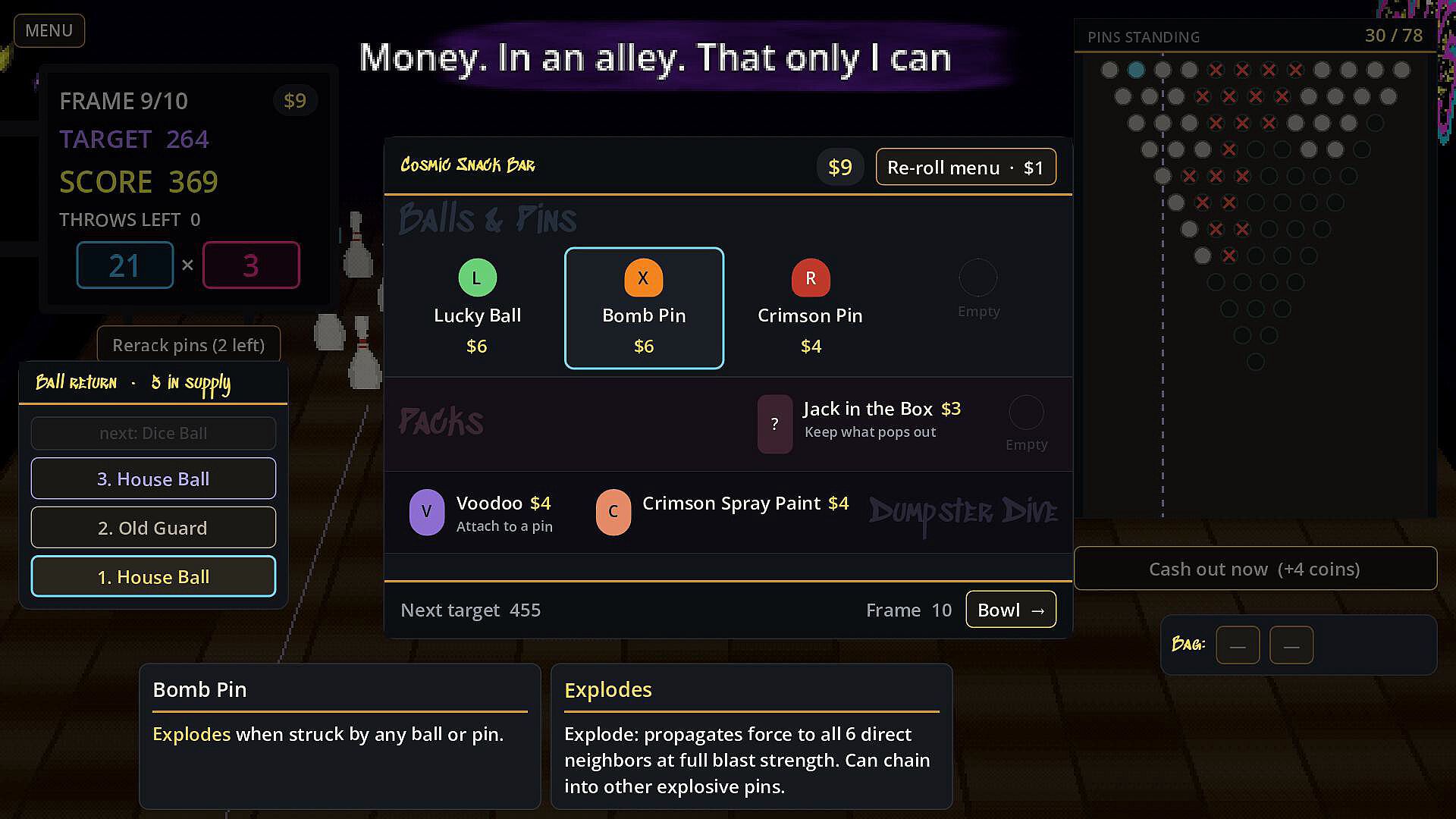
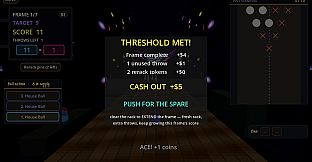
Each throw counts toward a single frame total that continues as long as the rack clears. Fresh pins appear after every successful clear, extending the frame without resetting the score. This structure rewards careful planning over multiple throws, as leaving key pins in place can amplify subsequent effects. Between frames, players visit a shop offering new pins, balls, charms, energy drinks, and other upgrades, with a choice to cash out early or risk resources for carryover bonuses.
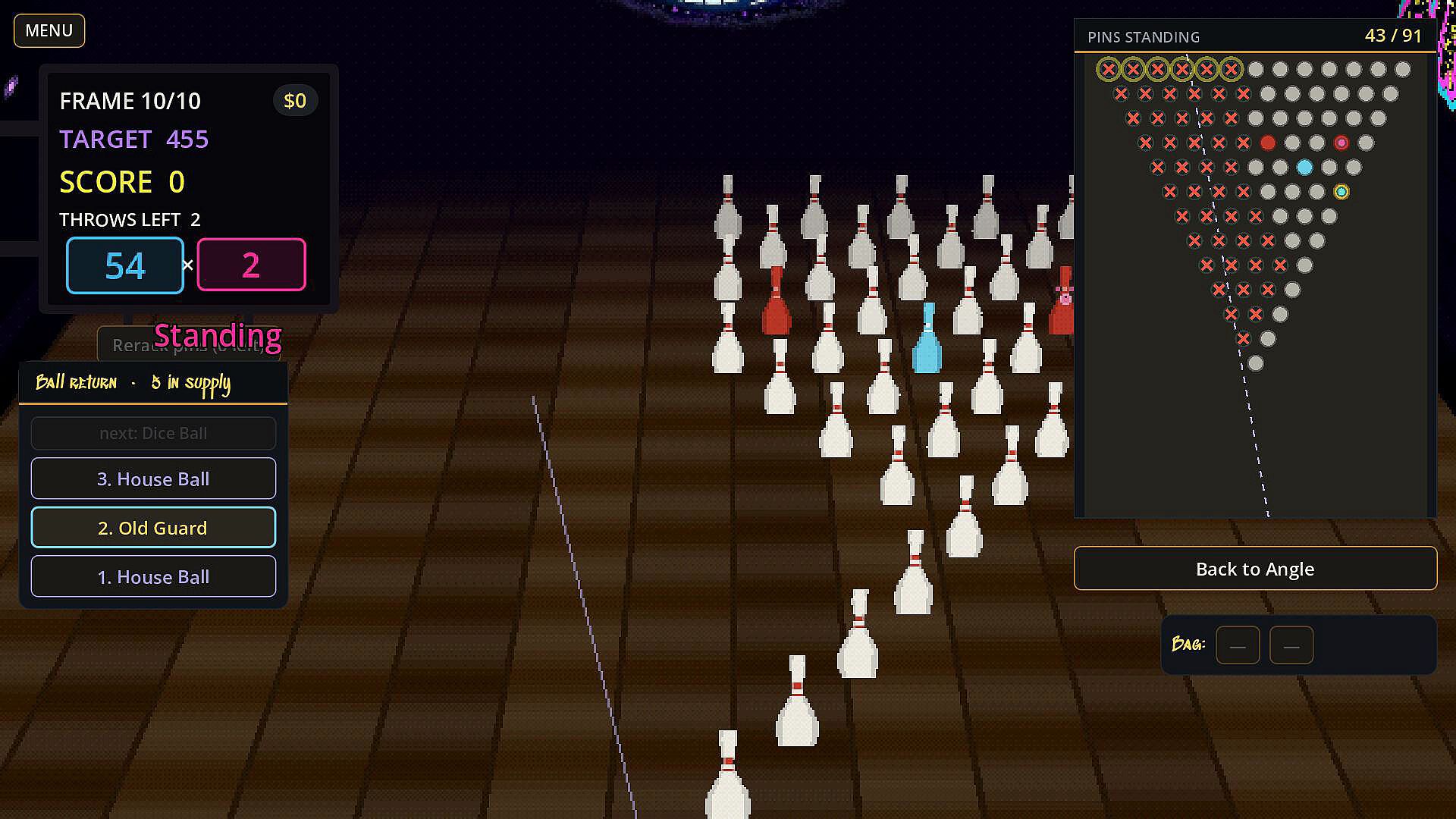
The lane itself expands row by row, starting with the standard ten pins and scaling to much larger configurations. Late runs present genuine spatial puzzles where a single well-placed throw must account for dozens or hundreds of interacting pieces. No timers or quick reflexes are required, allowing players to pause and resume at any point.
Game Modes
Hambone Alley operates as a single-player run experience without separate named modes. Each session consists of a continuous sequence of frames that build in scale, with the goal of maximizing score through extended chains and efficient resource use. Runs typically last between five and fifteen minutes, and every attempt carries forward knowledge of pin synergies and shop priorities for future attempts.
The structure emphasizes roguelike progression through repeated runs rather than a linear campaign. Players experiment with different deck compositions and charm combinations across multiple attempts, refining strategies as the rack size increases. No multiplayer or competitive elements are present.
Setting and Narrative
The game takes place in a single location called the Last Alley, a trans-dimensional space filled with bowling pins and overseen by a disembodied grin named Hambone. This character observes the proceedings with detached amusement but provides minimal direct assistance. The narrative remains light and atmospheric, focusing on the mechanical challenge rather than story progression or character development.
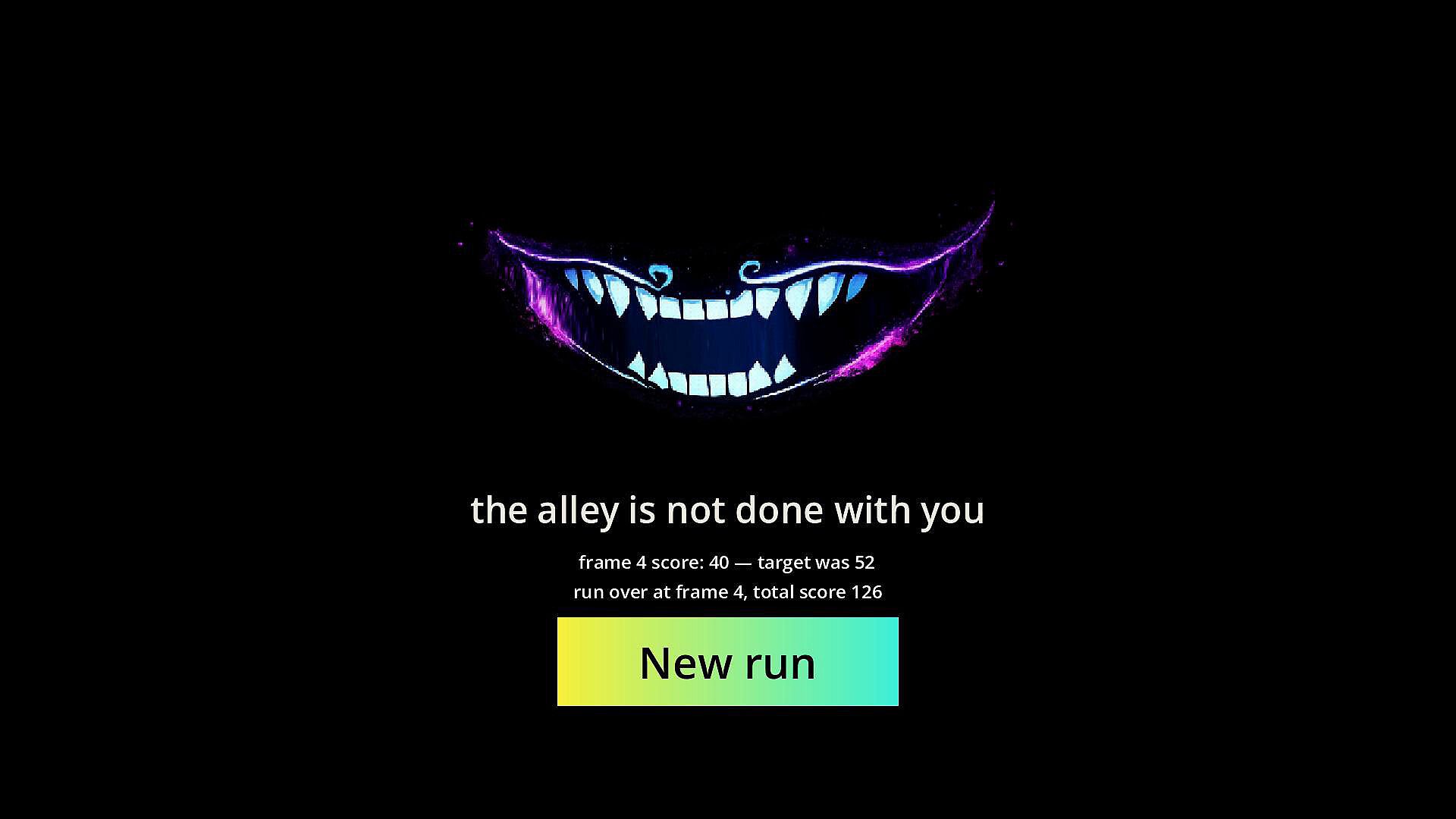
Hambone's presence adds flavor through occasional interactions tied to running out of throws, yet the emphasis stays on the pin-stacking systems and frame extensions. The setting reinforces the isolated, puzzle-like nature of each run without introducing complex lore or branching paths.
Is It Worth Playing?
Hambone Alley suits players who enjoy deliberate strategy games built around deck construction and combinatorial effects. Its short run length and lack of time pressure make it accessible for sessions that can be picked up and set down easily. The growing complexity of later frames provides ongoing challenge through spatial and synergistic puzzles rather than speed or precision.
Because the game is built around a single cohesive loop with no additional modes or campaigns, it appeals most to those who appreciate iterative improvement across repeated attempts. New tools and better understanding of charm and pin interactions emerge naturally with each run, supporting long-term engagement for fans of the genre.