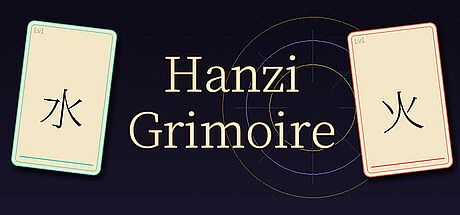


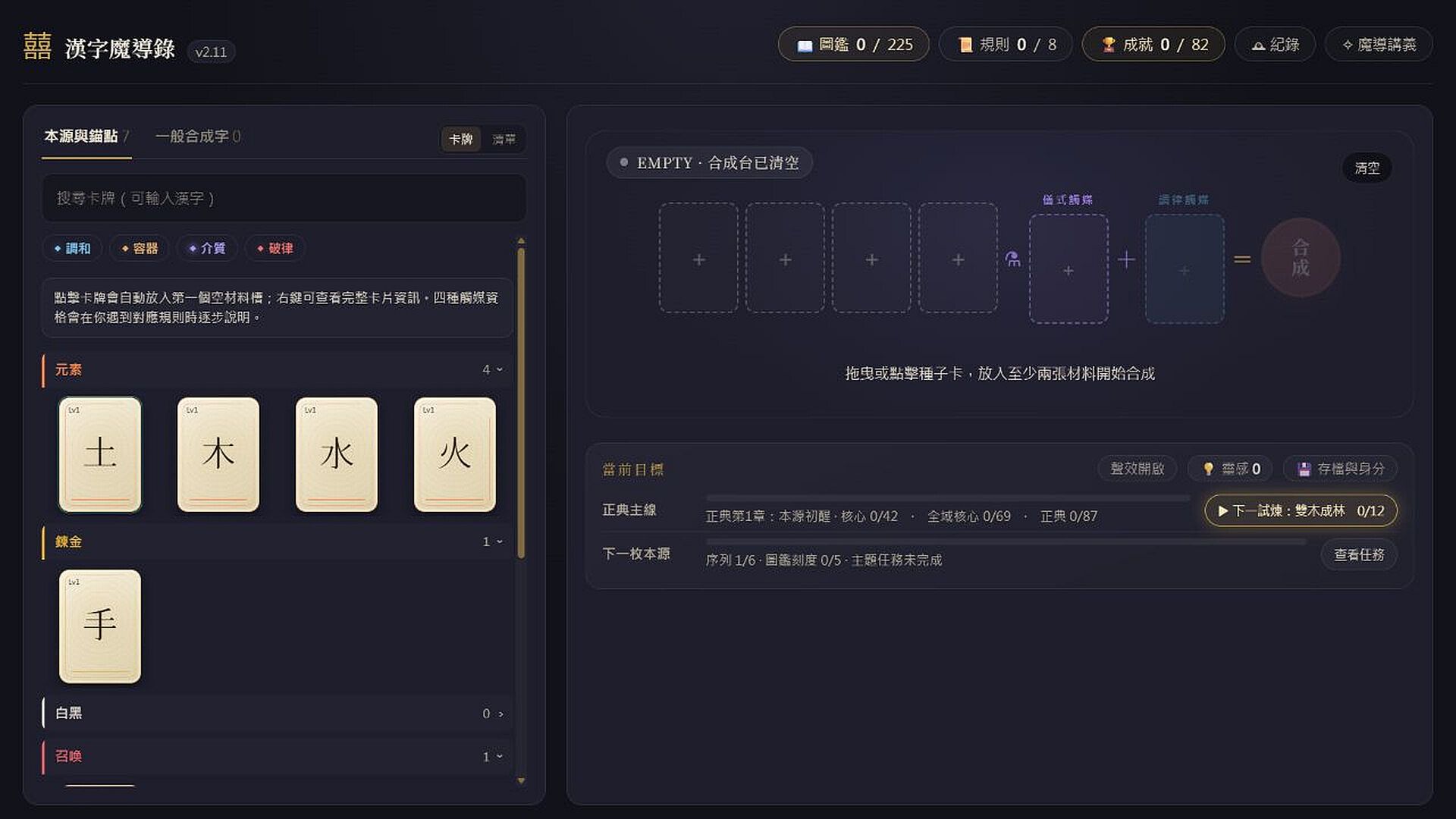
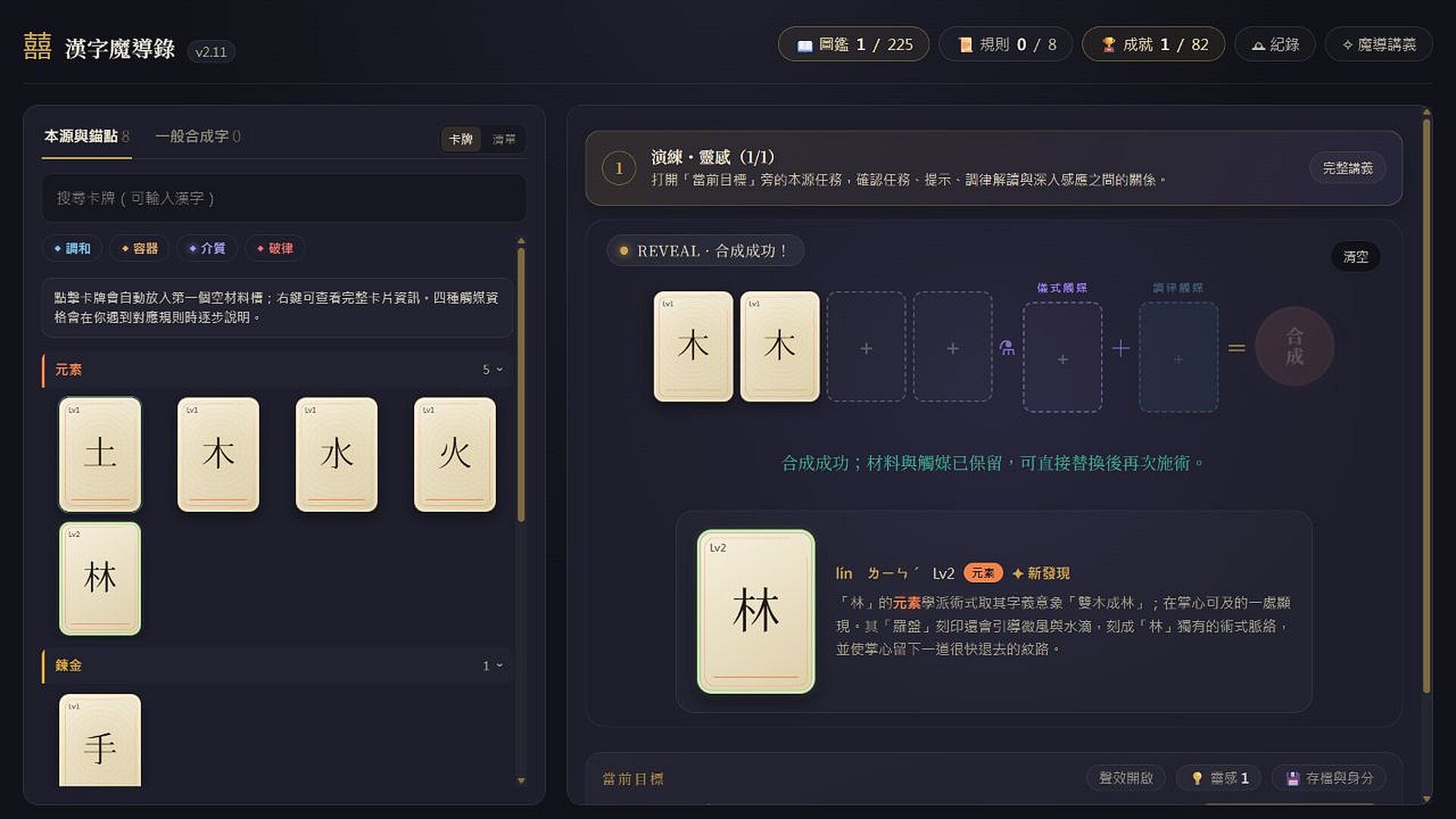

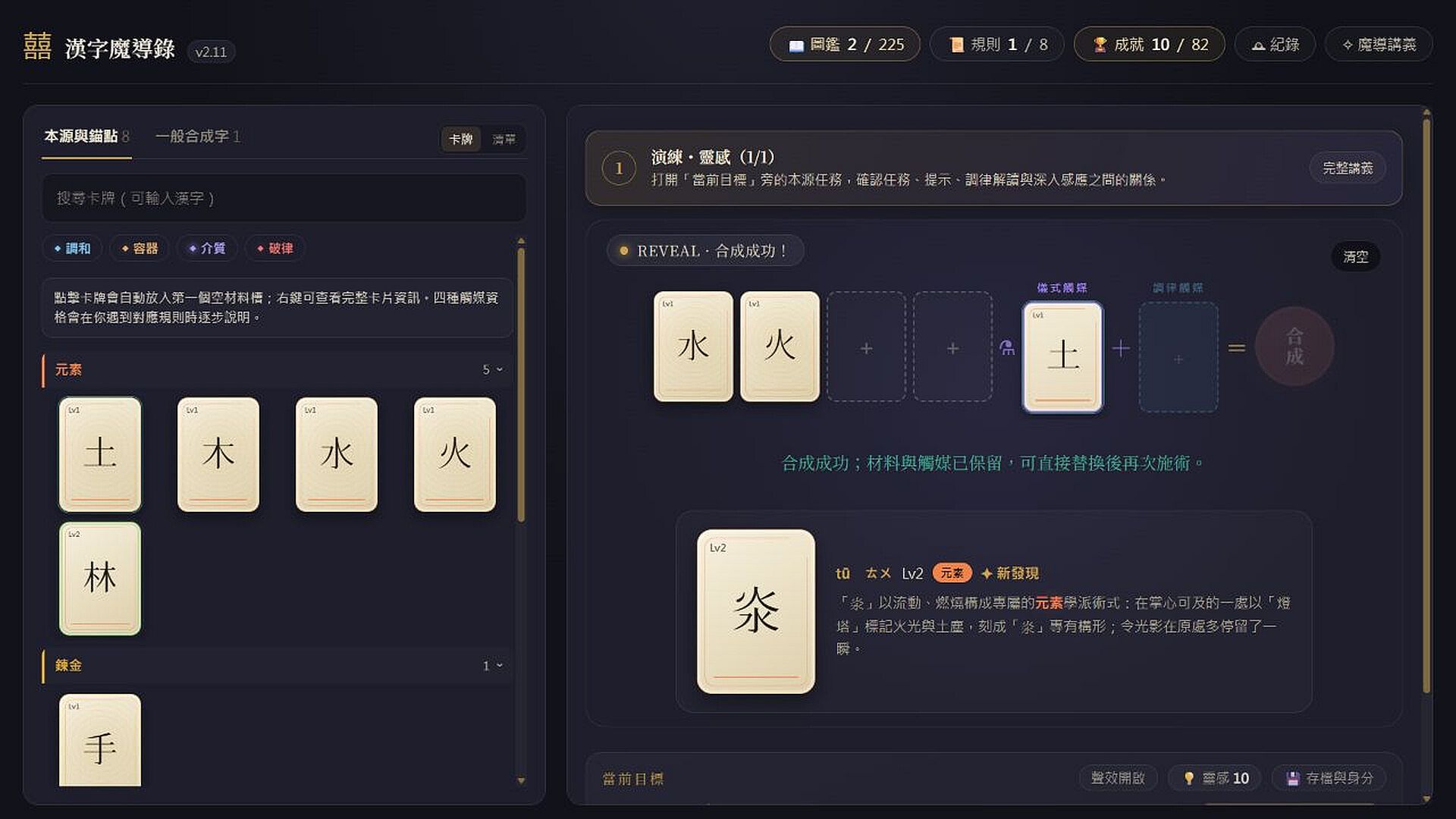









Hanzi Grimoire is a single-player deduction puzzle game that turns the structure of Chinese characters into a system for building and casting spells. Players begin as novice researchers equipped with a small set of source glyphs and experiment by breaking them into components, recombining forms, and discovering the hidden magical properties within real Hanzi structures. The core loop centers on synthesis attempts that follow actual linguistic rules, such as combining two instances of the wood radical to form a forest character or adding a fire element to create a burning result, while navigating constraints that prevent straightforward solutions every time.
Gameplay
The gameplay revolves around careful observation of shapes, components, and contextual clues rather than rote memorization. Each synthesis attempt draws from real character etymology and visual logic, requiring players to interpret why certain combinations succeed or fail. Opposing magical schools repel one another during rituals, overloaded combinations collapse, and the same base materials can produce different outcomes depending on the approach taken. Failures generate detailed research records that highlight the exact point where the ritual broke down, allowing players to refine their understanding of the underlying rules over repeated experiments.
Two distinct catalyst systems add layers of strategy. Ritual catalysts help satisfy the eight arcane laws that govern valid combinations, while tuning catalysts allow selection among alternate characters that can emerge from identical material bases. Seven schools of magic each carry unique colors, behavioral tendencies, and specific catalyst requirements: Elemental, Summoning, Alchemy, Mind, Light and Shadow, Space, and Concept. Progression involves unlocking additional source glyphs, pursuing pure-stack ascensions, advancing through canon chapters, completing trials, and earning achievements tied to collection and discovery milestones.
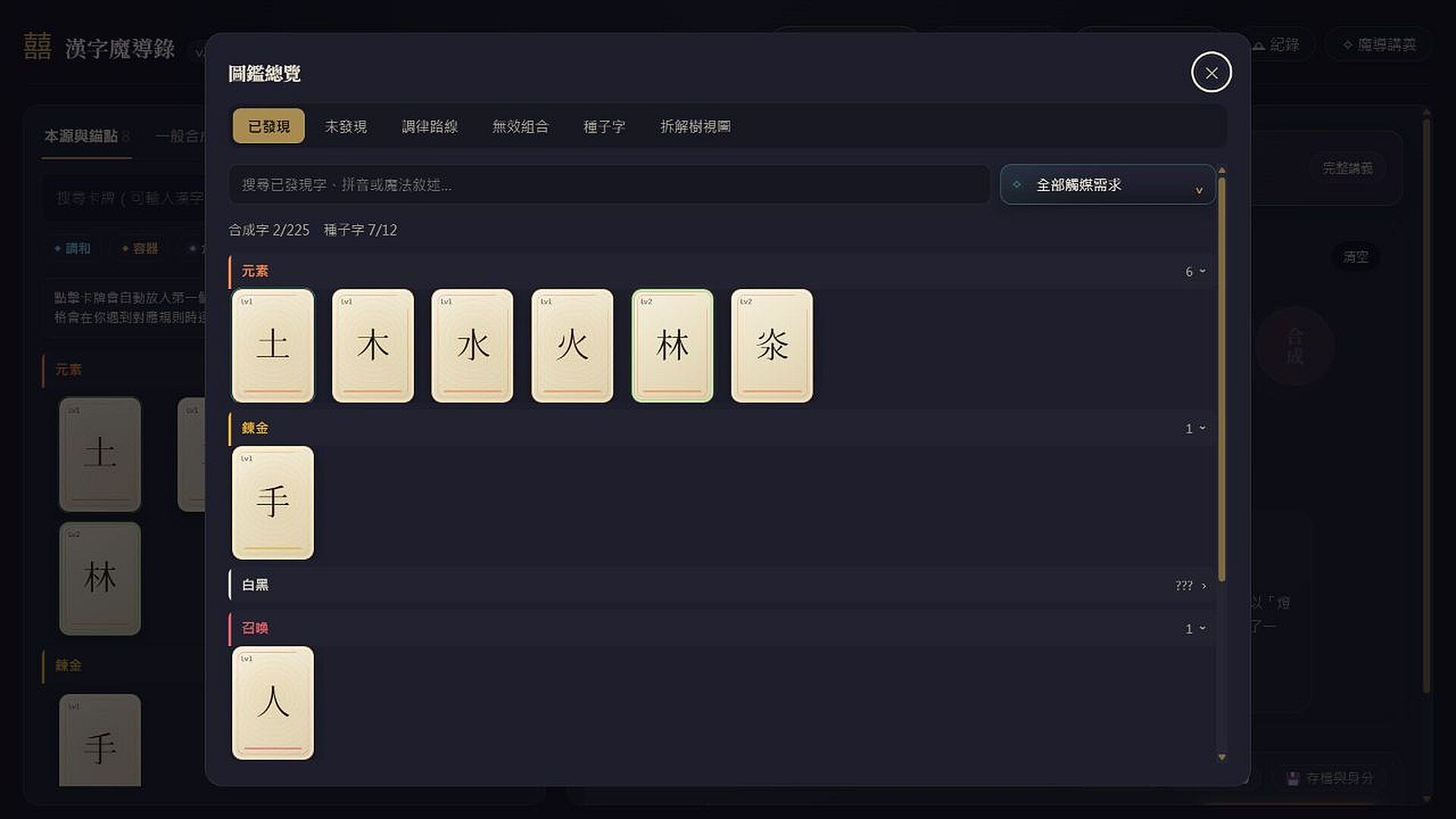
More than 2,800 characters become available as players experiment, with each receiving its own card, reading, school affiliation, and magical description. Familiar everyday Hanzi sit alongside rarer forms and extension-plane variants, encouraging players to build a personal grimoire through trial and error. The entire experience supports offline play, letting users experiment at their own pace without external dependencies.
Game Modes
Hanzi Grimoire operates entirely in single-player mode, structured around a personal research journey that unfolds through progressive unlocking and self-directed experimentation. The primary activities include advancing from basic origins to more advanced legends via canon chapters that introduce new glyphs and challenges. Trials serve as focused tests of synthesis mastery, while hundreds of achievements track collection progress, successful application of laws, and exploration of tuning routes. No multiplayer or competitive elements exist; the design emphasizes solitary deduction and iterative learning from failures recorded in the research log.
Key Mechanics and Progression
Central to the experience are the eight arcane laws that dictate valid synthesis. Players study failure records to identify violations, then apply the appropriate ritual catalysts to align with those laws. Tuning catalysts expand options by revealing variant characters from the same inputs, rewarding deeper analysis of component relationships. The seven schools provide thematic variety, each influencing which catalysts qualify and how spells manifest once discovered. As the collection grows, players review accumulated laws and routes to plan future experiments, turning the process into a cumulative knowledge base rather than isolated puzzles.
Is It Worth Playing?
Hanzi Grimoire suits players who enjoy deduction-based puzzles rooted in linguistic and visual logic, particularly those drawn to systems that reward pattern recognition over direct instruction. Its offline single-player format supports relaxed, self-paced sessions focused on building a personal collection of over 2,800 characters through genuine experimentation. With a planned release in November 2026 and no reviews available yet, the game appeals most to enthusiasts of indie casual titles that blend educational elements with magical theming. Those who appreciate methodical problem-solving and iterative discovery will likely find the core loop engaging, while players seeking fast action or social features may prefer other experiences. The emphasis on real character structures adds a distinctive layer that sets it apart from typical puzzle games.