











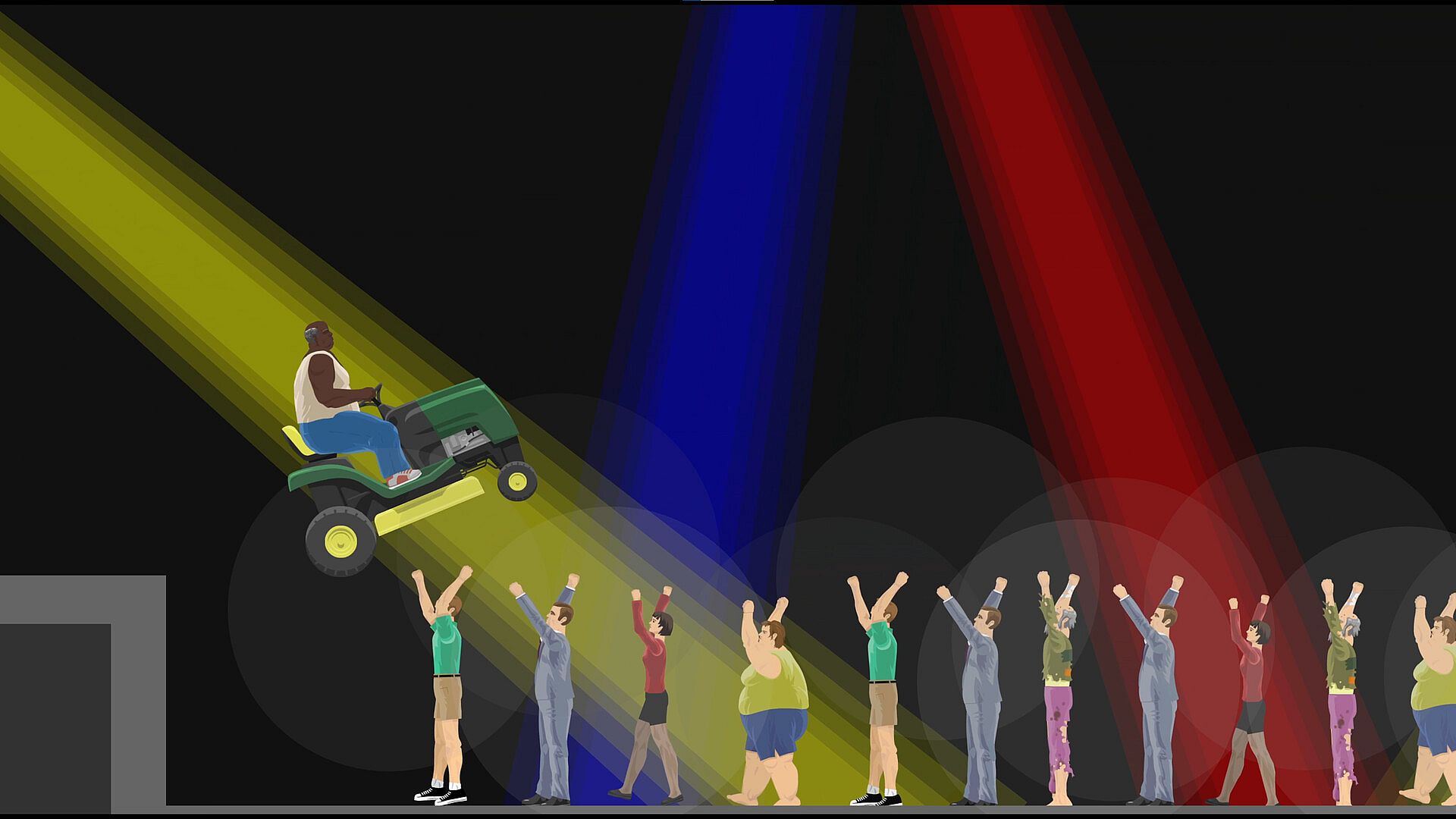
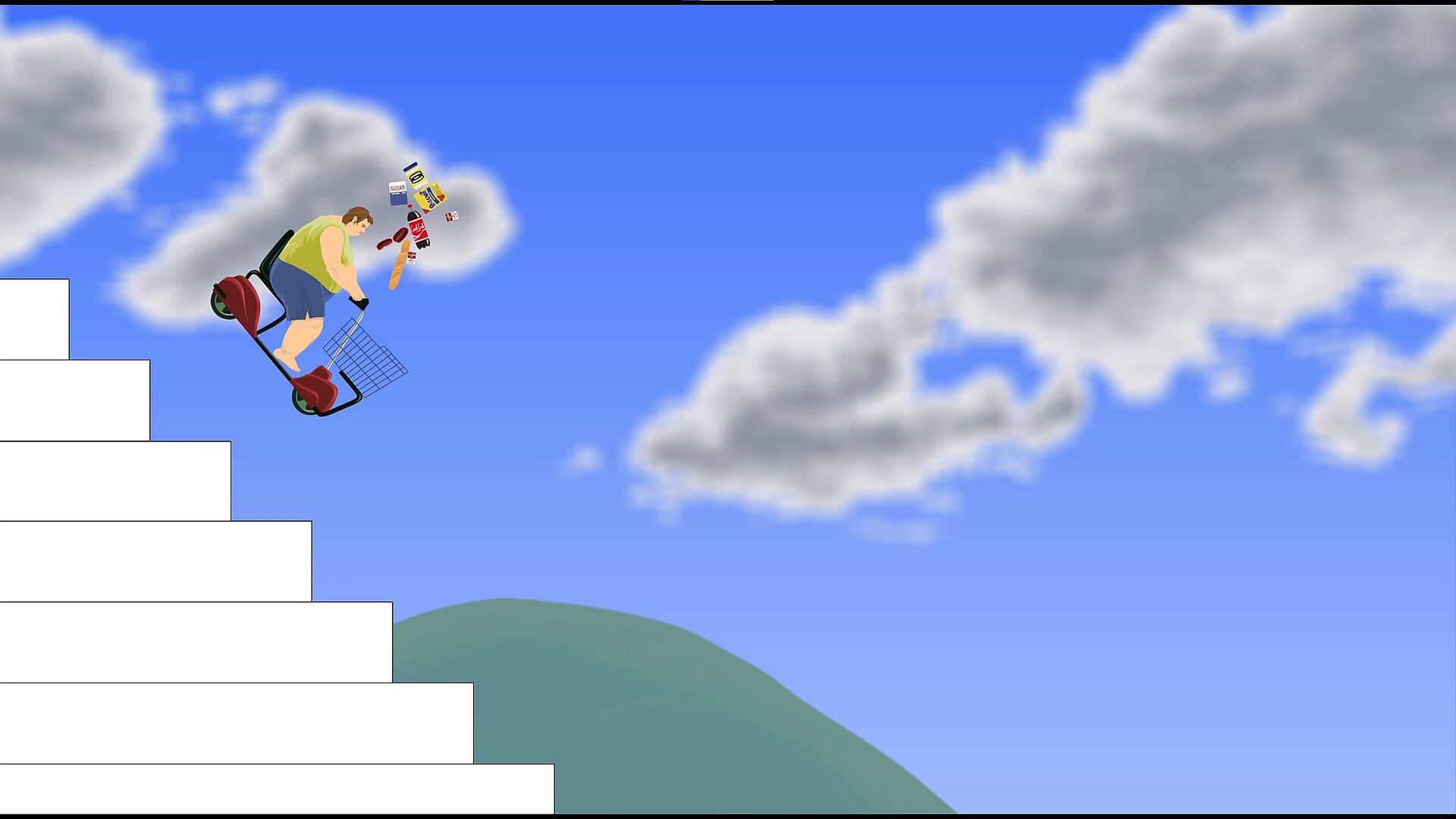
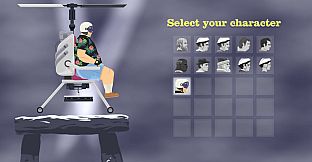
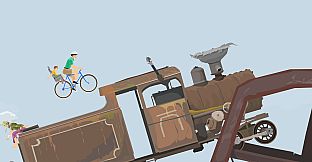


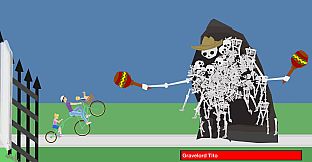

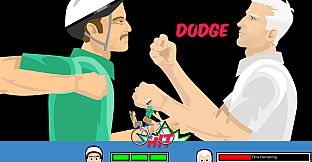


Happy Wheels is a side-scrolling physics-based action game available on PC that emphasizes ragdoll mechanics and user-generated content. Players select from several characters, each paired with distinctive vehicles, then attempt to navigate obstacle-filled courses where severe injury or dismemberment is common. The experience centers on reaching a finish line or completing objectives while the physics simulation produces unpredictable and often gruesome results from collisions with spikes, saw blades, explosives, and other hazards.
Gameplay
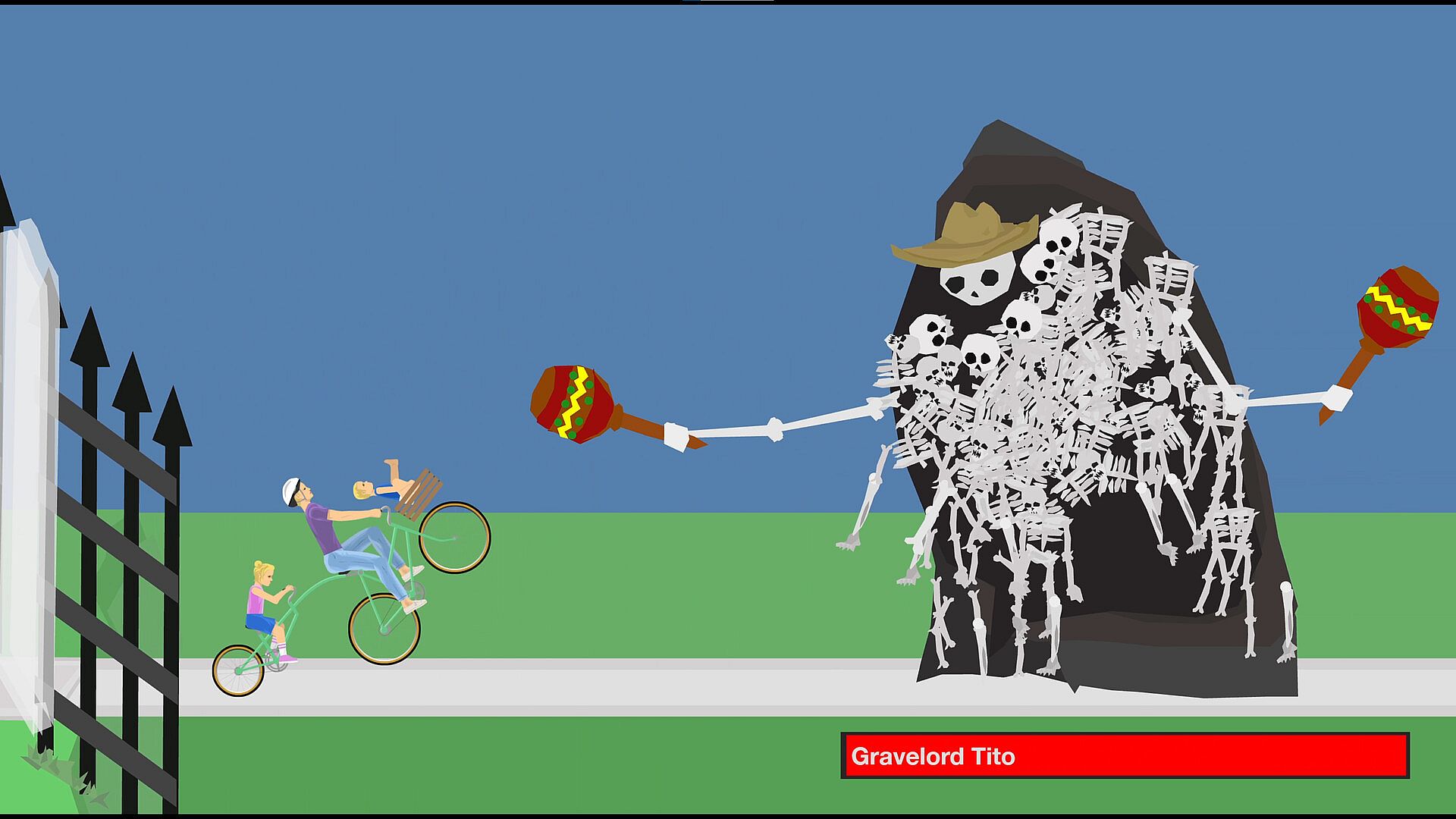
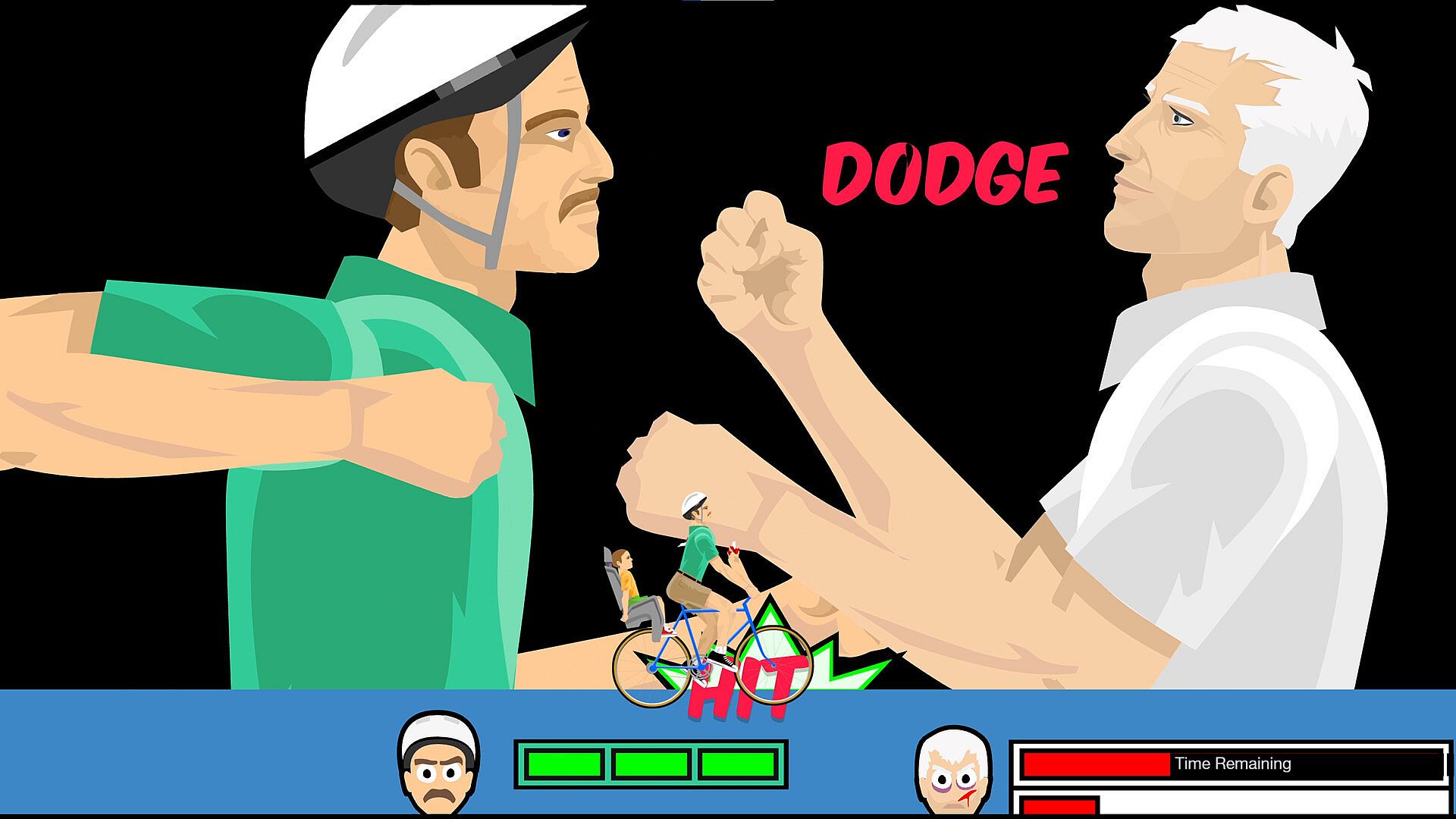
Core movement relies on simple directional controls combined with character-specific actions such as leaning, accelerating, or ejecting from a vehicle. The ragdoll system allows limbs to detach or the torso to sustain damage without immediately ending a run, provided the character remains capable of forward progress. Levels feature dense arrangements of interactive objects that respond realistically to momentum and impact, turning each attempt into a test of timing and adaptation rather than straightforward racing. Controller support enables precise handling for those who prefer gamepads over keyboard input.
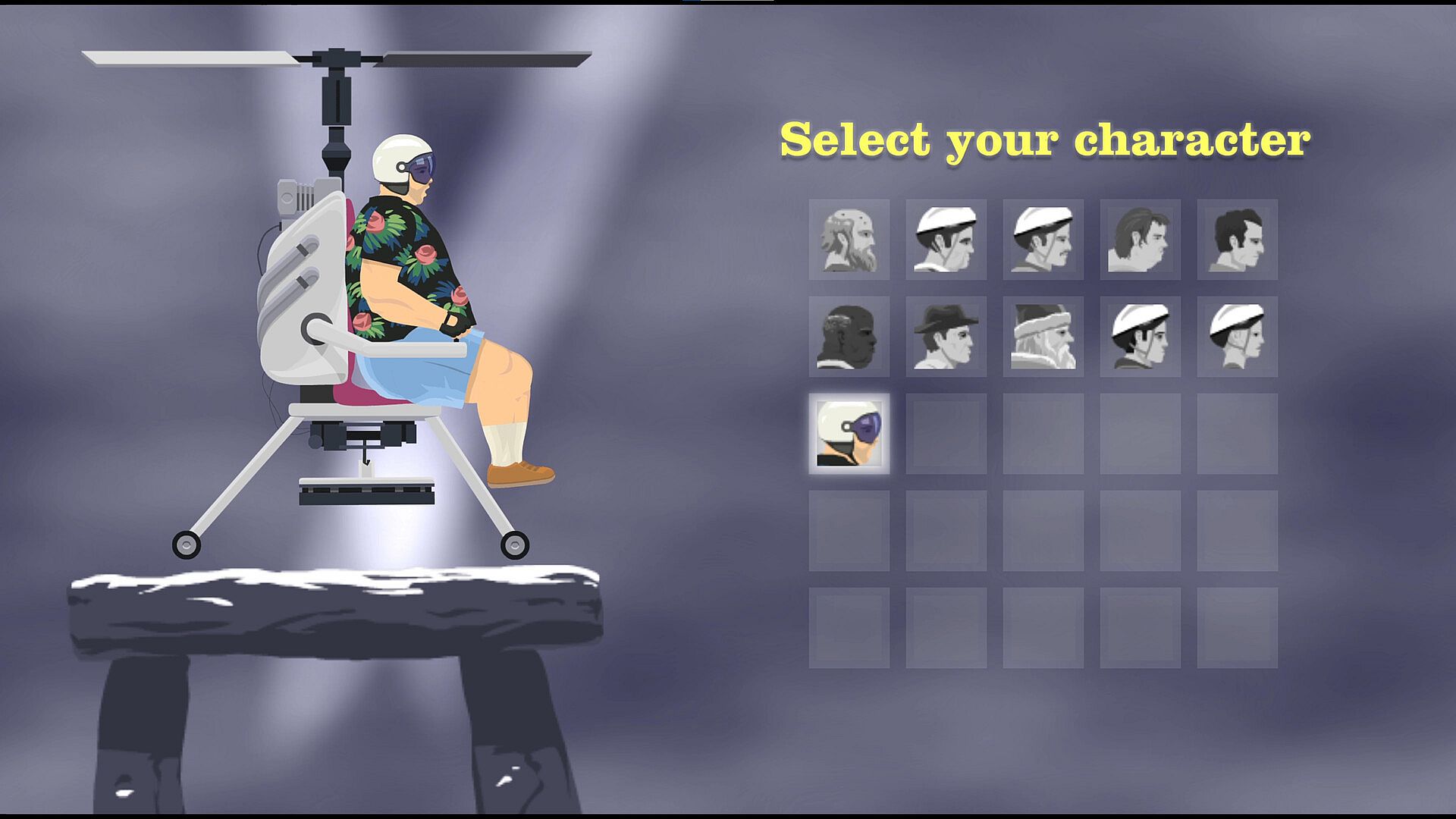
Progression occurs through repeated trials on individual courses. Players observe how minor adjustments in speed or angle produce dramatically different outcomes due to the underlying physics. The absence of traditional checkpoints or generous rewards reinforces a trial-and-error loop focused on mastery of each segment. Multiple characters offer varied starting conditions, with differences in vehicle handling and ability sets that influence strategy on the same level.
Game Modes
The primary activity involves browsing and playing community-submitted levels through an integrated browser that ranks and sorts daily uploads. This system provides access to millions of user-created courses, each designed with custom layouts, hazards, and sometimes thematic elements. Sorting options help surface new or highly rated content, keeping the selection fresh without developer-curated playlists.
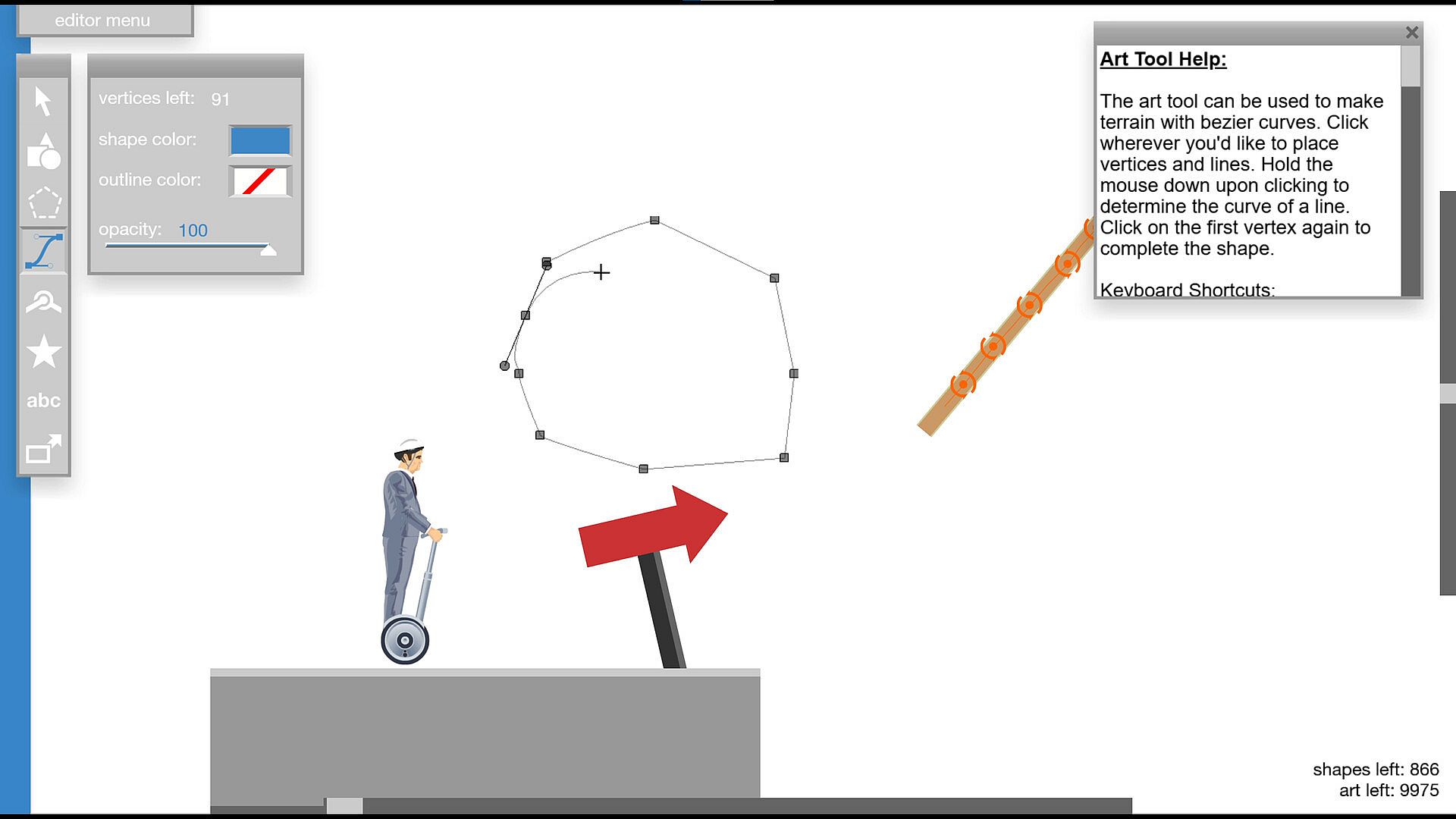
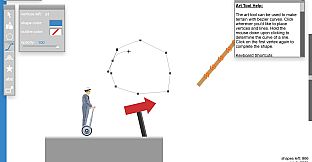
A fully featured level editor serves as the creation counterpart. Users place shapes, hazards, triggers, and special items to construct original courses, then share them for others to attempt. The editor supports detailed customization of object properties, joint behaviors, and character placement, allowing for both simple obstacle runs and complex mechanical puzzles. Single-player focus means all activity occurs in solo sessions, with no competitive or cooperative structures beyond viewing replays of other players' attempts.
Level Creation and Community
The level editor stands out for its depth, permitting builders to combine static obstacles with moving parts and scripted events. Shared levels undergo community rating through a star system that influences visibility in the browser. This feedback loop encourages creators to refine designs while giving players tools to filter for quality. The volume of available content exceeds five million courses, spanning straightforward races to elaborate contraptions that exploit the physics engine in unexpected ways.
Characters remain central to both play and creation. Each brings unique vehicle traits and limited abilities that interact differently with the same set of hazards, encouraging experimentation across the library. Controller integration extends to the editor workflow, supporting precise placement and testing on supported hardware.
Is It Worth Playing?
Happy Wheels delivers a consistent core loop built around physics experimentation and community creativity. The ad-free presentation on PC removes interruptions that affected earlier versions, while the included editor and browser provide immediate access to extensive user content. Players who enjoy short, repeatable sessions focused on overcoming brutal obstacles will find the format engaging, particularly those drawn to sandbox-style creation tools.
Reception for prior releases highlighted the satisfying ragdoll interactions and replay value from user levels, though difficulty spikes can lead to frustration for some. With the Steam version arriving as a polished, single-player package featuring controller support and no monetization barriers, it suits those seeking an unfiltered physics sandbox. The upcoming release means early adopters will contribute to the initial library growth, but the established base of millions of courses ensures substantial variety from day one. Individuals interested in building and sharing their own designs alongside playing others' work stand to gain the most from the full feature set.











