

Heaps: Special Interest Sandbox is an indie early access title on PC that turns personal files into explorable 3D knowledge spaces. Players ingest documents, images, spreadsheets, and code from their own computer, where a small language model running locally on the GPU extracts concepts and organizes them into clustered neighborhoods. The result is a custom sandbox built around individual interests rather than predefined content or multiplayer servers.
Gameplay
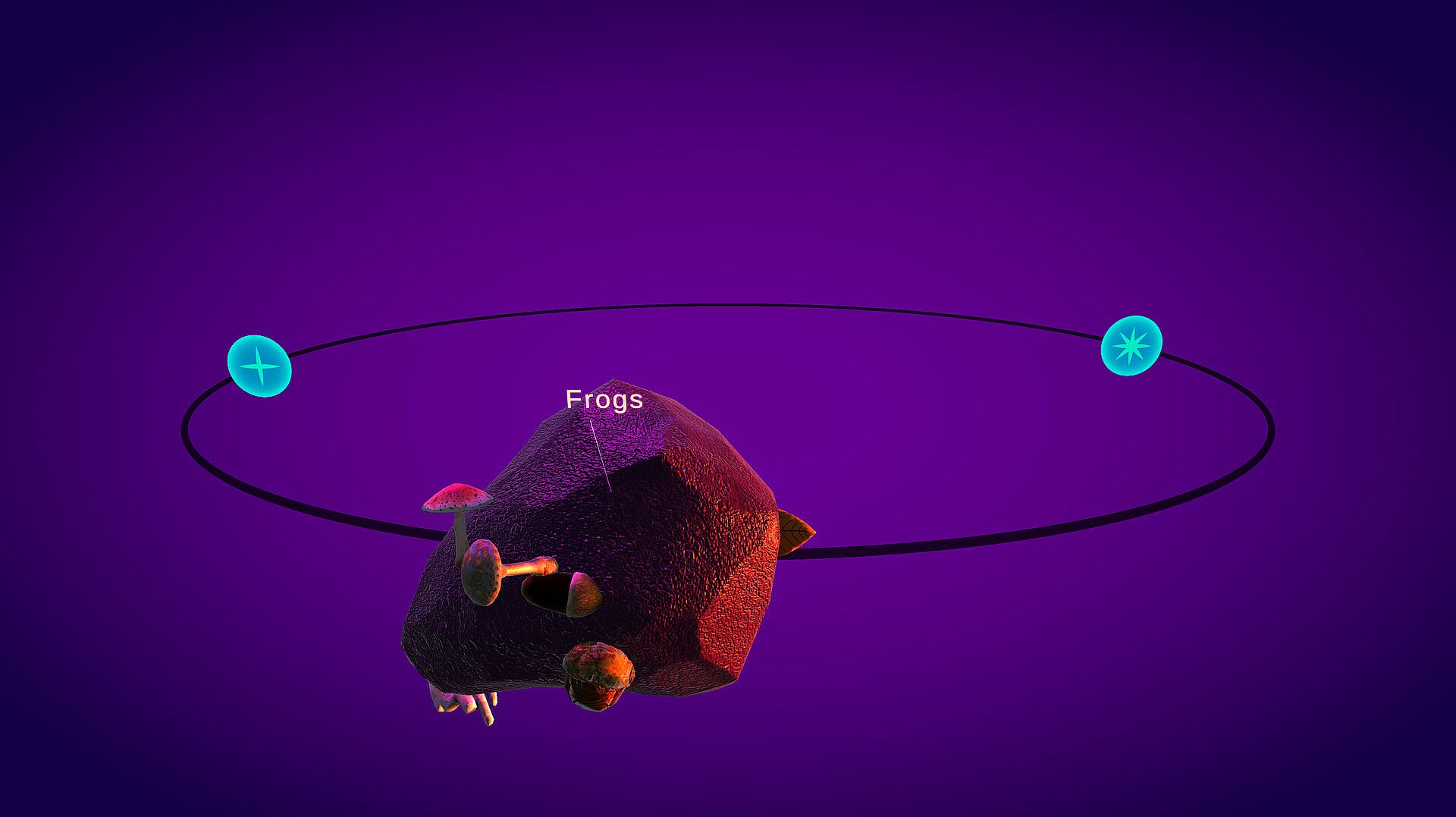
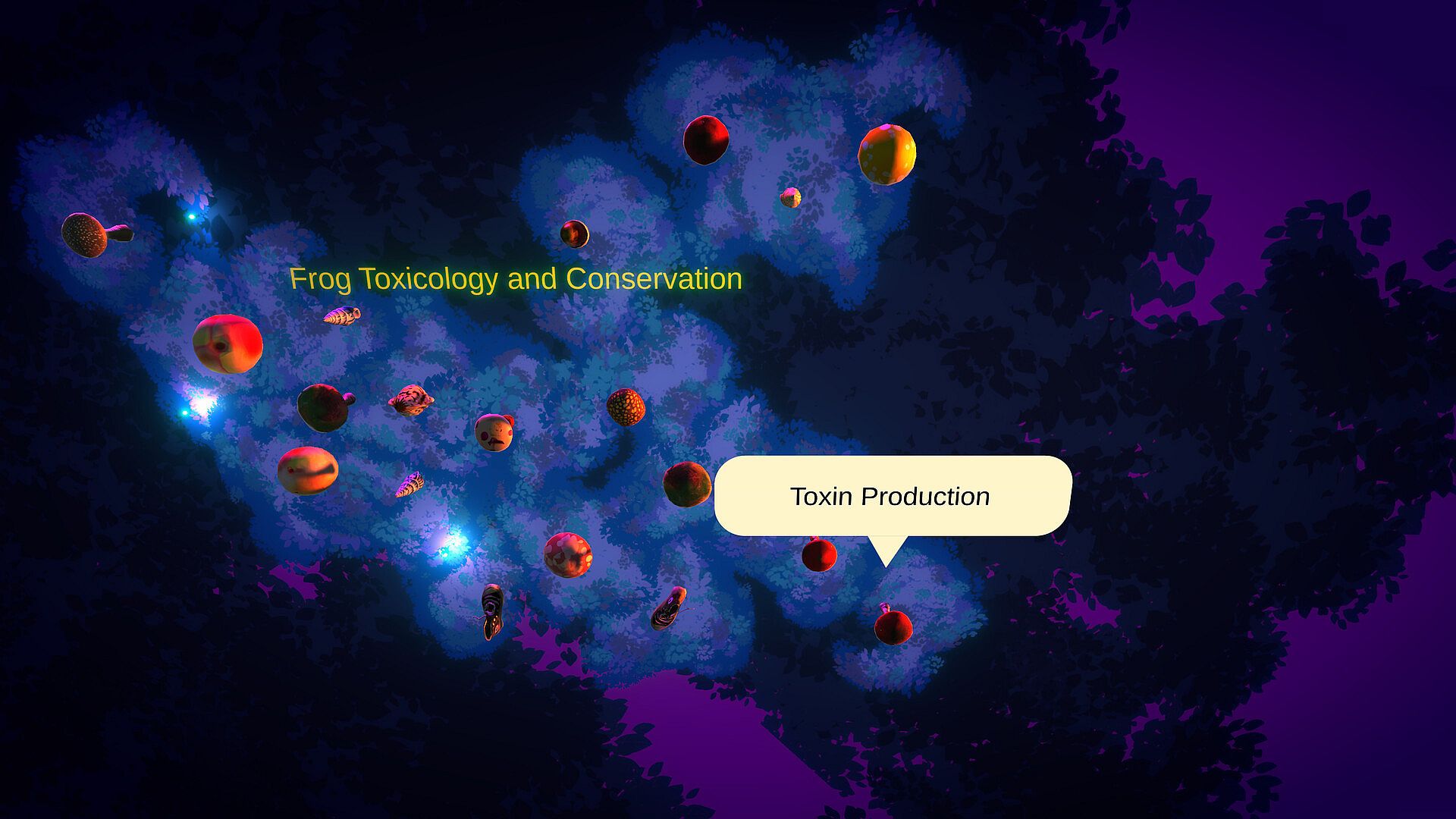
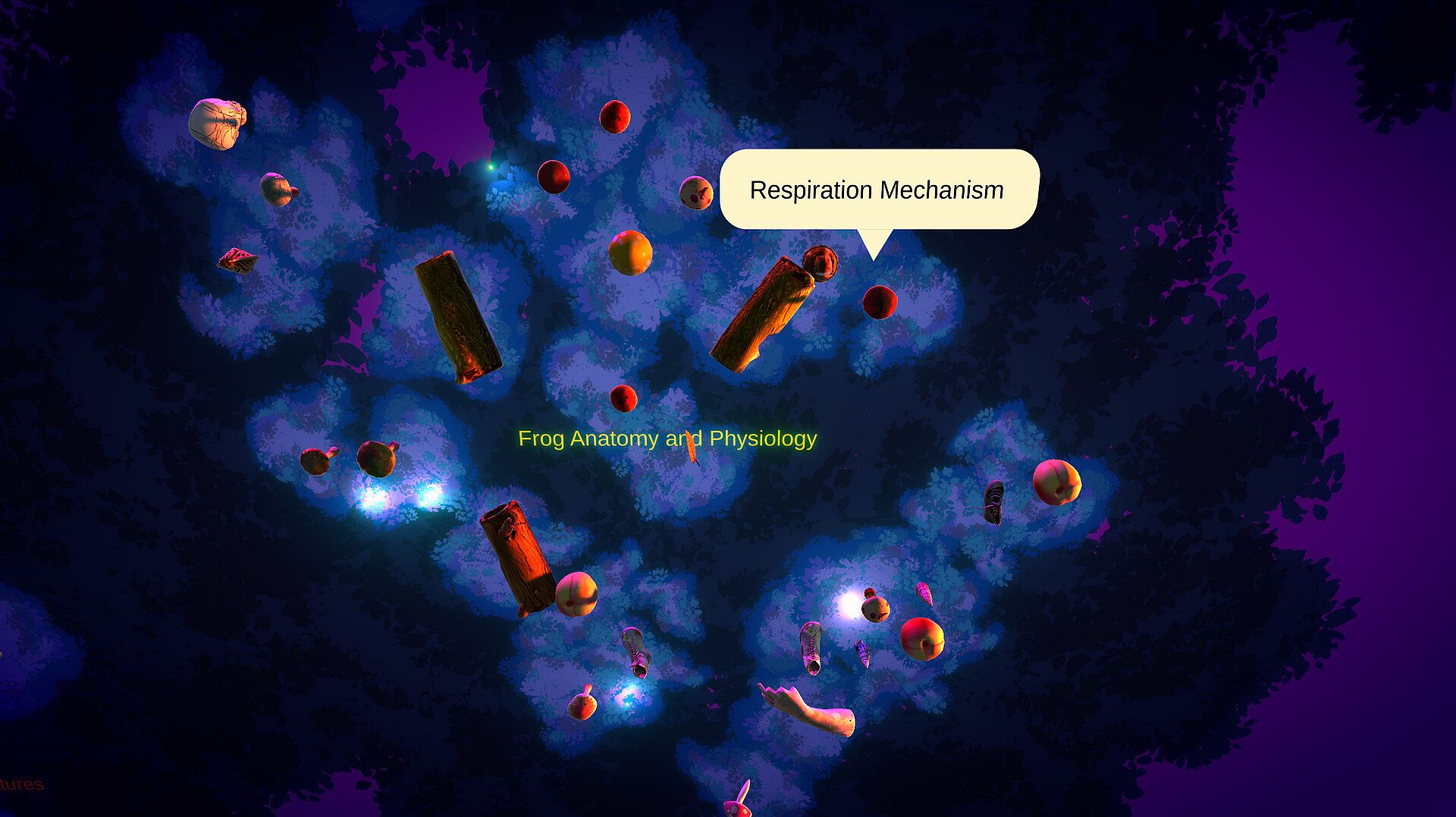
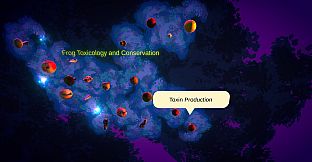
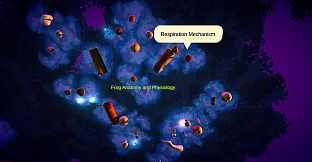
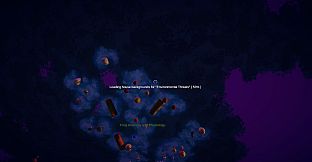
The core loop begins with creating a heap and feeding it selected files through a process called nomming. The local model scans the material for key ideas, groups related concepts, and builds a persistent 3D structure saved to disk. Once generation completes, the player enters the heap to walk through the resulting world. Procedural generation creates the initial layout automatically on first entry, after which the space remains available for repeated visits. Exploration focuses on navigating these concept clusters, with the background drawn from actual gameplay footage of the file-derived environments. The system relies on open-source components including Ollama for the language model, LibreOffice for handling PDFs and spreadsheets, and Tesseract-OCR for extracting text from images. Everything runs offline on the user's GPU, keeping data private and local.
Game Modes
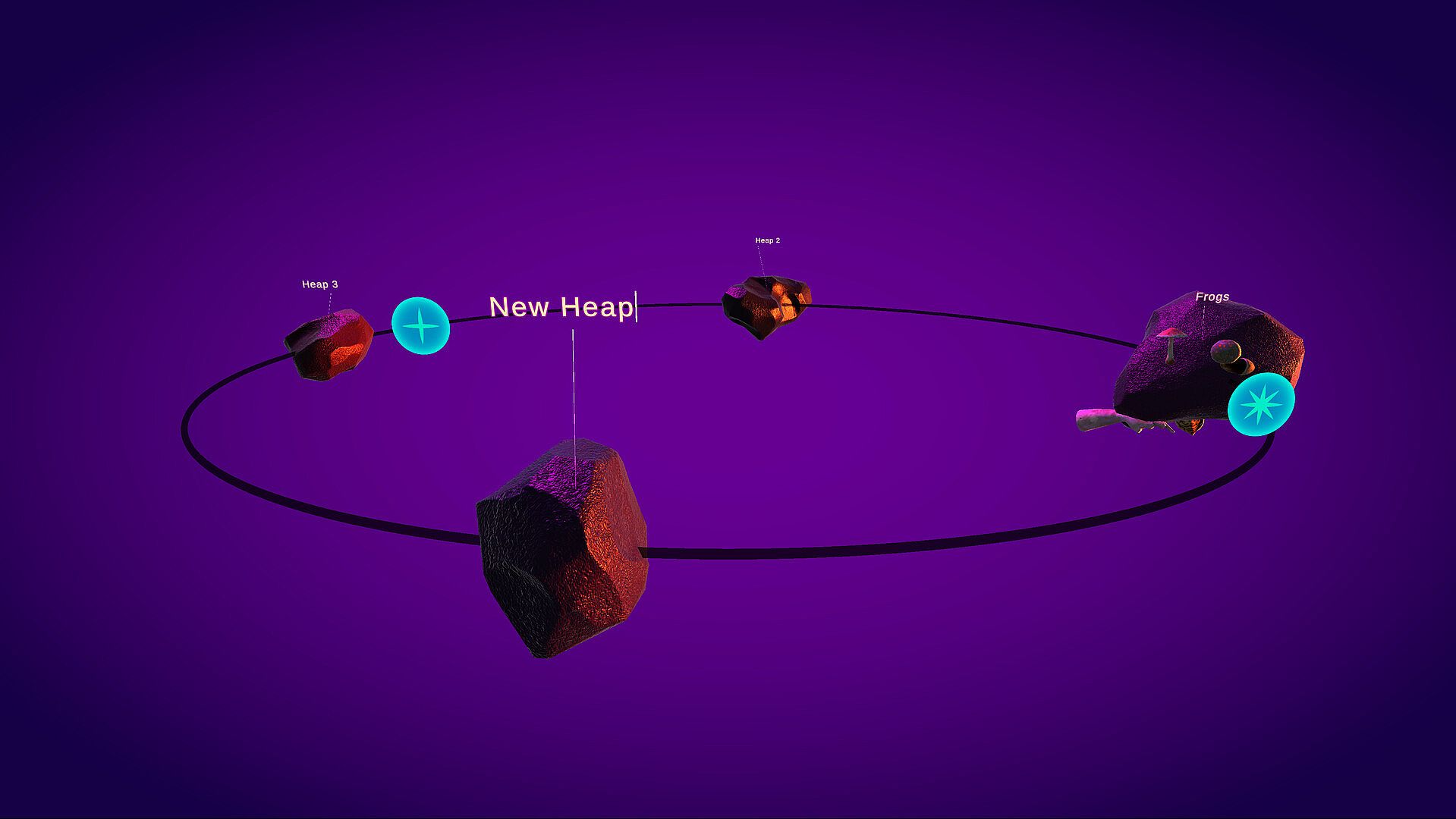
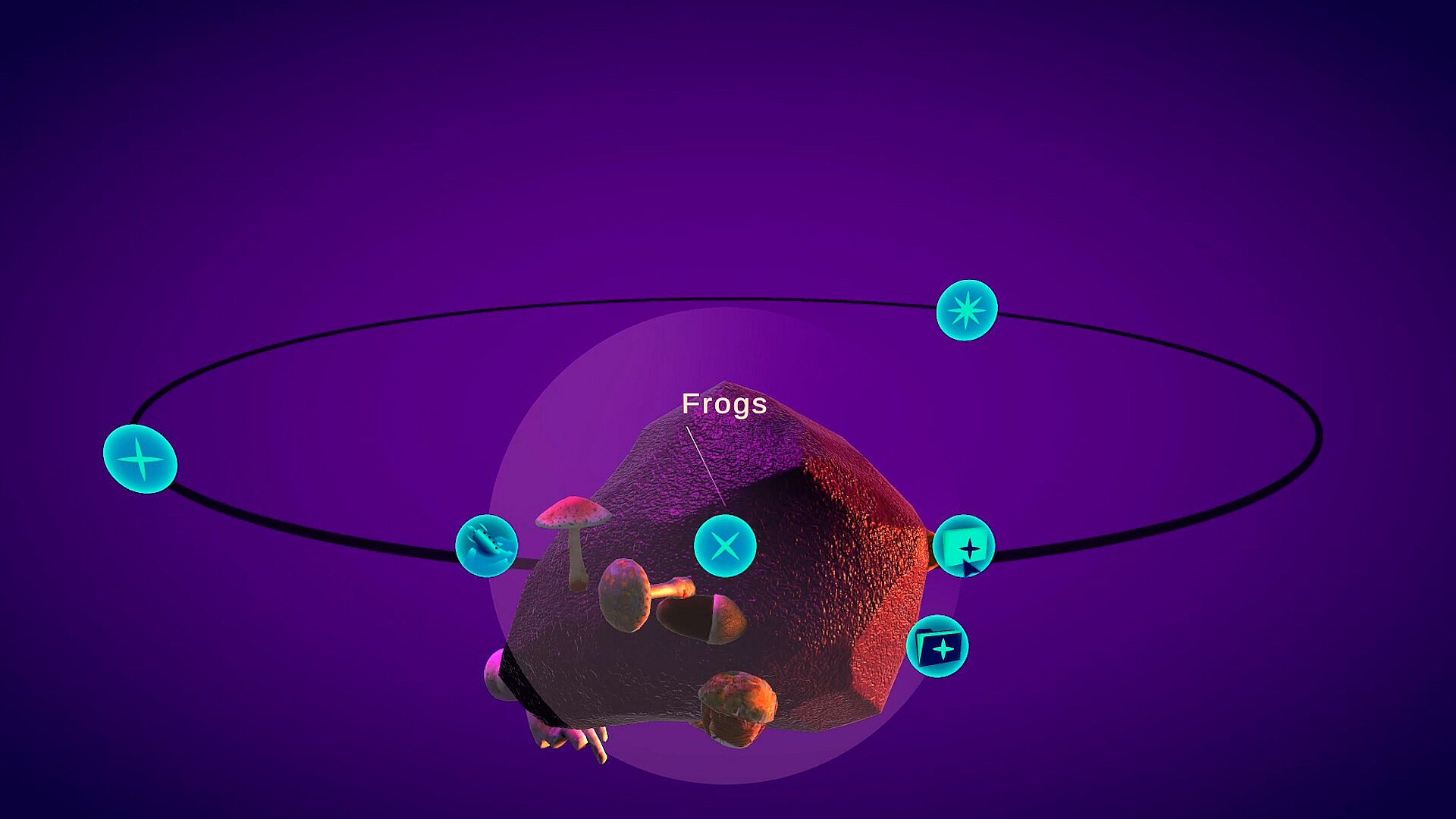
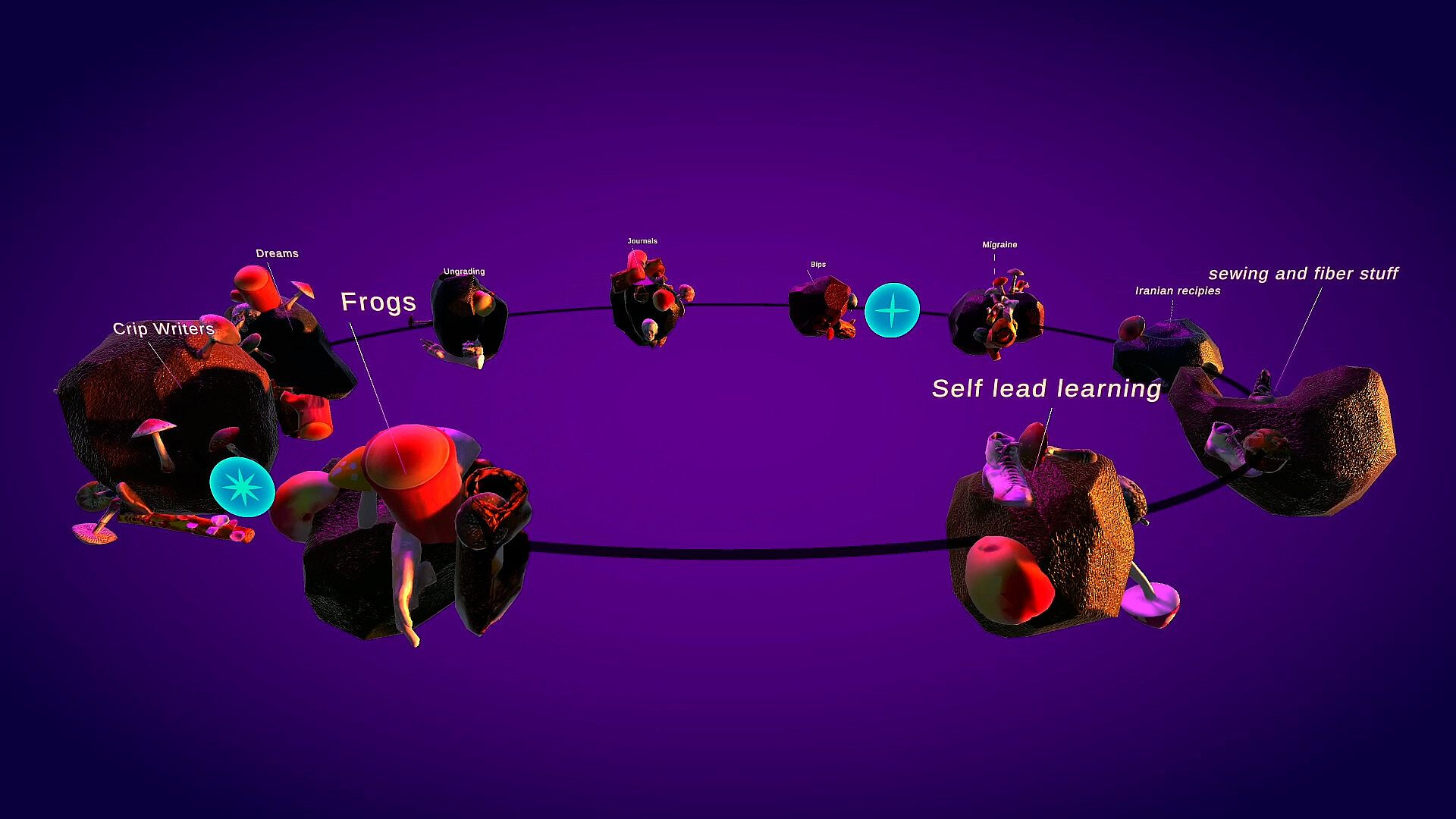
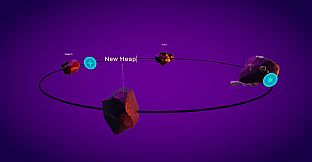
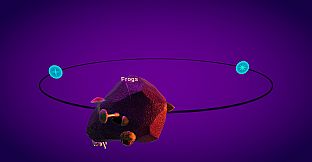
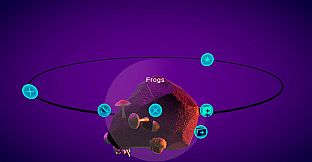
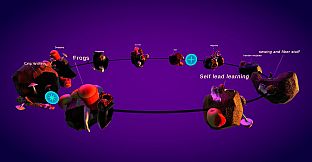
The primary experience centers on heap creation and exploration. Players can build multiple heaps, each tied to a distinct collection of files such as a personal archive on a specific topic. The universe ring serves as the top-level interface for managing these separate spaces. Current gameplay emphasizes solitary navigation of the generated 3D neighborhoods. Planned expansions include first-person perspective movement, interactive elements such as concept critters that move through the heaps, missions, crafting systems, and tools for modifying the environments directly. No separate competitive or cooperative modes exist at this stage, keeping the focus on individual knowledge organization and discovery.
Exploration and Future Features
Each heap starts as a procedurally generated world that saves automatically. Players move through the clustered concepts, discovering connections between ideas pulled from their files. The developer emphasizes transparency through the open-source ARTS standard for labeling AI-generated content, with system information available via QR codes on an accompanying label. Future updates aim to expand interactivity, allowing deeper engagement with the generated spaces beyond initial exploration. Multiple heaps can coexist, forming a personal universe of knowledge visualizations limited only by practical interface considerations.
Technical Foundations
The game operates entirely on the player's hardware with no cloud dependency. File ingestion supports a wide range including text documents, images, spreadsheets, and code files. Concept clustering creates spatial neighborhoods that reflect thematic groupings from the source material. The use of local processing ensures privacy while enabling repeated refinement of heaps as new files are added. This setup positions the experience as a tool for personal reflection and organization as much as a traditional game.
Is It Worth Playing?
Heaps suits players drawn to experimental indie sandboxes that blend file management with procedural world-building and local AI processing. Those who enjoy creating custom spaces from their own data and exploring emergent structures will find the current early access build offers a distinctive loop centered on personal archives. The offline, GPU-based approach appeals to users prioritizing privacy and control over their information. As development continues toward more interactive elements like missions and modifiable worlds, the title may grow in depth for dedicated explorers of knowledge visualization. Players seeking conventional multiplayer or story-driven experiences may find the focus too niche in its present form.