

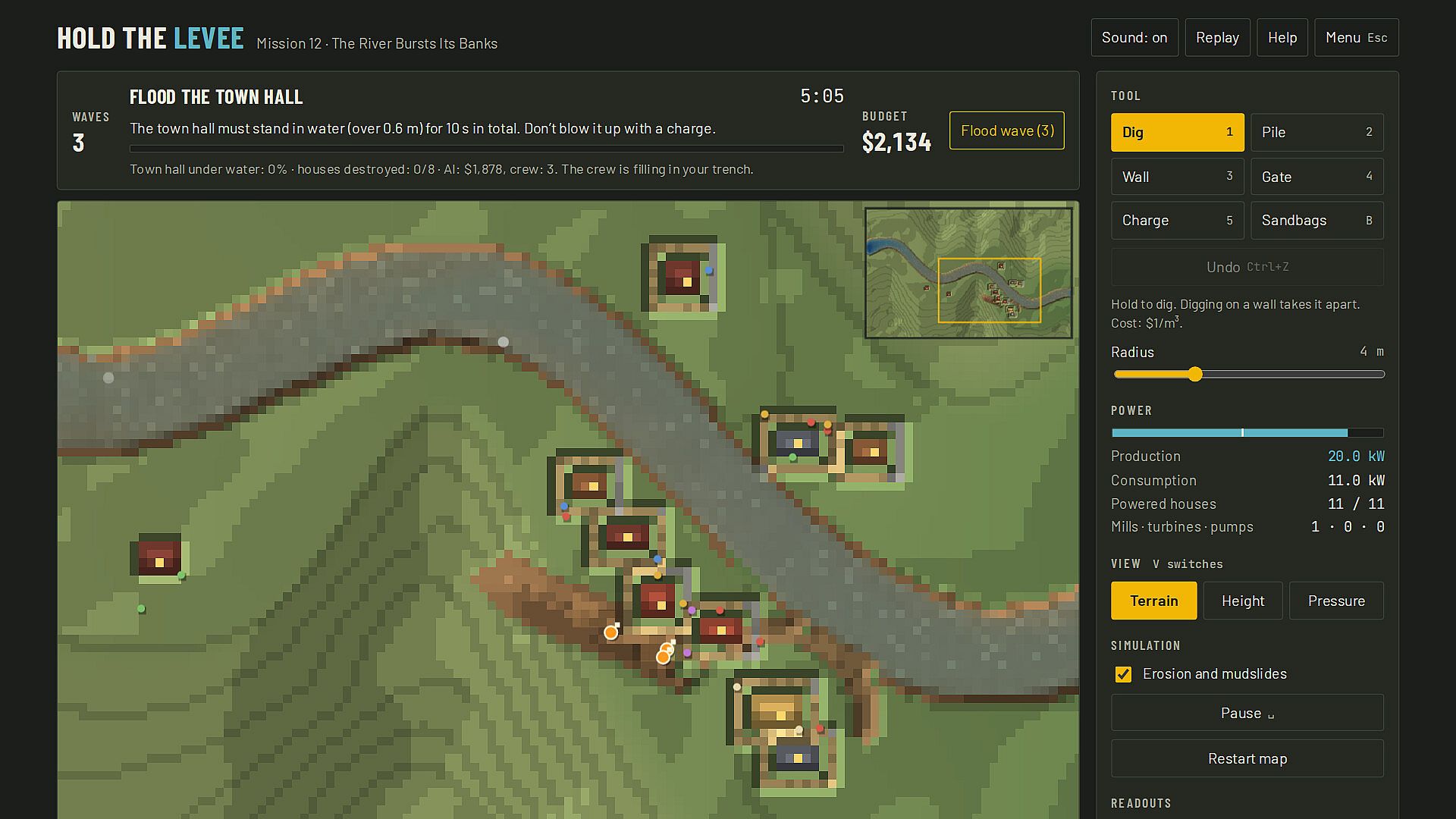
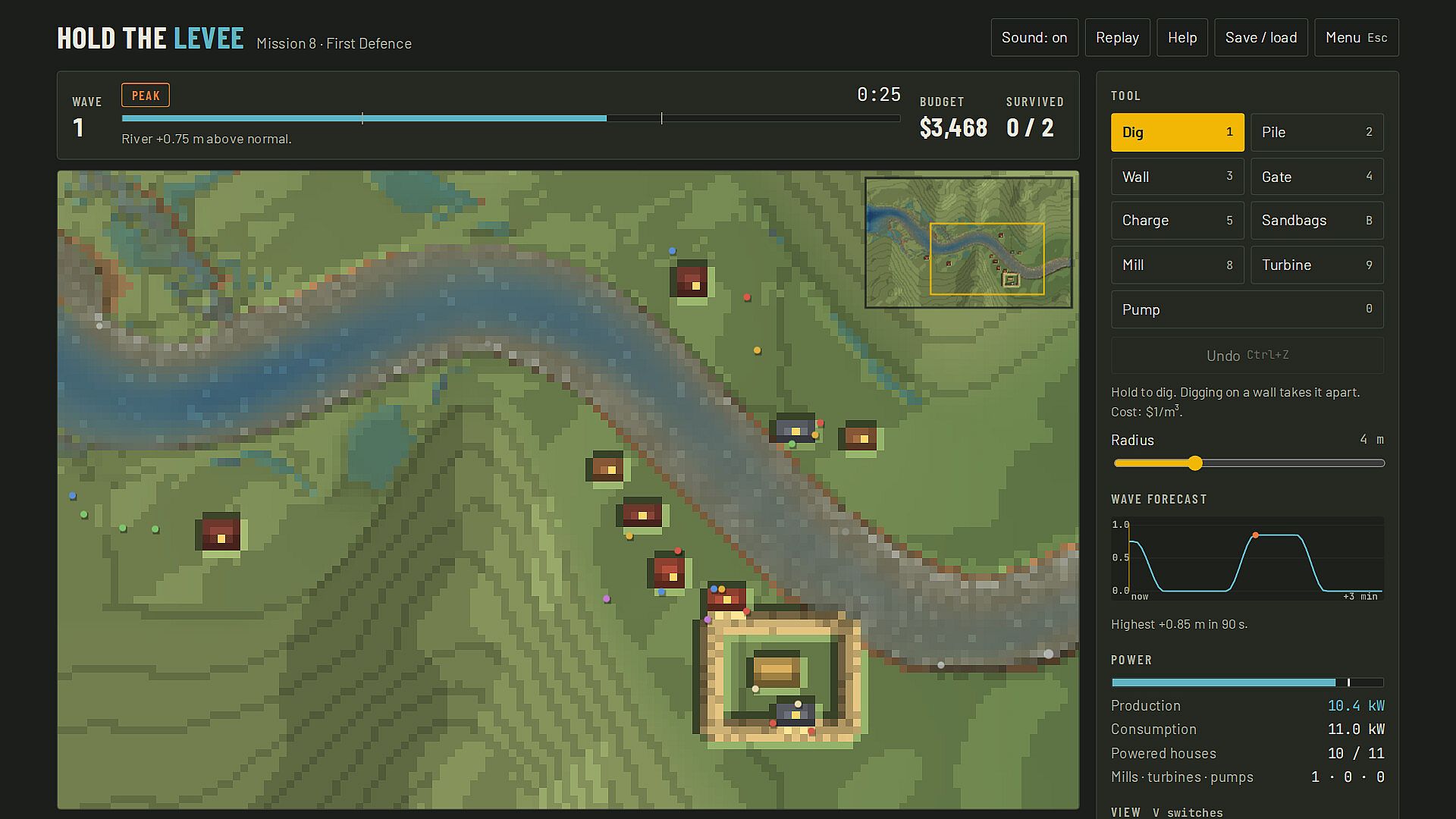
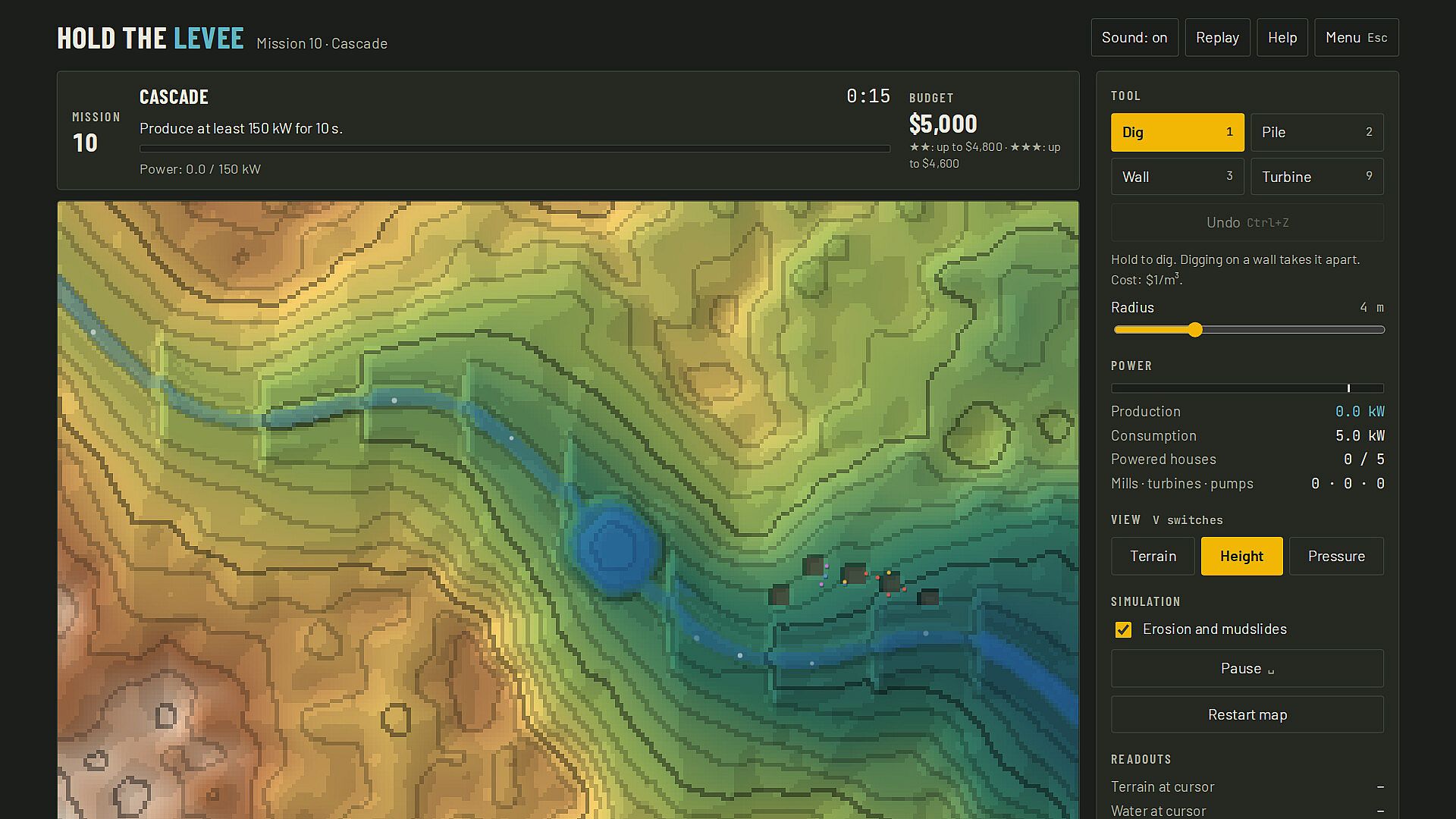
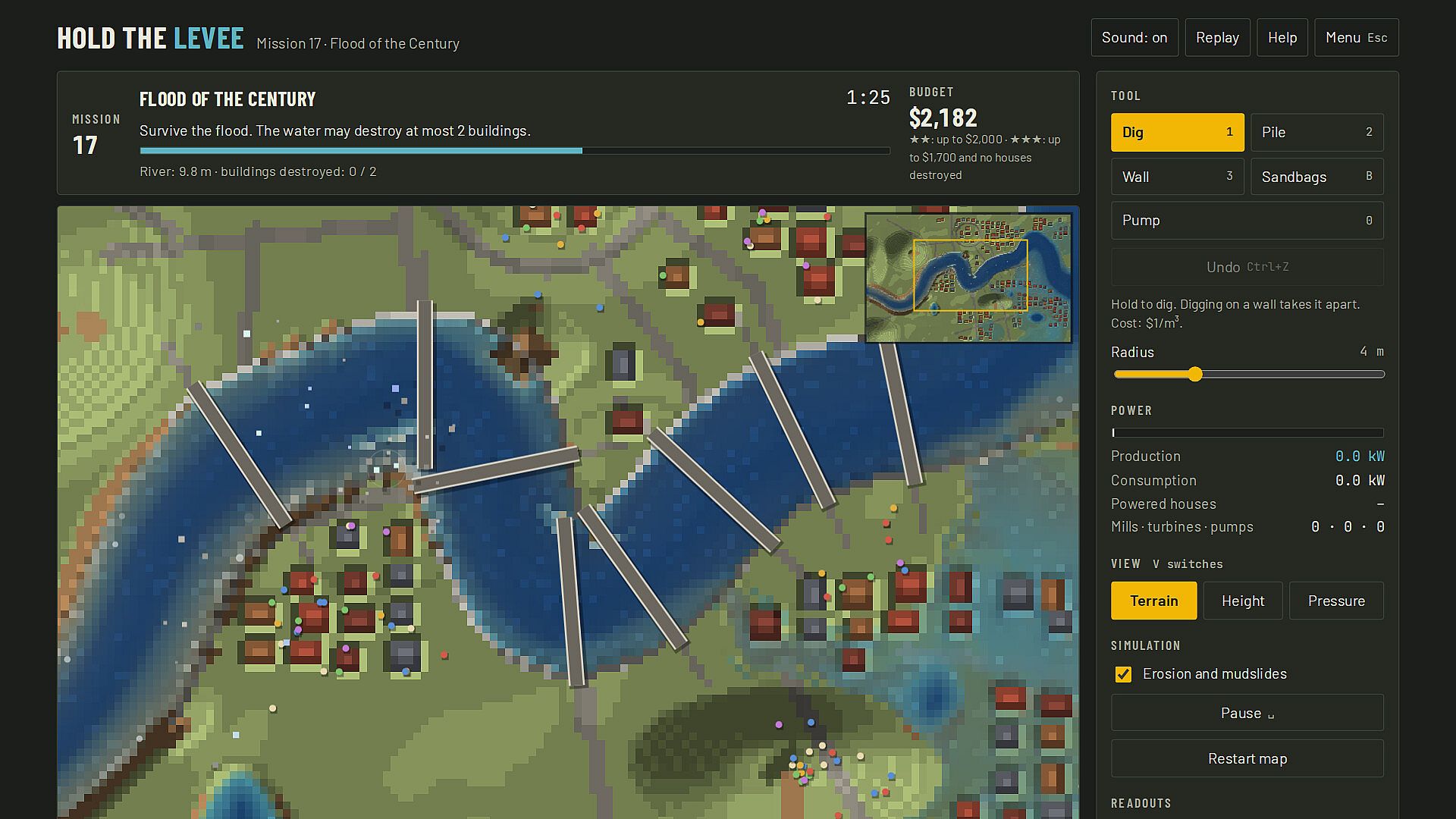
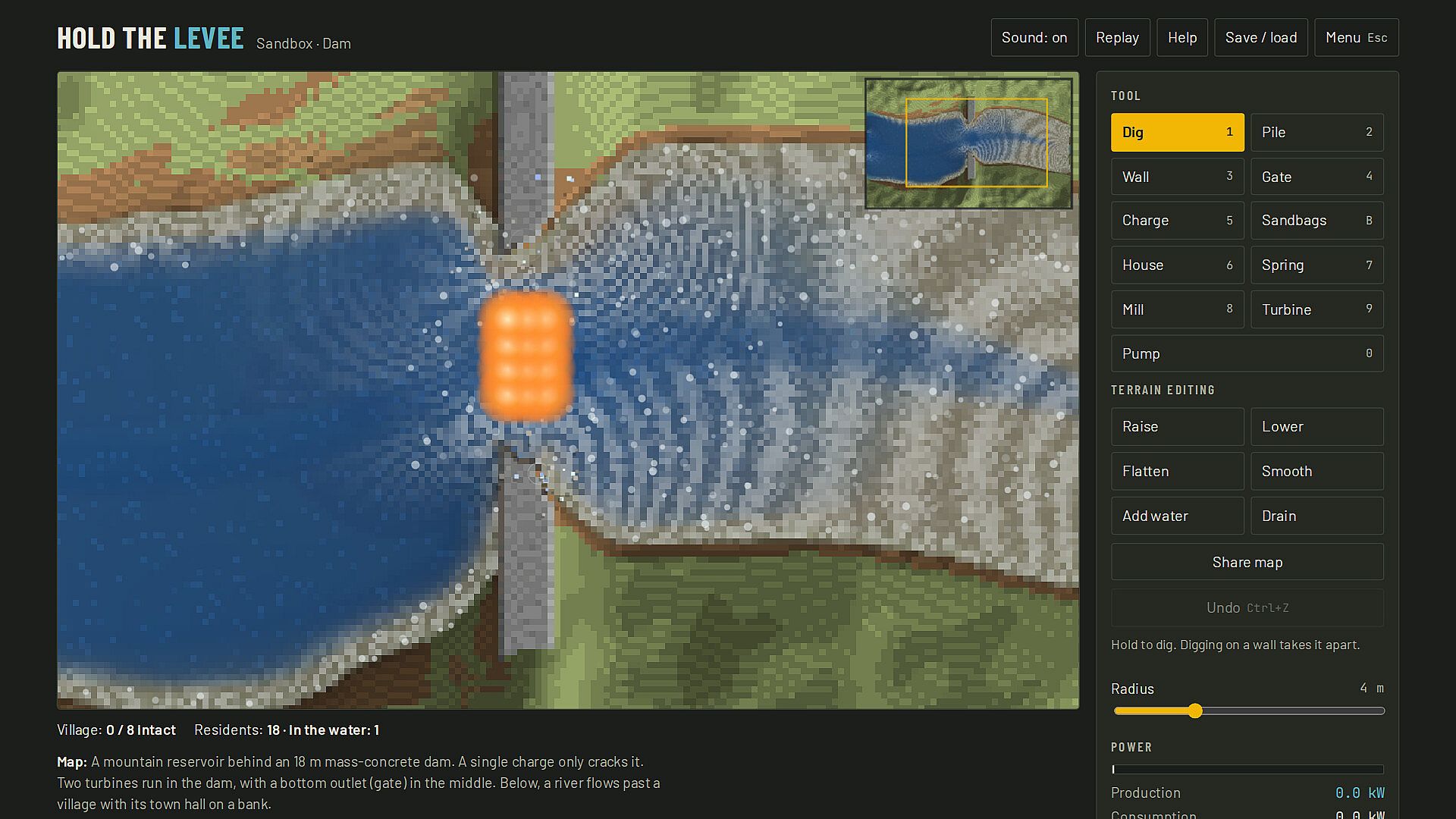
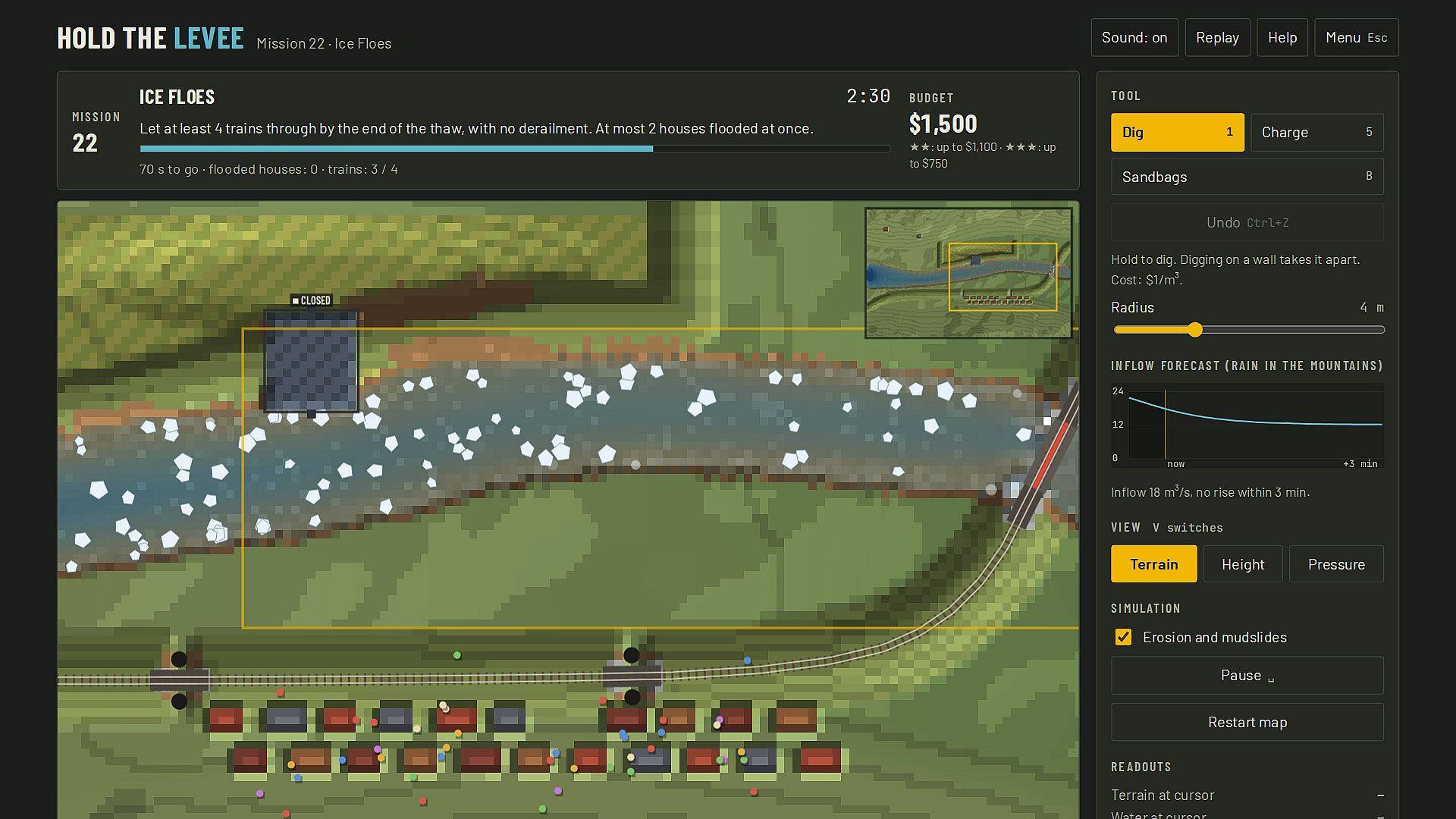
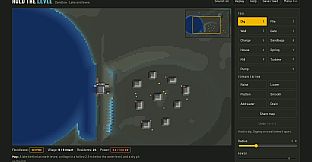
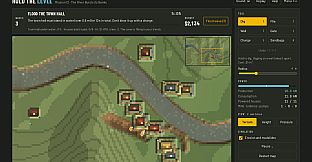
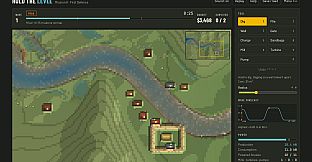
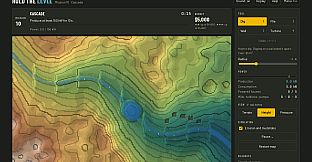
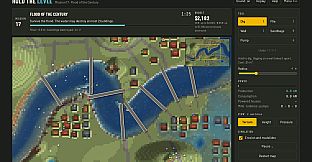
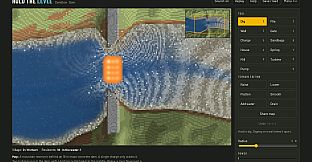
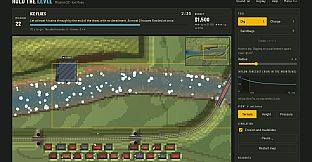
Hold The Levee is a strategy simulation game built around detailed water physics on a grid of map cells. Water flows downhill, pools in low areas, exerts pressure on barriers, and seeps through weak points in real time. Players shape the landscape with trenches that redirect flow, levees that hold back rising water, and pumps that manage excess volume. Every change to the terrain alters how floods develop across the map.
Gameplay
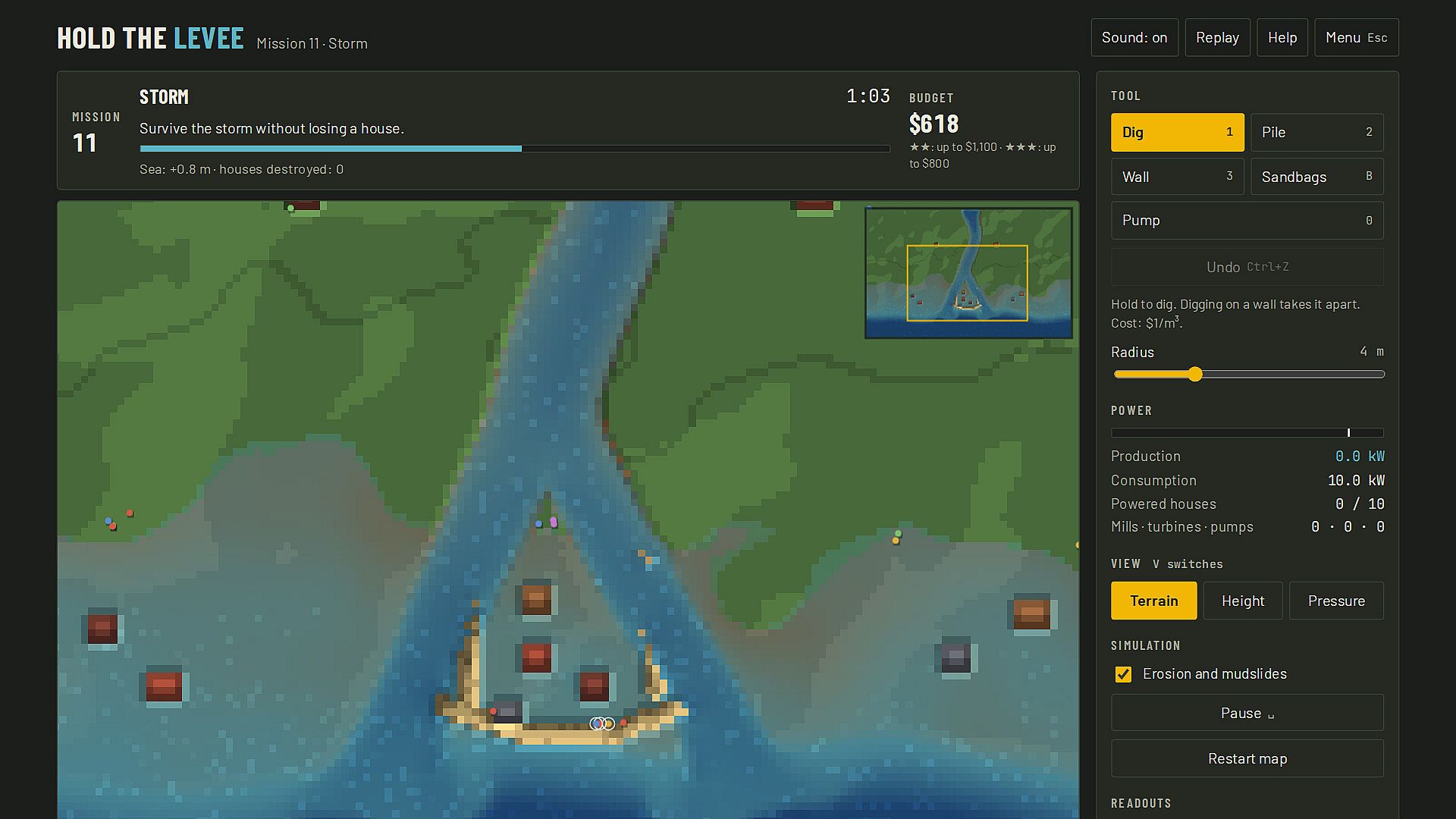
The core loop centers on managing water movement and structural integrity. Trenches divert rivers, mills and turbines generate power from elevation differences, and dams can fail under sustained pressure. A forecast system shows incoming water from upstream, giving time to prepare defenses before each wave arrives. Between waves the village expands if it survives, increasing the area that must be protected in later stages. Ice mechanics appear in winter missions where rivers freeze and then break into floes that jam under bridges. Coastal storms and medieval city layouts introduce varied terrain challenges such as railway embankments with culverts and debris on bridge piers.
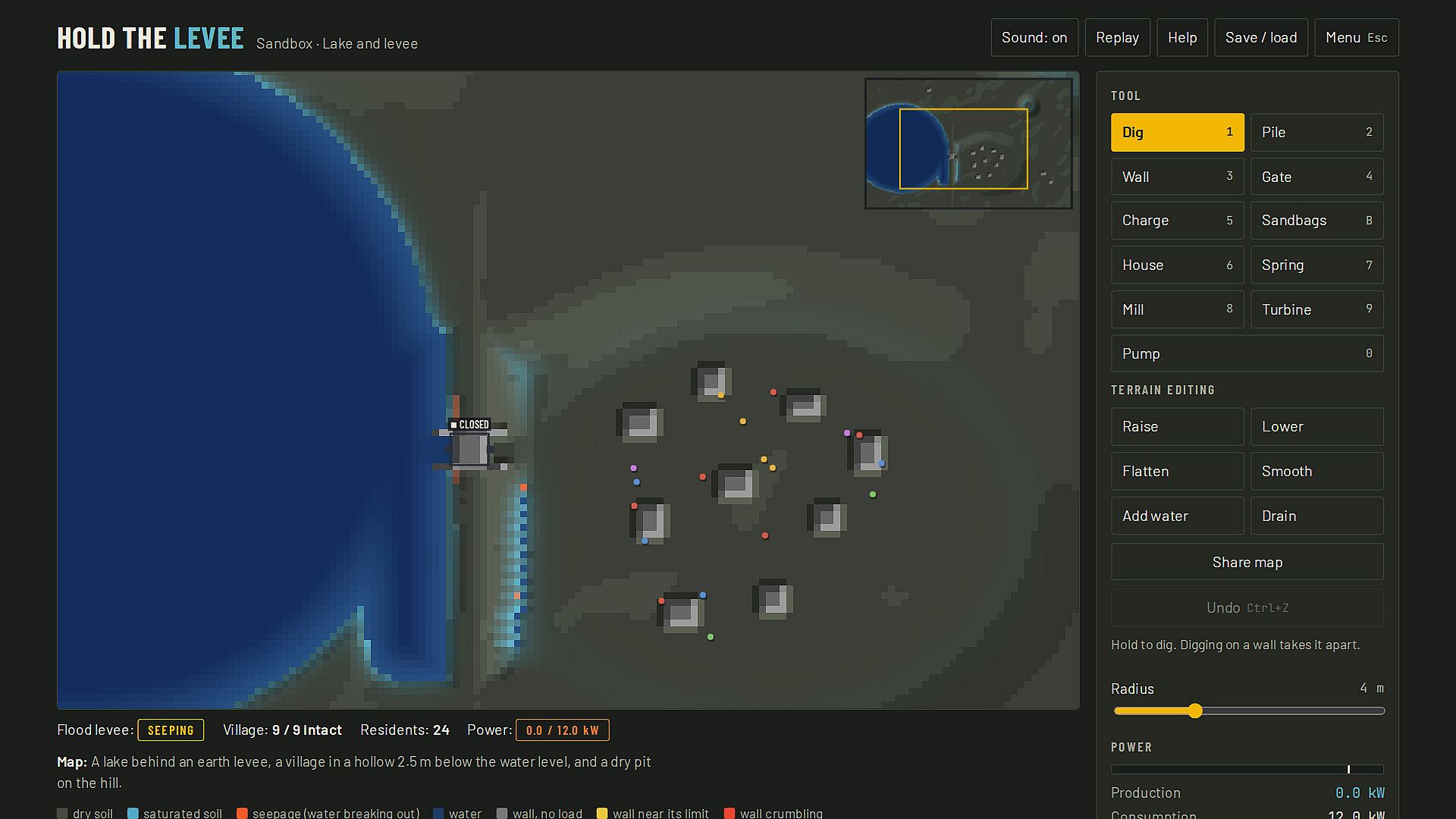
Construction uses a budget system for placing sandbags, walls, gates, and pumps. The simulation tracks seepage through embankments and undermining at the base of structures. Players receive a refund on undo actions, and a short replay buffer allows review of recent events. A map editor provides unlimited terrain adjustment, water placement, storms, and frost effects for custom scenarios.
Game Modes
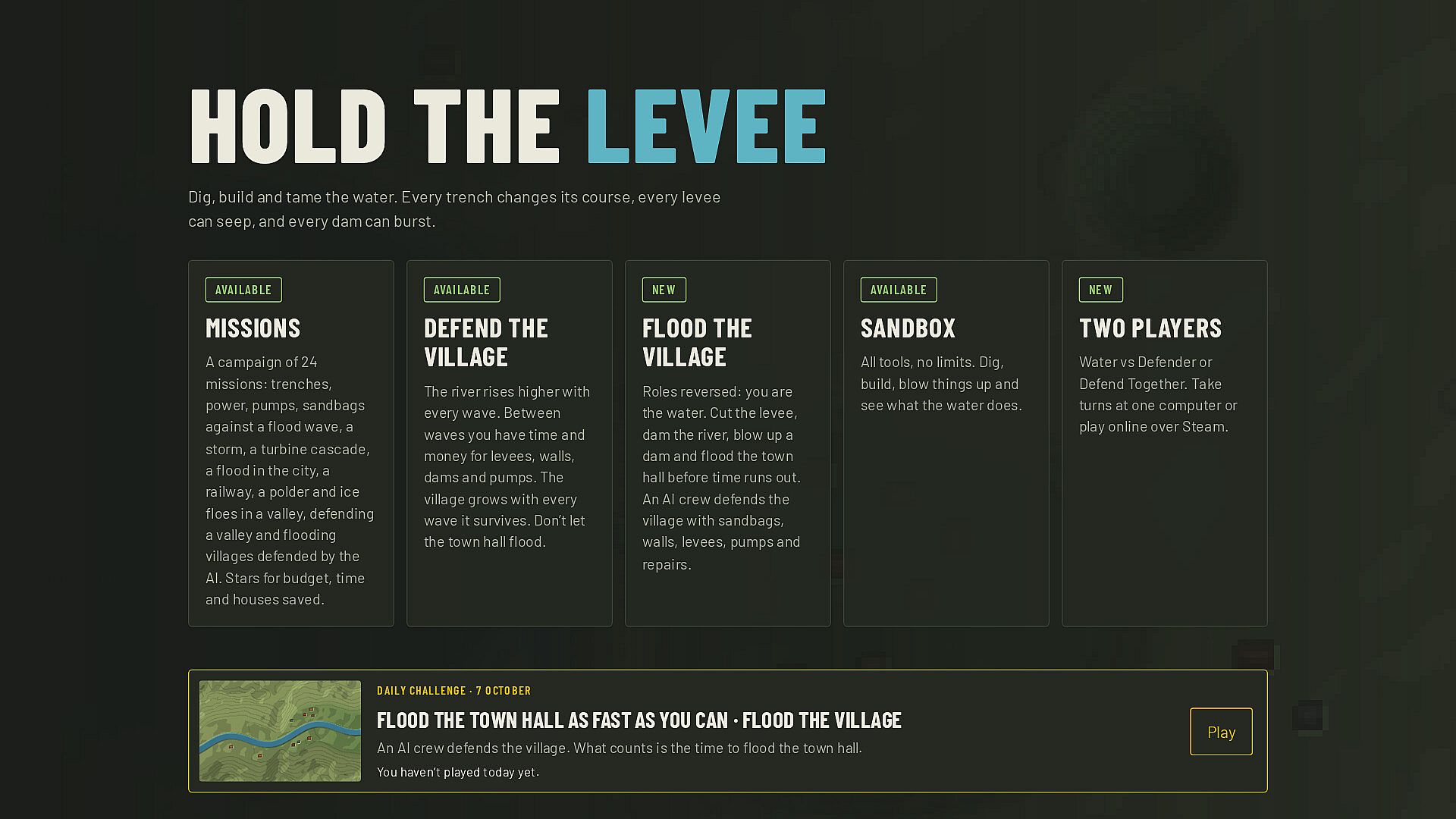
The campaign consists of 24 missions that range from defending settlements against flood waves to reversing roles and controlling the water itself to breach defenses around an AI-protected town hall. Defend the Village tasks players with holding back progressively higher waves using limited resources while the settlement grows. Flood the Village places the player as the water source with a shovel and explosives while AI workers attempt to reinforce the area.
Two-player options include Water vs Defender, where one participant directs the flood toward a target building and the other maintains barriers, and Defend Together, which shares a single budget against escalating waves. These can be played locally by alternating turns or online. Sandbox mode removes all restrictions for freeform experimentation. Daily challenges present the same generated valley to all players with leaderboards tracking performance. Mission leaderboards record the lowest budget spent to complete each scenario.
Additional Features
Steam Workshop support allows sharing of custom maps through short codes, along with community-created missions, rule modifications, and translations. The game includes 102 achievements. Supported languages cover English, Polish, German, Italian, Spanish, Russian, and Simplified Chinese. A replay function exports the last twenty seconds as a GIF.
Is It Worth Playing?
Hold The Levee targets players interested in precise simulation and iterative problem solving rather than fast action. The detailed cell-by-cell water behavior creates situations where small terrain adjustments produce large changes in flood paths. Single-player campaign and solo defense modes provide extended play, while the two-player variants add direct competition or cooperation. The map editor and daily challenges extend longevity beyond the main missions. As an upcoming title with no released version yet, its appeal depends on how well the described physics and mode variety hold up once available. Those drawn to strategy games focused on resource management under dynamic environmental pressure will find the listed systems align closely with that preference.