




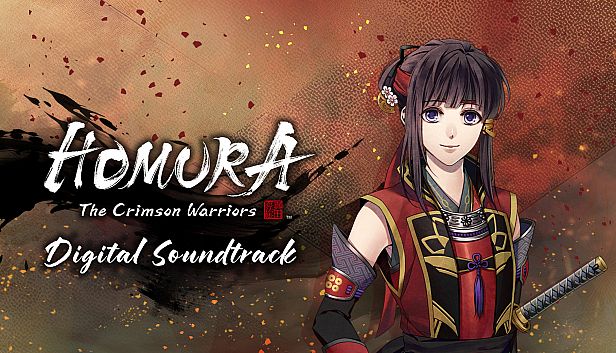


Homura: The Crimson Warriors is an otome visual novel developed by Otomate and published by Idea Factory International for the Nintendo Switch. Set during the final years of Japan's Sengoku period, the game follows a female protagonist navigating romance and loyalty amid historical conflicts involving the Sanada clan and its allies. Players experience a narrative-driven story that blends historical figures with original characters, focusing on personal bonds and the challenges of exile and survival.
Gameplay
The core loop centers on reading through illustrated scenes and dialogue while occasionally selecting from binary choices that shape the protagonist's relationships and story outcomes. These decisions determine which romance route unfolds and which ending the player reaches, with multiple paths available across the experience. The presentation relies on detailed character artwork, background illustrations, and a fitting musical score that enhances the period atmosphere without interrupting the flow of text.
Progression involves advancing through chapters that introduce key events and deepen connections with the available love interests. The protagonist, a young kunoichi named Mutsumi Mochizuki, joins a faction of the Sanada clan after the Battle of Sekigahara, and her actions help prove her worth while uncovering layers of clan politics and personal histories. Voice acting in Japanese accompanies the scenes, adding emotional weight to conversations and key moments.
Game Modes
The experience unfolds as a continuous single-player narrative with branching storylines triggered by player choices. There are no separate competitive or cooperative elements, as the focus remains on exploring different romantic and dramatic resolutions through repeated playthroughs. Each route highlights distinct interactions with the five main love interests, leading to varied conclusions that reflect the consequences of earlier decisions.
Additional content such as short stories appears in certain editions, expanding on individual character backstories outside the main campaign. The structure encourages multiple completions to uncover all endings and collect associated illustrations, though the base game provides a complete story on a single playthrough when choices align with one primary path.
Story and Characters
The tale begins fourteen years after the Battle of Sekigahara, placing the action at the tail end of the Warring States era. Nobushige Sanada and the Ten Braves form the central group, with the protagonist integrated into their exiled household at Osaka Castle. Conflicts arise from rival factions including the Ura Yagyu assassins and other warriors aligned with the shogunate, creating tension between personal loyalties and larger historical forces.
Character designs emphasize expressive portraits and period-appropriate details, supported by a soundtrack that ranges from tense tracks during confrontations to more reflective pieces during quieter moments. The narrative weaves romance with themes of duty, exile, and resilience, drawing from real historical context while introducing fictional elements centered on the protagonist's growth and relationships.
Is It Worth Playing?
Homura: The Crimson Warriors suits players who enjoy otome visual novels with historical settings and strong emphasis on character-driven romance. The choice system delivers meaningful branches that affect endings and illustrations, rewarding those willing to replay for different outcomes. Reviews highlight the quality of the artwork, voice performances, and atmospheric music as consistent strengths that support the story's emotional beats.
The game launched on March 31, 2026, in North America with both physical and digital options available on the Nintendo Switch. It stands as a self-contained title without ongoing seasonal updates or additional modes beyond the core narrative and its variations. Fans of similar titles from the same developer will find familiar pacing and presentation, while newcomers to the genre can approach it as an accessible entry focused on interpersonal drama rather than complex systems or action sequences.