

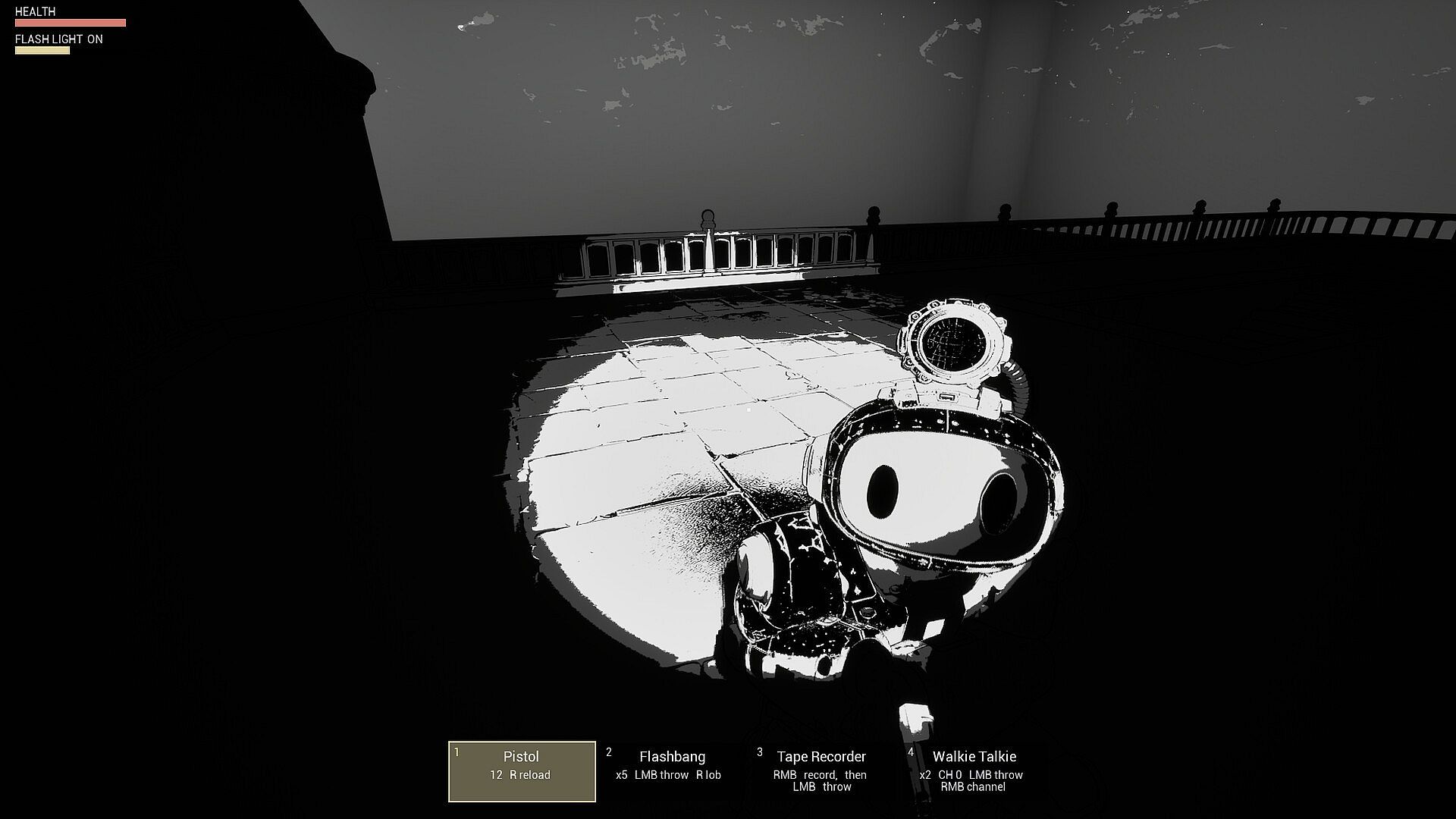
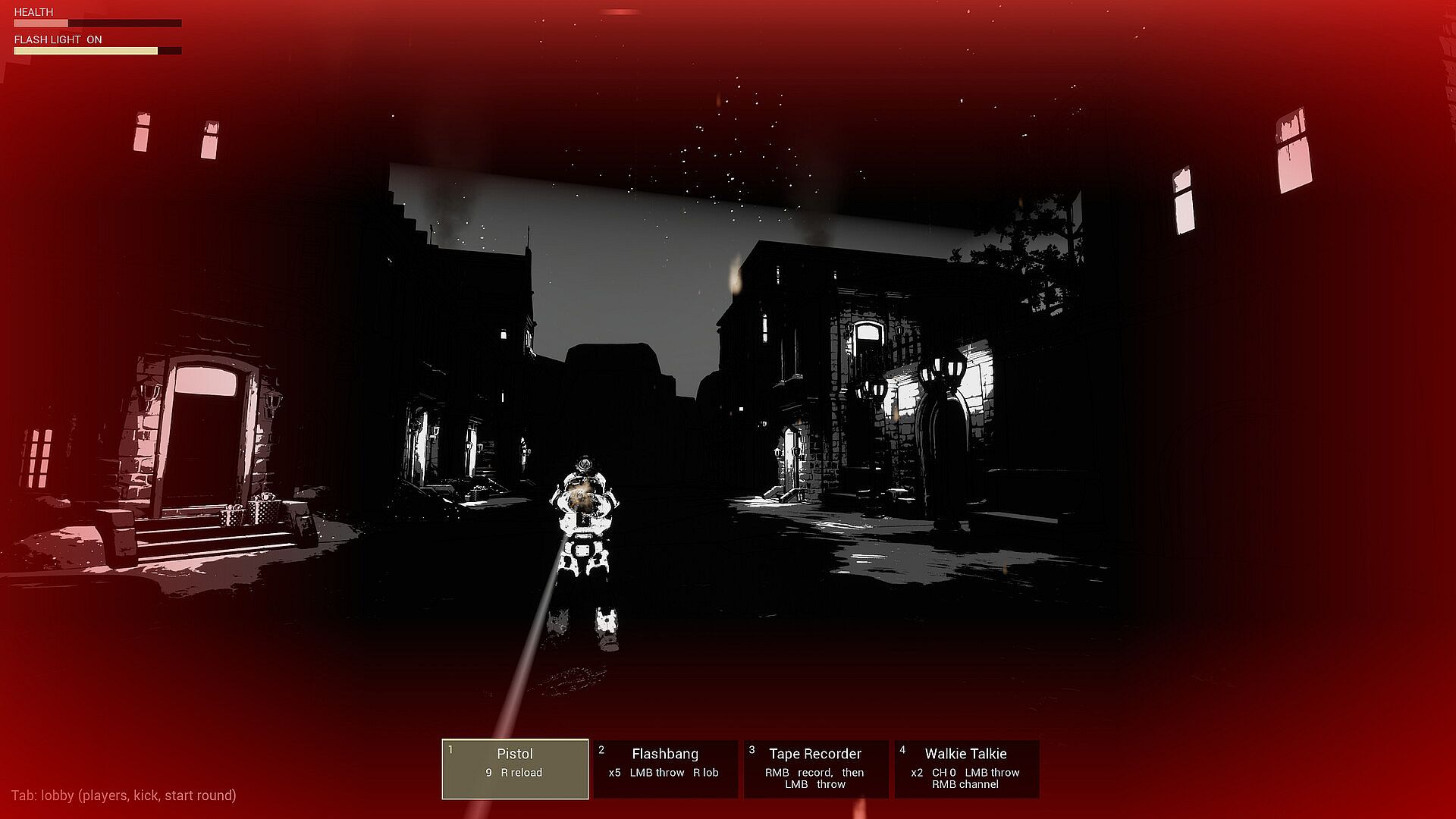
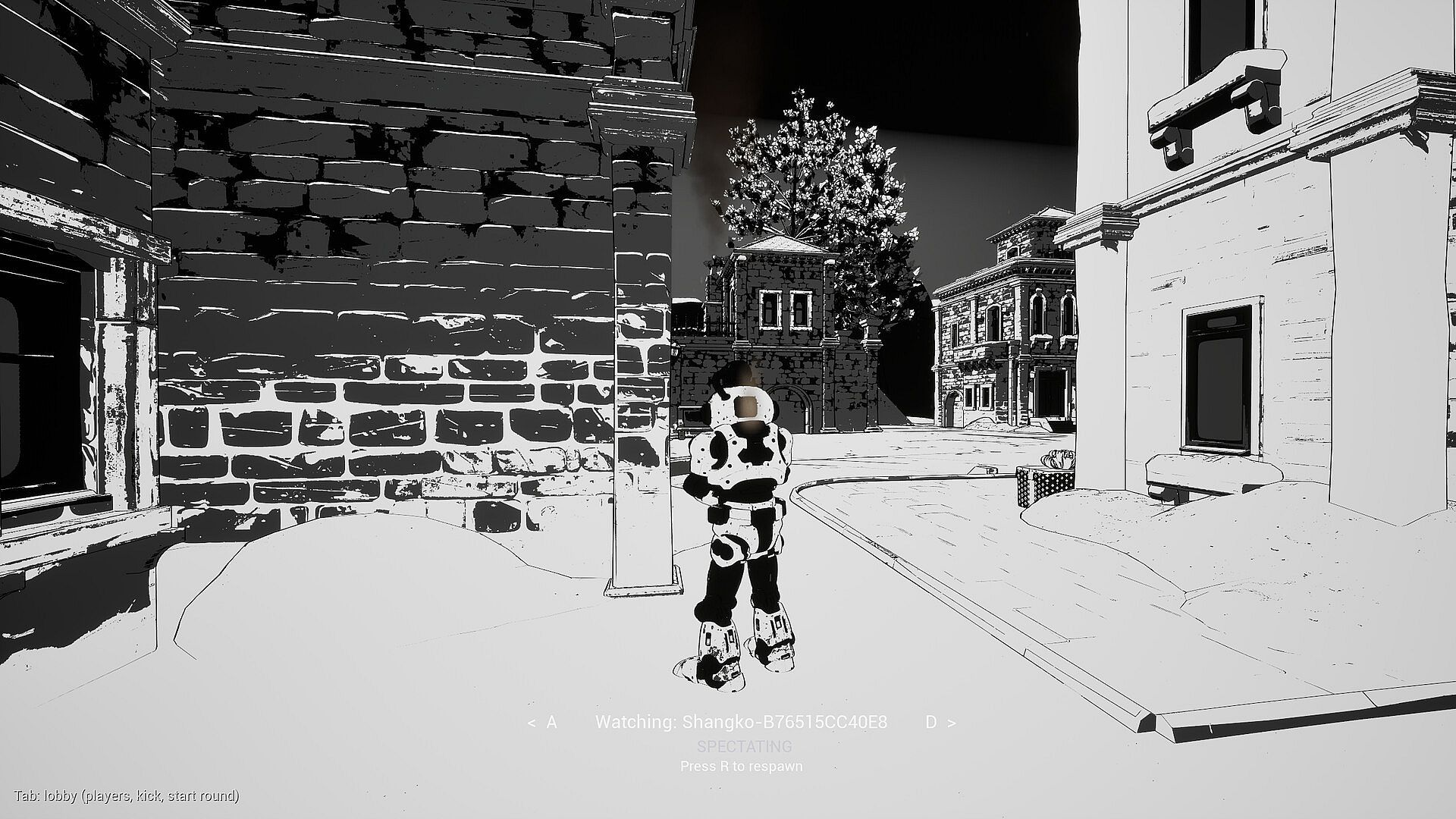
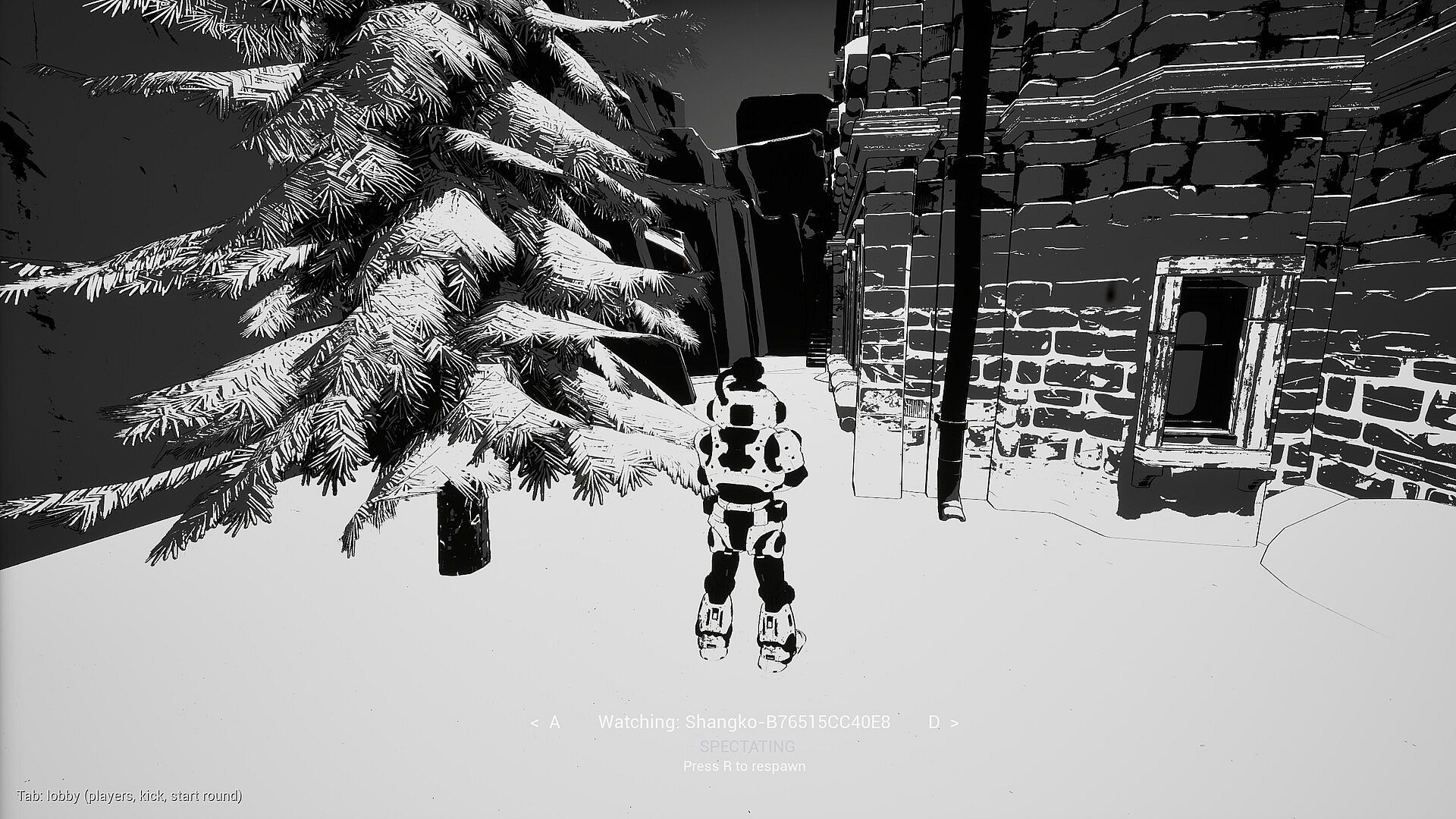


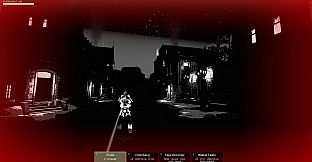
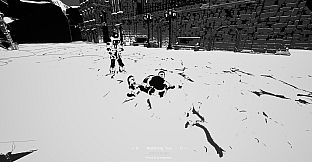
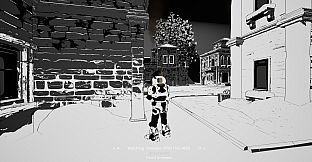
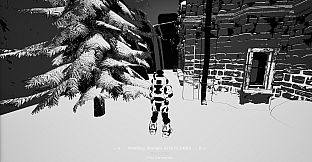
I Can't See You is an action indie early access multiplayer shooter designed for two to eight players on PC. Matches unfold in complete darkness across five distinct stages, forcing participants to rely on audio cues rather than sight. Every footstep, reload, shot, and spoken word reveals position to nearby opponents, turning voice chat into both a tool and a liability.
Gameplay
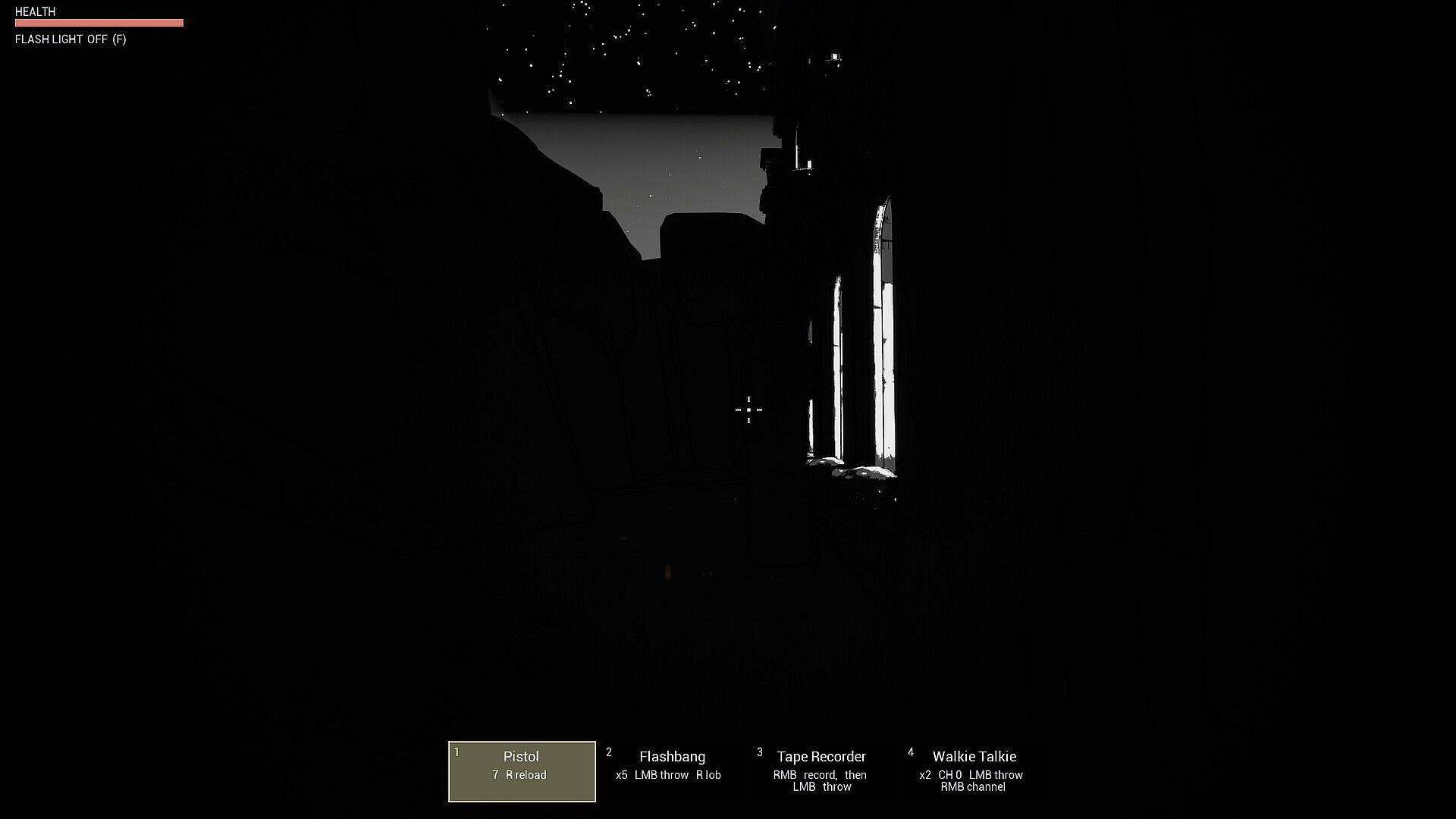
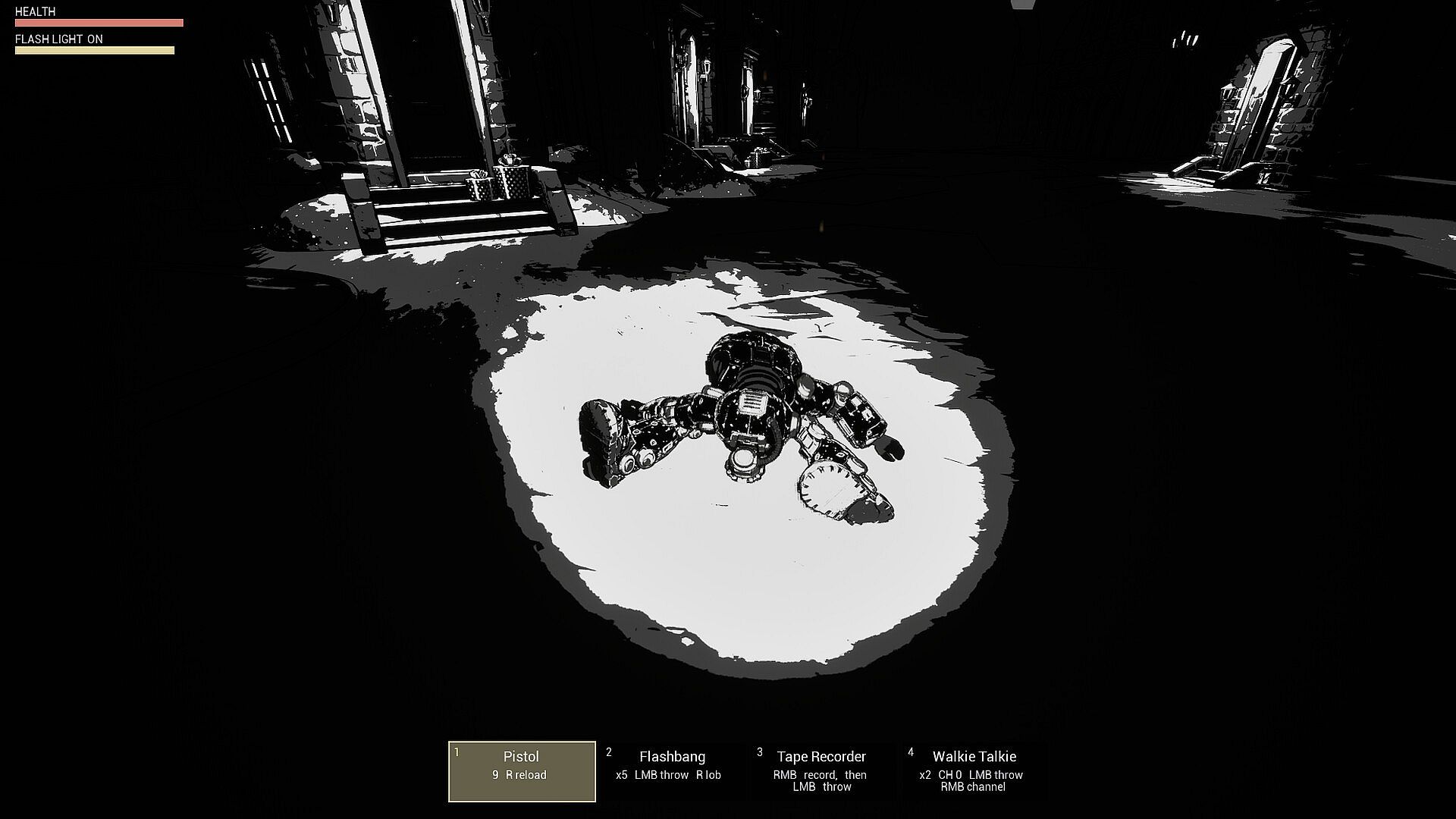
The core loop centers on sound awareness and deliberate noise management. Players move through environments using proximity voice chat that broadcasts only to those within hearing range. A pistol serves as the primary weapon with unlimited ammunition, though each reload produces an audible cue that can pinpoint location. The flashlight illuminates a narrow cone ahead but drains a limited battery and broadcasts the user's position to anyone watching. Flashbangs create temporary blindness for anyone facing the explosion while briefly lighting the surrounding area for all. Tape recorders capture and loop footsteps, gunfire, or voice to create decoys or distractions when thrown. Walkie talkies operate across twenty channels, allowing players to eavesdrop on or broadcast to others, with the option to attach one to an opponent for ongoing surveillance. Dummies can be dropped to mimic fallen players, tricking opponents into wasting shots and revealing their own position.
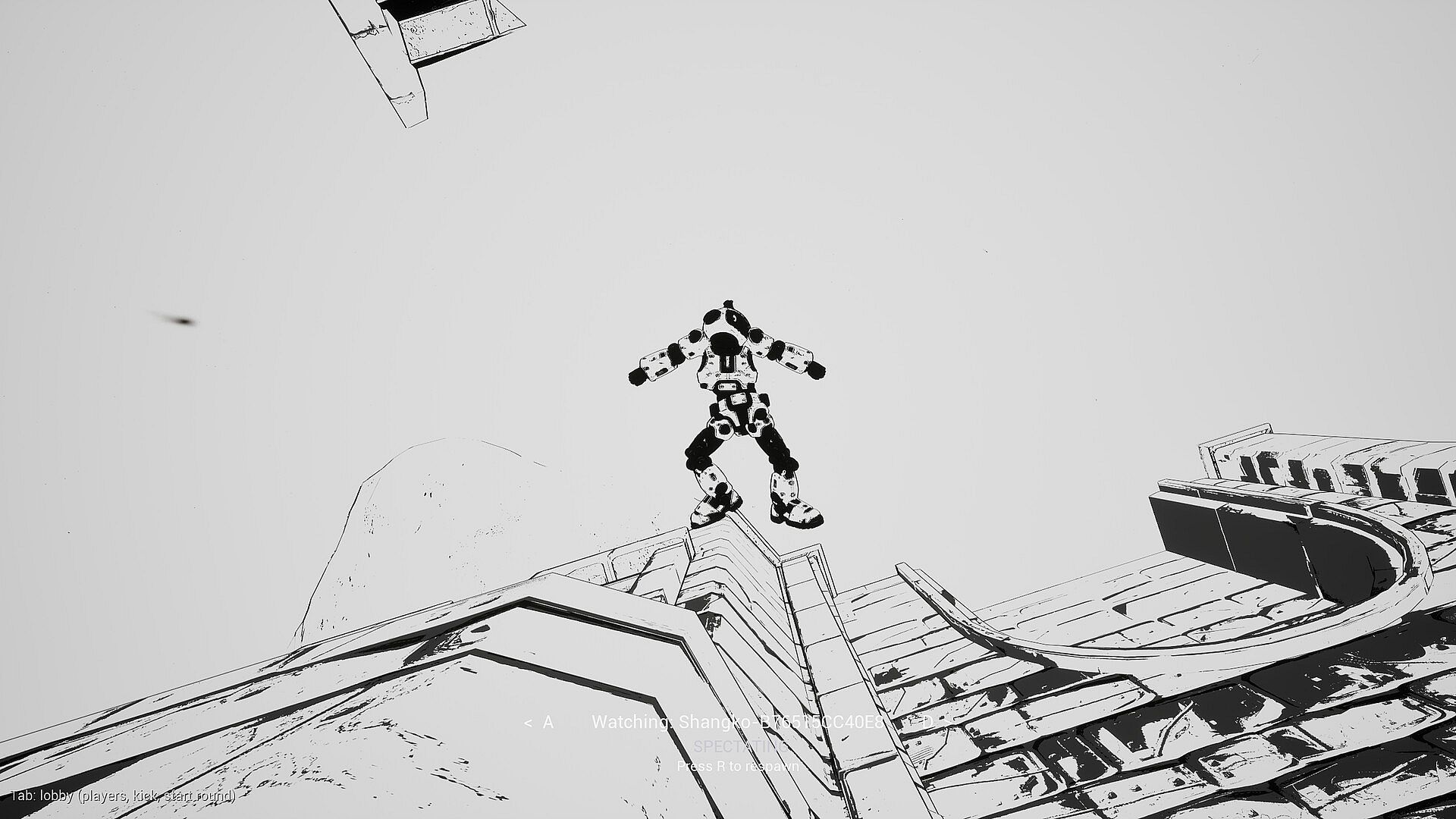
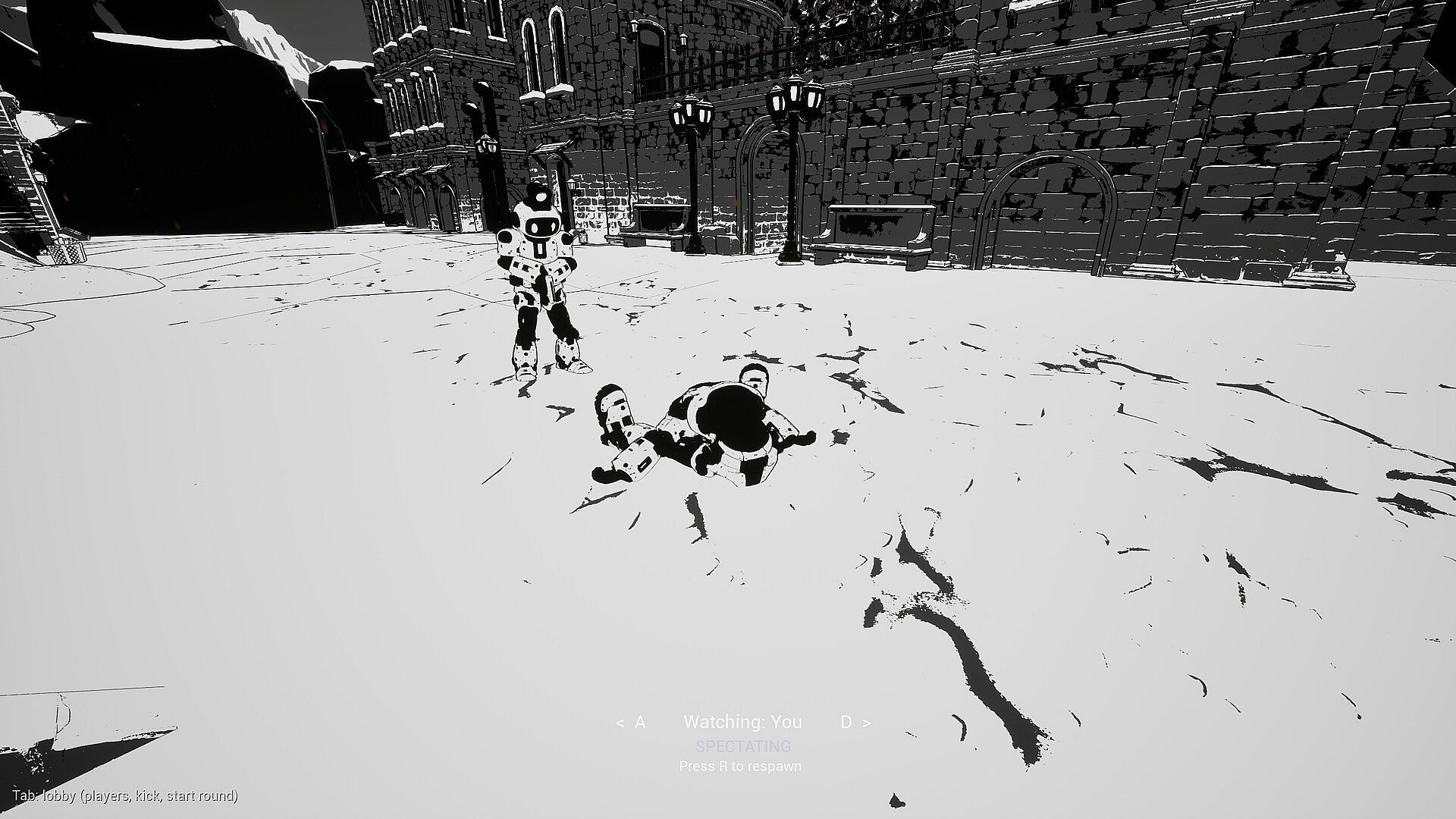
Additional movement options include climbing and mantling over obstacles to reach elevated or unexpected angles. Dead players enter a spectator mode where they can switch between living teammates to observe the remainder of the round. These systems combine to reward careful listening, strategic noise creation, and creative use of equipment in an environment where visual information is absent.
Game Modes
Matches follow customizable deathmatch rules set by the host before each session. Options include adjusting lives per player and the total number of rounds, selecting solo play or team formats with host-assigned or random groupings, and deciding whether stages remain fixed or rotate among the available maps. Respawn behavior can be set to automatic or manual, while item limits cover magazine size, quantities of flashbangs, tape recorders, and walkie talkies, plus flashlight battery duration ranging from brief to unlimited. These parameters allow hosts to shape sessions around preferred pacing and group size without introducing separate named modes beyond the core sound-driven combat framework.
Stages and Customization
Five stages provide varied layouts for matches: Office, Neighborhood, Forest, Old Town, and Castle. Each offers different verticality and cover opportunities that players exploit through climbing and positioning. Hosts further tailor experiences by modifying equipment availability and environmental rules, encouraging repeated play with the same group as settings evolve. The emphasis remains on adapting tactics to the darkness and audio feedback rather than learning fixed objectives.
Is It Worth Playing?
The game remains in Early Access with a planned duration of six to twelve months, during which developers intend to expand stages, add new items and modes, improve polish, and incorporate community feedback through Steam discussions. No user reviews are available yet, reflecting its pre-release status. It suits players who enjoy experimental multiplayer shooters that prioritize audio positioning, voice communication risks, and creative gadget use over traditional visual aiming. Those comfortable with Early Access titles and small-group sessions on PC will find the current feature set fully playable through Steam lobbies, while others may prefer to wait for further updates and balance refinements.