






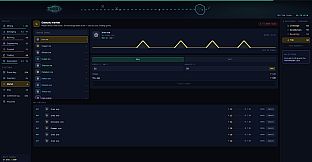
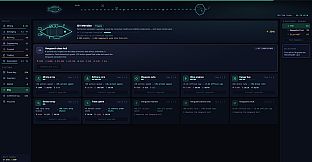
Idle Fleet is an idle skilling game that incorporates RPG progression, casual simulation, and massively multiplayer elements on PC. Players begin with a single ship equipped for basic mining and expand into a network of automated operations within a shared space economy that continues running independently of individual logins.
Gameplay
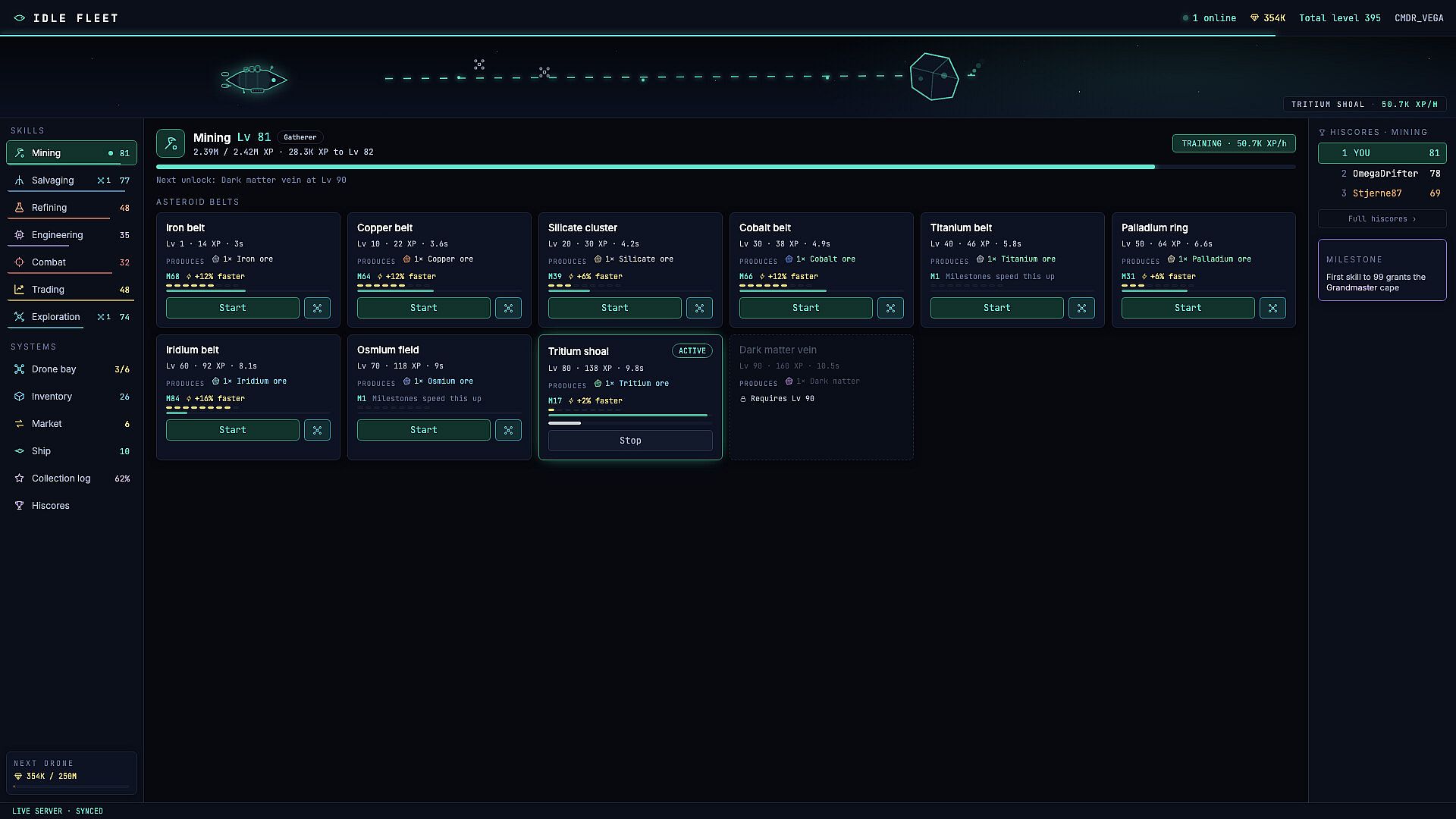
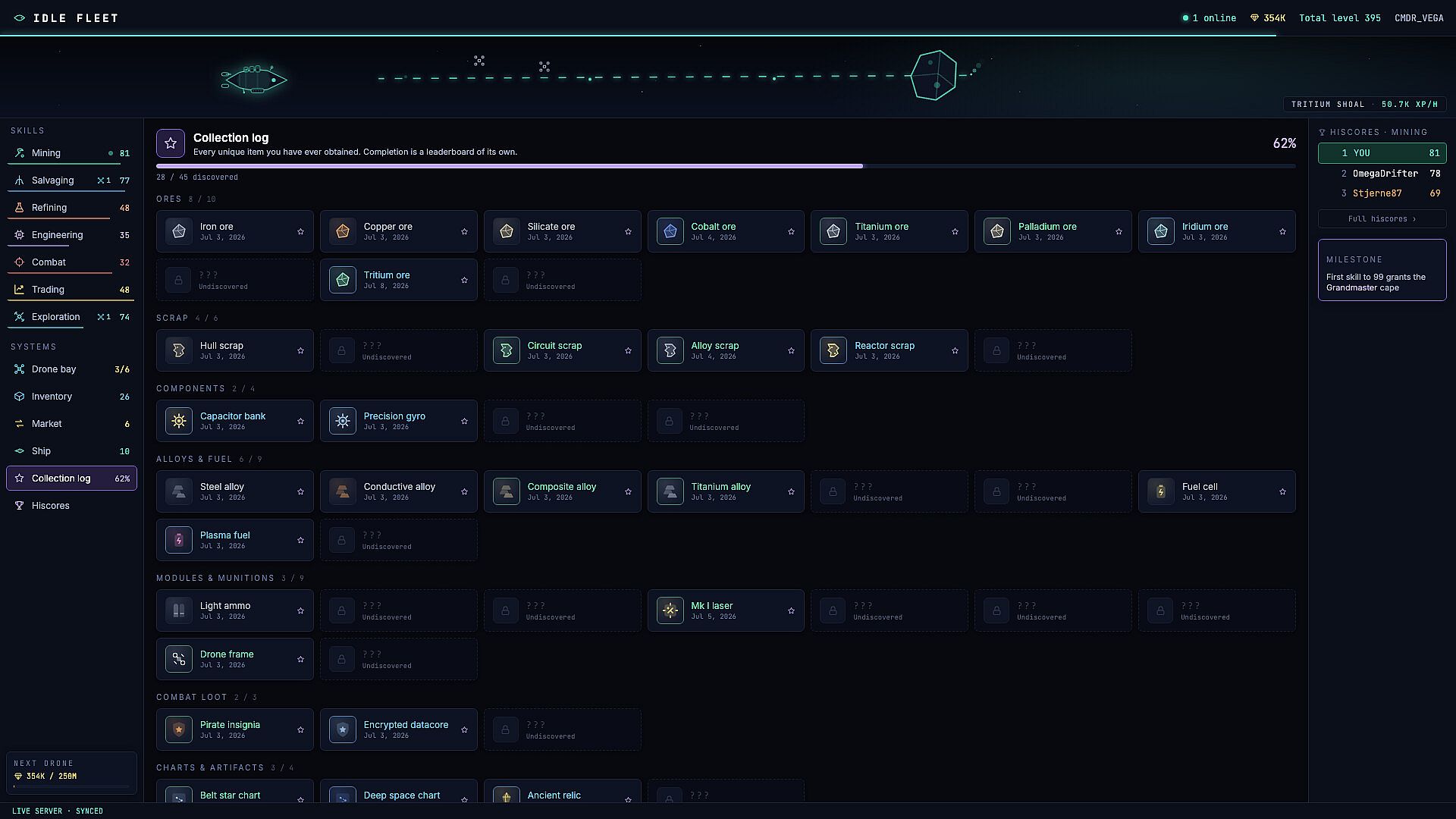
The core loop centers on seven distinct skills that support more than fifty activities. These range from extracting resources in asteroid belts and recovering materials from wrecks to processing raw ore into alloys, assembling components in fabricators, engaging in designated combat areas, fulfilling transport contracts, and dispatching extended expeditions that span multiple days. Each activity contributes to an interconnected economy where outputs from one process become inputs for others, keeping lower-tier resources relevant across all stages of advancement.
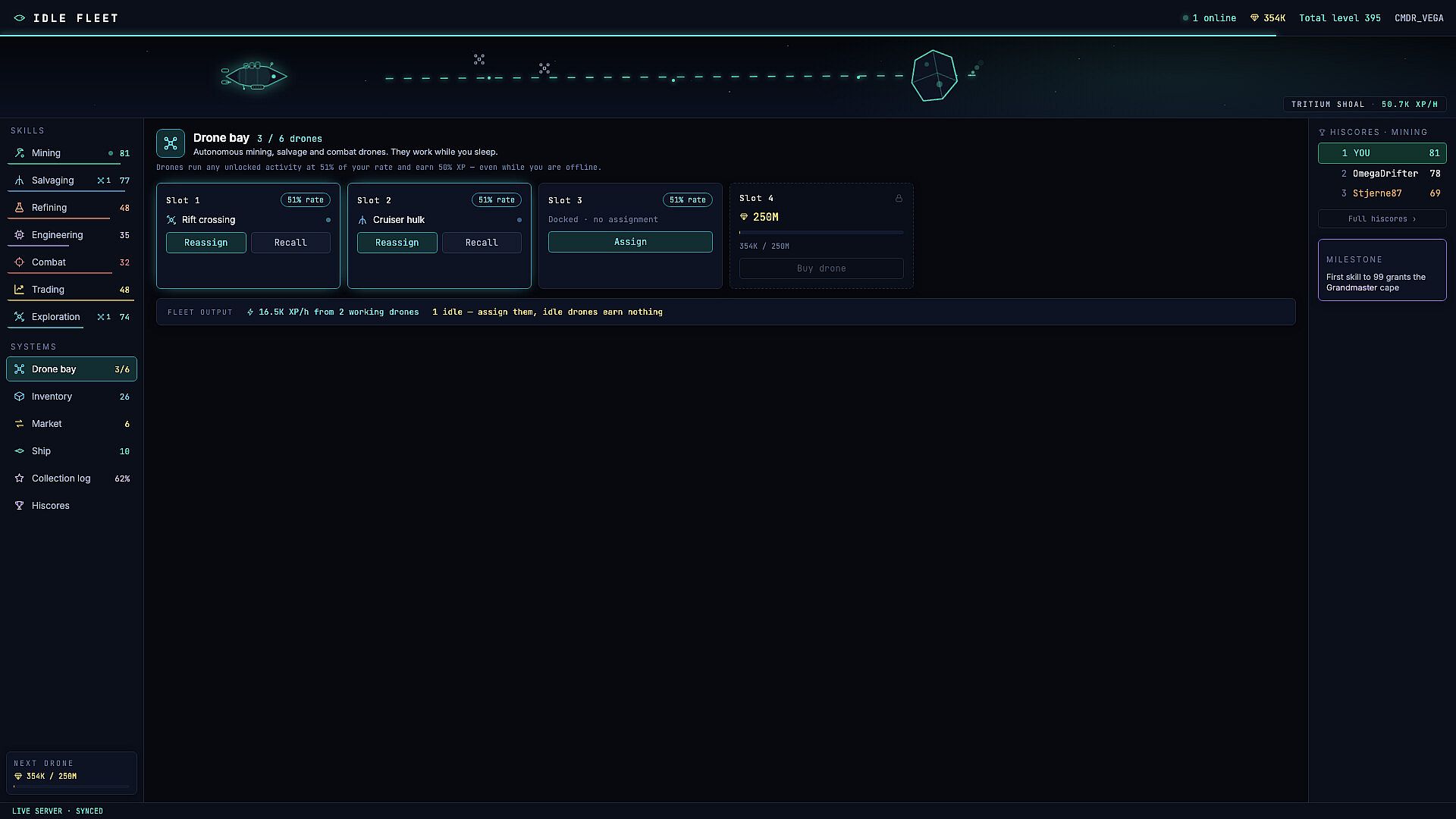
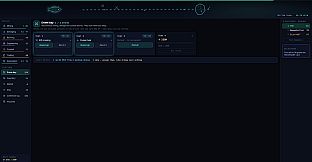
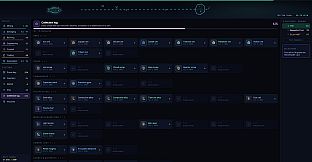
Progress occurs continuously through server-side calculations even when the player is offline. Upon return, a summary report details gains accumulated during the absence rather than requiring manual catch-up. Up to six drones can be acquired and assigned to any unlocked activity, operating at their individual efficiency levels around the clock. Mastery develops separately for each activity, with milestones that deliver permanent efficiency improvements.
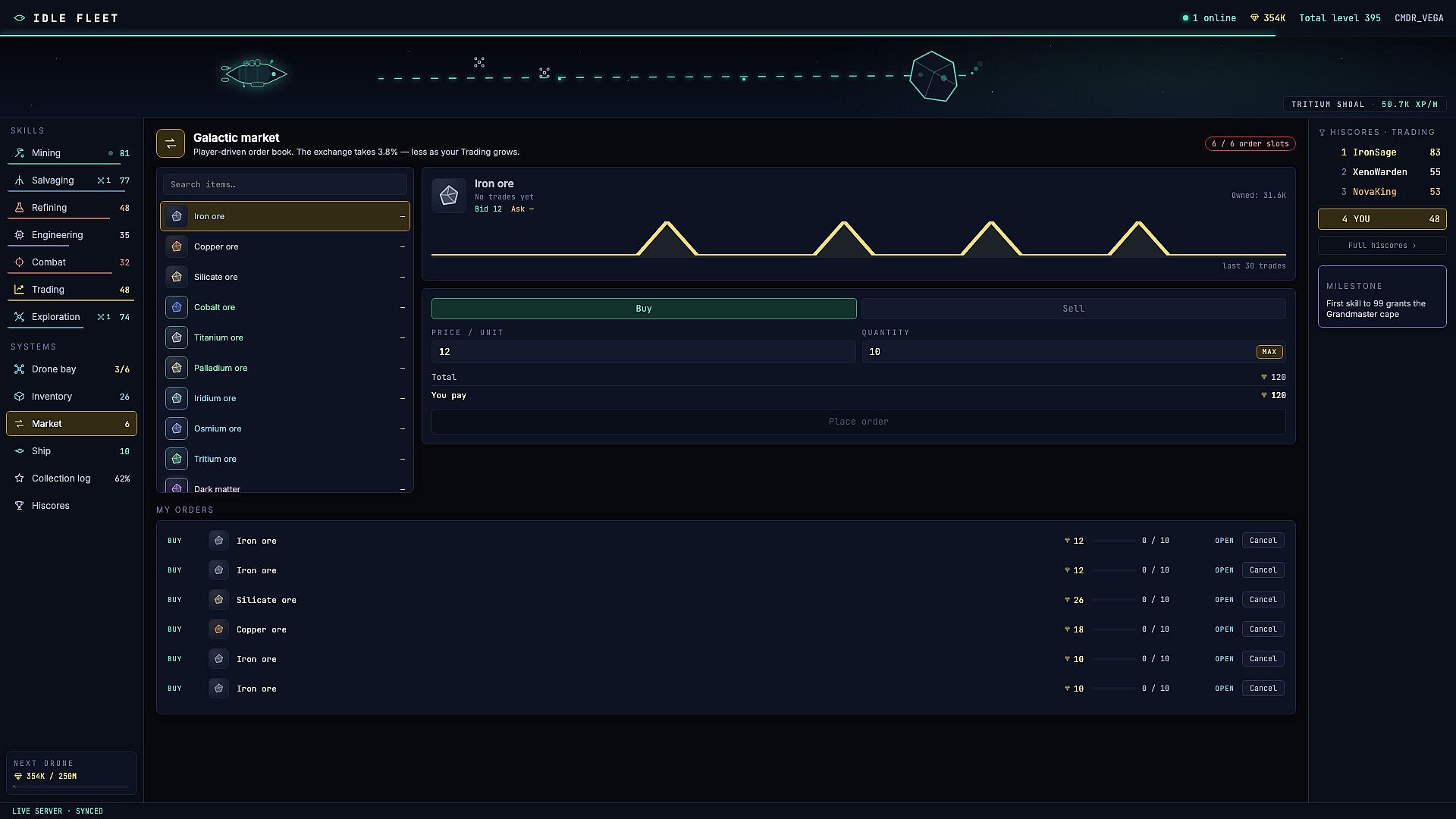
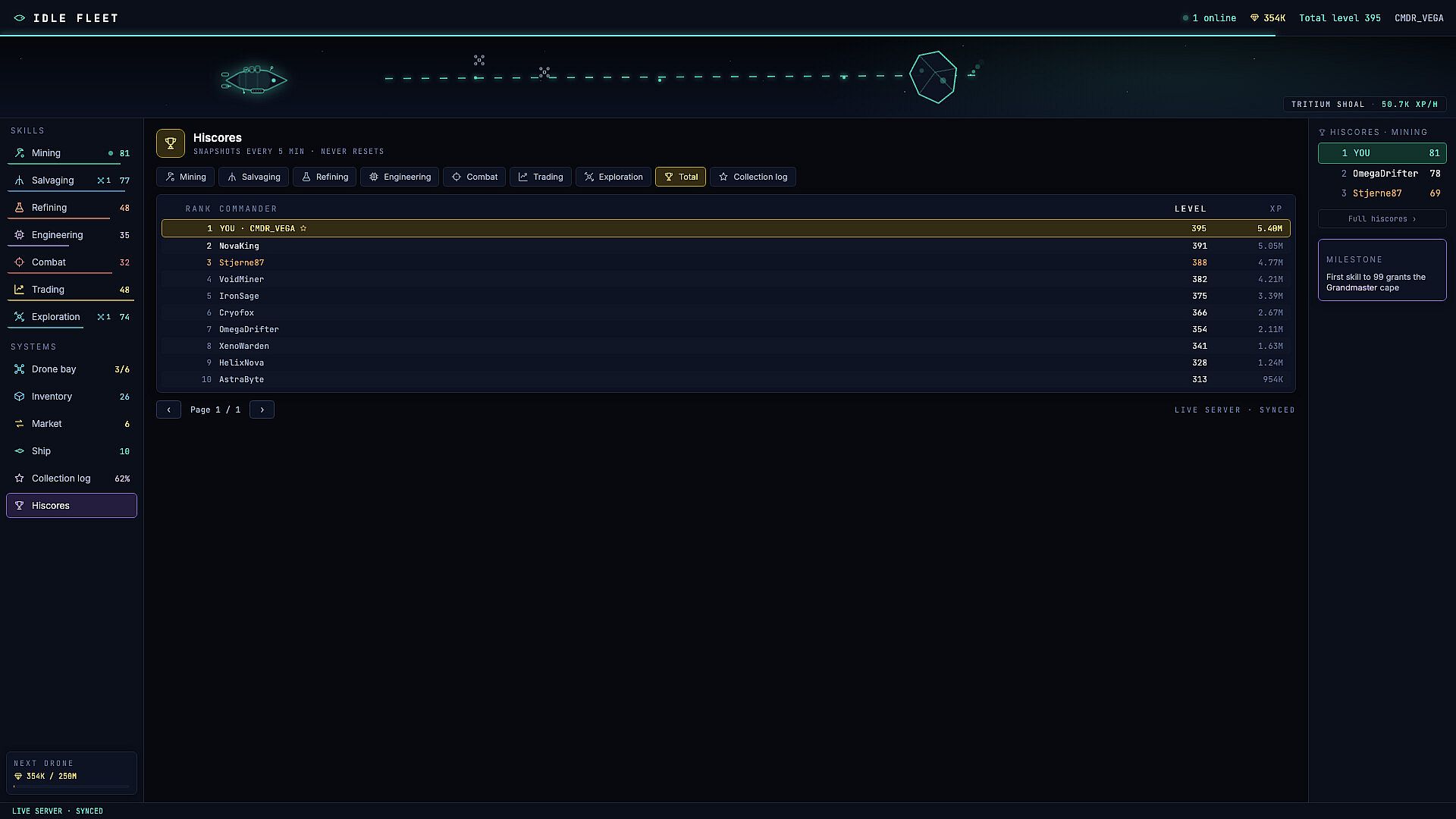
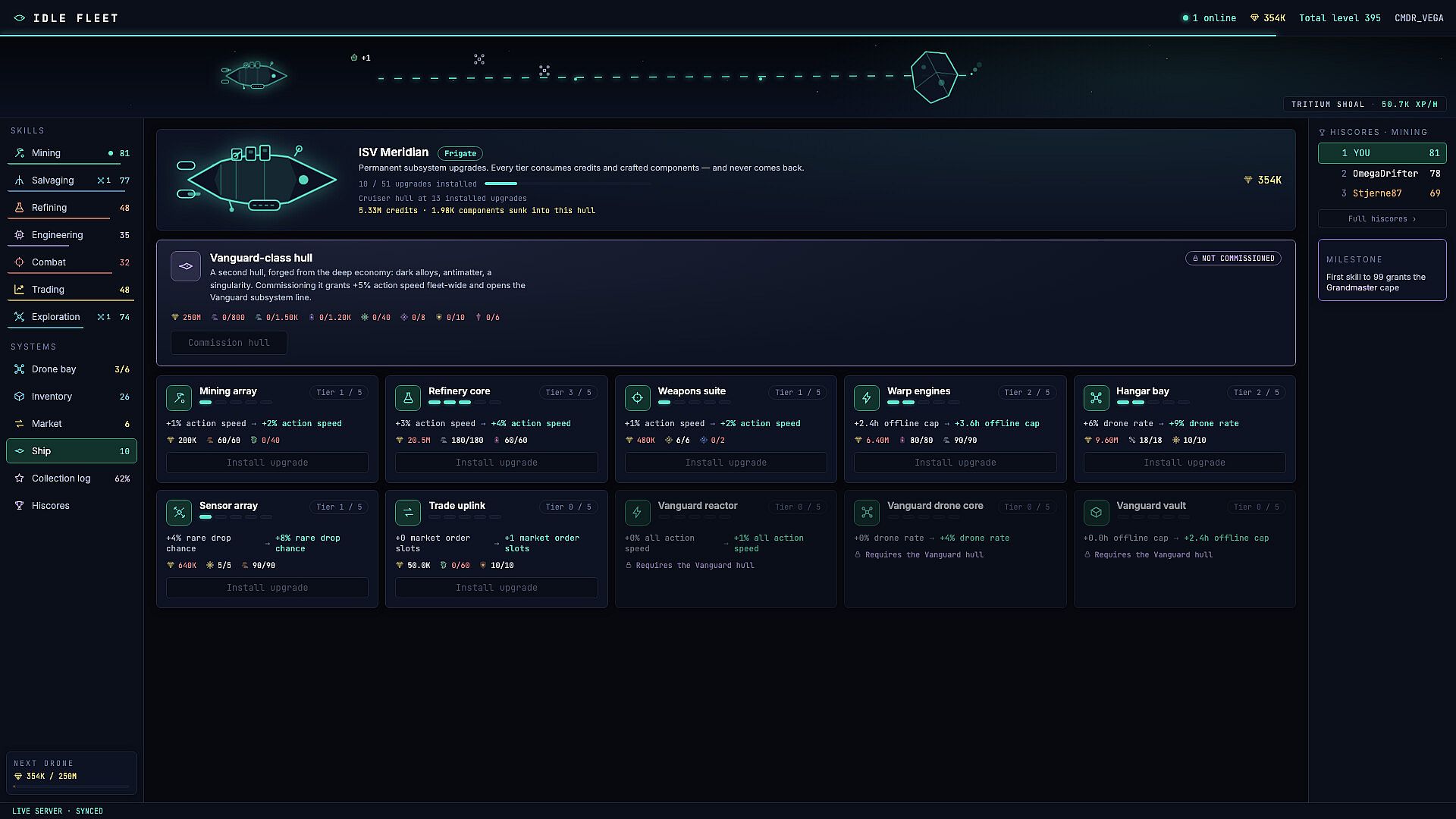
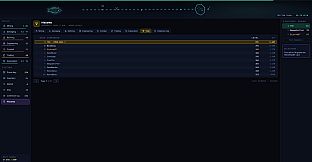
Visual progression ties directly to the ship itself, as upgraded subsystems appear as physical additions to the hull. The player market operates through an order-book system modeled on established exchange mechanics, with all prices determined by participants, subject to exchange taxes and protective bands that limit extreme fluctuations. A shared leaderboard tracks overall advancement, culminating in a race toward the first skill level of 99 and associated recognition.
Game Modes
Engagement centers on resource extraction, industrial processing, combat encounters, logistics operations, and long-range exploration. Mining and wreck recovery focus on raw material collection. Refining and fabrication emphasize conversion and assembly chains. Combat zones provide direct engagement opportunities that consume produced ammunition. Contract hauling and deep-space expeditions introduce time-extended tasks that reward sustained planning. These activity types interconnect through the shared economy, allowing players to shift focus while the overall system maintains balance.
Progression and Customization
Advancement manifests through skill leveling and milestone rewards that accelerate future work rates. The ship hull serves as the primary indicator of achievement, with each tier of subsystem visibly integrated. The ultimate goal involves commissioning a specialized second hull known as the Vanguard, constructed from accumulated economic output across the entire player base. This structure encourages consistent participation without resetting prior gains.
Economy and Multiplayer Features
The market functions as a fully player-driven system where supply and demand set values for every material and item. Low-tier resources retain utility indefinitely due to ongoing demand in higher processes. Server authority governs all settlements, eliminating client-side discrepancies and ensuring leaderboard accuracy reflects actual events. This architecture supports a single persistent world where individual contributions influence collective pricing and availability.
Is It Worth Playing?
Idle Fleet targets players who prefer steady, long-term progression through automated systems and economic participation rather than constant active input. Its server-side design promotes fairness across the shared environment, while offline advancement and drone automation reduce the need for constant monitoring. The combination of visible ship customization, milestone rewards, and a competitive hiscore ladder provides clear goals for those drawn to skilling and market dynamics in a simulation setting. As a title built around persistent mechanics, it suits individuals comfortable with gradual empire building in a multiplayer context where every participant affects the same economy. Those seeking immediate action or solo-focused experiences may find the deliberate pace less aligned with their preferences.