


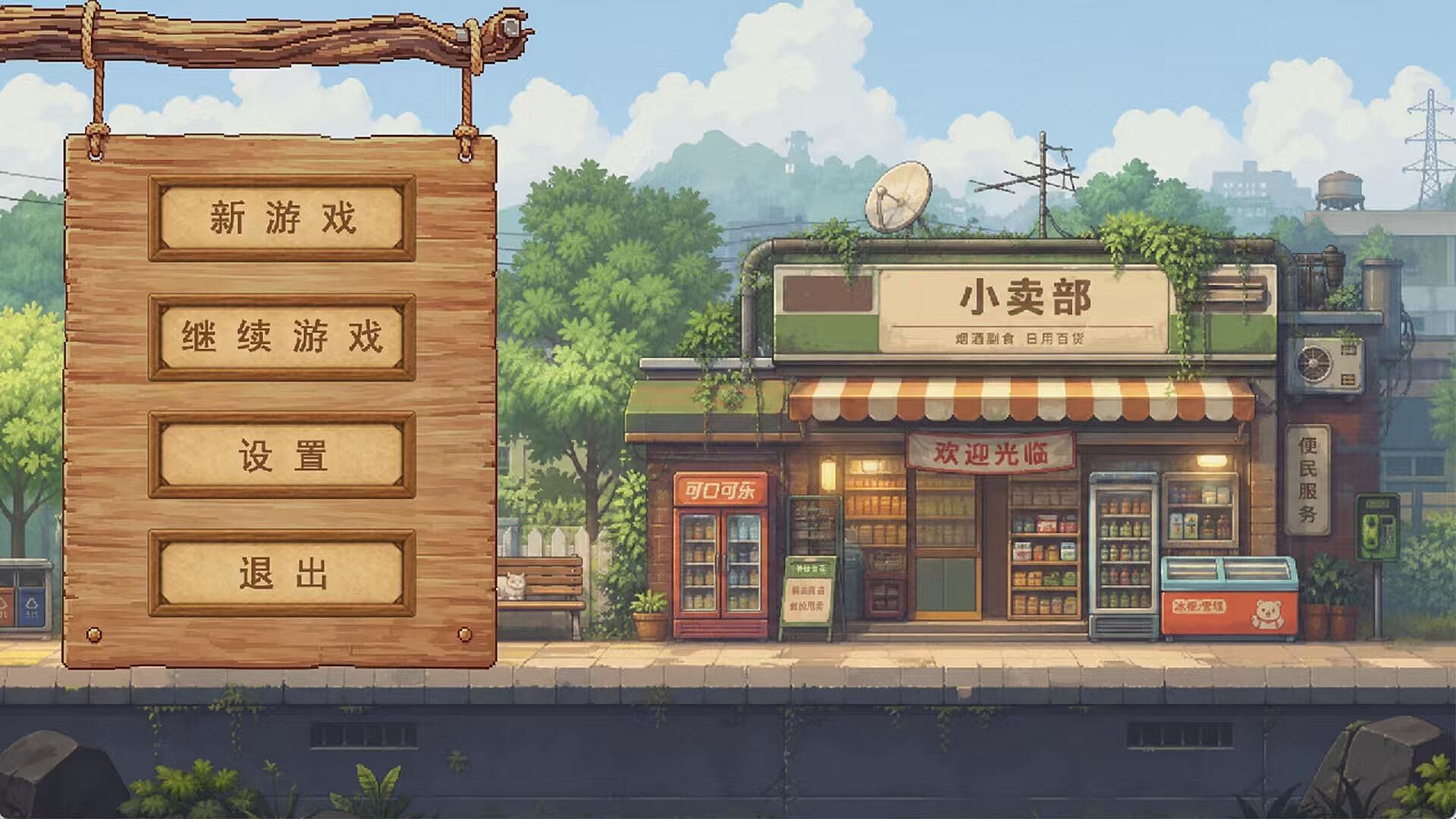



旧物小铺 is a single-player strategy, casual, and simulation game set in a 1980s Chinese vintage shop. Players step into the role of a shopkeeper who inherits a small business with limited starting capital and must balance daily operations, customer interactions, and long-term financial survival across a full calendar year.
Gameplay
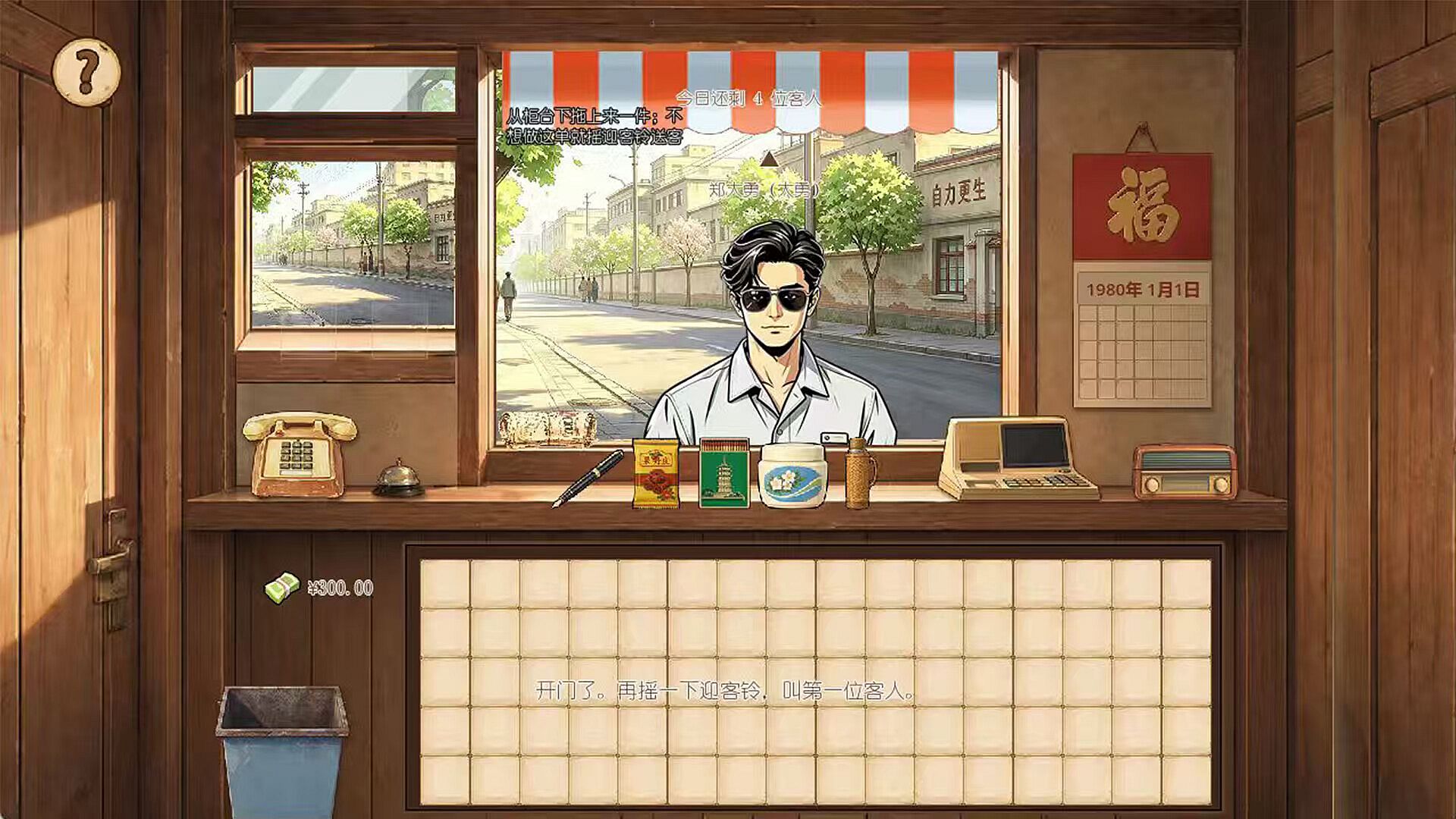
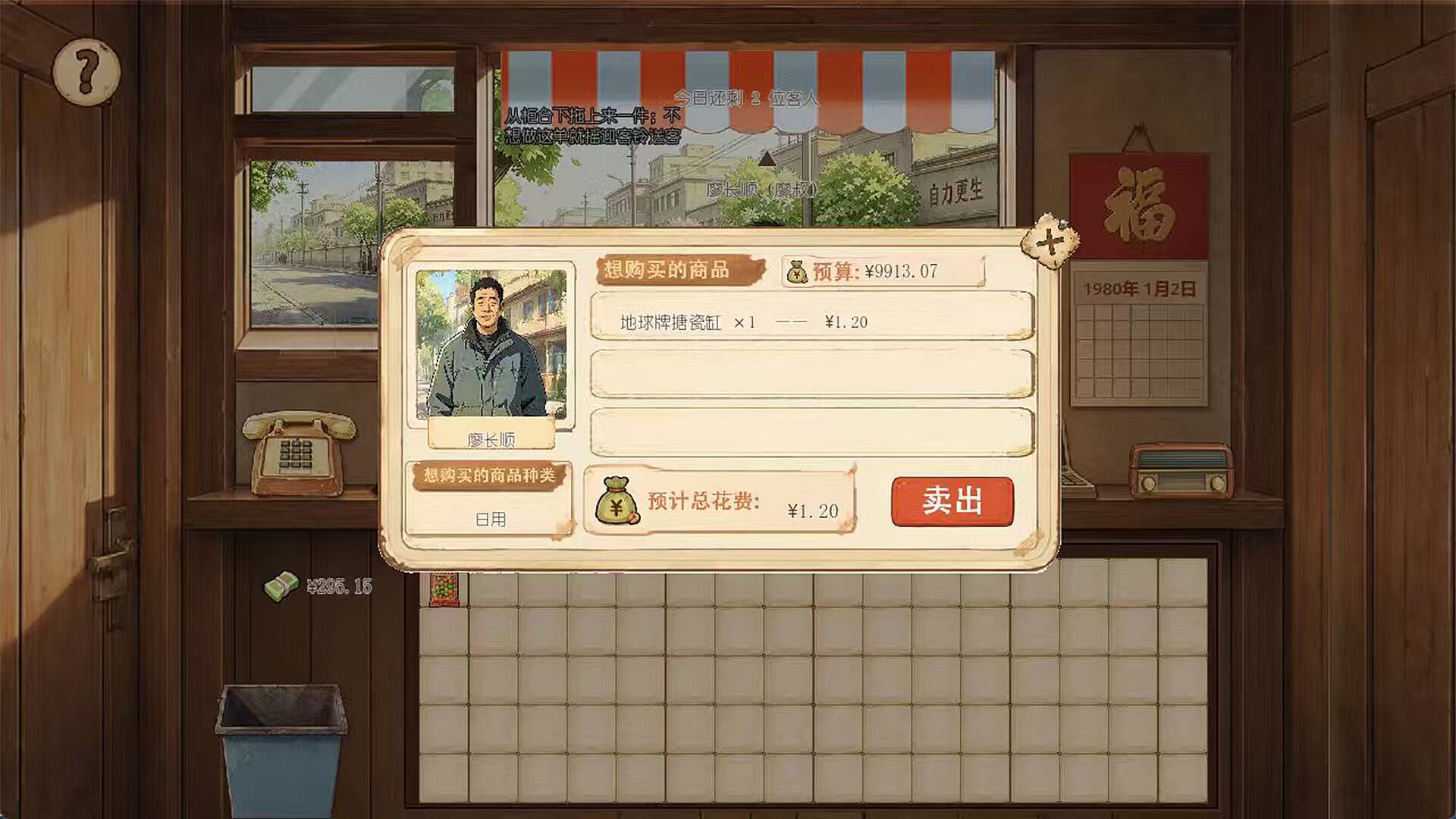
The core loop revolves around three daily tasks: restocking the counter display, greeting customers by ringing a welcome bell, and closing the shop at the end of the day. Goods come from storage compartments beneath the counter and must be arranged thoughtfully to match what regulars might want. Serving involves assessing each customer's budget on the spot, selecting appropriate items from the available stock, collecting payment, and providing change accurately. Customers remain until their remaining funds no longer cover displayed goods, after which they depart. The bell controls the flow of visitors, allowing the player to decide when to invite the next one rather than relying on automatic traffic.
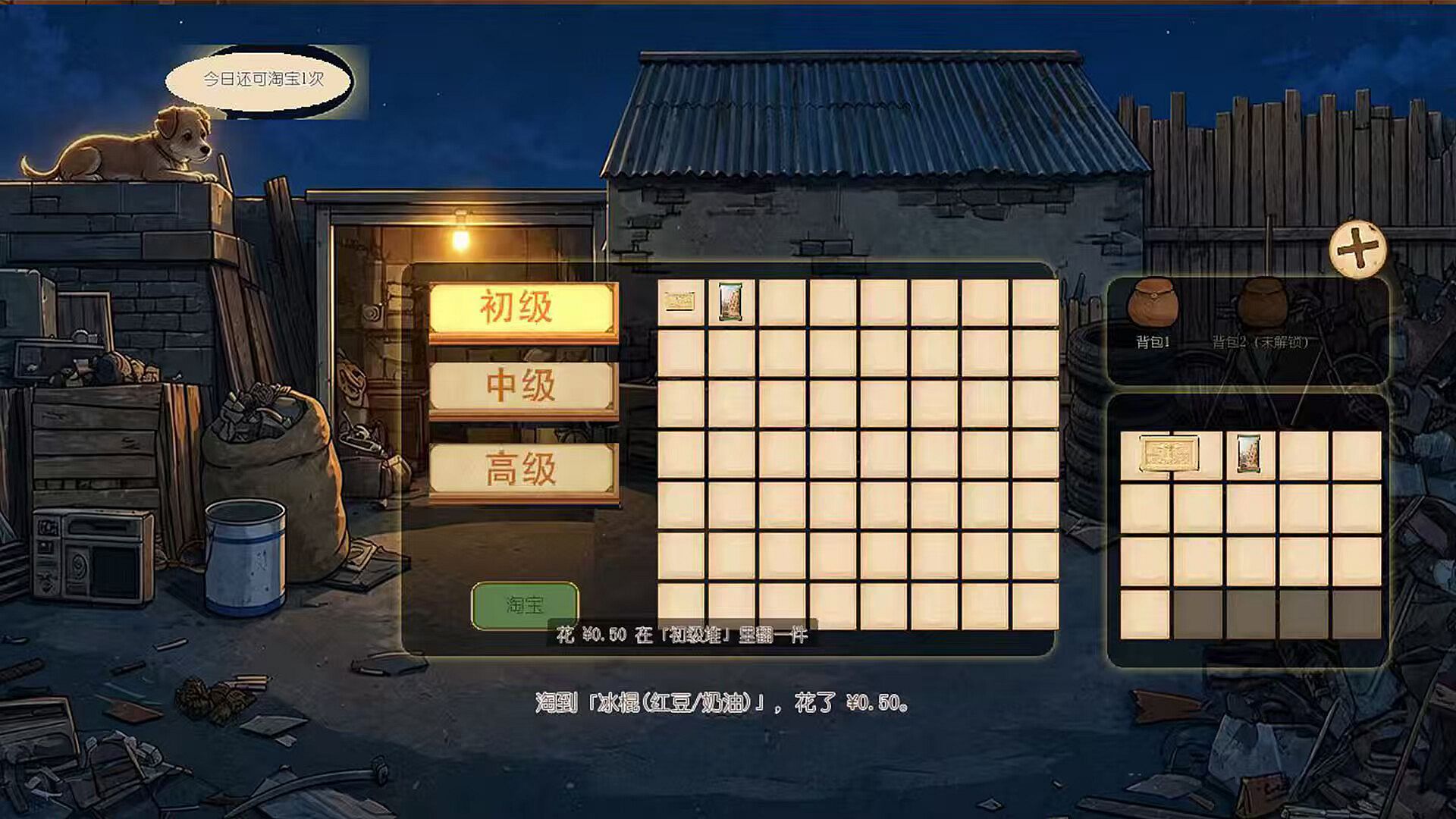
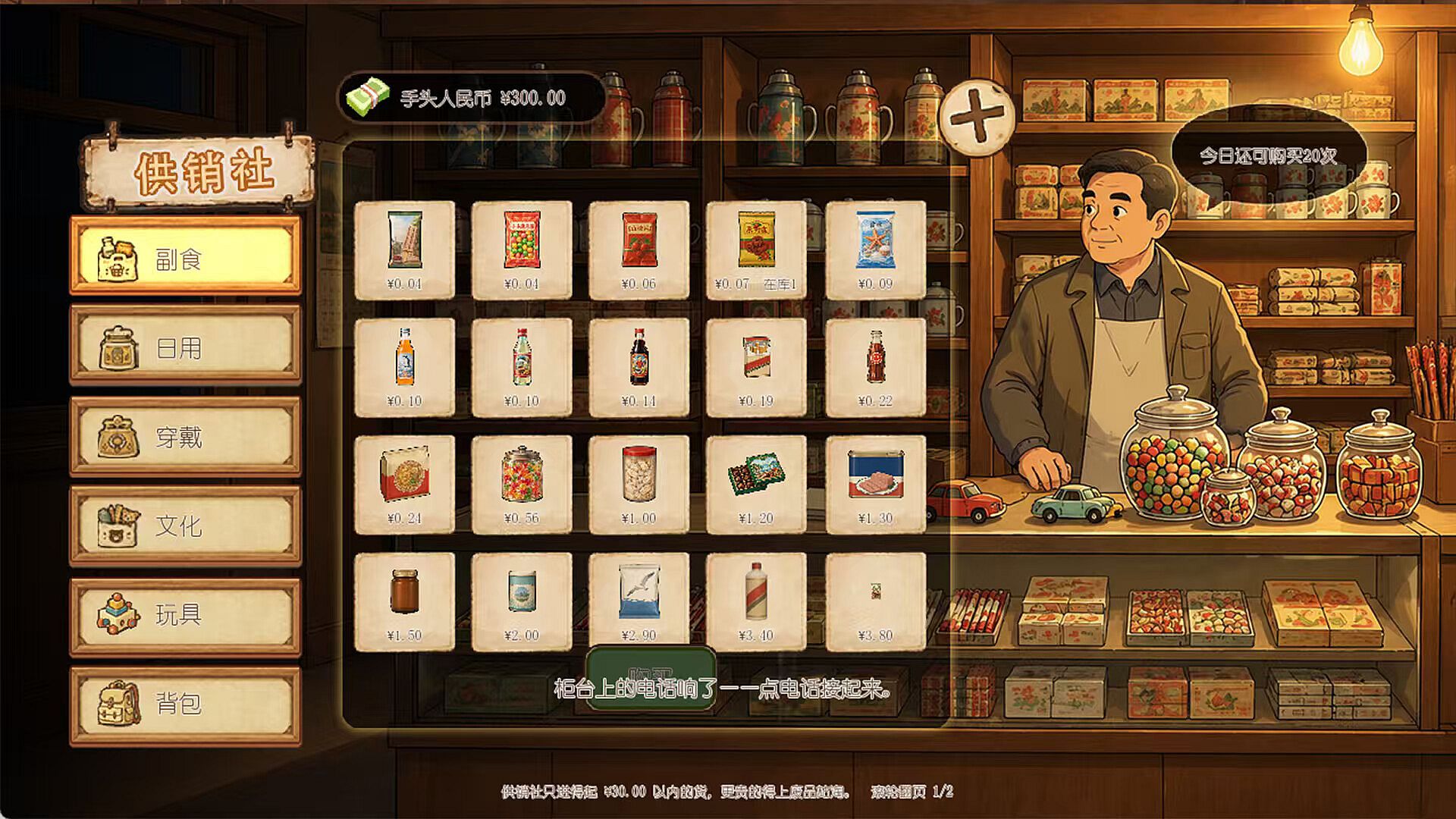
Restocking requires a single daily trip to either the Supply and Marketing Cooperative for fixed-price, limited-quantity new items or the scrap yard for batches of secondhand goods. Higher spending at the scrap yard unlocks better quality finds, but only three lots are available each day. The newspaper delivers three to five notices about price changes, demand shifts, and policy trends, helping players anticipate profitable stock decisions for the following day. A wall calendar advances in real time, tracking weekly rent and daily living expenses that steadily reduce available funds.
Seventy vintage articles span seven categories and four quality grades, each carrying era-specific annotations that reflect practical knowledge from the period. Ten regular customers each bring distinct preferences and behaviors, such as price sensitivity, prestige focus, or stock availability checks. Window displays influence what these neighbors desire on any given day, and successful sales depend on matching items to individual temperaments.
Game Modes
旧物小铺 offers a single continuous single-player campaign without separate modes or multiplayer options. The experience unfolds day by day through the fixed daily structure of restocking, customer service, and accounting, with progression tied to the advancing calendar and accumulating financial results. No alternative scenarios, challenges, or competitive formats exist beyond managing the shop's survival and growth over the simulated year.
Shop Management and Customer Dynamics
Financial tracking happens at the end of each day when the player tallies earnings, expenses, and remaining capital. Budget management extends beyond daily sales because rent and living costs accumulate regardless of revenue. Understanding customer habits becomes essential, as the same item may sell well to one regular but fail with another based on their priorities. The scrap yard and cooperative choices force strategic decisions about quality versus quantity and risk versus reliability when planning inventory.
Price information from the newspaper adds a layer of forward planning, encouraging players to buy low on items expected to rise or avoid overstocking goods facing upcoming drops. The limited daily restocking options and customer-driven sales create a rhythm where observation and timing matter more than rapid expansion.
Is It Worth Playing?
旧物小铺 appeals to players who enjoy deliberate, detail-oriented shop simulation with a strong emphasis on period atmosphere and interpersonal nuance. The mechanics reward careful observation of customer preferences, thoughtful inventory choices, and steady financial oversight rather than high-pressure optimization. Because the game remains in development with no released version or player reviews available, its reception depends on how well the promised systems deliver a cohesive experience upon launch. Those drawn to relaxed strategy and simulation titles centered on everyday life management in a specific historical setting may find the focused loop and authentic item descriptions engaging, provided the final release maintains the depth suggested by its core systems.