

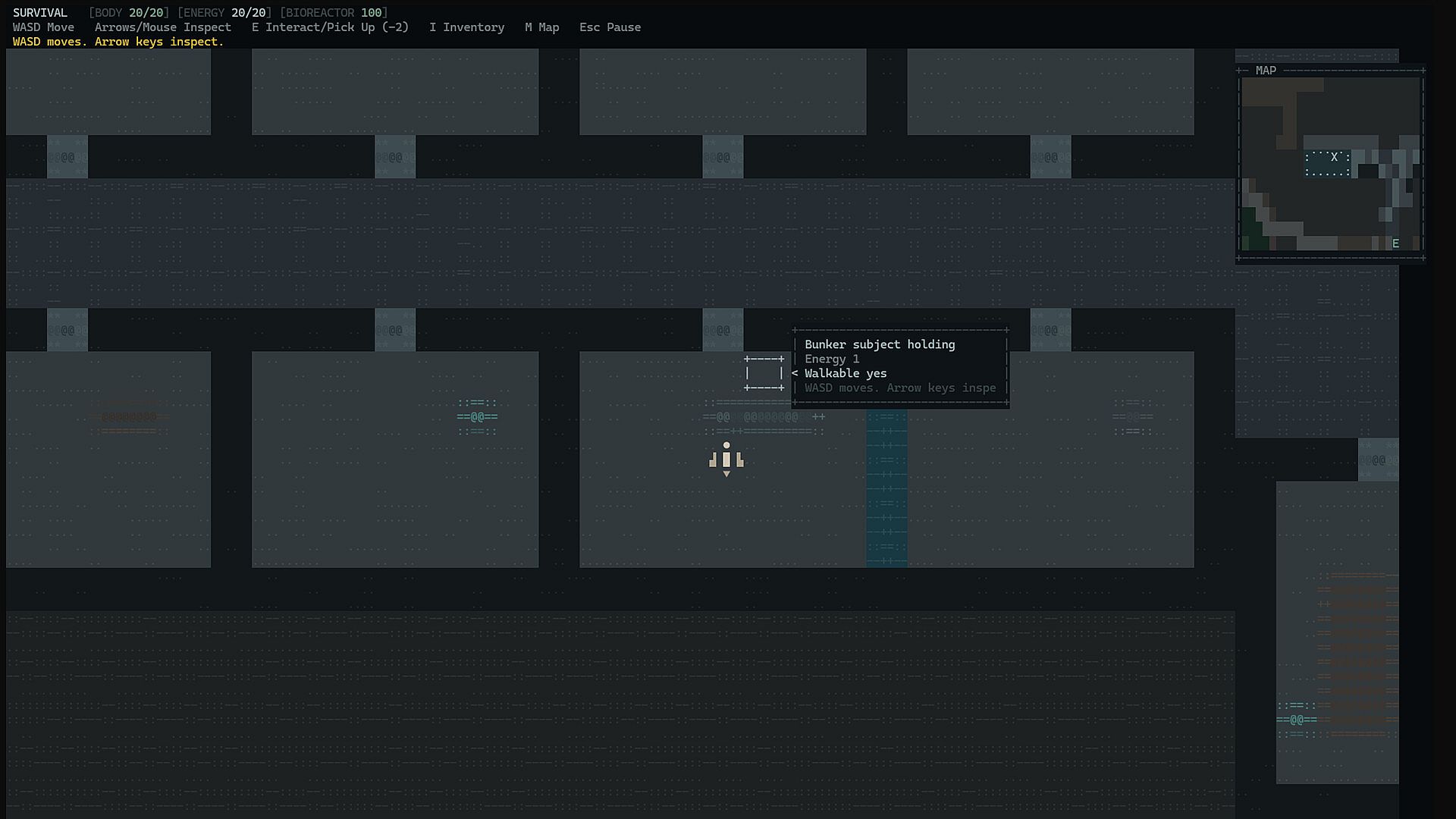
K-17 Solid Ground is an indie survival adventure game set in a terminal-rendered world where players control Subject K-17 after waking in a failing bunker. The core experience centers on escaping the bunker and then navigating a vast, ruined surface environment while managing limited resources during long journeys across procedurally generated terrain.
Gameplay
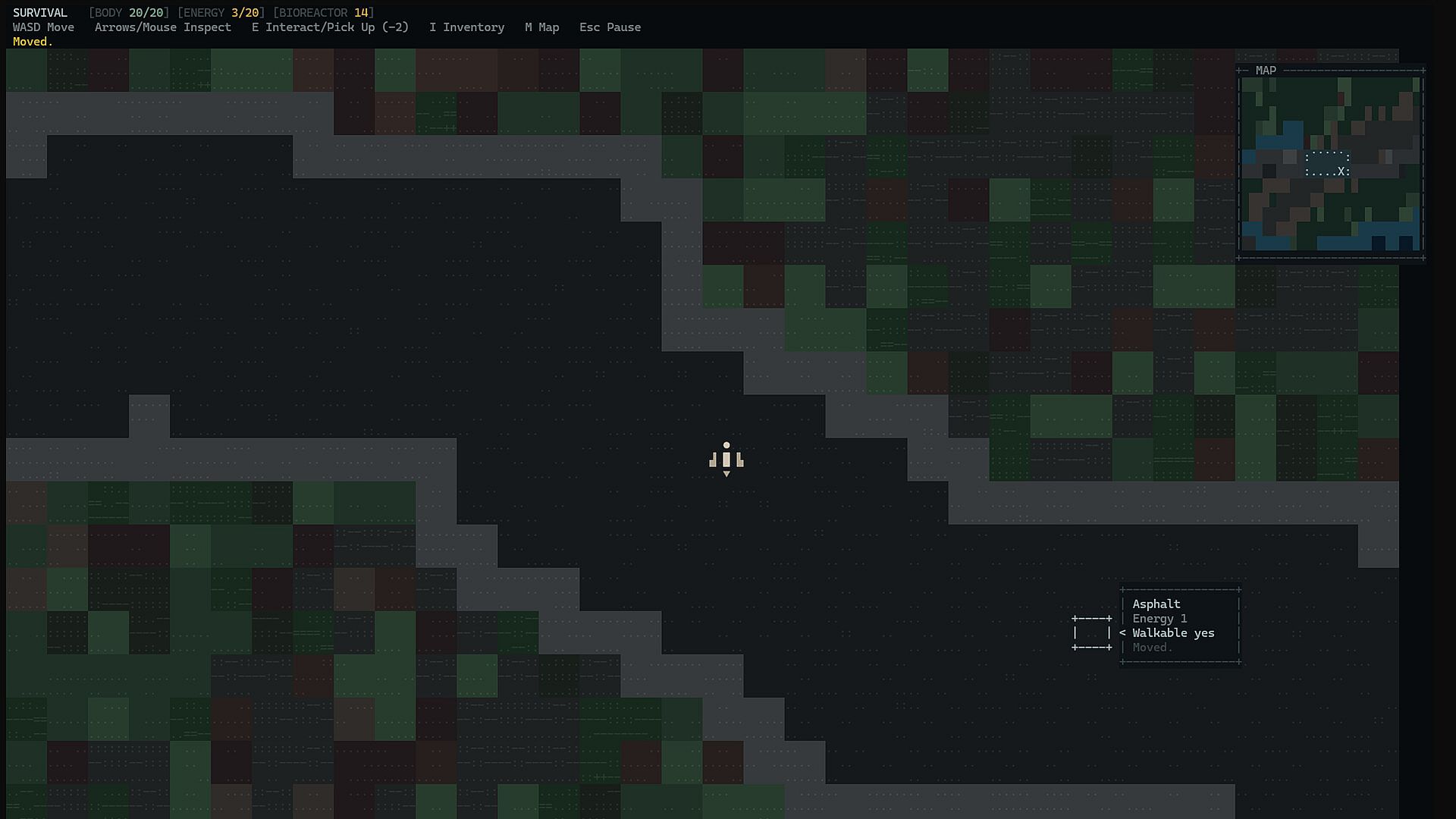
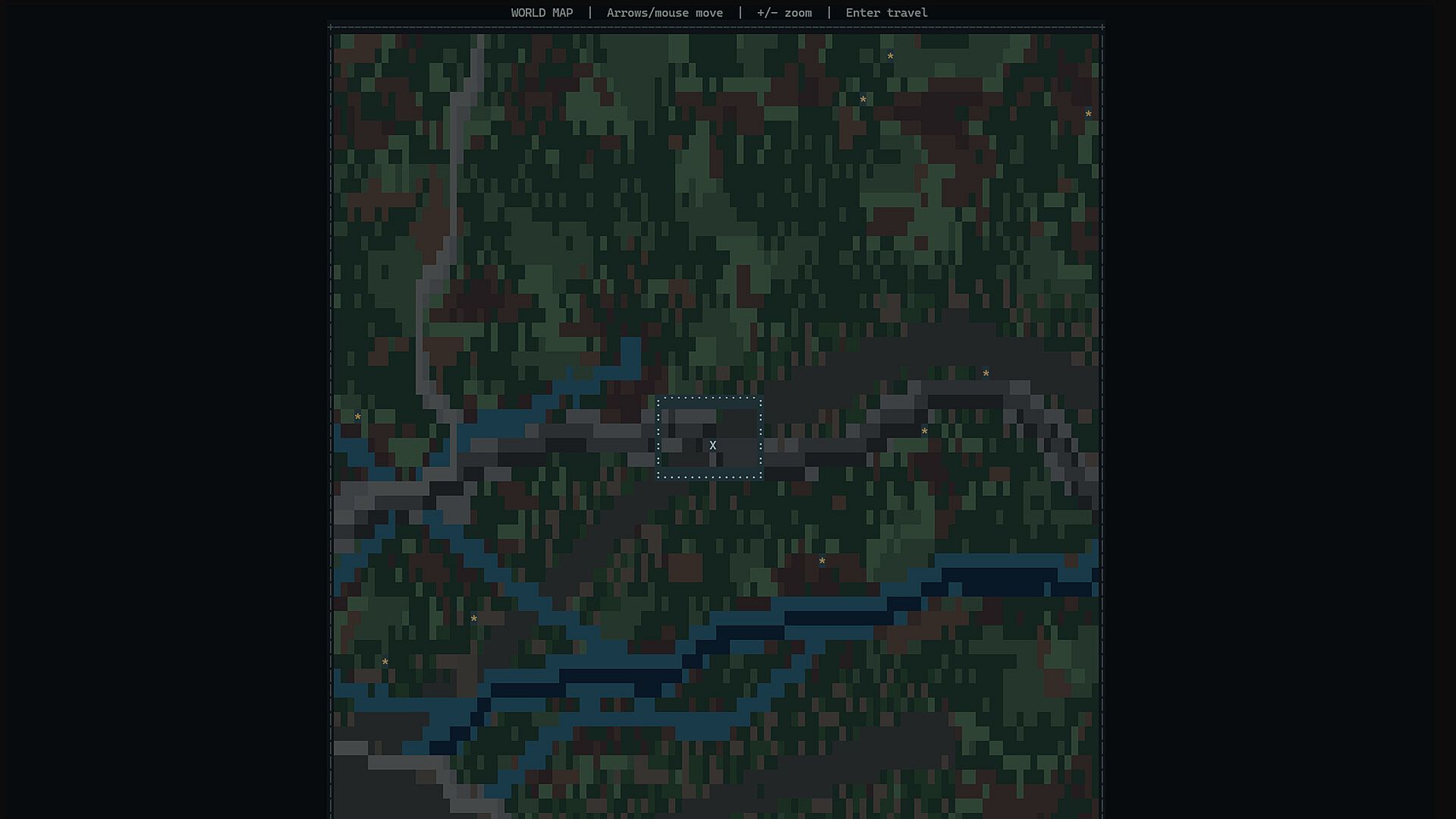
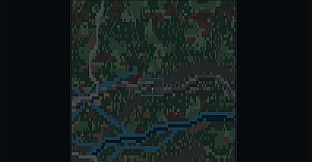
Exploration forms the foundation of play. Every tile crossed on the map consumes stored energy, which forces deliberate movement and planning. Standing still incurs no cost, so players can pause to observe surroundings, scan for threats, or decide on routes without pressure. Food powers the bioreactor that sustains the character, turning resource gathering into a constant priority during extended trips through peat forests, swamps, rivers, roads, mountain caves, research facilities, roadside shelters, and large underground complexes.
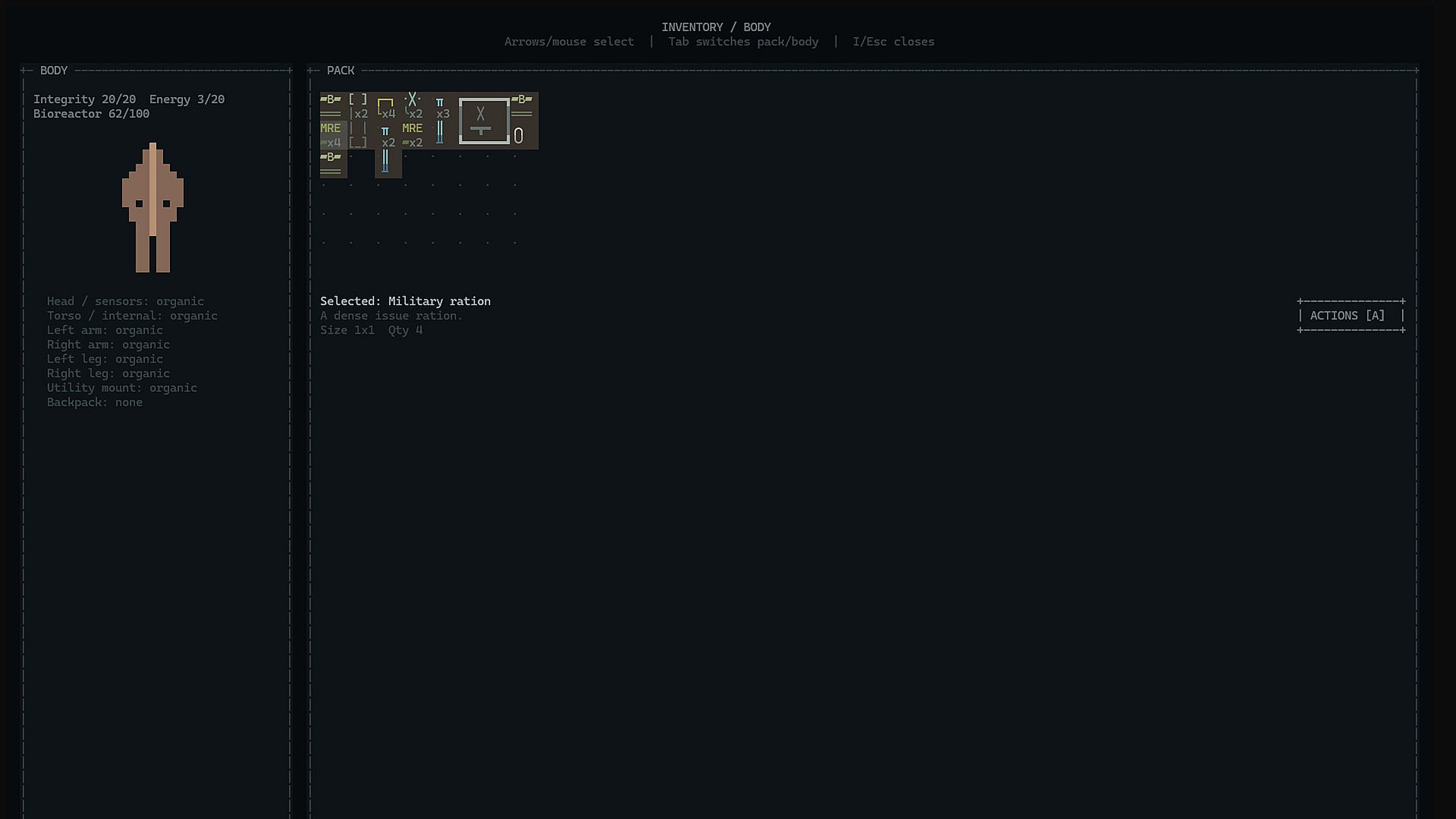
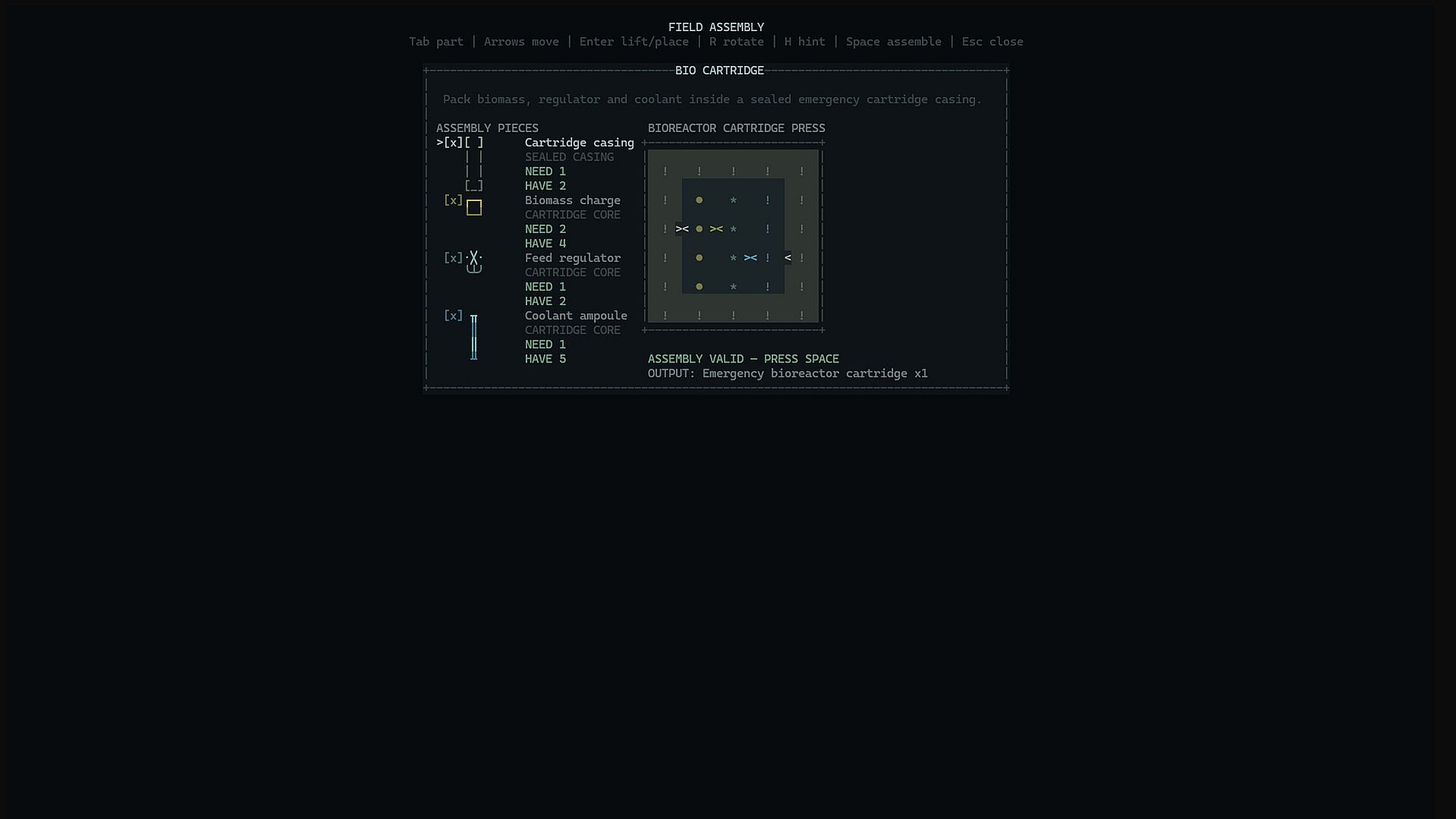
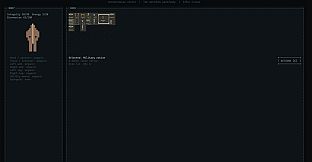
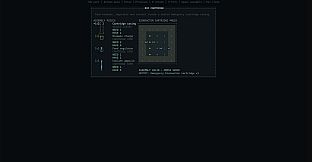
Scavenging supplies from distant structures becomes essential because caches inside them determine whether the next leg of the journey succeeds. Inventory management includes tracking equipment condition and performing repairs when parts wear down. Replaceable body parts and salvaged cybernetic modules add layers to customization, letting players adapt their capabilities based on what they recover. Security robots patrol the wasteland with visible intentions, so players can choose to avoid them, sneak past, or engage in tactical turn-based combat once contact occurs.
Worlds generate from seeds for consistent, deterministic results across playthroughs. English and German localizations support the single-player and multiplayer experiences, with a chat system available in the latter.
Game Modes
Single-player mode lets individuals tackle the full loop of bunker escape and surface exploration at their own pace. Multiplayer mode supports shared journeys across the same procedural environments, with chat enabling coordination during long treks or when deciding how to handle robot encounters. Permadeath applies by default in both, though an optional respawn-based variant exists for those who prefer continued access to a world after failure.
Exploration and Survival Systems
The wasteland stretches far beyond the starting bunker, with each structure or cache representing a meaningful waypoint rather than a quick stop. Procedural generation creates varied layouts of forests, swamps, caves, and facilities, ensuring that reaching any distant point requires careful energy budgeting and food management. Tactical decisions multiply once robots enter view, as their patrol patterns and responses influence whether combat or avoidance serves the player better in a given situation.
Equipment and body modifications tie directly into survival. Repairs keep tools functional over repeated use, while cybernetic modules salvaged from the environment expand options for movement, defense, or resource efficiency. These systems reward observation and preparation over rushed action.
Is It Worth Playing?
Players who enjoy methodical survival with strong emphasis on resource tracking, map traversal, and occasional turn-based encounters will find a focused experience here. The absence of a world-saving objective shifts attention to the ongoing question of reaching the next supply point before energy or food runs out. Multiplayer adds opportunities for coordinated exploration without altering the core loop. Those drawn to procedural worlds, inventory decisions, and visible enemy behaviors in a quiet, deliberate setting have the clearest match with what the game provides.