


K-jihacheol is a casual indie word puzzle game for PC in which players type the names of real subway stations to advance trains along actual metro lines. The core loop revolves around selecting a route and entering station names in sequence, with the time taken to reach the final stop serving as the score. Knowledge of local transit systems directly improves performance, as familiarity allows faster typing without pauses for hints or corrections.
Gameplay
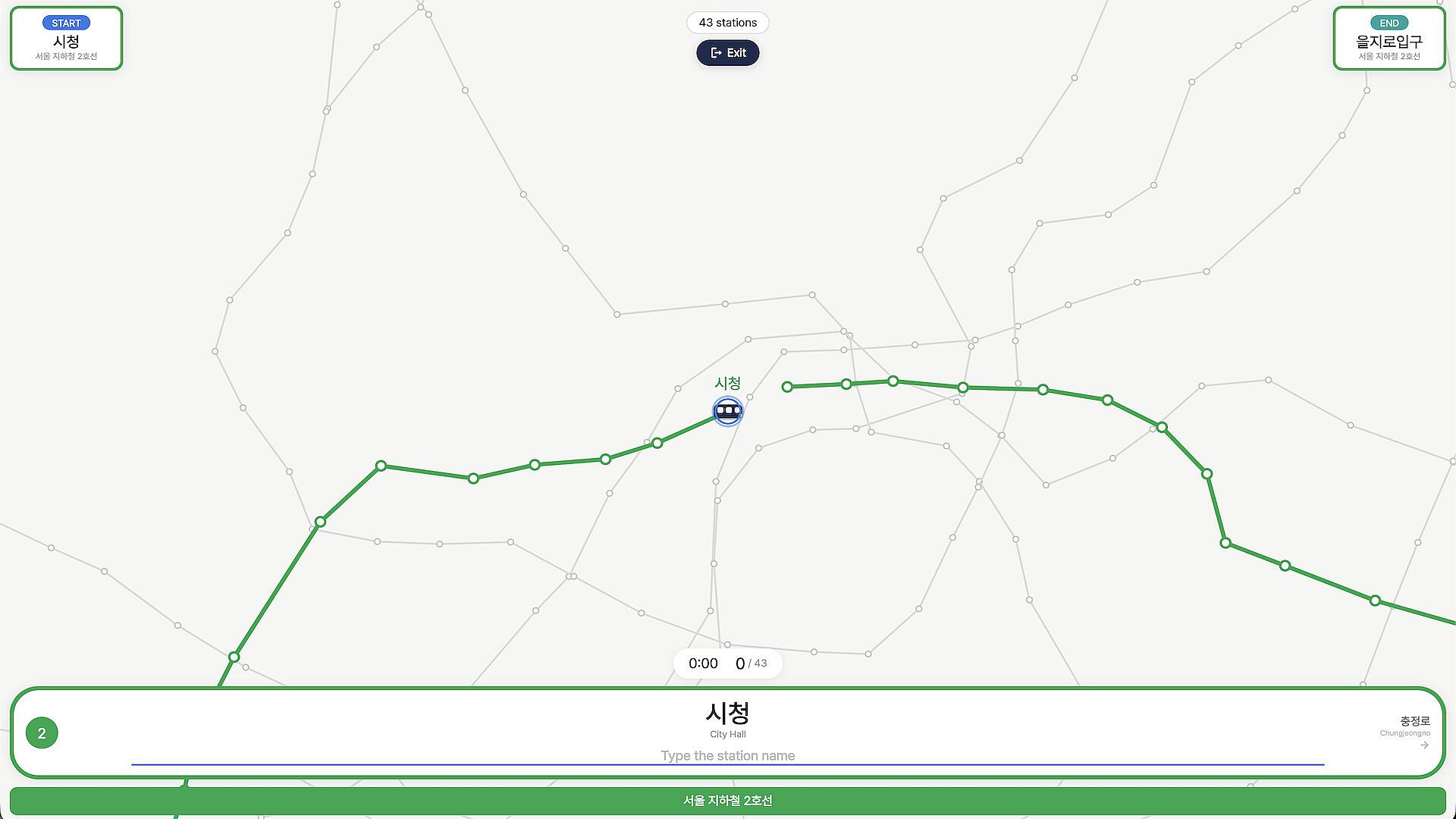
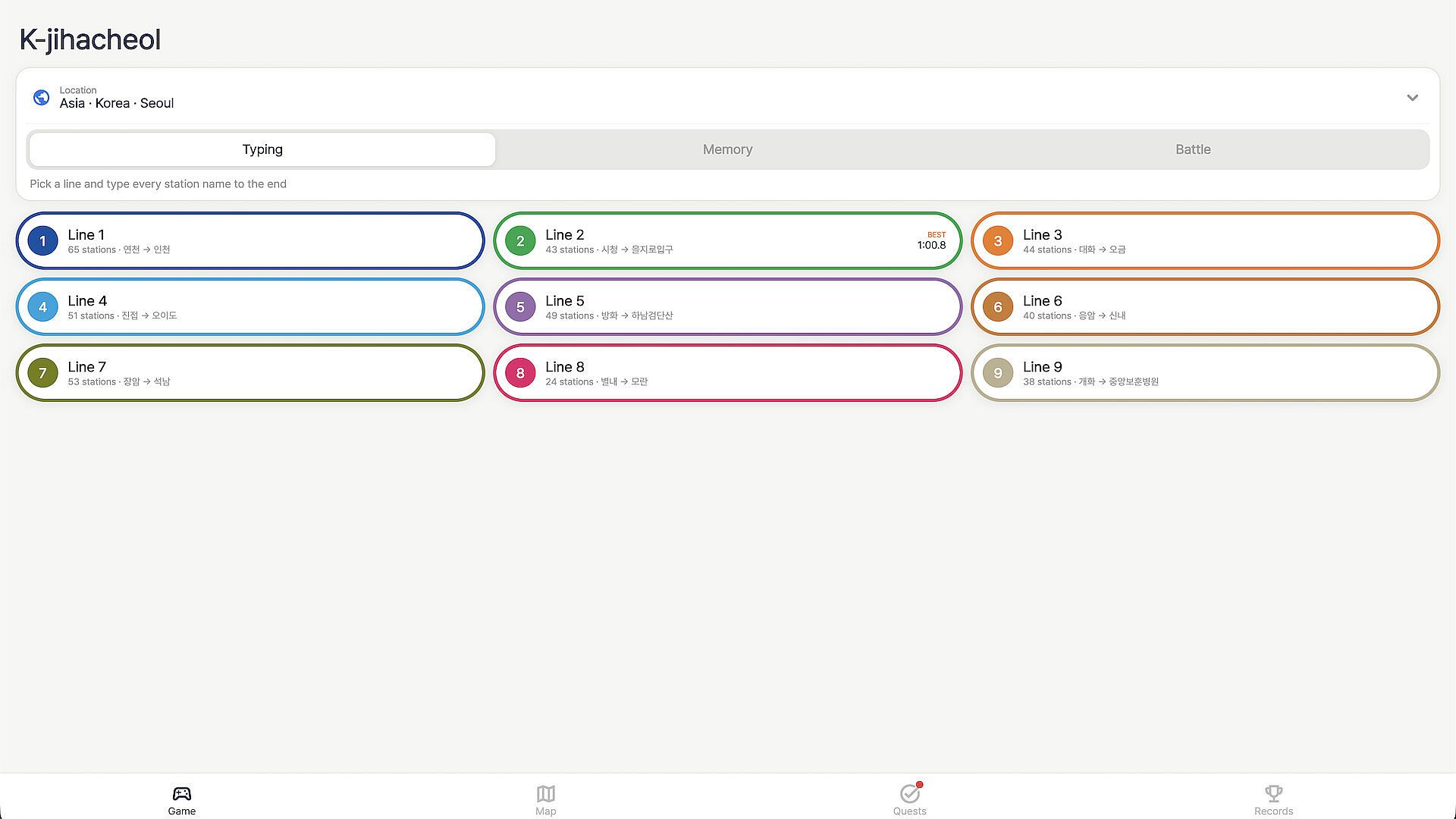
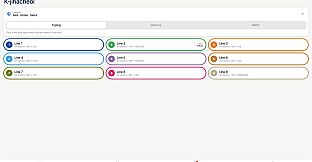
The gameplay centers on progressive station entry along chosen lines. A player picks a line, starts at the first station, and types the name of the next one to move forward. Arrival time at the end determines the result, encouraging both speed and accuracy. Routes span multiple countries and cities, requiring players to handle different scripts and naming conventions depending on the location. In Tokyo lines, Japanese characters are used, while Taipei supports Chinese characters or Pinyin, and New York uses English names. This setup rewards players who know routes by heart, allowing non-stop runs, while hints are available for forgotten stations at the cost of a longer final time.
Stations total 2,361 across 19 countries and 26 cities. Coverage includes all Seoul lines 1 through 9 plus Busan, Daegu, Incheon, Daejeon, Gwangju, and Gyeonggi in Korea. Japan features Tokyo with 14 lines such as the Yamanote and Ginza, plus eight Osaka lines. Additional systems cover Taipei MRT, Hong Kong MTR, Singapore, New York, Toronto, and several European networks including London, Paris, Berlin, Madrid, Moscow, Stockholm, Copenhagen, Oslo, Amsterdam, Brussels, and Lausanne, along with Sydney in Oceania. The variety creates repeated play sessions focused on memorization and quick recall under time pressure.
Game Modes
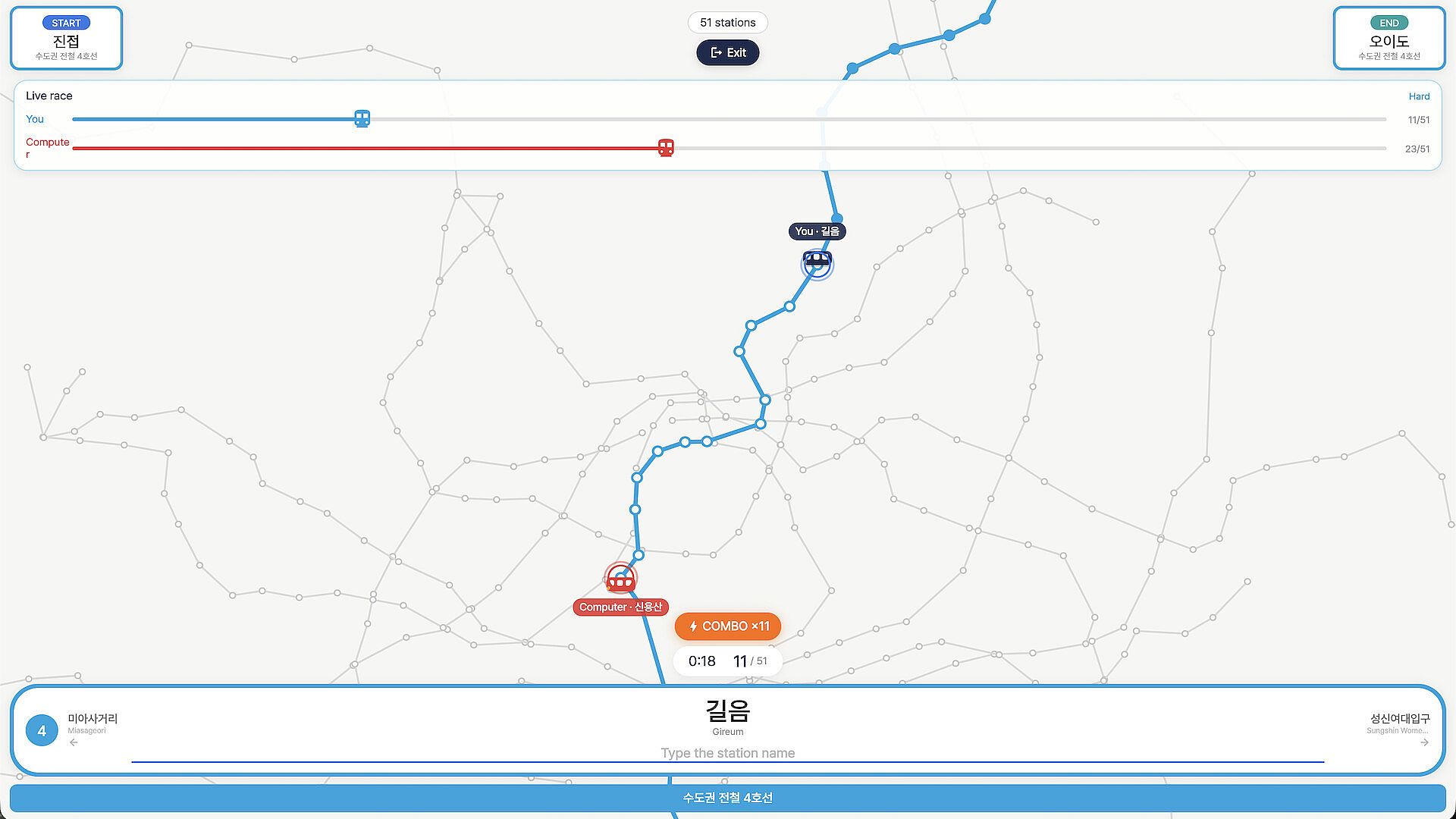
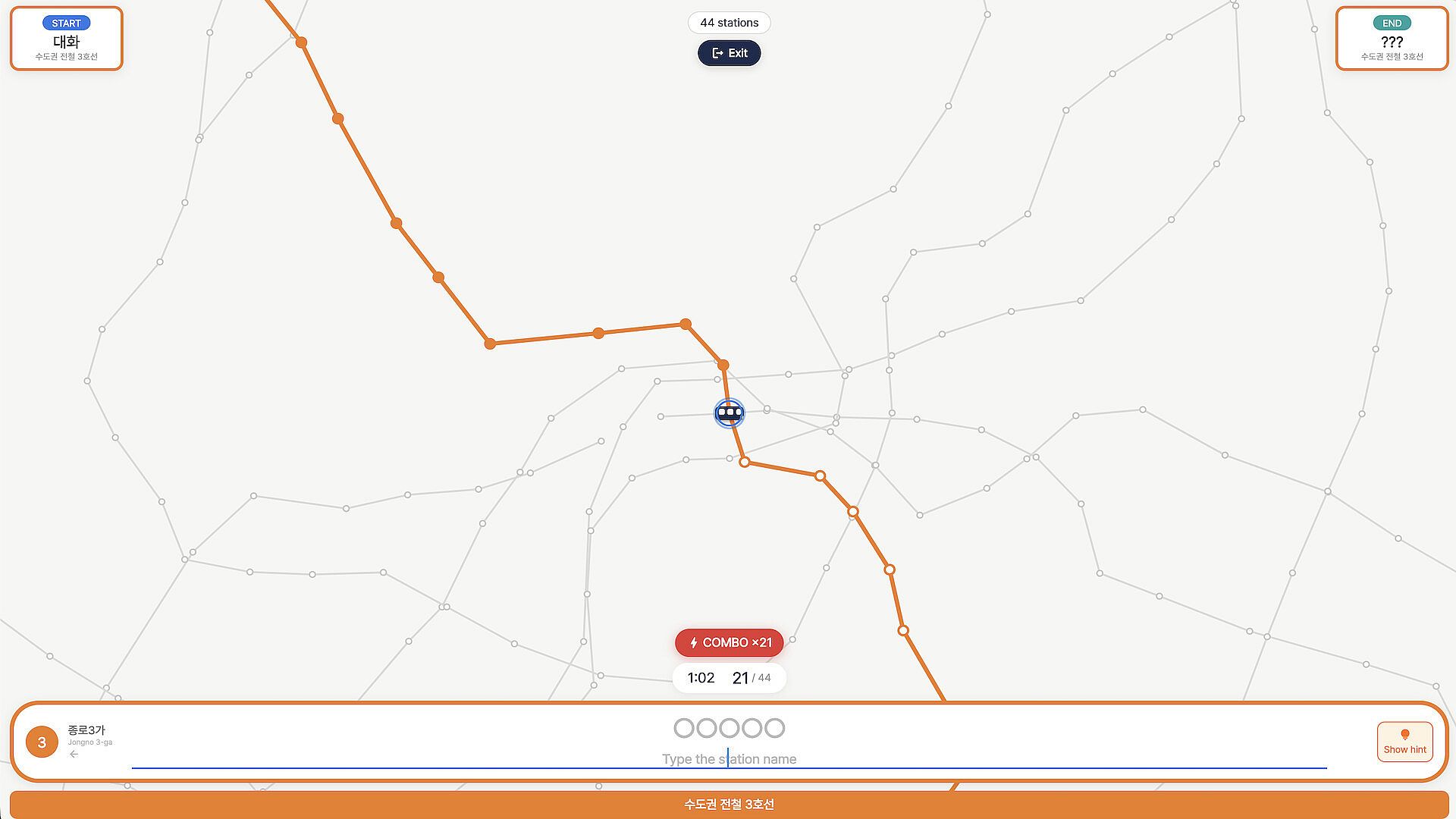
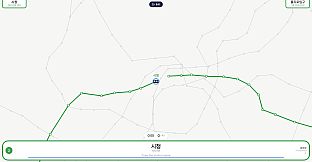
Three distinct modes shape the experience. Drive serves as the standard option, providing a visible map for reference while typing the next station name. Memory removes the map entirely, forcing completion based solely on recall of the route. Race pits the player against an AI conductor in real time, with three difficulty levels that adjust the opponent's speed and challenge level. These options support different skill stages, from learning routes with visual aids to testing pure knowledge or competing directly for faster times.
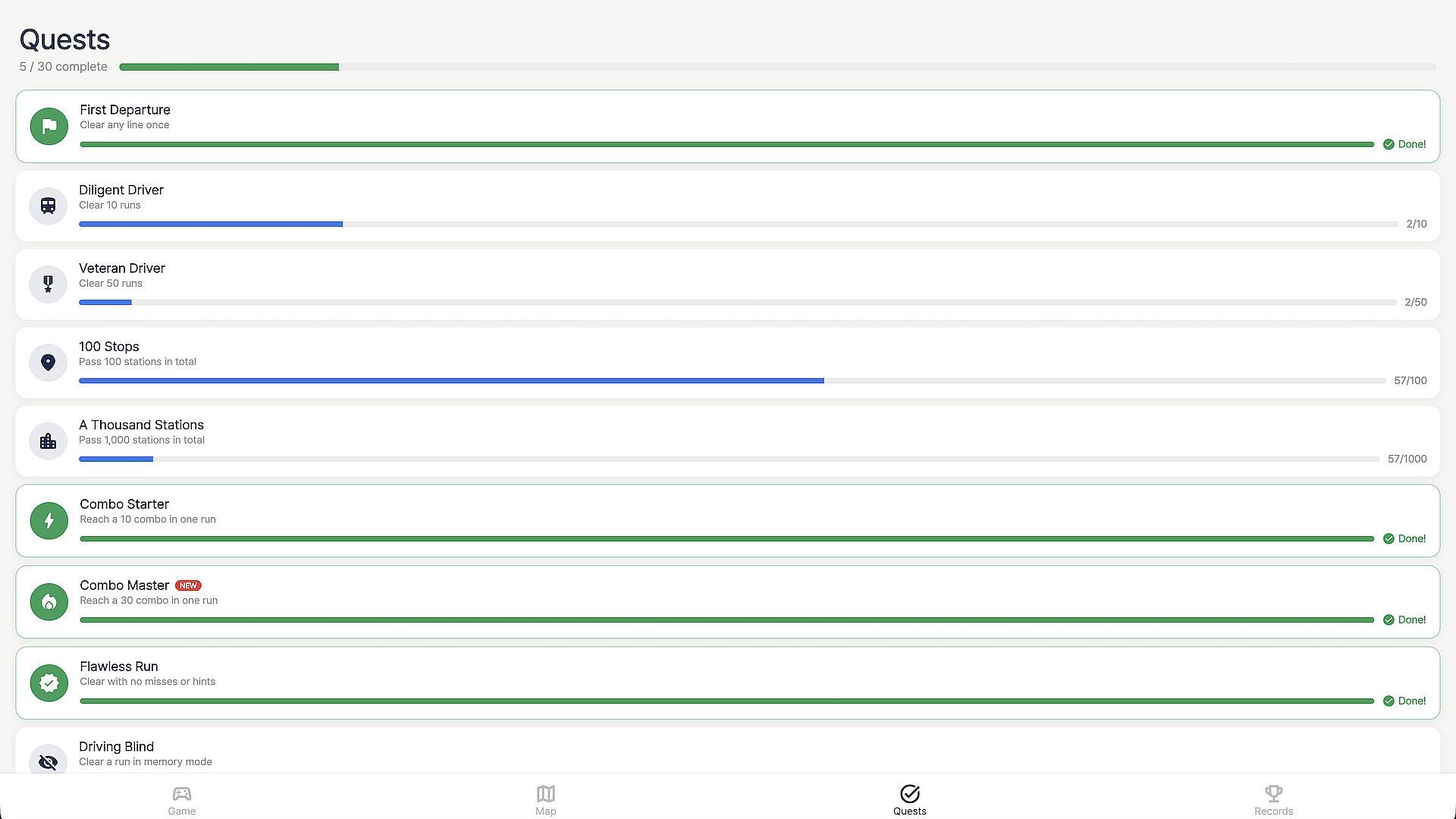
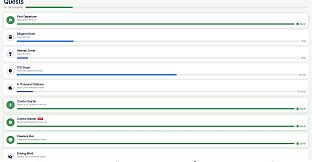
Progress tracking adds depth for dedicated players. Best times are recorded for every line and mode, alongside combos, flawless runs, and quest completions. Shaving seconds off personal records on specific lines becomes a measurable goal that structures repeated sessions.
Line Variety and Typing Challenges
Each line presents unique demands based on length and station density. Shorter routes build confidence quickly, while longer ones test sustained focus and spelling precision across unfamiliar names. Typing in local scripts reinforces practical language exposure, turning sessions into informal practice for travelers or language learners. The system avoids generic placeholders by using verified station names from real networks, so success depends on accurate recall rather than pattern guessing.
Hint usage integrates directly into scoring. Checking a station name extends the overall time, creating a trade-off between speed and accuracy that players manage differently across modes. This mechanic keeps runs engaging even after initial mastery, as optimizing hint reliance improves records over time.
Is It Worth Playing?
K-jihacheol suits players who enjoy word games, memory challenges, or transit trivia. The single-player focus with optional AI competition makes it accessible for solo sessions without requiring online matches. Its casual pace fits short play periods, yet the record system and mode variety support longer-term engagement for those tracking improvements. Availability on PC expands access beyond mobile versions, allowing keyboard typing that aligns naturally with the core mechanic. Those interested in real-world subway systems or simple typing exercises will find consistent value in the verified station data and structured progression. The game remains actively supported through its current feature set without additional seasonal content confirmed at this stage.