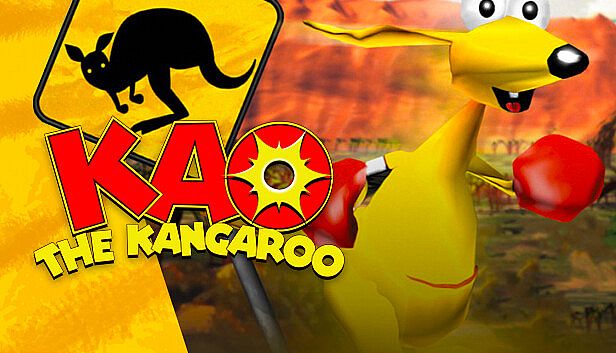






















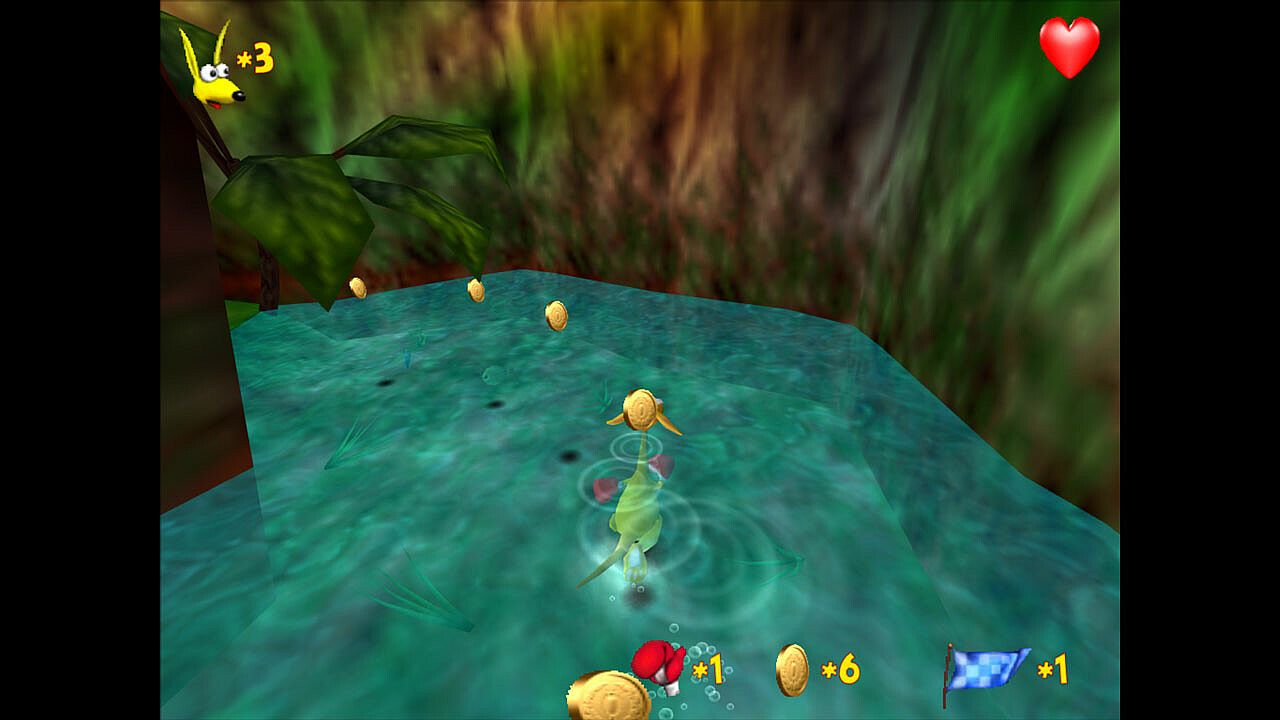
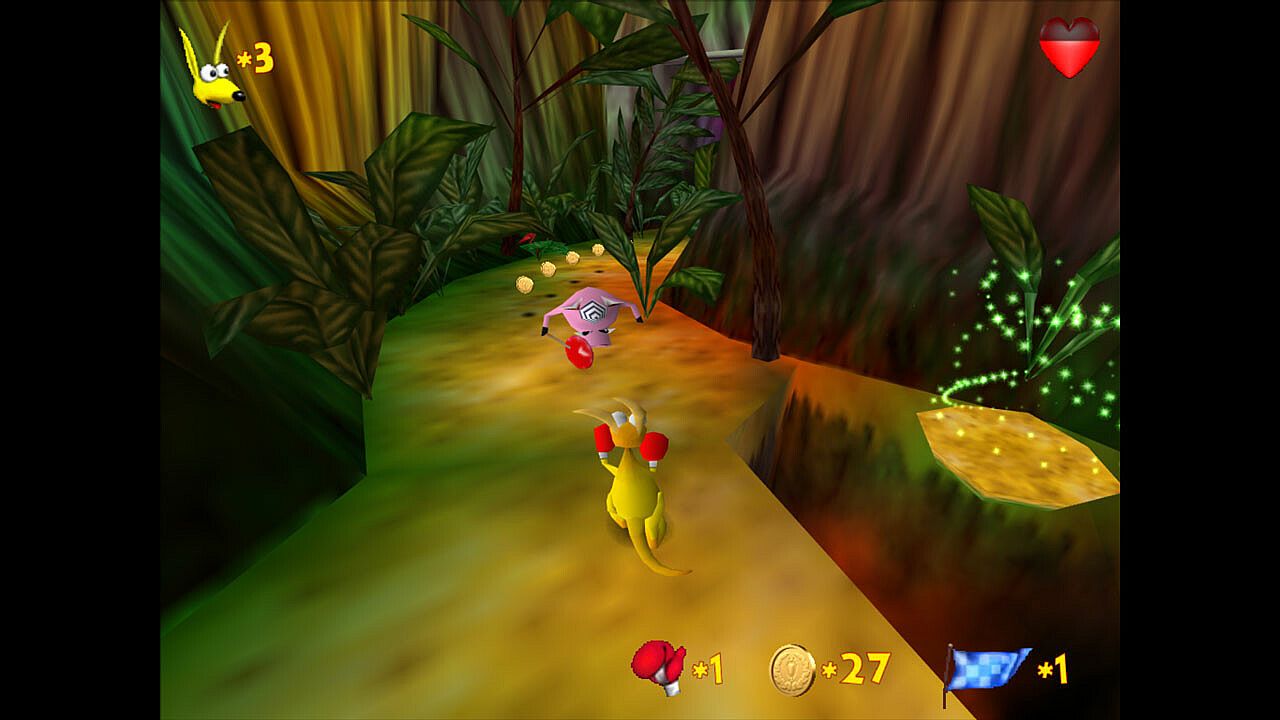
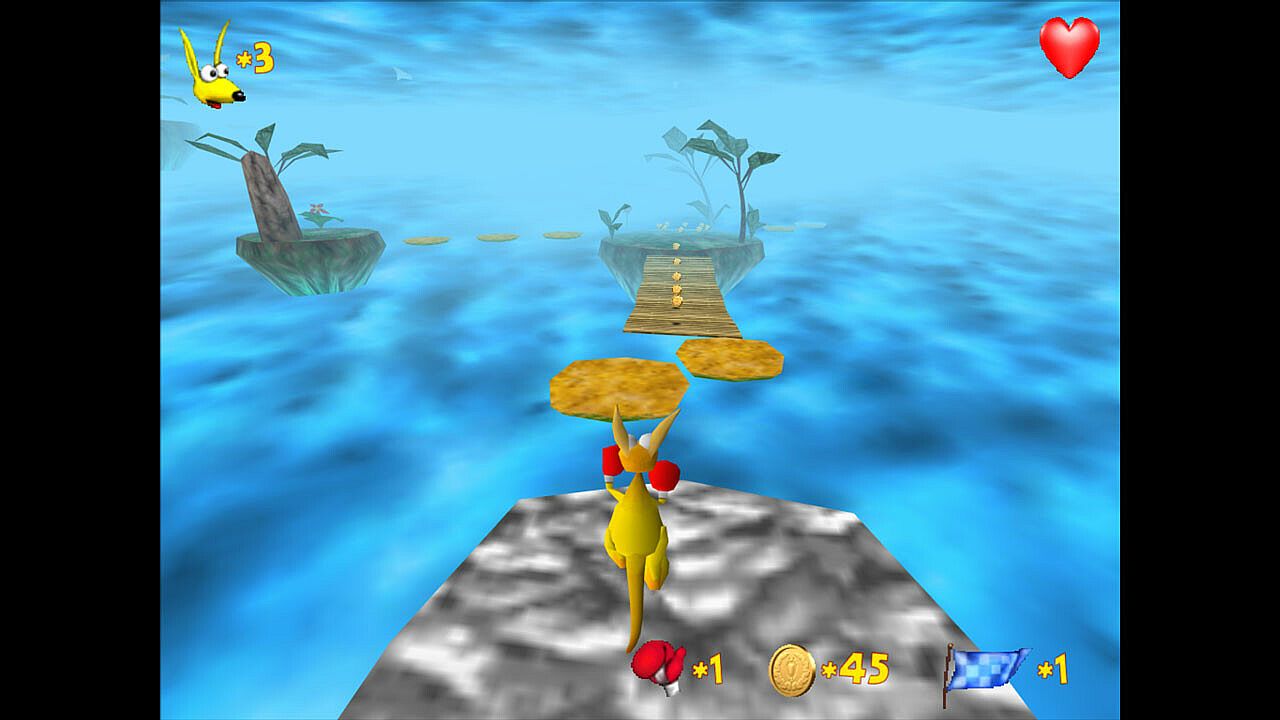
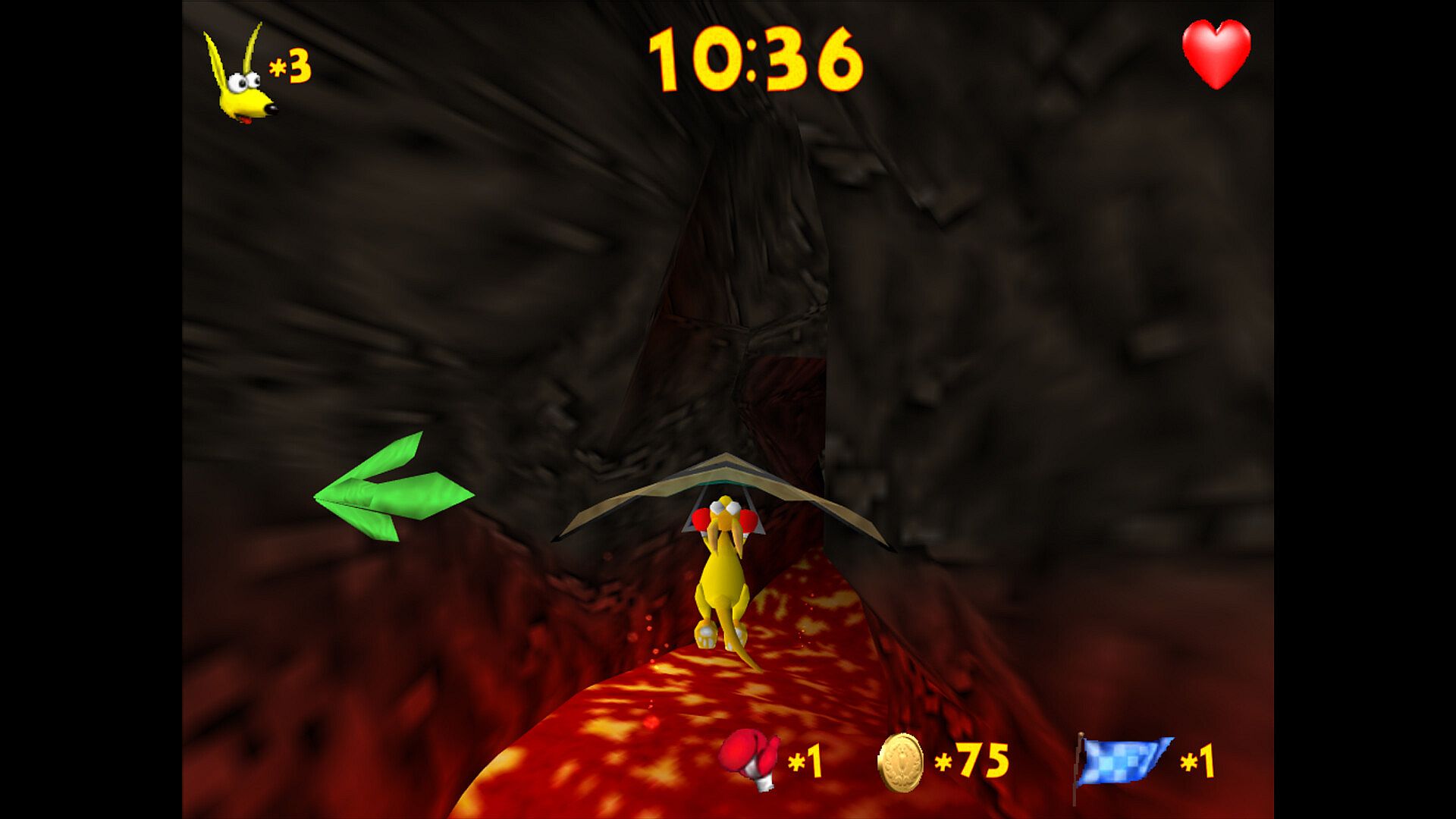
Kao the Kangaroo (2000 re-release) is a single-player 3D action-adventure platformer where players control the titular kangaroo on a journey across varied environments. The game follows Kao after he is taken from his home as he works to return to Australia using punches from oversized boxing gloves along with precise jumps and movement across platforms.
Gameplay
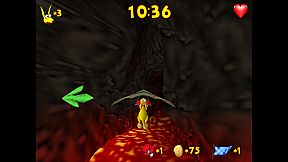
The core loop centers on navigating levels through a combination of hopping, skipping, and triple jumps while using the boxing gloves to deal with threats. Movement relies on standard platforming mechanics with added vehicle sections that change how players traverse sections of a stage. Hang gliders allow gliding across gaps, motorboats handle water areas, snowboards speed through snowy terrain, and a space scooter appears in later stages for faster travel. Alligator rides provide another option in specific environments. Players collect energy, coins, power gloves, checkpoints, freeze items, and speed-up bonuses to extend play sessions and gain temporary advantages. Three difficulty settings adjust the challenge level from the start, making the experience more or less demanding depending on player preference.
Levels feature colorful backdrops and a range of obstacles that require timing and positioning. The re-release preserves the original tank-style controls on PC while maintaining the demanding platforming that defined the 2000 version. Power-ups integrate directly into the flow, rewarding exploration within each stage without altering the fundamental third-person perspective.
Game Modes
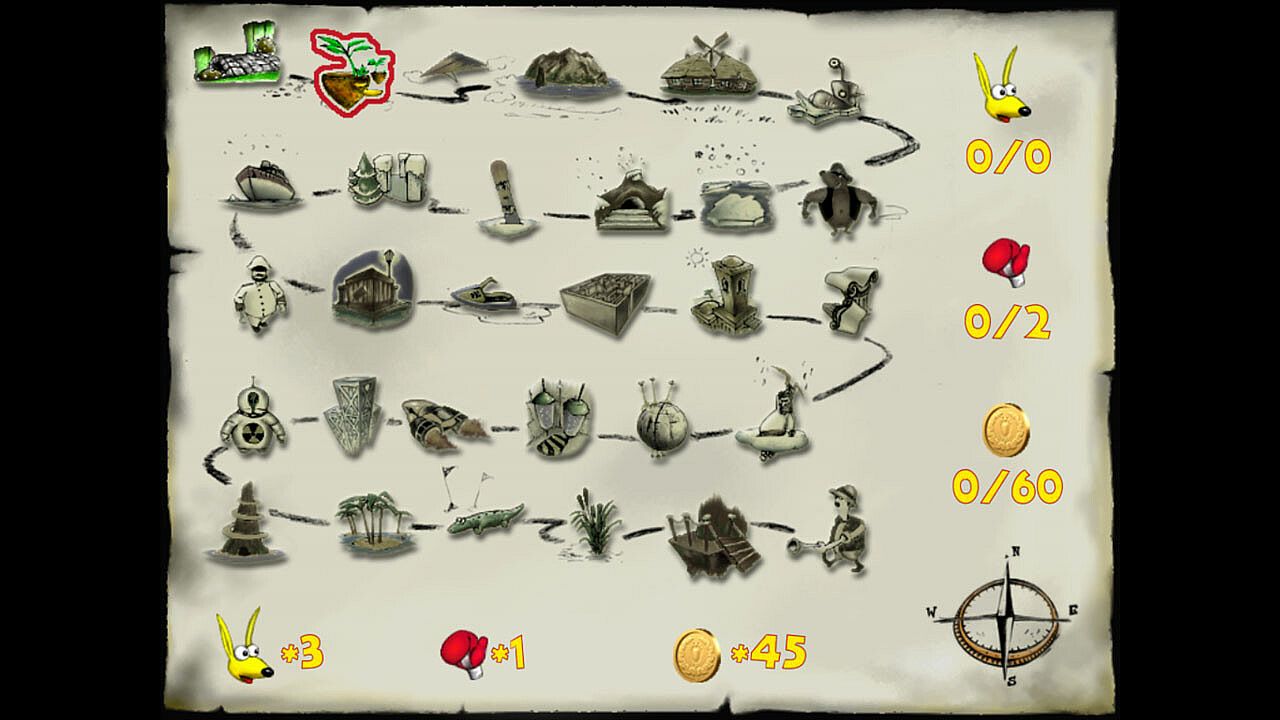
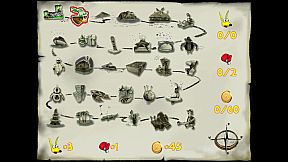
The game operates entirely as a single-player campaign divided across five worlds that contain more than 45 levels in total. Progression moves linearly through these stages, with vehicle segments and combat encounters integrated into the platforming. Difficulty selection serves as the primary way to customize the experience, offering three distinct settings that affect enemy behavior and platform precision requirements. No separate multiplayer options or alternate modes exist beyond the main campaign structure.
Collectibles such as coins and extra lives appear throughout levels to support repeated attempts. The structure encourages completion of each world in sequence while allowing players to revisit stages for missed items under the chosen difficulty.
Worlds and Levels
Five distinct worlds form the backbone of the campaign, each presenting unique visual themes and terrain types that influence both platforming and vehicle use. Stages within these worlds incorporate the listed vehicles at set points to break up standard jumping sequences. Enemy encounters vary by environment, including a pig armed with a lollipop club, a sailor focused on close-range attacks, an angry Eskimo, a happy Aborigine, and a shark that pursues the player in water sections. These foes require direct glove strikes or evasion during movement.
More than 45 levels spread across the worlds deliver consistent platforming challenges alongside the vehicle and combat elements. The design keeps each stage self-contained while building toward the overall goal of returning home.
Is It Worth Playing?
The re-release delivers a straightforward classic 3D platformer experience suited to players who enjoy precise jumping, light combat, and vehicle variety in a single-player format. Reception on the platform stands at mostly positive based on hundreds of user reviews, with praise directed at the nostalgic level design and music while noting the older control scheme can feel stiff. The three difficulty options provide flexibility for different skill levels, and the power-up system adds replay incentive through collectibles.
Those seeking demanding platforming with clear progression across multiple worlds will find the structure rewarding. The game remains available as a complete package without ongoing seasonal content or additional modes, making it a self-contained option for fans of early 2000s action-adventure platformers on PC.