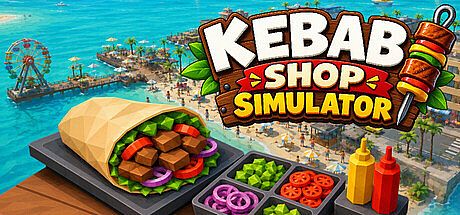



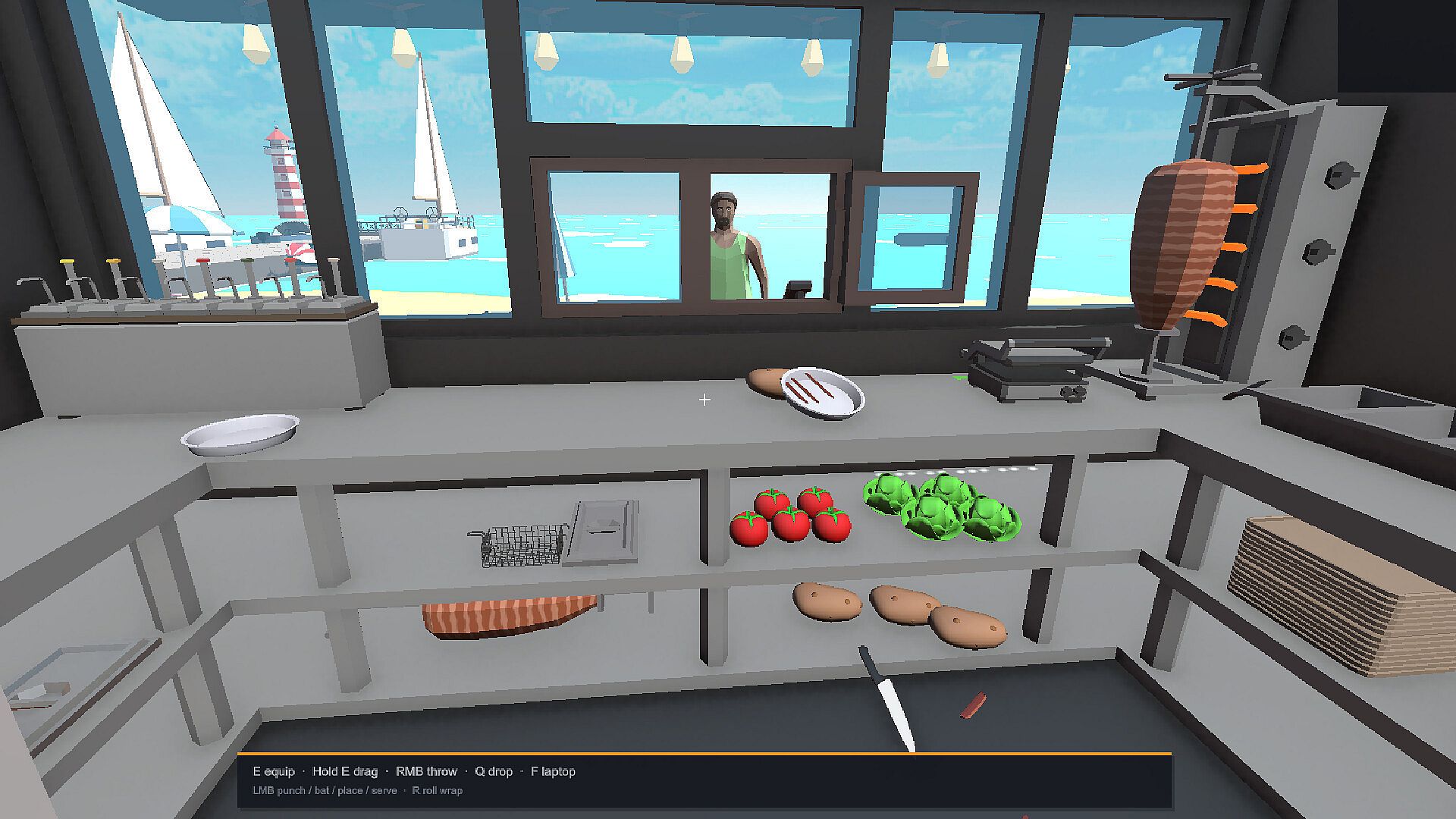

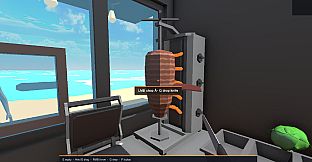
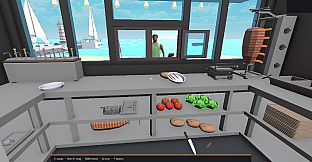

Kebab Shop Simulator is an indie casual simulation game set on PC where players take over a rundown kebab shop passed down from a missing father. The story places you behind the counter in a seaside location with white sand and warm water nearby, tasked with keeping the business running for family back home while the meat continues to turn on the grill. The shop already shows signs of neglect, yet customers arrive regardless and expect accurate orders served promptly.
Gameplay
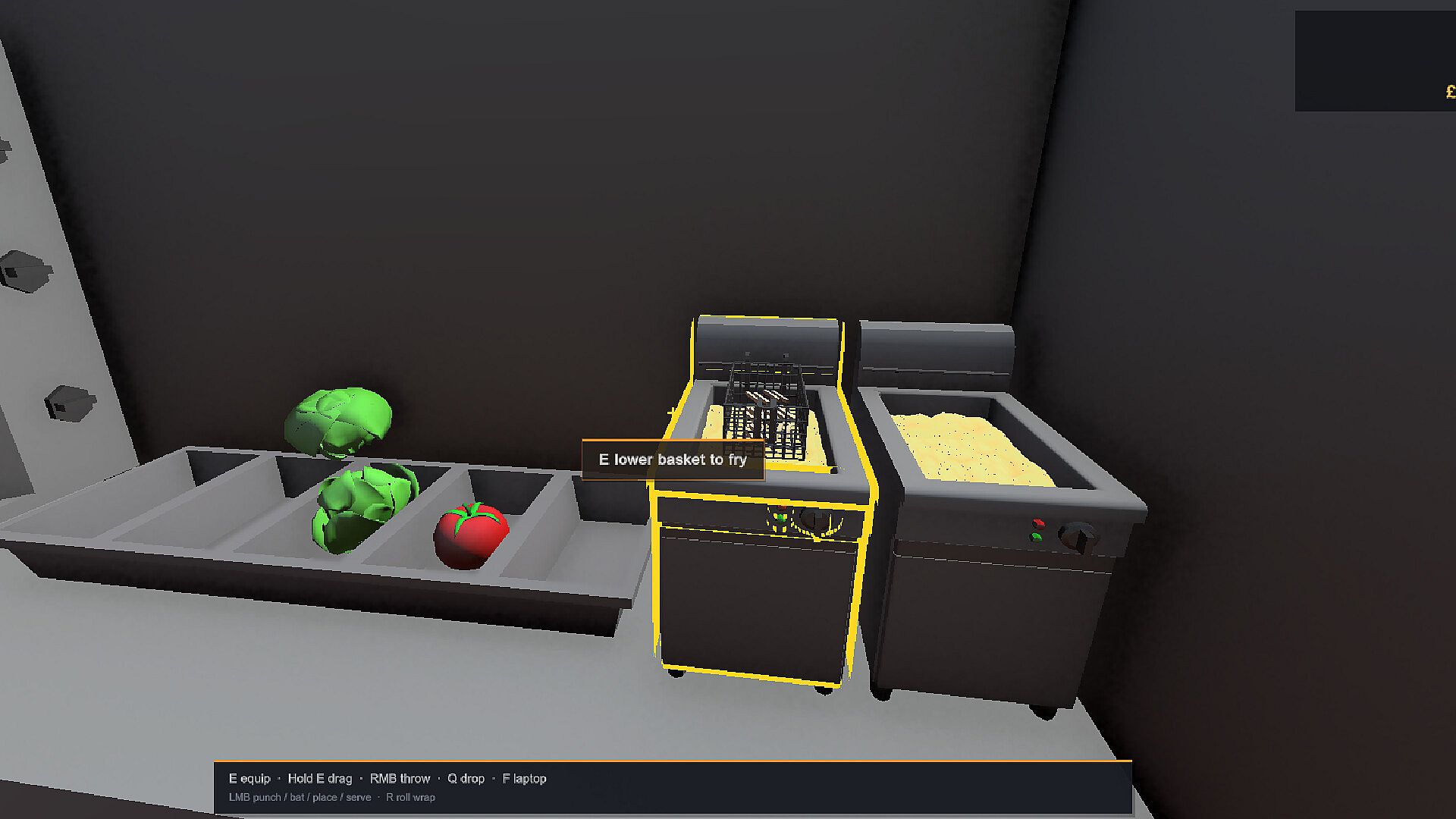
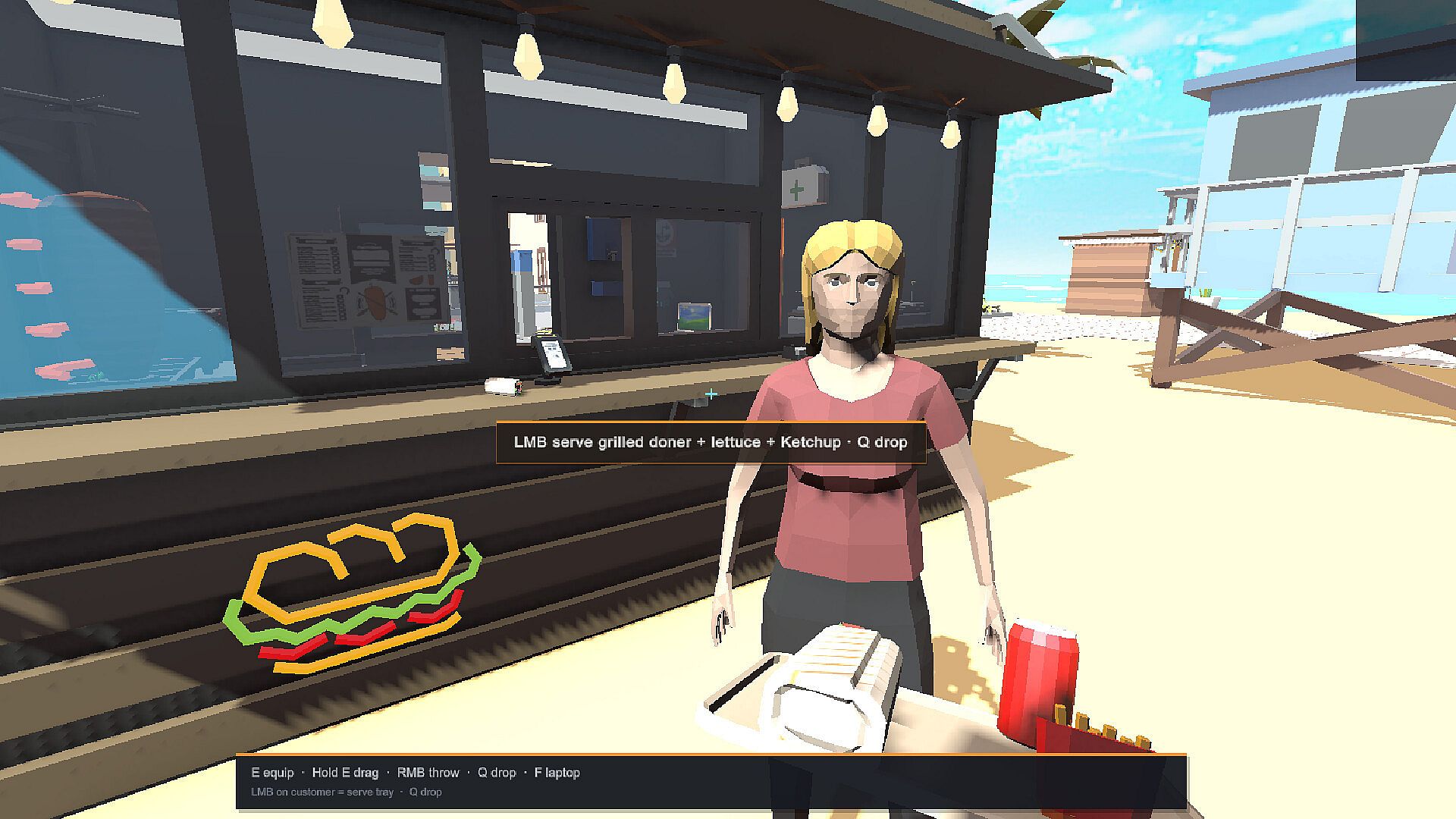
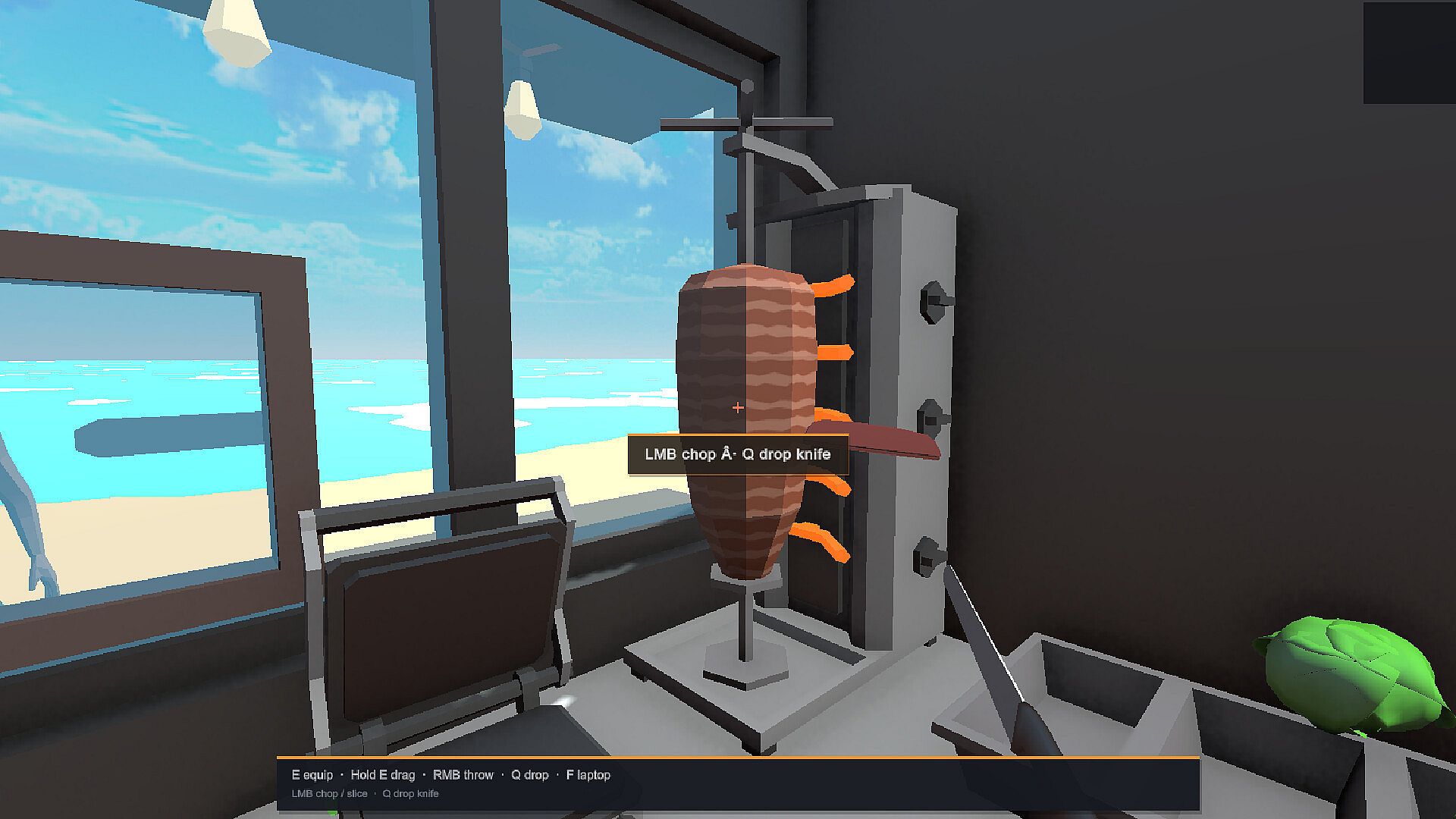
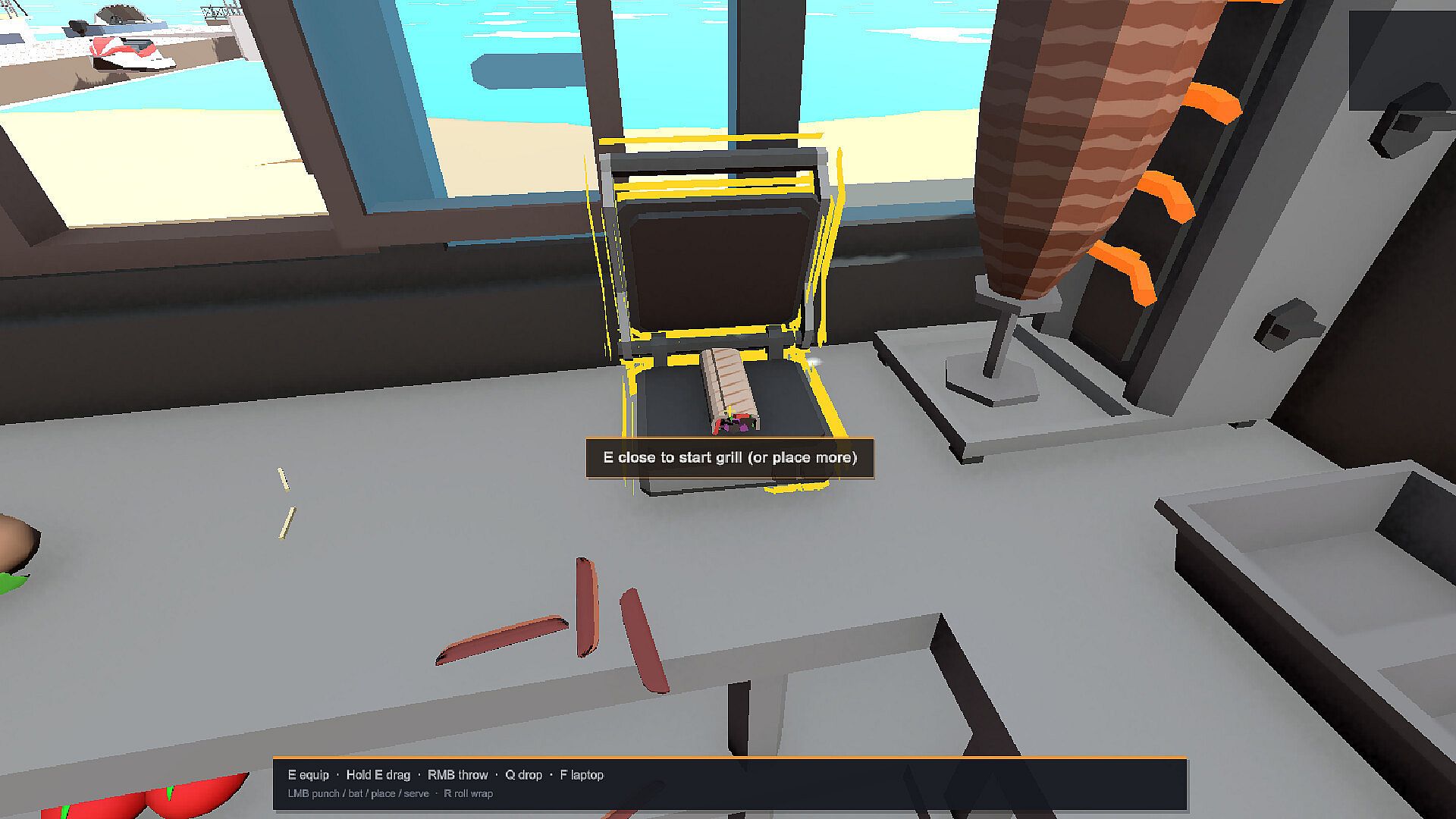
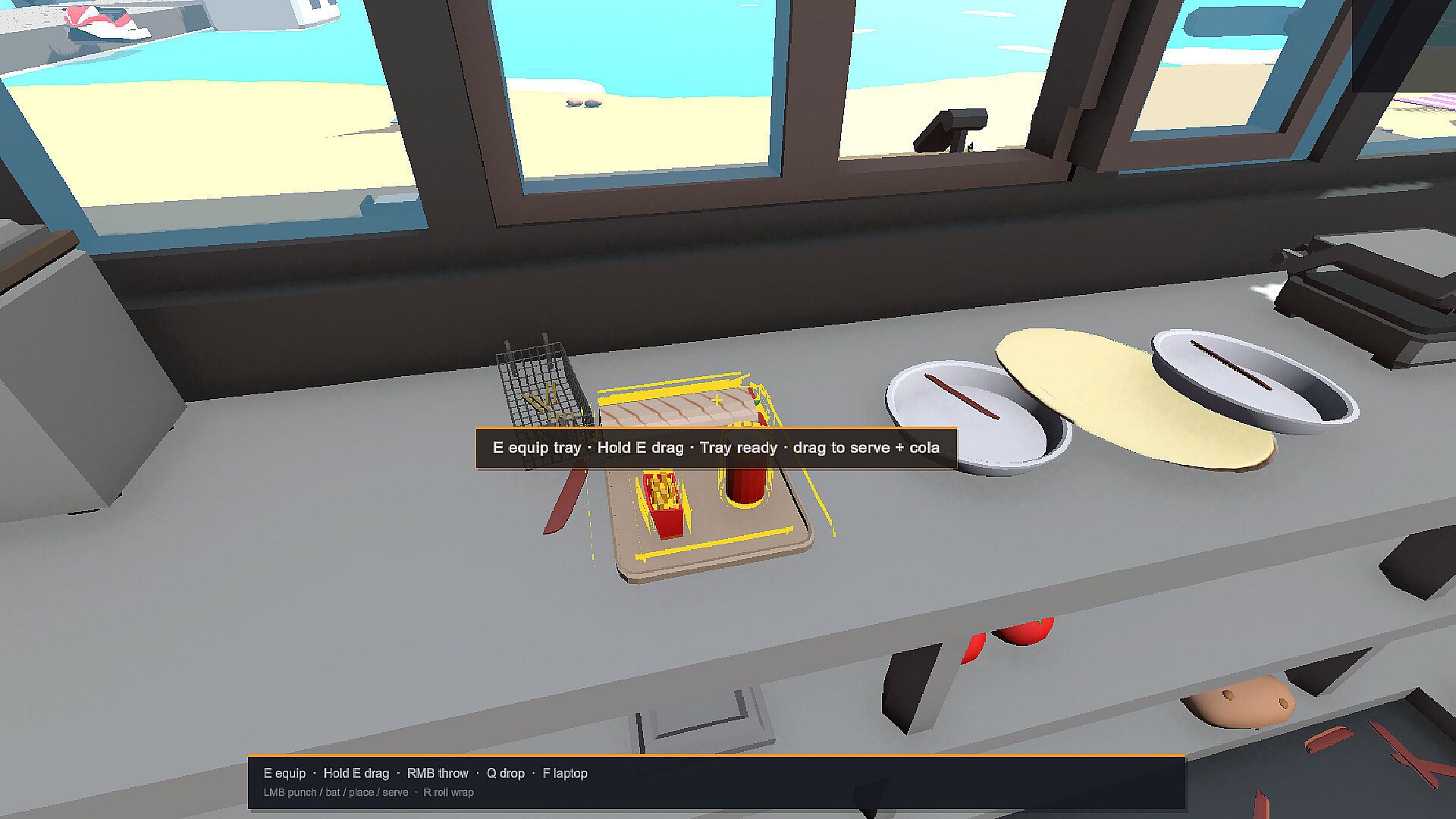
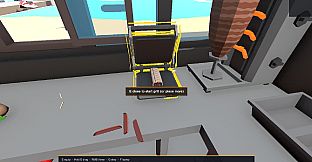
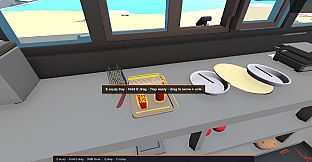
The core loop centers on hands-on cooking and daily operations. Players slice doner meat, prepare vegetables, fry chips, and assemble complete meals according to each order. Ingredients must be purchased as needed to keep the kitchen stocked, and the economy runs directly on payments received for served kebabs, with no sales meaning no income. The tired grill and existing setup require attention from the start, forcing quick decisions on what to prep and how to manage the growing queue.
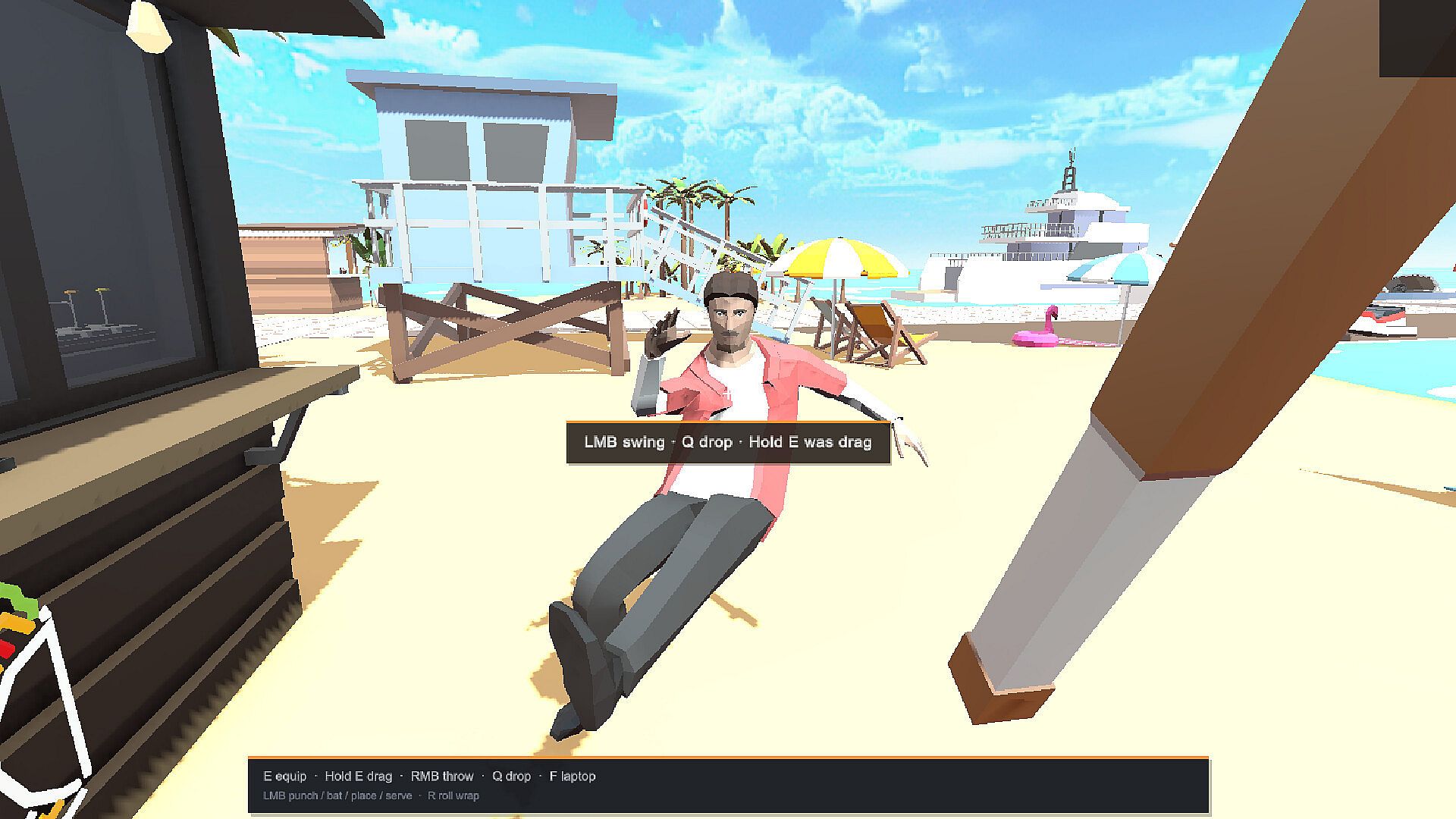
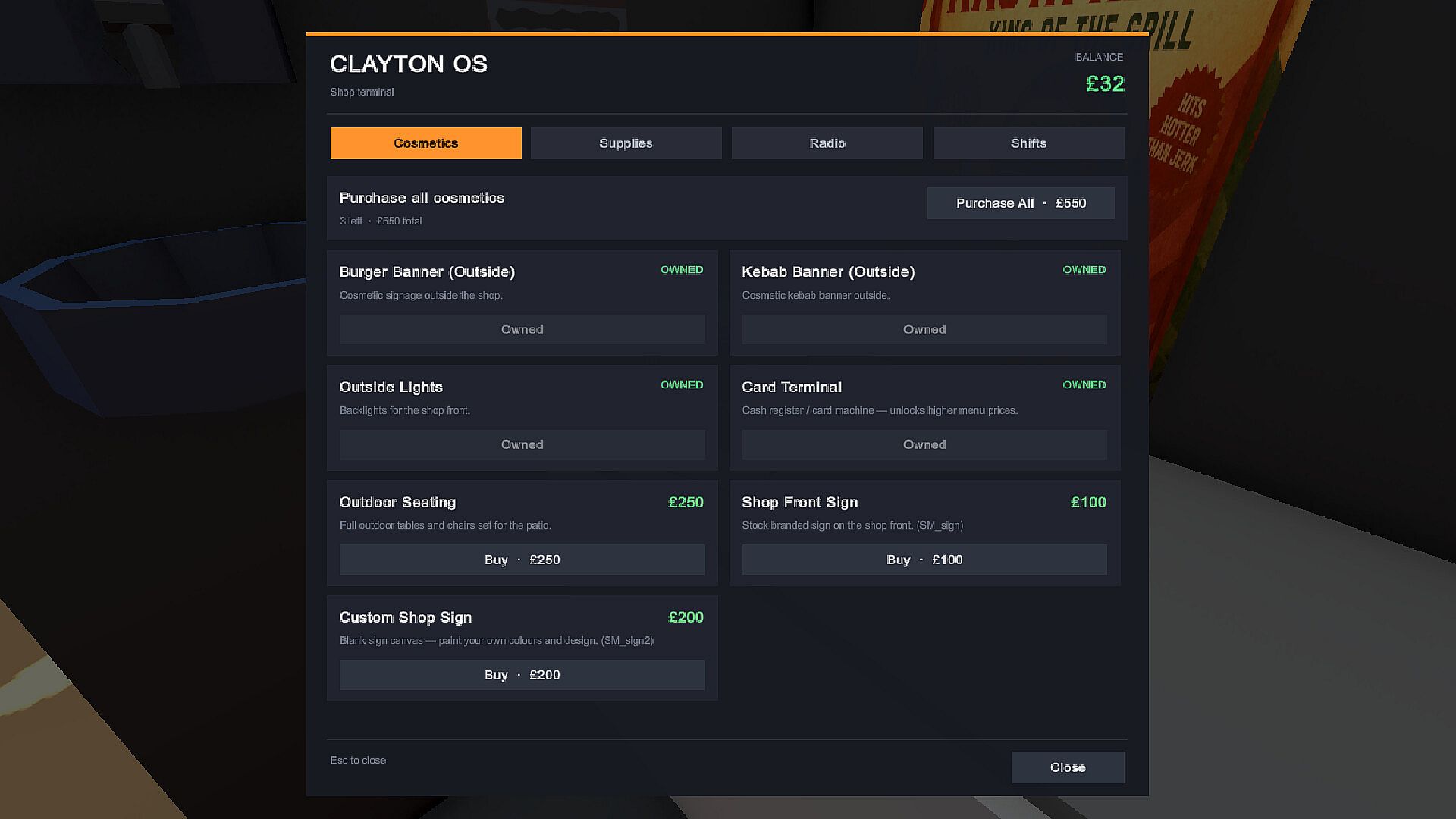
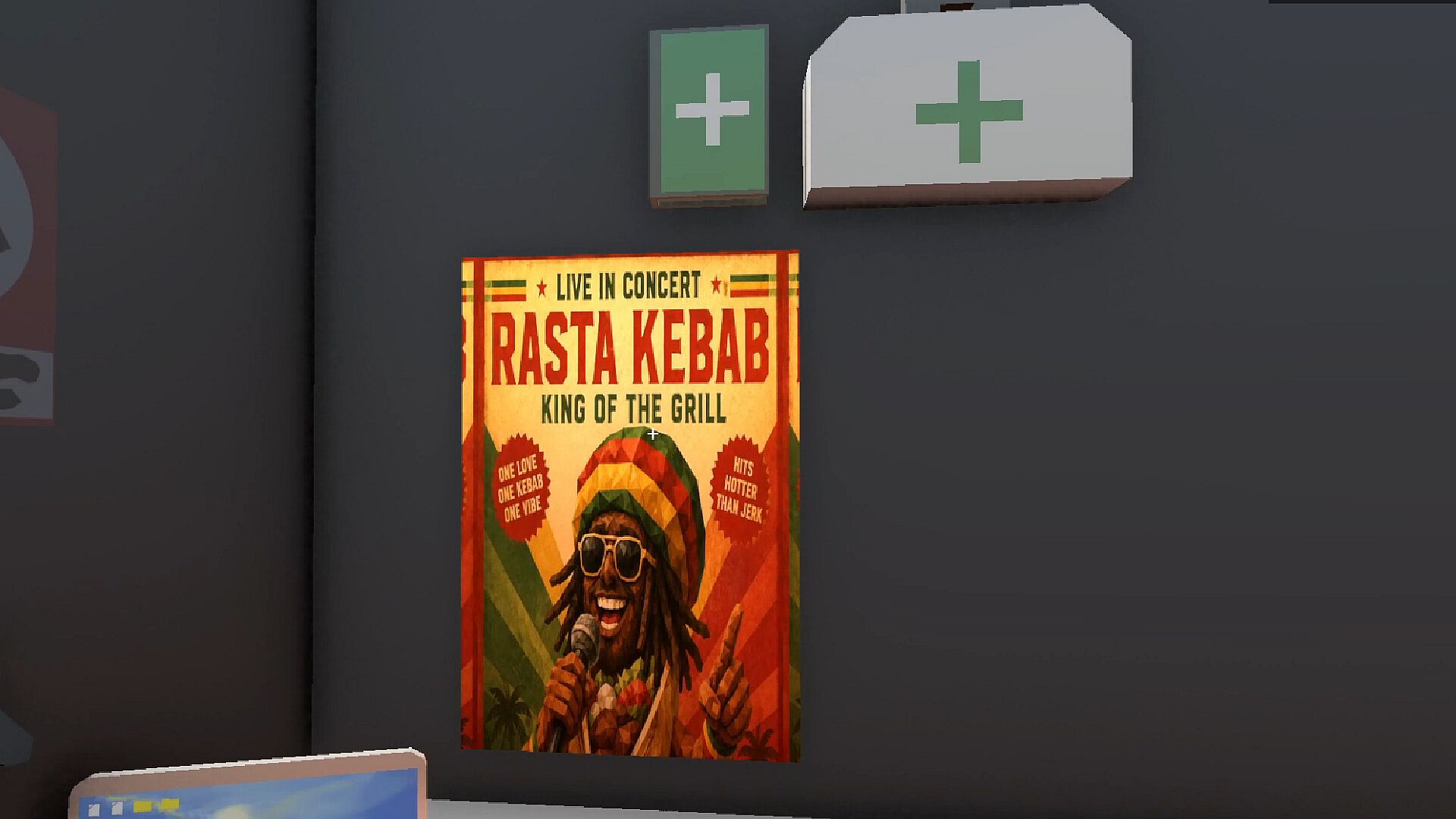
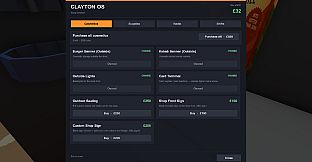
Shop upgrades become available through earnings and allow purchases of new furniture, card machines, and other equipment to improve workflow and customer flow. Custom sign painting and shop decoration give freedom to repaint the exterior sign and arrange interiors in personal styles. AI customers provide verbal dialogue, stating orders clearly and reacting with feedback when mistakes occur. Ragdoll physics come into play during chaotic moments, while throwing mechanics let players pick up and hurl objects when situations escalate. A radio station offers background music to help pass shifts, adding atmosphere during busy periods.
Game Modes
The experience focuses on a continuous single-player simulation of running the kebab shop day after day. No distinct named modes such as separate campaigns or competitive variants appear in the available details. Progression ties directly to managing orders, balancing the economy, and gradually improving the premises through upgrades and personal touches.
Shop Upgrades and Customization
Early sessions highlight the challenge of working with limited tools and space. As revenue grows, options open to expand the layout with better stations for prep and service. Decoration extends beyond functional items to include painted signs and thematic arrangements that reflect individual preferences. These changes affect both efficiency and the overall feel of the location without altering the fundamental cooking and serving demands.
Is It Worth Playing?
This title suits players who enjoy relaxed yet detailed management simulations with a focus on food preparation and customer interaction. The combination of precise cooking steps, economic decisions, and light customization creates a steady loop that rewards consistent attention. Reception notes the appealing premise and satisfying progression through upgrades, though some players mention occasional technical issues that can interrupt flow. Those drawn to indie casual simulations centered on running a small business will find the core systems align closely with the described experience. Availability remains on PC through standard digital platforms.